• AFH
  • 4Dimensions
  • News
  • AFH Projects
  • About Paul McLean
    • Generic Bio
    • DIM TIM: Fallacies of Hope
    • Reel
    • Sample Text: On Concentricity [Brooklyn Rail]
    • Studio
    • NMNF Blog
  • Contact
Art for Humans

[Paul McLean]

  • AFH
  • 4Dimensions
  • News
  • AFH Projects
  • About Paul McLean
    • Generic Bio
    • DIM TIM: Fallacies of Hope
    • Reel
    • Sample Text: On Concentricity [Brooklyn Rail]
    • Studio
    • NMNF Blog
  • Contact

VALUBL OBJX: Afterword [CODA]

VALUBL OBJX: Afterword [CODA]

By Paul McLean

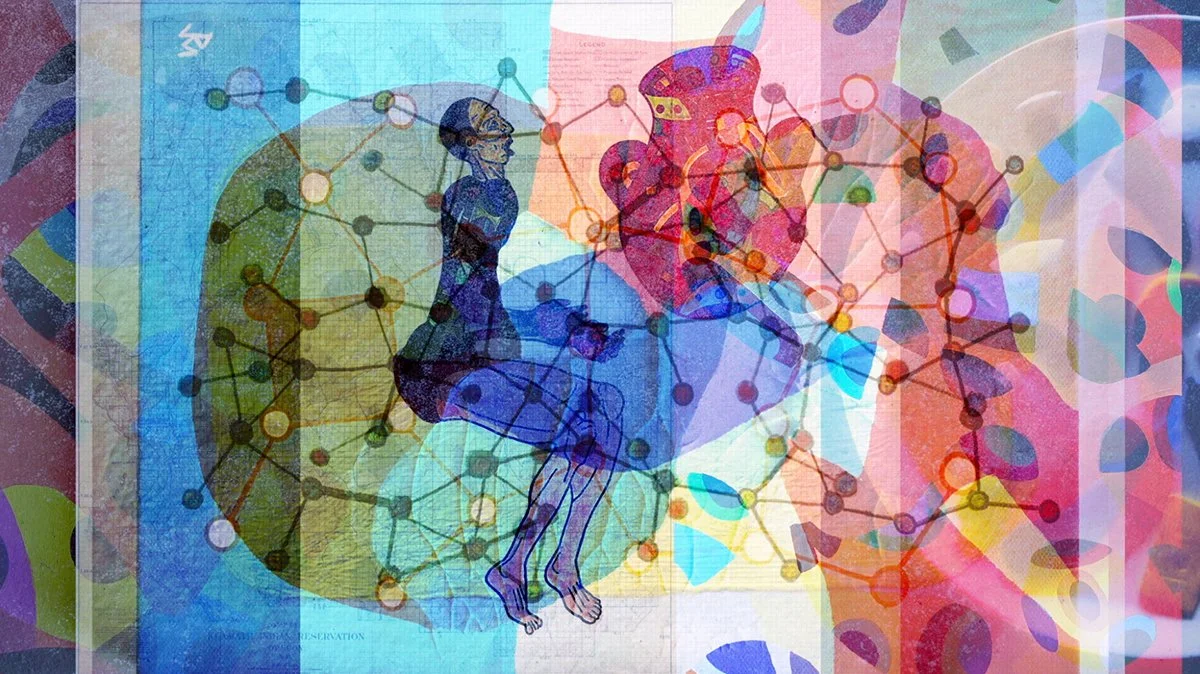
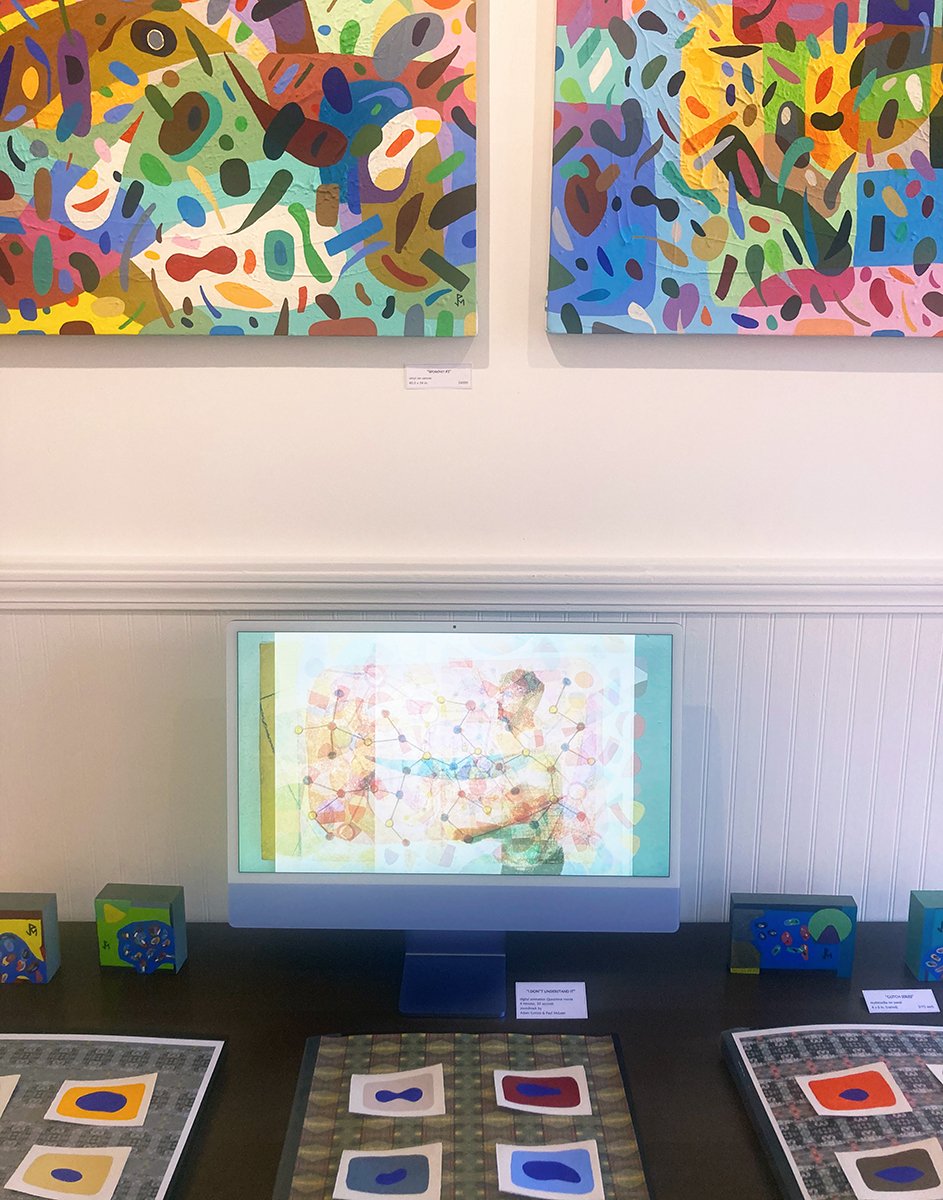
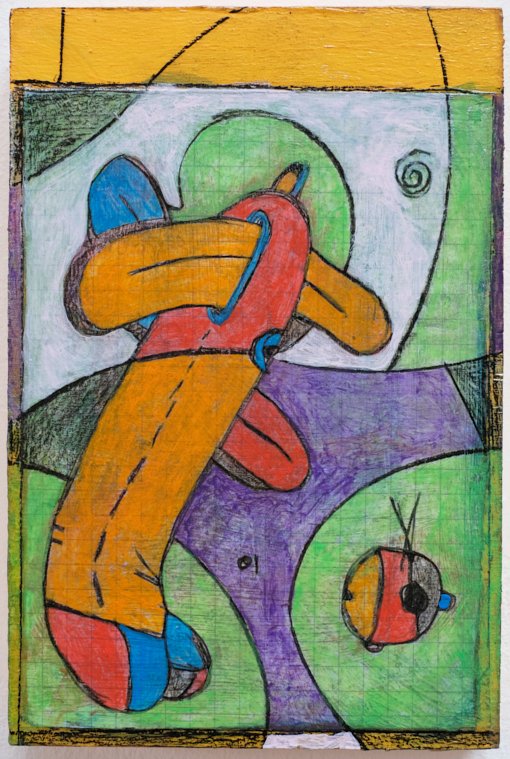
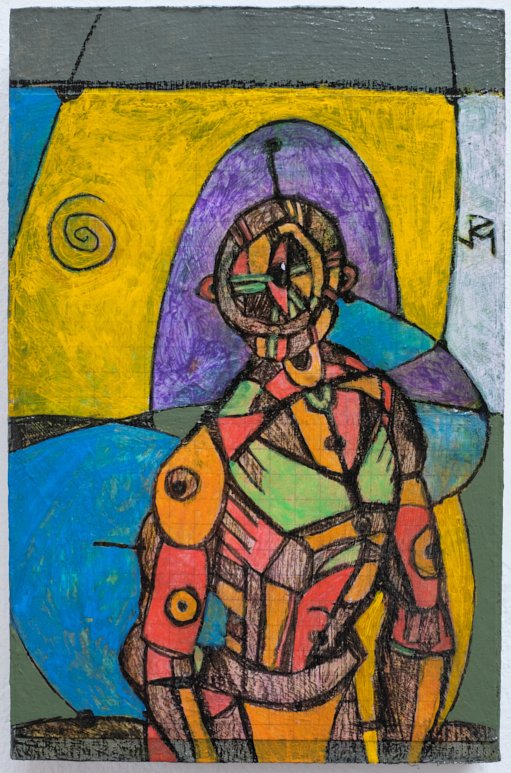
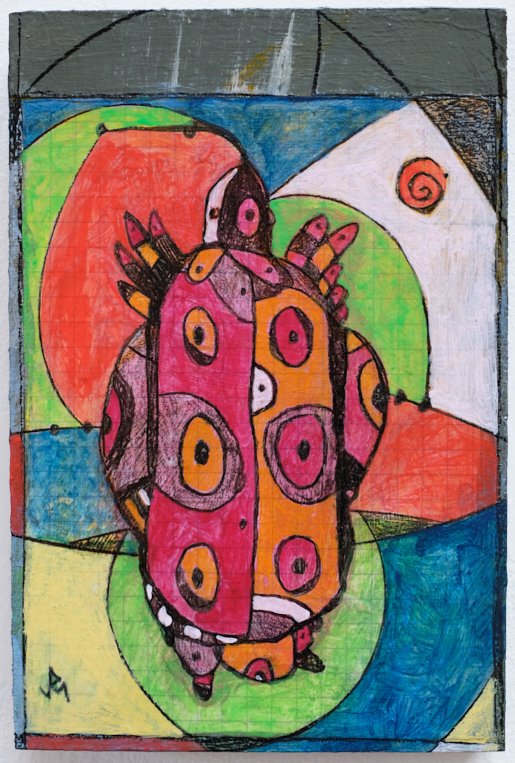
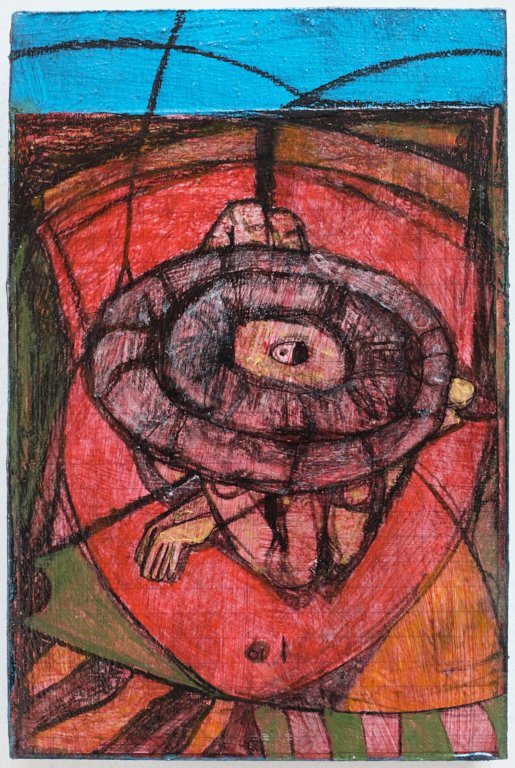
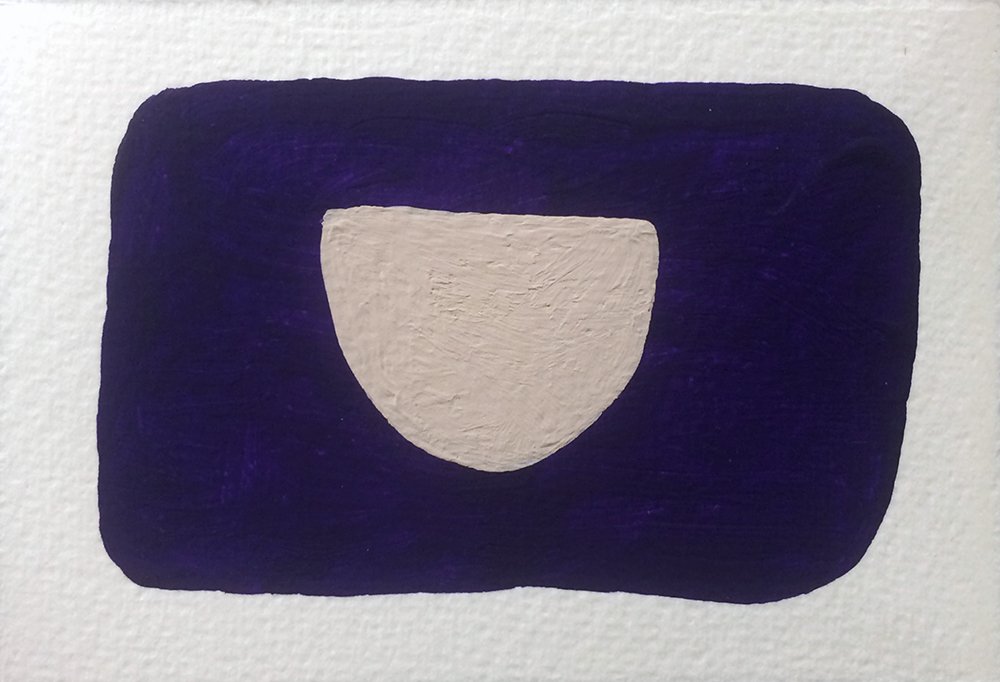
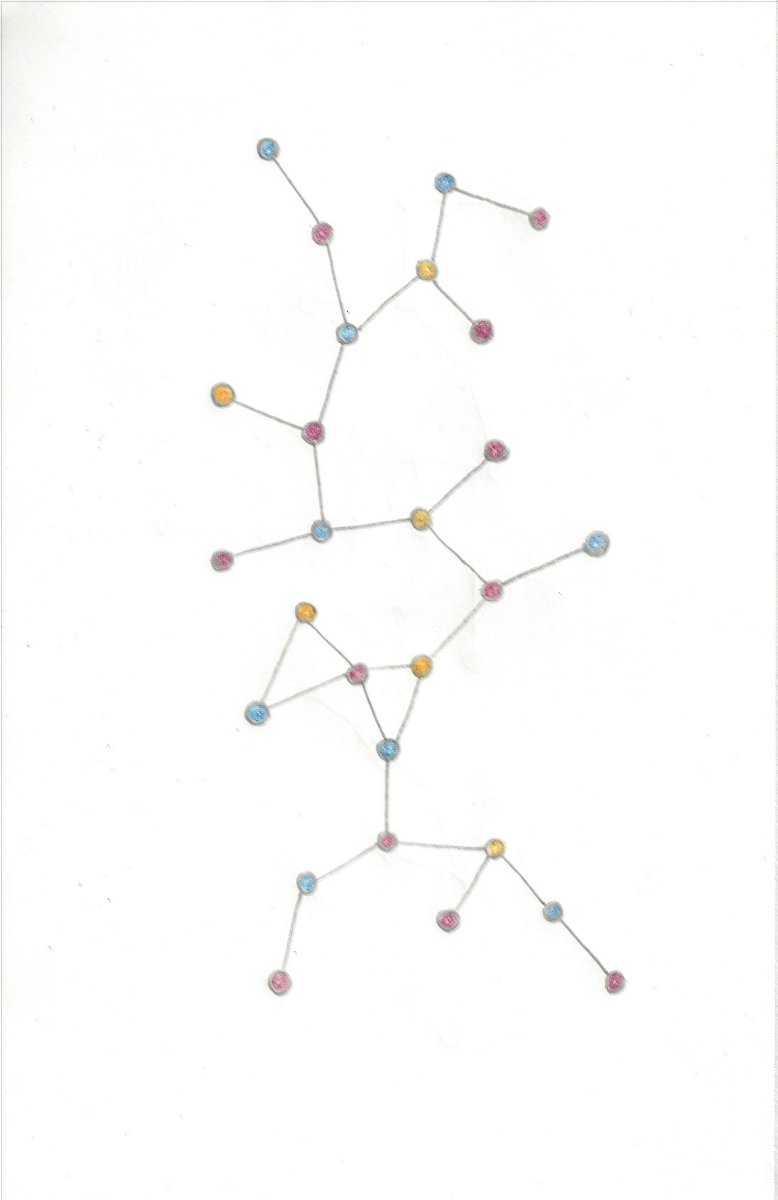
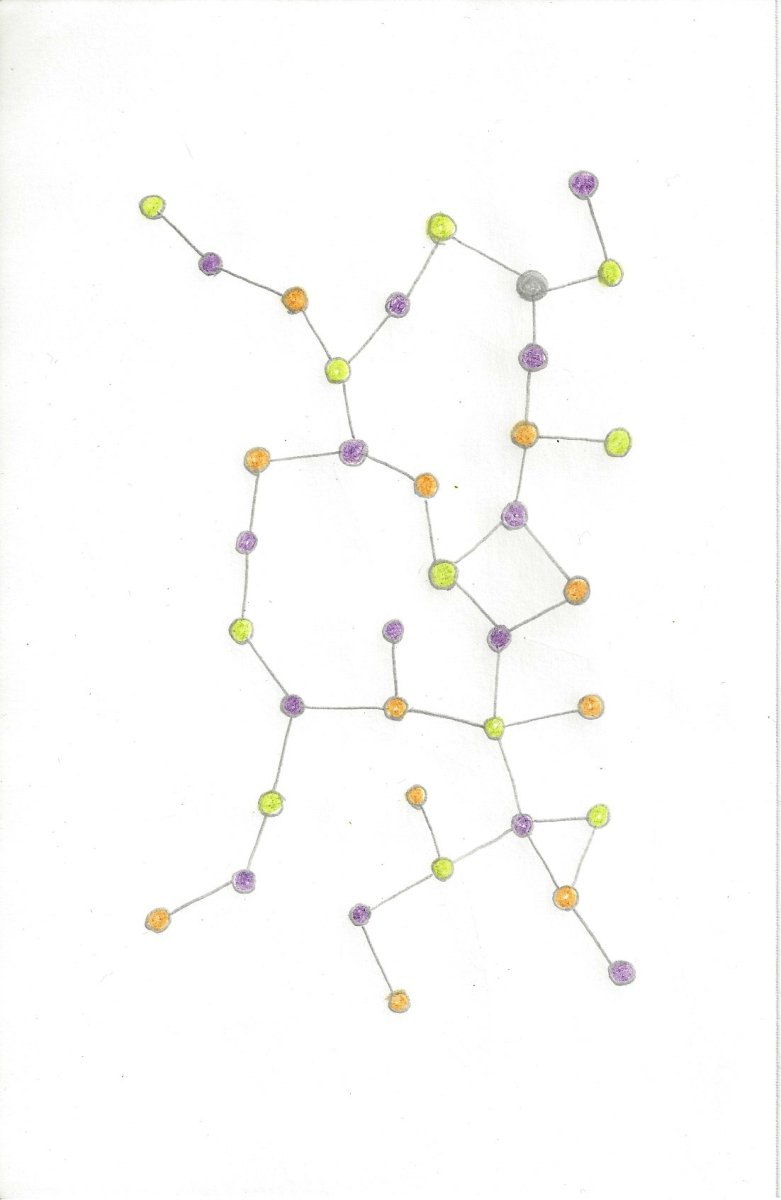
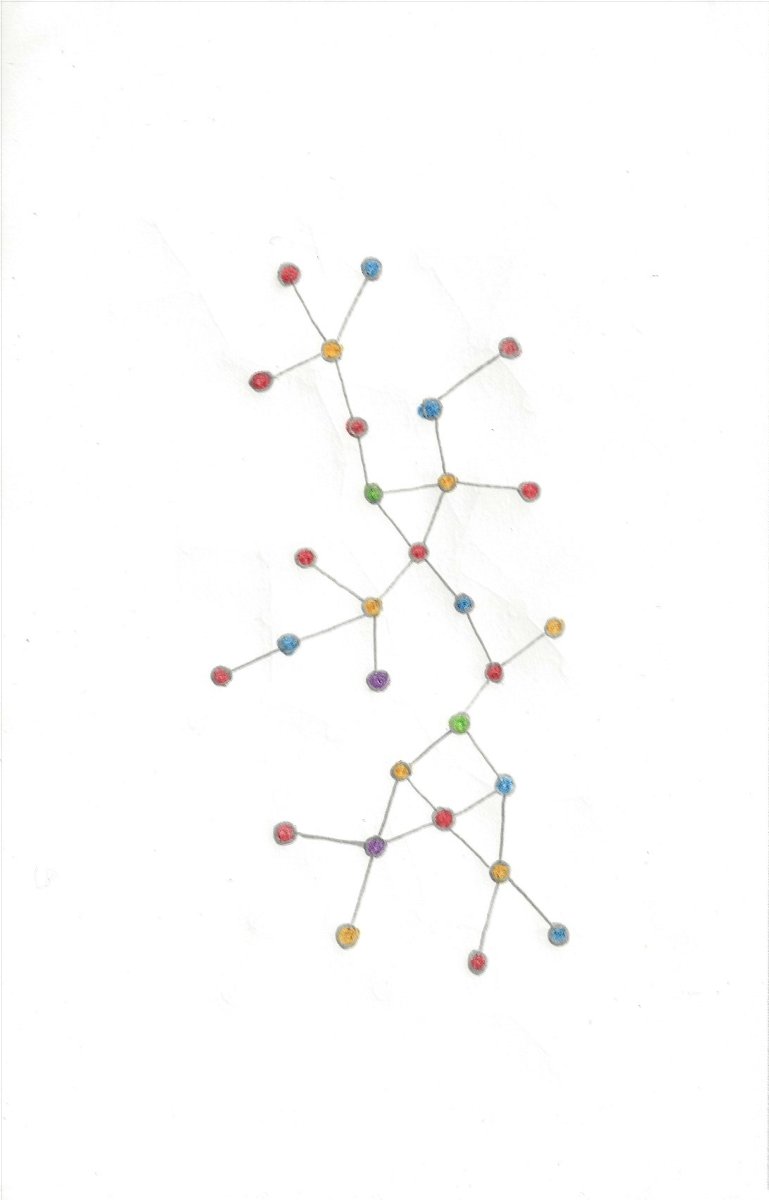
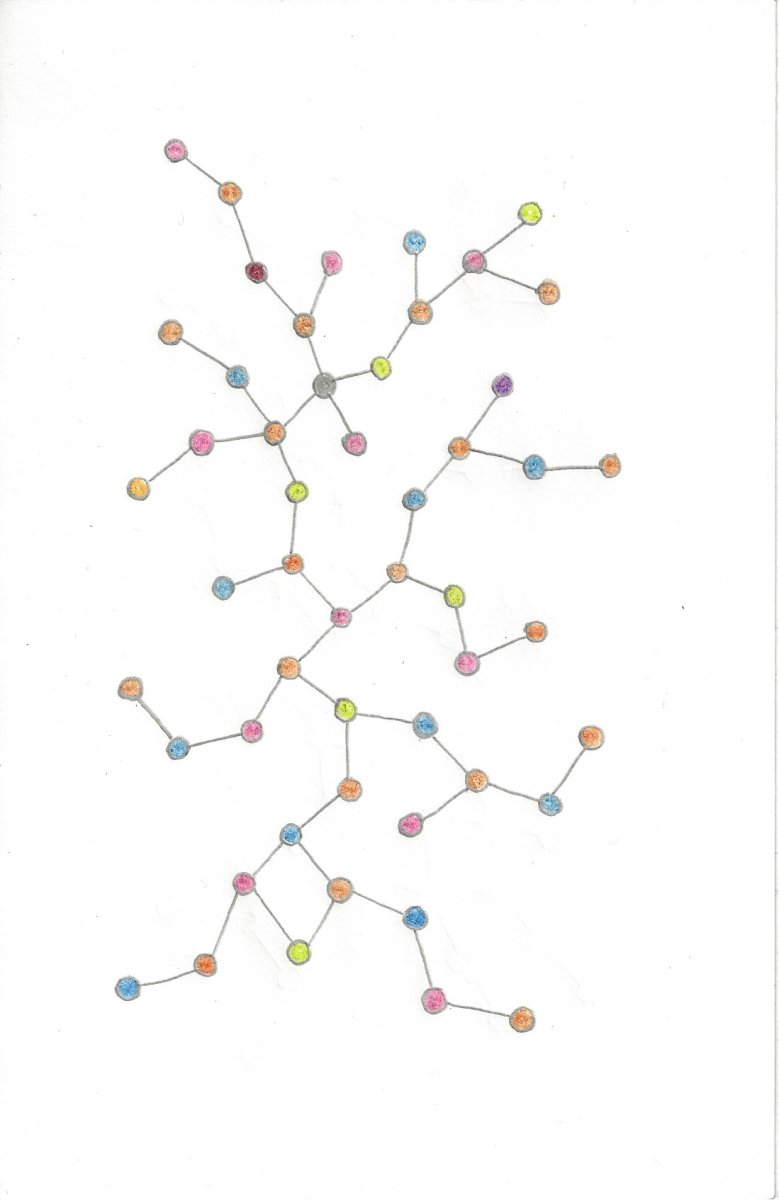
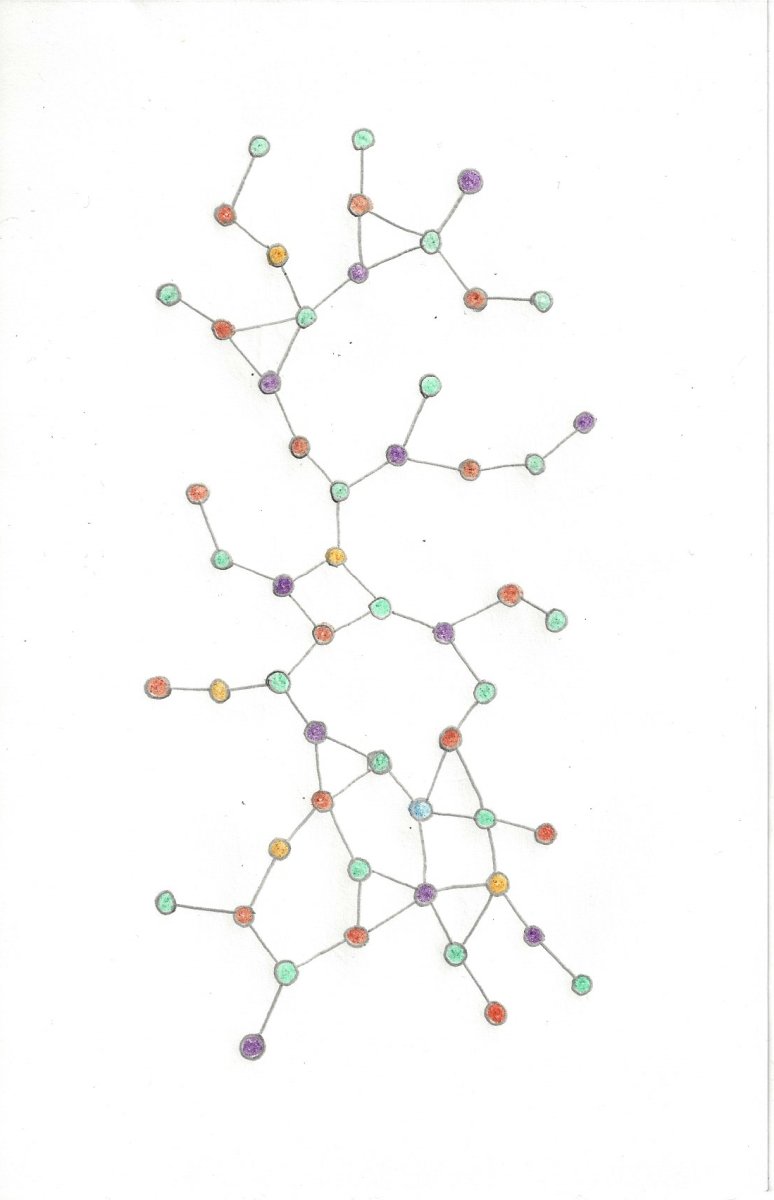
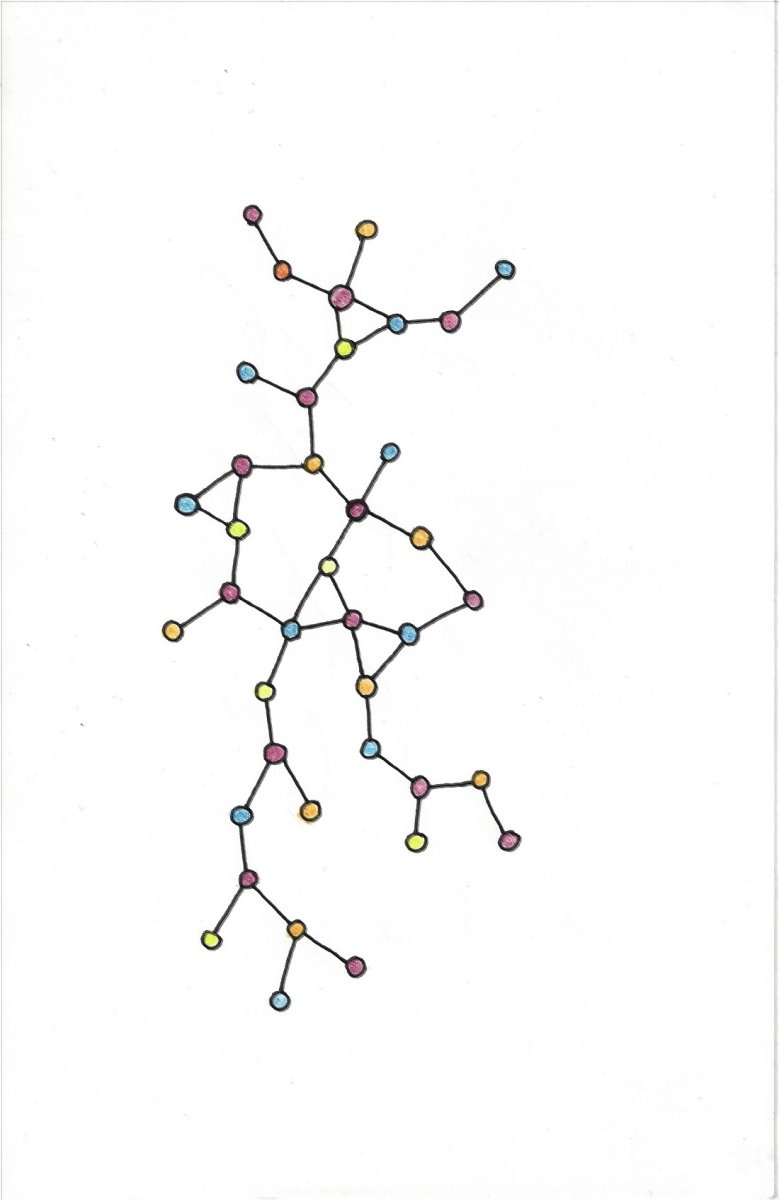
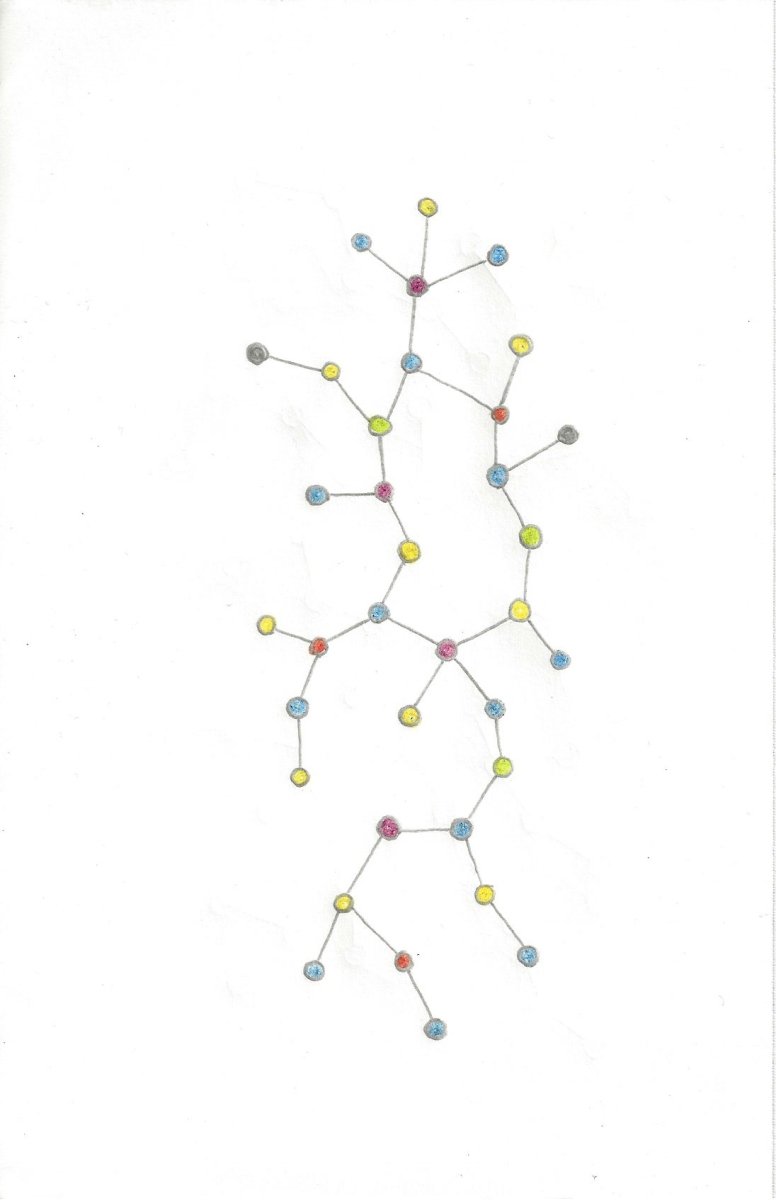
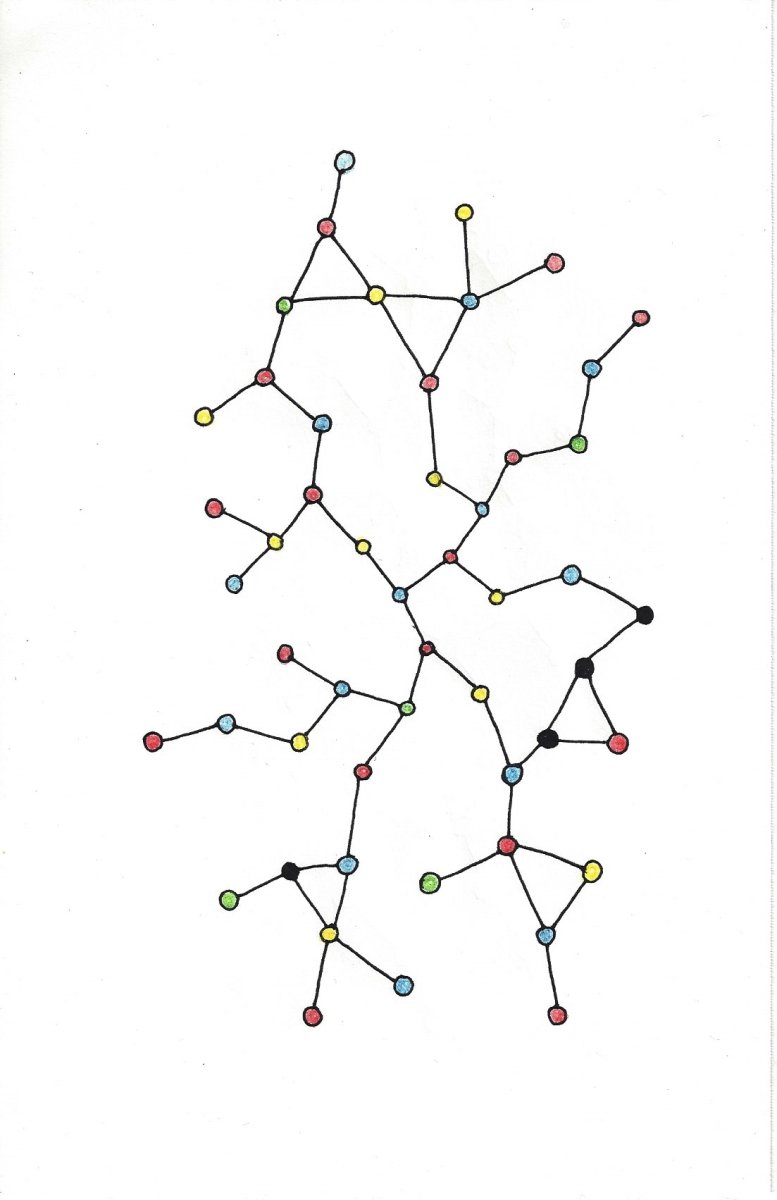
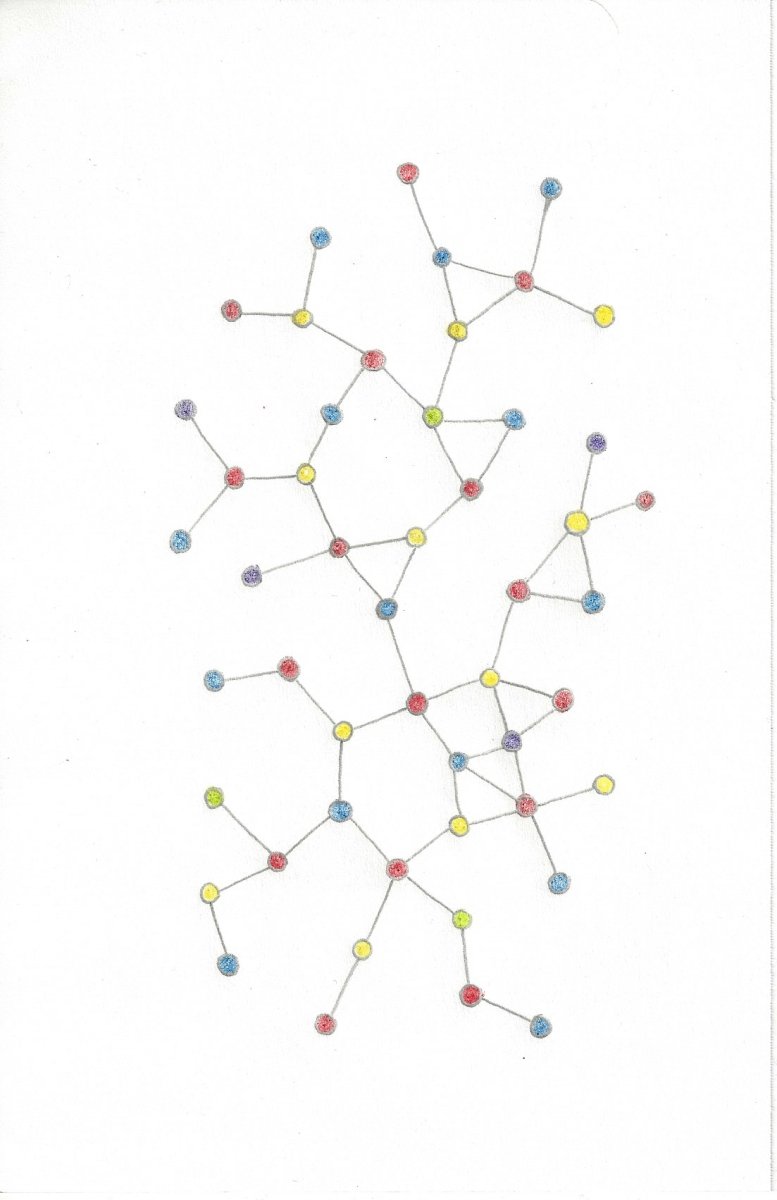
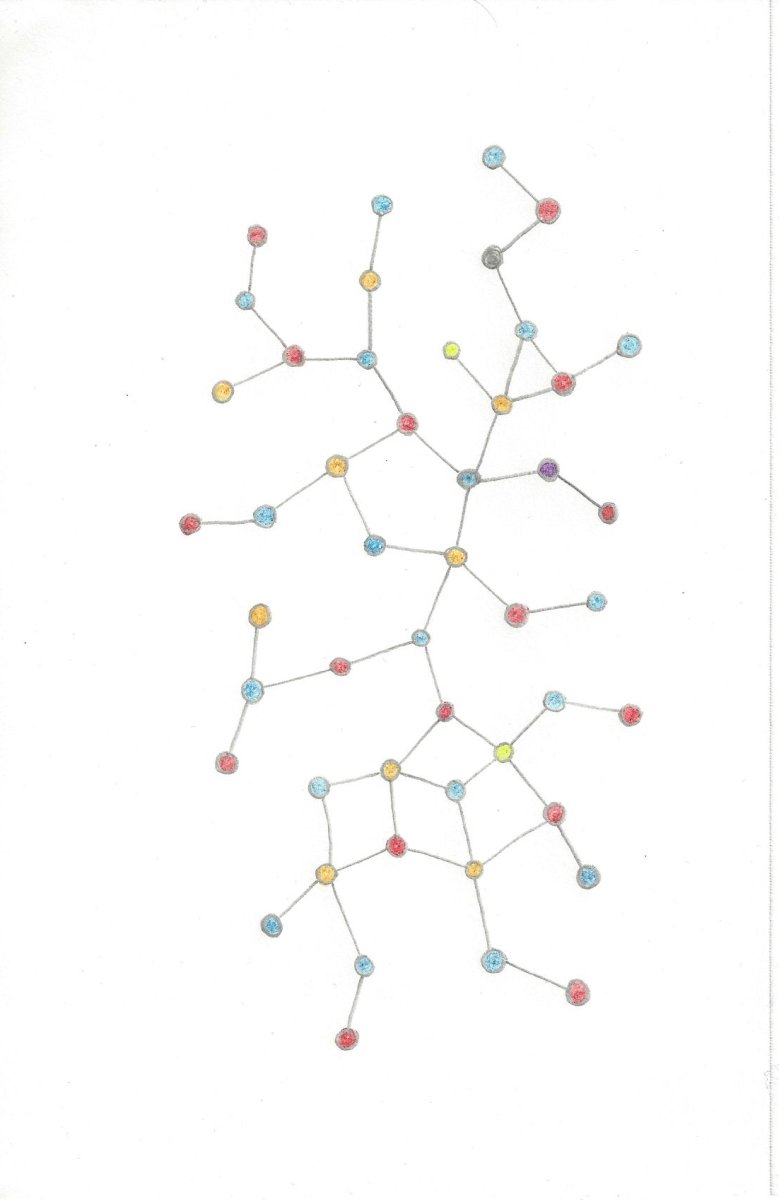
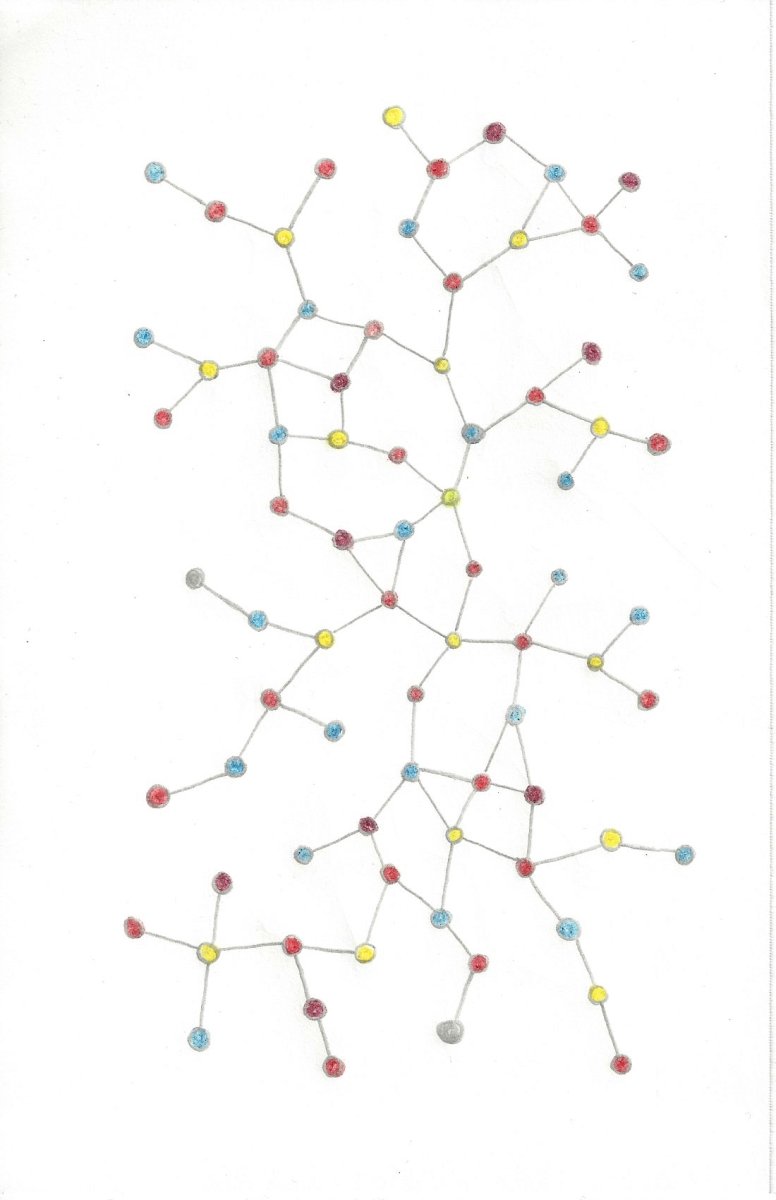
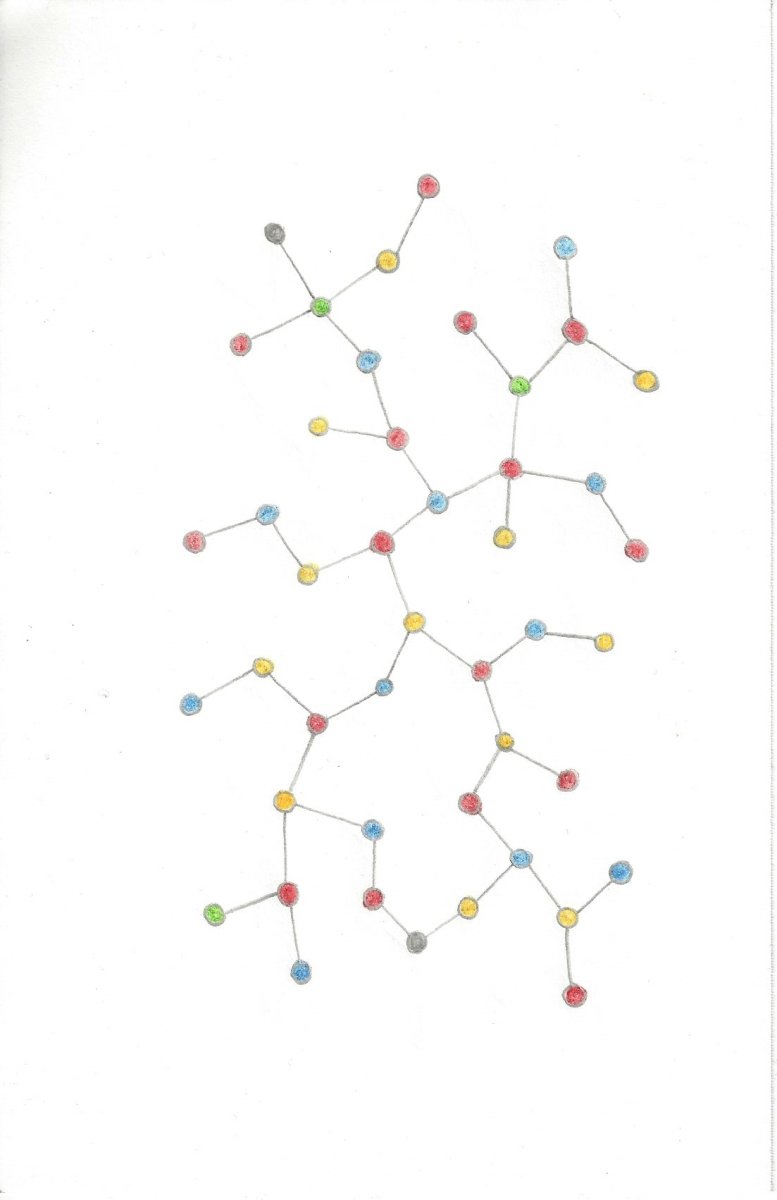
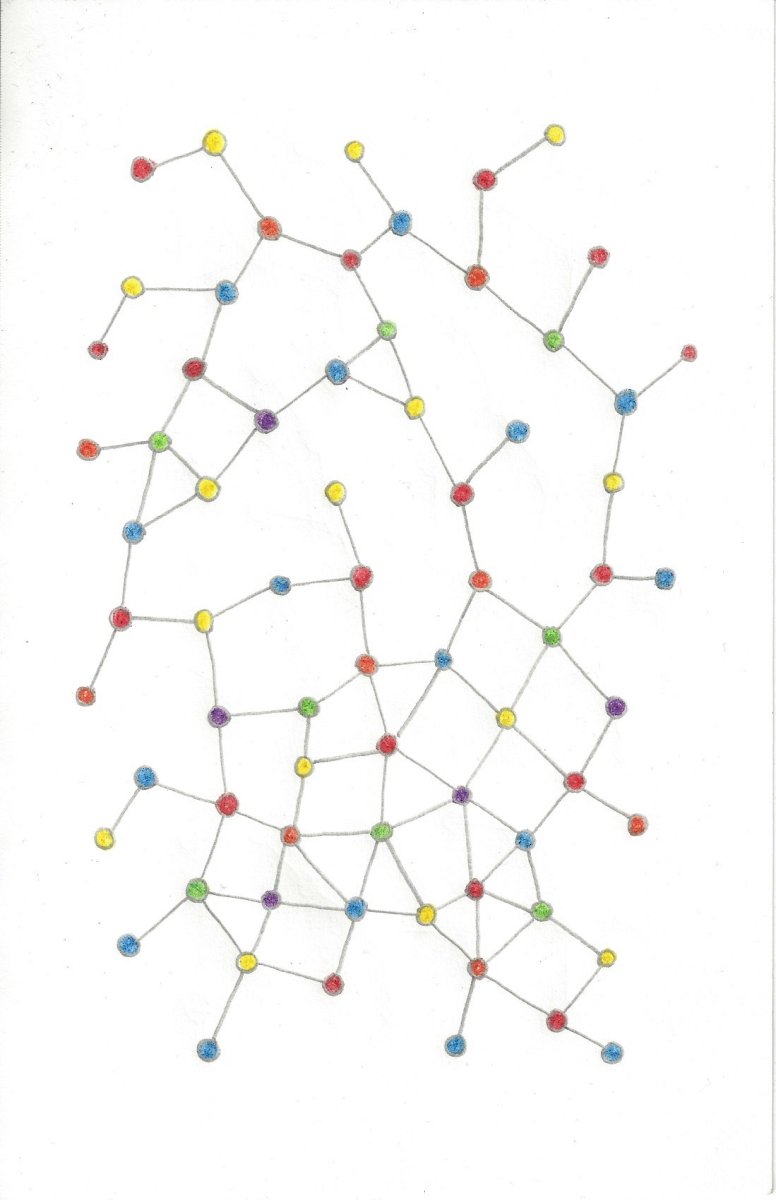
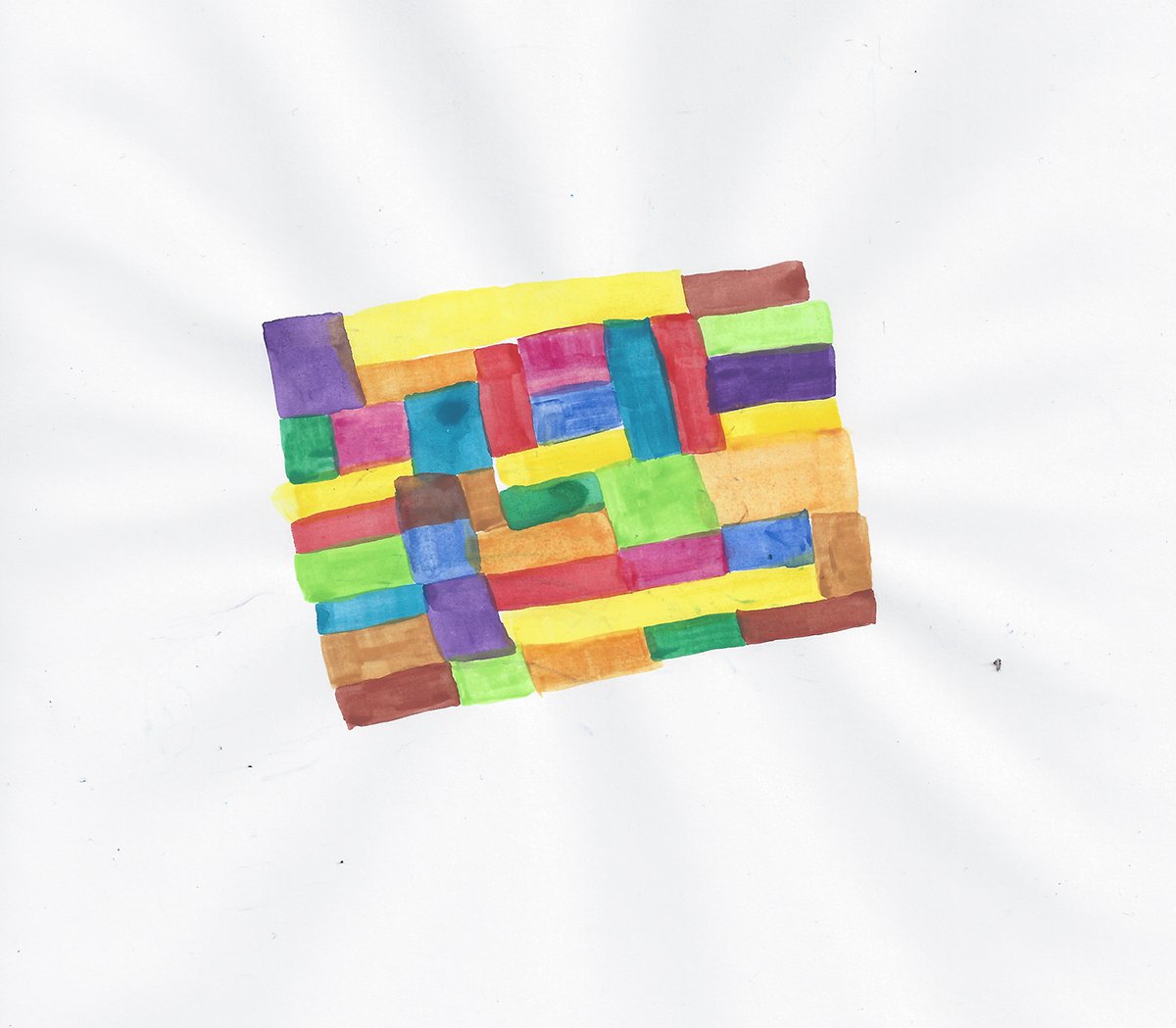
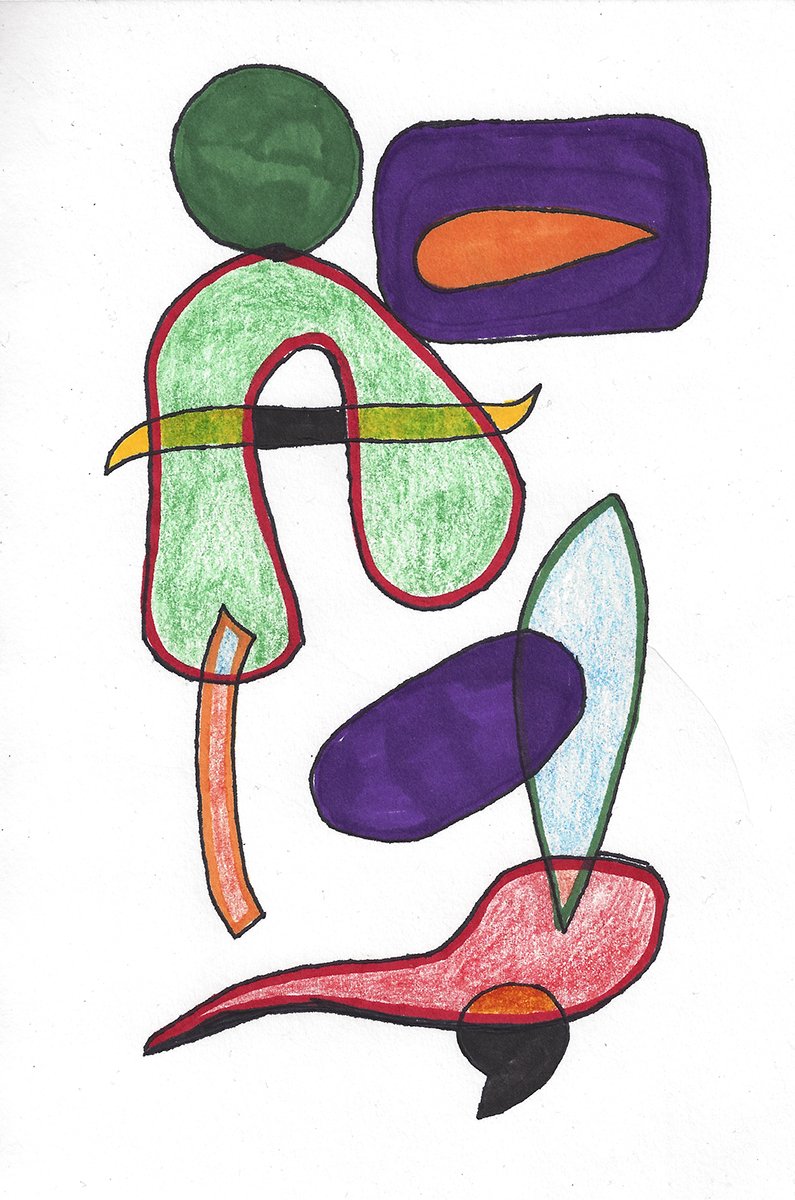
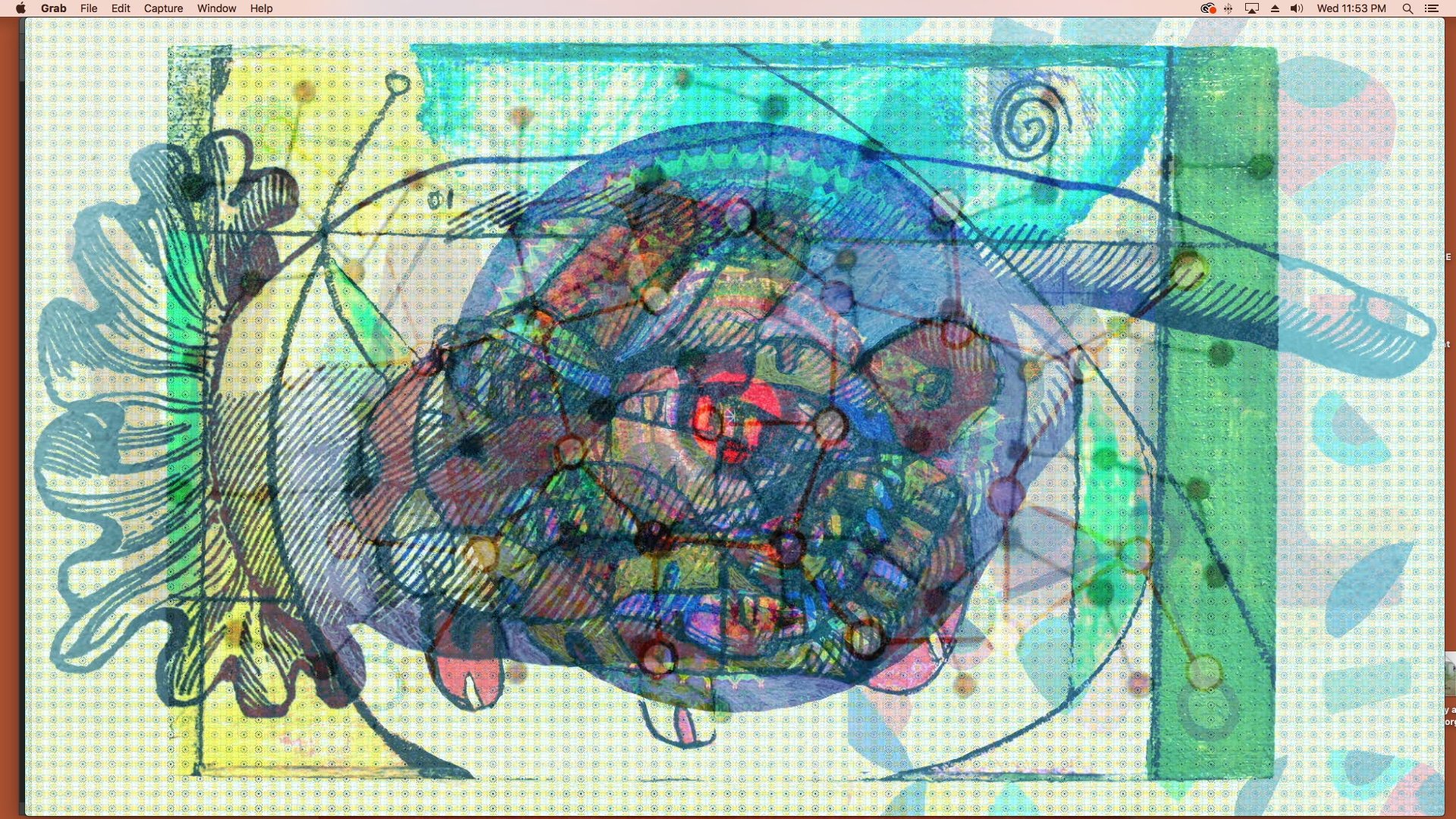
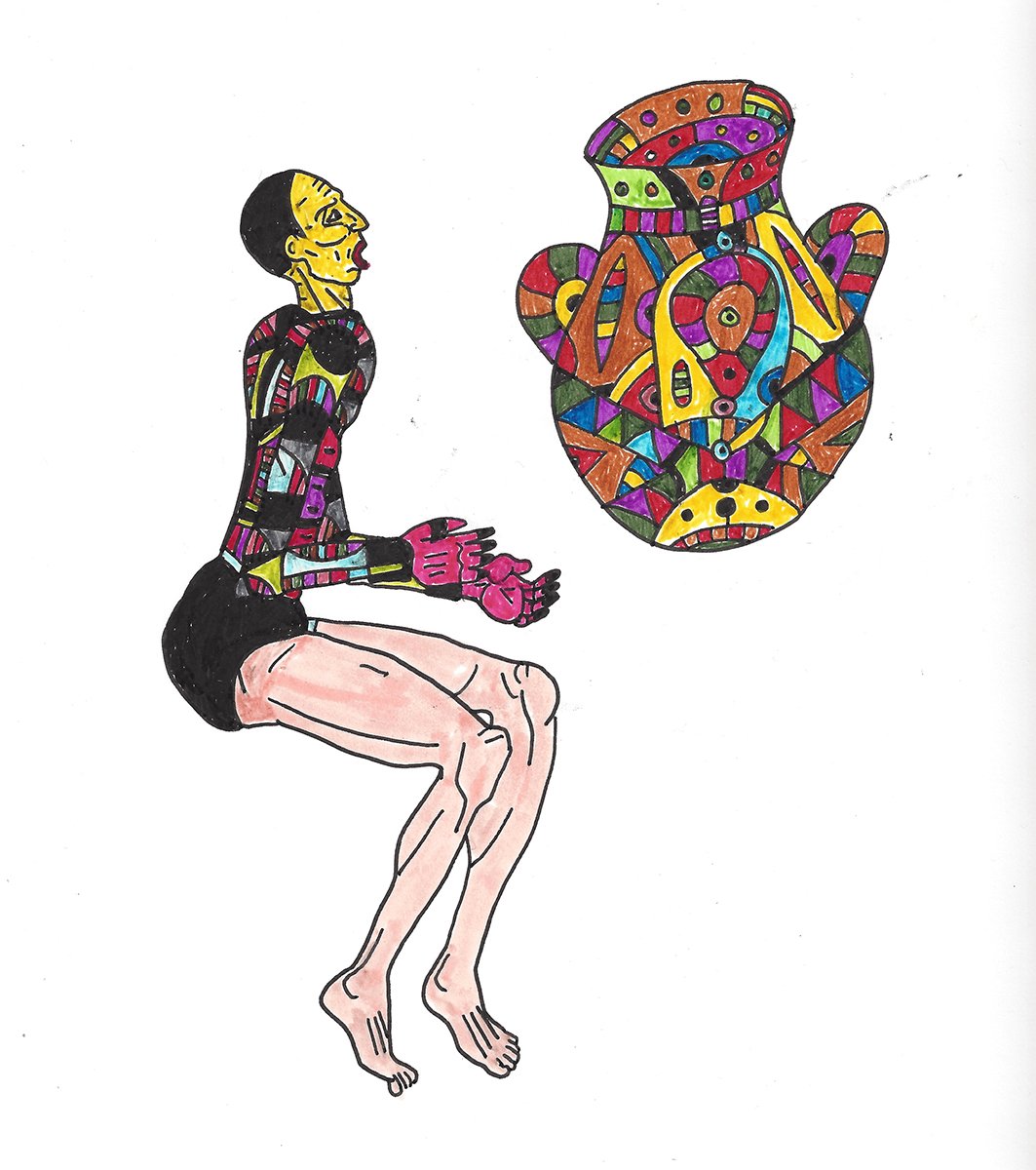
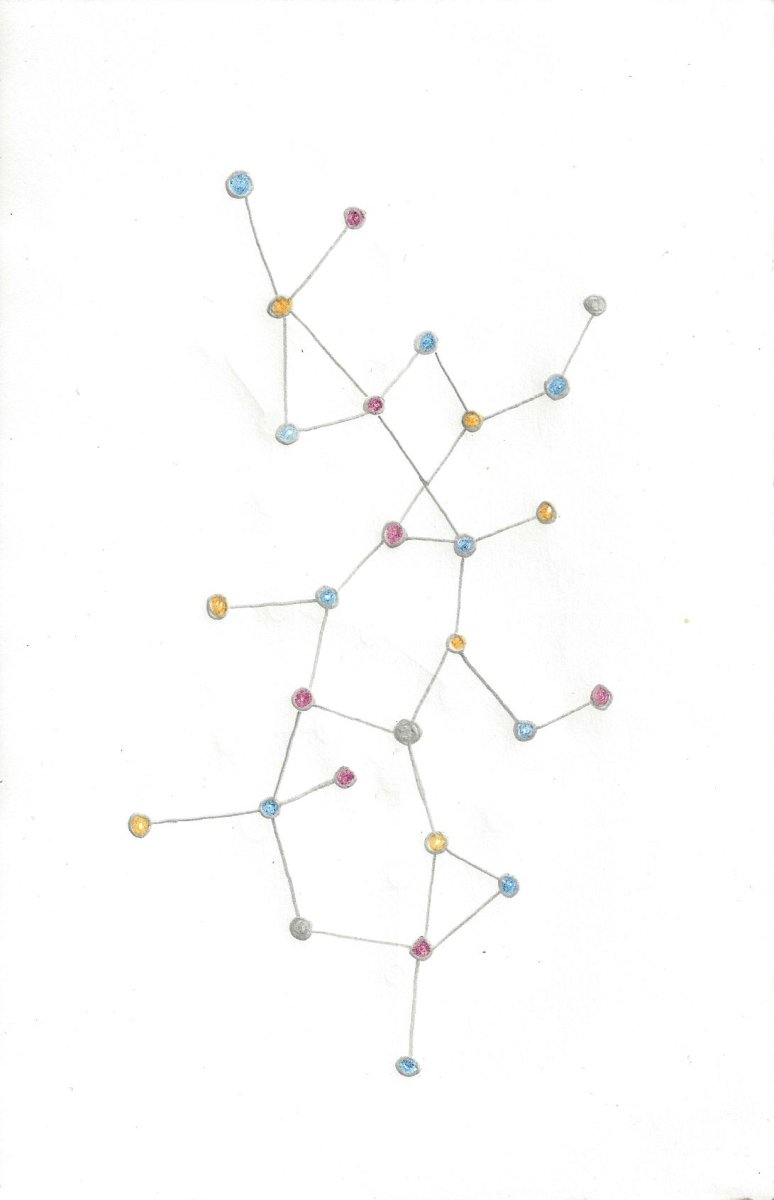
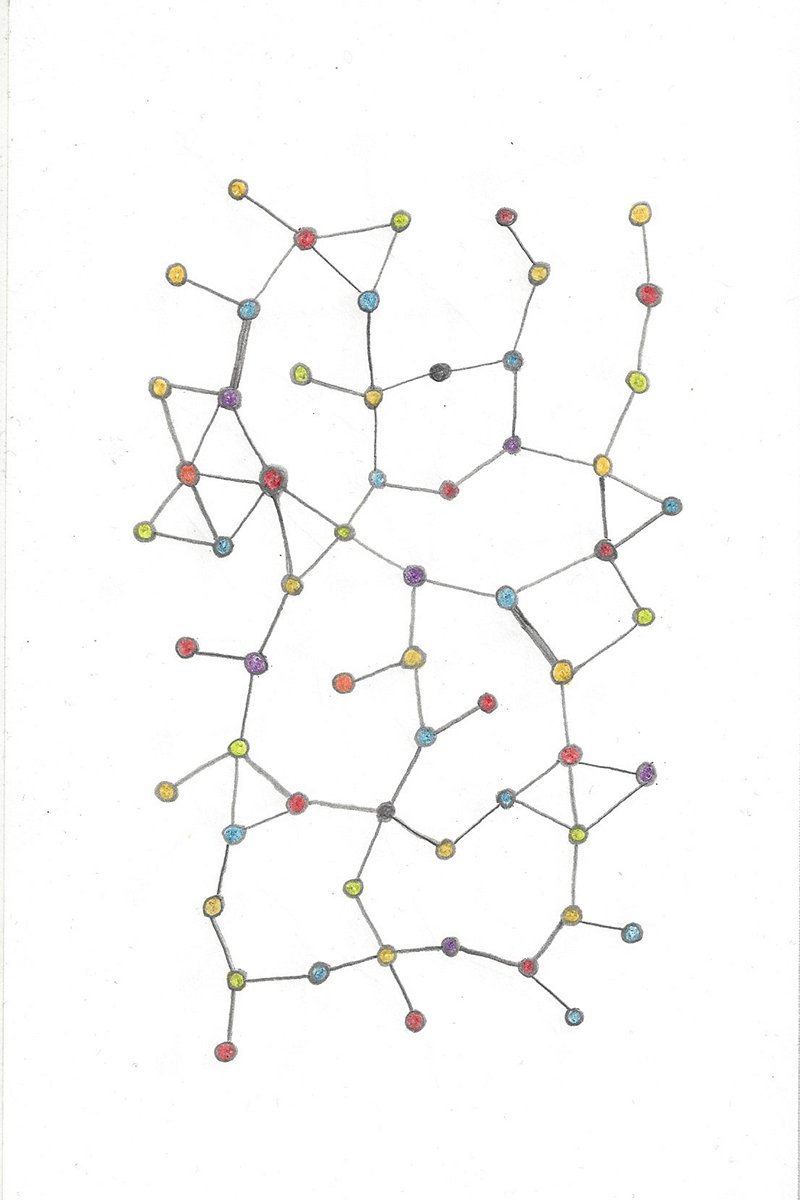
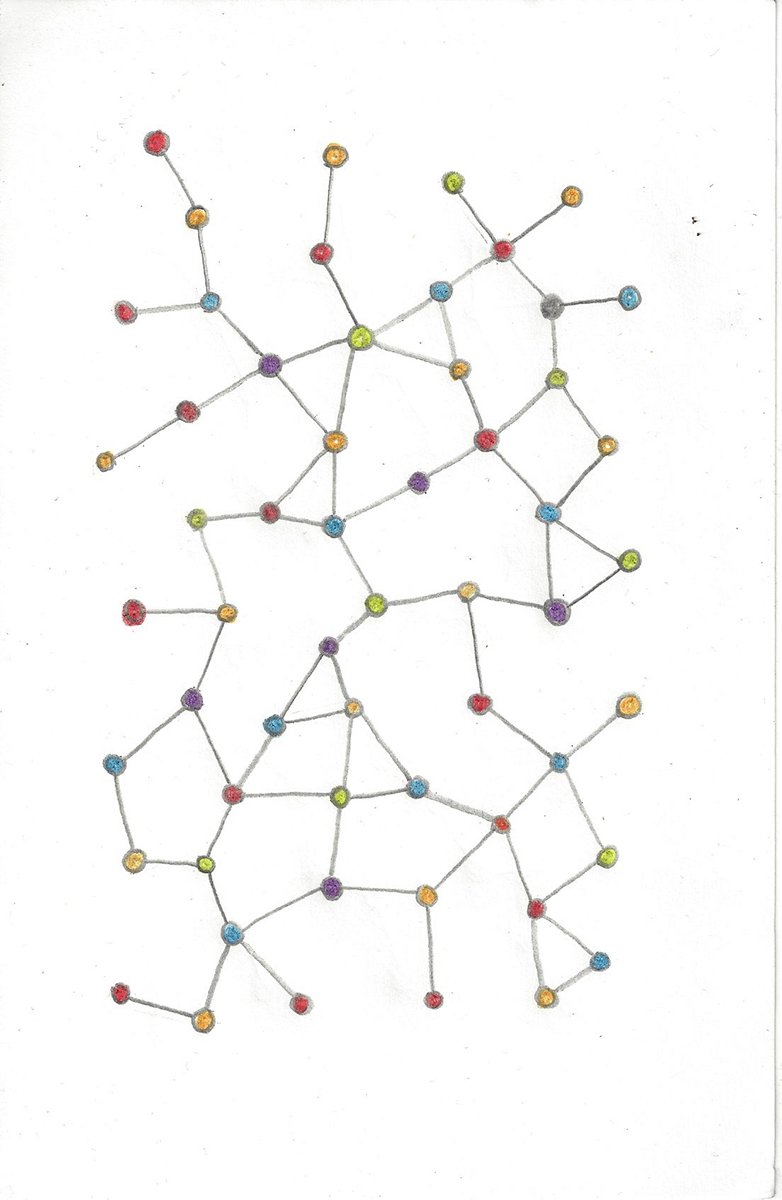
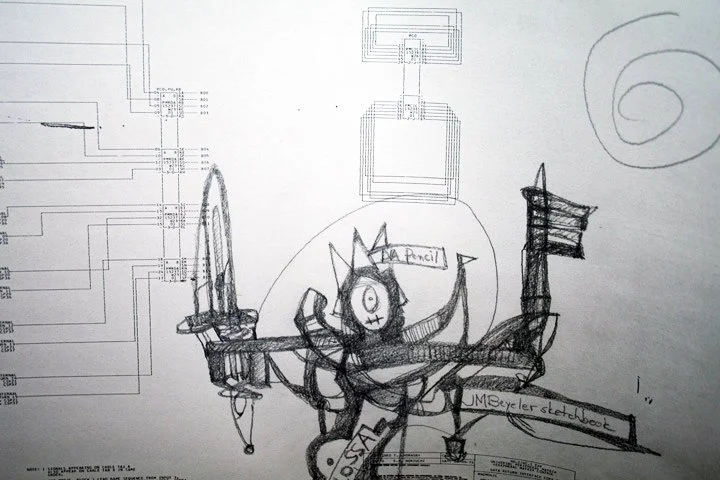
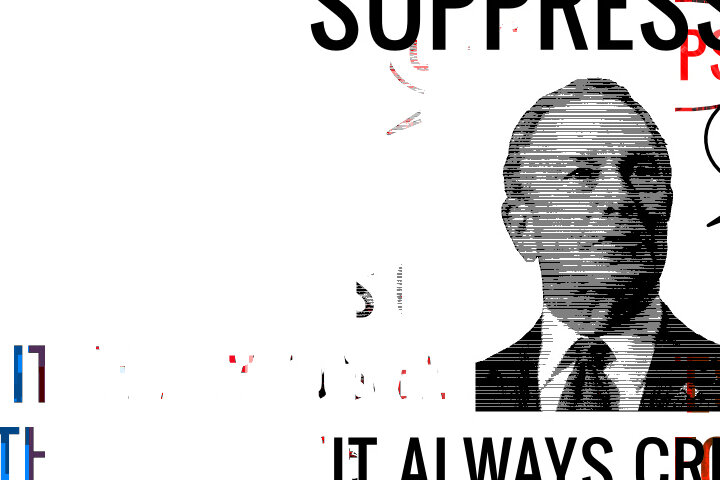
Screen capture from digital animation, “I don’t understand it” by Paul McLean for VALUBL OBJX.

INTRODUCTION

In VALUBL OBJX: Afterword [CODA], I explored the phenomenon of Post-Show Mode (PSM), a condition, I stipulate, that affects artists when their exhibit closes. In CODA, I will talk about the phase shift that follows PSM, which I will refer to as Post-Post-Show Mode (PPSM). PPSM typically involves the reformulation of the artist’s project, is future-oriented, is informed by the recent artist’s experience in and after the art “happening,” and other factors, some internal, within the artist, and others, external to art.

The metaphor of a flowering plant blooming, and the subsequent “death” and decay of the blossom, as part of a growth cycle is apropos. In nature, a regeneration cycle may peak with a beauty event, the objective of which fundamentally is creative exchange for life sustenance. Is art a cultural correlation? Does the metaphor still apply in the post-contemporary period? If so, how? If not, what has changed? Looking at PSM and PPSM from another angle, do we notice any evidence of art’s neutrality, perhaps a clue as to the quality or qualities of art in itself, which is to say, on its objective basis? We wonder if art has any real autonomy, from the artist, first, then from context and contingency, with respect to history, thought, time and place, etc. Is art itself an event form, and is such an object logical or evem reasonable?

PPSM foments this type of rumination. I would contend that the artist discourse, the oral tradition for art conducted by and through its producers and practitioners, accompanied by critics and the public, is exactly the proper format for the prospective narratives and dialogue that emerge from the exhibition format. The temporary versus permanent display of art emphasizes the shape of the word-based exchange that situates art at its center, and around which the talk and text circulate. I am thinking of Donald Judd and Jean Baudrillard here, the latter framing the matter in terms of appearance and disappearance. The making sense of art, over time and in time, its meaning, arises in the art object’s creation by the artist, dispersing as social, communal and public subject through our sharing it and sharing about it, a happening that is followed by a collective conversation - optimally, a diverse and educated one, although those conditions should never be mandatory. The formality of art is rooted in our event(-ually) observing and talking about it (art and everything else that “art touches”).

For an advanced treatment, the subject (art discourse) deserves a thorough dimensional analysis, which is beyond the scope of this project and accompanying text. In broad strokes, the infrastructure for examining the impact of art shows and their effects hardly exists in the post-contemporary. I superficially introduced the notion of artists being an endangered species in VALUBL OBJX: Afterword, as a prompt, but left it at that. In order to comprehend the displacement of fine art from its central position in Western cultural discourse, we would have to explore developments like: the emergence of industrialized commercial portable “art” over the last century; consolidation of media; the globally networked art market, concentrating on art fairs, a couple of dozen major galleries, the annualized expos, a few auction houses, linked museums, public and private collections, foundations and institutions, associated academic programs, high profile competitions and so on; the ubiquitous virtualization of all images and consequent channeling of attention on the Internet, especially in social media.

For a narrow study, the scope must be minimized, with a focus on the particular symptoms. To wit, an individual (living) artist and solo art show is nowadays usually about as visible as a sailor afloat at sea on a raft. Unless one happens to be one of the few hundred or thousand art stars who enjoy luxurious coverage in exclusive mediated territories, akin to gated communities, for and of the top-tier art world and its prime players. We talk about “albums” or “movies” the way major paintings and sculptures were discussed for a few centuries prior to the preeminence of electronic devices for content promotion and dispersion. Currently, cultural celebrity occupies the pinnacle of the attention hierarchy. It exists (celebrity, as such) in a constant state of disruption, almost entirely outside the traditional bounds of defined art, its purpose, meaning and applications. Famous artists are only identified as such for their viability in the creative industrial complex, in conformity with acceptable narratives, as determined by - whom? Celebrity is meretricious. It is not achieved through any referendum or consensus aligned with democratic ideals, ethics or logic. Free speech and art, for instance, are obliquely and incidentally related, and now bracketed in tandem with money and property. Unsurprisingly, very few people are passionate about discussing art price tags, and an artist’s net worth.

So where does one go to talk about your show, after the art is de-installed and returns to the studio, if it remains unsold or is not traveling to another destination? Over the course of my career I have had the good fortune to participate in vigorous, active art communities. I found one in Santa Fe in the late 80s and early 90s. In Nashville, on both sides of Y2K, we established a high-performing multi-disciplinary creative collective, which effectively gelled at a critical moment in a fertile environment. In Austin in the mid-2000s. At Occupy Wall Street. I have been aware of others, located both online and IRW. Art history is rich with examples, over the past several centuries. In the post-contemporary era, the concept of the artist community is as indefinite as art itself.

Why is this a problem? Because effectual comparison among the disparate art modalities is presently impossible - by design. Is Meow Wolf an art community or a corporatized simulation? Do Zoom calls suffice as a form of artist assembly? Responses to the Pandemic need to be critiqued, because they affected art discourse in very specific, if not unique, ways. Conversely, the forces that bear against the formation of strong community - economic, political and social - also oppress the mechanisms by which communal culture is fomented. To be precise, we must address the systematic techniques, ideologies and enforcement tools by which the individual is dislocated from community. We must also recognize who in particular benefits from that dislocation, and why they would pursue that outcome. Art is weirdly situated, so that it can be linked to most anything and everything, but has little or no capacity to alter Civilization’s course and contours.

Or at least, that is just the sort of presumption an artist’s mind projects on the thinker-artist who’s in the latter stages of PSM, that is, in the grip of the maudlin variant of PPSM. One might better be served by walking through a field of wild flowers on a sunny late summer, early fall day, thinking about nothing at all, rather than entertaining grim assumptions about the state of the art and one’s place in it, while navigating the psychic trough that PSM/PPSM can be.

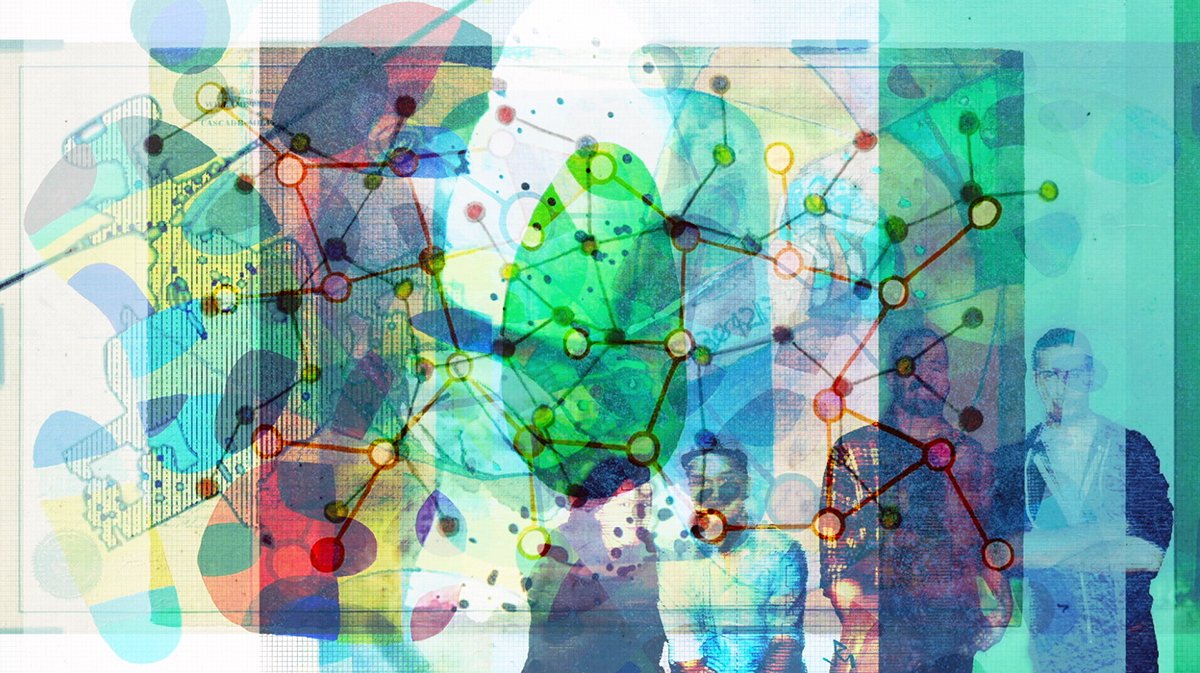
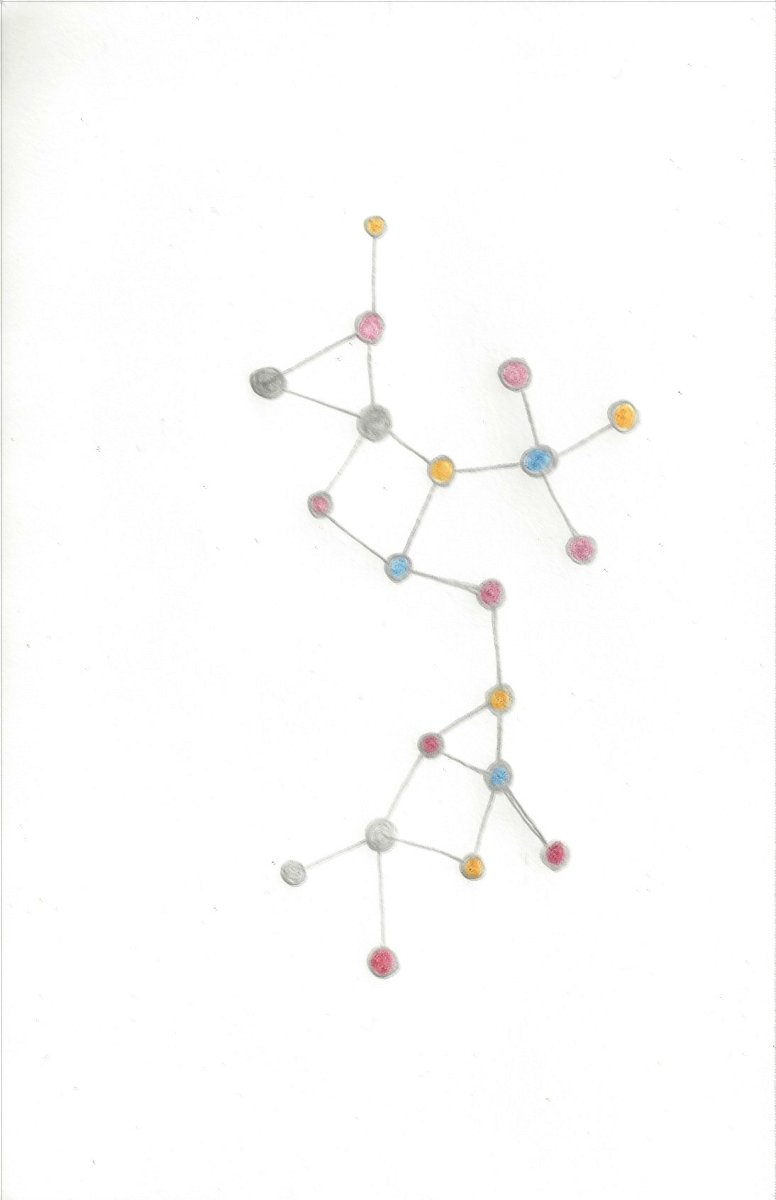
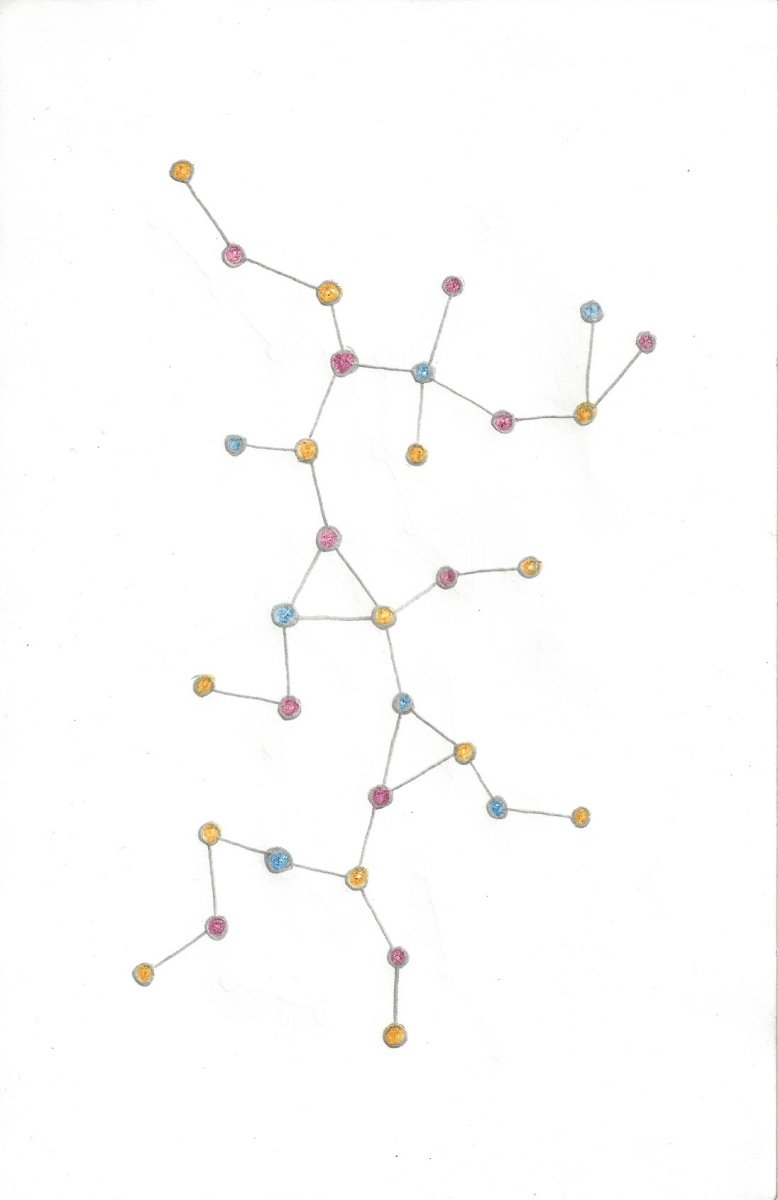
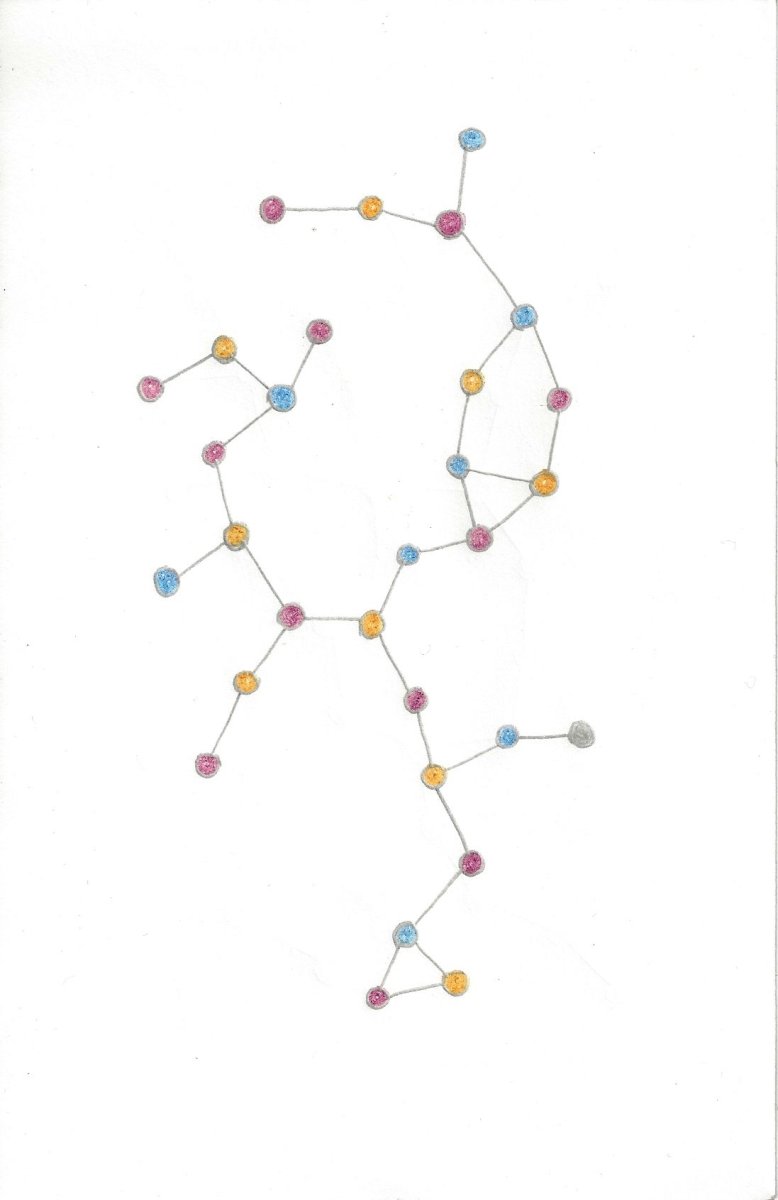
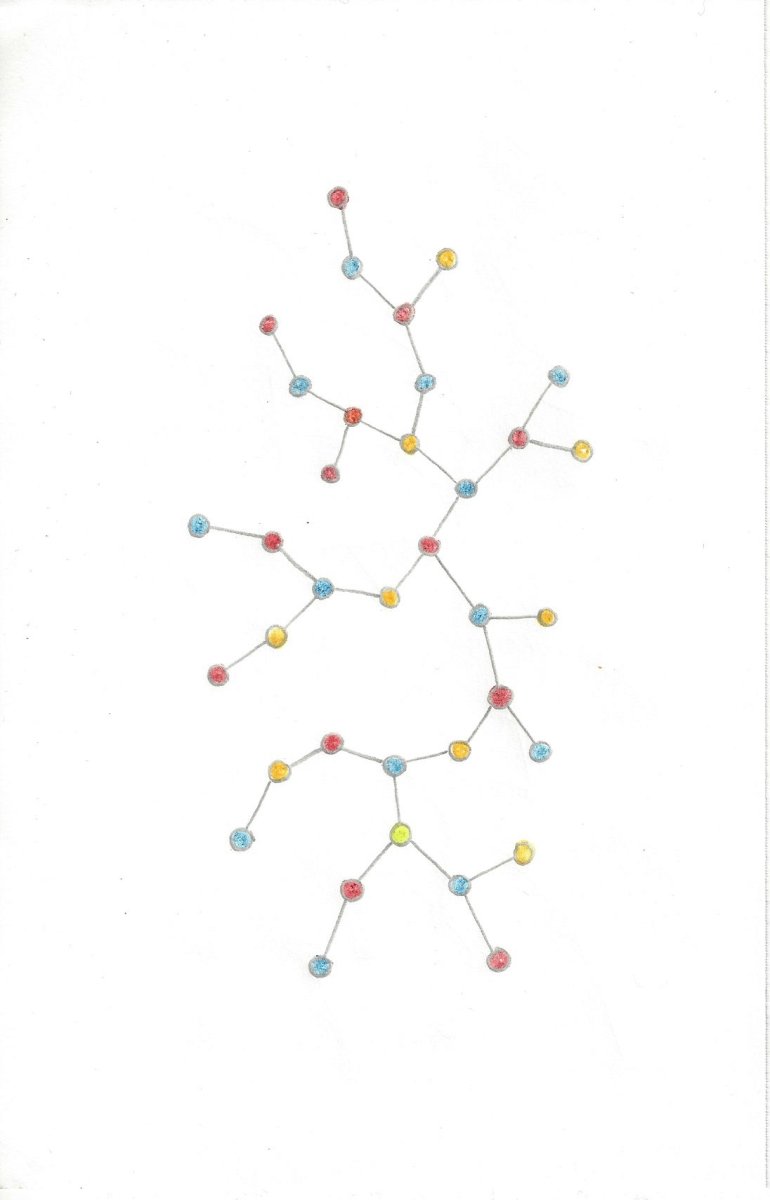
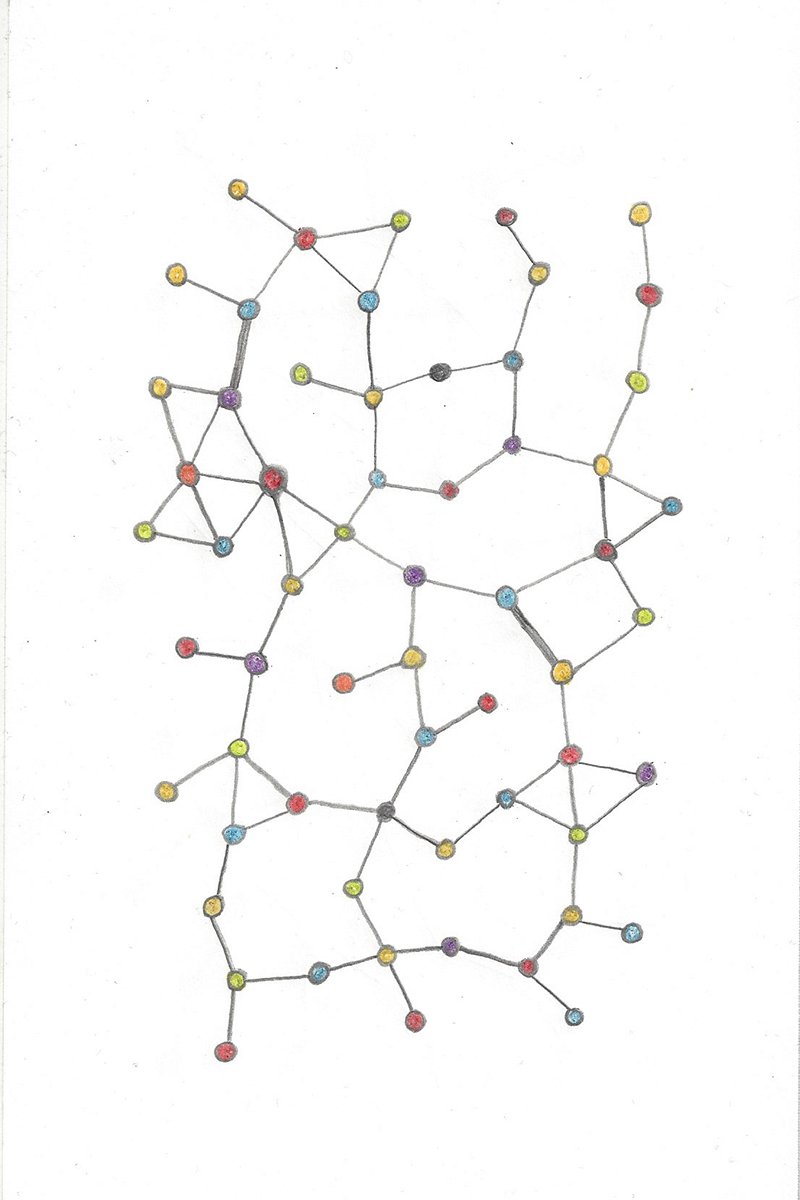
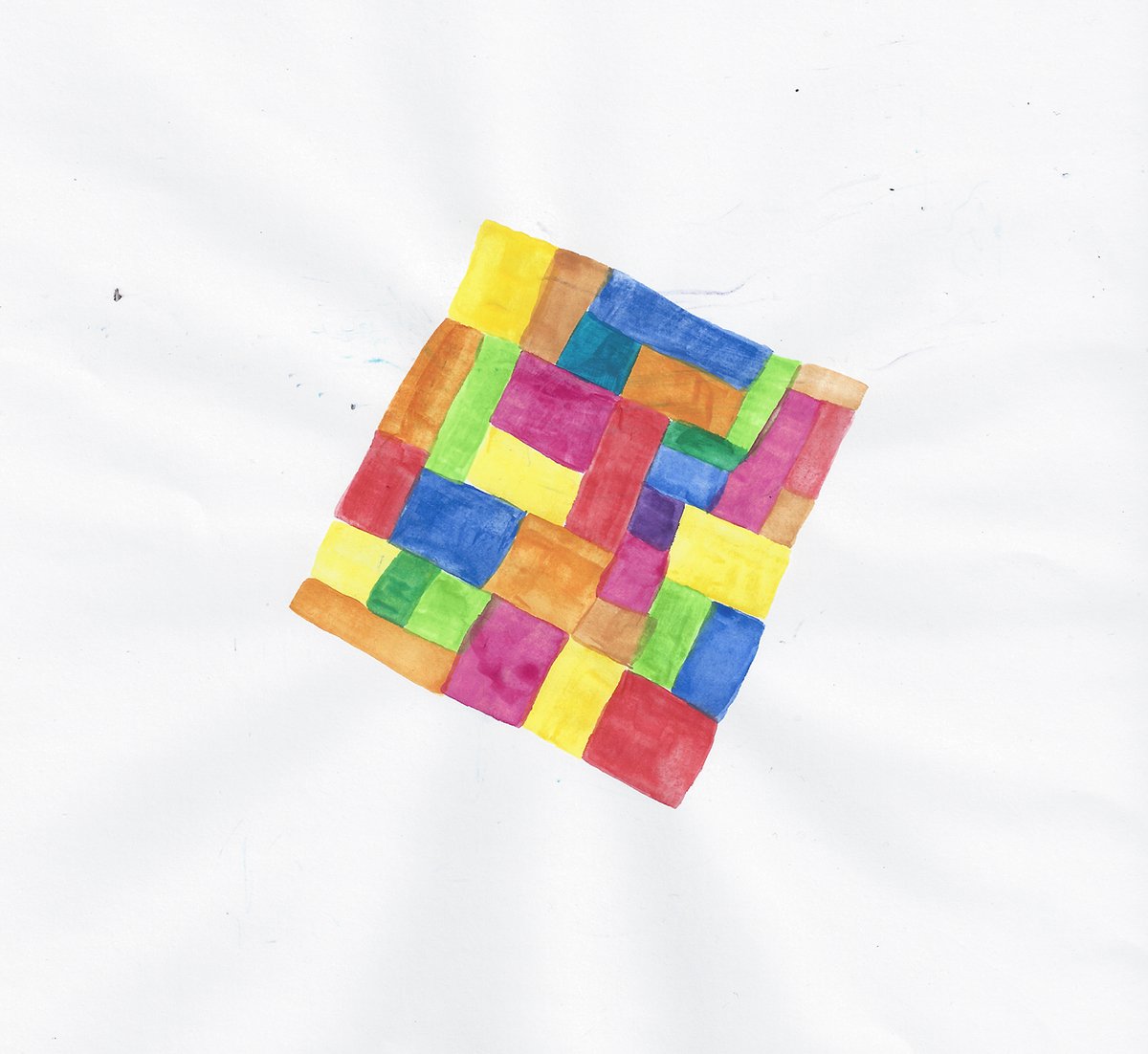
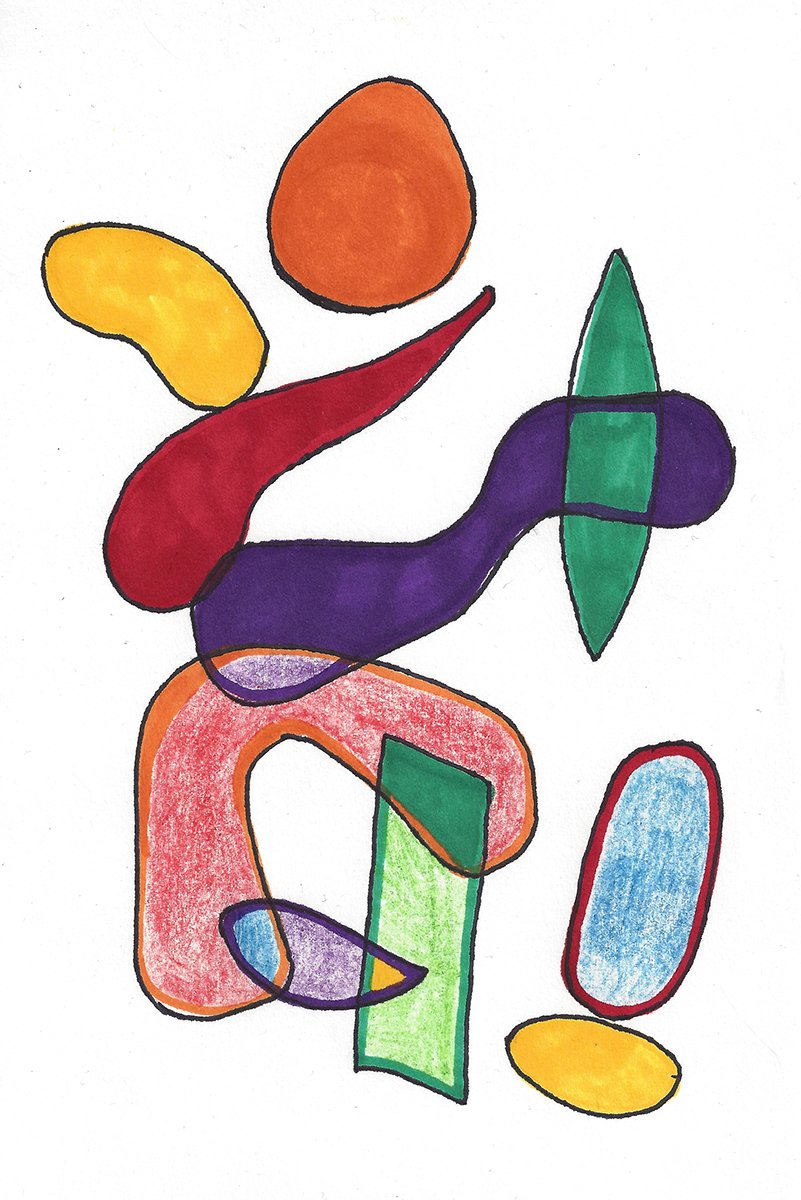
Screen capture from digital animation, “I don’t understand it” by Paul McLean for VALUBL OBJX.

ABOUT THE ART

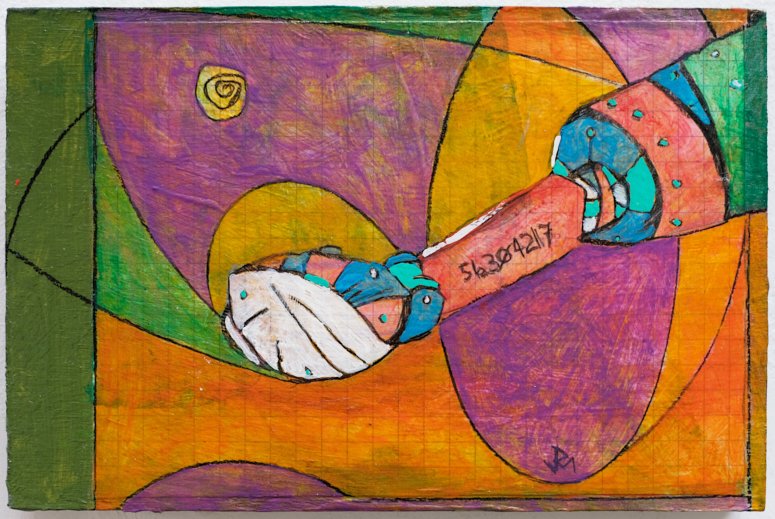
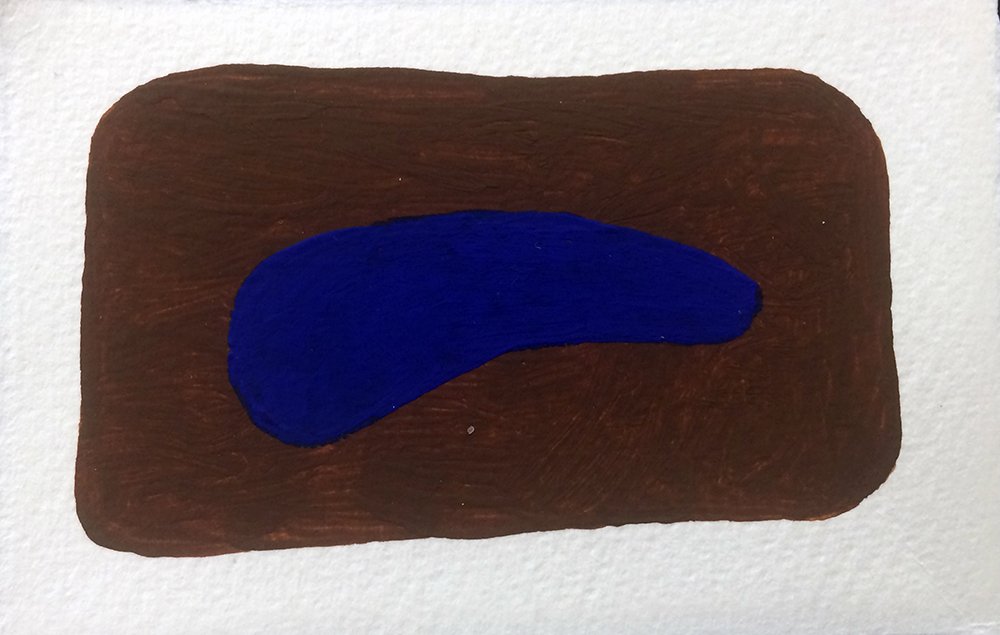
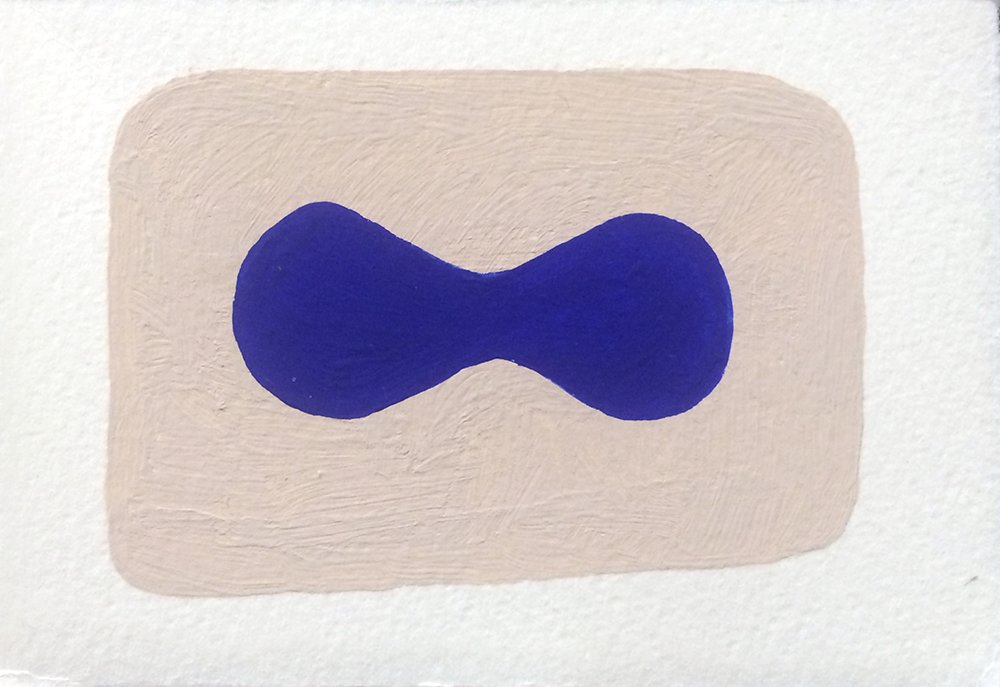
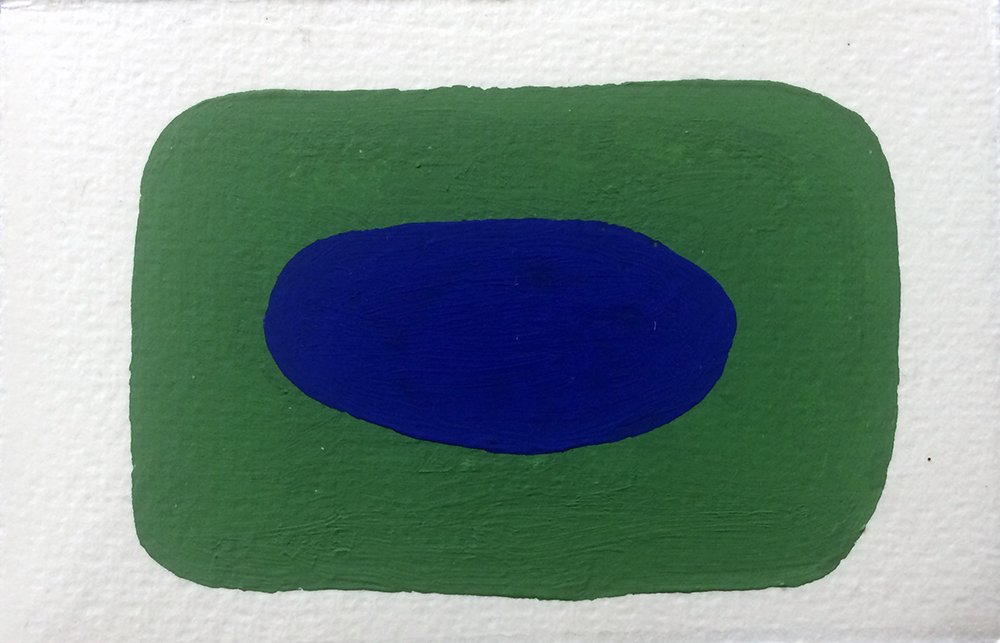
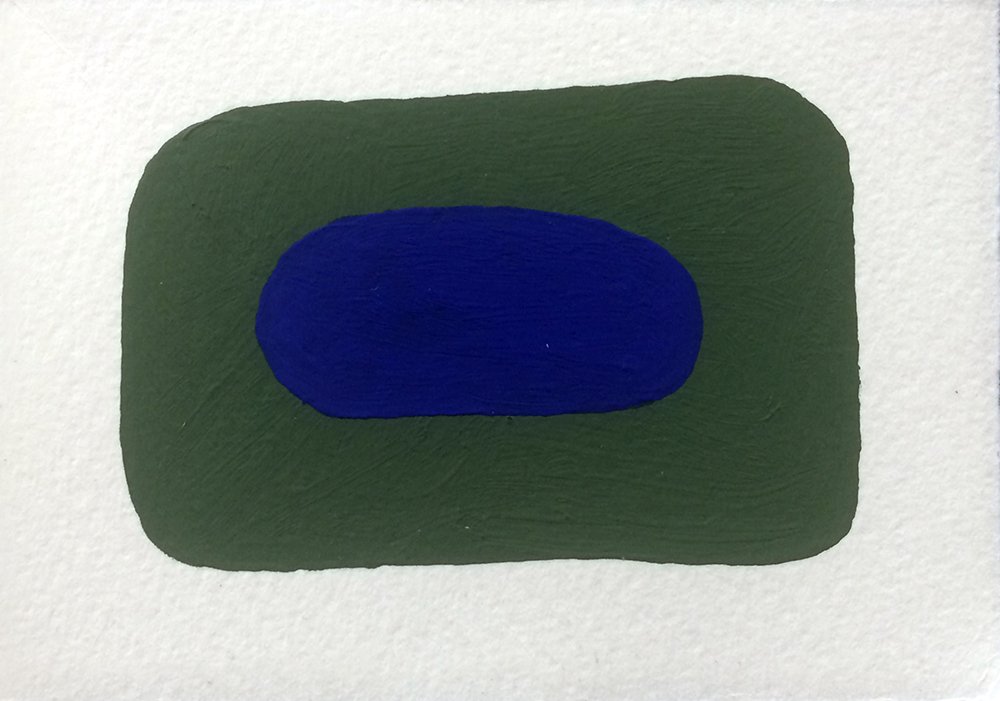
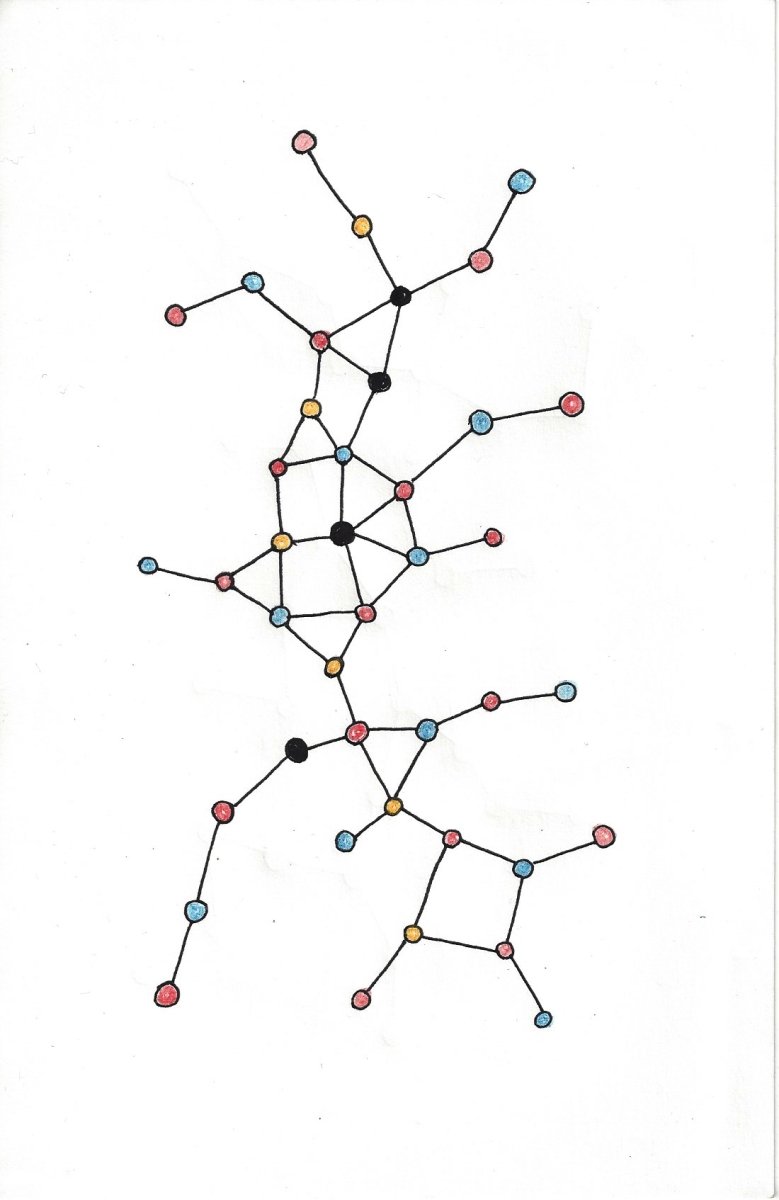
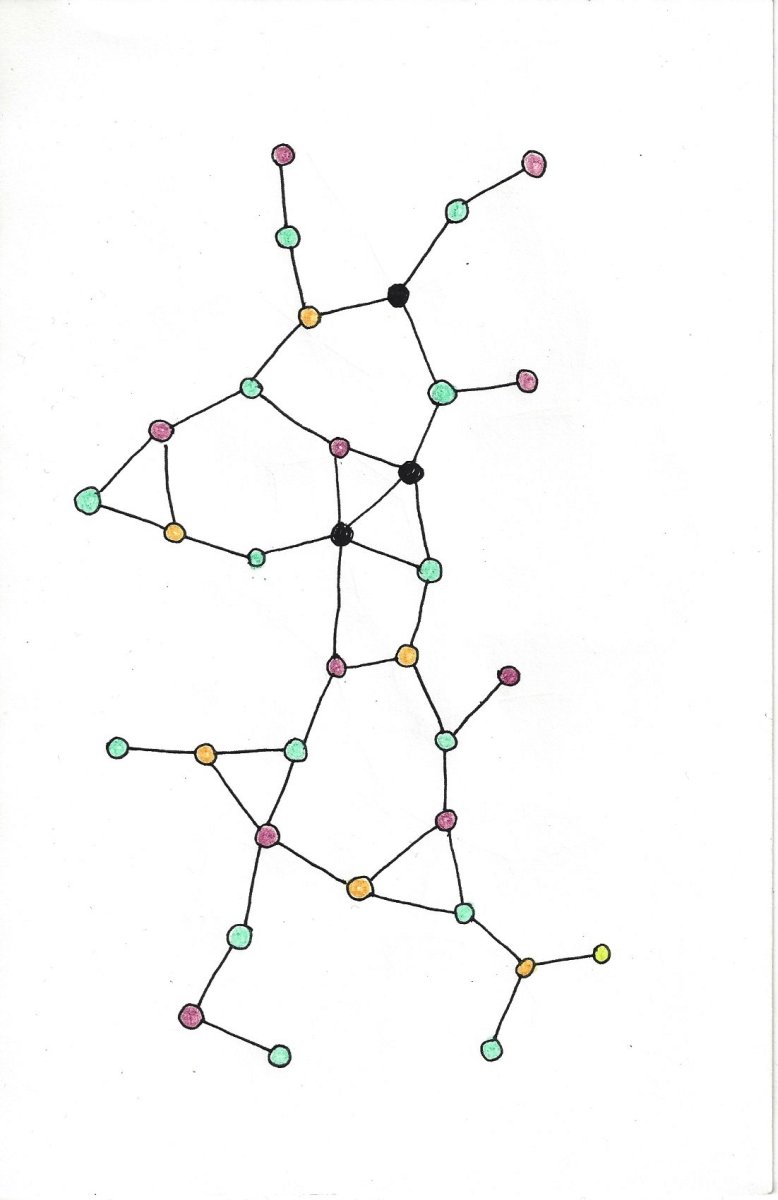
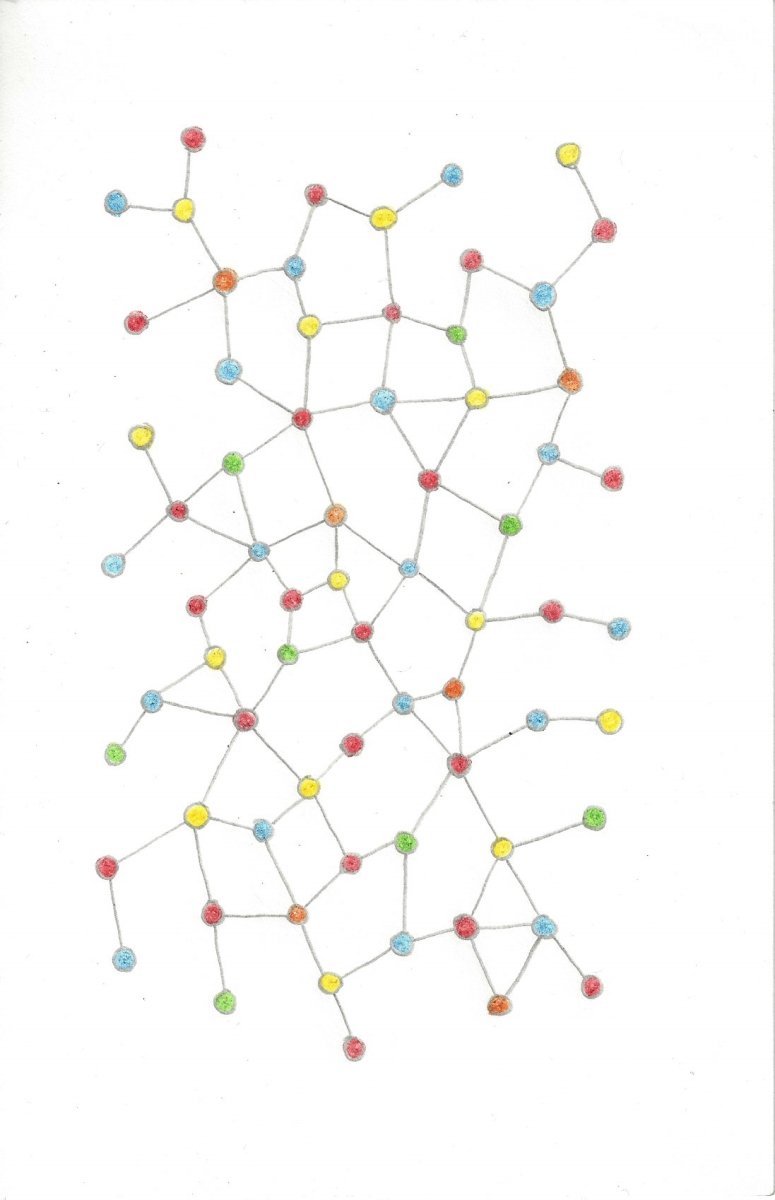
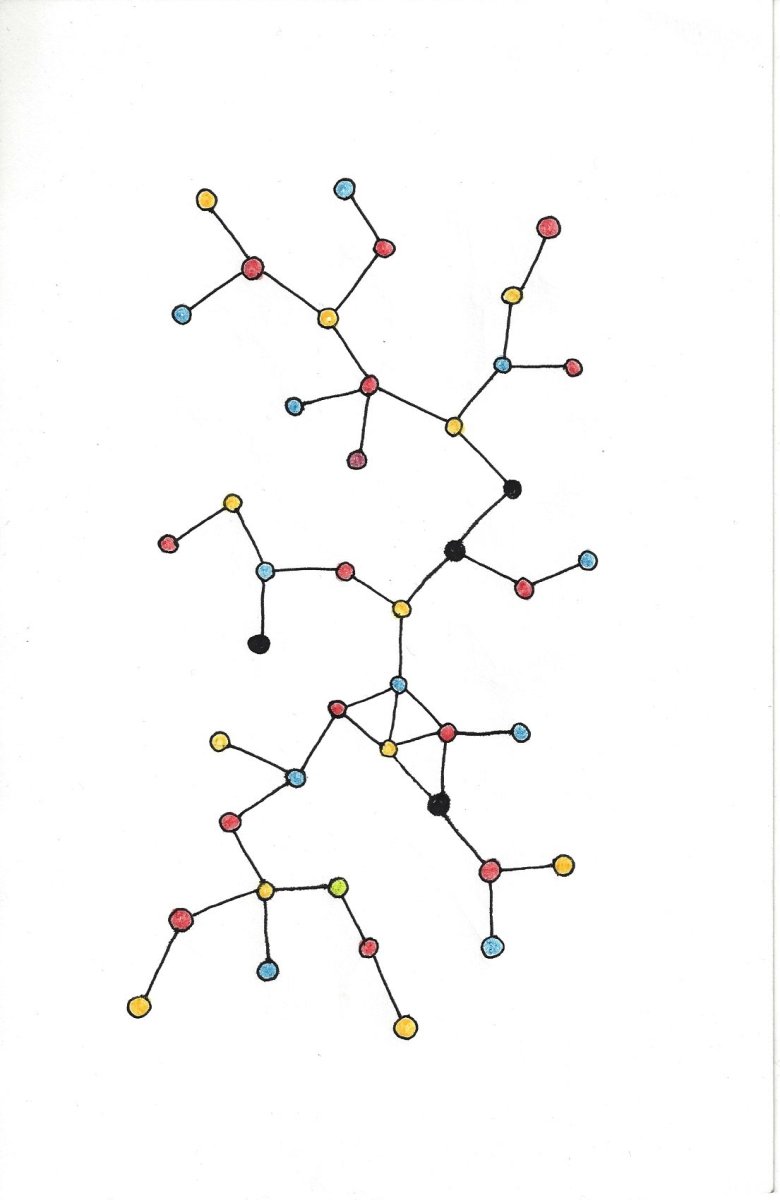
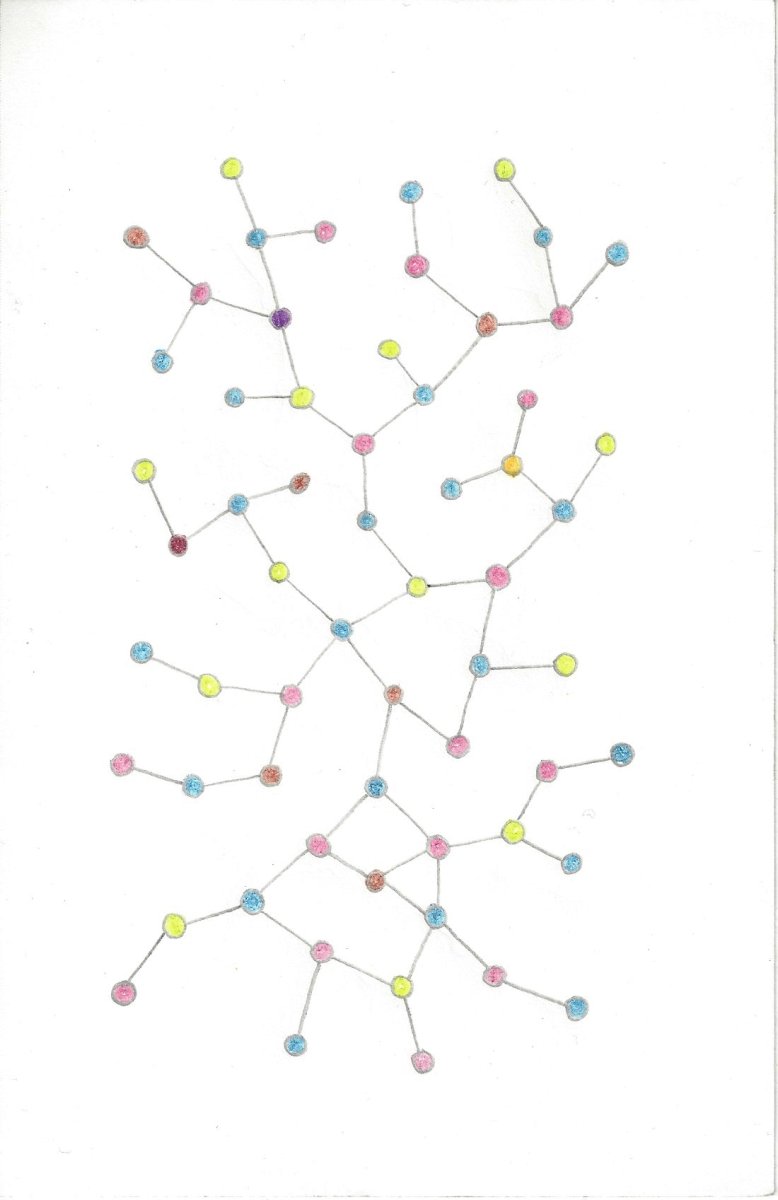
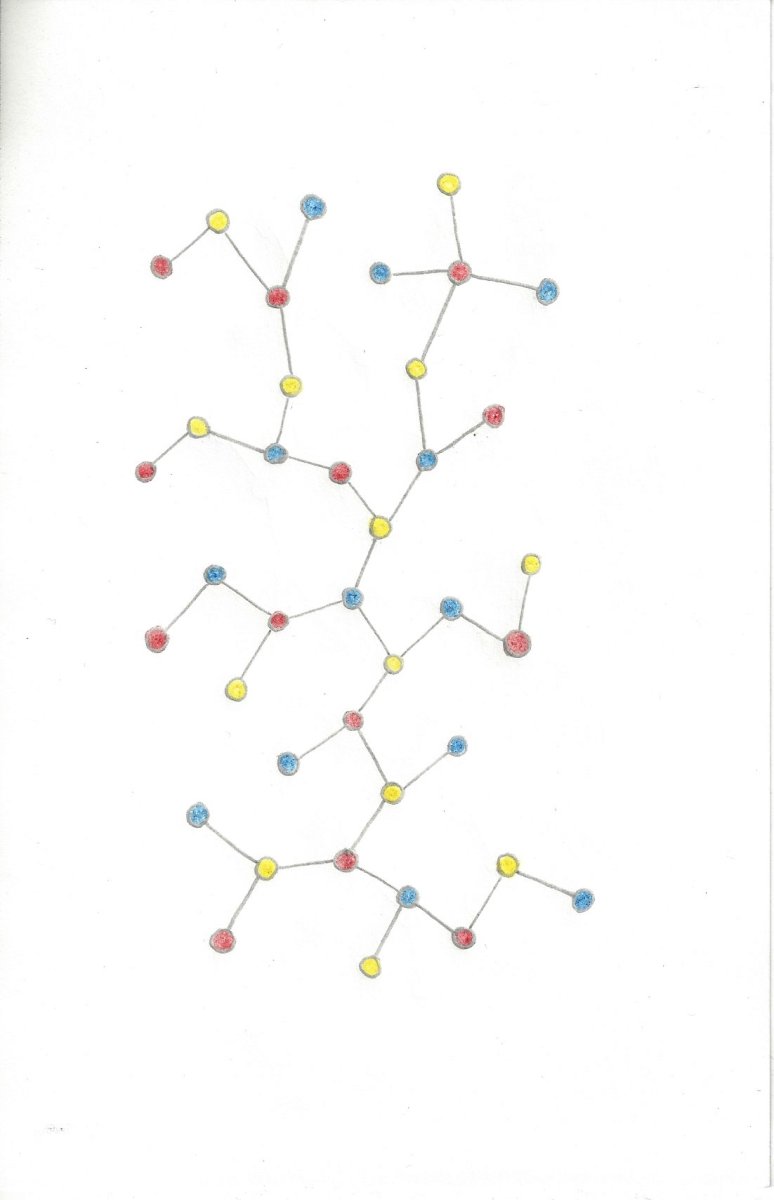
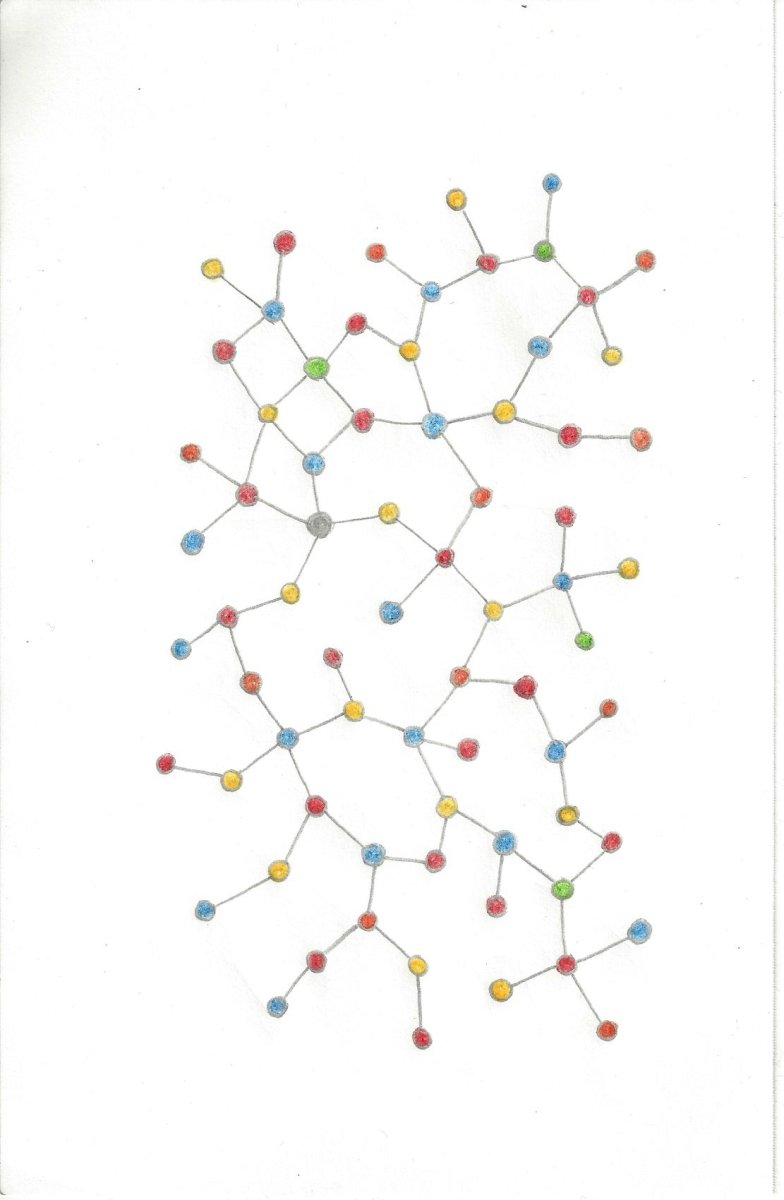
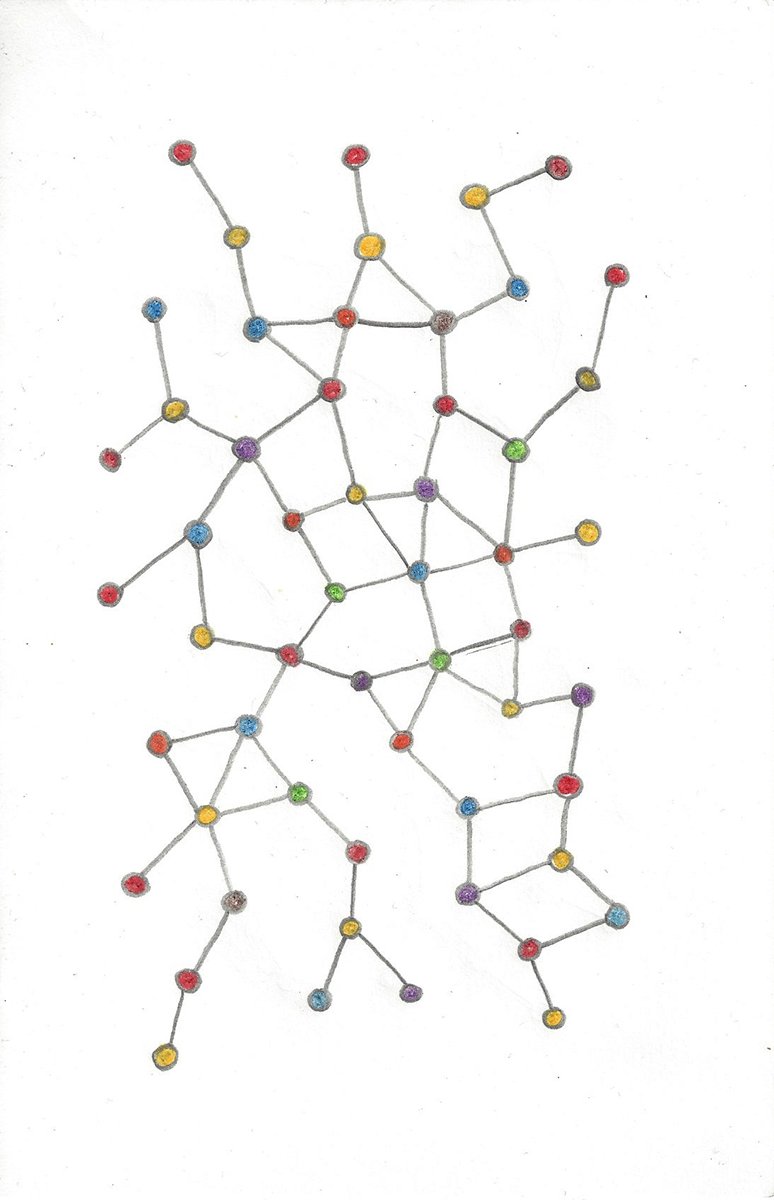
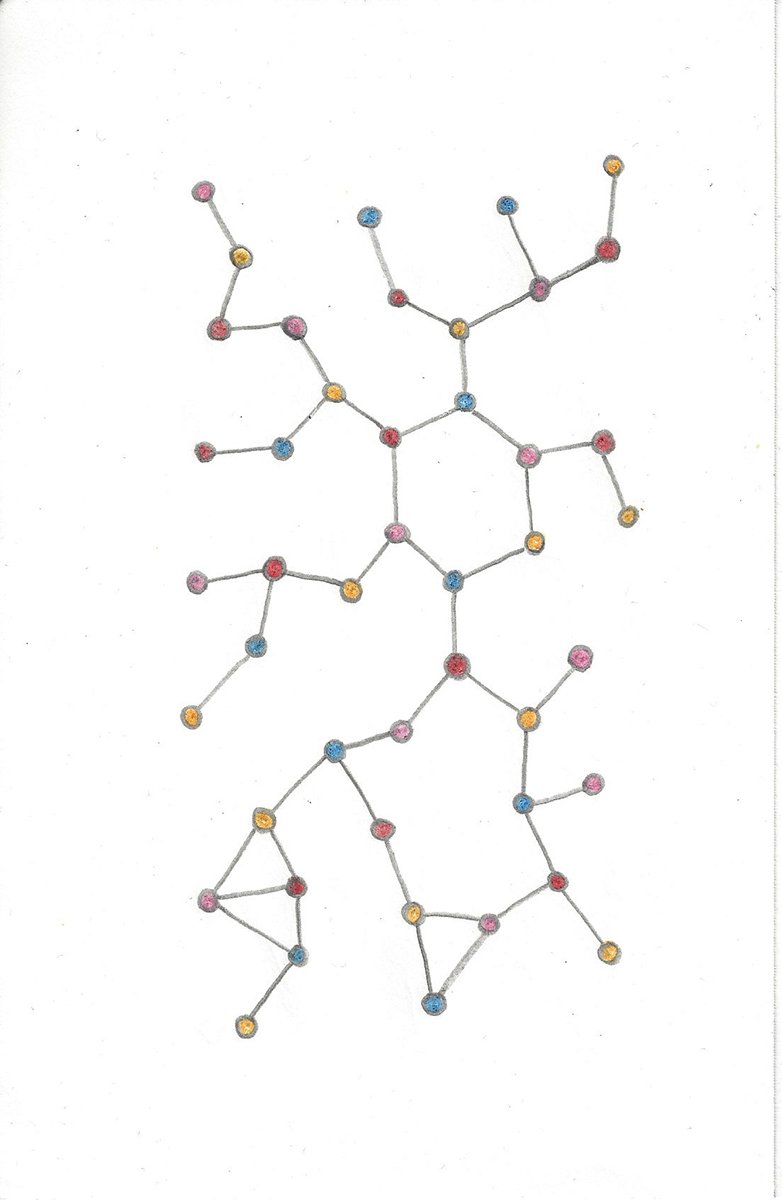
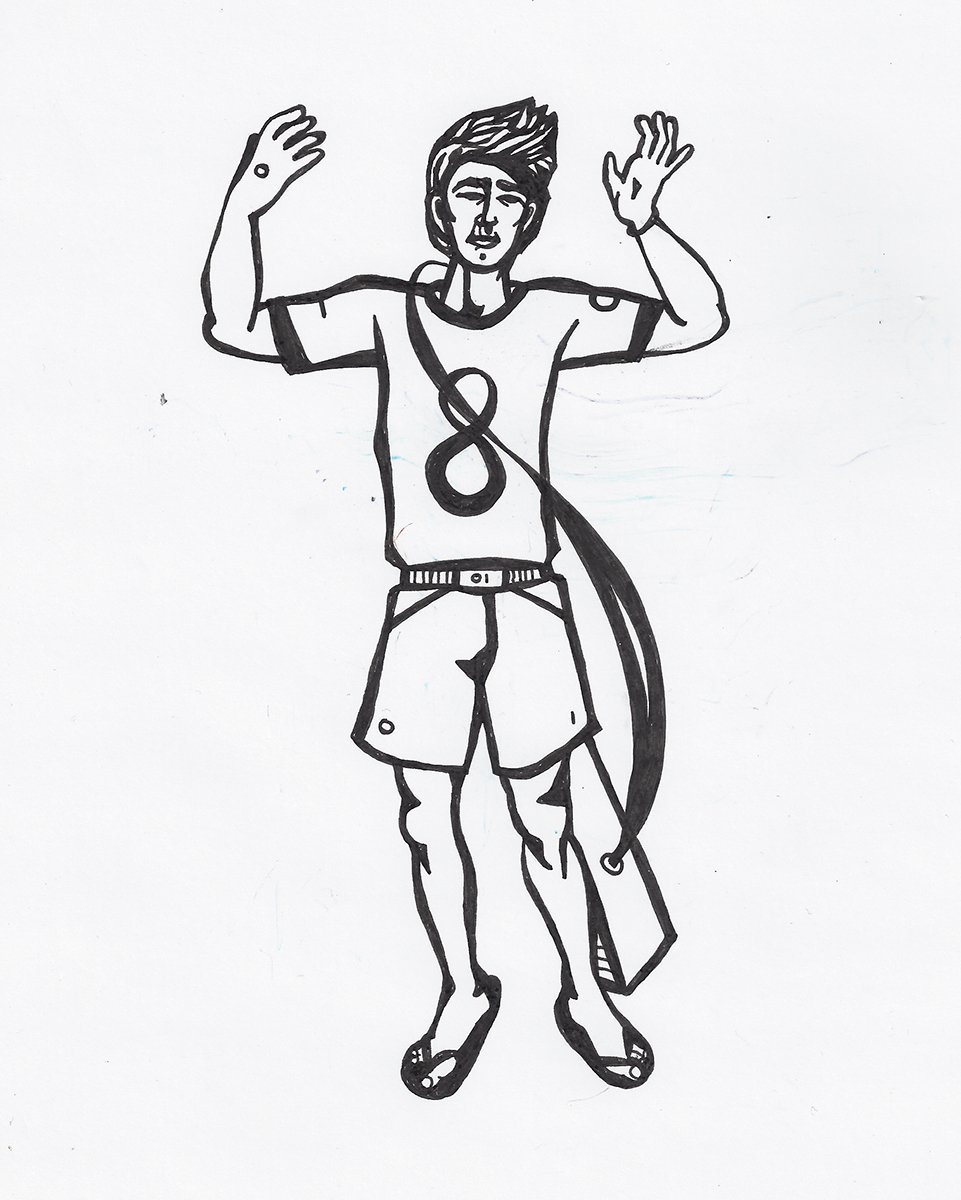
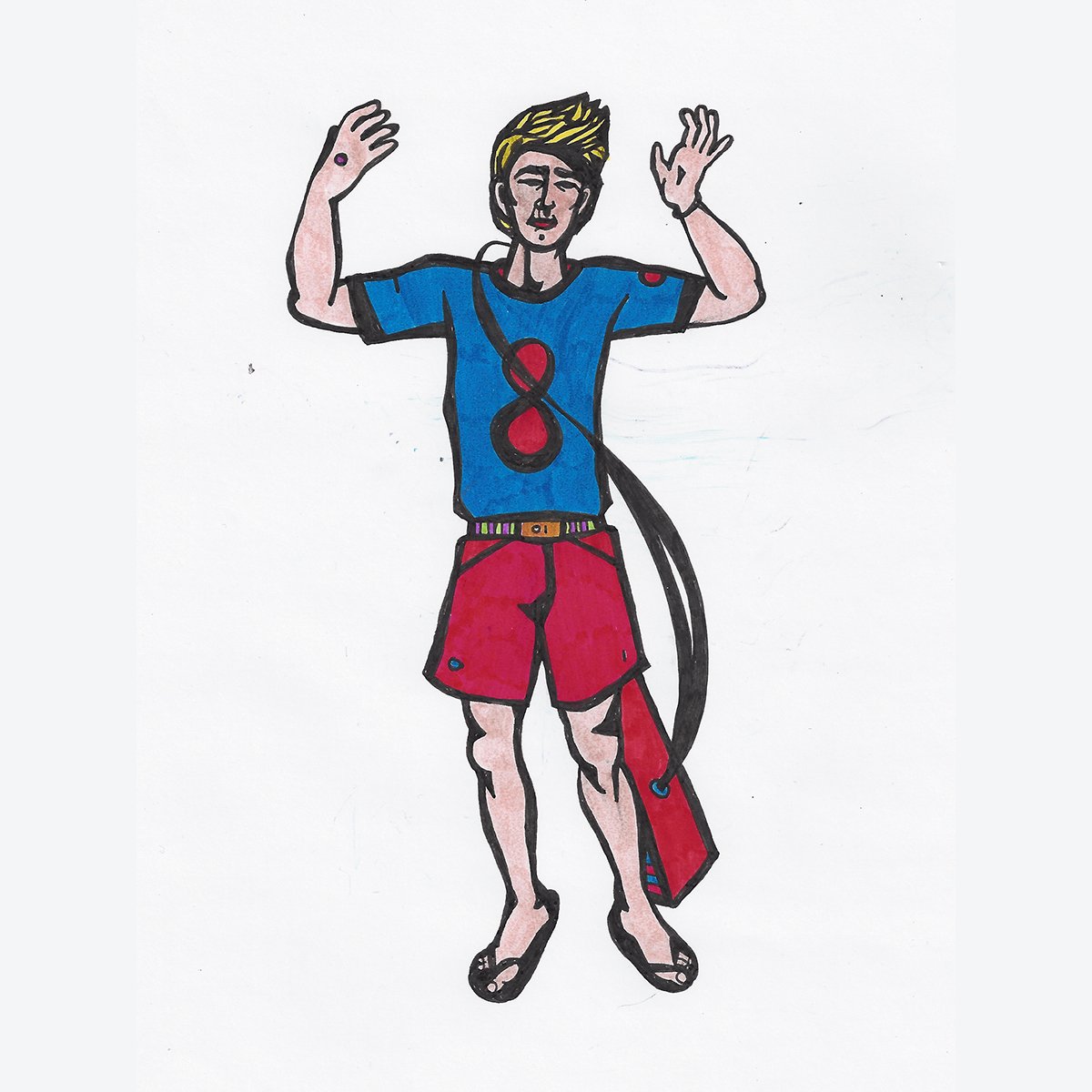
The title of the animation from which these frames are grabbed is “I don’t understand it,” which is what my son Lachlan sincerely deadpanned, after viewing the movie. I thought his reaction was the proper one. It encapsulates the general feeling of the moment. Most of us really don’t get what’s going on. Things don’t add up to form a convincing narrative. In times like these, which I identify as the post-contemporary period, certainty and purpose are rare sensations, and usually worthy of skepticism. One is more inclined to raise one’s hands in exasperation at the lack of meaningful cohesion. Like “Steve” in the concluding frame. The figure in that sketch was inspired by a well-liked lifeguard at the Astoria (Oregon) Aquatic Center, who perished in an auto crash on the nearby bridge, which spans the might Columbia River. I heard rumors suggesting he was driving impaired. Unfortunately, a common response to the malaise.

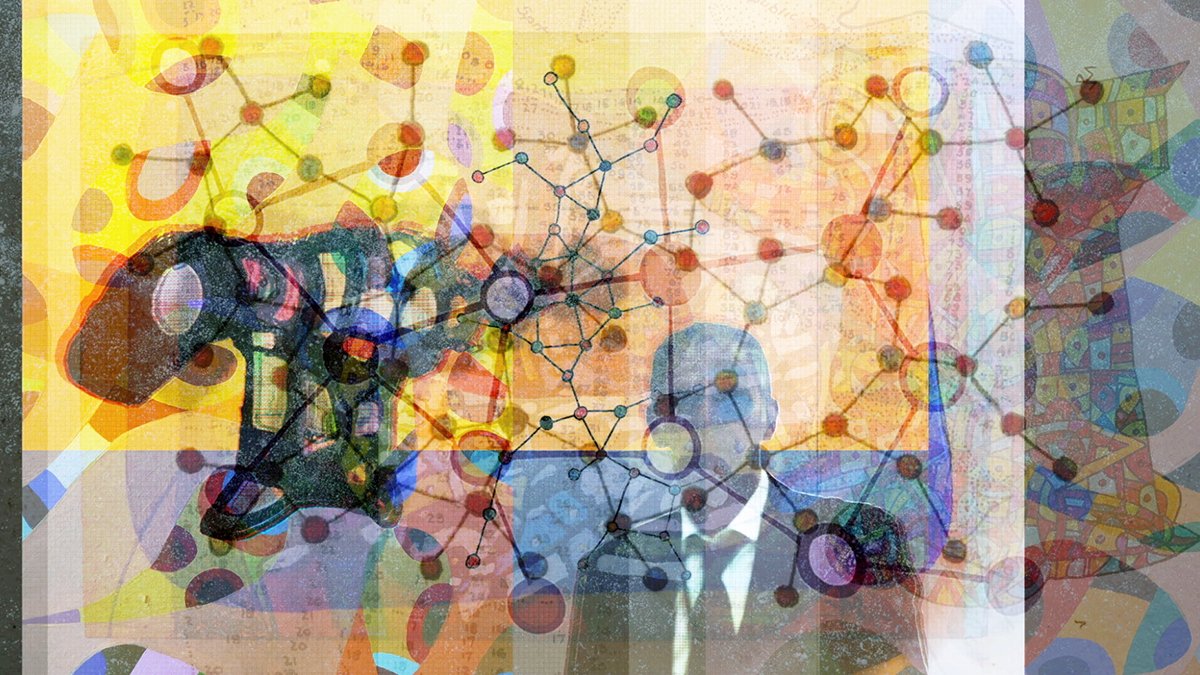
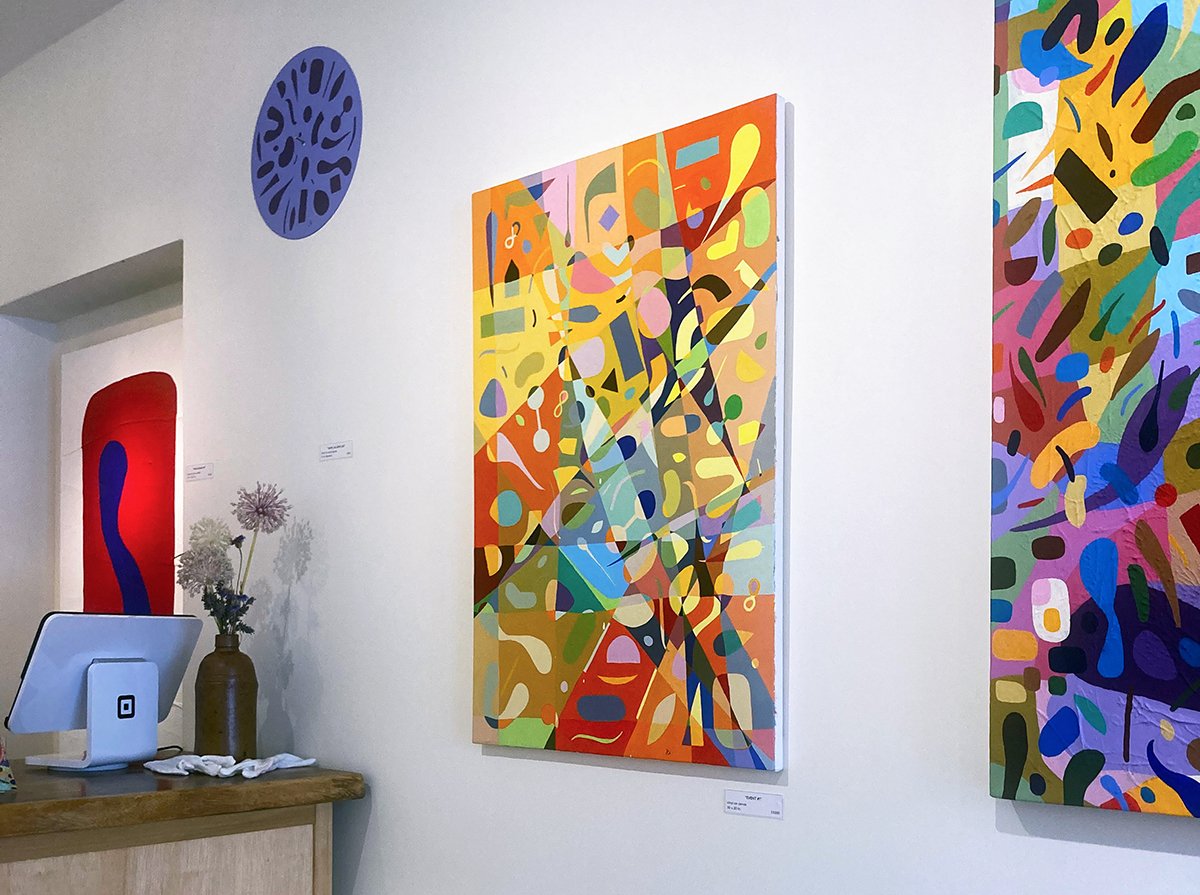
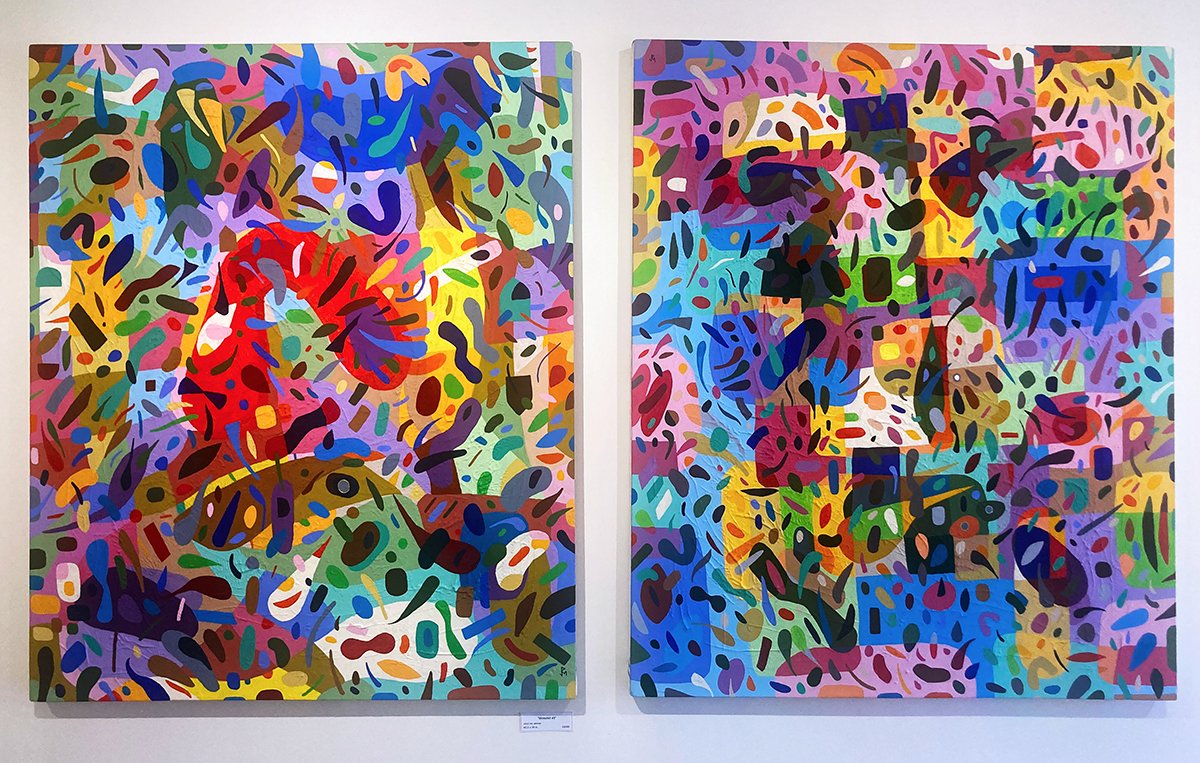
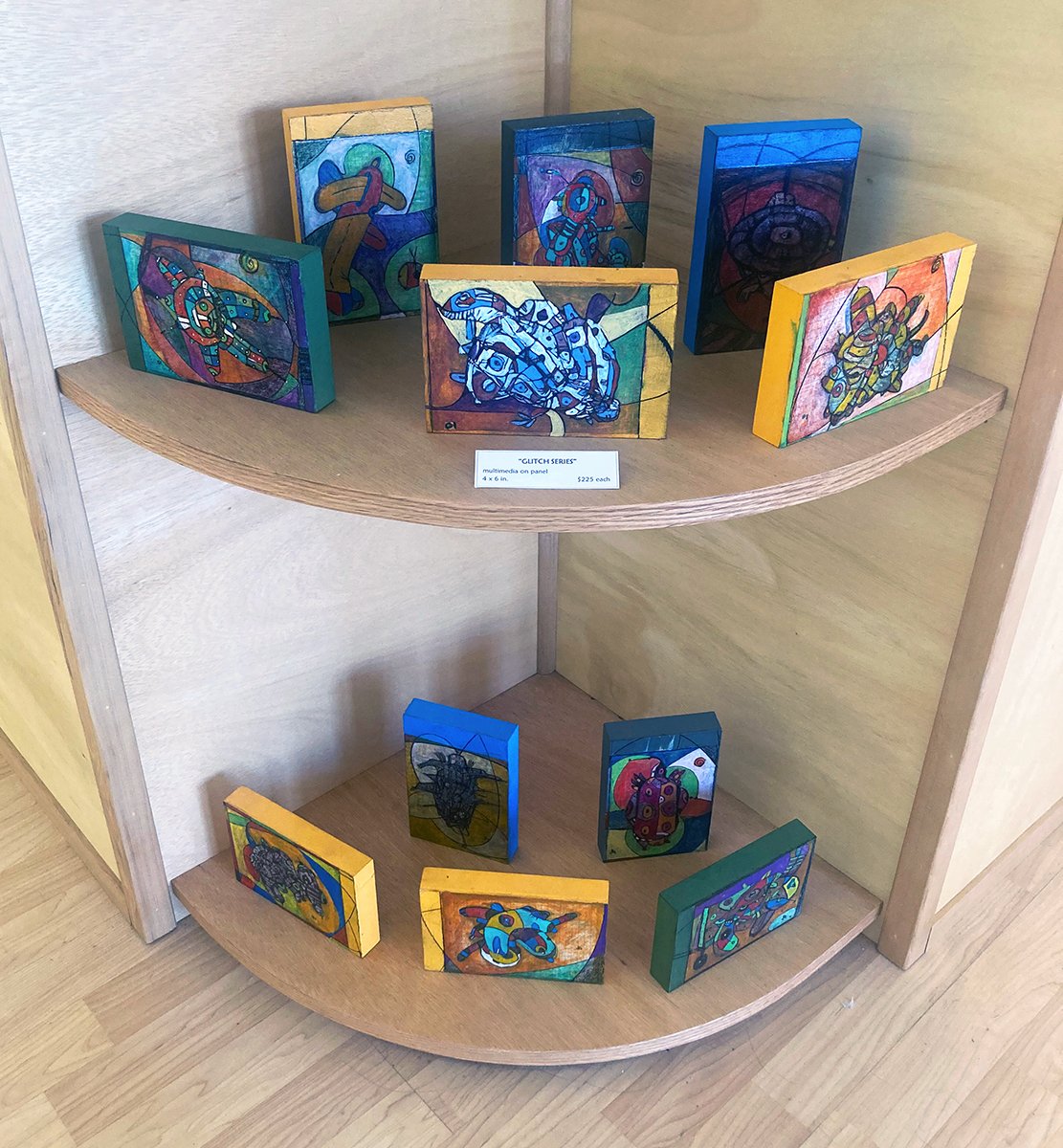
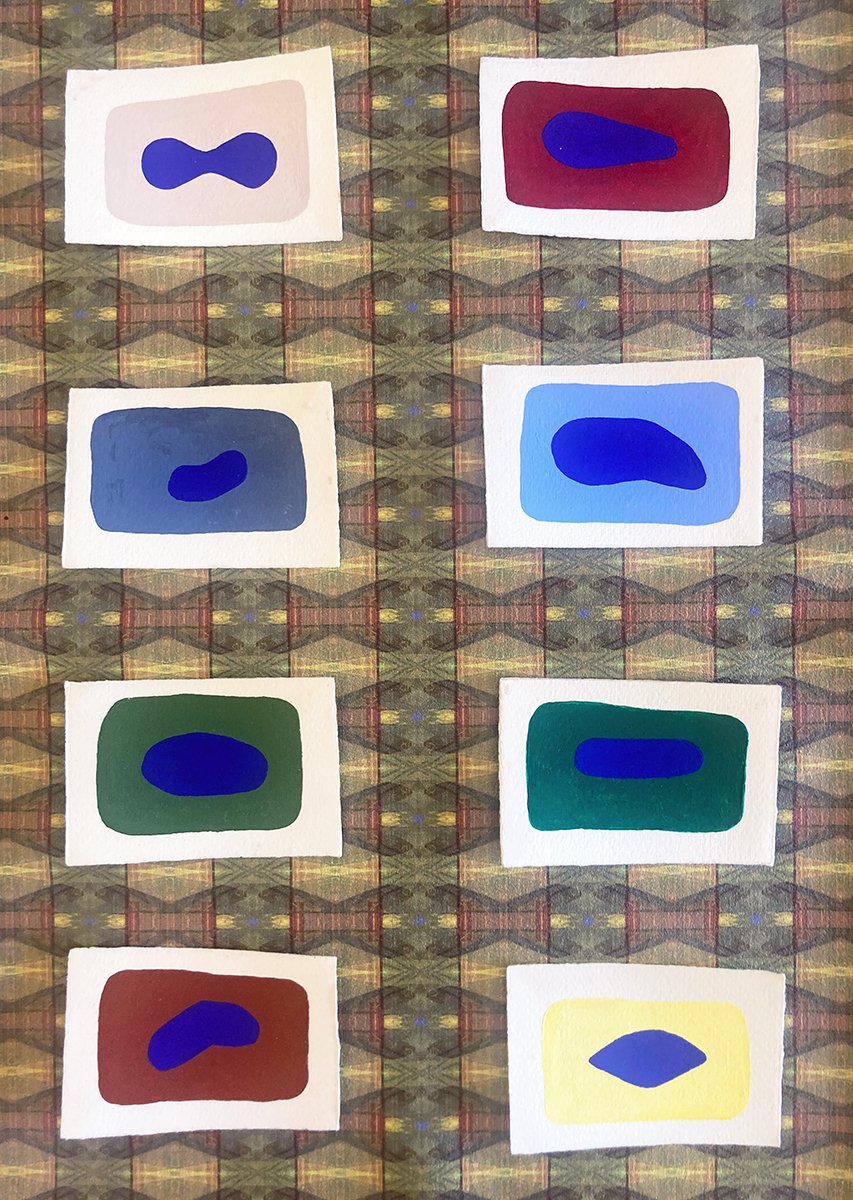
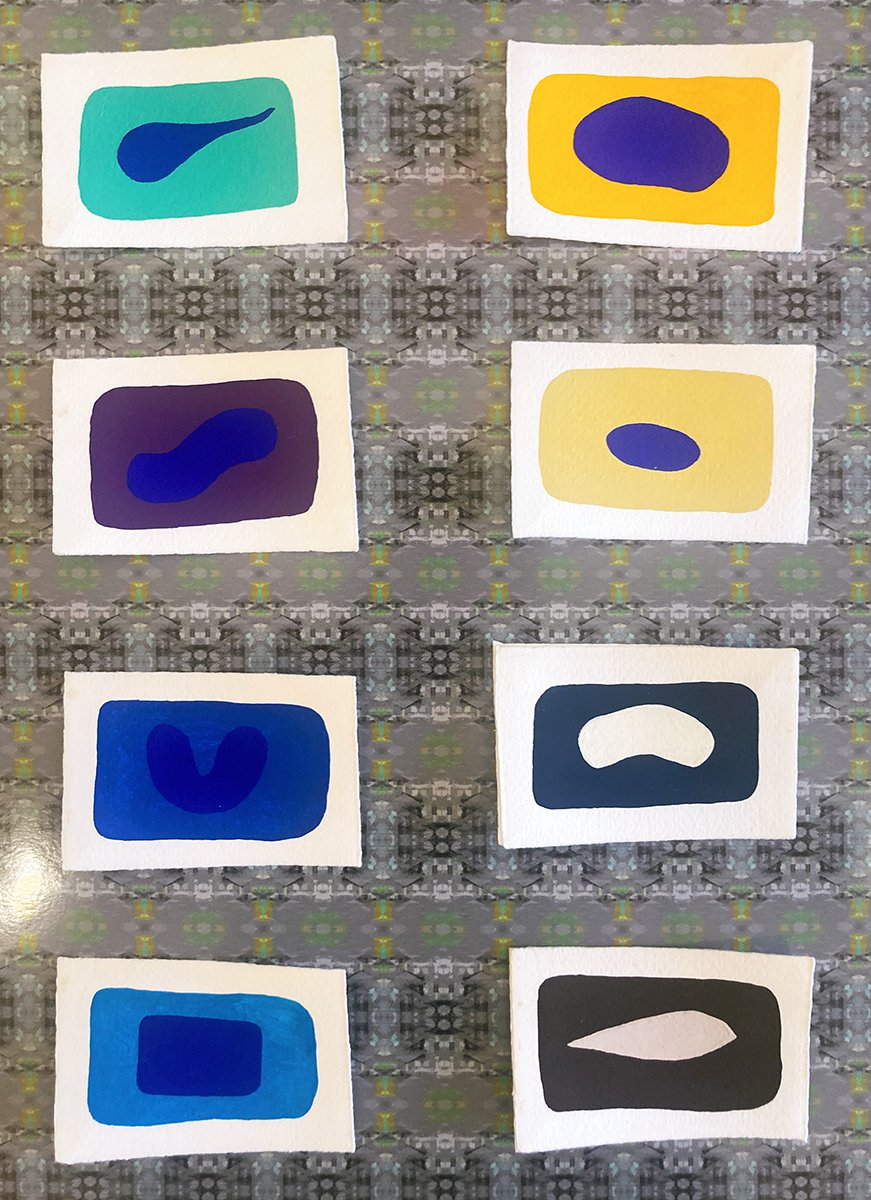
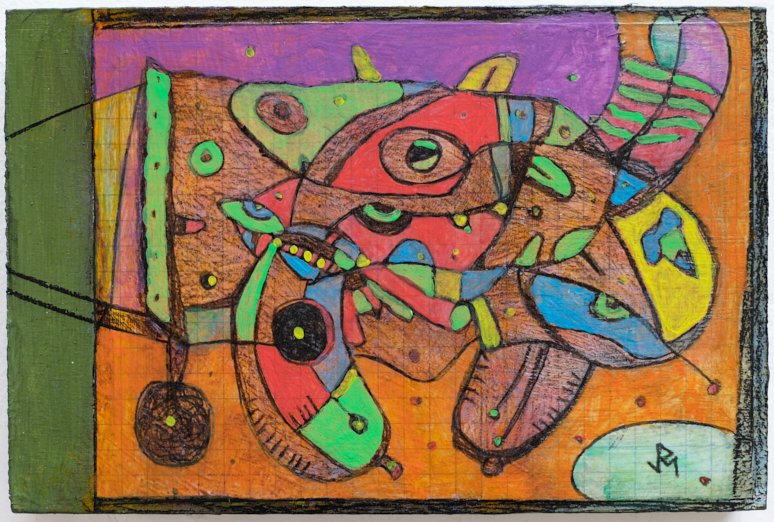
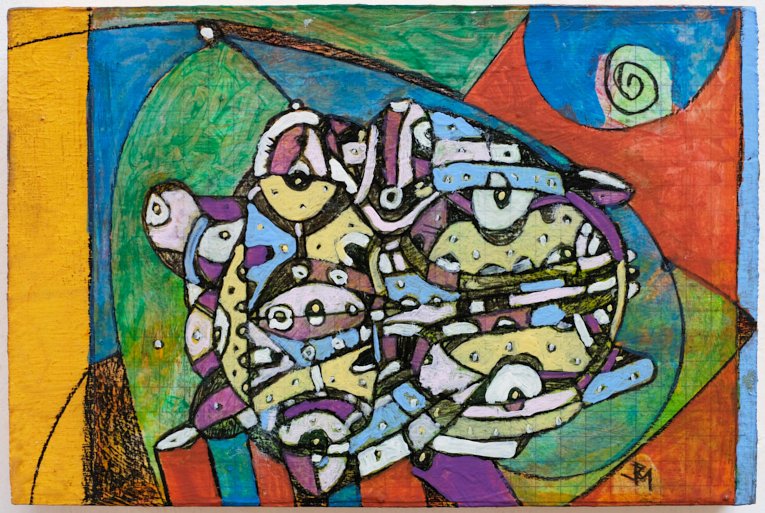
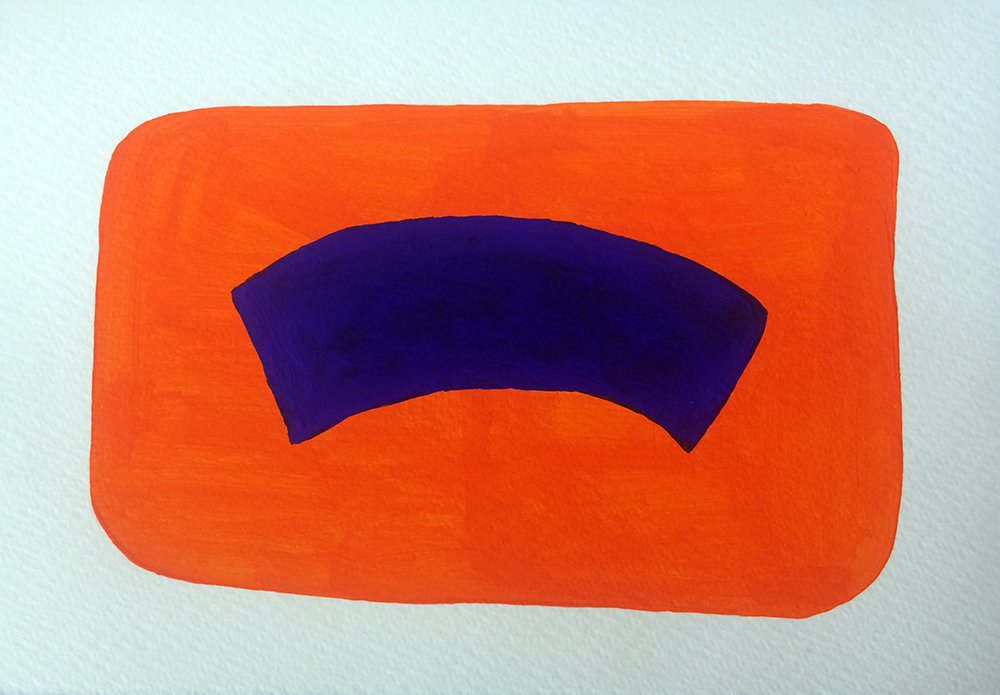
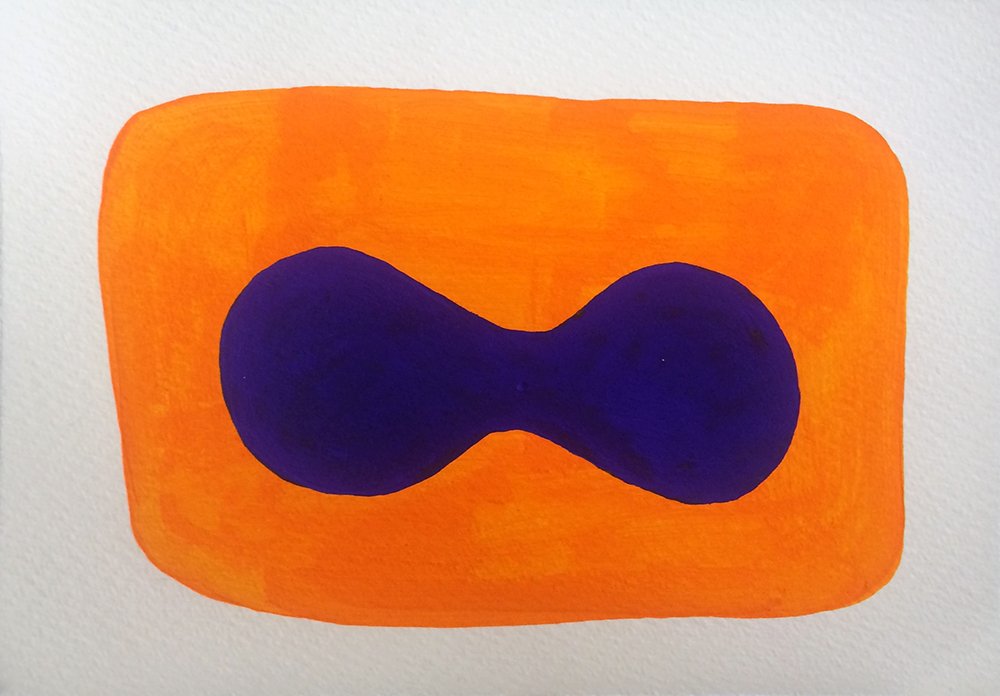
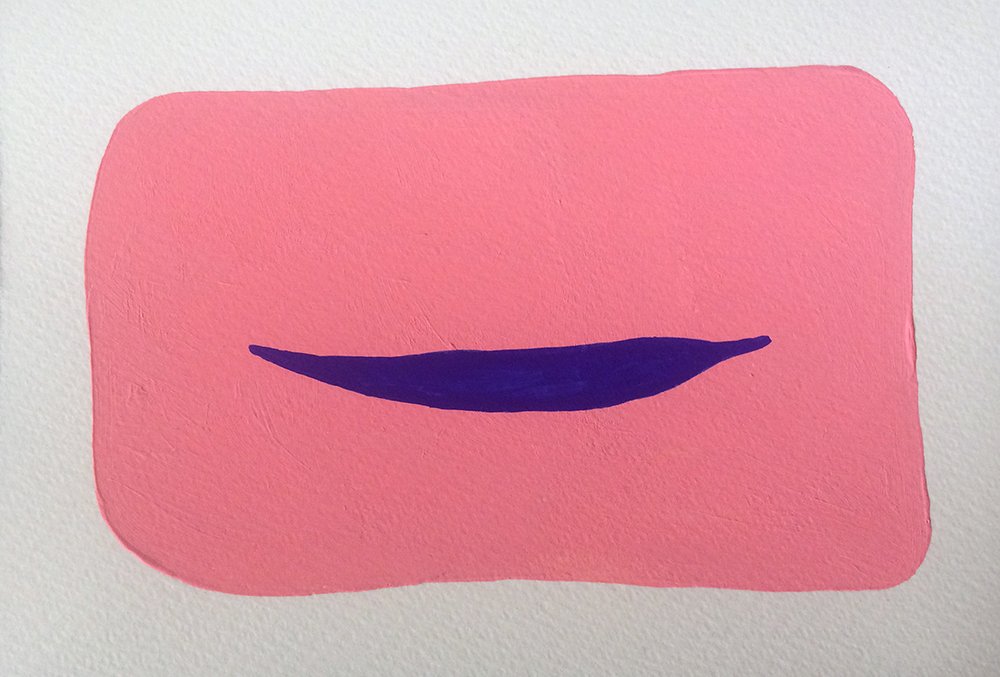
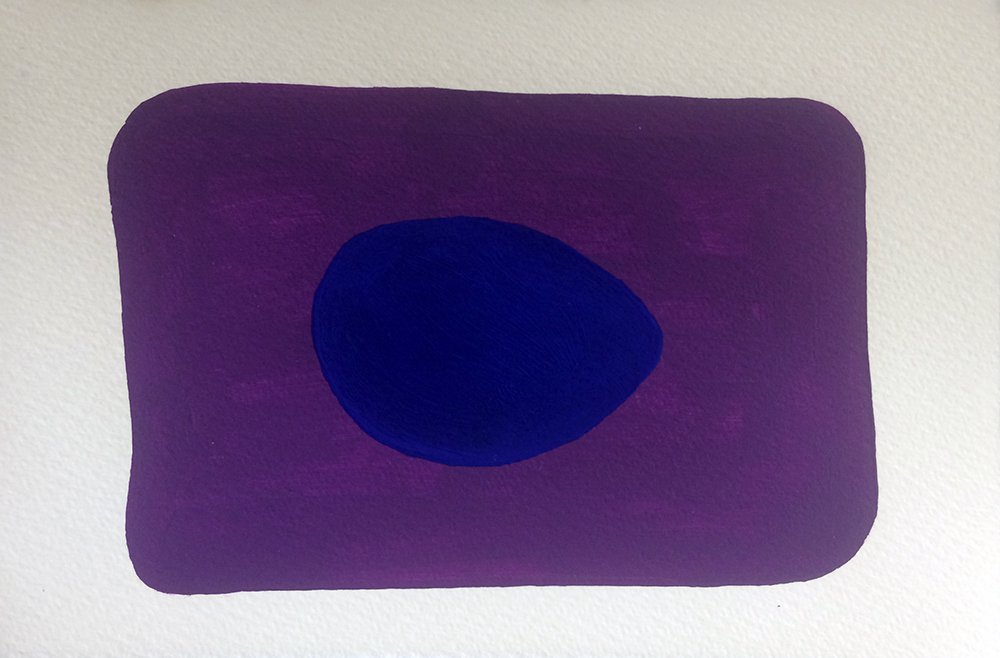
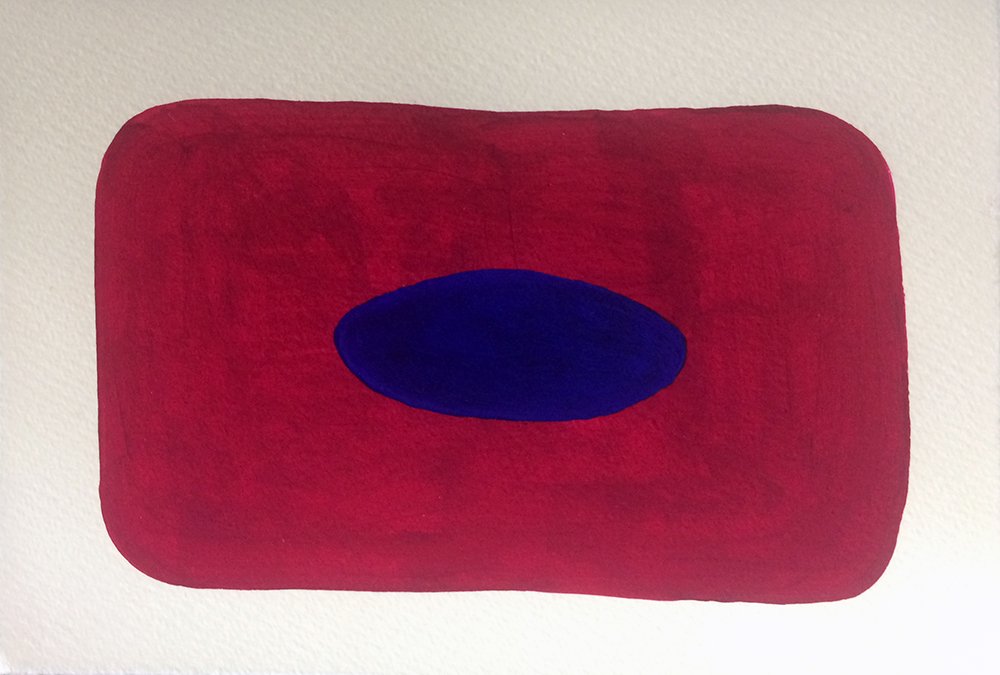
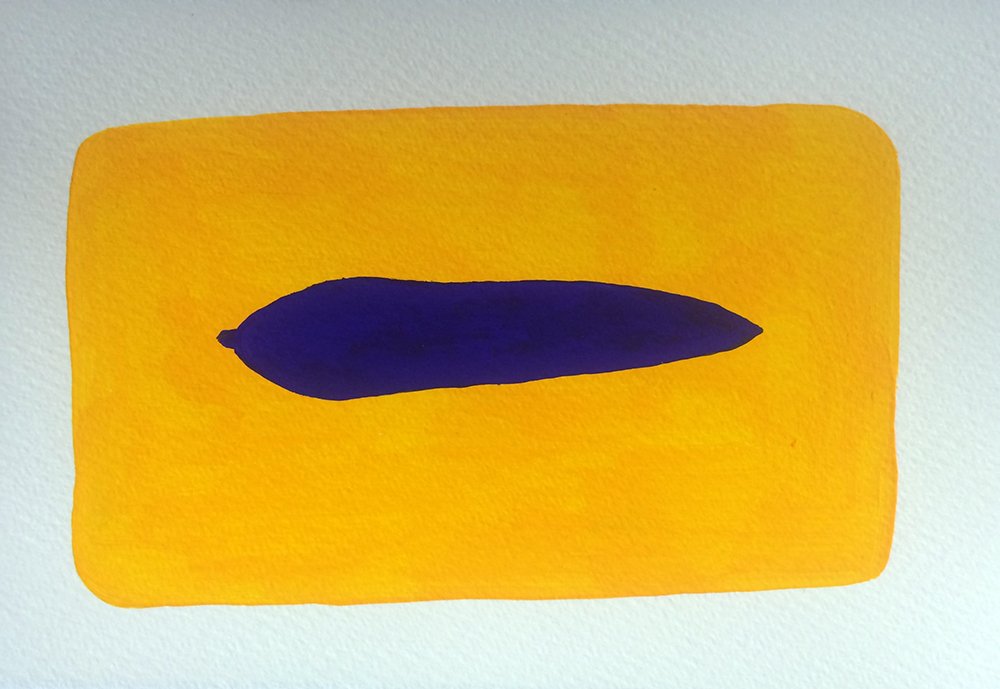
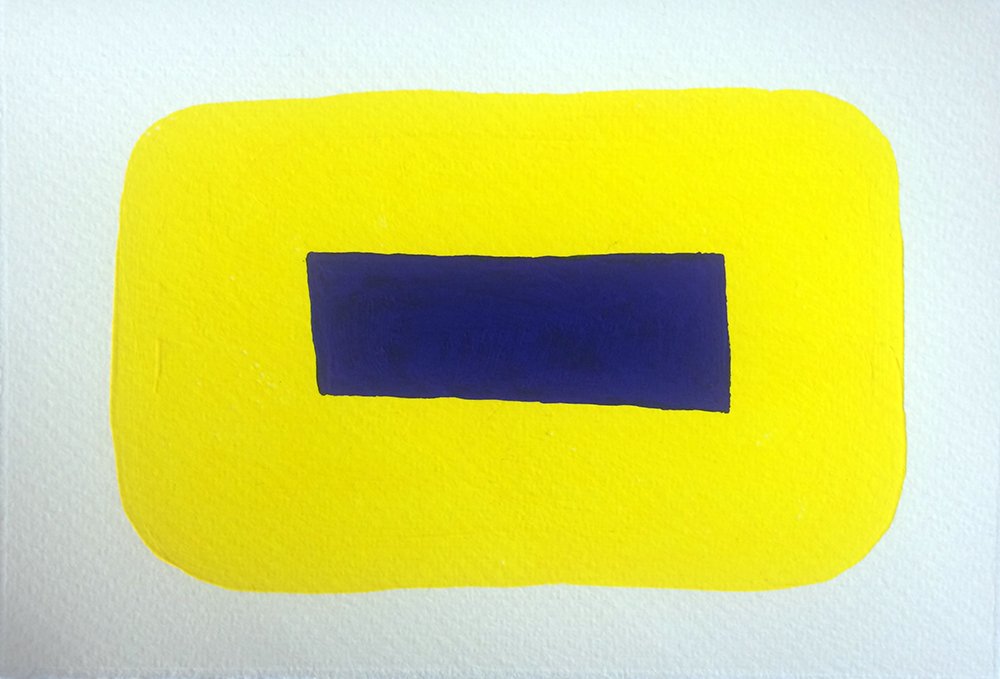
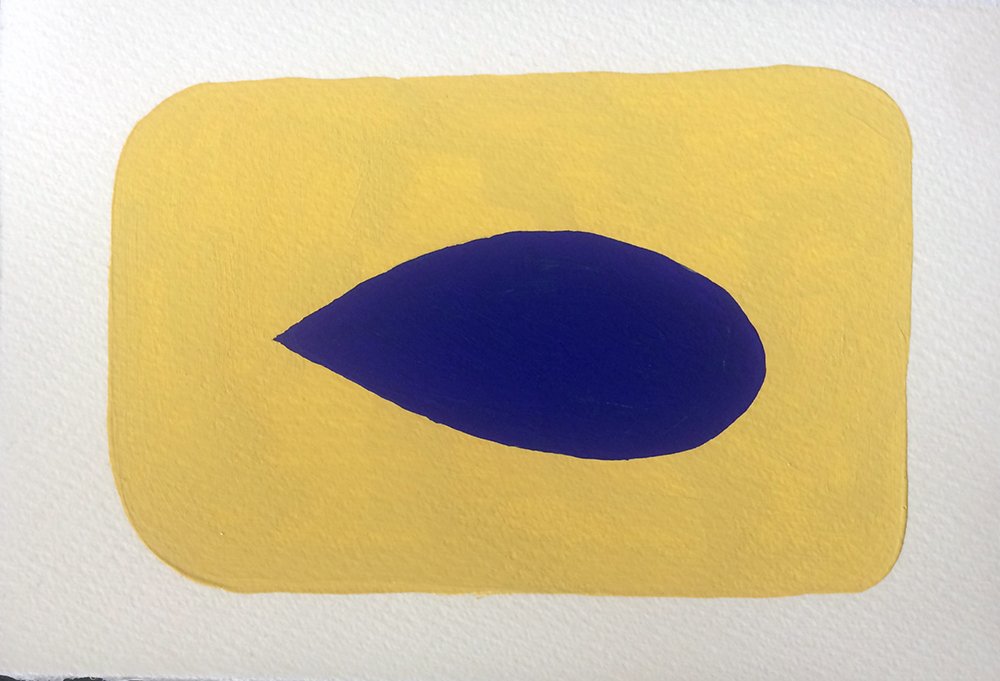
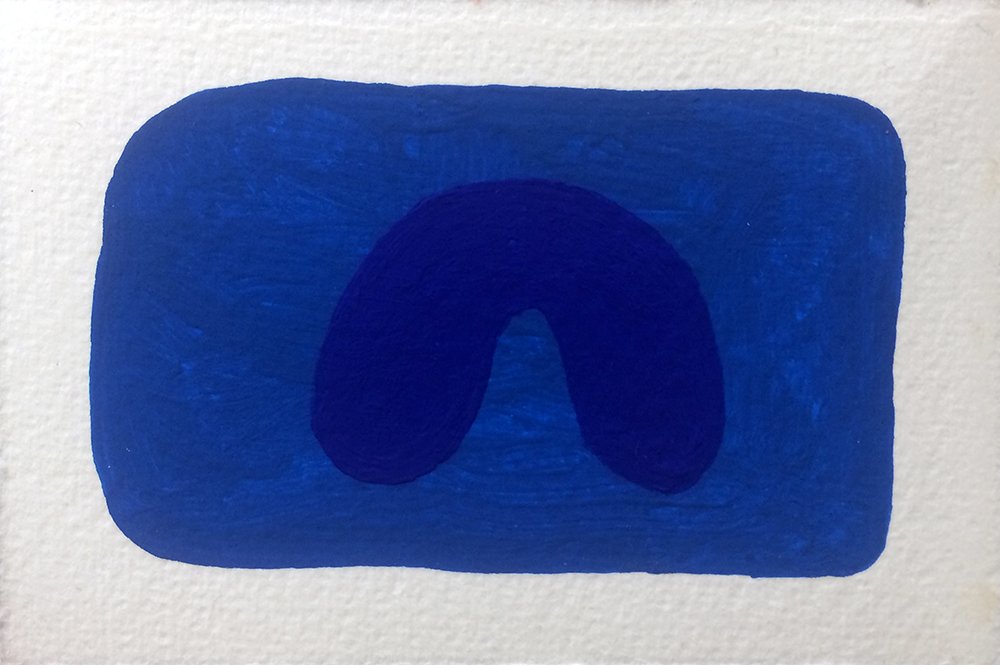
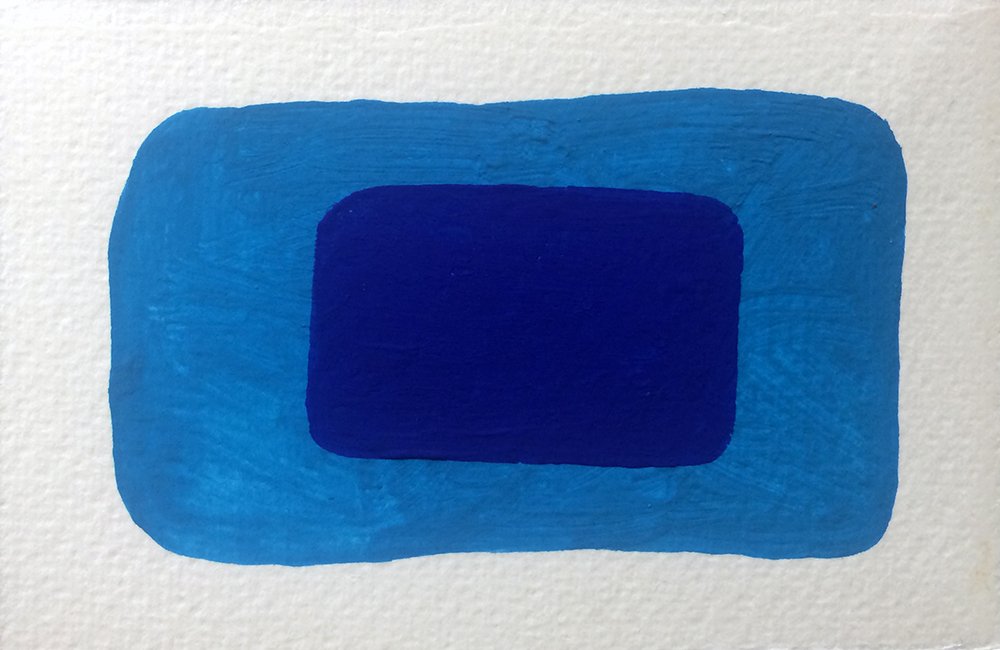
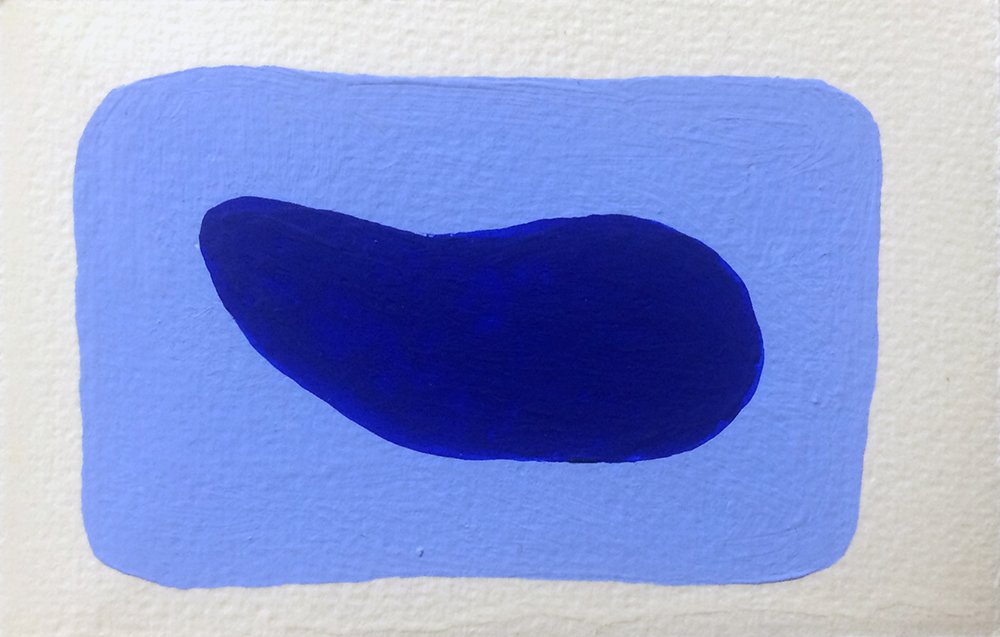
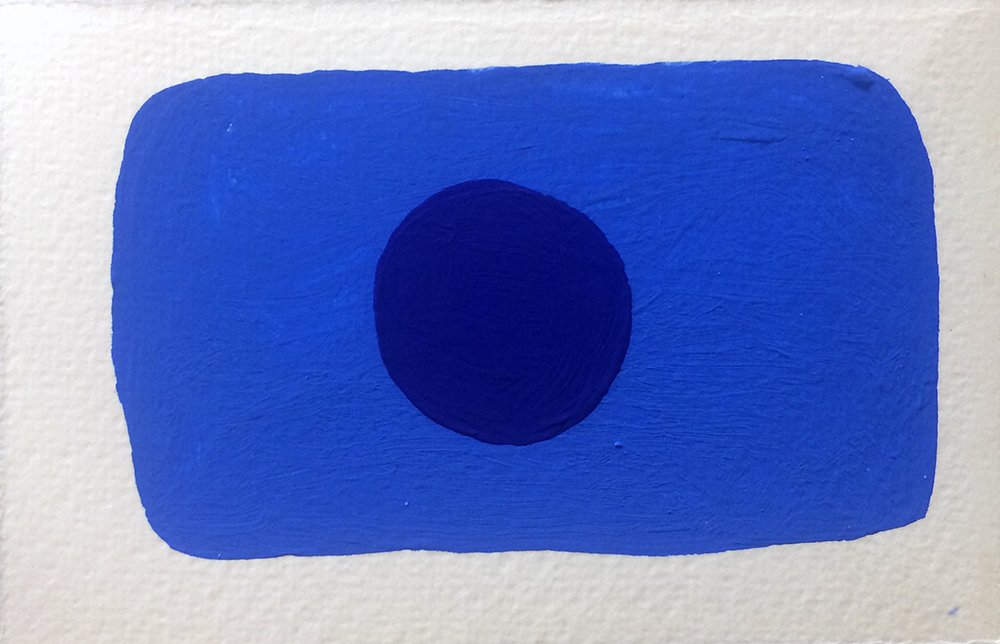
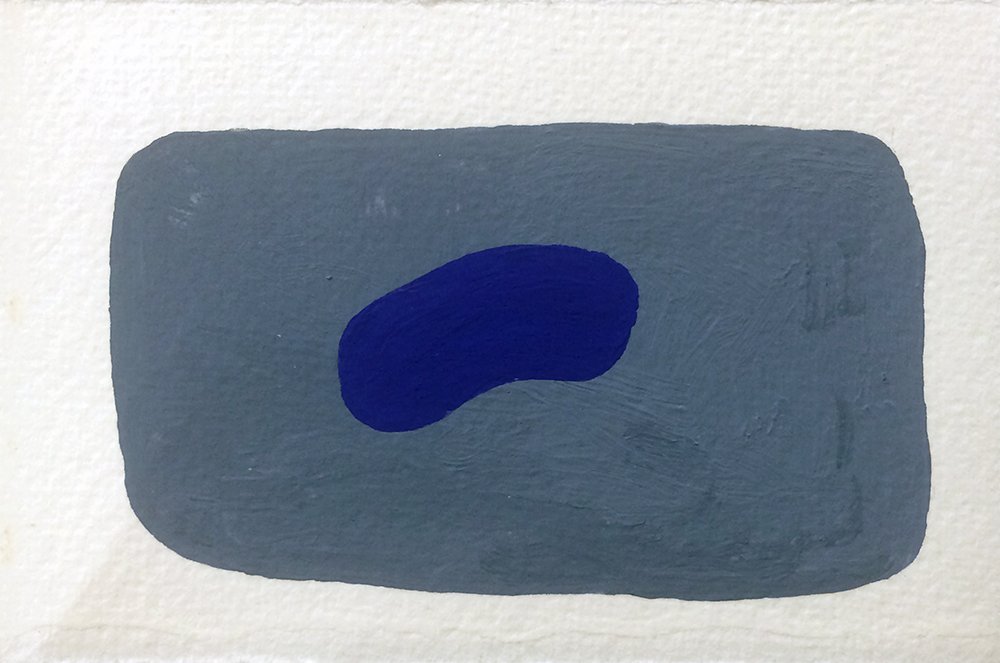
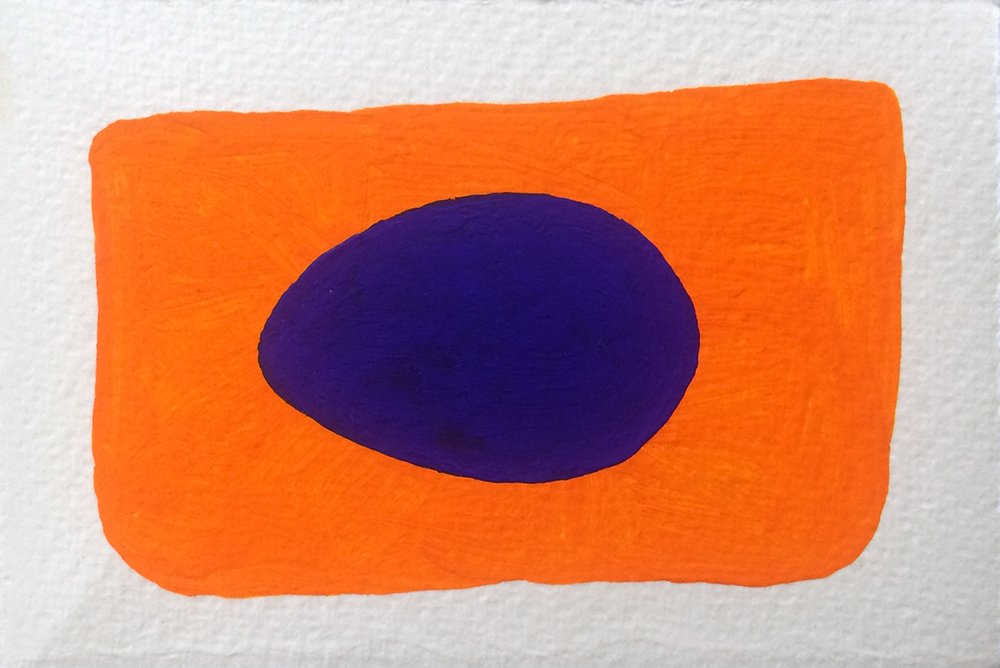
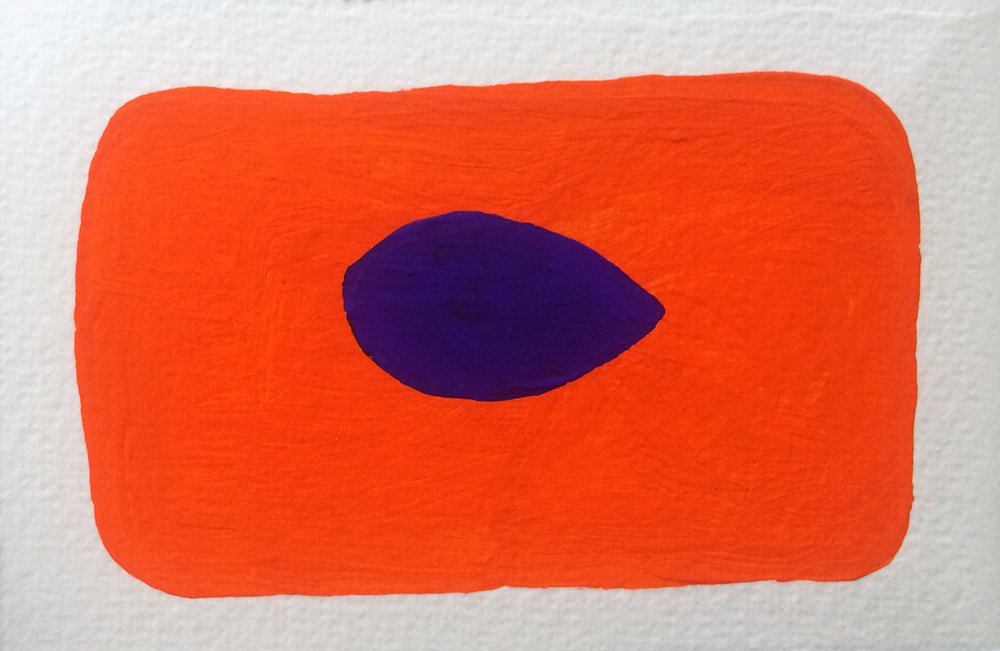
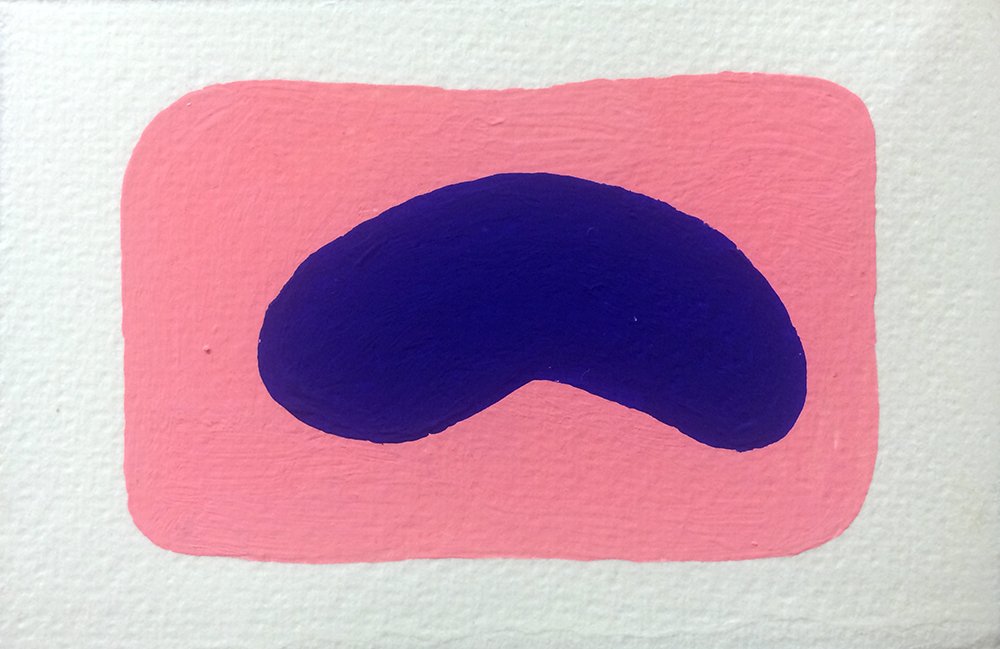
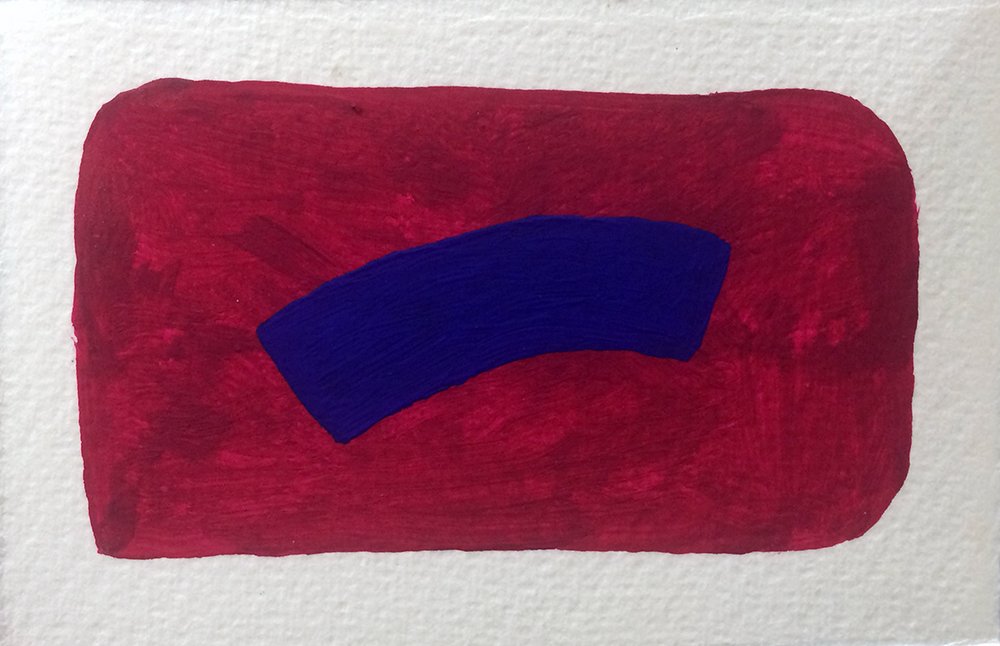
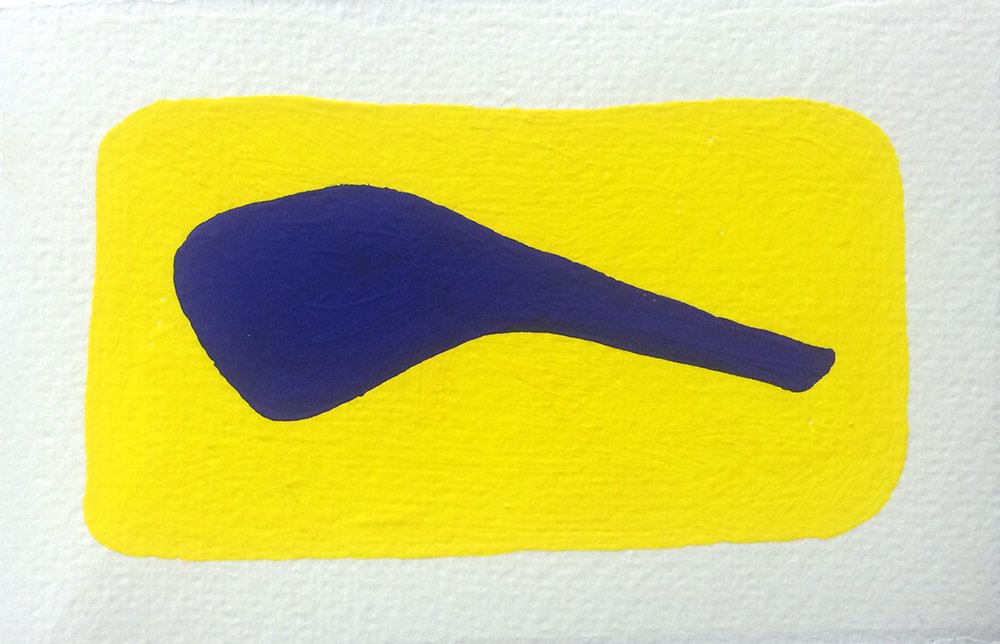
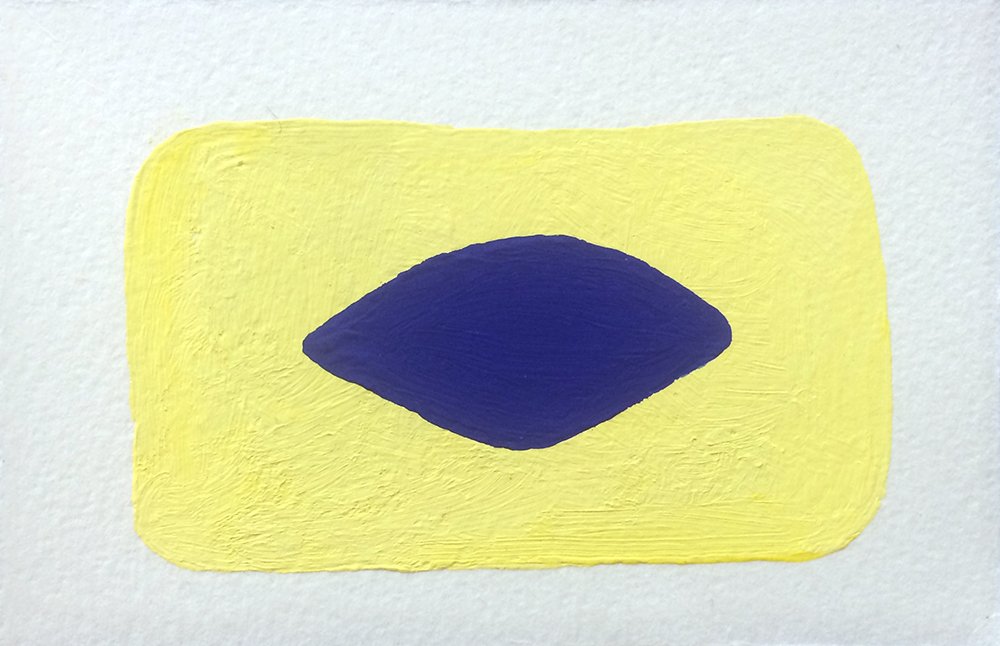
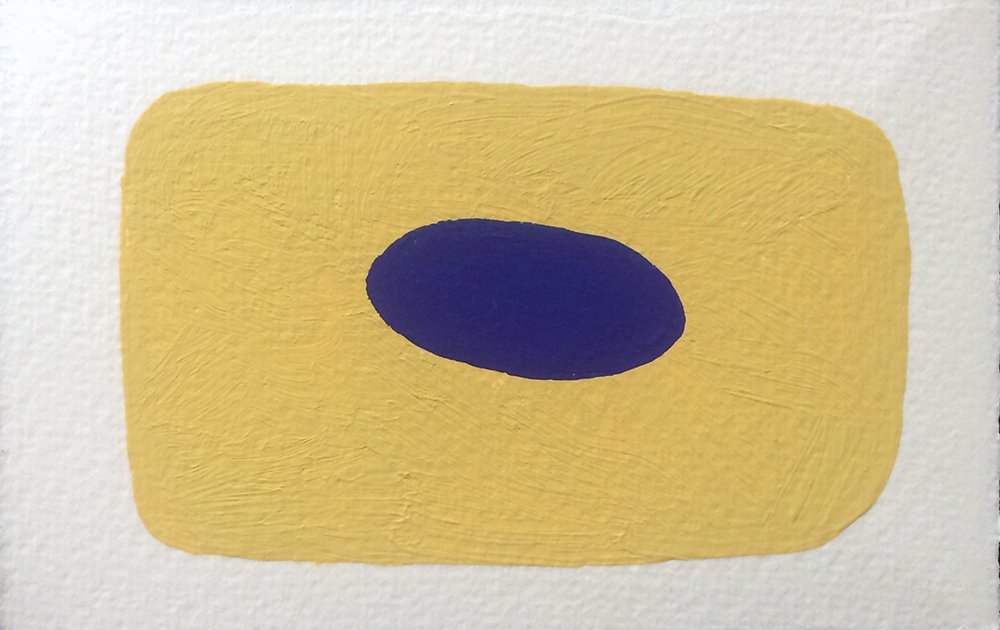
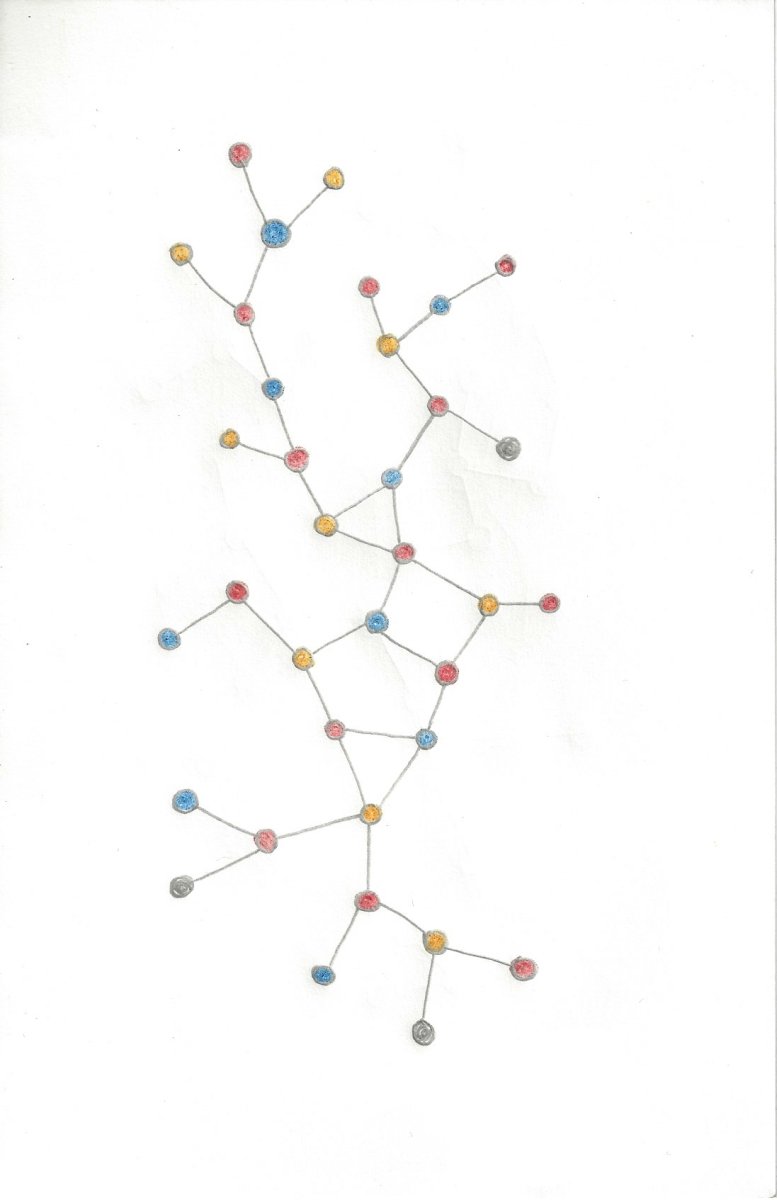
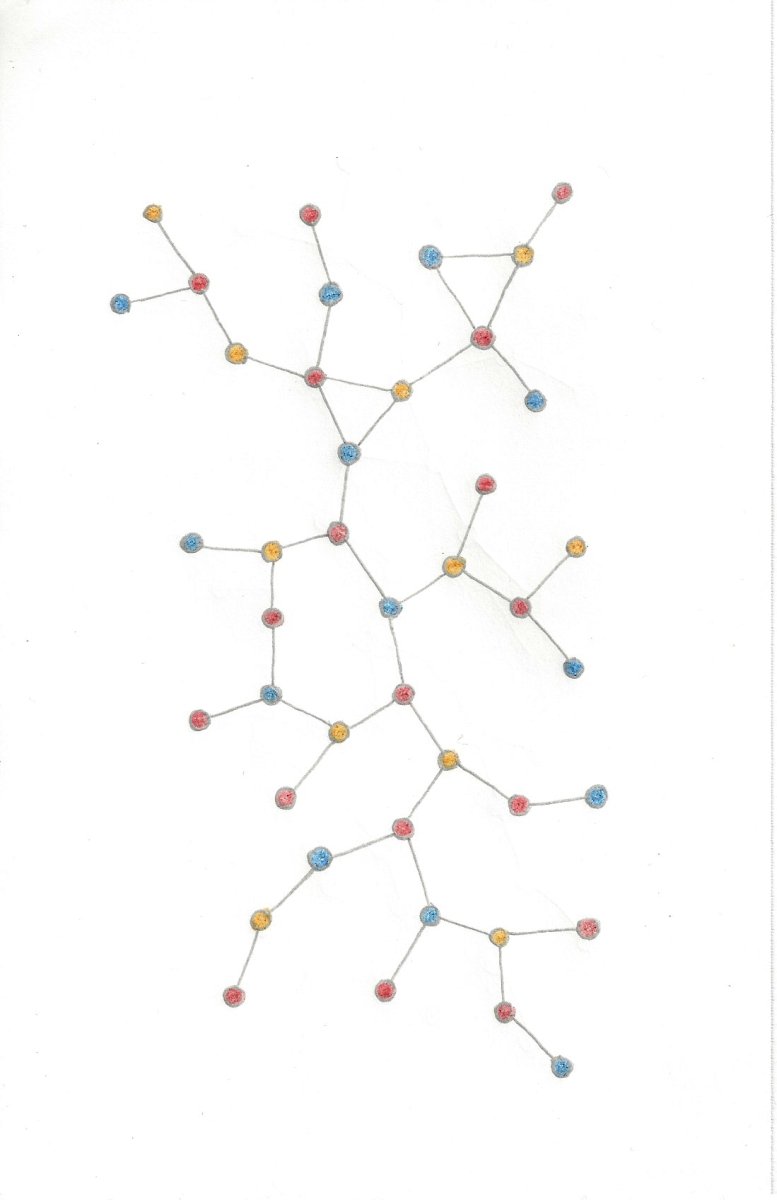
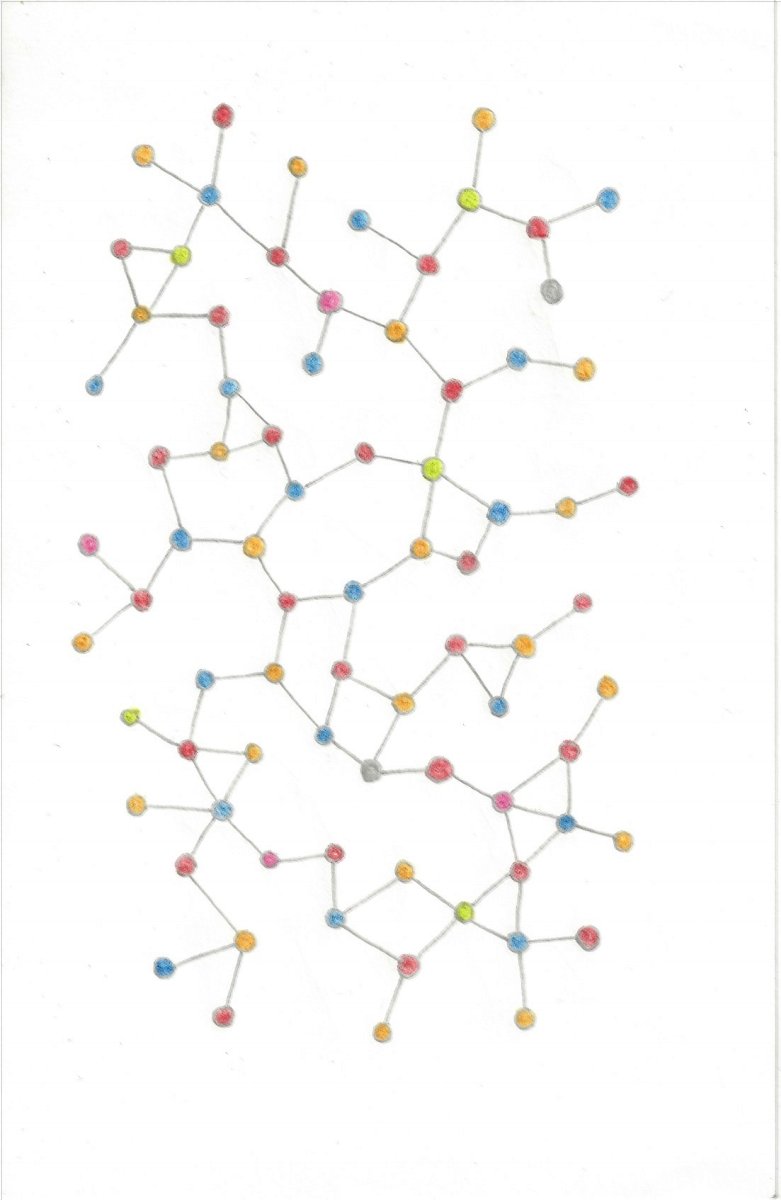
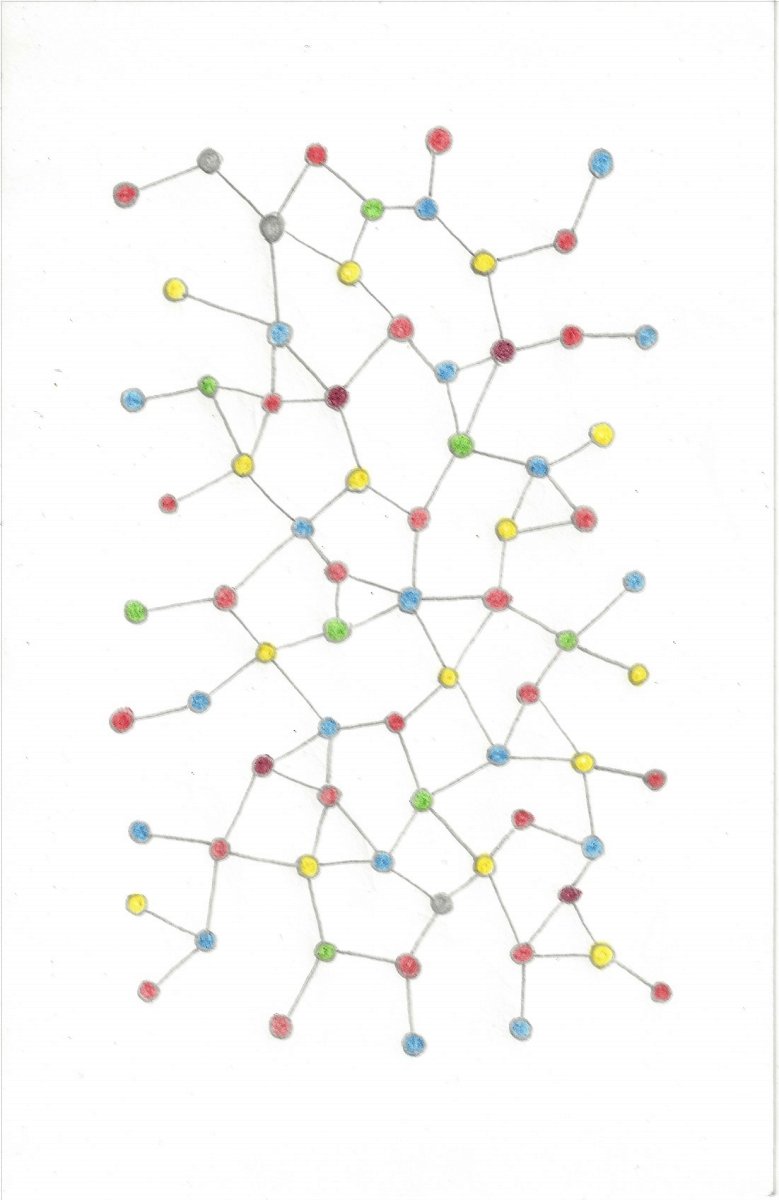
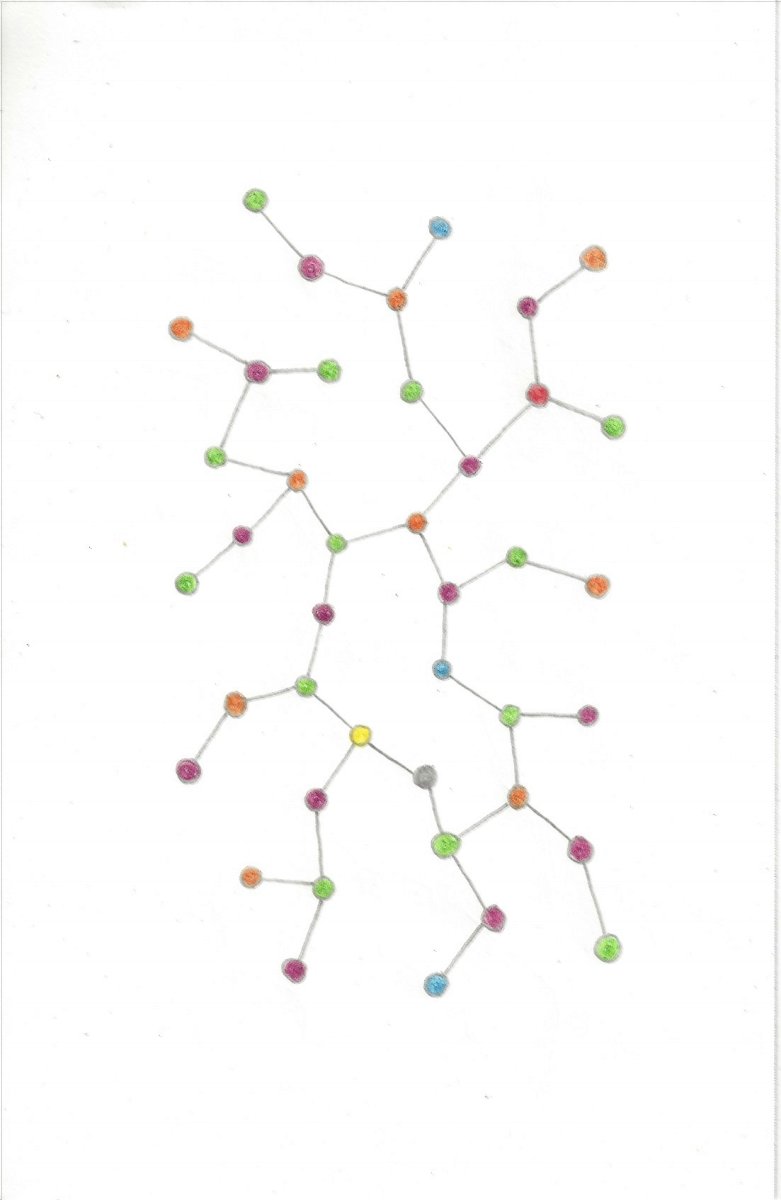
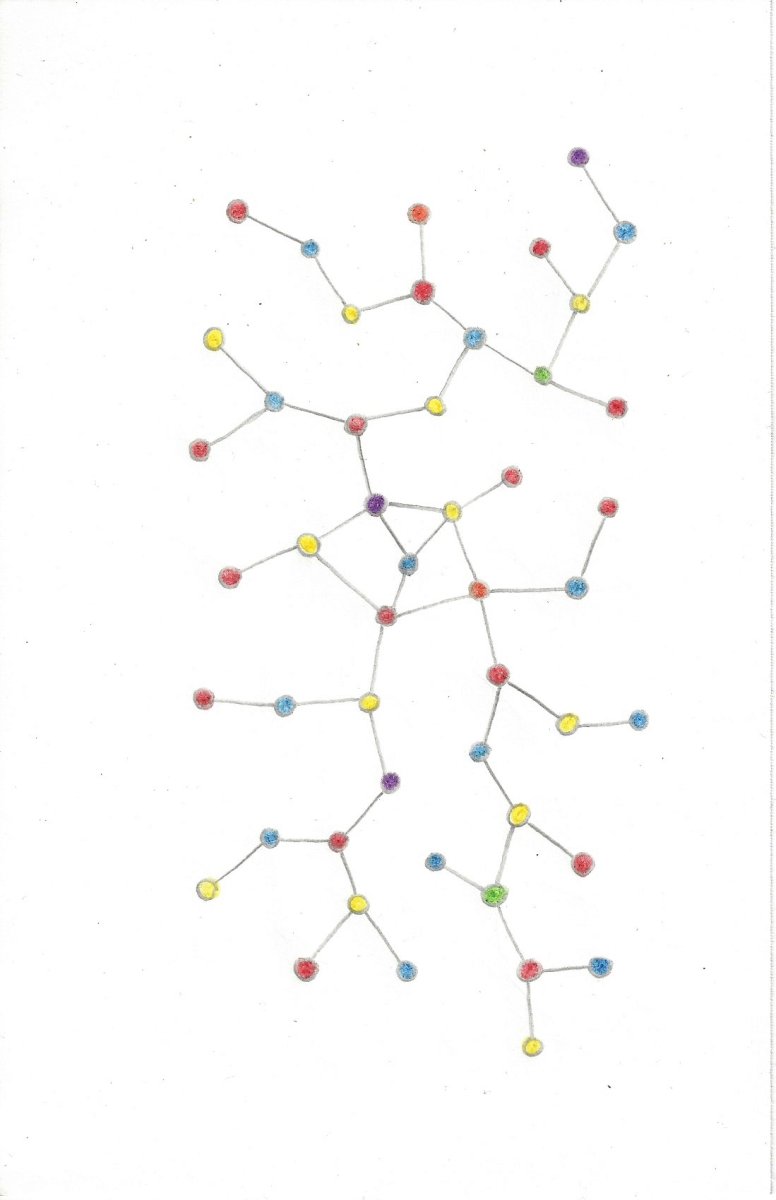
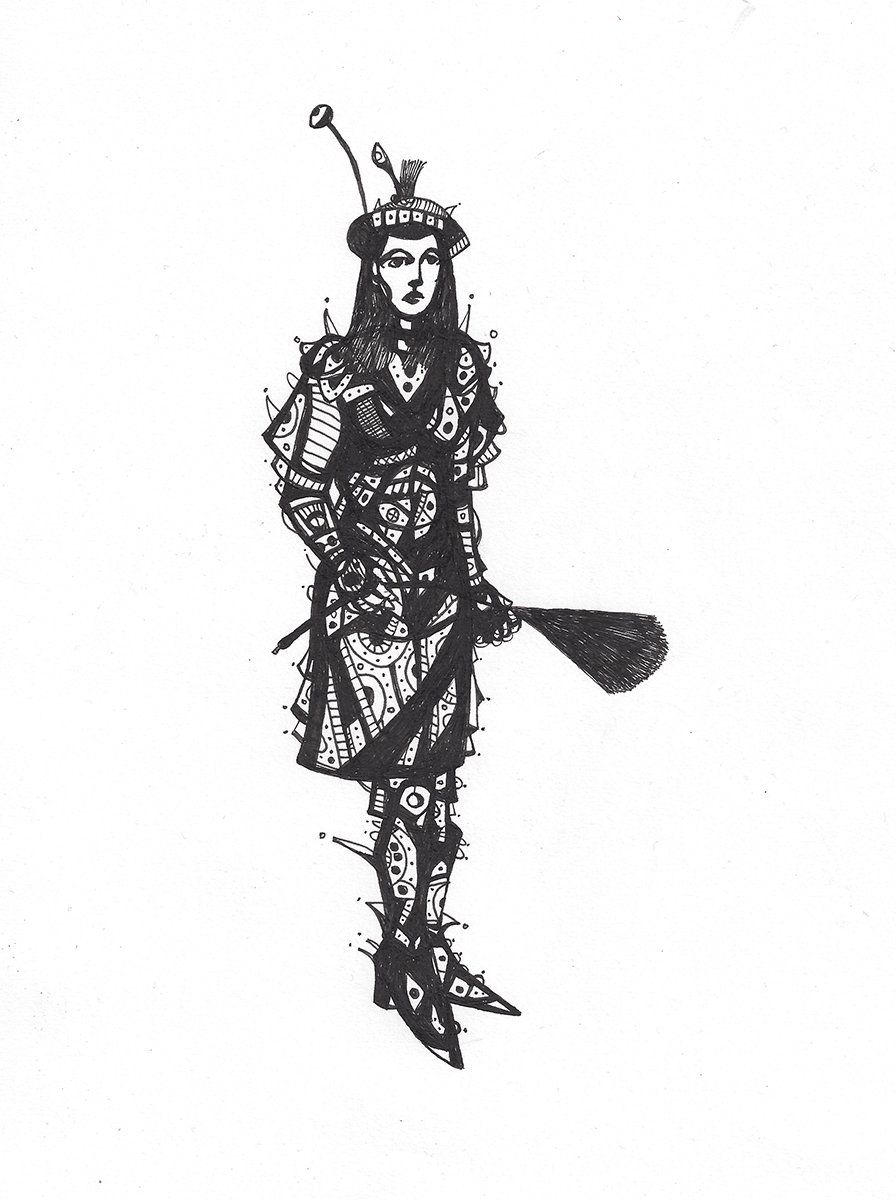
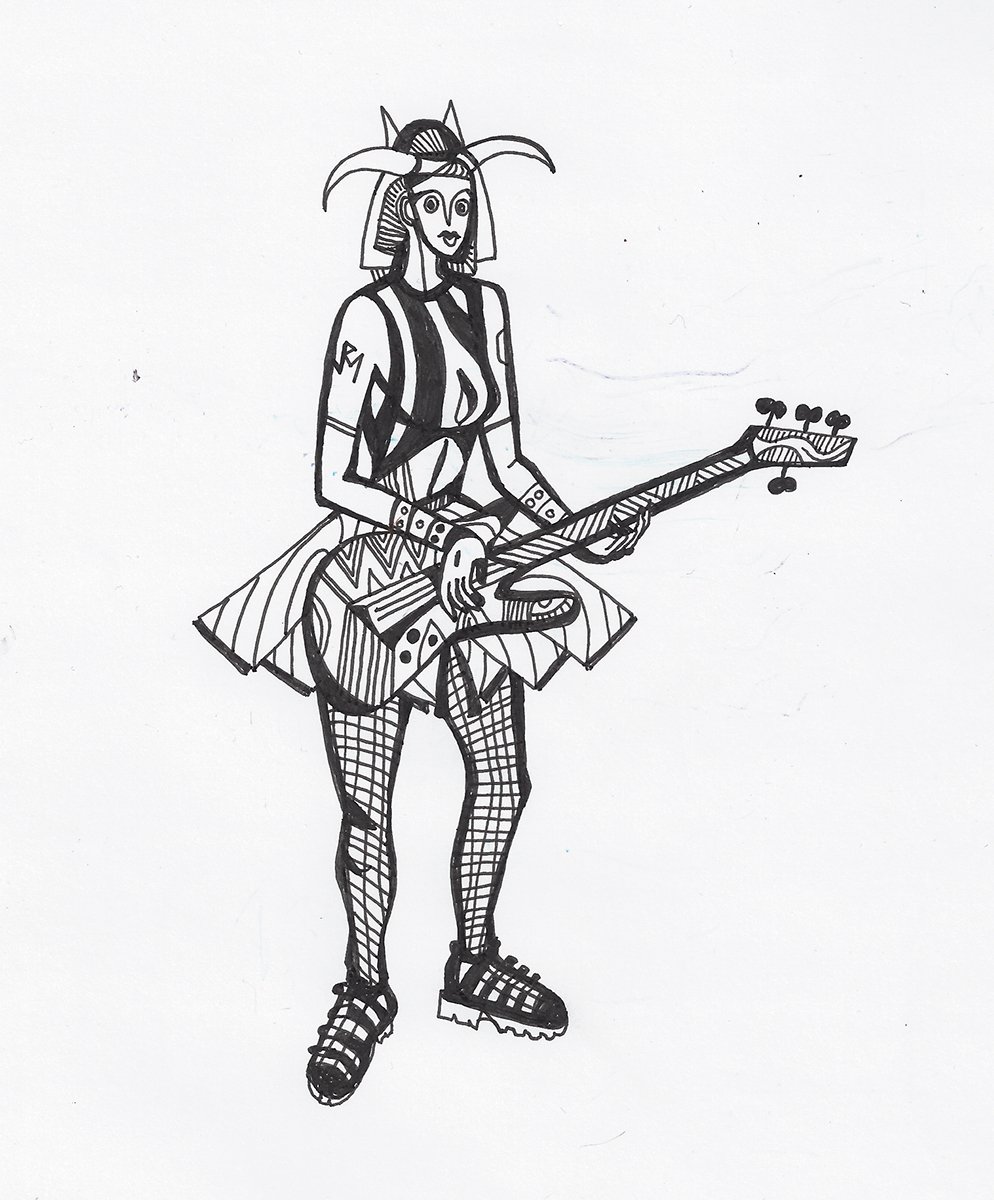
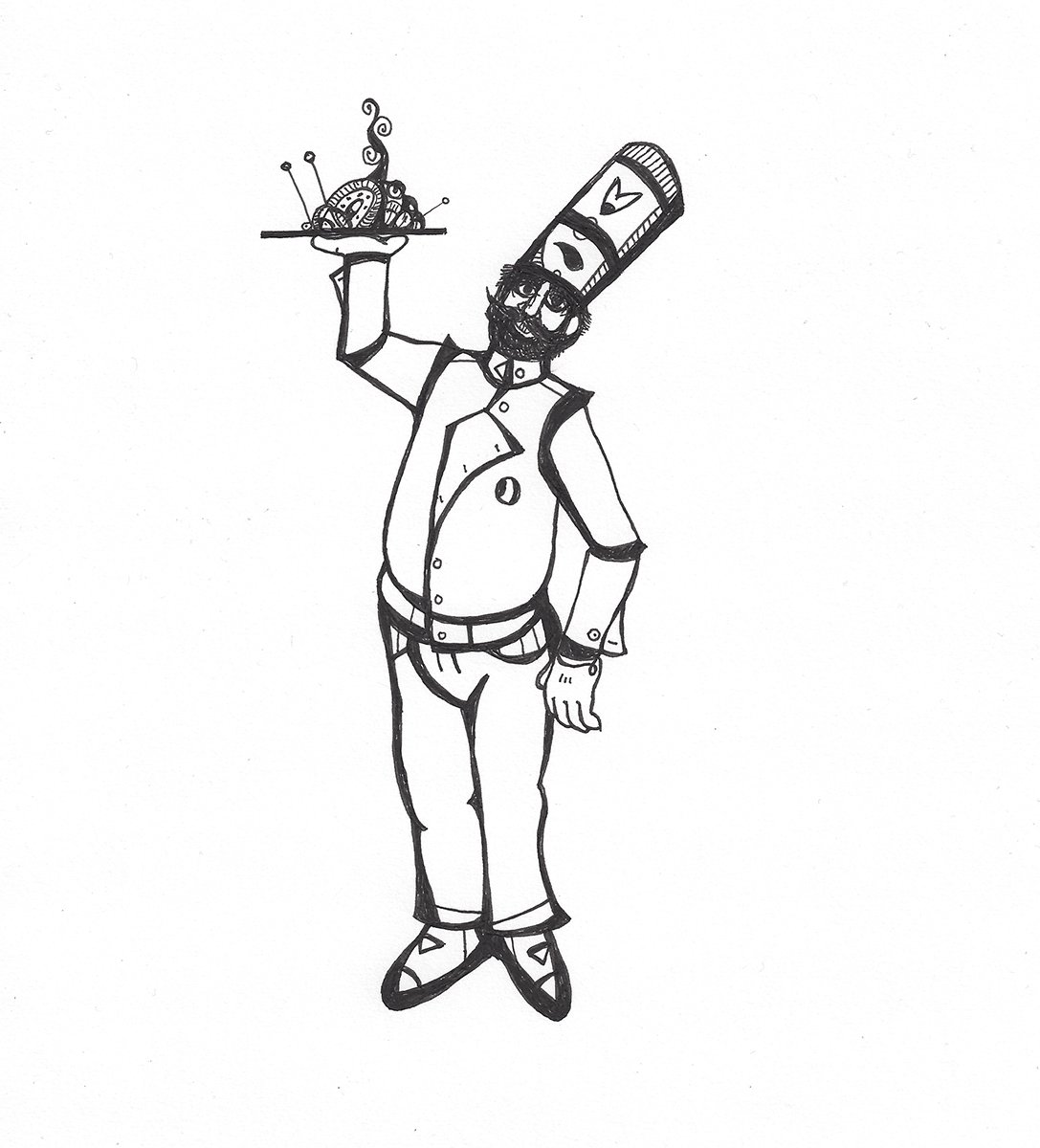
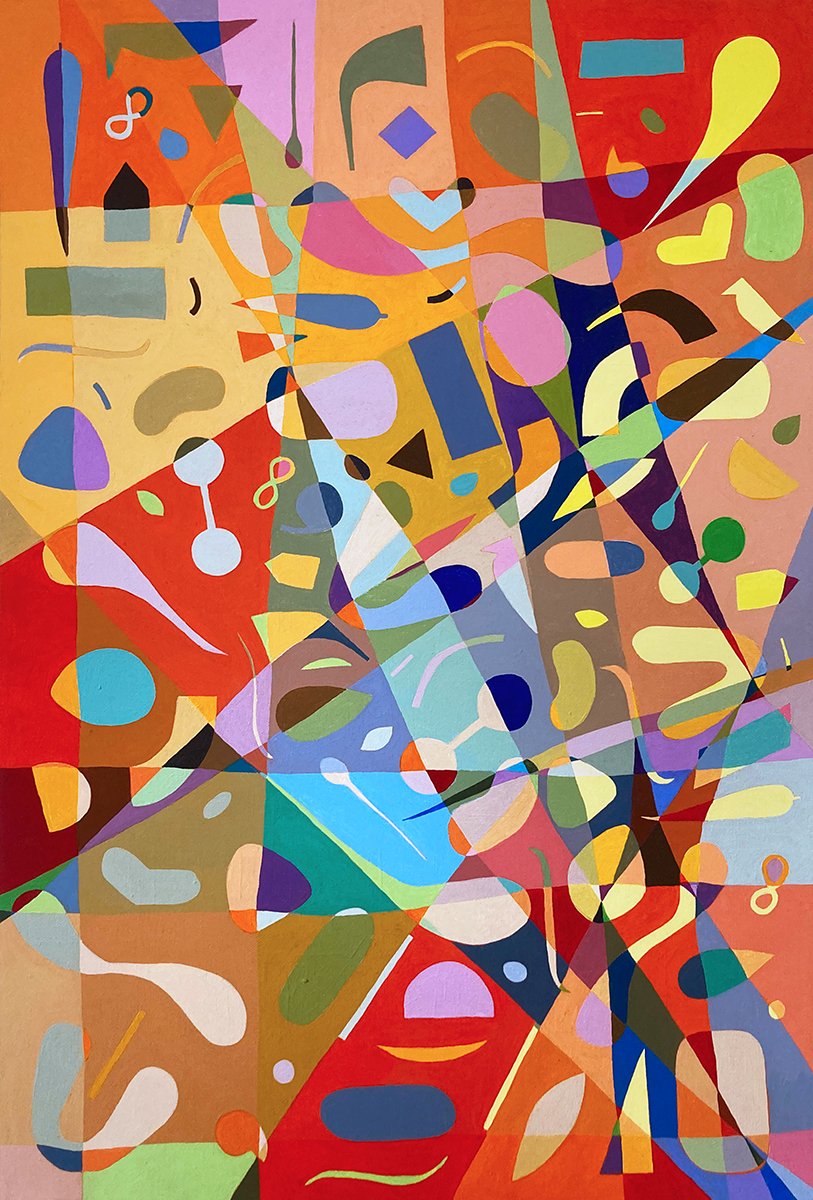
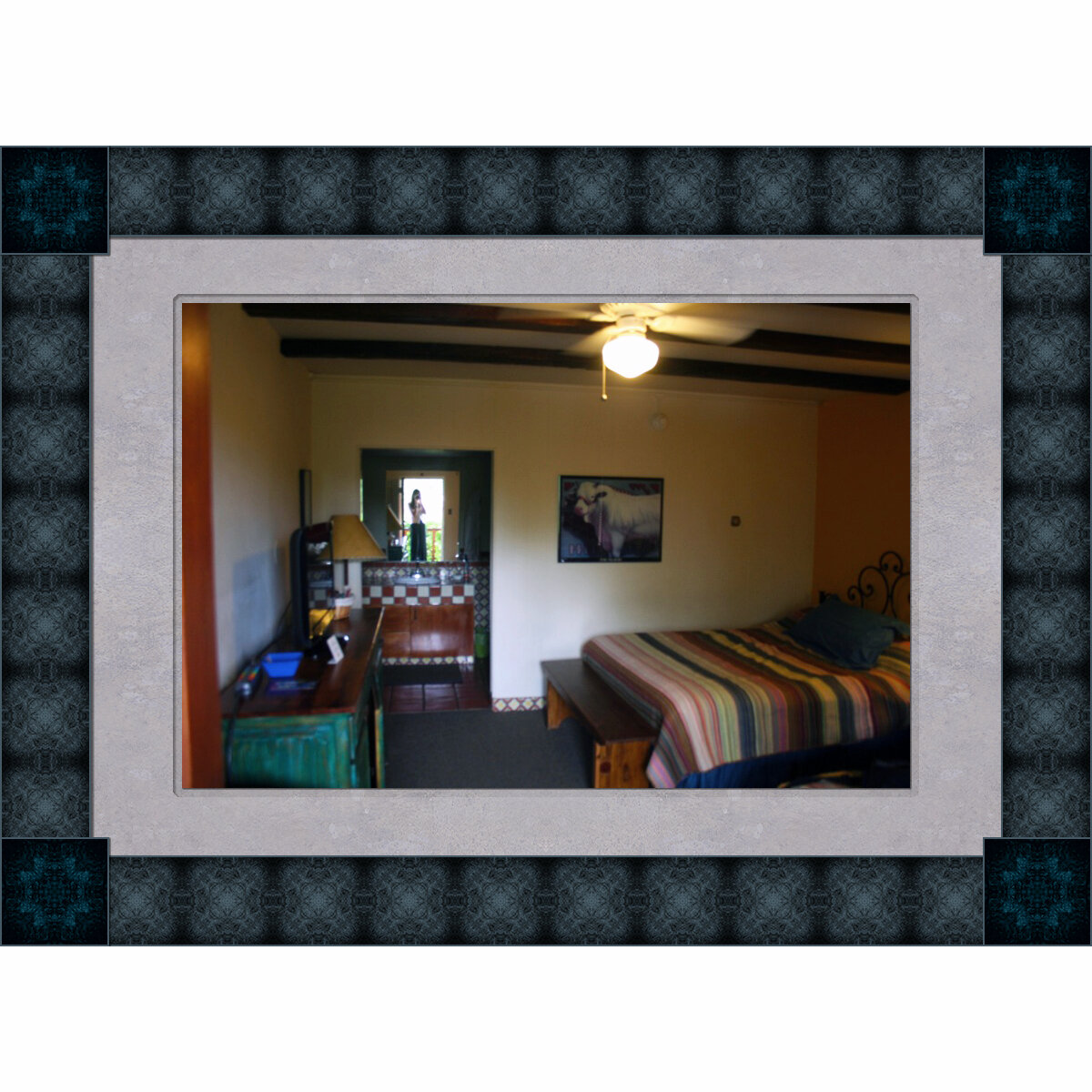
The technique I used to assemble the images in “I don’t understand it” is fairly simple, done in Photoshop. The source material includes art that was presented in my exhibit “VALUBL OBJX” at Made in Astoria gallery in late summer 2023. Mostly these are small works on paper done in ink, watercolor and Flashe Vinyl paint. I also sampled larger paintings from the “EVENT” series. Pictorial texture was created with samples of pigment-splattered or colored paper and ink washes on polyester. I added layers of historical maps of the Pacific Northwest, where I live. I added prospective assemblages of an imaginary art exhibit space created as visualization aids, published in Art for Humans online platforms over the past couple of years. The animation audio was composed and performed by Adam Cotton for an exhibit sound environment. I added some effects to the original to complete the soundtrack.

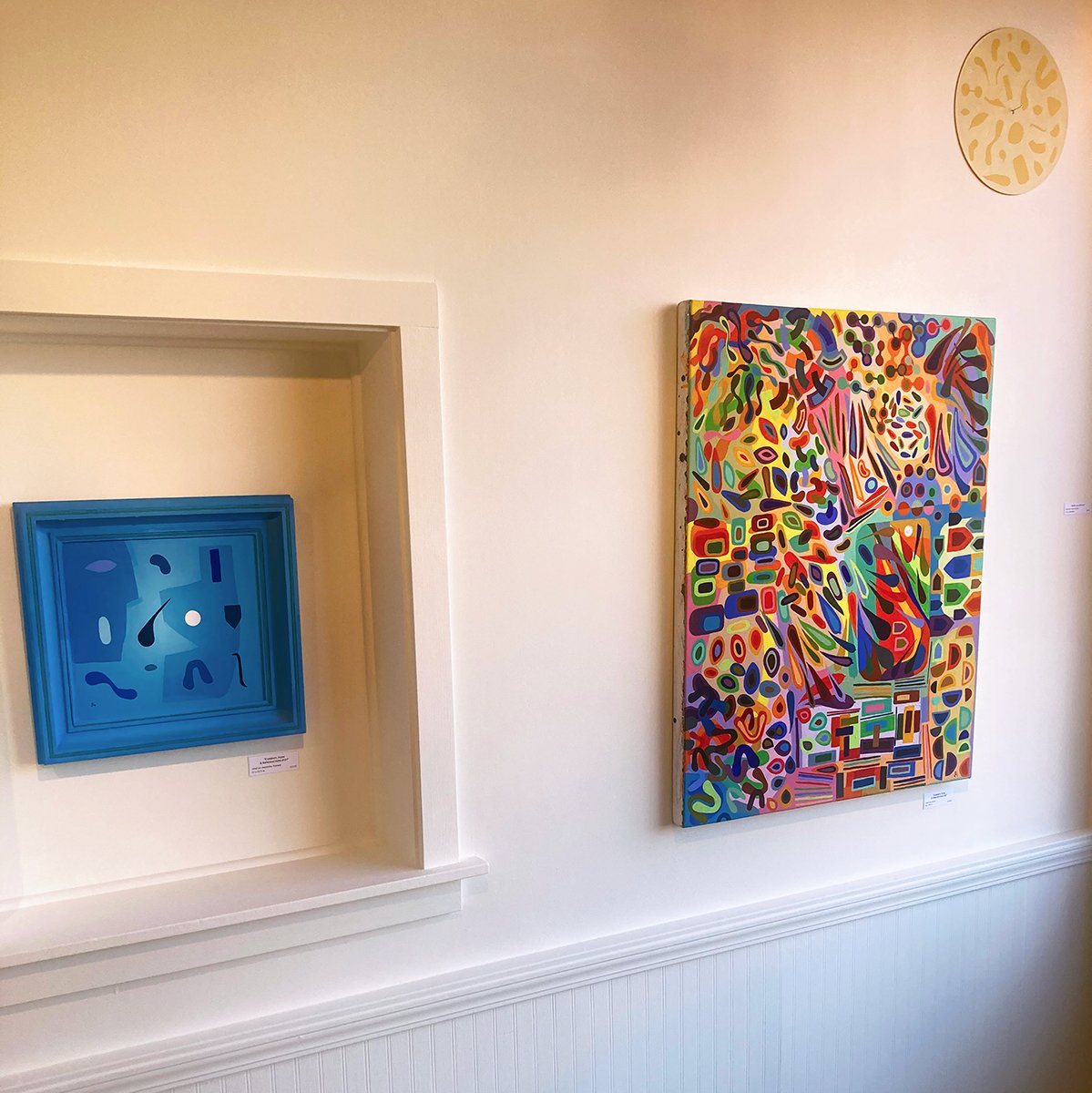
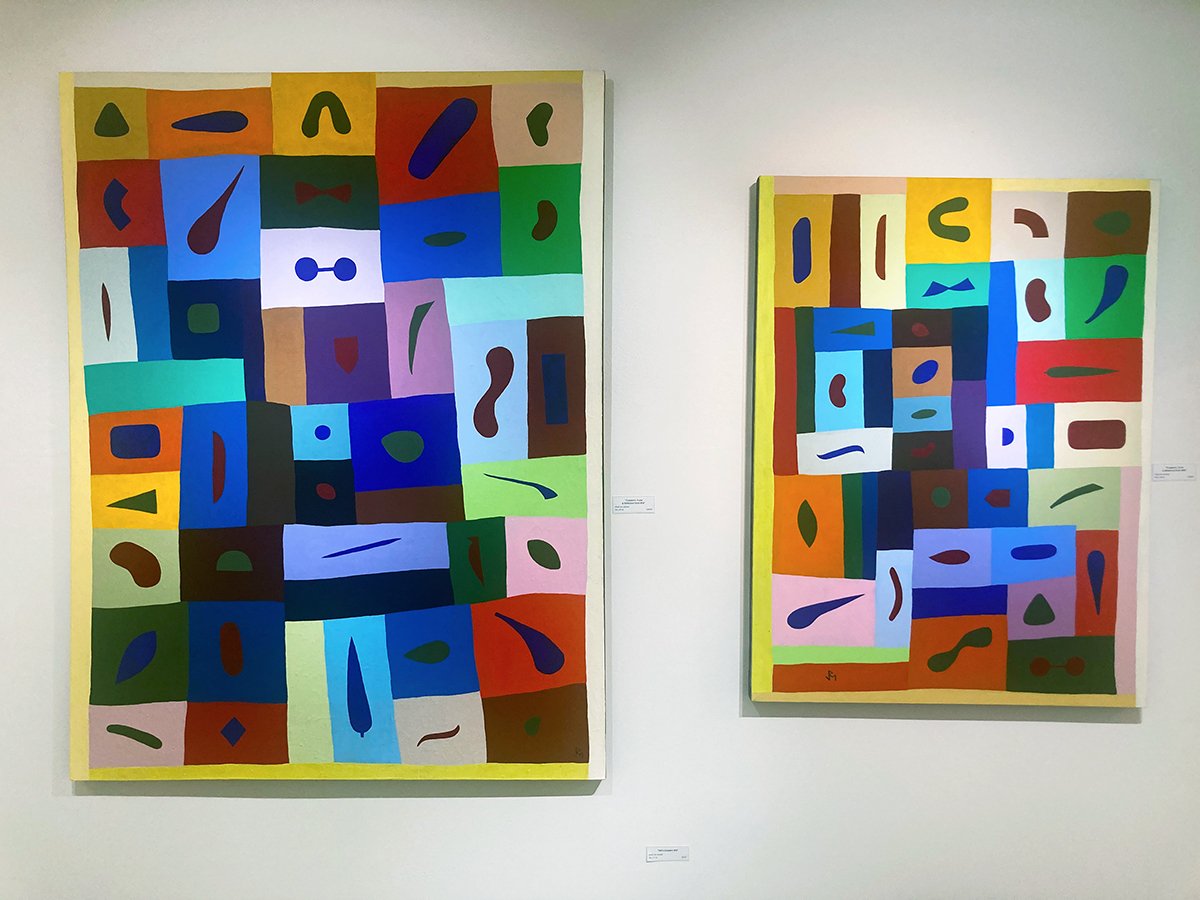
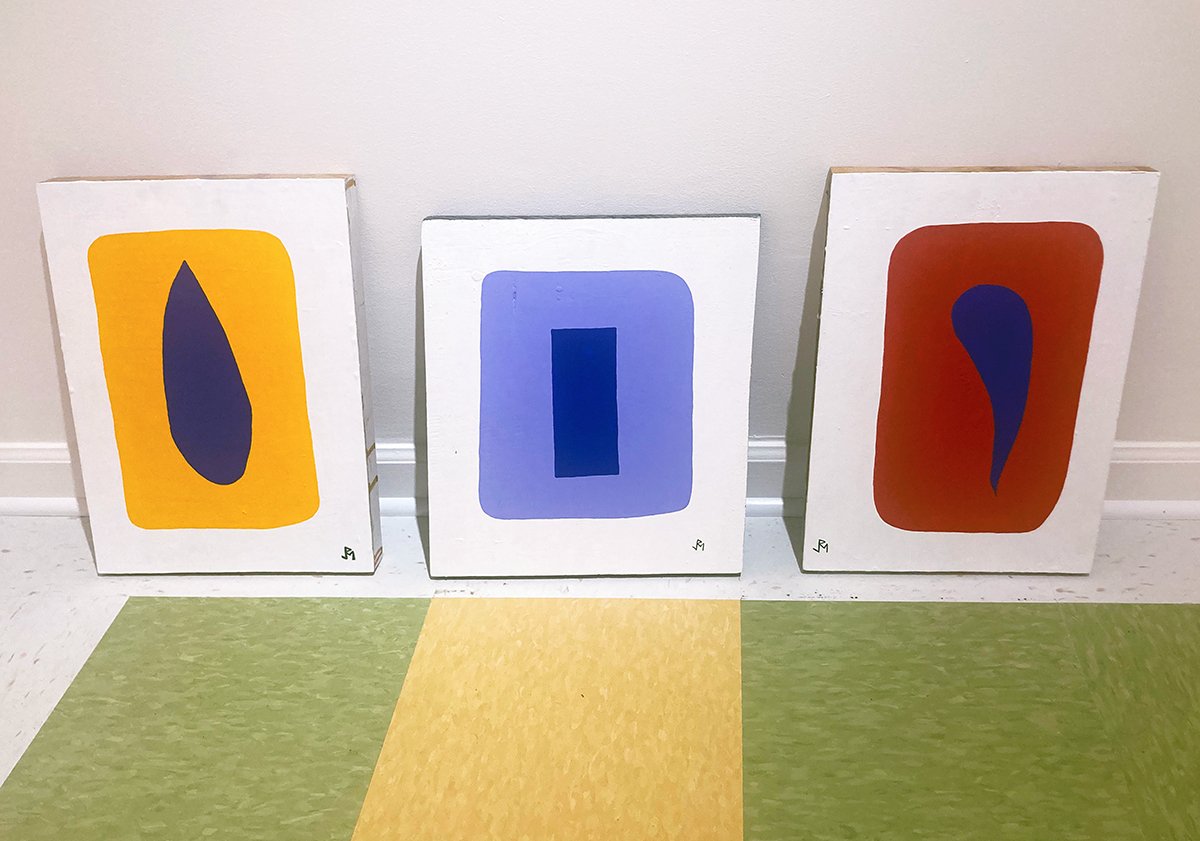
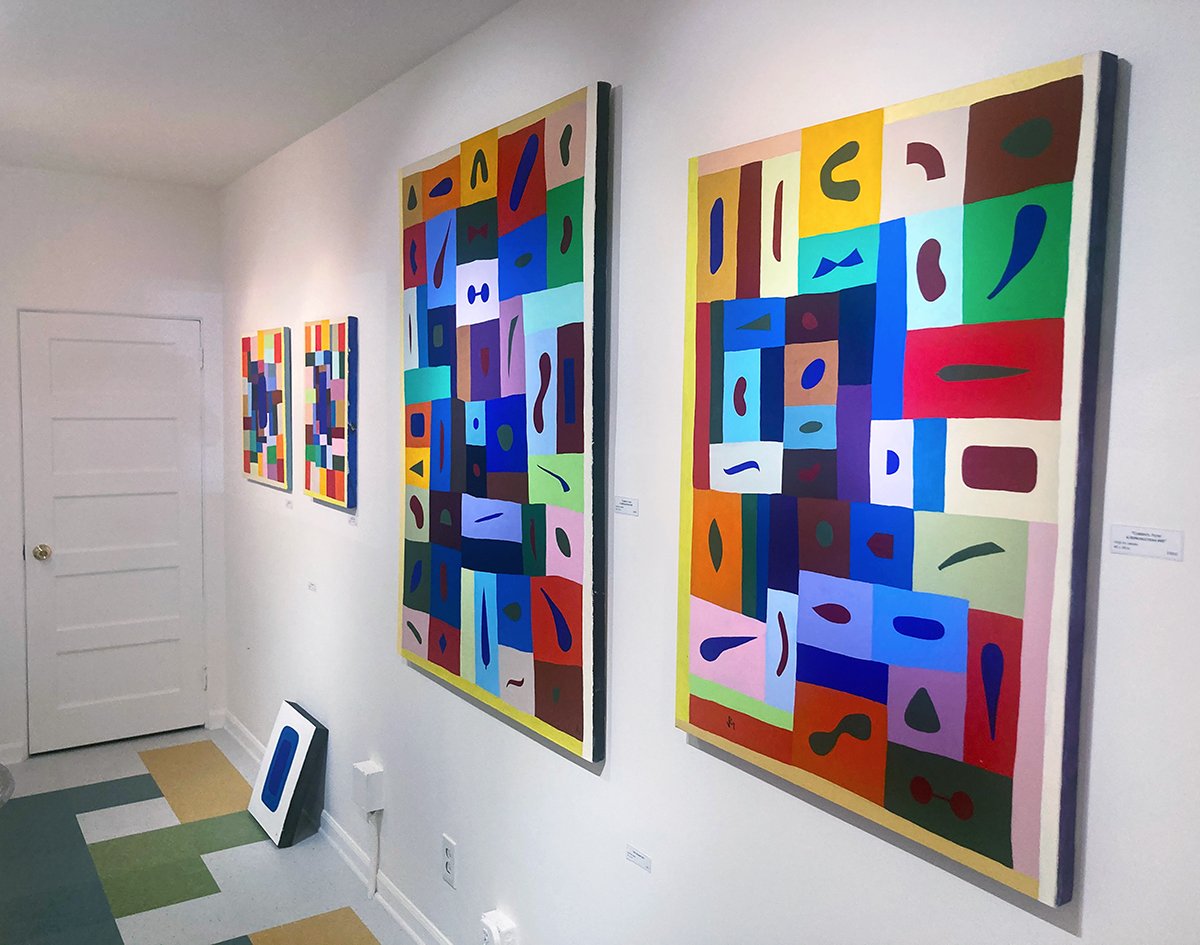
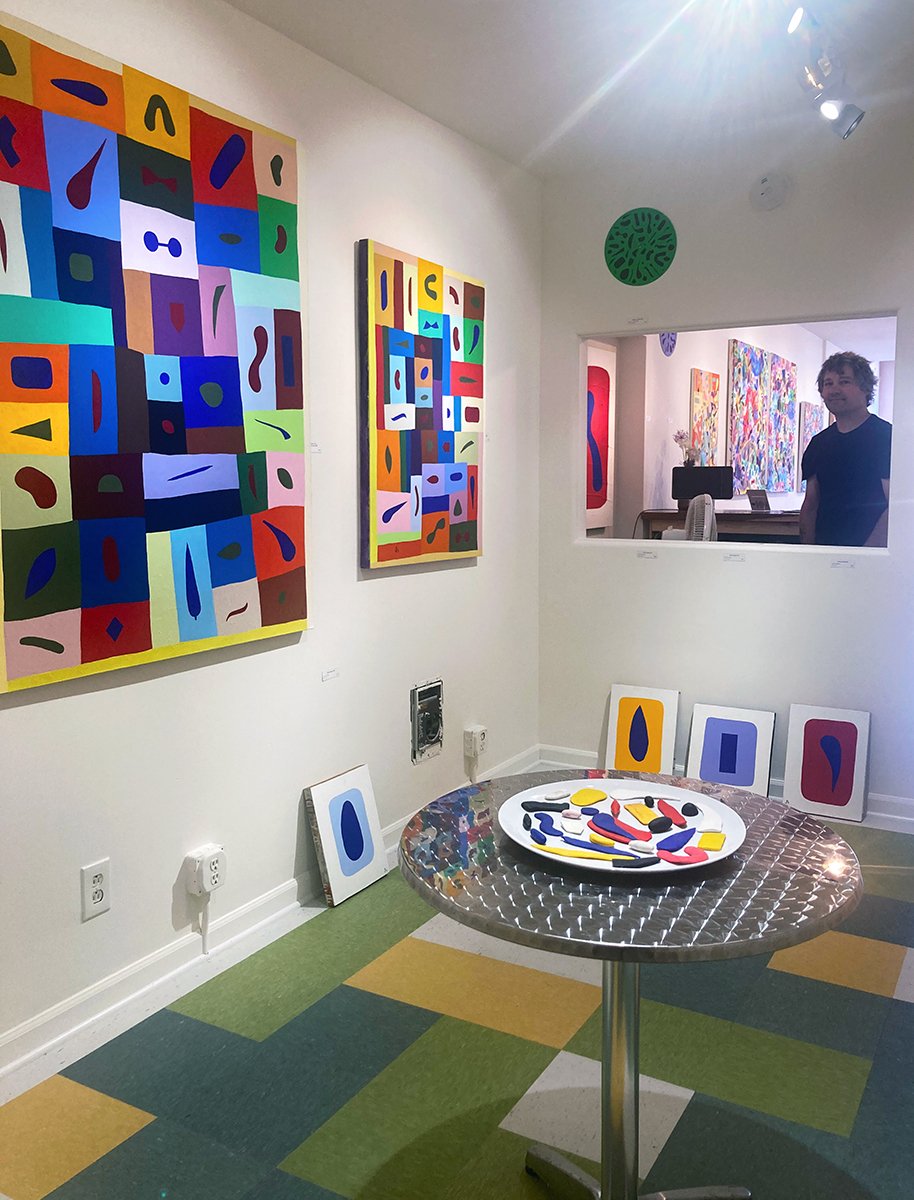
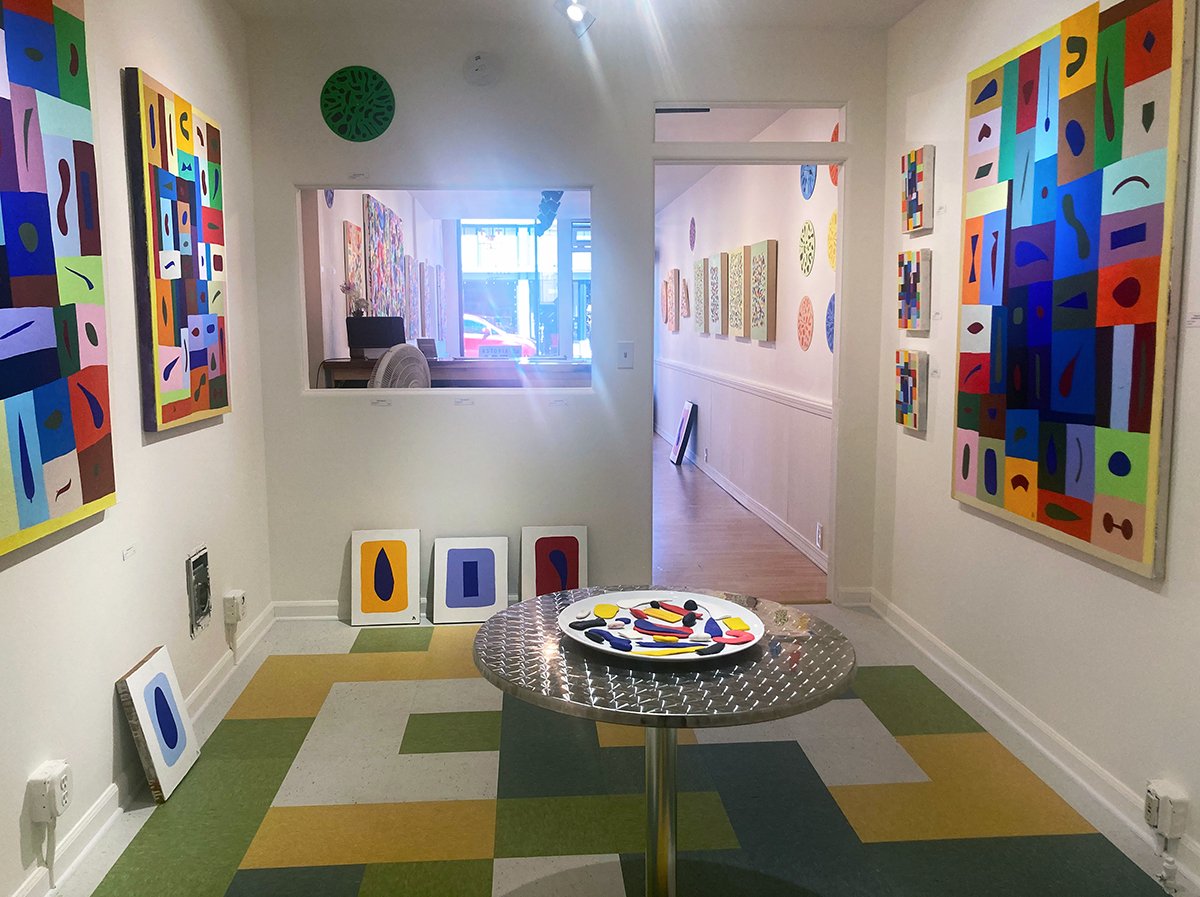
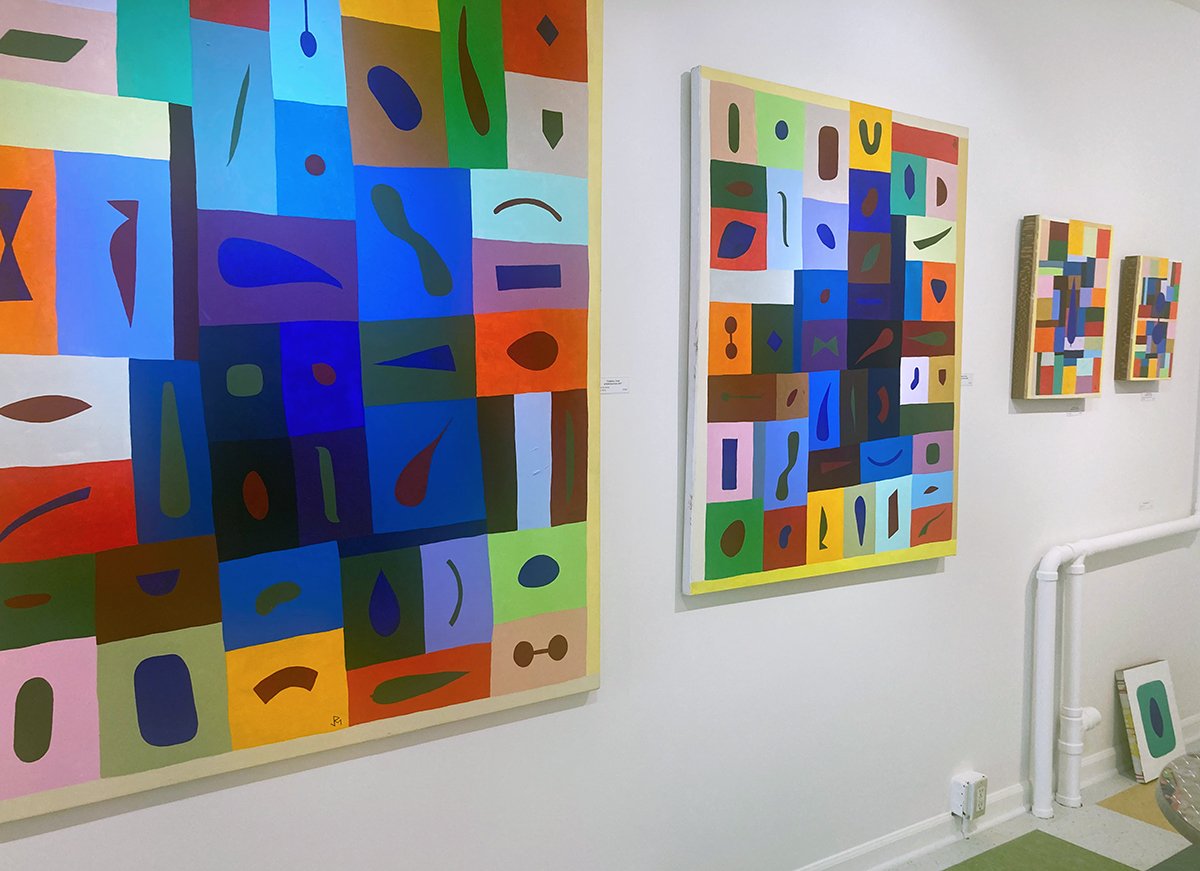
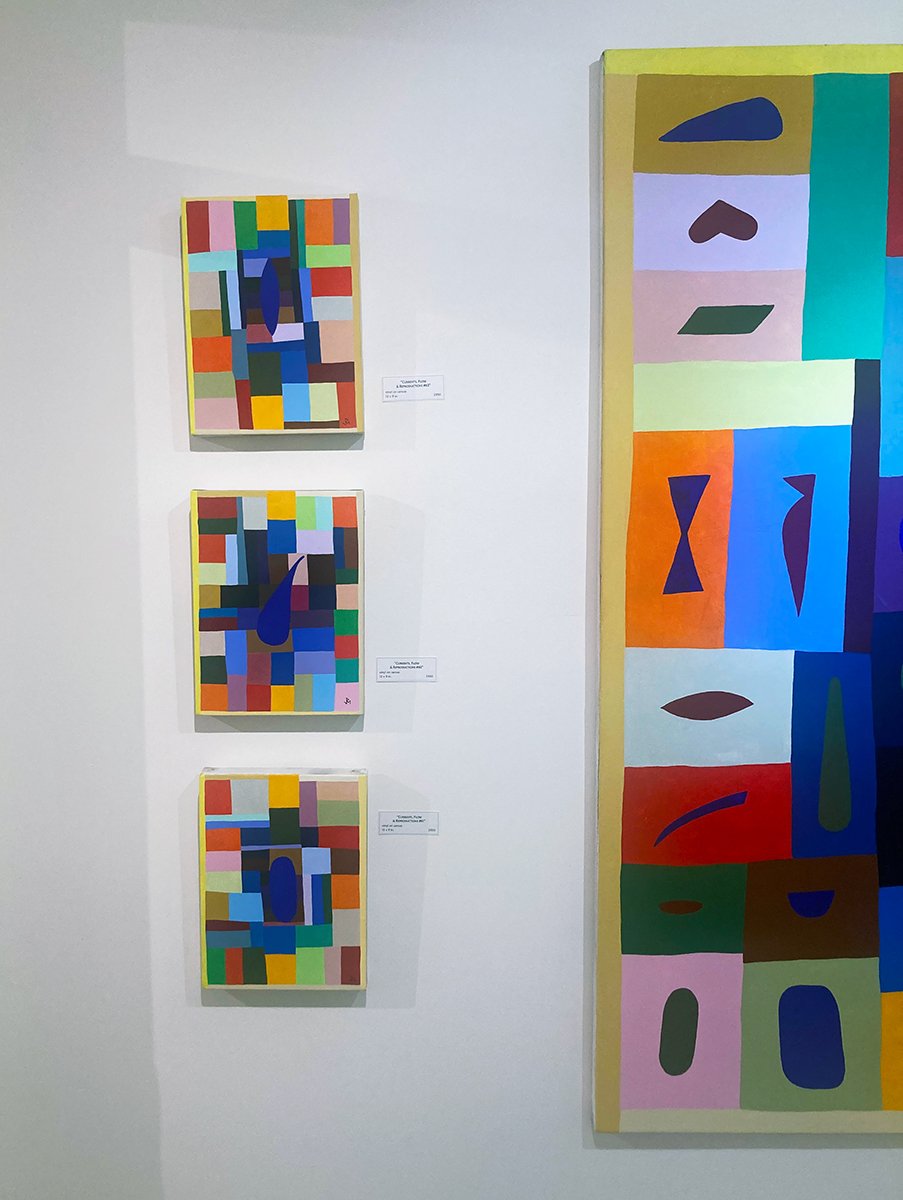
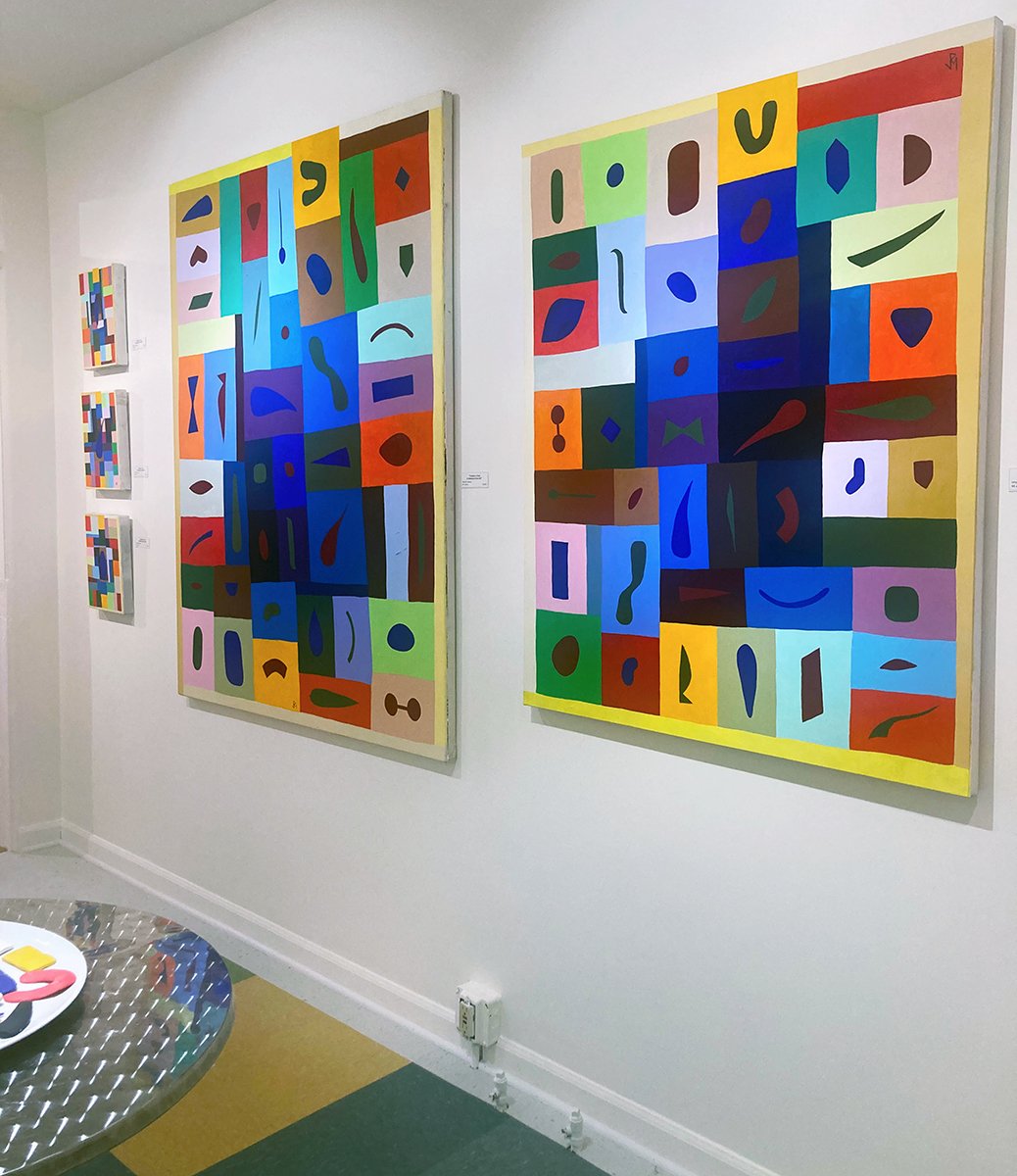
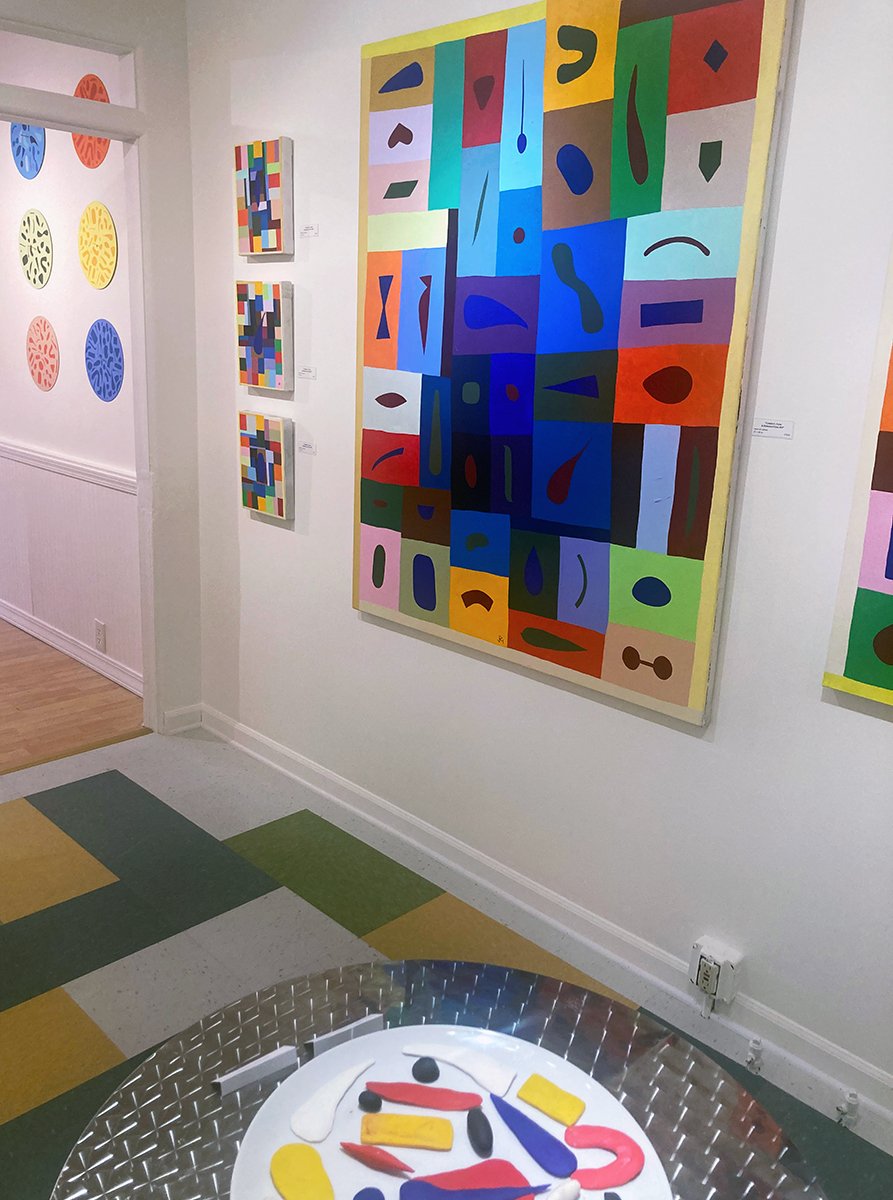
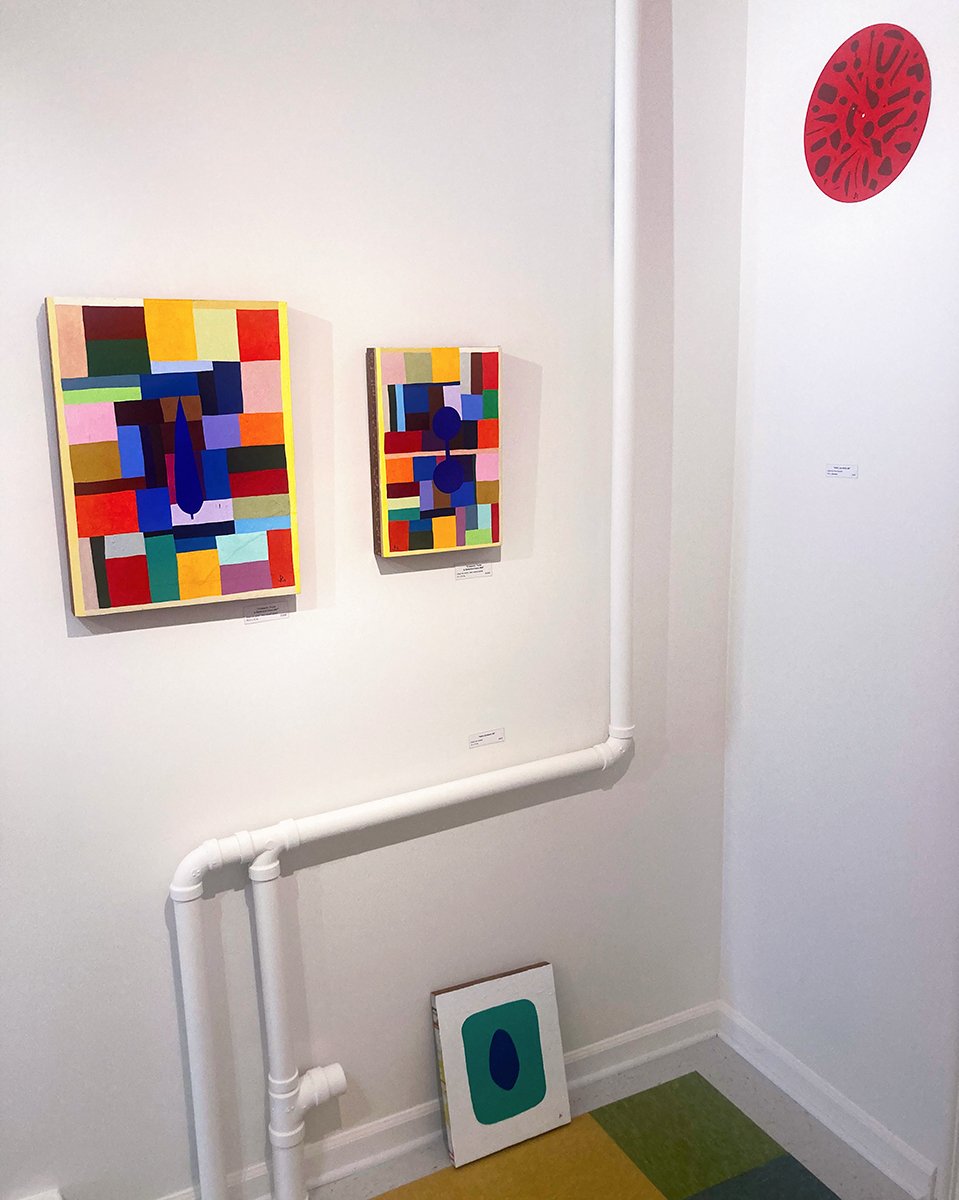
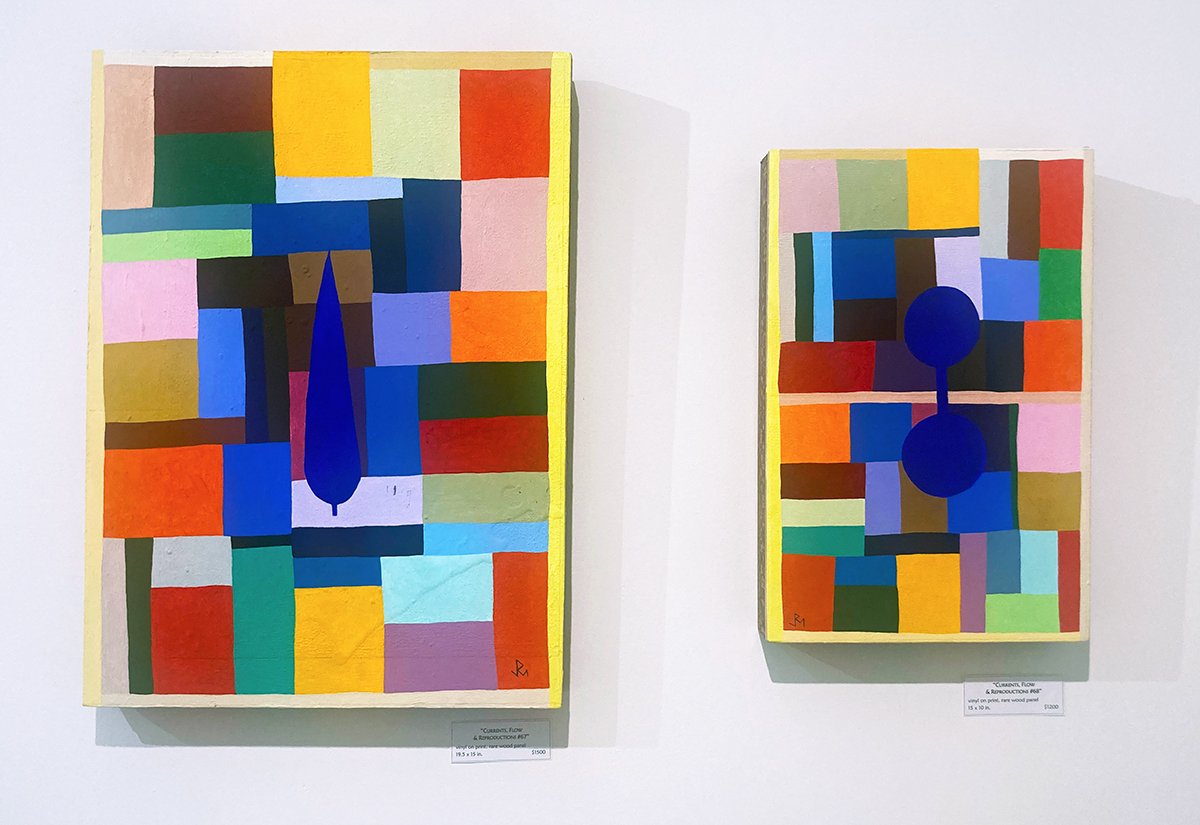
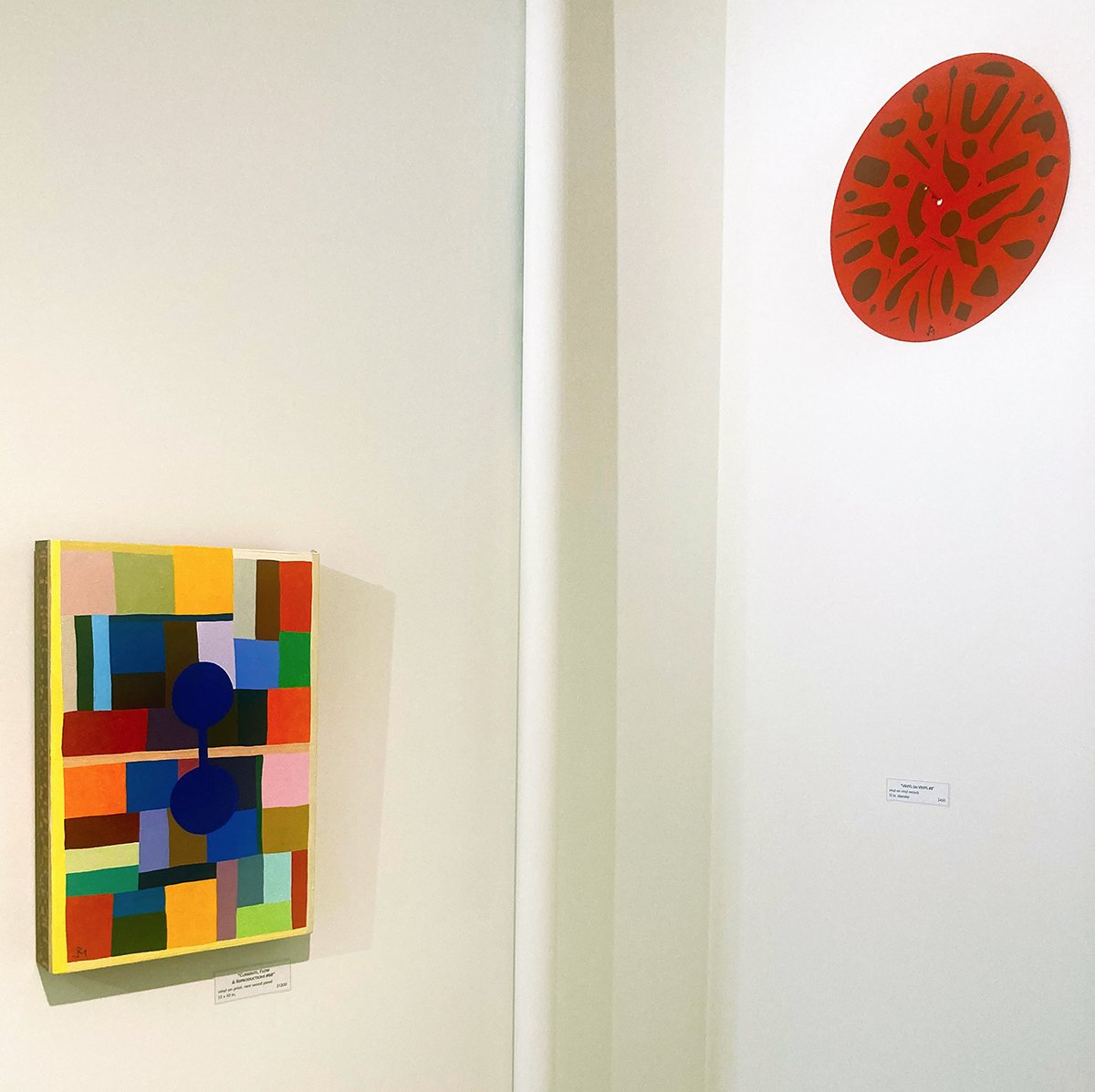
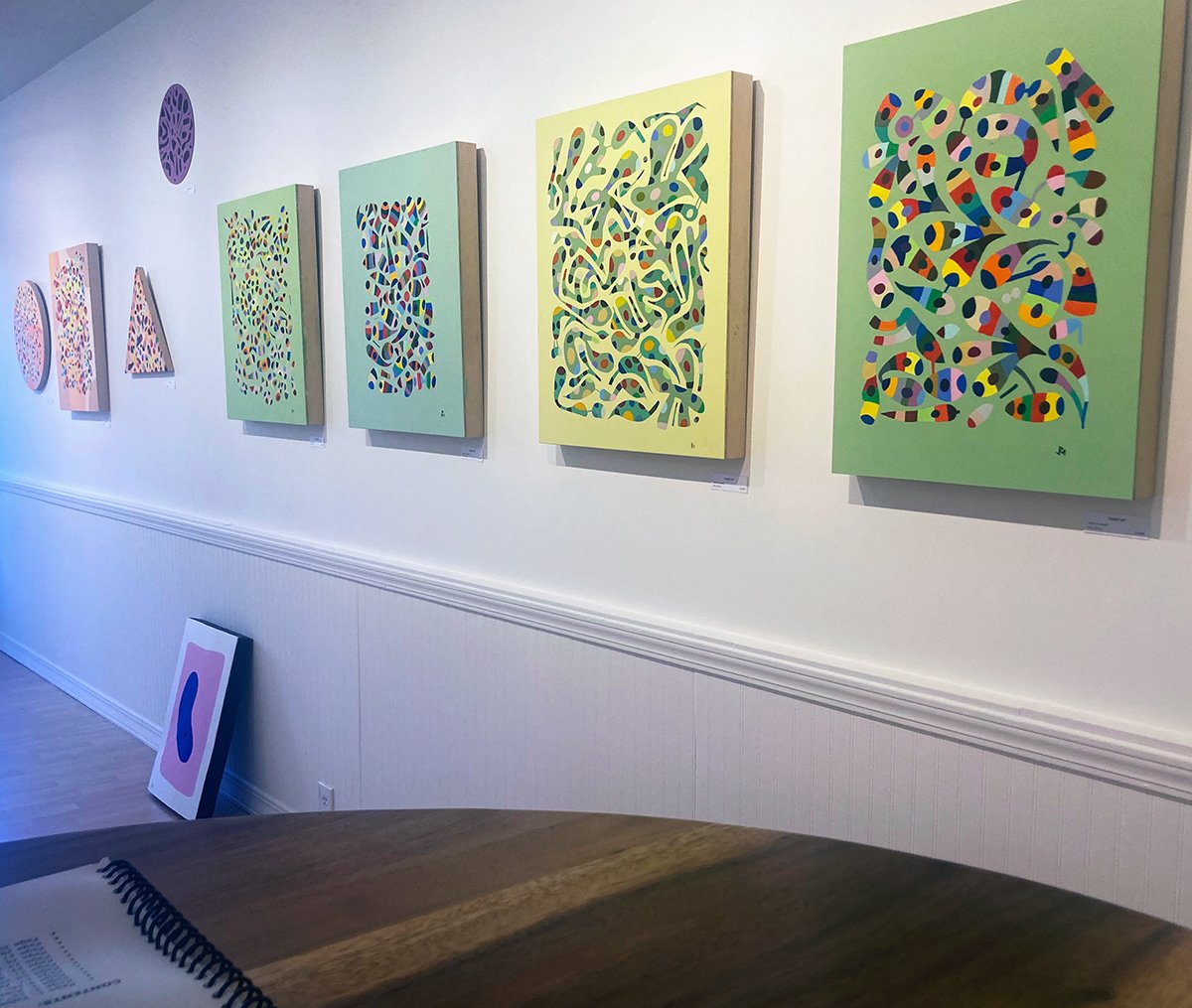
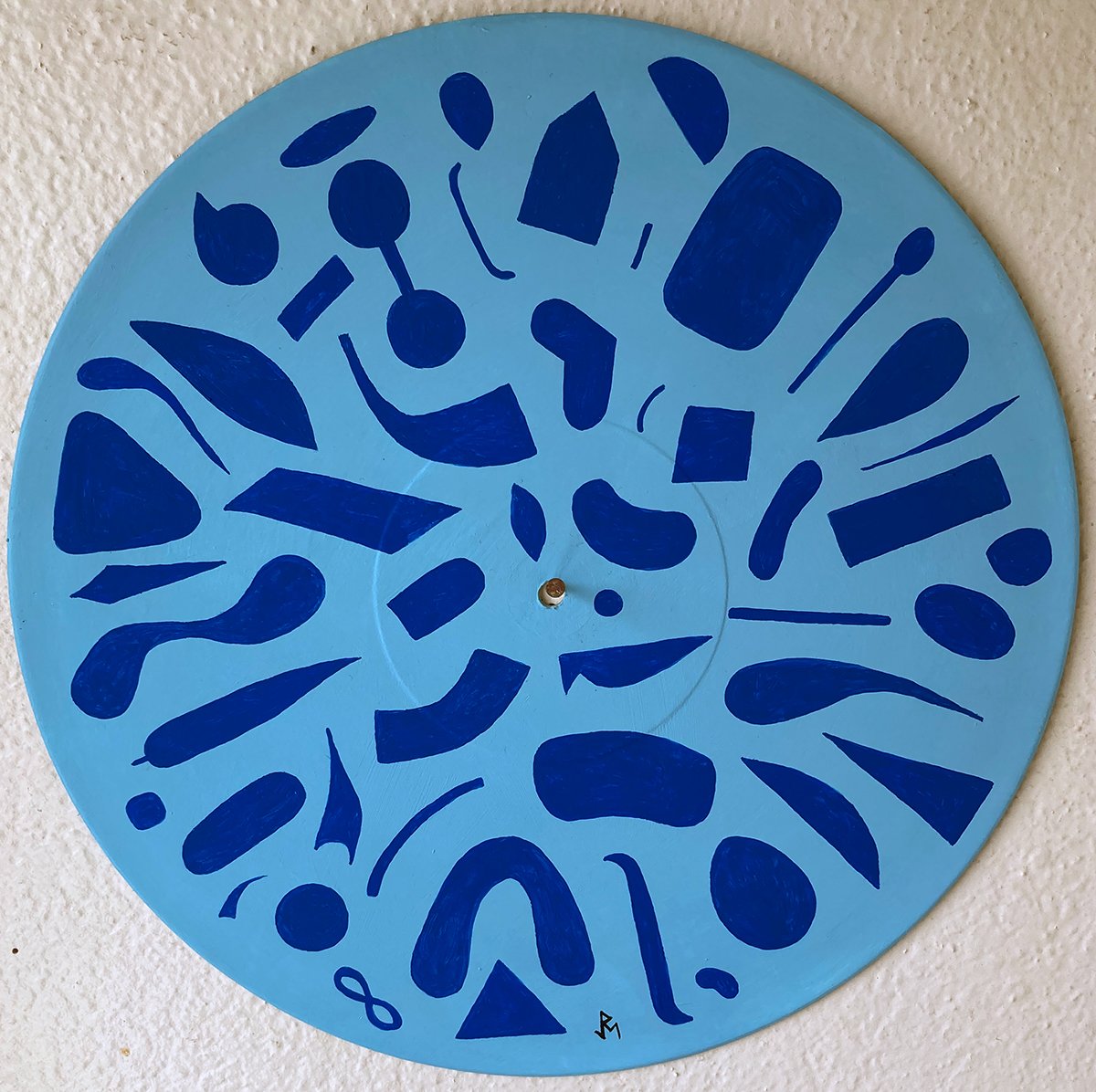
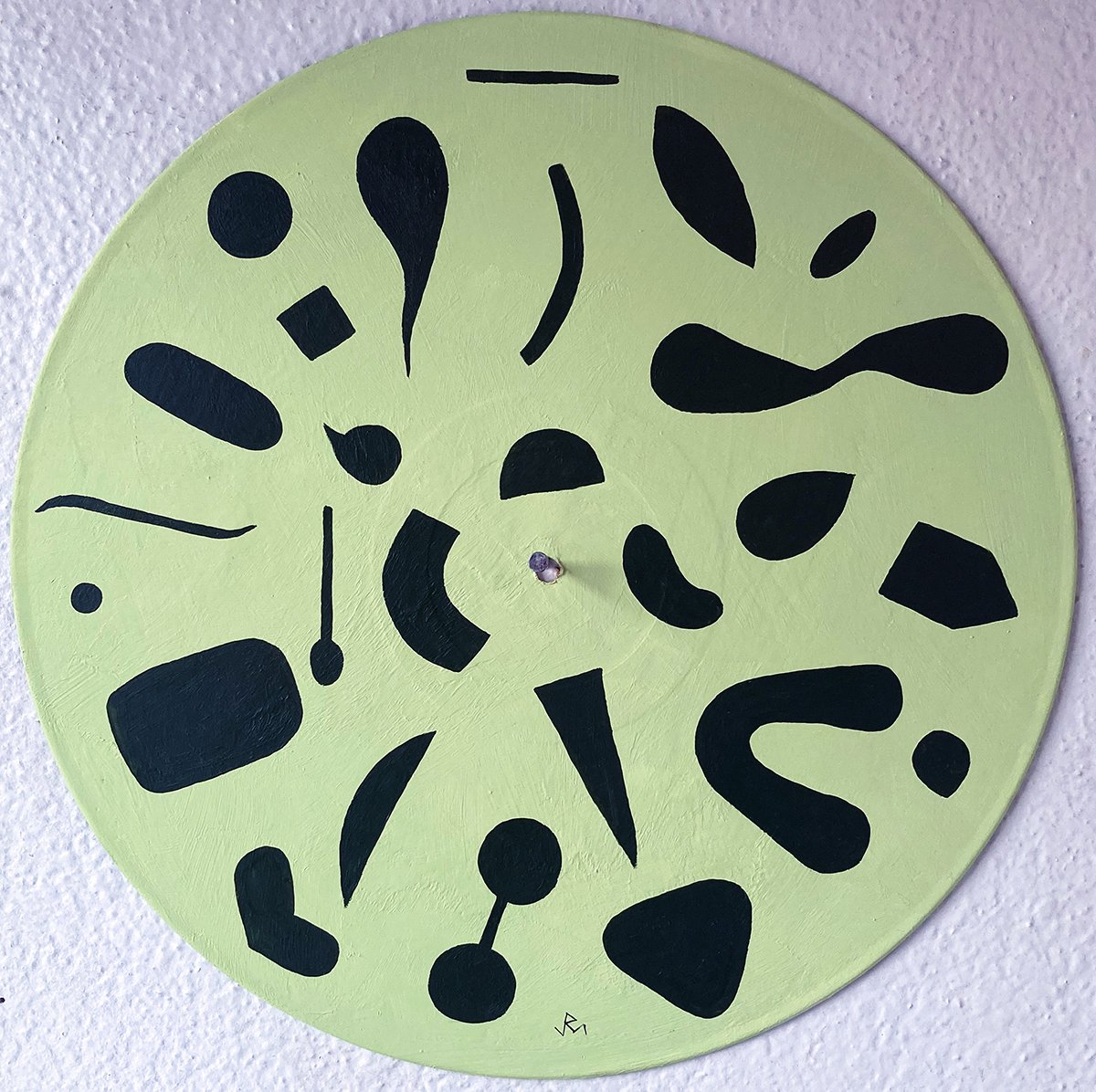
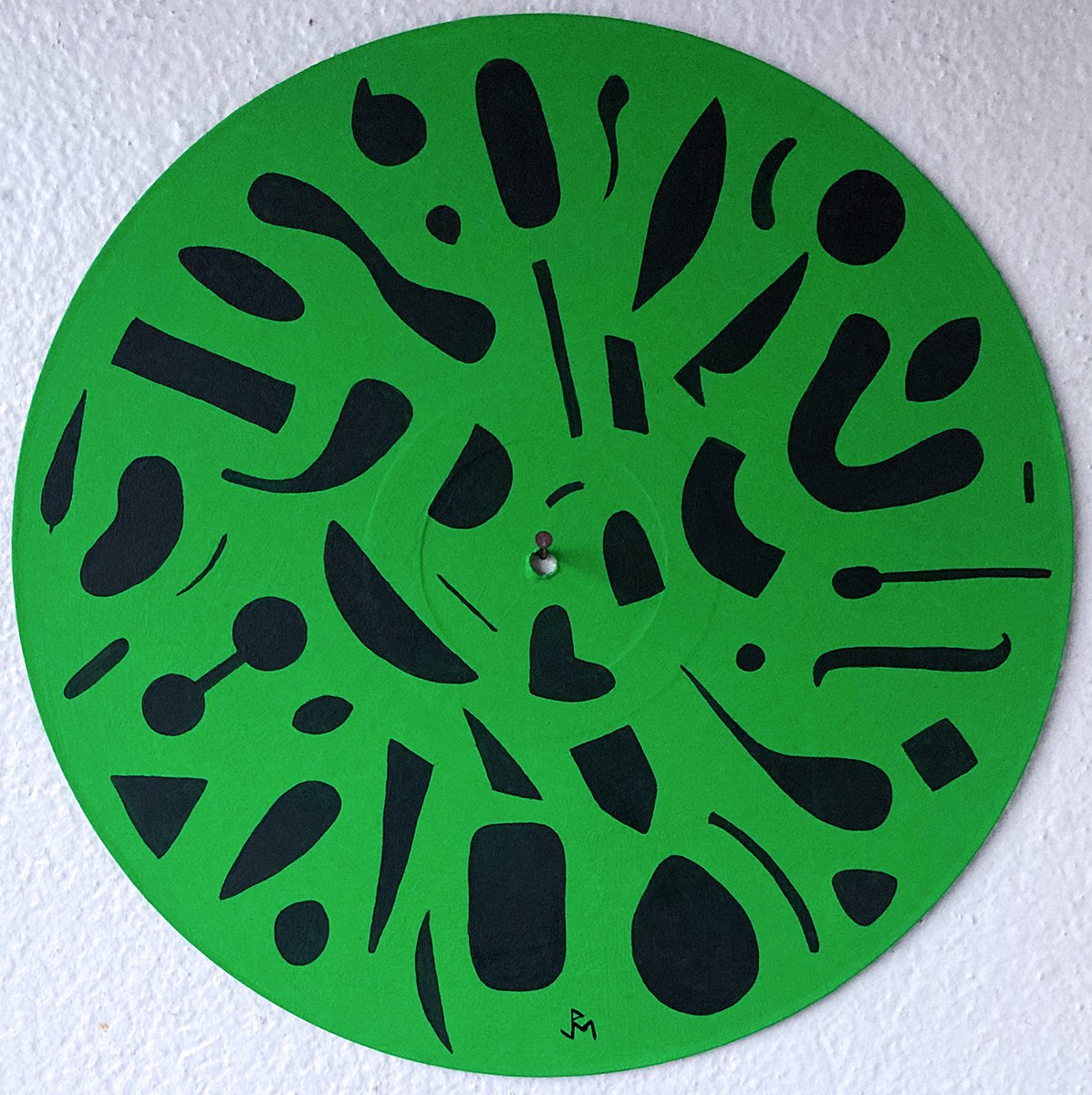
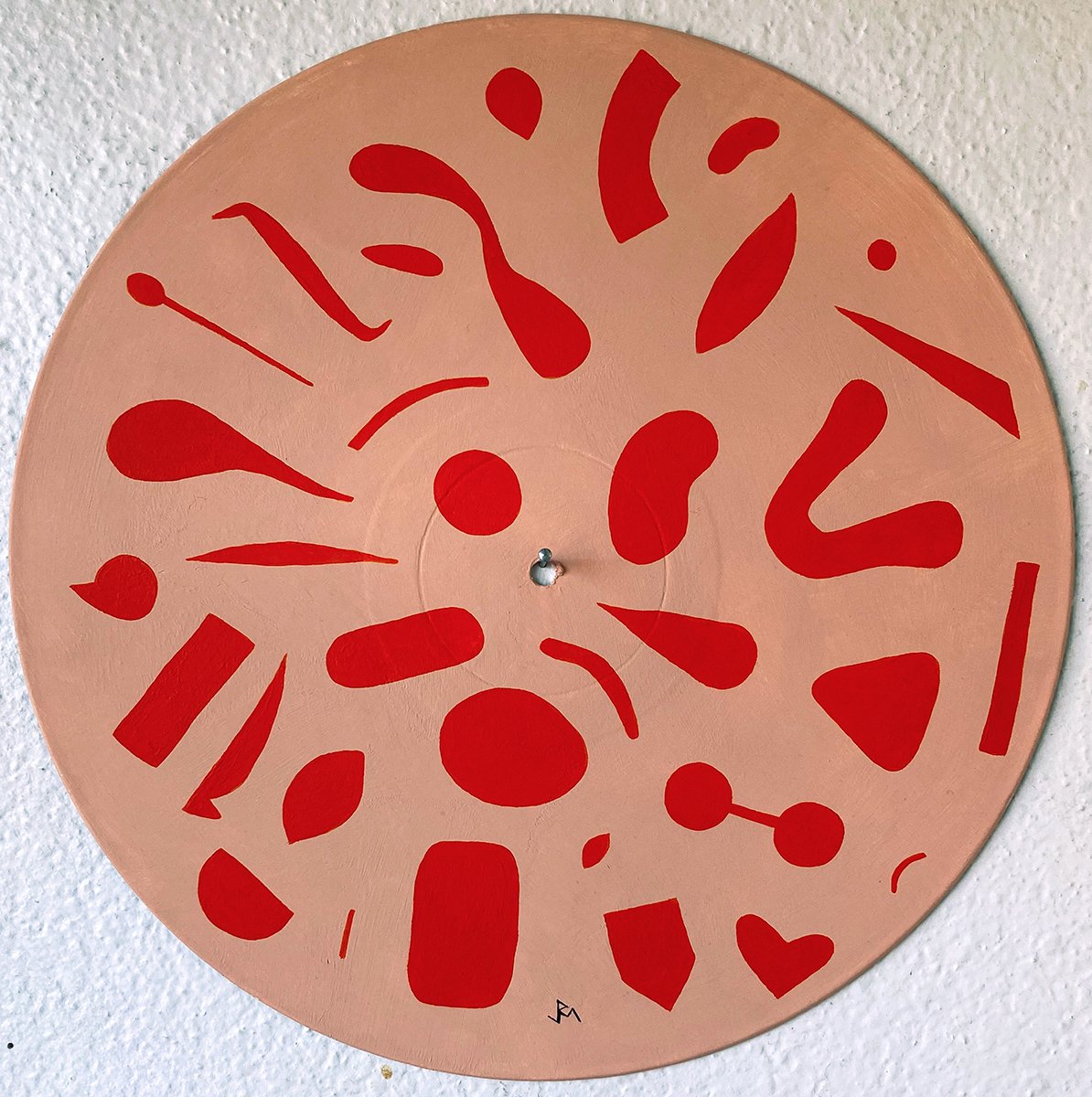
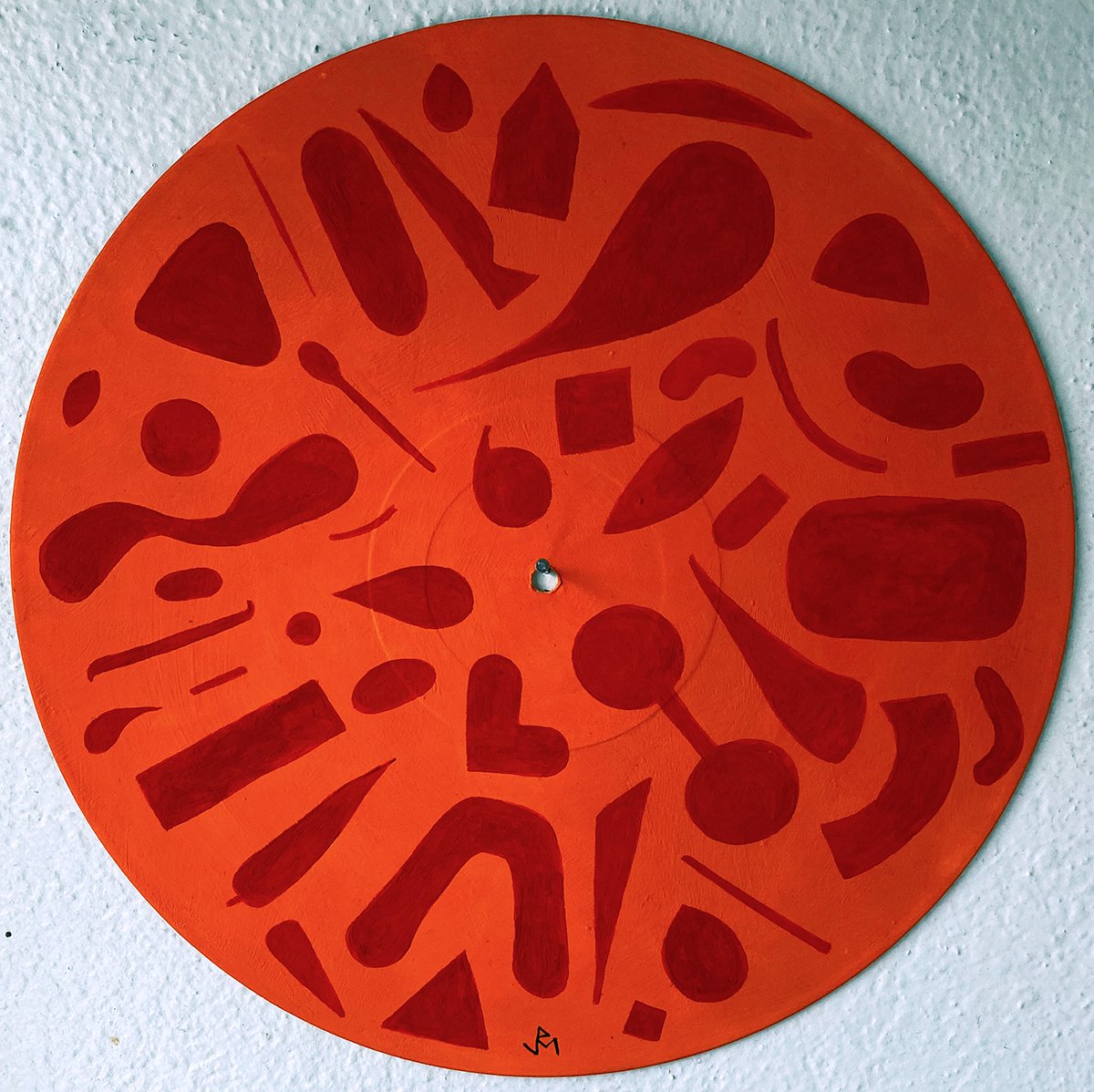
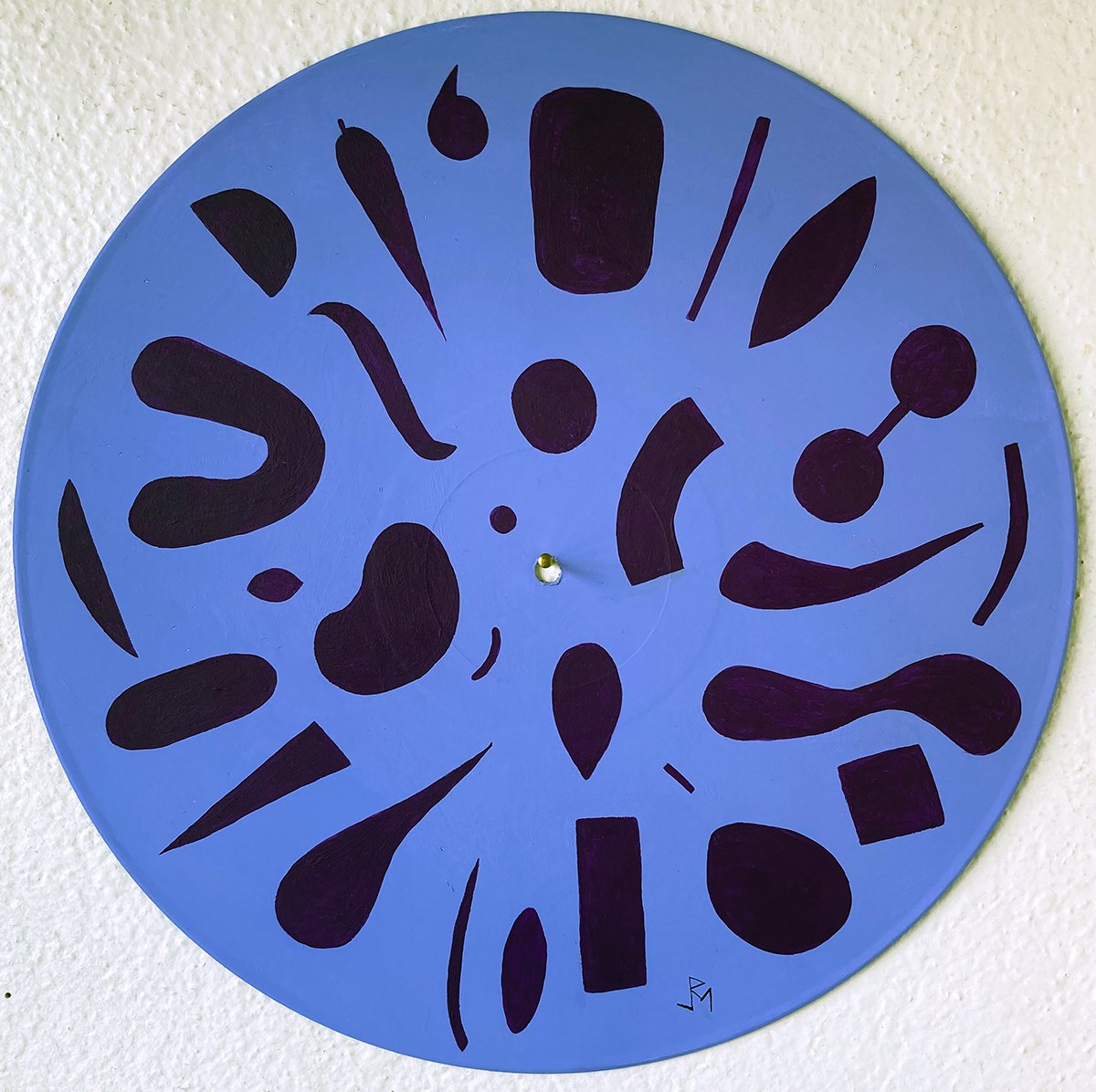
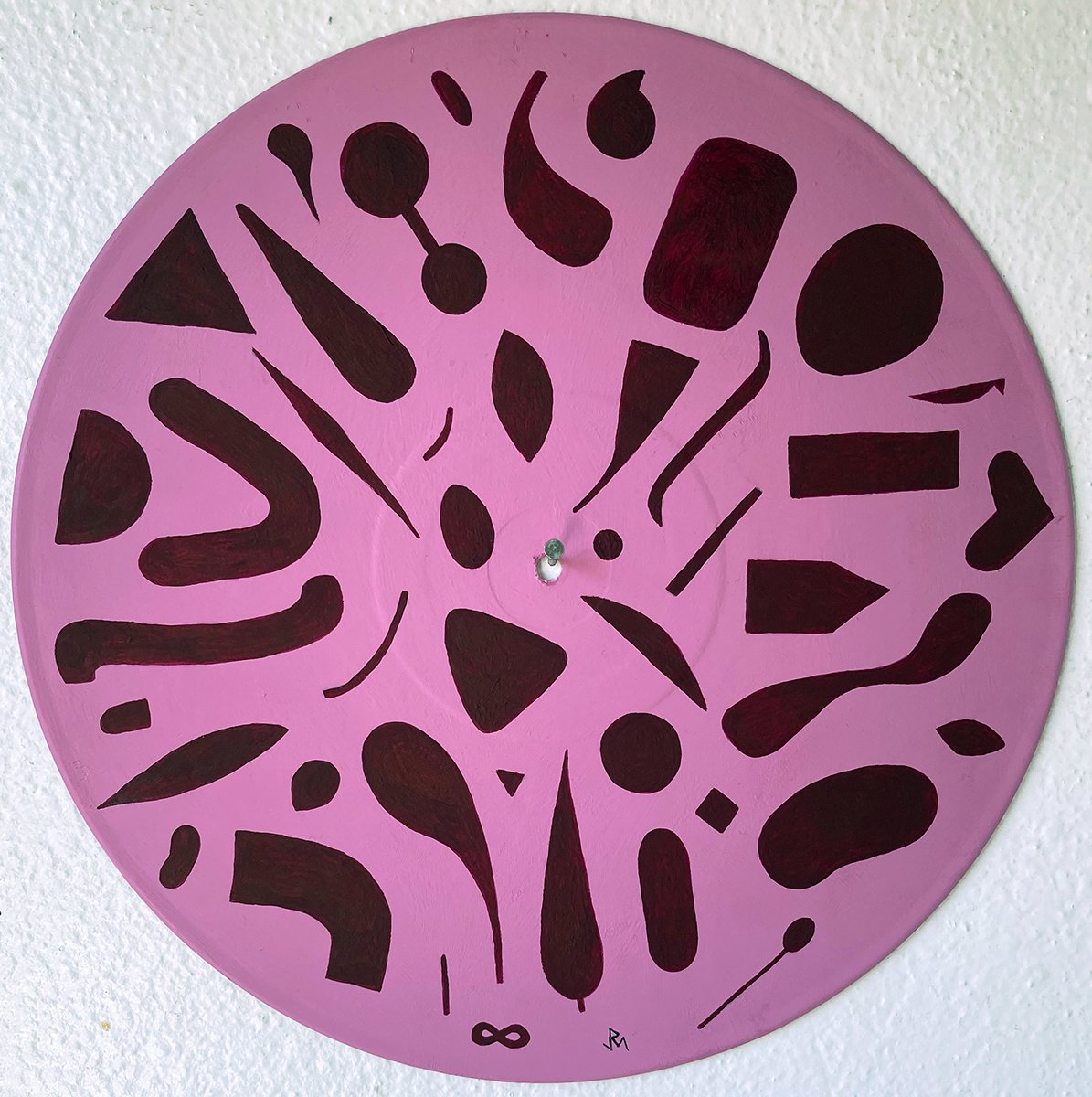
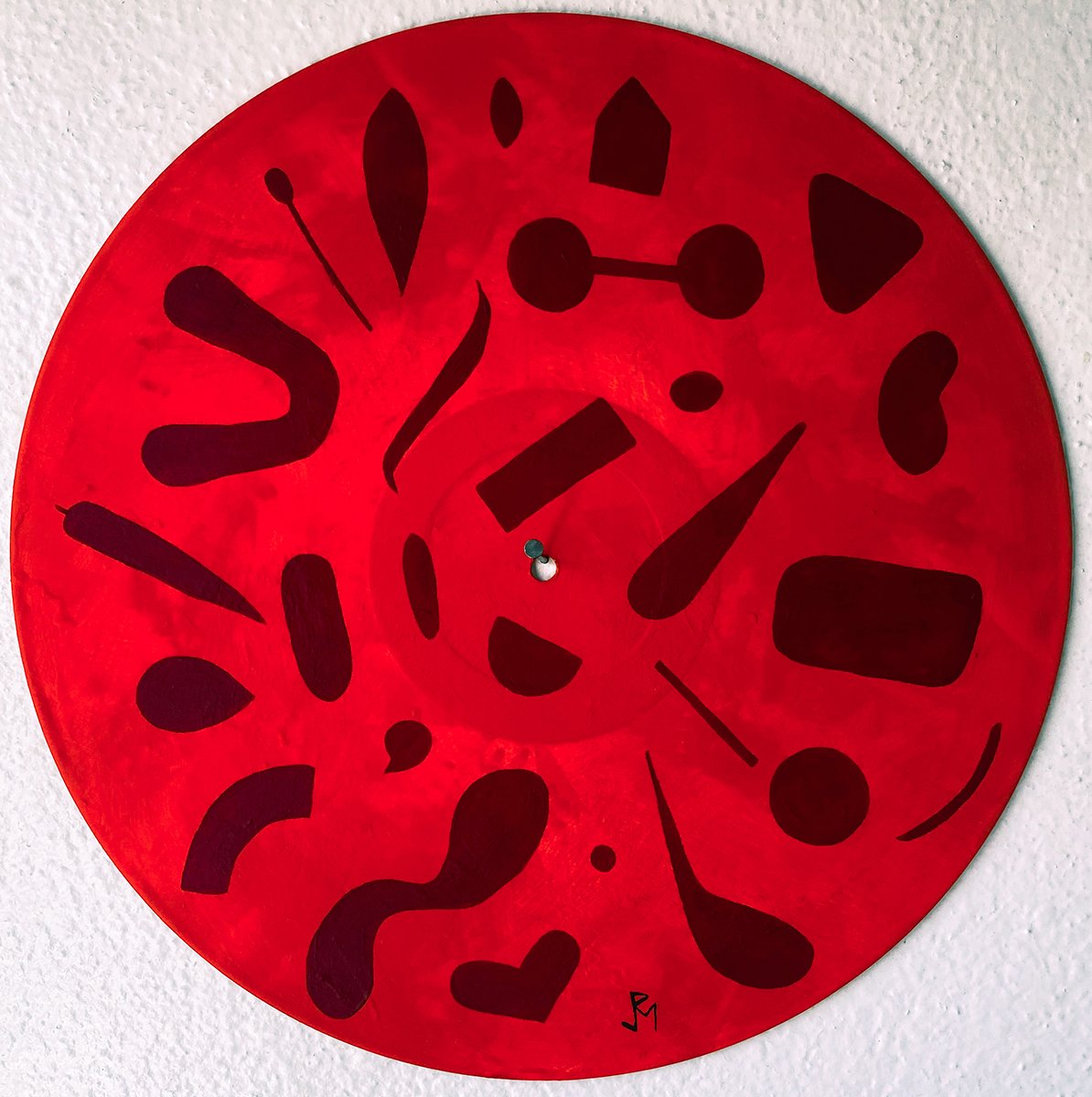
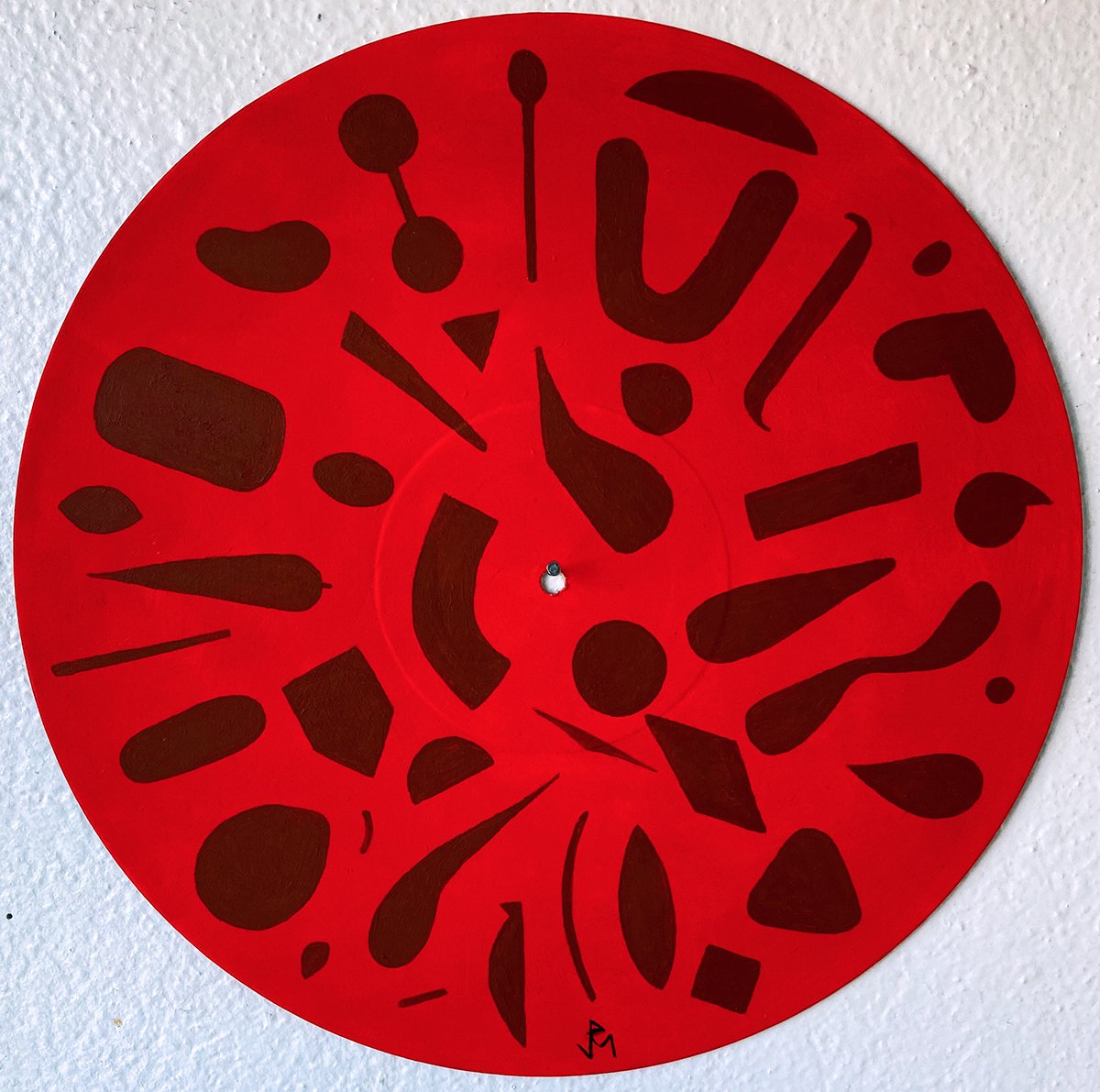
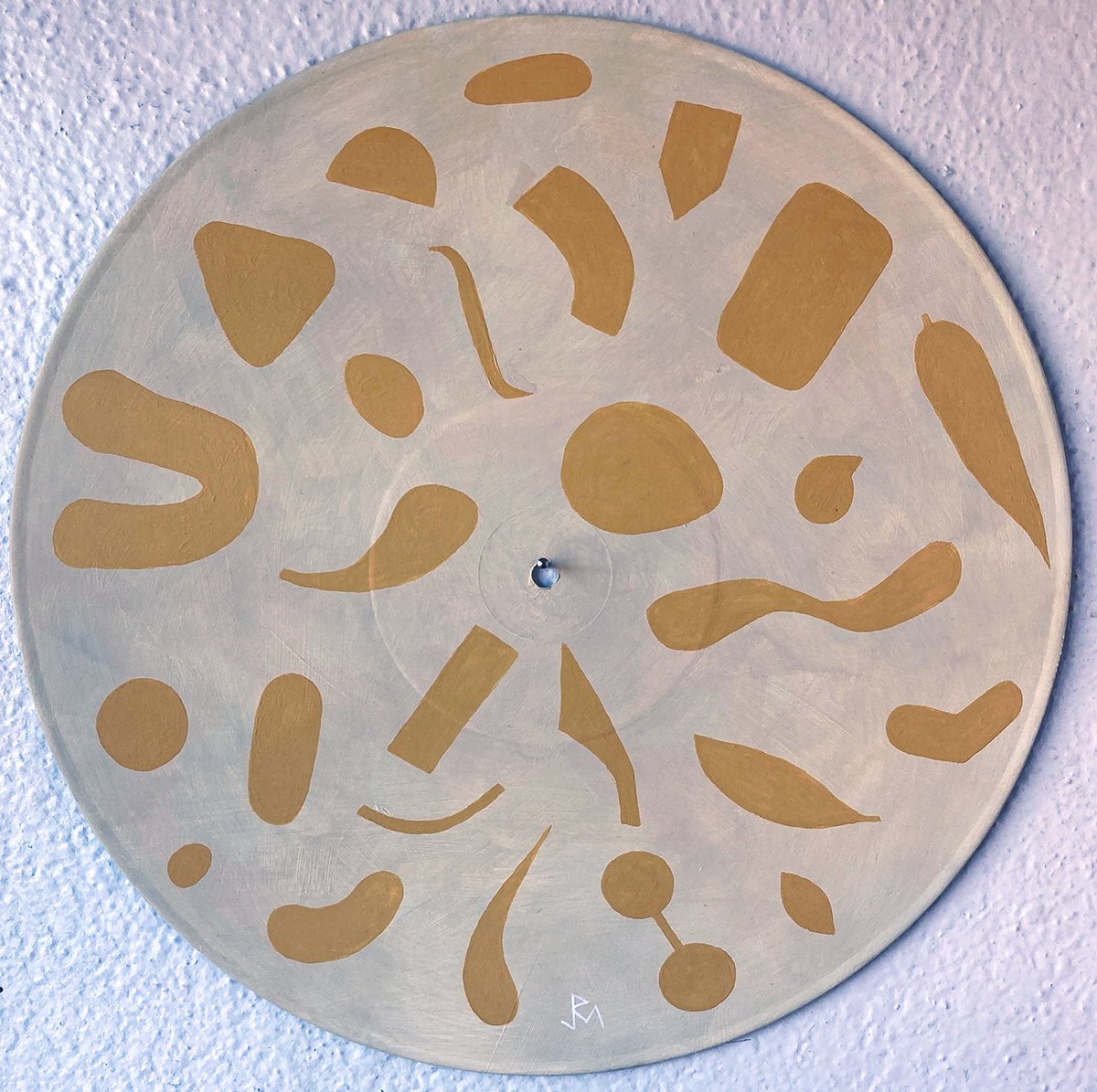
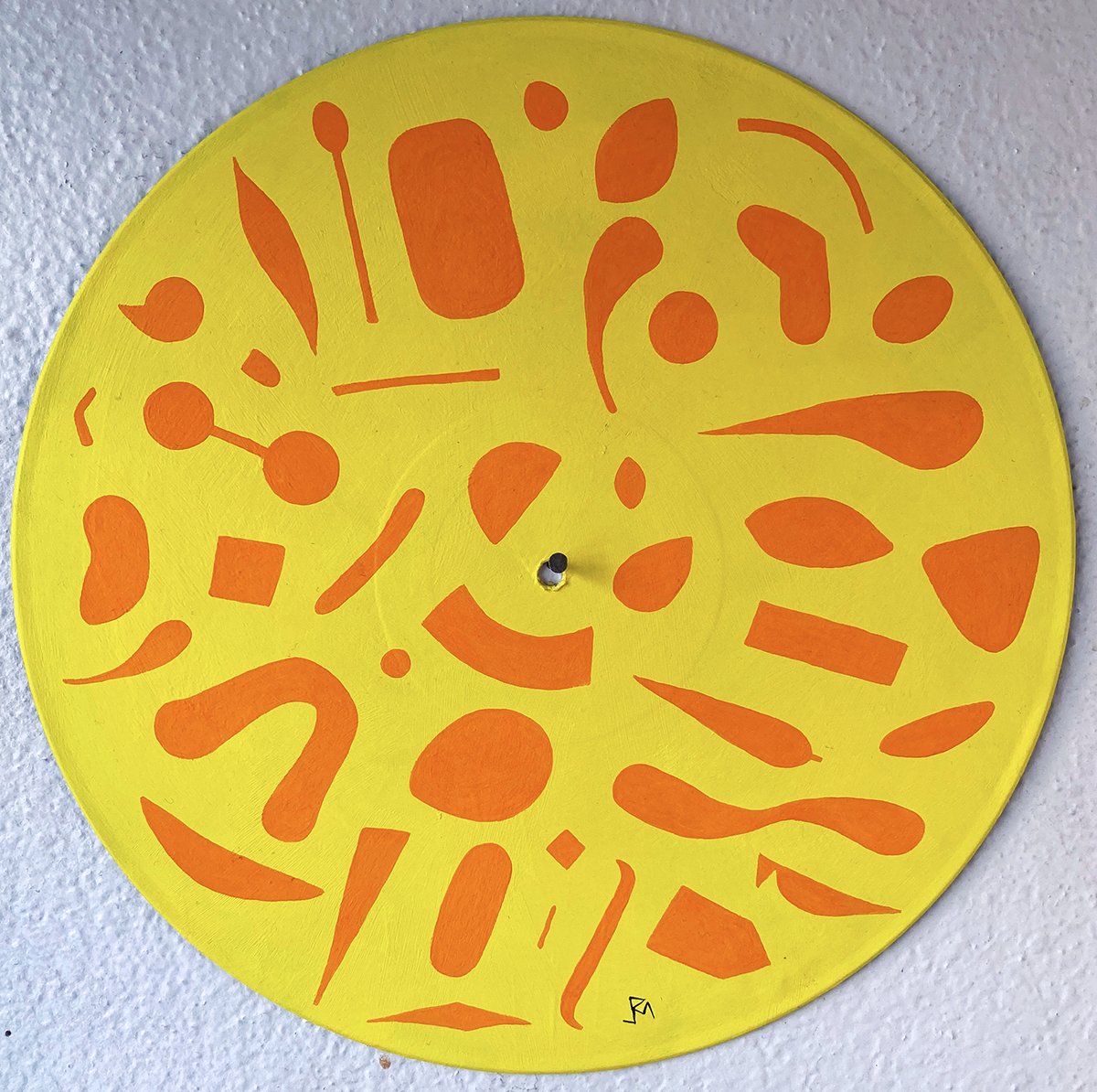
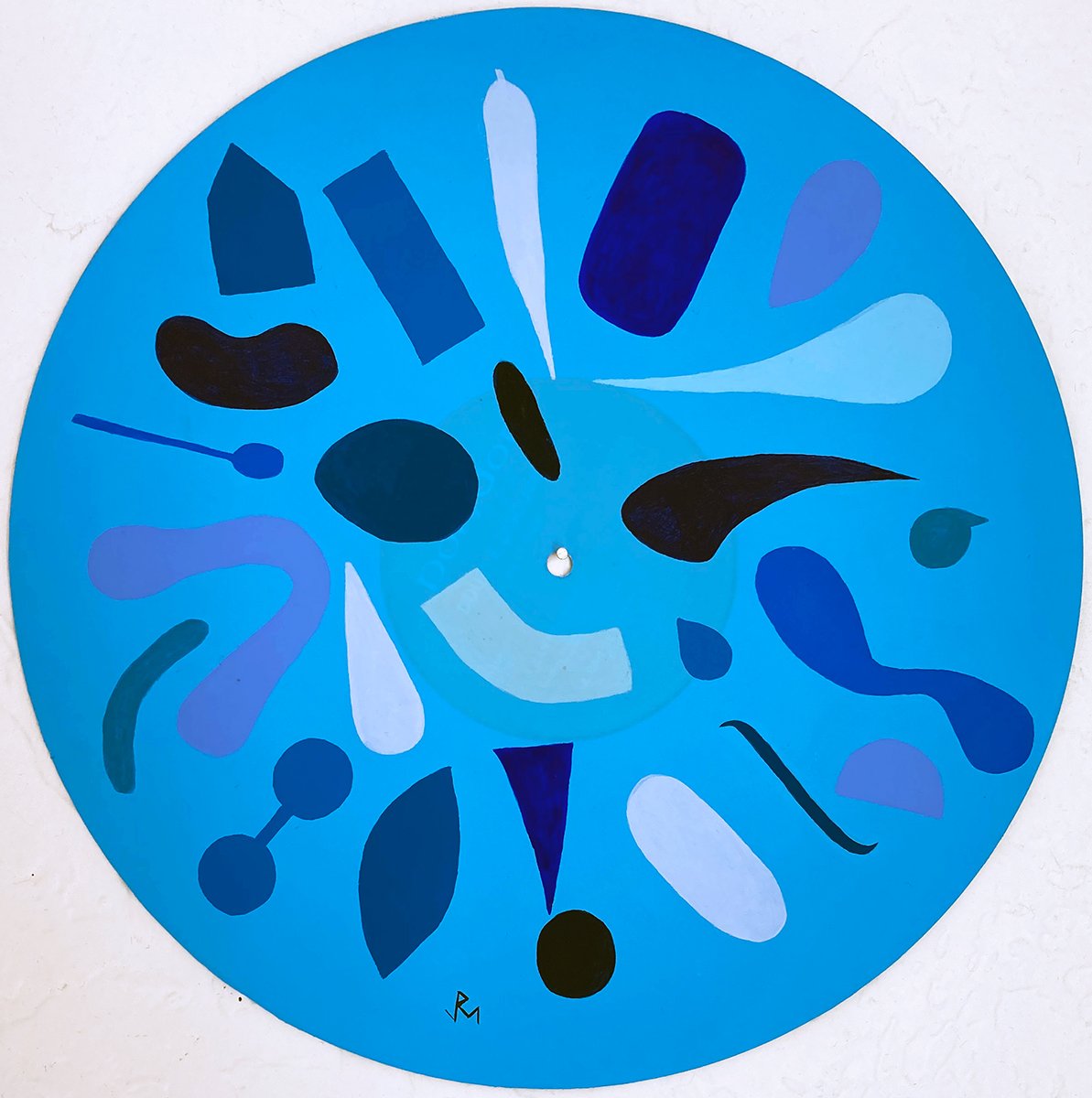
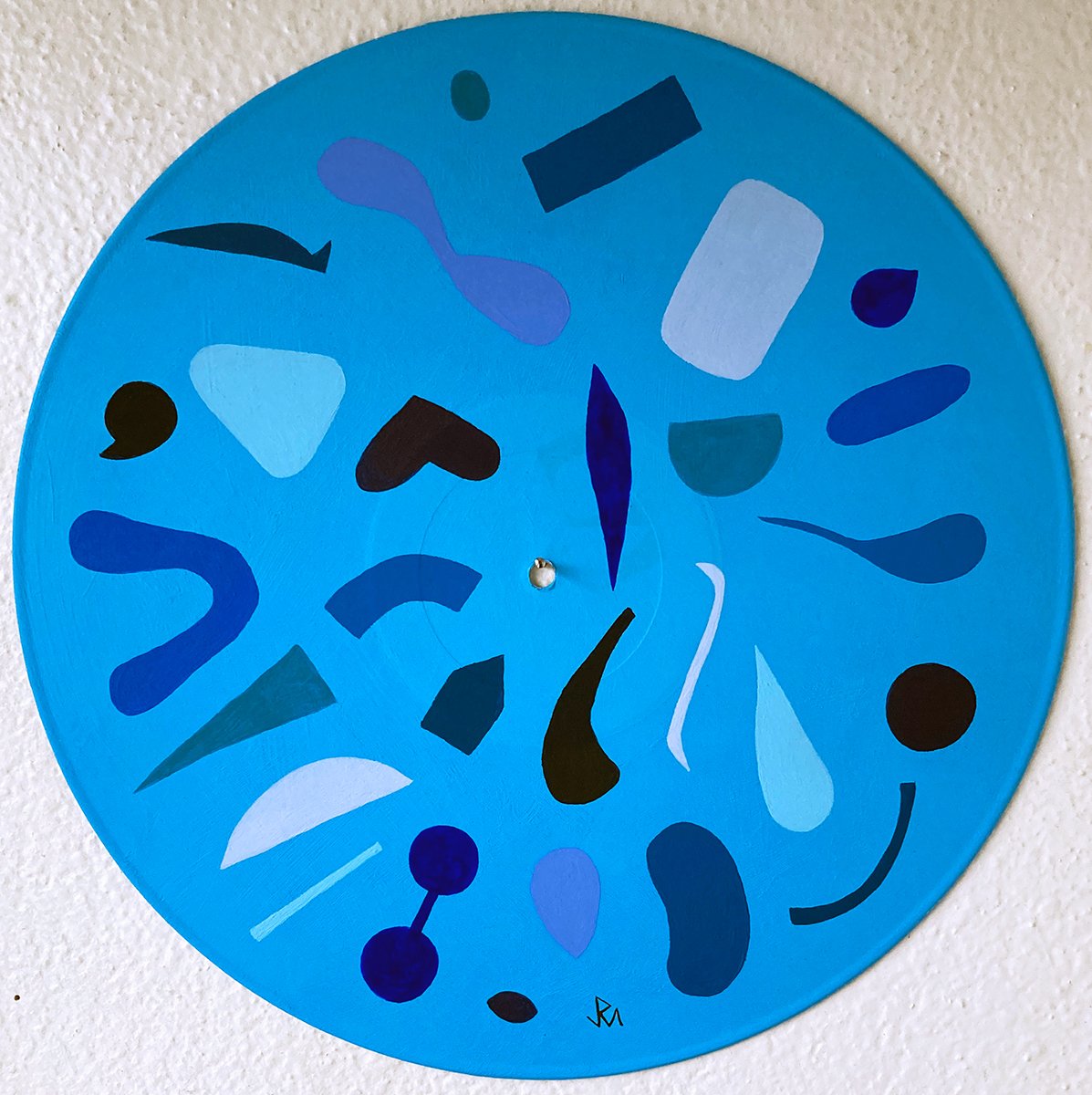
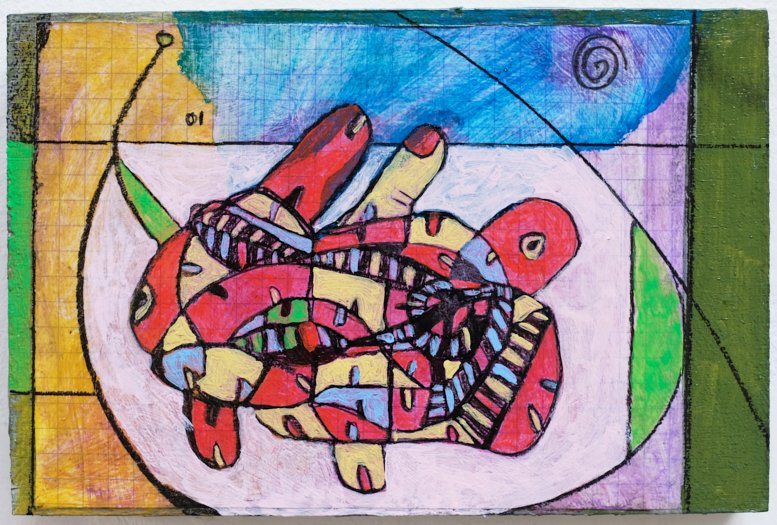
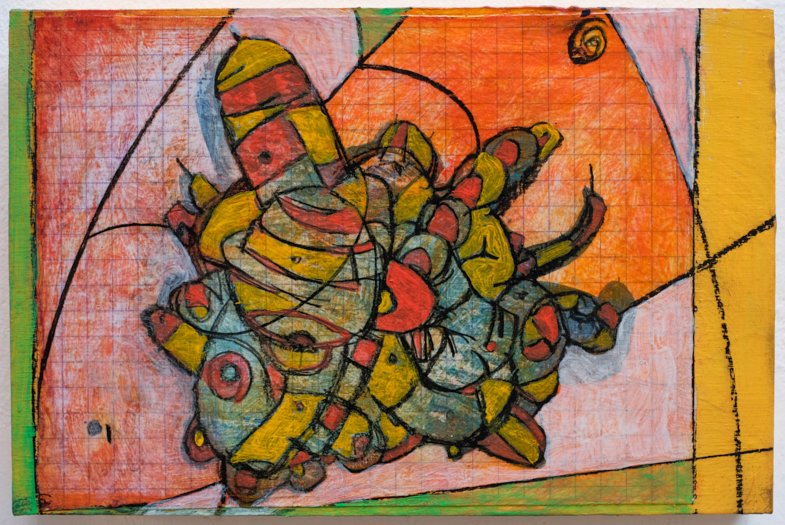
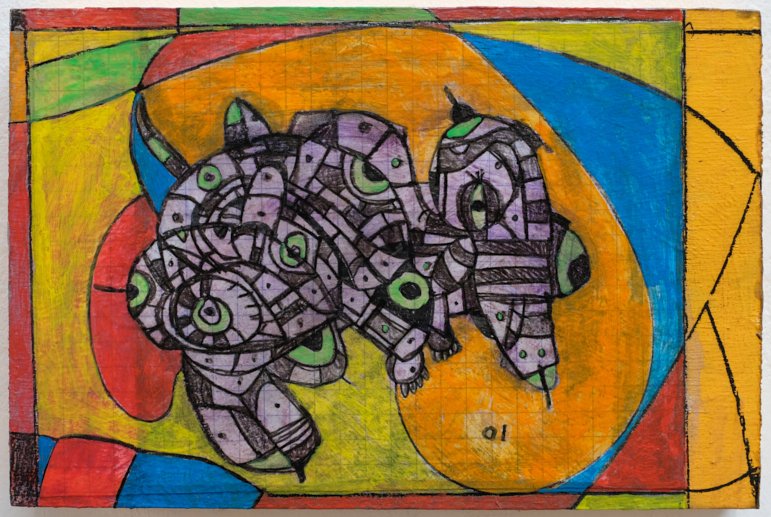
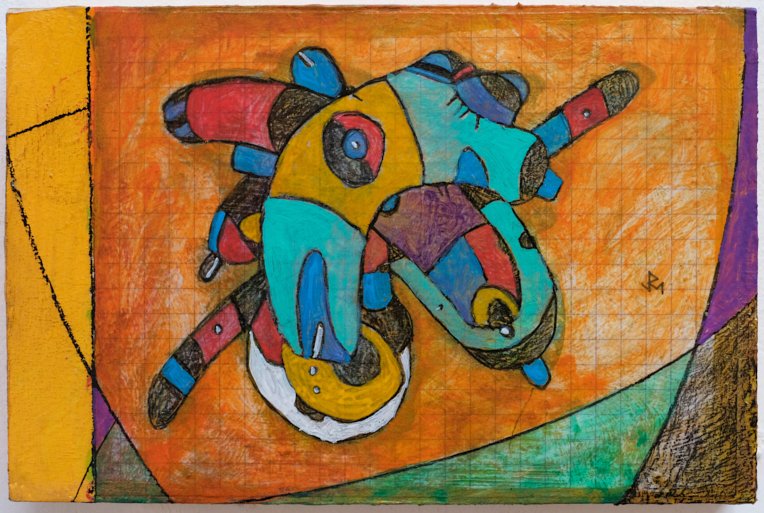
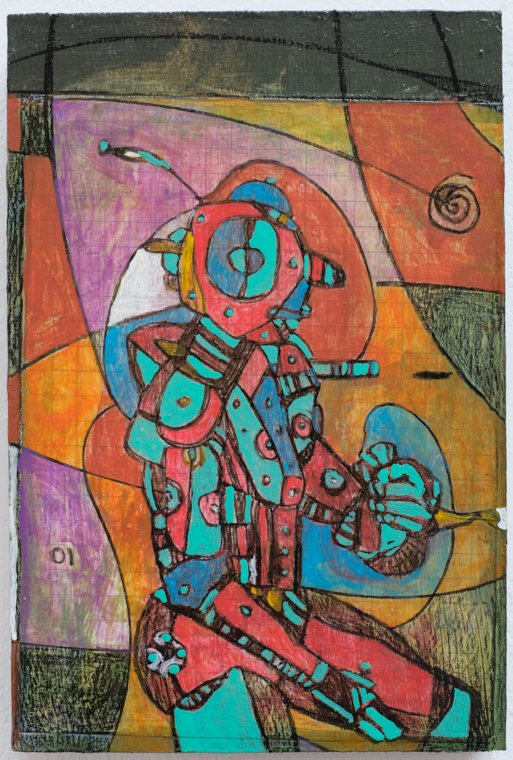
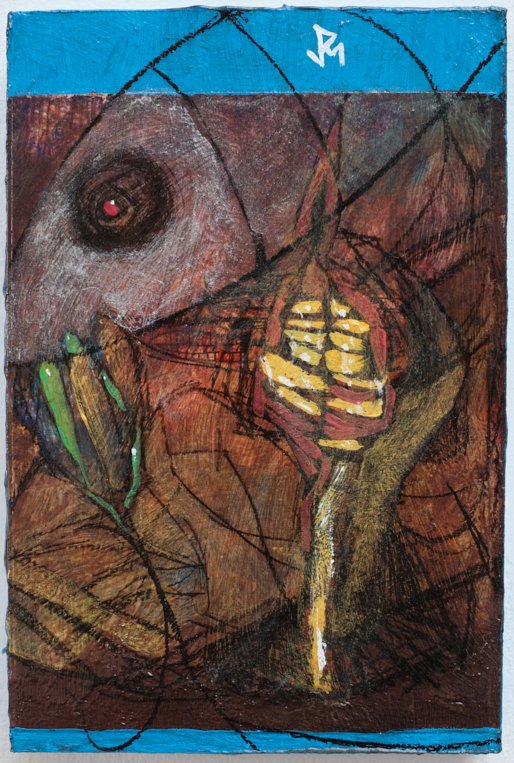
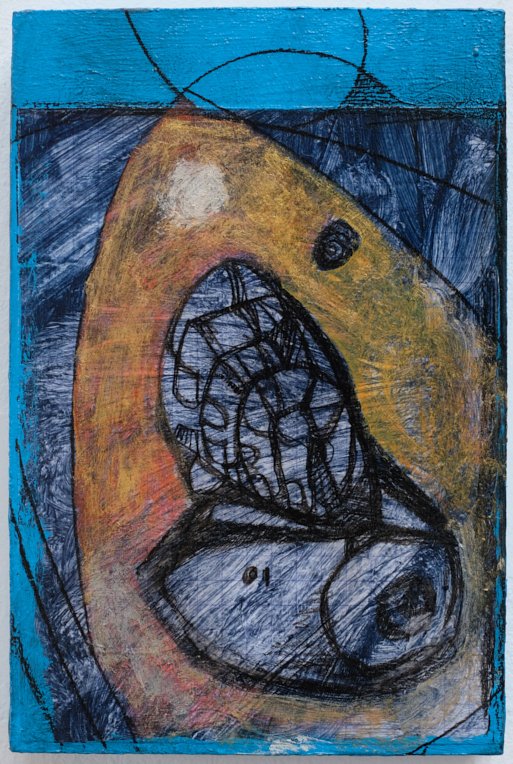
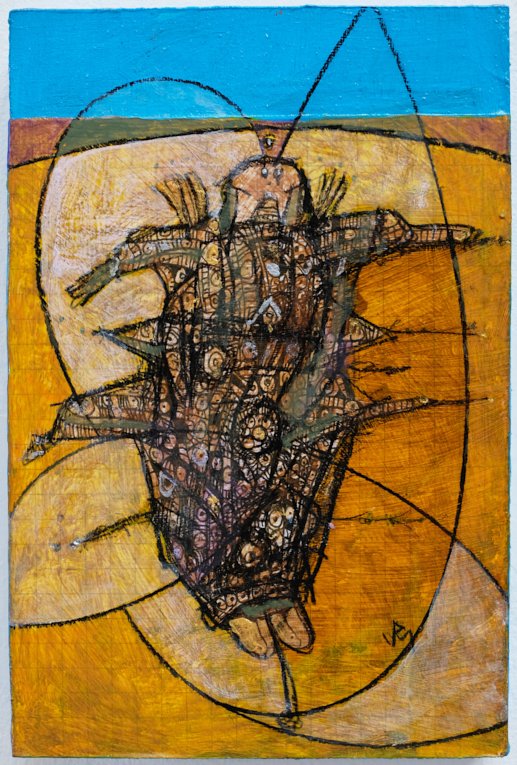
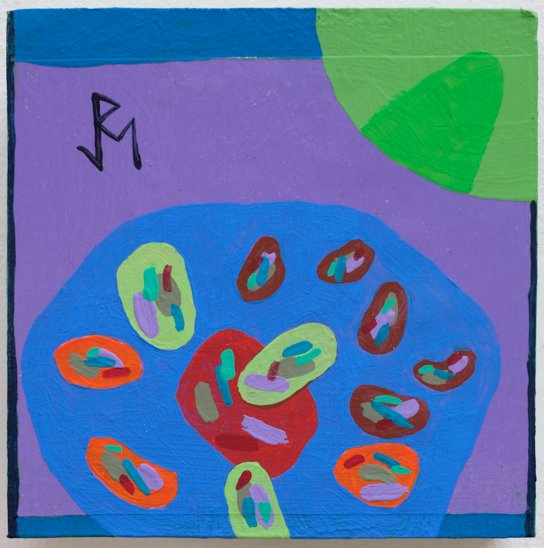
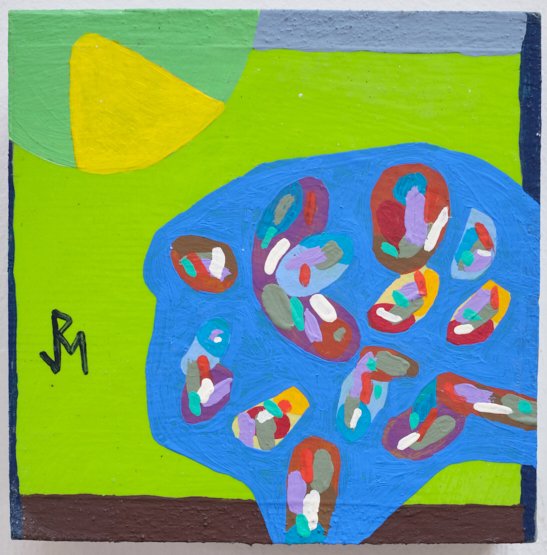
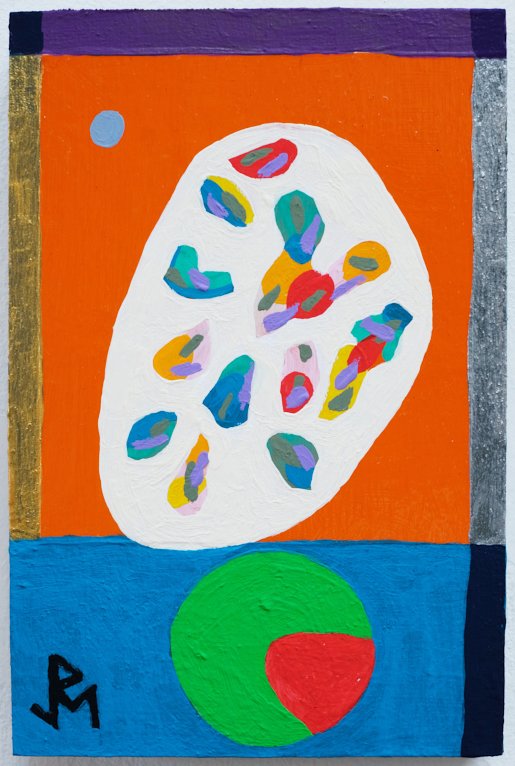
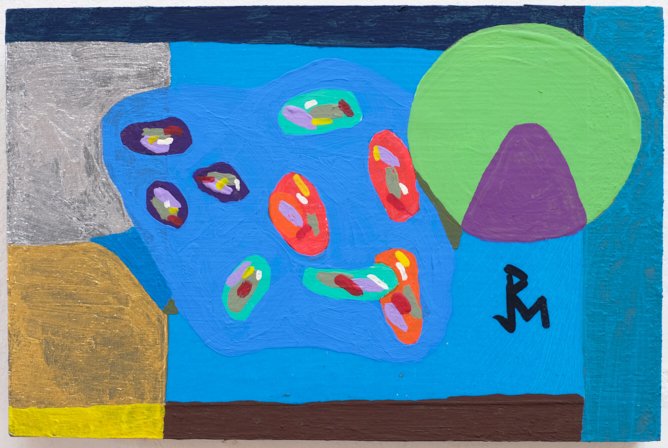
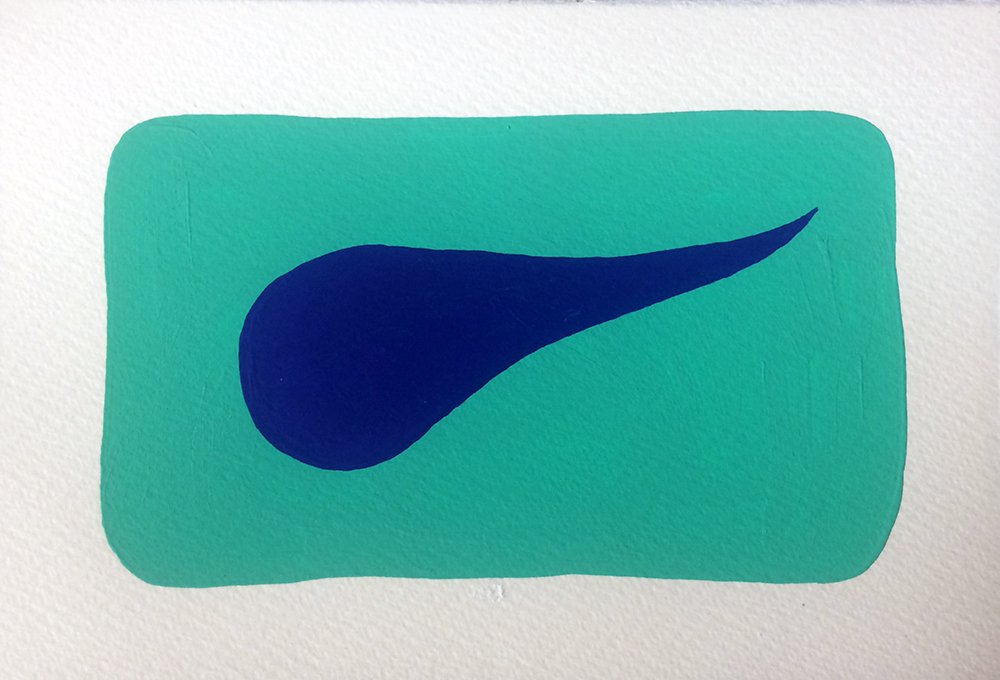
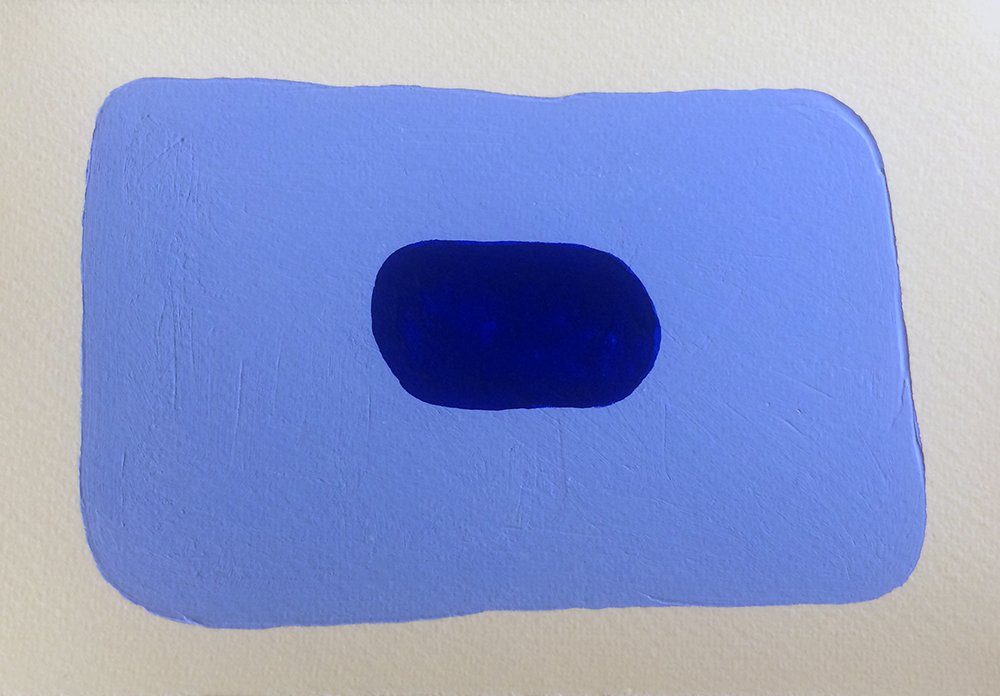
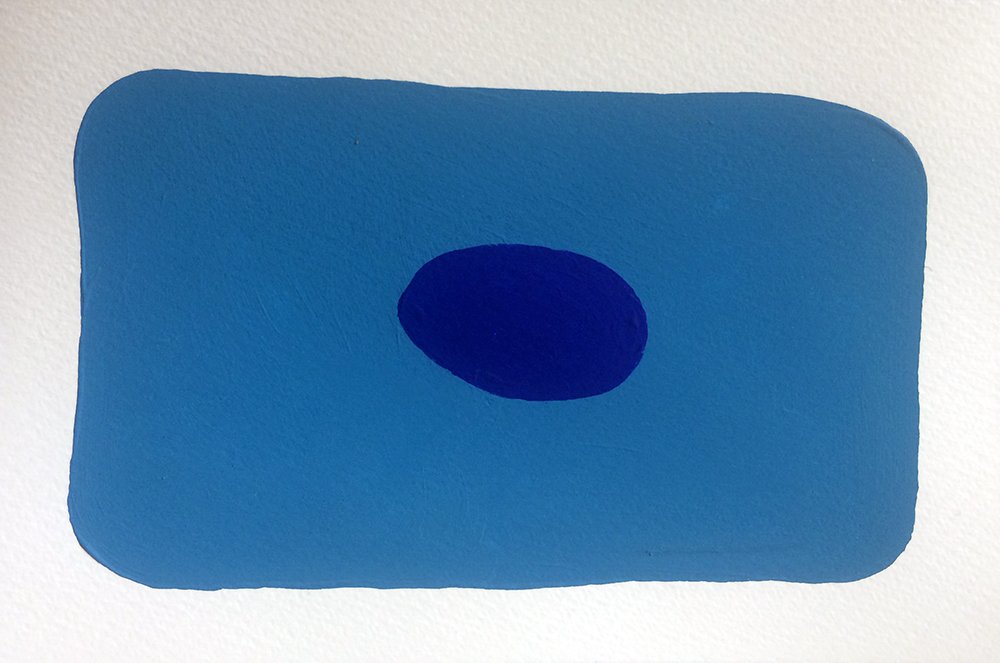
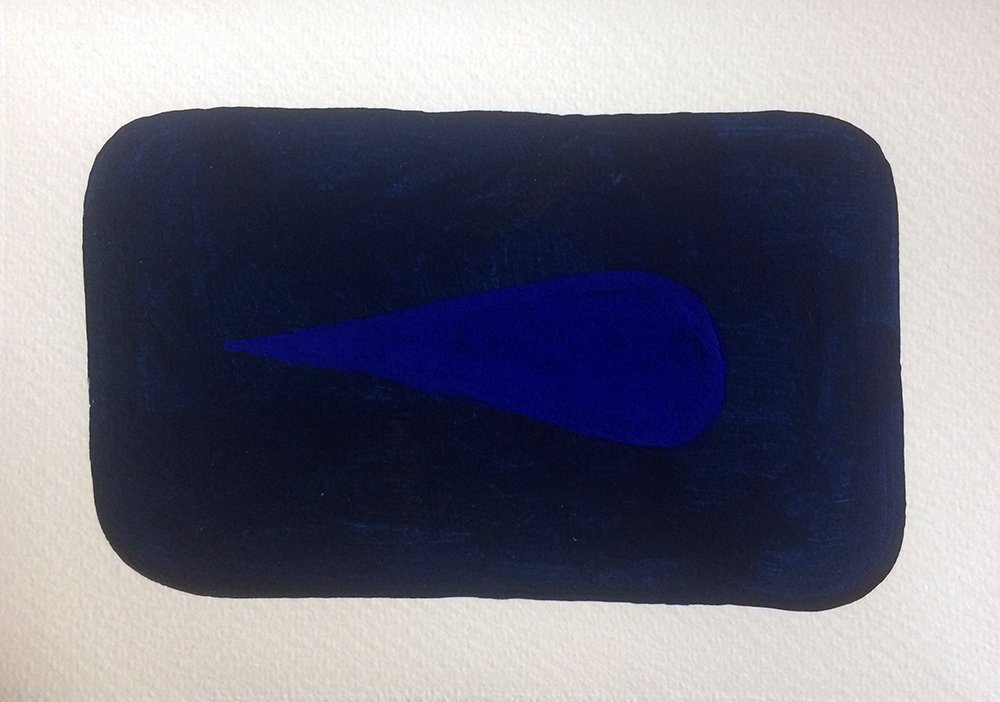
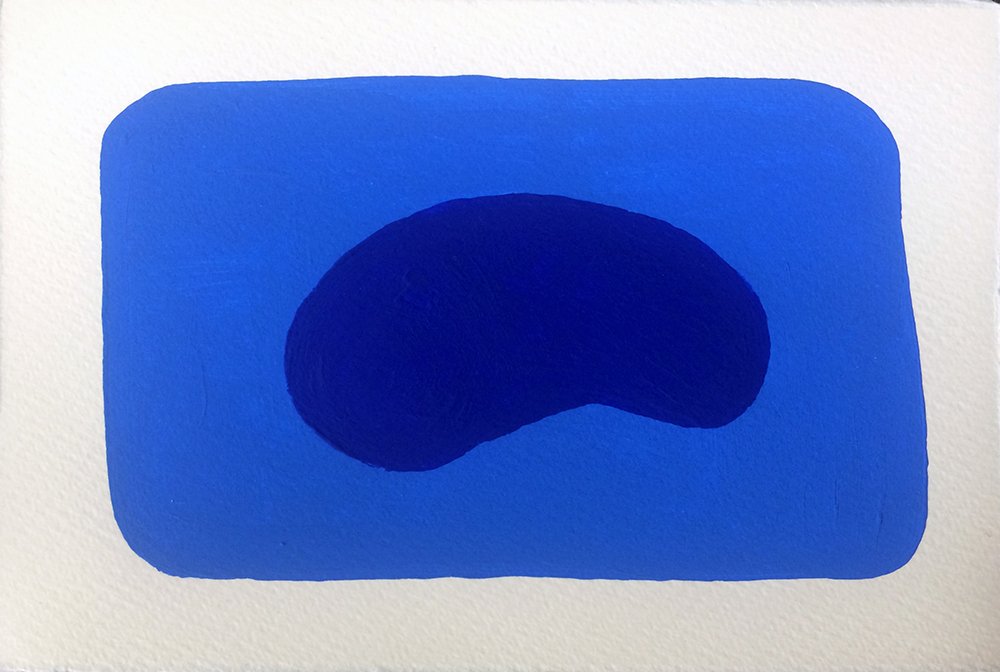
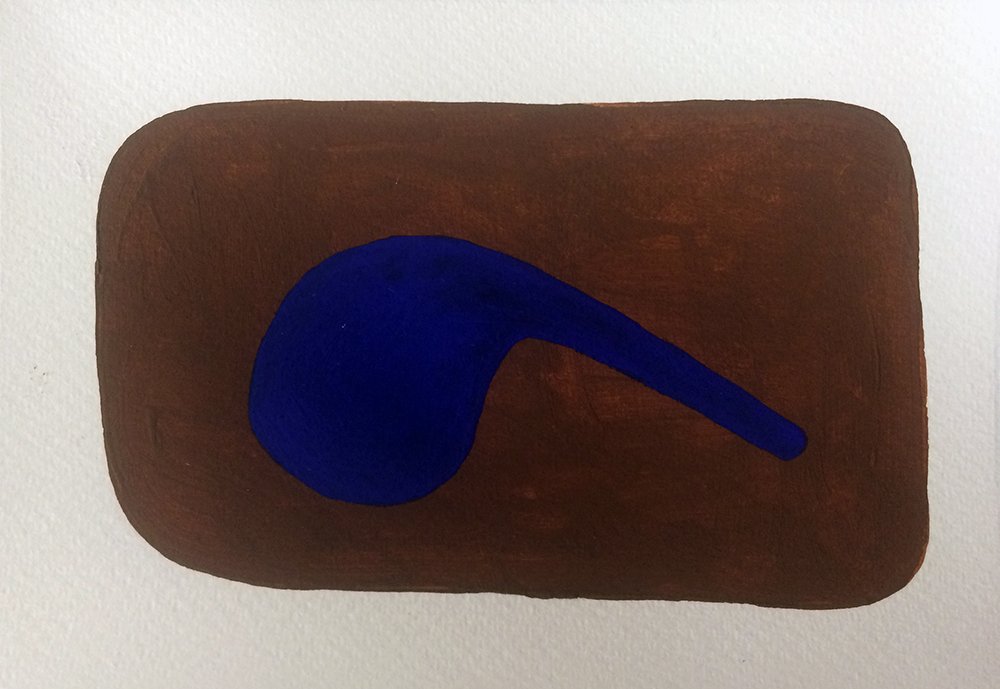
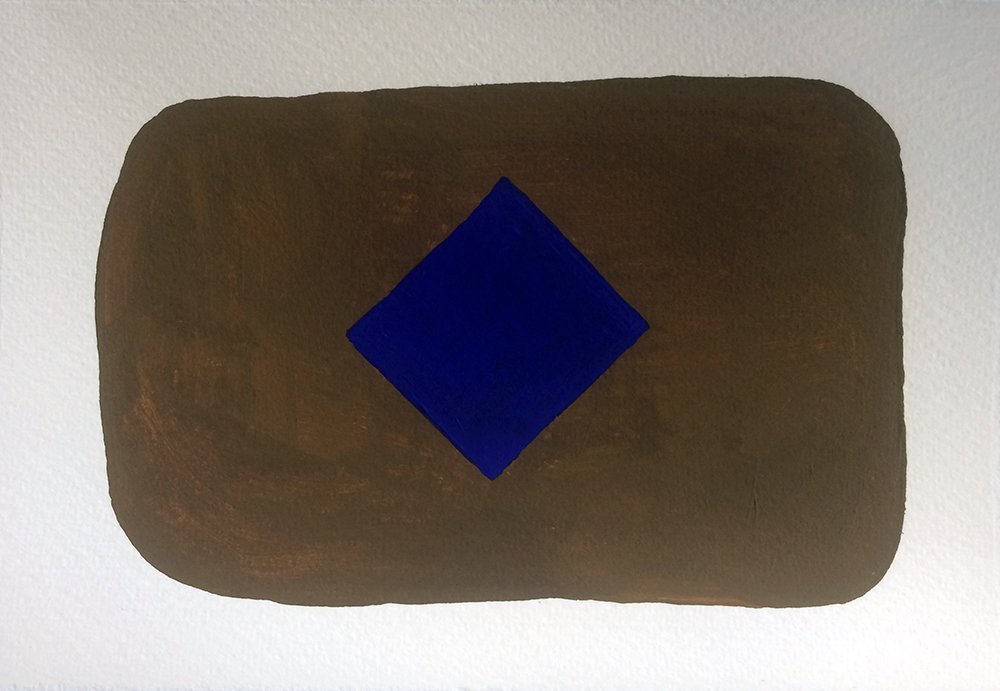
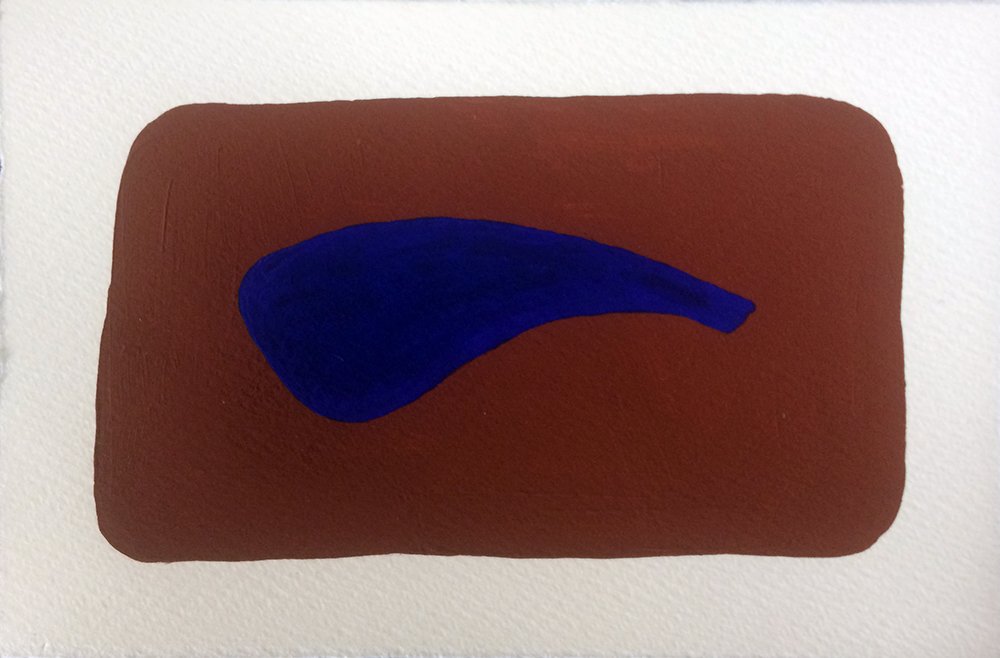
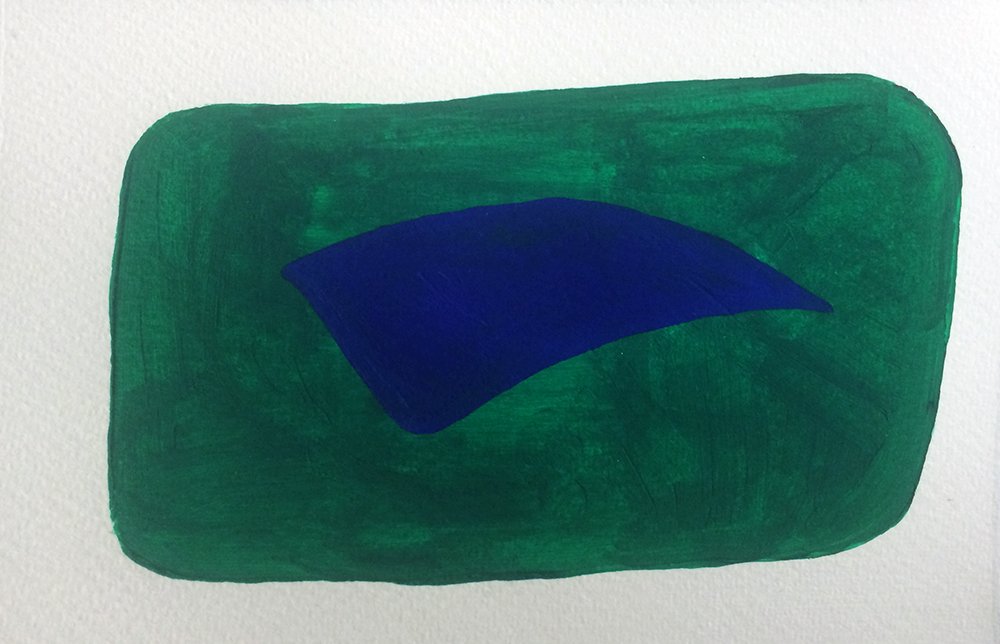
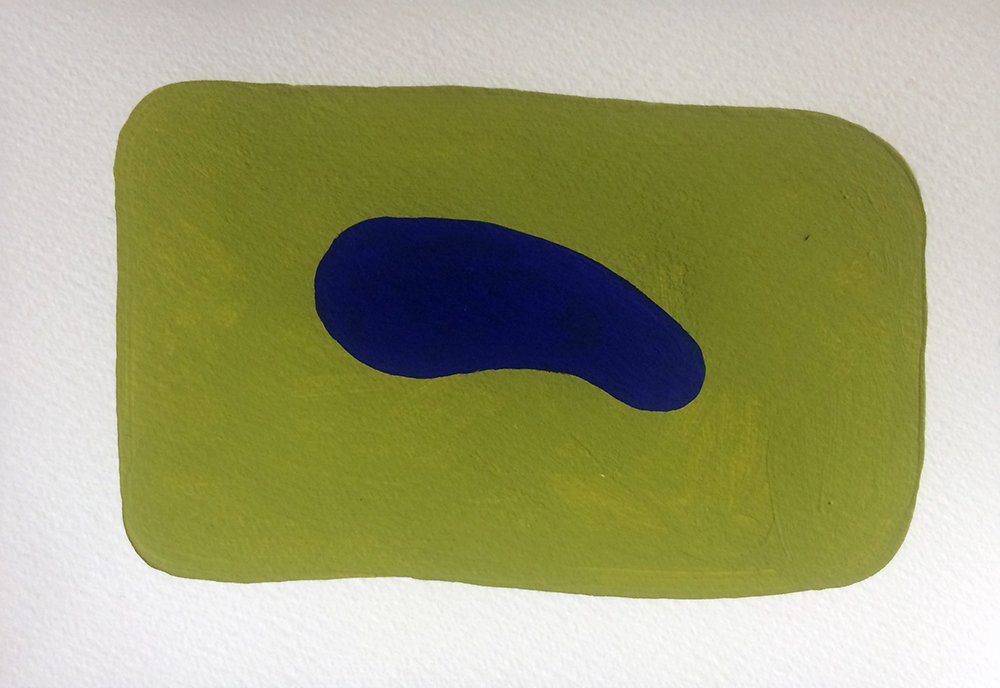
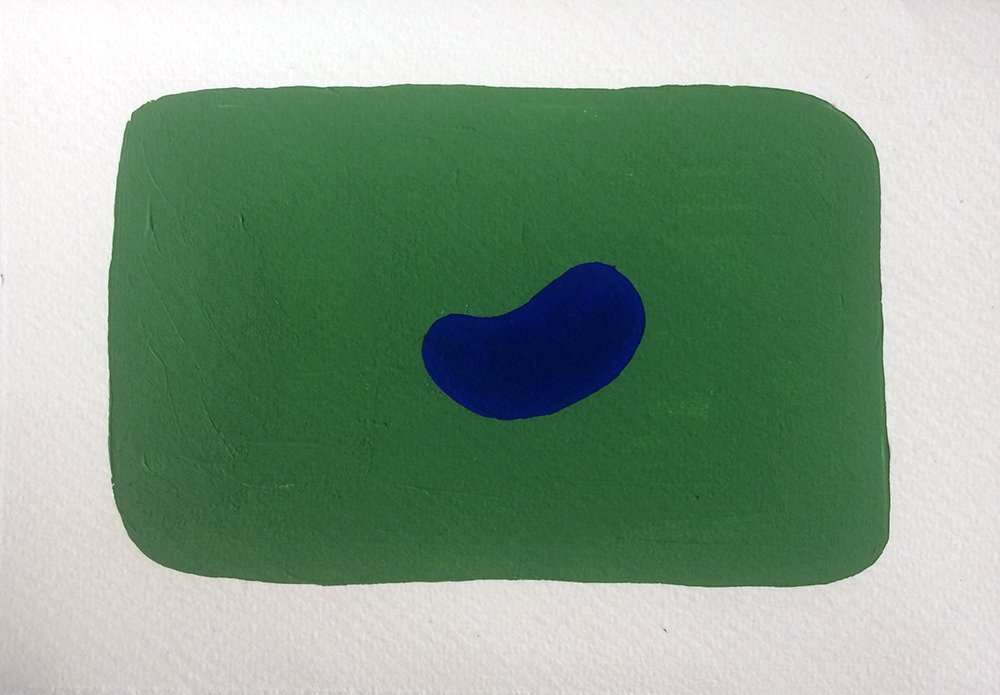
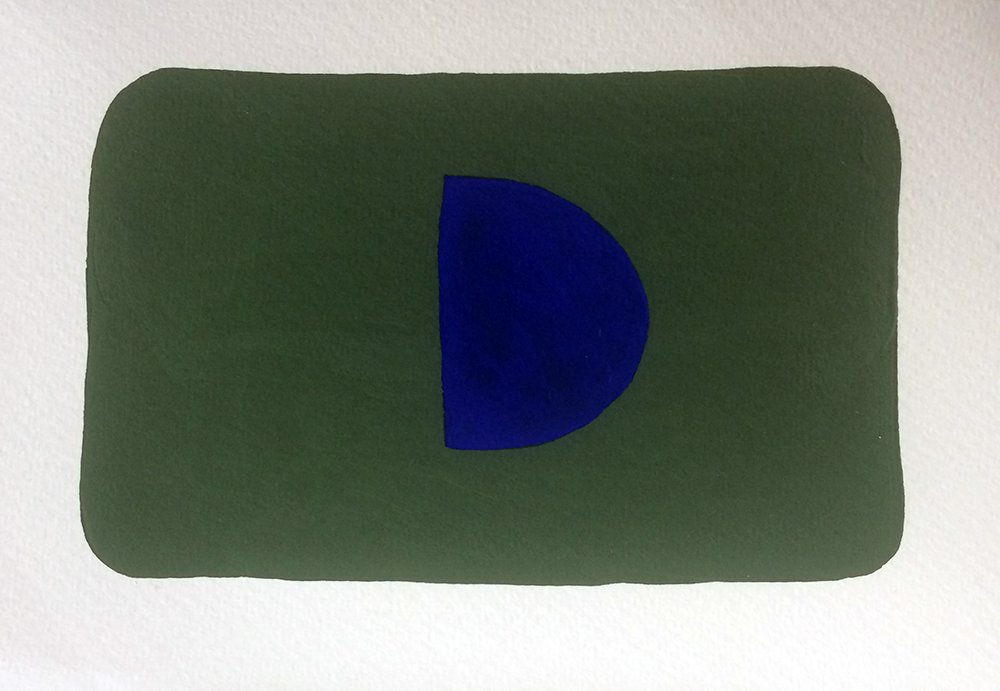
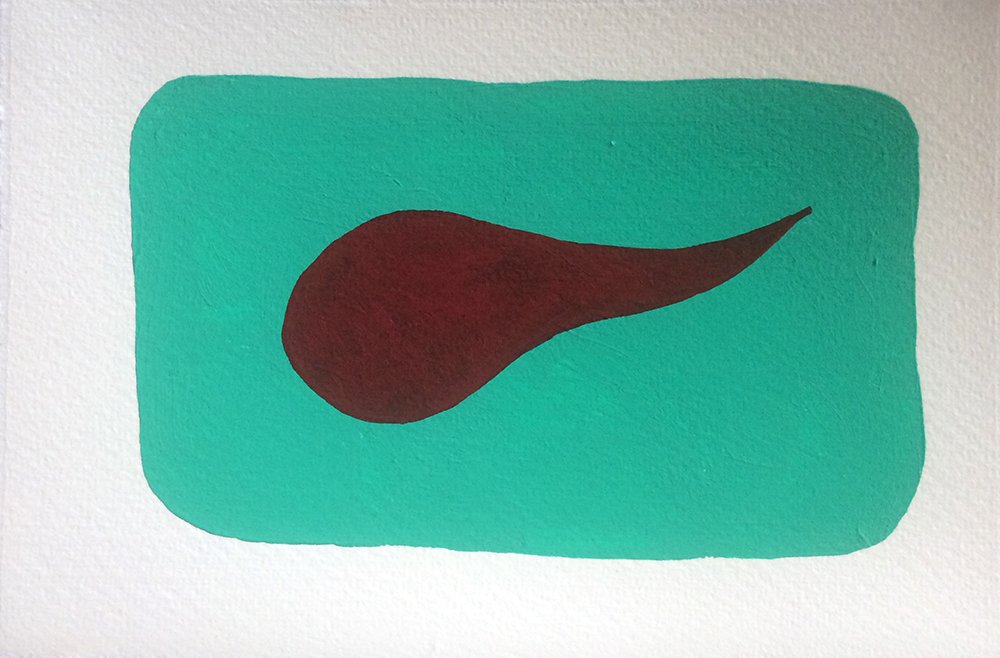
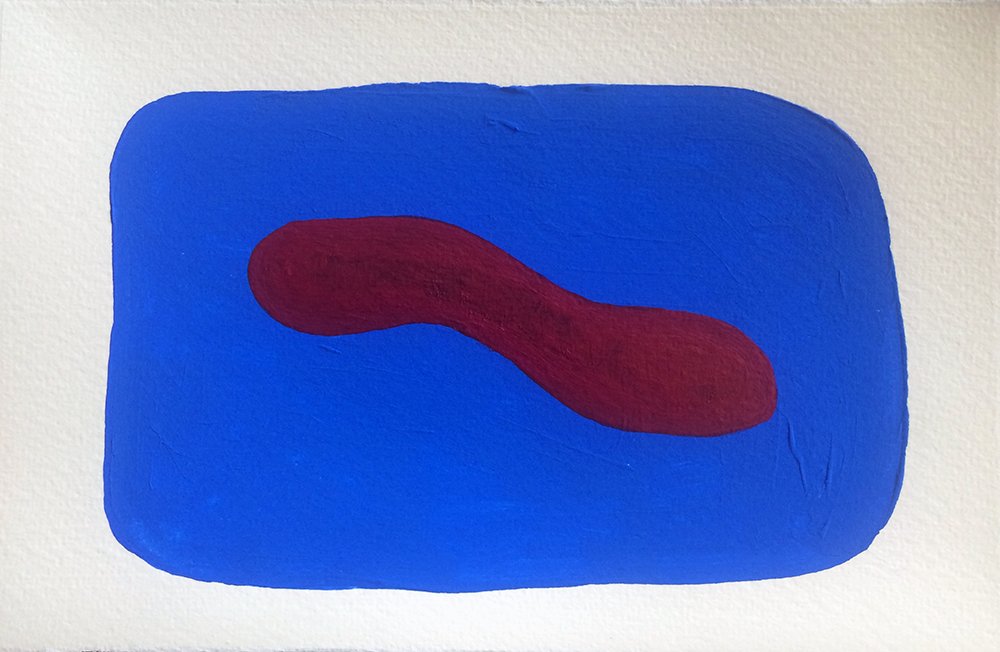
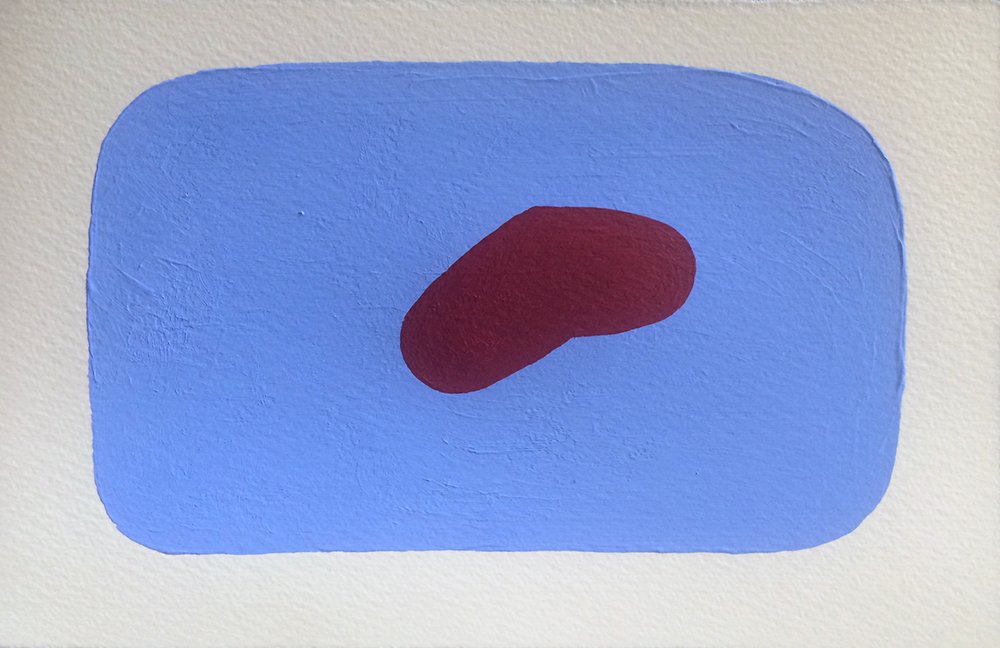
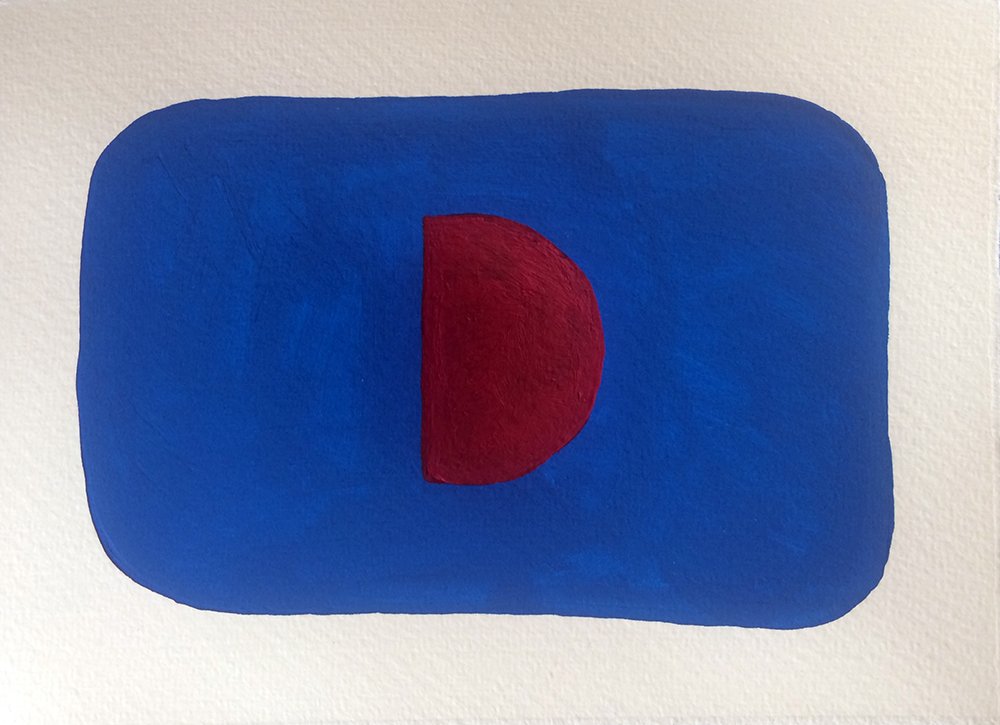
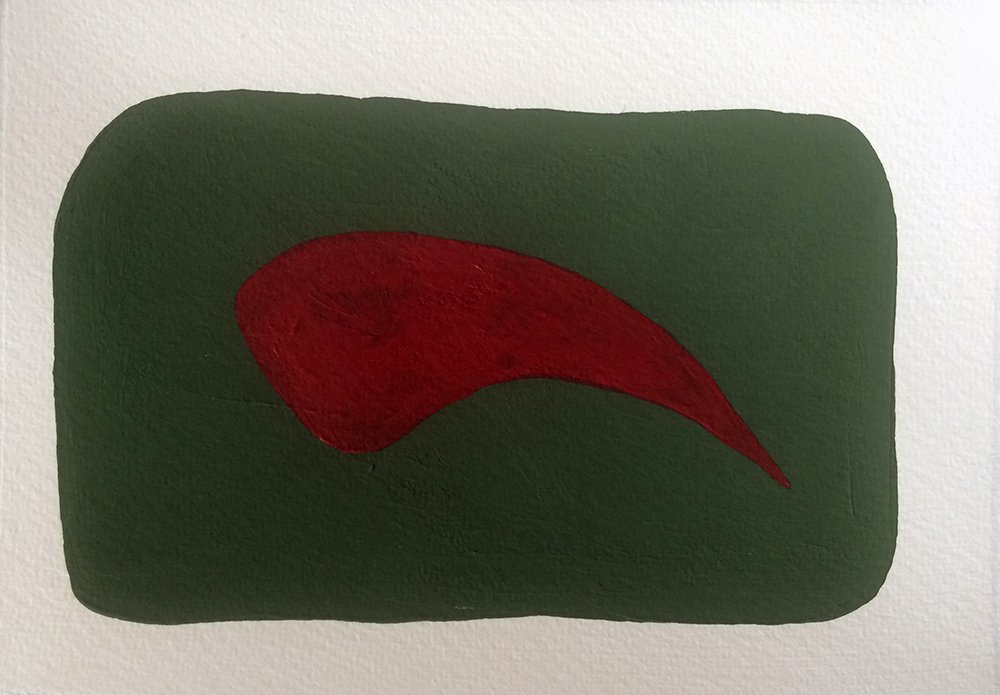
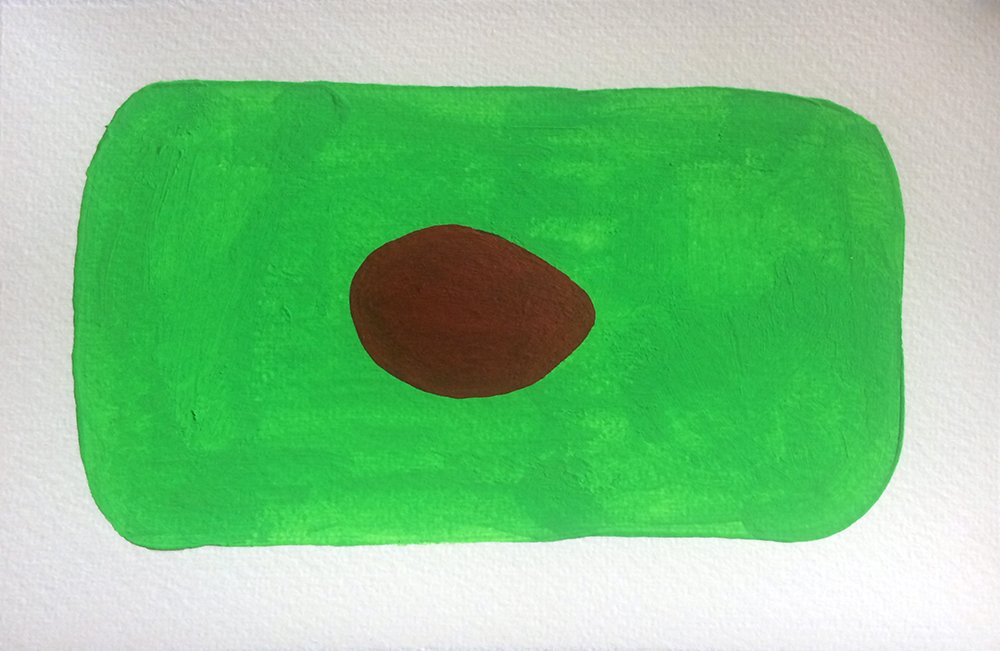
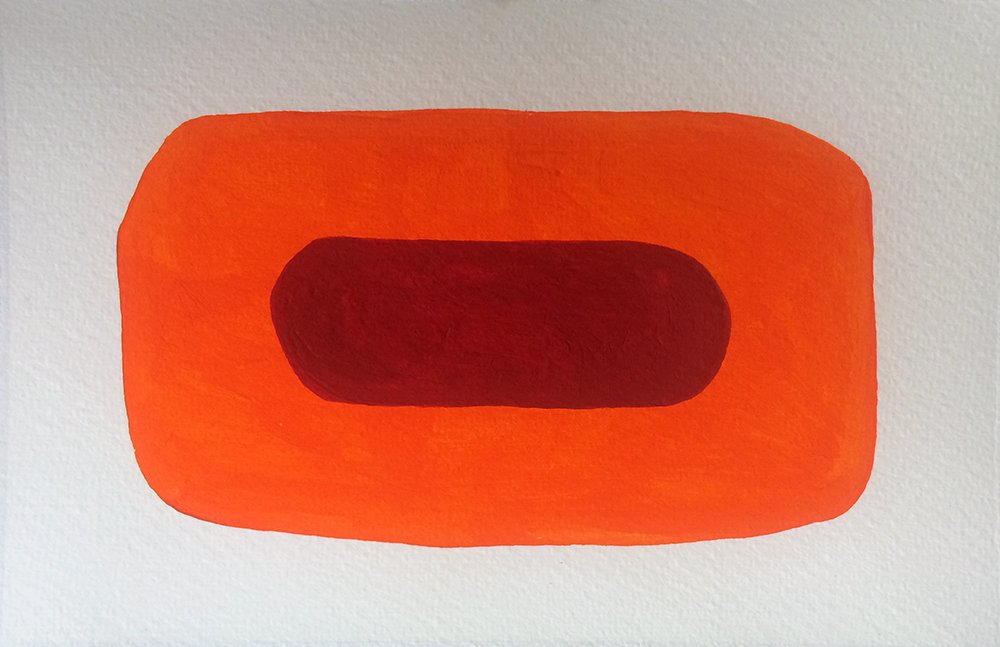
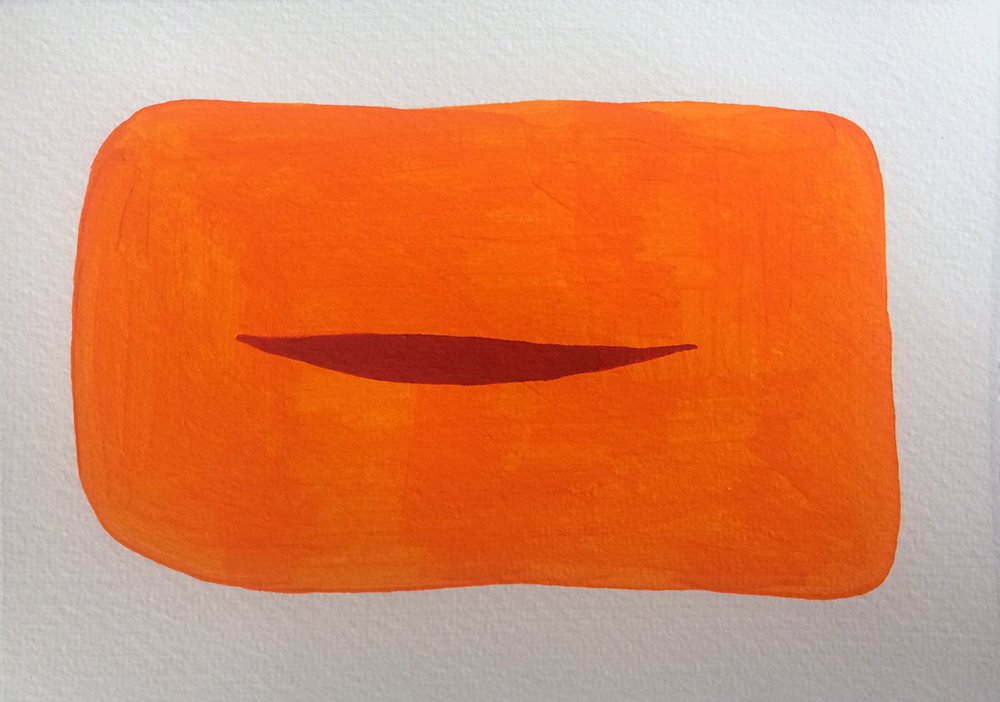
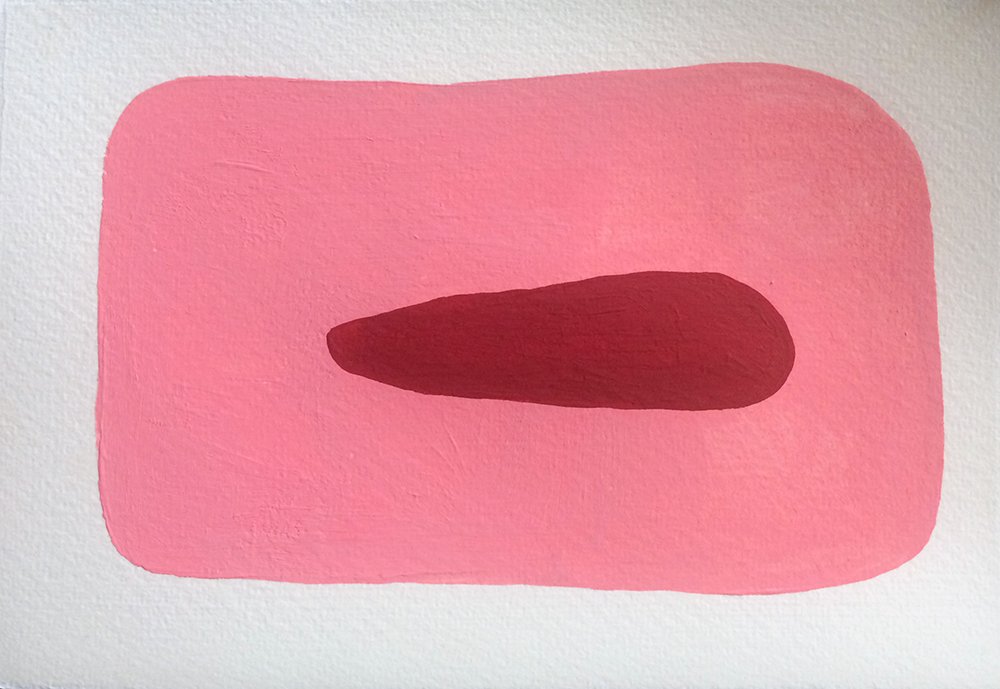
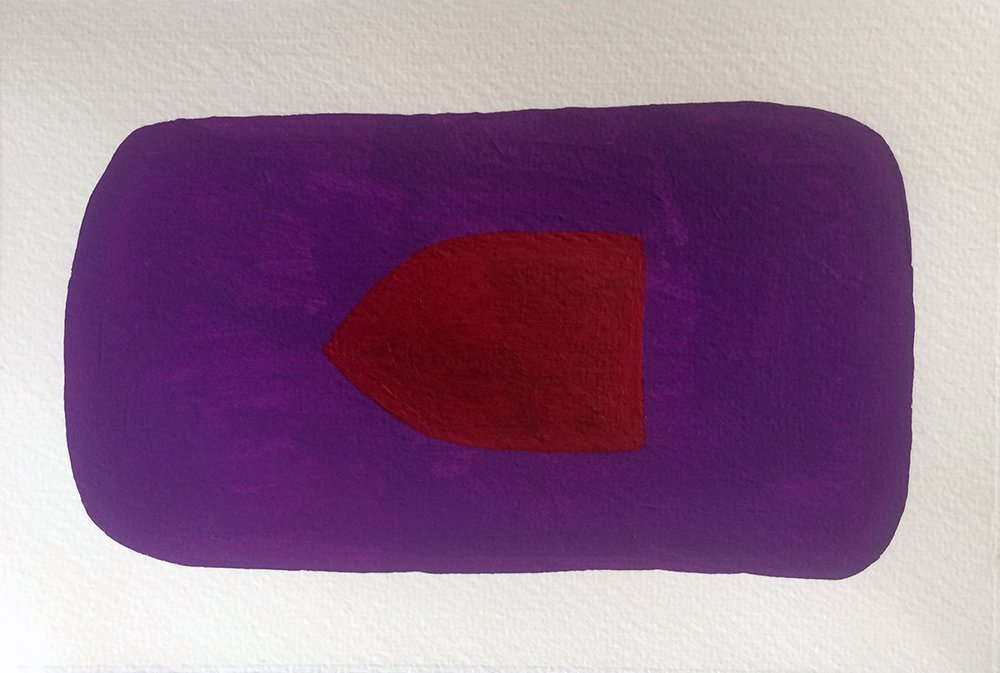
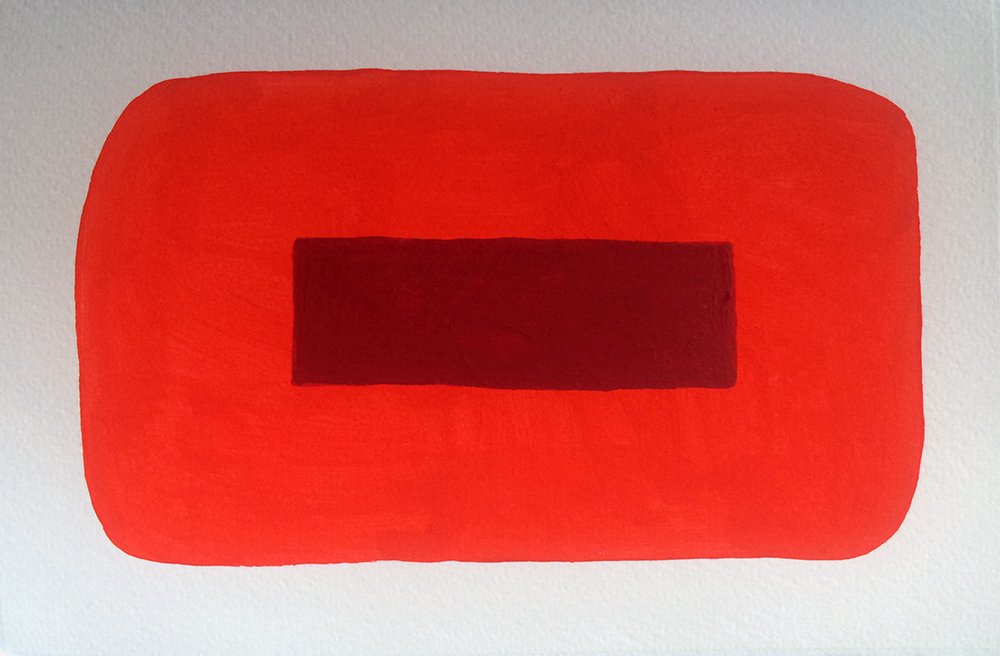
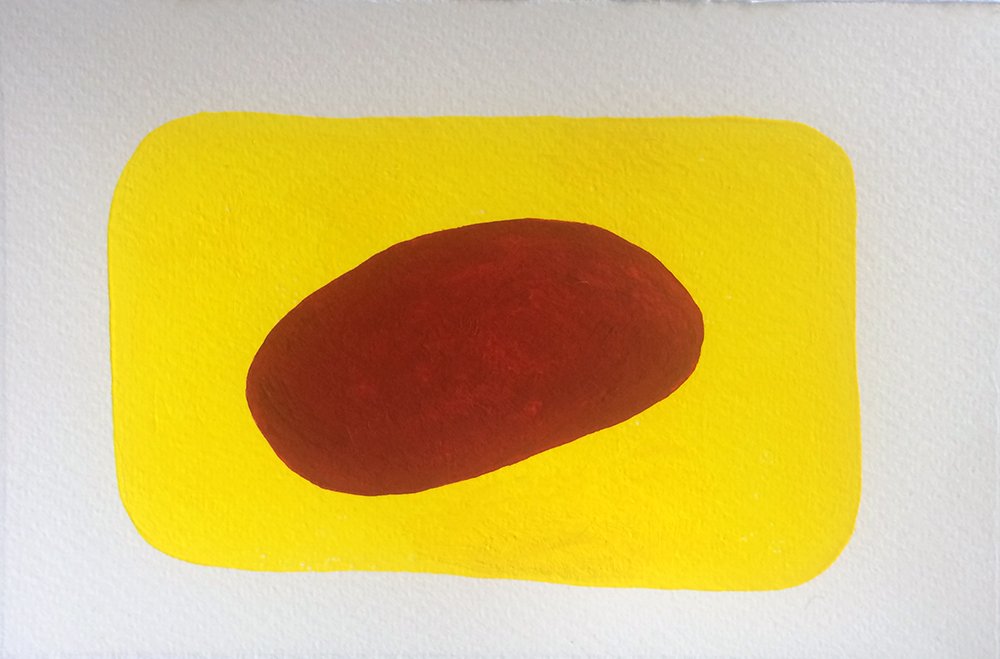
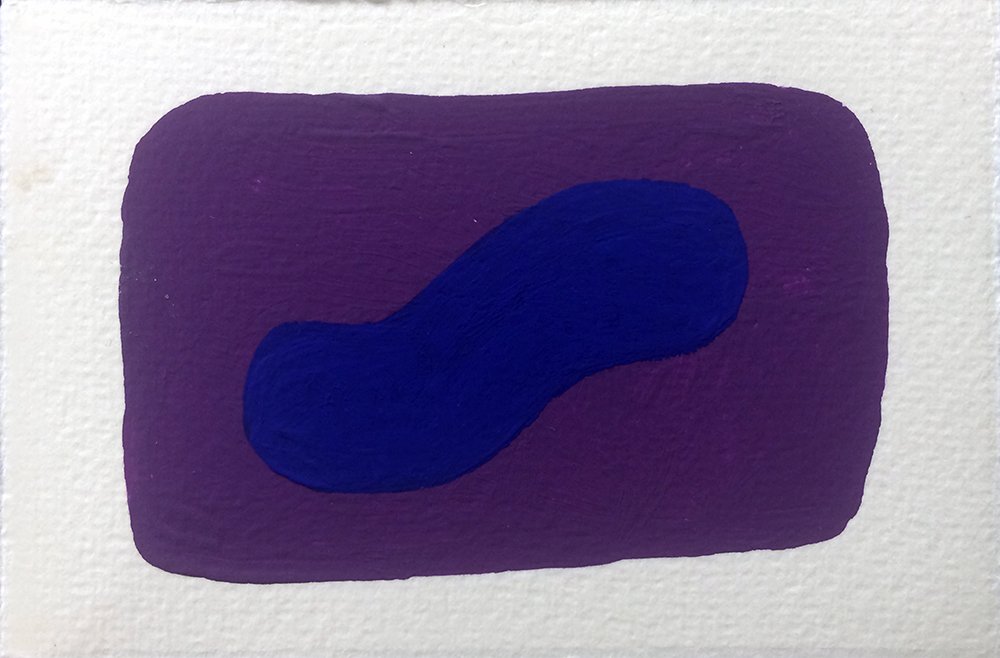
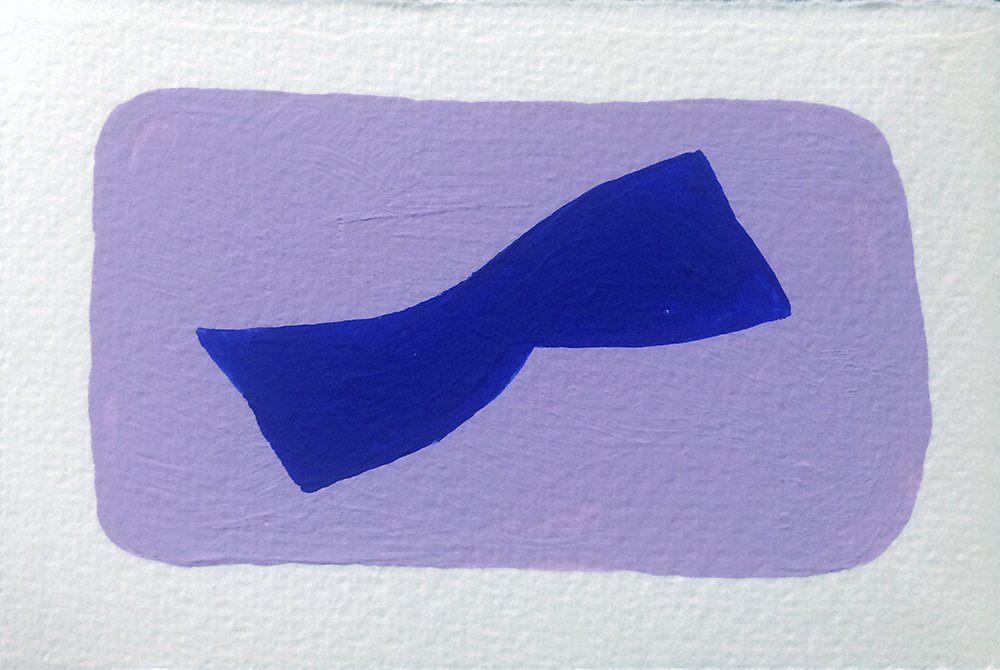
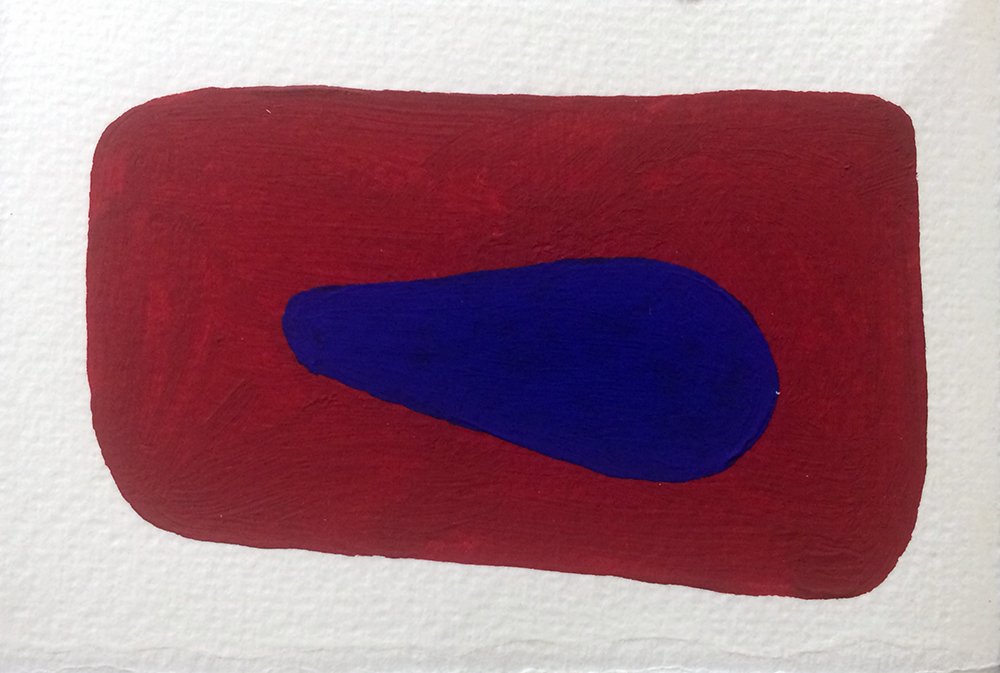
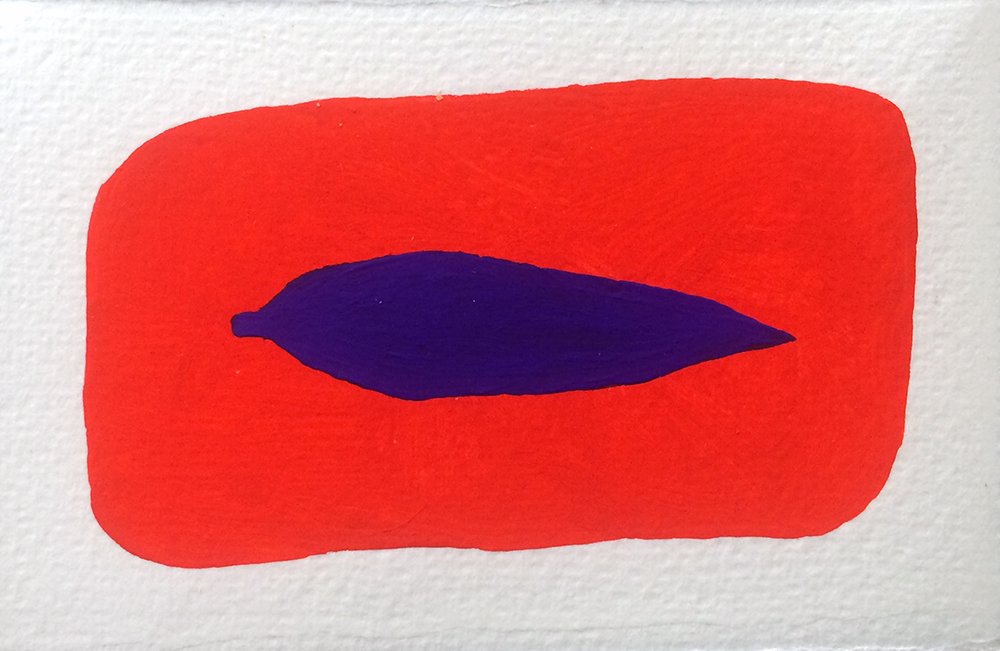
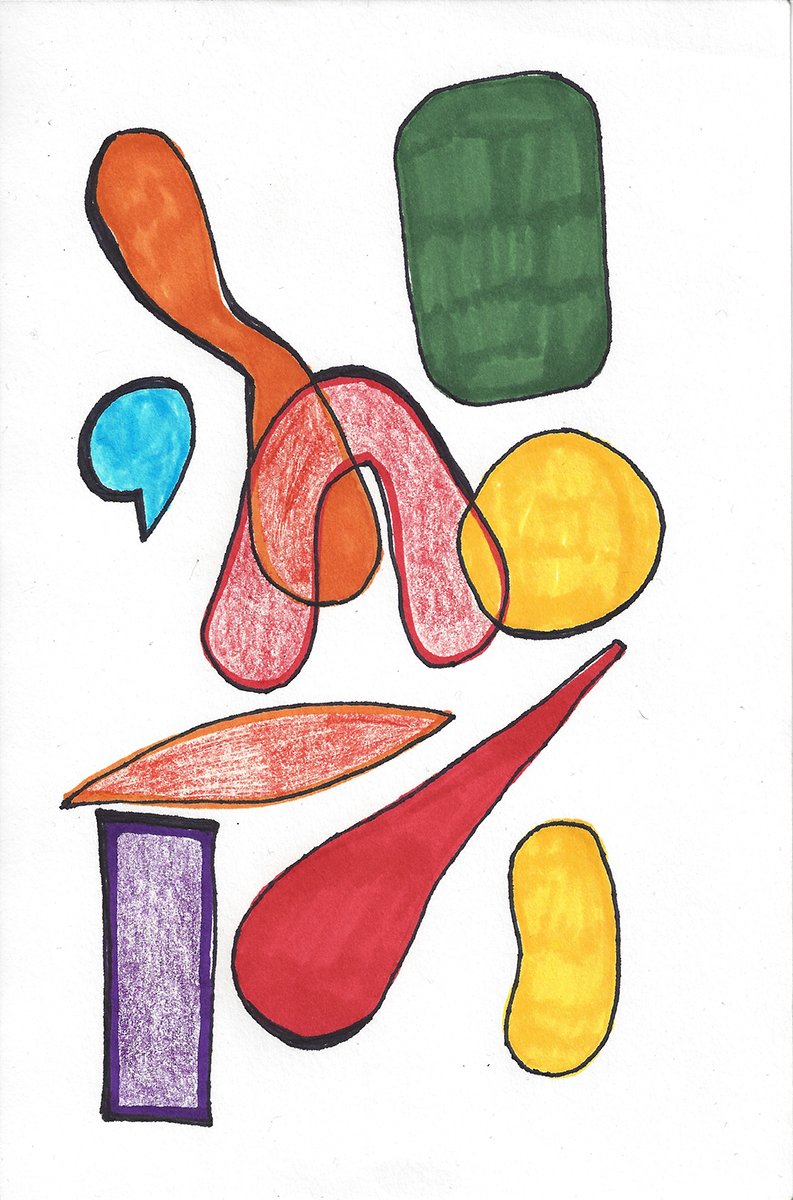
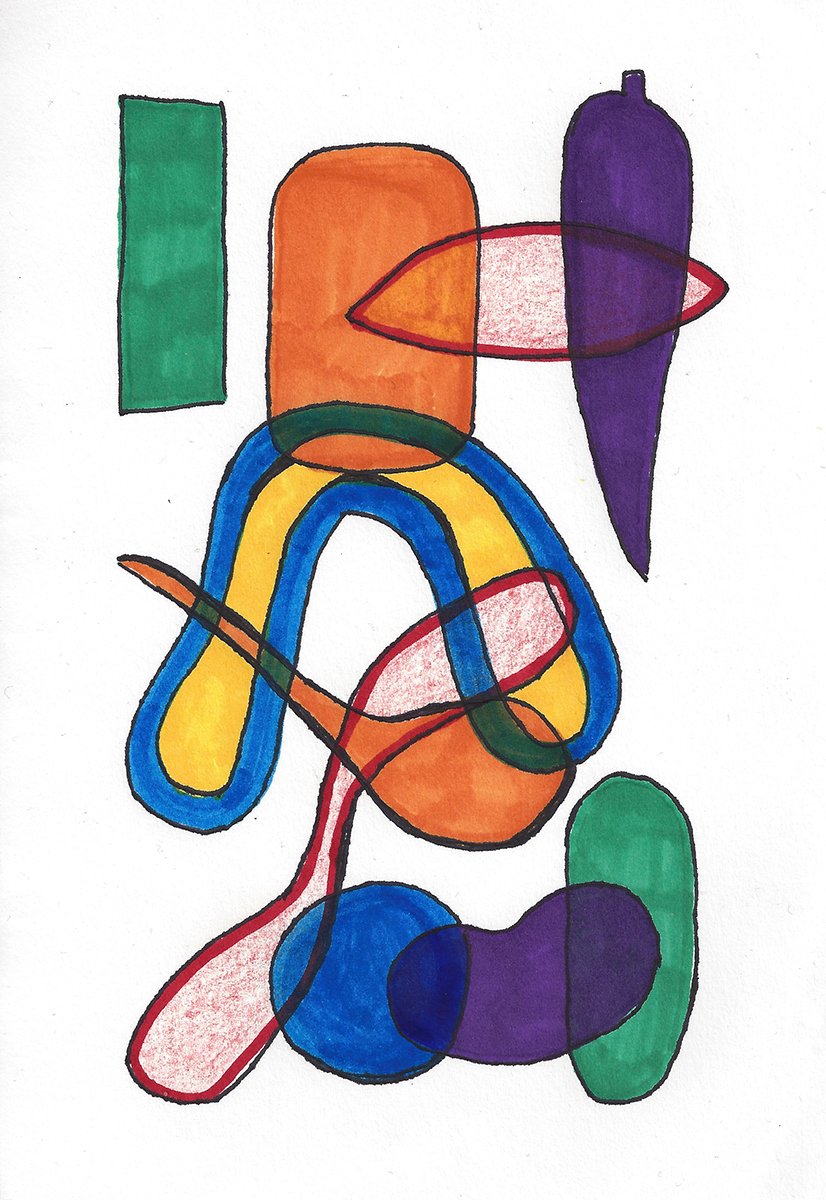
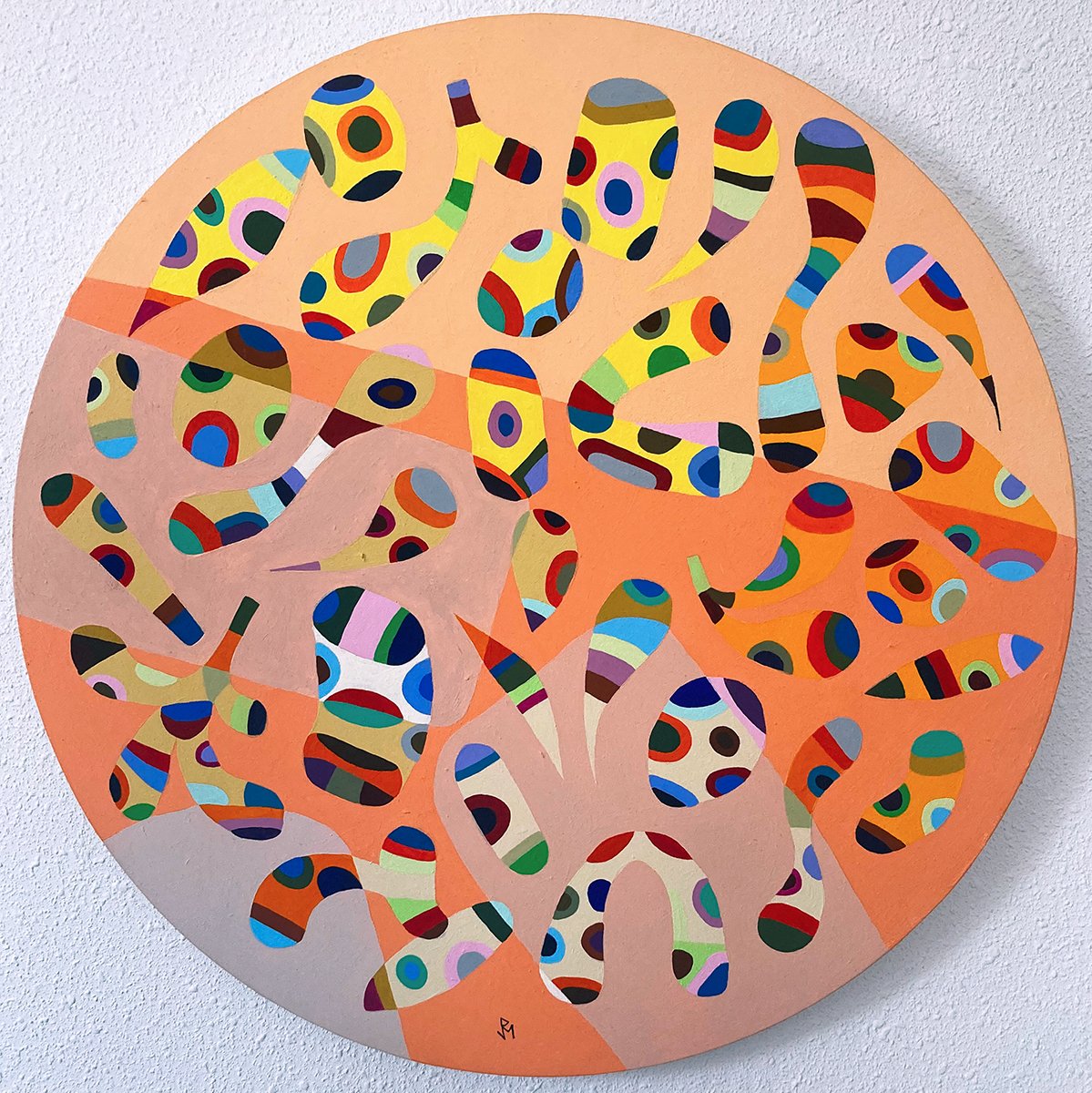
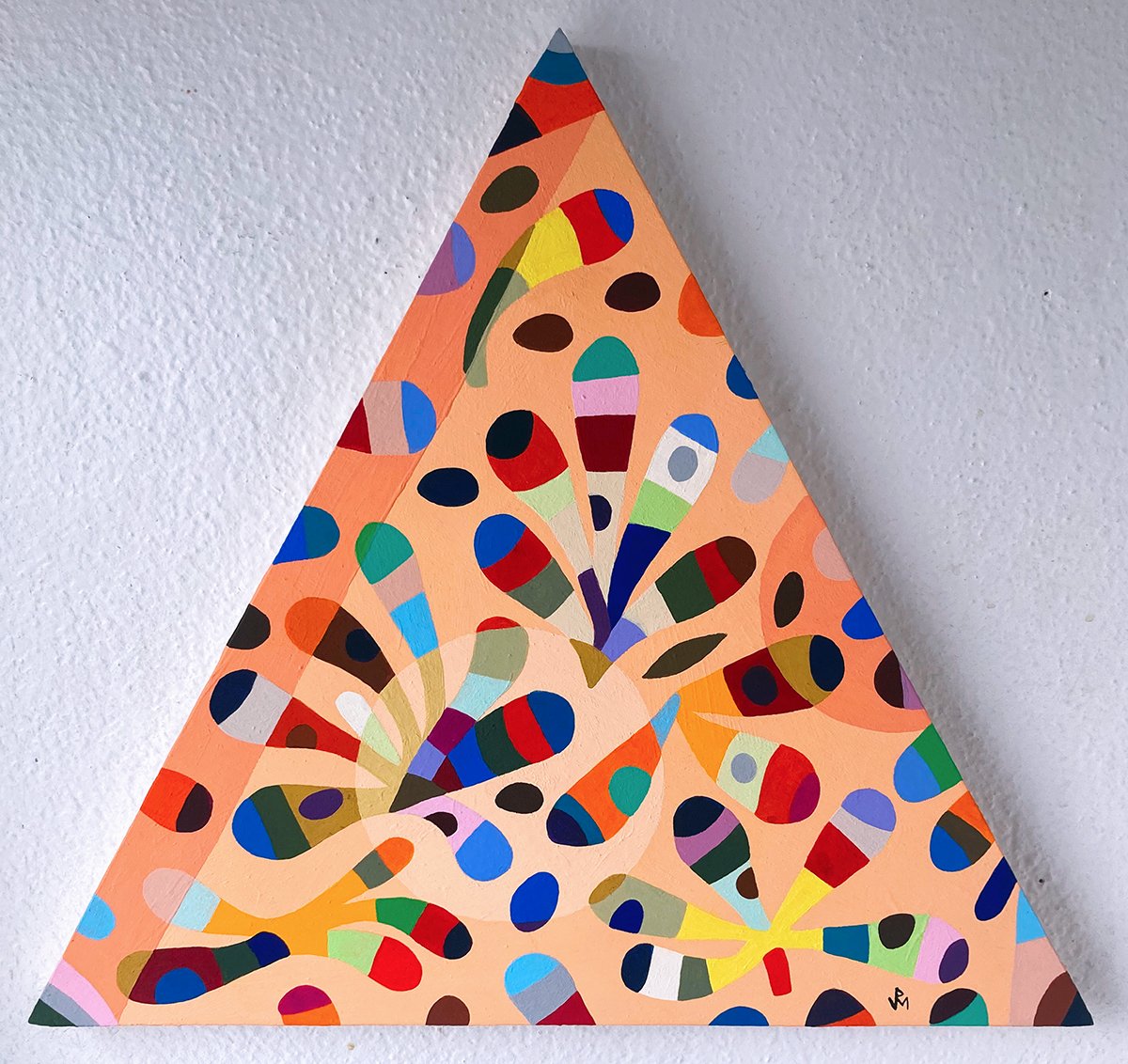
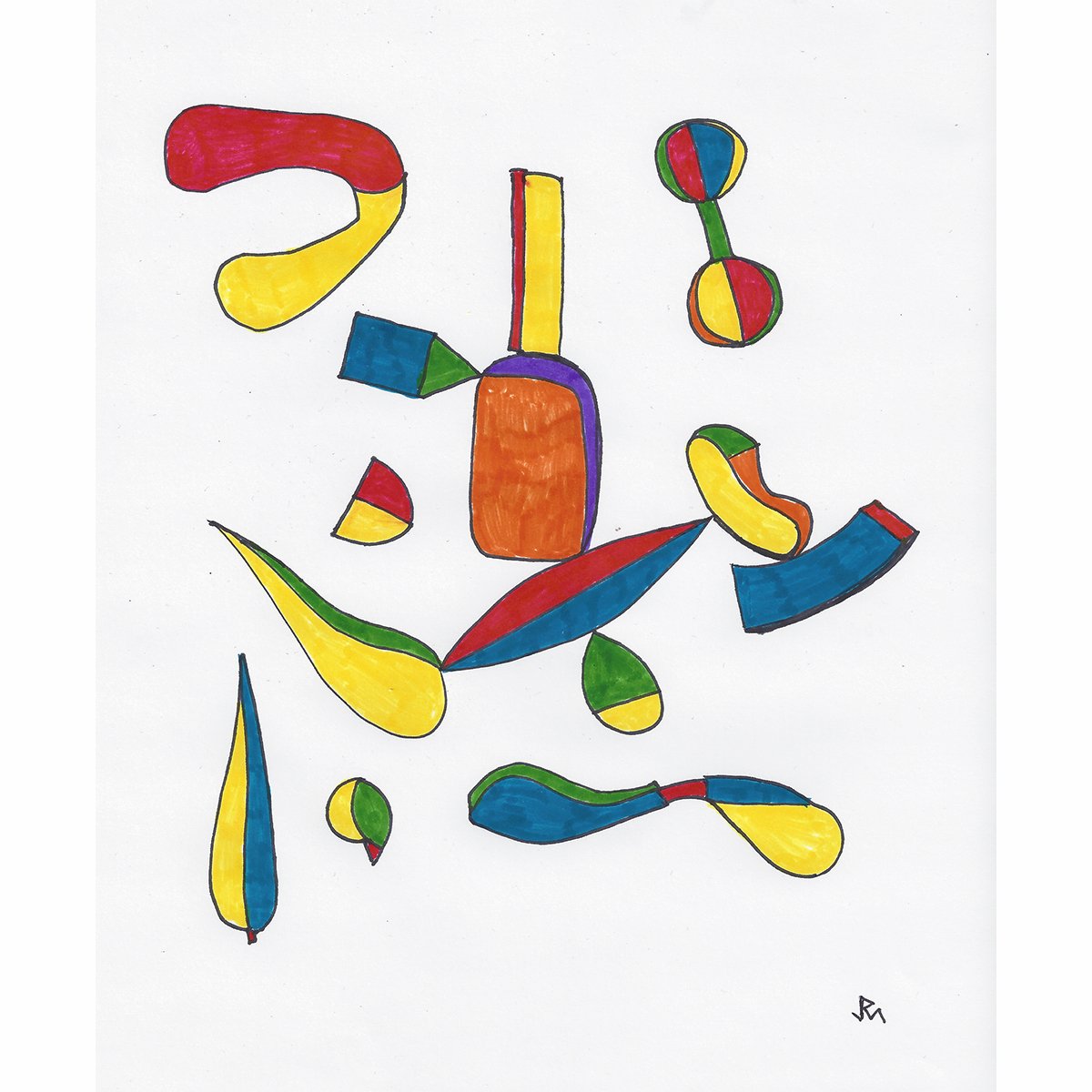
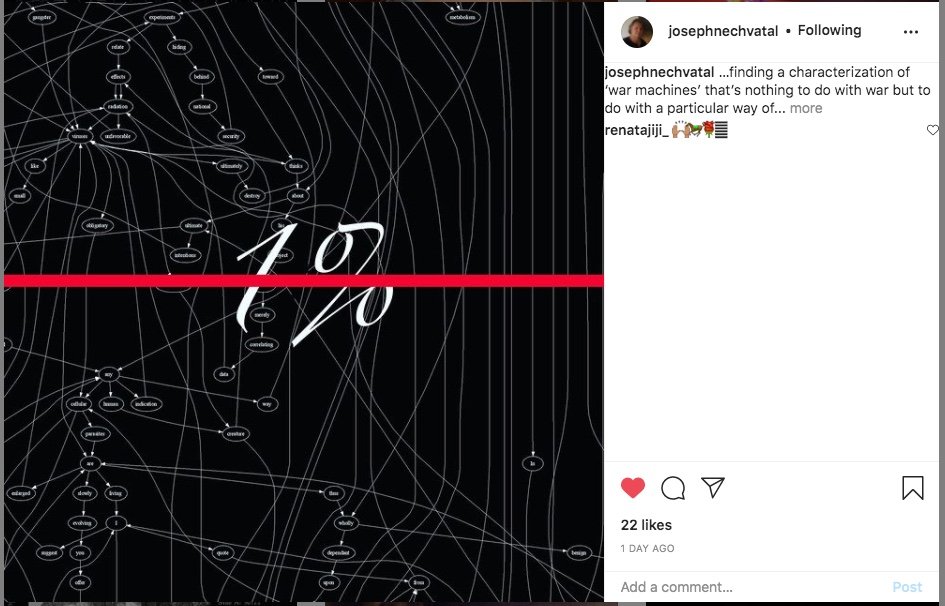
I wanted the animation and accompanying soundscape to ostensibly underwhelm the art viewer for “VALUBL OBJX,” establishing an ambient baseline for interactions. A nod toward Joseph Nechvatal’s investigations of Noise and Immersion. The preferable viewing experience, in my mind, should emphasize the actual, more or less physically autonomous art that was on display in the front and rear MiA galleries, adding a dimension for reverberation in that specific space, its architecture, its accesses, and so on. This curatorial decision conforms with the subtext of the “VyNIL Cycle.” “VALUBL OBJX” is the first public show of these works. They have been my artistic focus, since 2017-8. In “VyNIL” series, on a theoretical level, I am suggesting a mode for representing data flow. On a visceral level, I push color, unusual surfaces, vaguely familiar shapes for open association.

Which brings us to the tricky thing about “I don’t understand it.” The paintings on view in “VALUBL OBJX” are formal but non-figurative. The content in the animation is decidedly figurative. I invite the viewer to contemplate the relationship between the two show elements, seeking a connection between the two “stations,” or image-sets, neither of which comes with an attached visual directive in narration. One would need to refer to the published and printed texts that produced for the exhibit to find a “story” for the show, or anything resembling a unifying, productive or reductive principle, fiction or non-fiction functioning as the art’s conceptual determinant or encapsulation. In hindsight I realized this quasi-curatorial move was a clever inversion of aesthetic norms in the post-contemporary period. The art objects do not operate as propaganda, and are not foisted on the viewing public as presumptive mirrors. The movie, on the other hand, is dreamy, without defining the dream beyond the parameters of the exposition itself.

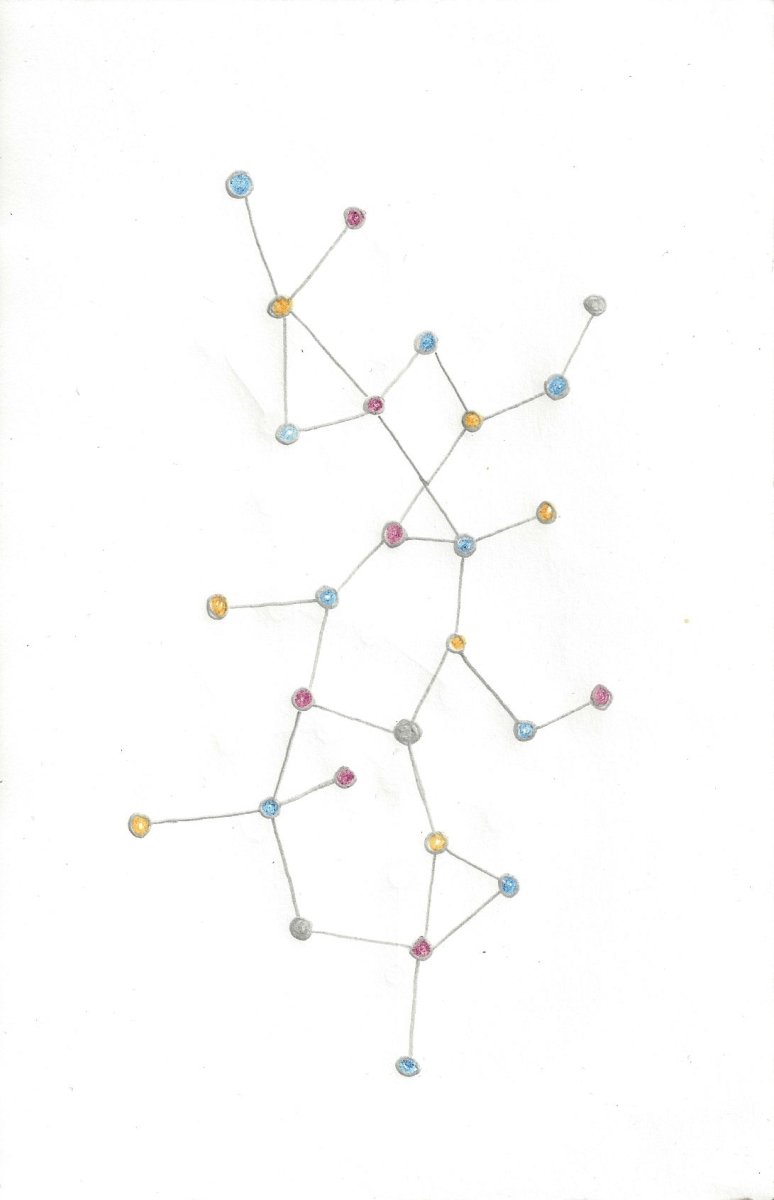
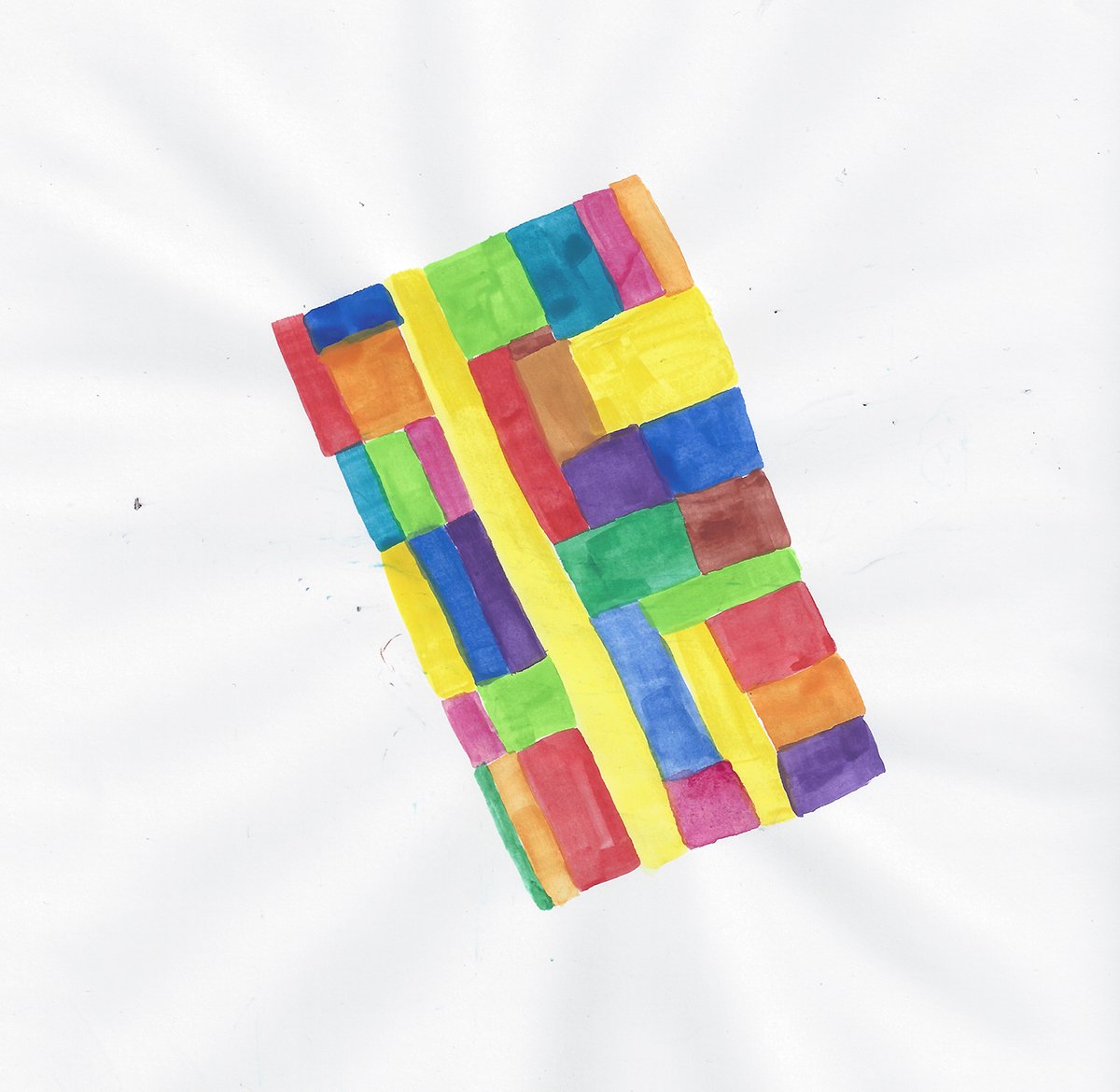
Screen capture from digital animation, “I don’t understand it” by Paul McLean for VALUBL OBJX.

THE IMPORTANCE OF REVIEWS

I feel that I must write a paragraph like the preceding one, due to an absence in the exhibit scenario of qualified critical review. For most of my career, the field of art criticism has been shrinking. My poke about artist extinction extends to the art critic. This is a long-tailed trend. Searching “art critic extinction,” I came across a blog entry in Wired magazine by one of my EGS instructors, the inimitable tech futurist and cyberpunk author Bruce Sterling, entitled “As art critics face sudden planetary extinction.” Bruce opens the notice for a panel “Critics Floating in a Virtual Sphere / Will Art Criticism Survive the Digital Age” with a pithy notation: “*Even Stalin couldn't nail all of 'em, but the Web might just do it – it was possible, after all, to hide from Stalin.” The event was held in November of 2009 at De Balie in Amsterdam. One question put forth in the blurb Stirling reposted: “Is there a future for serious, in-depth criticism in an internet-dominated society?” A summary response might be, “Yes, but quality art critiques will be lost like a sailor floating on a raft, in a sea of everything-criticism, his once-mighty vessel swamped by a critical wave of previously unimaginable proportions.”

More recent samples along these alarmist lines of thought can be found. Why is this phenomenon relevant to a discussion about PSM? After a show launches, a thorough, mindful, informed critic’s review offers the reader, the viewer, the artist, collector and dealer valuable perspective on the exhibition content. Whether positive or negative, a good review contextualizes art and artist dimensionally, framing the exhibit appropriately as an event occurring in a layered reality that intersects history, society and its discourses, technical art craft and so on. A good critic can summarize the moment in which the show occurs, the displayed art’s relevance, and explain why a particular show is relevant or isn’t. A qualified critic will also possess up-to-date knowledge of what else is happening in art, so apt comparisons and references can be made. Absent the critic, an art display exists to a degree in a contextual vacuum. In such a case, which is most common in the post-contemporary period, the art domain is diminished. Also, artist circles have one less thing, pertinent to their enterprise, to talk about. Meanwhile, it is absurdly easy to find a chat about last weekend’s pro ball game, or Trump’s latest public ejaculation.

There are more consequences. A critical void encourages discursive authoritarianism at every level of the aesthetic topology. I presented a text during the show run of “VALUBL OBJX, entitled, “Art is more than what you can say about it.” One of the attendees was the local art talk gatekeeper, the host of long-running radio interview program. As far as I know, after living in Astoria for half a decade, theirs is the only platform for regular public art critique and conversation. The print publications focus almost entirely on previews. They (the radio host) are the local version of NYC’s Jerry (Saltz) and Roberta (Smith) act. The VIP pantomime began as soon as they (the radio host) entered the gallery. They parked immediately outside the gallery and took a chair next to the door. The complaints started immediately. The gallery was stuffy, so the door should be open, we were informed, in spite of the street noise. They fidgeted continuously through my reading of the prepared text, which lasted about twenty-five minutes total, with a brief intermission. During the break, they chirped that the event was supposed to be an “art talk” and not a lecture or reading. They had not and did not look at the art on show. Their car alarm went off twice, during the reading. Twice! They skipped out on the Q&A, without asking a question or making a comment on the content of the talk, exhibit, art on view, technical artist process or underpinning theory. If I hadn’t seen this type of behavior or encountered such a person many times in the course of my career, and if I hadn’t already had several exchanges with this particular character prior, I might have been offended. Instead, I chalked it up as one more example of an unpleasant and awkward provincial Whos-it doing what a person of this type does and is. The urbane versions are much worse, and more sophisticated in their performances.

When a single person, or a few, or an entity, or media vehicle monopolizes discourse by occupying its choke point, in the process of dissemination, free speech exchange is thwarted or inhibited, and no longer free. Which is why ogreish people, whether superficially somewhat charming or not so much, gravitate to those essential critical nodes and seek dominance of them. The material compensation may be incidental or non-existent, but the immaterial rewards can be significant: A Pulitzer Prize; invitations to chic parties; access to elite society, public recognition — in short, soft power. Over time the critic-authoritarian may accumulate substantial cultural capital, a multitude of affectionate and protective followers, attractive professional opportunities, etc. At the top of the hierarchy, one might even be recognized by bigwigs in the other sectors as the go-to person, on aesthetic matters. The award-winning, widely recognized expert in the field. I have now and again had direct experience with such figures. During these exchanges it behooves one to recall that the critic-authoritarian is a symptom of a systemic problem.

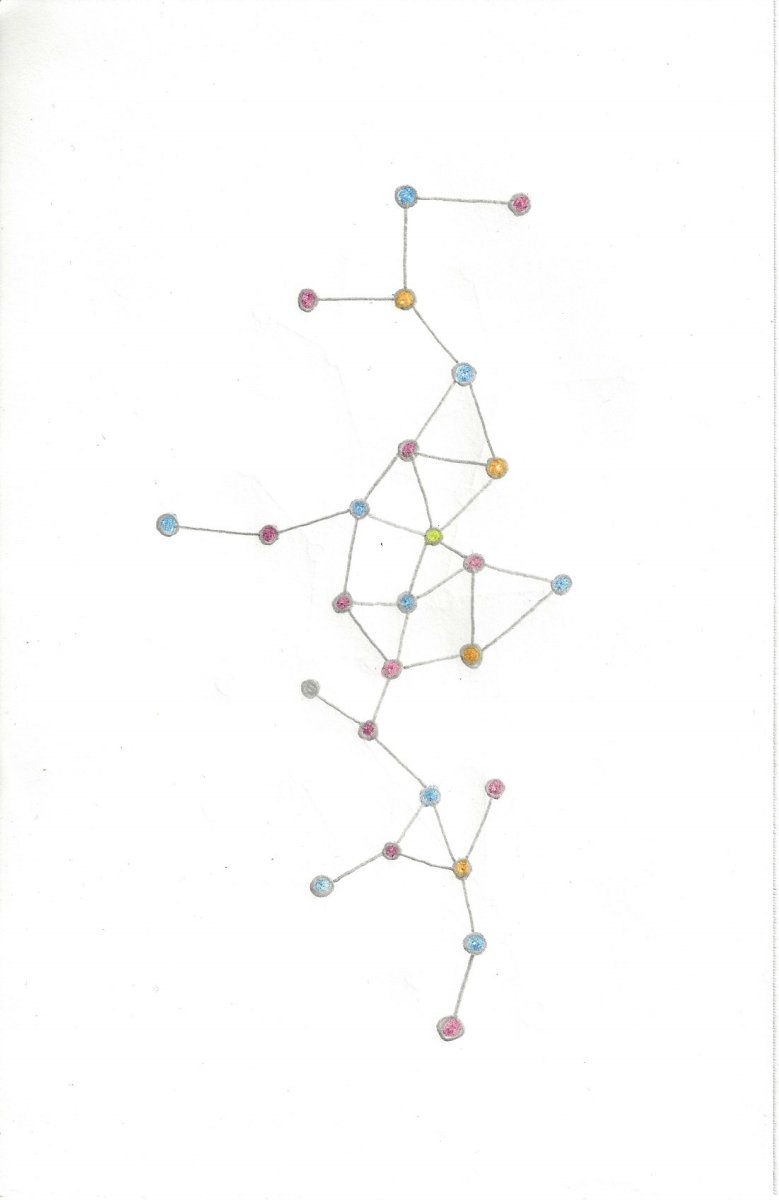
Screen capture from digital animation, “I don’t understand it” by Paul McLean for VALUBL OBJX.

POST-POST-SHOW-MODE IN THE POST-CONTEMPORARY PERIOD

After I submitted an unsuccessful application to the Oxford Ruskin School of Art Ph.D/Fine Art program in 2018, a friend consoled me by saying, “You don’t need validation anymore, Paul.” At the time I accepted his encouraging sentiments, but something about that idea didn’t strike me as correct. Upon considerable reflection, I concluded that validation is imperative and fundamental for artists, and the creative enterprise. Confirmations, verifications, a positive feedback loop, reciprocity — however you choose to phrase or frame it — artist rely on responses from peers, viewers, and others in their communal circle to stimulate consequent action. Positive or negative, cultural reaction at every step is critical to the evolution of the artistic vision, in its technicality and contingent ideology.

To deny this is to reinforce the movement to de-link art and society. Art disconnected from the 99% of its “stakeholders” is the post-contemporary status quo. The de-linking program is effected one artist, one exhibit, one conversation, at a time. A tiny fraction of the viewing public benefits from the constriction of art into an exclusive scheme, fortified by awesome wealth and power. Existing almost entirely outside the lens of mass media, the self-validating cabal of elite art aficionados and their assiduously vetted and selected art stars operate more or less with impunity. Art as such is dictatorial. It is reflexively rejected by most people as absurd, incomprehensible, decadent and so on, because it tends to be just that, by design and with that intent. Institutional practice, supported almost entirely by those nominally fractional elites, mostly reinforces the closed system format. Utilizing opaque rubrics of de-definition for traditional art, promoting ideologies that repel common folk, deploying an array of strategies to subvert democratic logic for art, the academy serves the masters whose names adorn their museums, kunsthalles, project spaces, offices, gardens, coatrooms and so on. Essentially, the architecture by which art is validated is co-opted by the donor elite, not as a sign of giving, but as a sign of ownership. The re-situating of public art in the spheres of the privileged minority is anything but subtle.

Over the past decade or two, as the world’s civilizations and empires drift toward another global conflagration, signs of tyranny abound, it is important to track the fortunes of the arts in relation to the Big Picture that is product of fortunes and exists for the fortunate. Art is the canary in the coal mine. We succumbed to this anti-democratic poison first. The precursors were complacency, neglect, ambition, resentment and hubris. Into the breach comes the opportunistic class, strategically distributing largesse, like tossing bread crumbs to pigeons. In short order the arts industrial complex was converted into quasi-cultural real estates. The objective was overarching compliance in the spheres of imagination and communication, and the program was successful by every pertinent metric. Art was made to run more like a business, with all that entails. The prime consequence is banality. The signifiers are technocracy, privatization and financialization of commonwealth, message control, making precarious of labor, oversupply of content and its consequent dilution of meaning, monopolization, conversion of fair or regulated exchanges to rigged currency, capture of leadership, and so on.

The 21st Century supremacy campaign is a signature methodology in the post-contemporary period. It has been applied to every sector of society: education; medicine; the military; government; journalism; manufacturing/industry. It consumes sex and religious practice equally. The program and its actors are hated and revered simultaneously. Those we had once relied on to protect our shared interests have been co-opted and valorized in their new roles as servants of the elite and their (elites’) mad, bizarre and repulsive interests: police; soldiers; elected representatives and career government officials; ministers; doctors; spokespeople and experts of every stripe; etc. Woe to anyone who ventures dissent. The mechanisms of oppression have advanced at a mind-boggling pace. The capacity of art, its dream and vision, to be a keen witness and inspiration for beauty in human experience, an expression of our collective soul or aspirational spirit, is nearly everywhere in tatters. The words “art” and “life” here are practically interchangeable. The ultimate question is, What is one to do about it? Or, interchangeably, What can we do about it?

Screen capture from digital animation, “I don’t understand it” by Paul McLean for VALUBL OBJX.

∞

Having passed through many PSM/PPSM phases over the decades, I have accumulated a skill set for not just getting through them (PSM/PPSM phases) psychically and artistically intact, but for using them as the springboard for creative renewal. The post-contemporary period comes with its unique challenges, but it too offers opportunity for one to shift perspective, and then direction. To this end, during PSM/PPSM, I tend towards productive reflection, and deep dives into the archives are the expression of that tendency. In the 2023 iteration, I can cite a couple of references to illustrate the supportive practice.

Before doing so, I would note the bi-polar factors that characterize the post-contemporary moment: Chance; and Chaos. To specify incidents within the historical moment provides a context for how these change agents manifest across societal sectors. The first notation is the unprecedented ouster of US House of Representatives Speaker Kevin McCarthy by radical rogue elements of the Republican Party. The second is the courtship of Taylor Swift and Travis Kelce. She is a phenomenally successful pop musician. He is an American football star. These citations do not illustrate Chance or Chaos. They illustrate how impulsive behavior in the elite political and cultural arenas is translated via media into antique subtextual notions of Fortune and Fate or Destiny. In the first notation, the drive is power. In the second, the urge is Romantic, bending toward Novelty, which can also be associated to material and immaterial reproduction. Chaos asserts itself in the aftermath of McCarthy’s ouster. In the emergence of the hook up of the two celebrities, we witness the pairing of the dual industries to which they owe their fame, Music and Sports. This was, as far as we know, not an arranged wedding. However, one can discern how the situation has sparked a flurry of activity commensurate with its popular reach. The first notation echoes Shakespeare’s Julius Caesar, the second Romeo and Juliet. In the post-contemporary, however, the Echo myth merges with the Carnival aesthetic, evocative of the fun-house mirror room, and the distorting, melding and blurring effects visible in Dali-esque Surrealism.

In a counterbalance to the PCP externalities, I will cite two Germaine re-discoveries that came to my attention in my current encounter with PSM/PPSM. The first is Kubrick’s monumental cinematic masterpiece, 2001: A Space Odyssey. I offer this citation to the reader on two counts, also referential. The first has to do with the movie’s content, which combines angsty AI narratives, space alien encounters, alternate history with speculative science visualized through brilliant special effects and innovative technical movie-making. Plus the soundtrack. Not to mention the literary source and minimal script. And scene design. The second count really is a reinforcement of Martin Scorcese’s recent comments on the threats to cinema arising from technology and industrial over-reliance on superhero movie franchises. My second citation centers on the dead crypto-currency Libra, renamed during its limbo phase as Diem. I would refer the reader first to a New Models Podcast Volume 1, Episode 16: “E Pluribus Zuck” for background. This failed project arguably indicates the incredible ambition of the elites to establish a techno-global wealth system whose levers they command, beyond the sovereignty of nations, individual privacy as an expression of citizen autonomy, and fading prohibitions against surveillance as a means of social control. From the crypto-boom-and-bust, through the ongoing trial of Sam Bankman-Fried, the PCP echoes the bridge-selling snake-oil salesman of yore and lore, but on a more serious level, the terrible danger attending fraud, and generally, the lack civic accountability as a means to counteract it. The roots of this Thing can be elliptically traced to the massively complicated and consequential historical convolution democratic law and anarcho-techno-libertarian-Capitalism at the last millennial turn. I am alluding to and inferring linkages to self-serving and -defeating nihilism and fanatical fascist religiosity or unprincipled righteousness to the unresolved catastrophes of the War on Terror, the Iraq War, the Great Recession… Covid. The J6 Insurrection… Homelessness in the USA. Deaths of Despair. Fetanyl… Out of control immigration… And on and on.

The wrong question, in one man’s opinion, is What have we done? The right question, in both PSM/PPSM and PCP, is Who is We?

Screen capture from digital animation, “I don’t understand it” by Paul McLean for VALUBL OBJX.

SOLUTIONS

Concisely put: anything and everything, one and all. The prospect is naturally as confusing at the outset as the confusion with which one is confronted in all directions at once. The principle dynamic of the age is mass predation benefitting a few of us. Who are They? We can look to the information gleaned from the disclosures provided by whistleblowers and relentless muckrakers for initial answers. Many of the agents and agencies of malevolence have been identified, or conduct their malevolence in the open. When threatened, they respond with inordinate force, manipulating the law and violating the norms of civil society with aplomb. Which is why we must stridently defend persons like Ed Snowden and Julian Assange, and entities like Wikileaks and condemn usurpers like Donald Trump, all he is by a long shot not the worst actor. We must read the Panama Papers and Capital in the 21st Century. A decade ago, during Occupy Wall Street, the stage was set for the wholesale overthrow of the anti-democratic power scheme. In the intervening years since that peaceful, flawed uprising was forcibly collapsed, the situation predictably and dynamically, even catastrophically worsened. Bernie’s political efforts were thwarted by corruption and subterfuge at the highest levels. Wild card Trump was elected, and in measures despotic and desperate, he gave the elites and reactionary fanatics whatever they wanted, and eventually attempted insurrection to hold onto power.

American democracy is truly at a crossroads. …An artistic solution can be framed as speculative fiction, a prospective narrative. I defer to Milo Santini: “For a dimensional problem on this scale, art provisions a catalyst for cascading change. In the proposed imaginary, the legions of self-identifying artists are organized and mobilized to address inordinate oligarchical influence in the domain of cultural production. In an extreme scenario, the money and dominance of the ultra-rich is completely deleted from the field of the arts. No artist would sell to anyone with a net worth over a few hundred million dollars, or whatever figure is determined to be reasonable, or to any corporation in the Fortune 500 or 100. No oligarch would be permitted to hold a trustee position is an art foundation, institution or not-for-profit. None of their philanthropic donations of any kind would be accepted. None of their names would adorn art buildings. Oligarchs would be persona-non-grata at all art functions and events. All oligarchical business entities would be boycotted by all artists, art-related workers. Anyone sympathetic to the mission of democratic arts reform would be encouraged to divest, boycott and sanction both individuals and enterprises identified as belonging to the superrich. All commerce with these people and companies would cease. Etc.”

This is the broad sketch of an essential first step, which can be expanded, specified and replicated by other social demographics, and directed at the same target. The effects are conjectural, but one could imagine the ruckus a collective direct action like the one Milo outlined above would create. One can also imagine the push-back.

Would this sort of intervention qualify as an artists’ project? As such it should have a name, such as “Herd of Cats.” It would be absurd to presume that a million-and-a-half or so artists could share anything resembling the single-mindedness necessary to formulate and execute a program like the one outlined above, on a common basis of politics, economics, ideology. Even so, the logistical obstacles would be formidable. Recent developments point to legal and legislative machinations that could be brought to bear, e.g., the use of RICO prosecution of activists opposing Atlanta’s “Cop City,” or the anti-BDS campaign executed by allies of Israeli Zionists, or the various corporate anti-labor efforts brought to bear against union organizers (see Starbucks, et al.), or the vigorous attacks on the protesters at Standing Rock, formulated through the consolidated interests of investors in and owners of the Dakota Access Pipeline. Raw, unadulterated force was brought down on Occupy, with the sanction of authorities at the highest levels of government, and executed by “Bloomberg’s Army,” the NYPD and many other agencies and agents. The Pinkertons and many other such outfits exist to quell threats to the status quo. Could an artists’ movement withstand the pressures that would undoubtedly be turned upon them, if they amassed to overturn the establishment?

Perhaps we might consider the proposition in another light. Why, one might ask, has there been no national commonwealth movement in the 21st Century to address the most difficult challenges of our times? Why are the masses resigned to their pervasive state of repression? Like everyone, I have ideas about power and powerlessness. Like many other people, I wish to belong to a just, equitable and peaceful society. In such a society I envision a place for my art, my family and myself. At this very moment in my PPSM rumination, a bit of news appears in my feed scans to provide a bit of hope. Dr. Cornel West has declared he will run as an Independent candidate for the US Presidency, abandoning the Green Party, which has little traction among the electorate. Cornel has a slim chance to obtain the highest office in the land, but his political and activist bona fides are real. He was a staunch supporter of Bernie Sanders’ doomed bids in 2016 and -20, although in this cycle that support was not reciprocated by Bernie, who fears a split Democratic base enabling the disastrous re-election of Trump. I wonder if I can drop West an email, outlining plans for a US Commonwealth Party, energized by American artists fed up with the two-party system. I would commit to small donations of the kind that fueled Bernie’s campaigns, to fund the pursuit of that third-party goal. In my mind I acknowledge the odds of a viable Cornel West Presidential campaign winning the 2024 election are minuscule. My heart could get behind this, though. I would volunteer.

But in the darker corners of my political consciousness, I am haunted by the poignant humor of long-gone pundits like Will Rogers and my distant ancestor Mark Twain. Then, in the heavyweight class of black political humors, there is Hunter S. Thompson, one of my literary heroes of the past three-quarters of a century. A few years ago (2018), Dick Polman penned a what-if article about Thompson for The Atlantic. I quote:

He was, in a sense, America’s first blogger, and his tone seems eerily contemporary. Even a letter he wrote to a friend in 1965 sounds like a common lament in 2018: “I think there is a terrible angst on the land, a sense that something ugly is about to happen, an hour-to-hour feeling of nervous anticipation.”

The Divine broke the mold when that bastard Hunter Thompson hatched, and both angels and demons recoiled and sighed in relief at his End. “Fear and Loathing” is a profound assessment of the American Project these days. But Hunter may as well have been describing my state of mind during this 2023 episode of PSM/PPSM. The optimism inherent in solution-finding is in short supply. I’m not alone in this sentiment, clearly. Not that that realization ought to give solace to any distressed citizen, either. Loneliness and Isolation are poisonous, too. They are ubiquitous in the PCP.

Screen capture from digital animation, “I don’t understand it” by Paul McLean for VALUBL OBJX.

CONCLUSIONS

Optimally, one emerges from PSM/PPSM renewed. Creatively vision clarified, the artist is able to chart a course forward, an eye toward progress. Approached correctly, PSM/PPSM yields a fresh sense of purpose. If the process has been constructive, the artist has assessed where in practical and technical areas one has room to grow and improve. The response among viewers, peers and critics (if there are any) have been measured and accounted for. If the show was mounted in a venue with which the artist has an ongoing relationship, discussions have been conducted on the success of the production, highlights from the show run, potential opportunities arising from the exhibit, what comes next. Most importantly, the artist will be coming away from the experience, and the vital period of reflection immediately following the event, with realizations about art, being an artist, and what art is for.

Stepping out of the shadow phase of VALUBL OBJX, I can speak to the last point. This has been an especially strong PSM/PPSM for me, artistically, and on other levels, too. The main contributing factors may be my age + experience, and the longer-than-usual period separating this exhibit and the previous one (“CODE DUELLO: Old Hick and a Big Bang,” Nashville 2014) not self-resourced. Also, since the show closed, I am going to apply for a couple of fellowships, a task that requires the applicant to think holistically about one’s work and communicate ideas that inform it. Because I have been through PSM/PPSM many times, I was actually looking forward to this one, instead of dreading it. Even through the most intense moments, I found the psychological stamina to weather the bitter storms of doubt and despair. I intentionally maintained perceptual openness to new perspectives on my art. In the final stages of PPSM, those arrived, without fanfare, in the fading summer/early fall PNW evenings, on the back porch.

My first realization is really a speculative fiction. It is connected to the “Dim Tim: Fallacies of Hope” PSM/PPSM. Back then in the contiguous development of Dim Tim — a name shortening “Dimensional Time” — I wondered about the character’s mind. I decided it would be fundamentally alien to a human mind, in that it would operate as a hybrid machine-person. After some poetic experimentation, expressed through text, song and scripts, I set aside the project and transitioned into a different creative direction. I shifted toward rendering tools for fooling facial recognition software. I mourned the death of a brilliant young mind who succumbed to addiction by overdose. My thinking became for a while more reactive. Civil unrest in the post-Occupy era nudged me into conceptual concerns that manifested as graphic patterns with unique color profiles, achieved through mixing of inks and acrylic polymers and mediums. My focus is dimensional — aesthetic, theoretical, technical, historical. I am, however, like most everyone, I suppose, affected by the circumstantial. The circumstances that precipitated our relocation from Bushwick/Brooklyn/NYC to Astoria, Oregon are not the subject of my paintings. They are the contextual aspect out of which art appears. Art, for me, exists as a parallel phenomenon to the realities I share with you all, a liminal thing that serves as a conduit for bundled relations, an objective site of exchange, the Thing among things. Art can help you through the toughest times, but not necessarily by subjectivizing objective reality to generate content.

In the 2023 PSM/PPSM it occurred to me that the VyNIL Cycle might be an attempt to represent the mind of Dim Tim. Maybe this is how his thoughts would appear, rendered in paint. This narrative in my analysis is congruent as data visualization, and it (the narrative)coheres with what I understand about evolution of creative ideas within fictional applications. I don’t suppose it works as a recursive answer to the question, “What are these paintings ‘about’?” I have other pre-conditions for the VyNIL sequence beyond a story about an entity of mysterious origins whose existence is anomalous. Those are mapped in the texts I published in conjunction with VALUBL OBJX. …I will say, without elaborating, the Dim Tim-mind explanation does deeply satisfy me as a provision of creative processing.

The second realization is more practical in nature. One should always be curious about the “How” facet of making things, beyond material methodology and logistics. In this regard, I came to accept that all the extensions of my studio painting — forays into other disciplines (i.e., philosophy, advocacy and activism, other branches of the arts, academics and education, etc.) — were all undertaken in order to improve my main artistic interest. None of them gives what painting does, to and for me. No matter how proficient I might become in any of them, they were and are not my vocational means to an end. They inform my true work. They are sidelines in a complex woven form that is my central practice. Bunched together, they form the fourth dimensional aspect of my painting. I wrote a 700+ page dissertation on the way to this realization, through which I arrived at a definition of 4D that applies to my art, and rationalizes my research, writing, philosophical and art historical studies, my adoption and immersion into digital processes and tools, my interests in the various sciences, including the “soft” ones, forays into the art press, into art-related politics and economics and more. The only facets of my life that exist on an equal footing with art are sobriety, family and spiritual matters. This is in no way a full disclosure. I do believe some of what we learn about ourselves is private, and should remain secret, or rather, not-public information. I treasure democratic protections as much as the spiritualism of anonymity. They hide to protect what is most precious, from bad actors who crave what is precious, but whose possession of preciousness is cruel and destructive.

I don’t know that any further commentary on the second revelation is necessary or helpful, beyond what I have already written. So I will end the essay here.

On the first day of this latest “war” between Israel and Hamas, et al.

Sunday, October 8, 2023, 12:22 AM

Astoria, OR

Sunday 10.08.23
Posted by Paul McLean
 

VALUBL OBJX: Afterword

I thought about photographing Made in Astoria gallery the morning after the de-installation of my exhibit VALUBL OBJX, but I just didn’t. Could’ve, but didn’t. A week later, today, I’ve definitely shifted into full-on Post-Sho-Mode [PSM]. Sleep patterns have more or less returned to normal. Same with the diet. The mind, though, that’s something else.

Screen capture from digital animation, “I don’t understand it” by Paul McLean for VALUBL OBJX.

PSM is fairly common among exhibiting artists, judging from many conversations I’ve had with my peers over the years. Sure, okay, the evidence is anecdotal. That doesn’t mean the phenomenon isn’t real. The intensity of a PSM episode, based on my non-scientific research, is usually proportional to the stakes and outcome of the show. Not true in all cases. A general rule.

Screen capture from digital animation, “I don’t understand it” by Paul McLean for VALUBL OBJX.

Artists, if you buy the romantic stereotype, are prone to various types of instability, and are not known for being the most logical bunch among us. It can be a challenge to discern what exactly is at stake for any given artist, during any given exhibition run. Could be nothing or not much, or could be everything, and I mean every damn thing. Be careful what you ask of an artist in PSM. You don’t how they might reply to the ubiquitous Casual’s question, after the show closes, “Did you sell a lot of work?” Could be the artist chirps, “Yeah, tons!” or they put their head through the coffee shop’s plate glass window you happen to be standing next to. It’s easier just to wave when you come across a PSM-affected artist, if you come across one. We’re an endangered species, don’t ya know. …By the way, I dropped that bit about artists being endangered, pretty much as a pithy throwaway line, to infer a corollary conversation about who’s an artist in post-contemporary period, and what the artists’ generic status might be presently. It’s a question (Who’s an artist?) I’m always asking, along with a couple of others (What is art? & What is art for?). On a verifying whim, though, I searched “artists an endangered species” and discovered that endangered species [ES] as subject matter for artists comprise a veritable sub-market in the art industrial complex. Topping the list of luminary ES artists - did you guess it? - long-deceased Andy Warhol! Ugh. Does anyone else out there suspect we artists should be on extinction watch? Even if we are in imminent danger of extinction, wouldn’t it also make perfect sense that we would keep ourselves occupied on the way to the Void, making pretty art about other species suffering the same fate?

∞

Screen capture from digital animation, “I don’t understand it” by Paul McLean for VALUBL OBJX.

I’m thinking about Bill Worrell, a Texan sculptor, whom I knew in Santa Fe in the late ‘80s, early ‘90s. Back then, he showed at Contemporary Southwest Galleries [CSG], one of Frank Howell’s constellation of art enterprises. Frank’s gone, now, as are his constellation of art enterprises. I don’t think either of these old white guys would have fared as well as they did as popular commercial artists these days, given the widespread animus towards cultural co-optation or appropriation. No way, José! Bill made and sold mostly bronze sculpture and jewelry, inspired by pictographs and petroglyphs. Bill was a gregarious character. At one point he offered me a job applying patinas to his stylized shaman figures, buffing them and so on. As I recall, that gig lasted an afternoon. I have a fairly vivid image of sitting in his yard, working away, smoking, maybe sipping a beer. Bill coming over to correct my technique in his twangy voice, urging me to speed up. At some point, later, I bought one of his pendants for my Mom. I forget what became of it, after she passed away. My stint at CSG ended messily, after a year and a few months. My tasks at CSG included installing work, doing the lighting, prepping art for transport, and, once I got the hang of it, selling the art, on or off the ladder. The gallery gypped me out of the commission for around 100k worth of sales (about a tenth of the gallery’s annual retail take), when they switched the payout structure to the gallery’s benefit. I filed a complaint with the appropriate Santa Fe city agency. We went to mediation, and the gallery got off without paying me what I was owed. It was suggested by the arbitrator I get a lawyer, LoL. Bad experience. Things got awkward, and I was let go or quit, I can’t remember which. Probably the former. I got sober not long after. Anyway, I searched for Bill on the web and discovered he passed away a couple of years ago. RIP, Bill. RIP, Frank. RIP, CSG, LoL.

Screen capture from digital animation, “I don’t understand it” by Paul McLean for VALUBL OBJX.

A lot of attached memories percolated to the surface, prompted by my recollections of Bill and his shamans. Maybe it has something to do with Venus and Mercury going retrograde. Maybe it’s just part of my closing in on sixty. Looking back gets complicated. It’s like being in two places and times at once. I catch a glimpse of the energy of those long-gone moments and the relationships that intertwine through them. What I was doing with whom. What I was thinking and feeling. What happened next, or didn’t. How things ended. Complex narratives, a rhizome of relations.In PSM, the mind follows the drift. The river of memories flows in one direction, then bends in another. Once you’re in the current, you try not to get too far away from the shore, which is the present, and Reality, in the here and now. One has to possess mental discipline, to be tenacious. You have to muster reasons to keep close to the shallows, and not surrender to the depths.

Screen capture from digital animation, “I don’t understand it” by Paul McLean for VALUBL OBJX.

A river’s flow is a fine, ancient metaphor for the flow of memory. Lucky, I can gaze out to the vast Columbia and find a reflection for my musings. Or I can take a short drive to Sunset Beach and ponder the powerful Pacific Ocean. I can think about rip tides, about waves. These northwest coastal waters are cold, and can turn violent, wreck a vessel in the churn. The season of storms is approaching. You can feel it in the bones. Even though the sun still shines, and the temperature is balmy while it does.

∞

Screen capture from digital animation, “I don’t understand it” by Paul McLean for VALUBL OBJX.

After a show, I commonly go through a pronounced post-partum phase. Over the years, I have developed techniques to mitigate the negative aspects of the post-show blahs. In the past, I took a month off to travel, or rest. Maybe get some bodywork, do extra workouts, take hikes and get out in nature. Eat a lot of comfort food. Sleep in. Hang out with friends and family I’d neglected during production. Read a book. Take in somebody else’s show or performance. Watch a movie. Relax.

Screen capture from digital animation, “I don’t understand it” by Paul McLean for VALUBL OBJX.

For some reason today, Texas kept coming up. I was chasing some thread and Ballroom Marfa popped into my scope by way of Glasstire. Ballroom’s facade is just fantastic. One of my favorites. I thought about visiting Marfa, about Don Judd (RIP), about Prada Marfa, and some of the people I met in that special, distinctly American destination art town within spitting distance of the Mexican border. Which got me thinking about Cormac McCarthy and Blood Meridian. RIP, Cormac. Through the lens of PSM, I tripped into the scroll-hole of the Paris Review’s “The Daily.” I find a review of Tara Donovan’s “screen drawings.” Suddenly, I’m back in LA, sweating, smoking, slurping coffees, with several crews of art handlers, unloading a myriad of commonplace materials in bulk for a show Tara was doing at Ace. Pause. Drift some more. …No Rest in Peace for Doug Chrismas, yet. And they haven’t got him into prison, yet, either. Amazing. I remember our doing a surface inspection and damage report on a massive and heavy wall sculpture we were picking up or dropping off, don’t remember which. We marked down every little ding and scratch, of which there were many, due to this particular artist’s technique and materials. The process took forever. All because the assistant director or whoever bitched about something and pissed off the lead handler. They always did this with Ace/Chrismas. He was a known quantity among vet logistics guys. I remember scanning art classifieds in LA Weekly or LA Times and finding several listings for positions at Ace in a single issue. Every few months. Not a good sign. Means the owner’s turning over the entire staff, routinely. A few of my CGU art faculty showed with Doug, and I attended a few of their openings. I heard stories and explanations. I saw how the work was presented, the big crowds and VIPs at the reception. It wasn’t hard to understand the phenomenon that was Ace/Chrismas, in one way. The man knows how to put on a show.

Screen capture from digital animation, “I don’t understand it” by Paul McLean for VALUBL OBJX.

∞

I run into Bill and Annie of Made in Astoria at Sleeper Coffee one morning. Bill asks me what I think about wall treatments for temporary exhibits. I launch into a history lesson that lasts ten minutes. Annie has to get to work. When I get home, I look up Whistler’s Peacock Room, which I had confused with the Jade Room. The article I find on the Met site, “The Jade Room and Other Forgotten Museum Spaces,” dovetails nicely with my PSM. The illusion of permanence that art perpetuates as it transits architecture and exhibition is only one seam, in the “mine” of art thoughts. …Imagining every art show, ever. Putting oneself momentarily into the presenters’ pipe dreams of aesthetic immortality. All those sparkly openings and dreary closings. The steady stream of art handlers and logistics guys, moving to and fro. Admins fretting. …Paint the walls, don’t paint the walls. Eventually, it always comes down. Art is a migratory species. It appears and disappears. RIP, Baudrillard.

Screen capture from digital animation, “I don’t understand it” by Paul McLean for VALUBL OBJX.

This is an example of drifting too far from the metaphysical shore. Paddling back.

Screen capture from digital animation, “I don’t understand it” by Paul McLean for VALUBL OBJX.

After my encounter with the Ghost of Art Shows Past (and forgotten), I do an about-face, and leap into the deep scroll, out of the drift. Into the morphing of the Real that is Contemporary Art Daily. There I discover a clever show by Mads Lindberg at C.C.C. in Copenhagen. I have never encountered Lindberg before. Never visited the gallery. Never been to Copenhagen. Ahh, fresh content! I adore Lindberg’s paintings, hung high above the floor. The offset spiral staircase reminds me of the McLean family home on Granville Avenue in Beckley, West Virginia. The layer of graphic two-tone snowballs is a nice dimensional device to bind the series into a whole. Well done! Refreshed and curious, I click down the infinite scroll, dropping in on contemporary art exhibits and installations from around the globe. After the first several, I’m still encouraged. I am noticing the painted- or other treated-wall features in some of them. I must remind Bill to check this out. But after a half-dozen I am feeling the momentum gear down. Ennui is replacing it after a dozen virtual show-visits. Shit. The realization that we are decidedly well into the post-contemporary period, and in aggregate these shows are proof. I am contemplating the carcass of the contemporary. The scenes are reminiscent of Alexander Gardner’s Civil War photographs. Or pictures of mass-die-offs of cattle in pastures. Art, like the American Southwest, and other parts of the real world, is suffering an extended super-drought. In my imagination, beautiful people are sunbathing among Gardner’s array of bloated corpses, oblivious to the stench.

∞

Screen capture from digital animation, “I don’t understand it” by Paul McLean for VALUBL OBJX.

I thought about getting a good Road vehicle and crisscrossing the North American continent again. RIP, Jack Kerouac. About documenting every art gallery in the country. Meditation practice has taught me to let thoughts come and go. Other visualization-based practices help me to think ideas through. Doing so can help one avoid missteps and overreach in production and logistical operations. Interstate travel in the USA has changed significantly, and not for the better, in one man’s opinion. Gas is crazy expensive. American infrastructure is in decay. The Pandemic, political and cultural polarization, virtualization, etc., have radically affected the people of this nation. I want to name the malaise, but it is dimensional, and therefore resistant to recursion, to any over-simplification. Although that (oversimplification, narrative flattening or compression) is exactly what everyone seems to yearn for. There’s no good local radio for late nights on cruise control at 80MPH. Smartphone map apps spoil the experience, in some respects. Search engines, too. All these factors make it harder to just fall in love with America, to swoon as the miles go by. Making friends of strangers was the difference-maker, back in the day. Now, hardly anyone trusts anyone else. Damn. There’s plenty of blame to be assigned, but in the end it just sucks. The up-and-comer generation can hardly conceive of the way it was. Not everywhere, not for everyone, for sure. For me, the Highway was a promise fulfilled. For every season that no major public policy initiative passes, addressing the matrix of problems combining to manifest Coast-to-Coast structural desolation, neglect and squalor, we love a big chunk of our Big Country identity (and I don’t mean this Big Country, though I do have fond memories of the song and band. I mean this one.). …Shame.

Screen capture from digital animation, “I don’t understand it” by Paul McLean for VALUBL OBJX.

In the post-contemporary, all the money goes to The Information Superhighway. Remember that stained old jack of a trope? About as cheap a coinage as The Cloud. RIP, Information Superhighway. RIP, Road. The current iteration operates more like a Disinformation Super-pipeline channeling the seeds of madness directly into our homes and minds. …In PSM one must be very careful about reactionary impulses. On the other hand, one has to be conscious of veering too far into isolation, or tendencies toward willful ignorance of actual circumstances external to one’s immediate concerns and conditions. A second opinion can be immensely useful, if one is in the throes of dark PSM. A reality check from a real person not similarly affected. In some instances, a little web scanning can serve to allay an unwarranted fear, dissolve a goofy idea or counter a ridiculous position. In 4D analysis we categorize such procedural methods verification and negation. For those of us predisposed to nuttiness, it helps in the discernment of the True from the False, in keeping with settled standards for Reality.

Screen grab of Meta alert.

Let me give an example. Approximately a day after “VALUBL OBJX” came down, and Bill and I brought the work home, my Instagram started glitching hard. An alert warned me that someone, presumably a phisher or other sort of black-hat hacker, had tried accessing my account. IG wanted to confirm I was, in fact, myself. A six-digit code was emailed to the address I set up, oh, around 2001, which I had made the default when I set up my first Facebook account, circa 2006 or -7. Once I receive the code, I enter it into a form, then the next form appears, demanding I change my password. Fine. Granted access to @Valubl once more. Then, a few minutes later the alert pops up again, freezing my account. Repeat the process. Over and over and over. I did all the things you do. Clear all Insta-history. Log Out/Log In. Restart browser. Restart computer. Contact the notoriously shitty (non-existent) Meta customer service via email or by phone [two #s for billions of users (!)]. Confirm this is a known bug, via web forums and tech Q&As. Finally, after days of frustration, I contacted the Better Business Bureau of Oregon to lodge a complaint against Meta Corporation. My complaint was accepted. BBB contacted Meta, and we’ll see what happens. I think I’ll follow up by reaching out to my federal and state representative. I might ask the Feds if they need an extra hand in breaking apart Big Tech monopolies. Or start a user movement to nationalize social media, starting with boycotts of all Meta products. Here’s what the voice of Reason whispers in my ear: “…Whoa, now, hoss. Let’s dial it back, just a hair. You’re just a guy, an artist in Astoria, dealing with PSM.”

Screen grab of BBB/Meta complaint.

Another known side effect of PSM is What-if-ism. The progression can go something like this, if, say, you happen to be a fan of Adam Curtis documentaries, Radiohead, Will Oldham, the Trillbilly Workers Party, and so on: “Maybe the timing is finally right for a real turnaround!” You can just make out the contours of a post-contemporary rebellion, an uprising of the beleaguered hordes. The wholesale rejection of status quo tyranny and its constantly-expanding nebula of macro- and micro-oppressions. Magical thinking inflects the elliptical logic of intellectuals, poets and pundits. Radicals and reactionaries alike note that collective action is making a comeback. Class commentary becomes colorful in the metaphors: “The spinning knobs of the oligarchy are wobbly;” or “The veneer of monopoly media is showing some cracks, due in part to dreadful management, awful behavior and failure to keep in touch with the majority of content consumers, who yearn for consistent, good quality entertainment and information products.” I imagine Milo Santini on a News Hour Program. “Bob, Rachel, my tracking data and analysis indicate potential for disruption of the industrial command and control matrix on a number of vital fronts. Labor is flexing in Hollywood and Detroit and the typical neo-liberal responses have failed to derail those strikes. The narratives of Big Gig are thinning out. The huge muscle driving AI has doinked its systemic push.” The anchors are grimacing. Their flesh is flush. Ties and collars are tugged at. Skirts and earpieces are checked. “The rigged financial sector is getting nervous behind some indicators and situations that threaten to pull its lever, and draw the dirty players out of the shadows and into the bright lights of scrutiny. The pressures that combine to blow the lid off the cauldron, turn it over and spill its seething contents are mounting.” Everyone is staring into the camera, blinking faster, fidgeting nervously. The subtle non-verbal twitches and gestures signing the producers to cut ASAP to commercial break. Milo’s vocal pitch is rising. He’s gathering steam for a crescendo. “If you listen close, you can hear the whistling at night. You can almost hear the songs over the wind blowing. You might hear the sound of Bernie’s raspy rant echoing in the distance. God bless SAG-AFTRA, the UAW, those pesky Starbucks baristas. Remember East Palastine! Remember Silicon Valley and First Republic!” Milo’s totally losing it. He’s gone off the rails. Security appears, and the others clear out. Milo begins to shout, as he’s being hoisted and dragged backstage and out of the building. “Oliver Anthony howls across the hilltop, the ground is shaking, then the Flood, and a hundred more catastrophes. War dogs are snarling. The castle gates have never seemed more feeble. A hoard of fortune will prove no solace, in the end, for anyone, when it all goes Helter Skelter (“Helter skelter, feare no colours, course him, trounce him”). Shame and justice pursue the wicked wherever they hide. By god, maybe in the 21st Century, the humble shall inherit Earth!” In post-production, Milo’s eruption is given the montage treatment, with layers and layers of blurred imagery and distorted audio. Of course, no corporate media would in a million years let a disaster like this near a broadcast. Their “news” aesthetic? Rinse, repeat, cut to ED, fast food, and new car or credit card ads. Clickbait. Culture war transgression. Pwns. Influencers. Mass shooting. #METOOs. Bombs. China/Taiwan, Russia/Ukraine, anything Middle East. Disease and pestilence. Nature out of control. Things that will kill you. Things you can buy or do to not die too young. Etc. Focus directed anywhere, besides the Real Problem.

Resample by PJM. Source material, HERE.

RIP, Sinéad O'Connor. …In my PSM fervor (or fever), I was starting to channel a chaotic, loony, post-contemporary version of the Beatitudes, but then Bukowski crashed the party. The poet possessed an eccentric gift for deadpanning a grim social dynamic, and turning a beat spiritual pep talk into a smoky grumble, conjuring a mad mise en scène:

The Meek Shall Inherit The Earth

if I suffer at this
typewriter
think how I'd feel
among the lettuce-
pickers of Salinas?
I think of the men
I've known in
factories
with no way to
get out-
choking while living
choking while laughing
at Bob Hope or Lucille
Ball while
2 or 3 children beat
tennis balls against
the wall.
some suicides are never
recorded.

Resample by PJM. Source material HERE.

Yadayadayada… Or in reverse: A Day. A Day. A Day. Each a miracle and wonder. Or, conversely, an endless trudge saturated with horror and frustration. RIP, Charles. Sometimes, “success” is a function of what one doesn’t do. On the 27th of this month, I’ll have thirty-two years sober.

During PSM, one has to learn to deny the prophetic urge and embrace the natural Flow of existence. Easier said than done, am I right?

Screengrab of BBB reply.

The studio is calling again, thank the heavens. The Muse is whispering. I am dreaming again of worlds in pigment. I am seeing things BIG, like stargazing on a clear PNW night, whose darkness is like no other I’ve known. PSM will not last for long, of that I’m certain. It passes. It all does. The whole universe is moving, it seems to me. No two moments are identical. Like breath. Note: On the first or second working after I filed my complaint with BBB Oregon, the annoying as hell Meta alerts just ceased. No explanation. No contact by a Meta representative. I’m thinking I will still contact me government representatives, report the problem, and offer to assist any efforts to remedy Big Tech overreach and malpractice. I’ve also had an idea for an activist solution: forming a Platform Users Union (PUU, pronounced pee-yew) for networking, boycotts, petitions, protests and all kinds of direct and asymmetrical collective action. Historically, powerful versus powerless ain’t a fair fight. America, though, has at moments, including in its origins, given hope to underdogs everywhere. Don’t count us out just yet. It’s been years since I first argued that the ultimate showdown, the real World War III, would pit the global elite against everyone else. Are we there yet?

∞

Screen capture from digital animation, “I don’t understand it” by Paul McLean for VALUBL OBJX.

Proposals. In the liminal space or psychic trough following a show, I will go to work on a proposal. I did that this time, and will be submitting an application for an Eyebeam Fellowship. The title of the proposal is: Post-Digital Commonwealth [P-DC]; mapping Technology-Free Corridors within society; precursor for networked analog-safe zones; for restorative purposes; a Post-Contemporary imaginary emulating Park systems. The title is descriptive of the proposed program, in its broad contours. I must admit that I have little inkling of how the review committee will receive the concept. It (the proposition) is Heyoka-flavored, which appeals to a backwards-looking, forward-walking soul, and not necessarily to the tech-progressive art set. We shall see.

Homage to Bill Worrell by PJM.

It seemed to me that I might have applied for an Eyebeam Fellowship before, a long time ago, but I couldn’t remember, with certainty, so I checked my Submittable history. I hadn’t. About ten years ago I applied for a residency at Recess in Brooklyn. Rejected. I also applied to Artist Relief for funds during the Pandemic. Rejected. Twice. Over the past decade, post-Occupy, most of my art-related proposals have been rejected. I won’t bore the reader with a lengthy list, measuring what a loser I am. Lulz. While experiencing PSM, it behooves a body to cleave to the positive. In keeping with that principle, I have moderated my expectations with such things. Without question, the art world has undergone significant change over that period. Or has it? I’m afraid we’re turning negative, folks. …The art world is always in flux, like the rest of the world. Is that true? …I, after all is sung & done, defer to Bo Burnham, as we approach the finish below. Haha. No, not really. I’m, like, three times his age. I’m just in PSM. This is what it’s like, among the curls and foam, one hour to the next.

Screen capture from digital animation, “I don’t understand it” by Paul McLean for VALUBL OBJX.

Immediately after an exhibit closes, I try to refrain from critical analysis at depth and generalizations about What’s Happening Now. Not just in the Big Picture. In the up-close & personal domain, too. I find my interpretive systems can be - let’s say - prone to asymmetry, even reactive. I shouldn’t get upset about spilling a portion of lasagna on the floor and my shoe, this afternoon, but I did. The storm, though, passed quickly, the result of proper training and some helping hands. At the end of the day, the best trick to yank you out of a gnarly spell of PSM is to celebrate happy life events with family and friends. Which is what we did. My friend Lori and her husband Christoph visited us from Basel, and we enjoyed a delightful supper at Bridgewater Bistro, here in Astoria. Lori and I grew up together in Beckley, West Virginia. They bought my painting “Elliptical Logic” and picked it up. The occasion for them was the wedding of Christoph’s daughter. On our side, we were cheering Lauren’s birthday, a lovely respite from the challenges posed by her cancer treatment. A wonderful evening for all, and a reminder for me of the abiding power of art to bring people together.

Tuesday 09.19.23
Posted by Paul McLean
Comments: 2
 

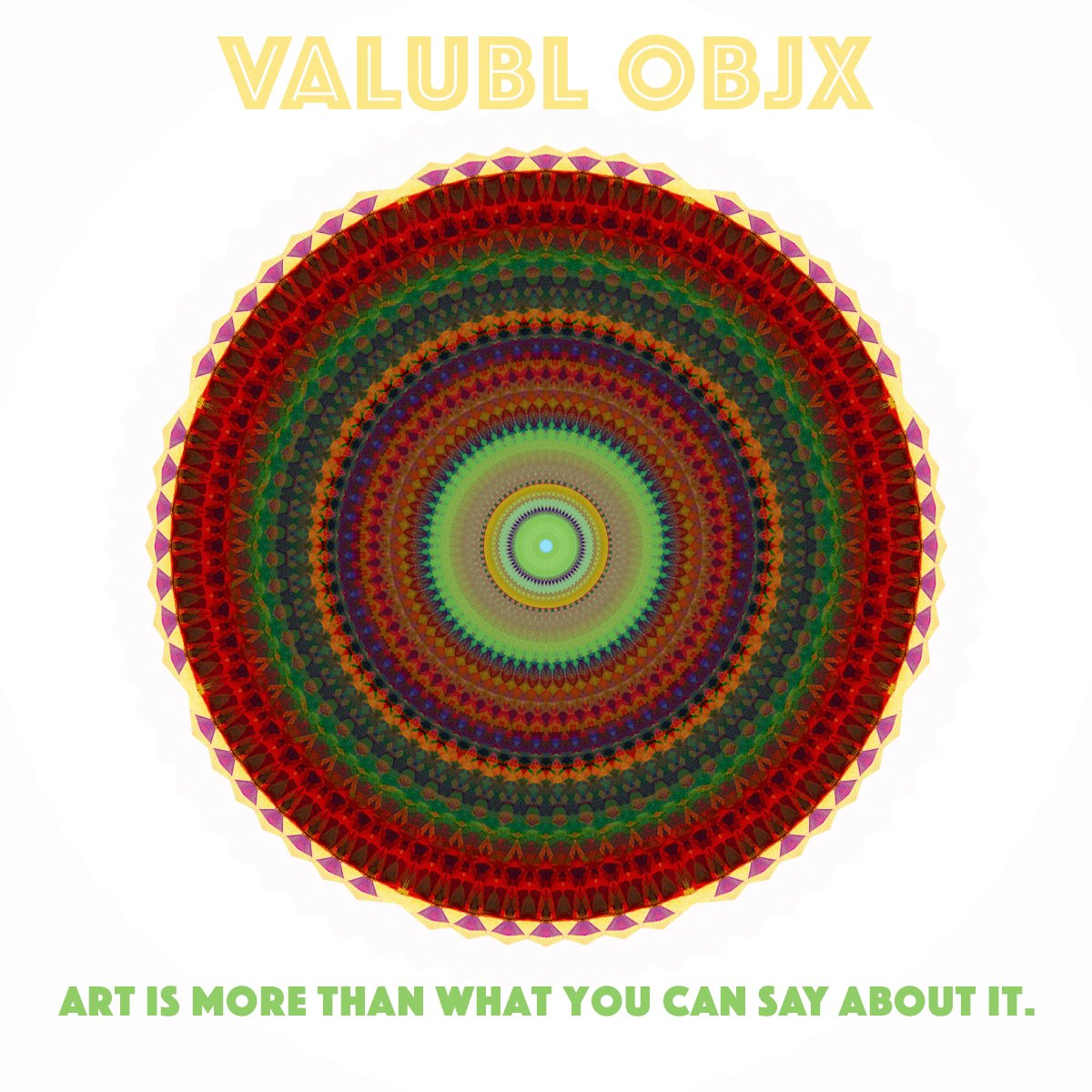
VALUBL OBJX: "Art is more than what you can say about it."

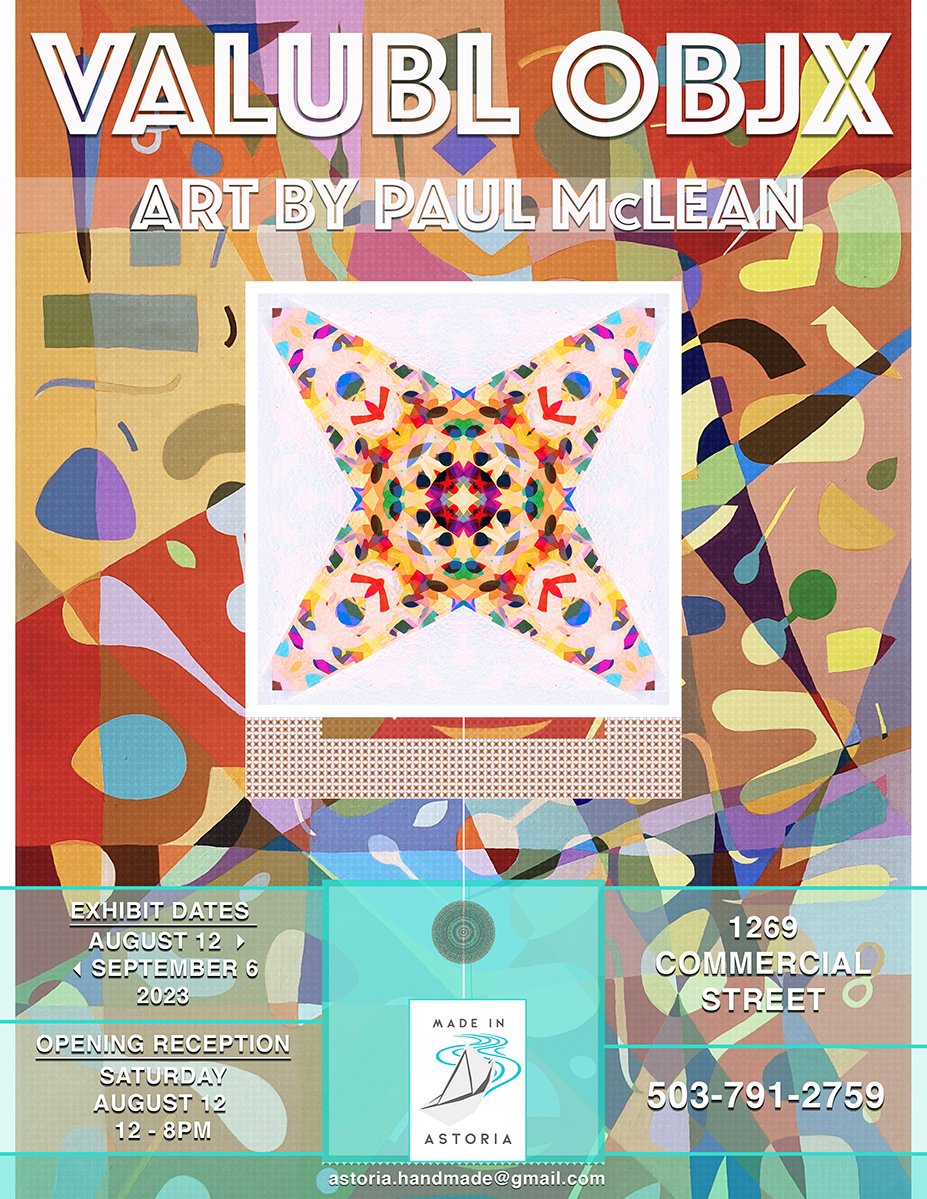
Made in Astoria gallery is pleased to announce an artist talk and Q&A by Paul McLean, in conjunction with his exhibition "VALUBL OBJX. The event will presented at Made in Astoria in historic downtown Astoria on Friday, August 25, 2023, at 5:30PM. The subject of the presentation is “Art is more than what you can say about it.” Paul McLean is an artist, thinker, writer and educator, whose theoretical focus is dimensional systems. McLean is based in Astoria.

EXHIBIT INFO:

“VALUBL OBJX”
Art by Paul McLean

Exhibit Dates: August 12-September 6
Opening reception: Saturday, August 12, 12 - 8pm

Presented by Made in Astoria | Confluence Gallery

Business Hours: Wednesday - Sunday 10AM - 5PM

1269 Commercial St
503-791-2759
astoria.handmade@gmail.com

Social Media: @made.in.astoria + @valubl

“Art is more than what you can say about it.”

By Paul McLean

1

I disagree with Walter Benjamin, who, long before he wrote “The Work of Art in the Age of Mechanical Reproduction,” wrote the essay “On Language as Such and on the Language of Man.” “All that is asserted here is that all expression, insofar as it is communication of contents of the mind, is to be classed as language. And expression, by its whole innermost nature, is certainly to be understood only as language.” This assertion is remarkable. In a sense, it is a provocation. I would characterize it as a willful fallacy.

Benjamin’s argument ignores the shared record of human expression. Prior to any incidence of written language, we have prodigious examples of human expressive artifacts in the form of pictographs, petroglyphs and carvings. This sort of expressive means dates back tens of thousands of year prior to any known or documented linguistic expression. The phenomenon is a global one. From the Caves of Lascaux or Chauvet, to the rock walls of La Lindosa in the Amazon, ancient people applied themselves to the visualization of experience. China, Africa, Australia, the Middle East, Russia, Scandinavia, the Americas - rock art is found in all these places. You can find many examples here, along the Columbia River. The sheer quantity of prehistoric expressive evidence suggests that the creative urge to render life in images and form anticipates language, as such — although one cannot know with certainty what other methods our ancestors used for communication, besides visualization. What we can say with certainty is that people all over the planet were capable of beautiful renditions of their environment, and the plants and creatures with whom they shared their world. As to their world views, we can mostly only speculate, although their aboriginal or indigenous descendants contend otherwise. The question is whether Civilization as such blinds itself to answers that Civilization itself does not produce. We can talk about this more, later.

One other point along these lines. In the Western traditions of Philosophy, and in our exploration of the world through language and ideas, expressed through text, there exists a fracture separating art and the Word. I don’t believe that describing this schism as a fundamental ideological prejudice is excessive. Plato, in formulating his Republic, expressed a very dim view of art and artists. He went so far as to entertain the idea of expelling us artsy types from his imaginary Ideal state. [An interesting take on this can be found HERE. — PJM] We can frame this conflict as a formal competition, between writers and philosophers versus art and artists. I would argue that the picture will win this competition, if that is what it really is, hands down. “A picture is worth a thousand words,” the old saying goes. If we consider the state of culture in our present day, can we not agree that the visual has obliterated the two-plus millennia dominance of the Word? Still and moving images drive our society today, in a way that renders Plato practically obsolete and invisible.

Benjamin quoted artist Paul Valery’s visionary essay, “The Conquest of Ubiquity,” to introduce “The Work of Art in the Age of Mechanical Reproduction.” In this text, Valery envisions the technology for delivering all kinds of communications “into our homes.” He essentially predicts the Internet. Valery contends that it would not be Art, but Music, that would be the preeminent mode of and vehicle for cultural ubiquity. He wrote, “Of all the arts, music is nearest to this transposition into the modern mode. Its very nature and the place it occupies in our world mark it as the first to be transformed in its methods of transmission, reproduction, and even production. It is of all the arts the most in demand, the most involved in social existence, the closest to life, whose organic functioning it animates, accompanies, or imitates.” In “The Age of the World Picture,” philosopher Martin Heidegger writes, “To be ‘new’ belongs to a world that has become picture.” In “The Origin of the Work of Art,” Heidegger wrote, “Form and content are the commonplace concepts under which anything and everything can be subsumed.” Heidegger thought, wrote and lectured incisively and influentially (for me) about the Thing, art and technology, and their relation to Being and Modernity. Eventually, he came to prefer poetry as a primary means by which what is most valuable in humanity can be expressed in our problematic present and future. I am fond of this verse from Poetry, Language, Thought’s “The Thinker As Poet:”

When the wind, shifting quickly, grumbles

in the rafters of the cabin, and the

weather threatens to become nasty. . . .


Three dangers threaten thinking.

The good and thus wholesome

danger is the nighness of the singing

poet.


The evil and thus keenest danger is

thinking itself. It must think

against itself, which it can only

seldom do.


The bad and thus muddled danger

is philosophizing.

Which brings us round to what I have to say, here, in the midst of VALUBL OBJX, my exhibit presented at Made in Astoria.

2

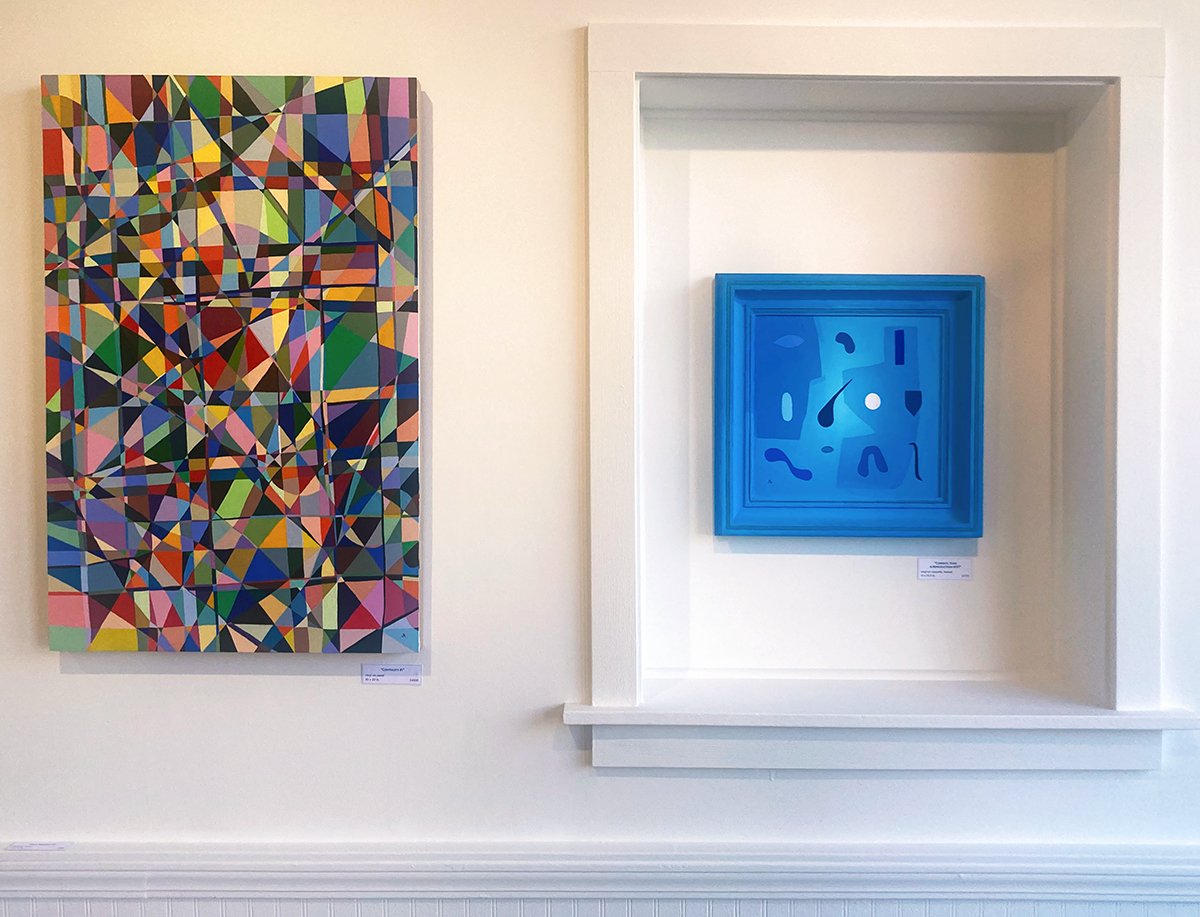
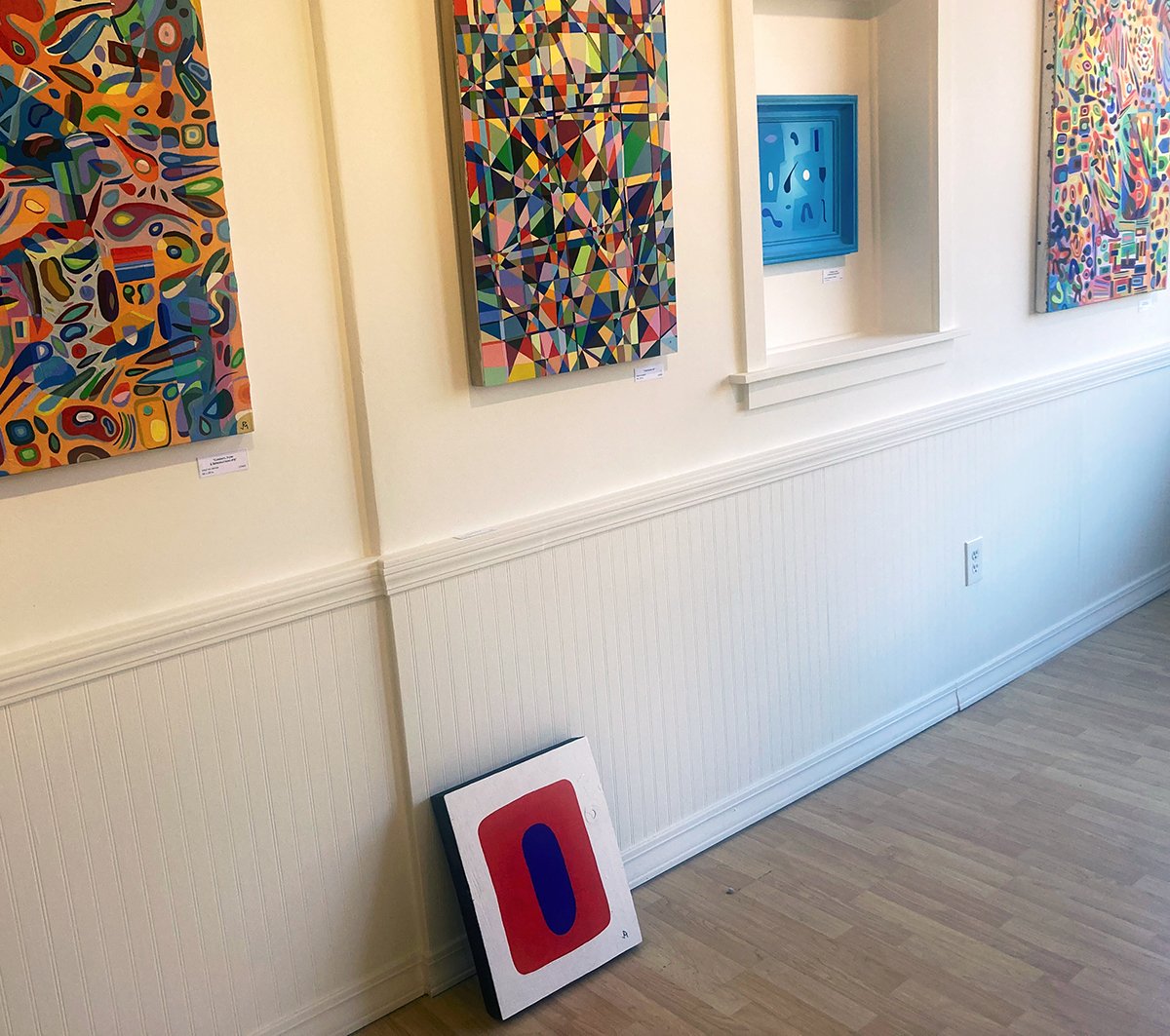
I imagine a through-line connecting my art to the visual expression of our ancient predecessors, who carved and painted on stone, who created recognizable forms in wood and clay, who decorated these forms, and their own bodies. Our ancestors did so with genius, I dare say, and some of their expressive, creative techniques and tools are still viable today. In my aesthetic choices for the VyNIL Cycle of artworks, mostly paintings and drawings to date, I intentionally excluded the explicit, the narrative element, the overtly representational, the contingent reference, symbols and so on. In short I avoided as much as I could, the force and dynamics of language, in an effort to emphasize the potential of the strictly visual. My platform, for enabling a particular kind of viewer experience, is by design, limited to the extensive means provided by painting, as a post-contemporary medium. “For choice,” I might add, at the risk of being cryptic.

Now, it is true, that I had ideas in mind about a subject matter for the VyNIL Cycle. Throughout my creative life, I have been primarily focused on dimensional systems. Without delving deeply into this topic (“dimensional systems”), in my talk, I will share some of the theoretical concerns that impact the VyNIL artworks, such as those on display in VALUBL OBJX. I was curious as to whether or not it was possible to make paintings that reflected the nature of information flow and exchange in the post-contemporary period. What do I mean by post-contemporary? For our purposes, it is not so important. Suffice to say, I am referring to this historical moment, for which contemporary art has proven itself insufficient to the task of expressing our condition within the technology matrix that has in large measure consumed our daily existence and dominates our conventional exchanges. Whether we are talking about economics, politics, culture, or our individual relations with each other, technology is to a great extent the prime mediator of exchange.

What are the characteristics of ubiquitous media and network technology? Its infrastructure is mostly hidden from our view, or camouflaged. Its key feature is speed, and more, speed’s acceleration. Without question the phenomenon is global, and simultaneously local. To understand the technology is to recognize its necessities, such as electricity. The project of technology is rooted in code. Chunks of code activate technology, and the connection between software and hardware is fundamental. No less basic is the human element to which technology attaches (“wetware”), in a triangular configuration. If one wishes to comprehend the drive to AI, artificial intelligence, one must recognize that the motivation behind this new-ish development is the reduction of importance in the human aspect in this configuration, if not its complete elimination. Which is why there is a natural widespread social resistance to the concept of AI, as it is expressing itself in emergent technology. In and through my art, I am conscious of these factors and phenomena, and am working out some of my own reflections and realizations about them.

Art, however, is not just thinking about something, and neither is it simply a mechanism for visualizing the reactions of the mind to what the artist perceives is happening in the world. When I sit at the easel to create art, one of my most important objectives, a prerequisite I think for making great art, is to clear the mind, prior to making a mark on the canvas, panel or paper. Why? Because the act of painting is a physical act. I do not mean to argue that art is only physical — it is decidedly more than that. I would argue that making art requires a specific balance or harmony among body and mind/spirit for the purposes of artistic creation. I conjoin Mind + Spirit this way to acknowledge Hegel. I think there are many human activities that require such harmonious conjunctions of these facets of being (Mind + Spirit). These include work, sport, lovemaking, cooking, building, to name but a few. What do they have in common? They all derive quality due to the level of craft they demonstrate. In excellence, they all arise from the refinement of their conceptual root. In some aspects or scenarios, they conduct emotion, and aspire to beauty. Finally, they manifest as a product of love, itself. I would suggest that Love is ineffable, but to do so would be to gloss over how persistent we are to express Love, to communicate it, not just in deed or action, but through the Word, in poetry, for instance, but also through music, art, and a million other things, including our own bodies. In short, art is complicated, as are we humans.

3

Art is more than what you can say about it, which is true also of Love, and of Life itself. Which is not to say that art is not worth talking about. Quite the opposite. Art inspires discussion, or discourse, if you will, and this is one of its basic, if not simple, functions. Whether this has always been the case, dating back to 40,000BC, we cannot know. It is my own notion that what we think of as art today and for a long time is not really the same as what our ancient forebears were doing. Whether we are talking about what Michelangelo, van Gogh or Pollock did, we are still describing something relative, but different to what the anonymous (to us today) petroglyph or pictograph was doing. What is the difference? I would suggest this is a wonderful point at which a meaningful conversation about human expression and creativity can begin. As a 20th and 21st Century (AD) American artist of Celtic descent who paints in the Western tradition, I am resolutely situated in my current aesthetic circumstances, and fairly comfortably so. In other words, I have a life, more behind me than in front of me, that has been dedicated to pursuit of artistic success, even greatness, a statement I make with as much humility as I can muster, because success and greatness are both relative, that is, subject to change, and incredibly difficult to obtain and maintain. Art, including my own, has a direct correlation to Time, to the times, and the artist’s disposition in his conditions of internal and external reality. “Contemporary” in that sense is always a useful descriptor for the artistic enterprise. For me, the best art materializes both the times and the conditions of reality, within and outside ourselves, precisely as possible, because in this facet of its potentialities, art is an important conveyance for us. When Art does so (precisely conveys our Time, and our situation in it), Time is — to put it poetically — expressing itself through the artist, with us. And then, what is behind Time and the artist (and art, and us), namely the presence of both the Infinite and the finite, is harmonized, visibly, as color and form. Or color in form.

This is the difference between art and poetry or music, Word and sound, as well as thought or idea. Initially, we respond to color and composition, which is to say form, viscerally, which is to say, physically. At that moment, our interpretive complex is activated. We search for the familiar, in form, and our capacity to discern one color from another is associated with emotions, but also with the socially and intellectually conventional. We are used to certain contexts and applications for color. For instance, when Green means Go, and Red means Stop, and Yellow means Caution, and so on. In art, the artist has some leeway with the applied convention, and meanings can be flipped, or otherwise altered, within the scope of art. Seeing, on the cognitive side, becomes in art a type of non-competitive puzzle or exercise. Art can be framed as a sophisticated game, a type of play with its own rewards or penalties, in the domain of the emotional (mind), but this is only half-right. Because art in the end is not about winning; it is about what survives loss and gain, and why one thing survives and another does not. Art then potentially operates both inside and outside the intellectual, touching registers of feeling that normally are distinct from thinking abstractly, about things - like "mortality” - or whatever else. For example, art can come across as either childlike or wise, and sometimes both simultaneously. “To what end?” we should wonder. In this subtle facet of artistry, totality of life can be compressed in a singular persistently instantaneous experience, within the unifying context of time. However, to derive pleasure from art, to recognize its unique beauty, the viewer (and the artist) ought not to need to know anything extra in order to engage with art on its own terms, i.e., color and form. Art, in this respect, has its own particular mechanics. The rest of art, its immateriality, is fine with being held in reserve, as a complement to the visceral effect of art, that moves through vision. The artist and art demonstrate in this combinative exchange the proficiency of the maker to achieve a direct connection with the viewer, at the levels of both the physical and intellectual. We call this technique, but it is more than technical. It is inherently human.

Communication, as such, is an abstraction of this process. We can pronounce that language is a more precise vehicle for human-to-human transmission, but is this true? In a hierarchy of sensuality, we might argue that musicality is the more profound medium for connectivity, but to do so ignores the ambivalence of sound, its circularity. Direction and focus are the qualities to which art bonds our attention. I can close my eyes and experience sound more fully, and that is a clue. Language requires literacy. Art can be experienced fully without thought, absent speech. Again, a clue. Painting has its obvious limitations. A blind person cannot receive art in its totality, withal the tactile aspect of art might convey. Art must be seen to be believed, which distinguishes it from articles of Faith. The subjectivity of art, that over-worn trope, is only relevant in the interpretation of the visual fact of art as object, not in the object itself, which exists as itself, beyond or outside the interpretive complex, and its desire to convert everything to a utilitarian function. Art is a free and radical Thing, opening to immateriality. As such it can be an object of wonder, and much else aside, such as a form of giving. The full range of human response, from despair to awe, can be encapsulated in art, and we know this because it has been done. In truth there are no two artworks that are identical, or each of them and both of them could not be art, by definition. The question of reproduction is therefore irrelevant. What is unique about art and what is common has to do with a much more convoluted exchange between the object and subject, which encompasses both the work of art itself and the viewer. The artist is naturally, inextricably linked to both, and this is an indicator of the artist’s true value. Binaries are insufficient, which is why art is so resistant to recursion. To say that the artist is the medium for art resonates, because on more than one level, the artist must act as a facilitator for not just the art, but for our experience of it. No dealer or curator is an adequate substitute here. Artificial “art” is not art, because it is bereft of its human element, and therefore its capacity for truth, as far as we are capable of ascertaining it (truth) at any given time. [“Scraping” data is not creative. It is more like theft.] This is a critical distinction, especially at such a time when truth and reality do not conform easily. The post-contemporary is just such a time, yet within this tumultuous and precipitous point in human history, when human history itself is questionable, art is possible, and proof of itself. No additional words, like “simulation” or “simulacra” are necessary for art’s verification, now. Which perhaps was always the case, anyway.

- PJM

August 22, 2023


REFERENCES

Walter Benjamin:

  • “The Work of Art in the Age of Mechanical Reproduction”

  • “On Language as Such and on the Language of Man”

Paul Valery: “The Conquest of Ubiquity”

Plato: The Republic (article at Stanford Encyclopedia of Philosophy, entry on “Plato’s Aesthetics;” see Section 2.3 Republic 10: copy-making)

Martin Heidegger:

  • “The Age of the World Picture” (p.69)

  • “The Origin of the Work of Art” (p.9)

  • Poetry, Language, Thought; “The Thinker As Poet” (p.6)

G. W. F. Hegel: Phenomenology of Spirit

Tuesday 08.22.23
Posted by Paul McLean
 

VALUBL OBJX Exhibition Views

The ‘VALUBL OBJX” installation at Made in Astoria Gallery consists of paintings from several series from artist Paul McLean’s “VyNIL Cycle.” Featured is the entire set of “EVENT” Series paintings, occupying the front gallery’s north wall, and most of the “META-ELEMENT” Series, installed primarily in the MiA backroom gallery. The front gallery south wall contains pieces from “CURRENTS, FLOW + REPRODUCTION,” “WORKNET” and “CONTINUITY” Series, with “EVENT #1” installed by the gallery counter. The tabletop installation displays the digital animation “I Don’t Understand It” running on loop, four pieces from the “PETRI” Series, as well as three portfolios in which the “META-ELEMENT” paintings on paper mounted, along with several sets of recent drawings, including “NODES,” “CHARACTERS,” and “CONSTRUCTS,” on digital prints from the “CONTENT” Series. Throughout both galleries “VINYL ON VINYL” artworks are presented, as are “META-ELEMENT” paintings on wood, board, block and fabric. “GLITCH” paintings are displayed on room-facing shelves in the gallery counter, which is between the front and rear spaces. The mini-sculptures of the “META-ELEMENTAL” Series are placed on a round plate on a table in the backroom gallery.

EXHIBIT INFO:

“VALUBL OBJX”
Art by Paul McLean

Exhibit Dates: August 12-September 6
Opening reception: Saturday, August 12, 12 - 8pm

Presented by Made in Astoria

Business Hours: Wednesday - Sunday 10AM - 5PM

1269 Commercial St
503-791-2759
astoria.handmade@gmail.com

EXHIBITION VIEWS


PHOTOSET 1

v-o-opening-s1-1-fb.jpg
v-o-opening-s1-2-fb.jpg
v-o-opening-s1-4-fb.jpg
v-o-opening-s1-3-fb.jpg
v-o-opening-s1-5-fb.jpg
v-o-opening-s1-6-fb.jpg
v-o-opening-s1-8-fb.jpg
v-o-opening-s1-9-fb.jpg
v-o-opening-s1-10-fb.jpg
v-o-opening-s1-7-fb.jpg

PHOTOSET 2

v-o-opening-s2-1-fb.jpg
v-o-opening-s2-2-fb.jpg
v-o-opening-s2-3-fb.jpg
v-o-opening-s2-4-fb.jpg
v-o-opening-s2-5-fb.jpg
v-o-opening-s2-6-fb.jpg
v-o-opening-s2-7-fb.jpg
v-o-opening-s2-8-fb.jpg
v-o-opening-s2-9-fb.jpg
v-o-opening-s2-10-fb.jpg

PHOTOSET 3

v-o-opening-s3-1-fb.jpg
v-o-opening-s3-2-fb.jpg
v-o-opening-s3-3-fb.jpg
v-o-opening-s3-4-fb.jpg
v-o-opening-s3-5-fb.jpg
v-o-opening-s3-6-fb.jpg
v-o-opening-s3-7-fb.jpg
v-o-opening-s3-8-fb.jpg
v-o-opening-s3-9-fb.jpg
v-o-opening-s3-10-fb.jpg

PHOTOSET 4

v-o-opening-s4-1-fb.jpg
v-o-opening-s4-2-fb.jpg
v-o-opening-s4-3-fb.jpg
v-o-opening-s4-4-fb.jpg
v-o-opening-s4-5-fb.jpg
v-o-opening-s4-6-fb.jpg
v-o-opening-s4-7-fb.jpg
v-o-opening-s4-8-fb.jpg
v-o-opening-s4-9-fb.jpg
v-o-opening-s4-10-fb.jpg

PHOTOSET 5

v-o-opening-s5-1-fb.jpg
v-o-opening-s5-2-fb.jpg
v-o-opening-s5-3-fb.jpg
v-o-opening-s5-4-fb.jpg
v-o-opening-s5-5-fb.jpg
v-o-opening-s5-6-fb.jpg
v-o-opening-s5-7-fb.jpg
Wednesday 08.16.23
Posted by Paul McLean
 

VALUBL OBJX Price List

PURCHASE INFO:

To purchase artwork from “VALUBL OBJX” please contact Made in Astoria gallery directly at 503-791-2759 (co-owner Bill Atwood) or 503-791-0575 (co-owner Annie Eskelin). Sales can be conducted by credit card via Square over the phone, or in person at the gallery counter. Checks are accepted in the gallery. For local and repeat patrons, the gallery may offer additional credit arrangements, upon request. Price considerations on multiple purchases may be offered by the artist and gallery. Some list prices have been reduced for the duration of the exhibit run, as noted on the price list.

EXHIBIT INFO:

“VALUBL OBJX”
Art by Paul McLean

Exhibit Dates: August 12-September 6
Opening reception: Saturday, August 12, 12 - 8pm

Presented by Made in Astoria | Confluence Gallery

Business Hours: Wednesday - Sunday 10AM - 5PM

1269 Commercial St
503-791-2759
astoria.handmade@gmail.com

PRICE LIST

PAINTINGS ON CANVAS OR PANEL

EVENT Series

1) “Event #1”

30” x 20”

Flashe Vinyl on canvas

2019

$5000


2) “Event #2”

24” x 18”

Flashe Vinyl on panel

2021

$2500


3) “Event #3”

20” Diameter

Flashe Vinyl on panel

2021

$2000

4) “Event #4”

16” Triangle

Flashe Vinyl on panel

2021

$2000


5) “Event #6”

24” x 20”

Flashe Vinyl on panel

2021

$3500


6) “Event #7”

24” x 20”

Flashe Vinyl on panel

2021

$3500


7) “Event #8”

24” x 20”

Flashe Vinyl on panel

2021

$3500


8) “Event #9”

24” x 20”

Flashe Vinyl on panel

2021

$3500

CONTINUITY Series

“Continuity #1”

30” x 20”

Flashe Vinyl on panel

2023

$4500


CURRENTS, FLOW + REPRODUCTIONS

1) “Currents, Flow & Reproduction #18”

36” x 28”

Flashe Vinyl on canvas

2019

$5400


2) “Currents, Flow & Reproduction #22”

30” x 30”

Flashe Vinyl on canvas

2019

$5400


3) “CFR Series #137, Blue Series #16 [Meta-Elements (Hybrids)]

15” x 15.5”

Flashe Vinyl on Masonite, Framed

2020

$1775

WORKNET

1) “WorkNet #3”

40.5” x 34”

Flashe Vinyl on Canvas

2018

$6000

2) “WorkNet #4”

40” x 34”

Flashe Vinyl on Canvas

2019

$5800


META-ELEMENTS

[Meta-Elements paintings on board and redwood block will be offered at half of the list price for “VALUBL OBJX”. The same offer extends to “Meta-Element #1”.]

1) “Meta-Element #1”

35.5” x 22.5”

Vinyl on Print on Fabric

2018

$1100

2) “Meta-Element #2”

16” x 11”

Flashe Vinyl on Board

2018

$700

3) “Meta-Element #3”

16” x 11”

Flashe Vinyl on Wood

2018

$700

4) “Meta-Element #4”

14” x 11”

Flashe Vinyl on Wood

2018

$625

5) “Meta-Element #5”

11.5” x 11”

Flashe Vinyl on Wood

2018

$500

6) “Meta-Element #6”

14” x 12.5”

Flashe Vinyl on Wood

2018

$625

7) “Meta-Element #7”

17” x 14”

Flashe Vinyl on Wood

2018

$825

8) “Meta-Element #8

22” x 15.5”

Flashe Vinyl on Wood

2018

$950

9) “Meta-Element #8

Dimensions (?)

Flashe Vinyl on Wood

2018

$850

10) “Meta-Element #10

14” x 11”

Flashe Vinyl on Wood

$675

11) “CFR Series #49, 4d Quantities Series #11 [Meta-Elements (Array)]

40” x 30”

Flashe Vinyl on Canvas

2019

$3850

12) “CFR Series #56, 4D Quantities Series #12 [Meta-Elements (Array)]

54” x 11”

Flashe Vinyl on Canvas

2019

$6850

13) “CFR Series #57, 4D Quantities Series #13 [Meta-Elements (Array)]

57” x 45”

Flashe Vinyl on Canvas

2019

$7250

14) “CFR Series #58, 4D Quantities Series #14 [Meta-Elements (Array)]

44” x 36”

Flashe Vinyl on Canvas

2019

$5250

15) “CFR Series #60, 4D Quantities Series #15 [Meta-Elements (Portal)]

12” x 9”

Flashe Vinyl on Canvas

2020

$950

16) “CFR Series #61, 4D Quantities Series #16 [Meta-Elements (Portal)]

12” x 9”

Flashe Vinyl on Canvas

2020

$950

17) “CFR Series #63, 4D Quantities Series #17 [Meta-Elements (Portal)]

12” x 9”

Flashe Vinyl on Canvas

2020

$950

18) “CFR Series #64, 4D Quantities Series #18 [Meta-Elements (Portal)]

24” x 24”

Flashe Vinyl on Canvas

2020

$2200

19) “CFR Series #65, 4D Quantities Series #19 [Meta-Elements (Portal)]

19.5” x 15”

Flashe Vinyl on Print, Rare Wood Panel

2020

$1650


20) “CFR Series #66, 4D Quantities Series #20 [Meta-Elements (Portal)]

24” x 18”

Flashe Vinyl on Canvas

2020

$1350


21) “CFR Series #67, 4D Quantities Series #21 [Meta-Elements (Portal)] (Barbell)

15” x 10”

Flashe Vinyl on Print, Rare Wood Panel

2020

$1200

VINYL ON VINYL

Description: This series of vinyl two-tone paintings on 12” (vinyl) records belong to several series: “Currents, Flow + Reproduction”; “Colors”; “Blue”’; and the ongoing “V on V” sequence. For “VALUBL OBJX” they will be offered at half of list price, while the exhibit is on view. Most include the original jackets and album packaging. The title details (series numbering, etc.), is available for view on Good Faith Space Online.

All “Vinyl on Vinyl” artworks: $450

Flashe Vinyl on 12” vinyl record

2020

blue-vinyl1.jpg
blue-vinyl2-fb.jpg
green-vinyl-fb.jpg
green-vinyl2-fb.jpg
orange-vinyl-fb.jpg
orange-vinyl2-fb.jpg
purple-vinyl-fb.jpg
purple-vinyl2-fb.jpg
red-vinyl1-fb.jpg
red-vinyl2-fb.jpg
yellow-vinyl1.jpg
yellow-vinyl2-fb.jpg
bluevi1-fb.jpg
bluvi2-fb.jpg

PAINTINGS ON MUSEUM BOARD OR PAPER

“EVENT” Series [“Growing Things]

Note: These pieces are available, but not on view. “Growing Things” 1 & 2 belong ti significant series of similar-sized artworks, completed by the artist since 2018. They generally share the formal characteristics of the VyNIL Cycle, but tend to emphasize some of the graphic features of those paintings and drawings, e.g., the Meta-Elements, the Nodes and the arrays. To see these works, please inquire with the gallery and artist to arrange a viewing.

1) “Growing Things”- 4WS [1]

30” x 22”

Flashe Vinyl on museum board

2021

$1400

2) “Growing Things” - 4WS [2]

34” x 18”

Flashe Vinyl on paper

Date: 2021

$1400

PAINTINGS ON BLOCKS

Description: These paintings were the from the very first VyNIL series, “Glitches” and “Petri”. They were created in Bushwick, Brooklyn The “Glitches” are multimedia, including graphite, Flashe Vinyl, grid paper and varnish applied to small wood 4” x 6” panels. A set of ten is available for the Made in Astoria exhibit. For the duration of “VALUBL OBJX” only, the “Glitches” will all be offered at the special price of $225 (list price $300). The “Petri” series are 4” x 4” (3) or 4” x 6” (1) Flashe VyNIL paintings on panel. “Petri” series paintings will all be offered at $175 (list price $250), during the “VALUBL OBJX” exhibit. For more details on individual works still available for purchase, please refer to the Good Faith Space Online website or contact the gallery or artist.

glitch1_Paul_McLean.jpg
glitch2_Paul_McLean.jpg
glitch3_Paul_McLean.jpg
glitch4_Paul_McLean.jpg
glitch5_Paul_McLean.jpg
glitch6_Paul_McLean.jpg
glitch7_Paul_McLean.jpg
glitch8_Paul_McLean.jpg
glitch9_Paul_McLean.jpg
glitch10_Paul_McLean.jpg
glitch11_Paul_McLean.jpg
glitch12_Paul_McLean.jpg
glitch13_Paul_McLean.jpg
glitch14_Paul_McLean.jpg
glitch15_Paul_McLean.jpg
glitch16_Paul_McLean.jpg
glitch17_Paul_McLean.jpg
glitch18_Paul_McLean.jpg
glitch19_Paul_McLean.jpg

Glitch Series > [x10]

4” x 6”

Multimedia on Panel

2017

$225

petri1_Paul_McLean.jpg
petri2_Paul_McLean.jpg
petri3_Paul_McLean.jpg
petri4_Paul_McLean.jpg
petri5_Paul_McLean.jpg
petri6_Paul_McLean.jpg
petri7_Paul_McLean.jpg
petri8_Paul_McLean.jpg

Petri Series > [x4]

4” x 6” or 4”

Multimedia on Panel

2017

$175


“DATUM” Series

Description: Four sets of paintings on paper; Two sets of Flashe Vinyl paintings on 4.5” x 6.75” Fabriano/Medioevalis; two sets of Flashe Vinyl paintings on 2.5” x 3.75” Fabriano/Medioevalis paper. All works are signed ‘PJM” in pencil in verso. Please check on availability of individual works with the gallery and artist.

aqua.jpg
blue1.jpg
blue2.jpg
blue3.jpg
blue4.jpg
blue5.jpg
blue6.jpg
blue7.jpg
blue8.jpg
brown1.jpg
brown2.jpg
brown3.jpg
brown4.jpg
brown5.jpg
cream.jpg
flesh.jpg
green1.jpg
green2.jpg
green3.jpg
green4.jpg
green5.jpg
green6.jpg
grey1.jpg
grey2.jpg
orange1.jpg
orange2.jpg
pink.jpg
purple1.jpg
purple2.jpg
red1.jpg
red2.jpg
tan.jpg
violet.jpg
yellow1.jpg
yellow2.jpg
yellow3.jpg

SET 1

“DATUM”

Number of pieces: 34

Orientation: 28 vertical; 6 horizontal

Dimensions: 4.5” x 6.75”

Medium/Substrate: Flashe Vinyl on Fabriano/Medioevalis paper

Date: 2018

Price: $180


aqua.jpg
blue1.jpg
blue2.jpg
blue3.jpg
brown1.jpg
cream.jpg
flesh.jpg
green1.jpg
green2.jpg
green3.jpg
orange1.jpg
orange2.jpg
pink.jpg
purple1.jpg
red1.jpg
yellow1.jpg
yellow2.jpg
yellow3.jpg

SET 2

“DATUM”

Number of pieces: 18

Orientation: 11 vertical; 7 horizontal

Dimensions: 4.5” x 6.75”

Medium/Substrate: Flashe Vinyl on Fabriano/Medioevalis paper

Date: 2018

Price: $180


_flesh.jpg
aqua.jpg
blue1.jpg
blue2.jpg
blue3.jpg
blue4.jpg
blue5.jpg
brown1.jpg
brown2.jpg
brown3.jpg
brown4.jpg
cream.jpg
green1.jpg
green2.jpg
green3.jpg
green4.jpg
green5.jpg
grey1.jpg
grey2.jpg
orange1.jpg
orange2.jpg
pink.jpg
purple1.jpg
purple2.jpg
red1.jpg
red2.jpg
violet.jpg
yellow1.jpg
yellow2.jpg
yellow3.jpg
yellow4.jpg

SET 3

“DATUM”

Number of pieces: 34

Orientation: 29 vertical; 5 horizontal

Dimensions: 2.5” x 3.75”

Medium/Substrate: Flashe Vinyl on Fabriano/Medioevalis paper

Date: 2018

Price: $90


blue_white1.jpg
blue_white2.jpg
brown_cream.jpg
purple_cream.jpg

SET 4

“DATUM”

Number of pieces: 4

Orientation: 3 vertical; 1 horizontal

Dimensions: 2.5” x 3.75”

Medium/Substrate: Flashe Vinyl on Fabriano/Medioevalis paper

Date: 2018

Price: $90


META-ELEMENTALS

Description: An ongoing series of small sculptures made by Paul McLean from Sculpey “Clay” in (so far) primary colors, black and white. Dimensions of individual pieces are variable. The Meta-Elementals shown at Made in Astoria | Confluence Gallery belong to Set #1 (consisting of 26 individual pieces), which was created in 2018.Please check with gallery and artist on availability of individual pieces.

Medium: Sclulpey Clay

Price: $50 each.

Number of pieces: 26

[Pre-Sale price for entire set: $1200]


SMALL WORKS ON PAPER

Description: The portfolio of small paintings and drawings on various types of paper contains pieces from series that have been created since 2019, after the artist moved to Astoria. Their content and techniques span a wide range of practical applications and projects. Some are: studies for paintings; technical problem solving; creative play; conceptual illustrations; etc. For the run of VALUBL OBJX, the entire collection of portfolio works on paper will be priced at $125. Please check with gallery and artist on availability of individual pieces.

node1.jpg
node2.jpg
node3.jpg
node4.jpg
node5.jpg
node6.jpg
node7.jpg
node8.jpg
node9.jpg
node10.jpg
node11.jpg
node12.jpg
node13.jpg
node14.jpg
node15.jpg
node16.jpg
node17.jpg
node18.jpg
node19.jpg
node20.jpg
node21.jpg
node22.jpg
node23.jpg
node24.jpg
node25.jpg
node26.jpg
node27.jpg
node28.jpg
node29.jpg
node30.jpg
node31.jpg
node32.jpg
node33.jpg
node34.jpg
node35.jpg
node36.jpg
node38.jpg
node39.jpg
node41.jpg
node42.jpg
node43.jpg

NODES

Description: 37 Unique pieces (plus 2 set-asides, one larger, torn from spiral-bound sketchbook; one coffee-stained); signed on back, titled and numbered: $125 each; mounted in portfolio; hand-drawn, using Prismacolor pencils and/or Micron pen, on archival artist paper; each sharing a sleave with an 11” x 17” CONTENT series A/P pattern print. Clients who wish to add a digital print for presentation purposes for their purchase, may do so (Price + $125). This series of small drawings is linked to a series of Flashe Vinyl paintings on museum board and other artist papers, in hued palettes (blue, green, et cetera).Please check with gallery and artist on availability of individual pieces.

figure2-fb.jpg
figure3-fb.jpg
figure4-fb.jpg
figure5-fb.jpg
figure6-fb.jpg
figure7-fb.jpg
figure8-fb.jpg
figure9-FB.jpg
figure10-fb.jpg
figure11-fb.jpg
figure12-fb.jpg
figure13-FB.jpg
container1-fb.jpg
figure14-fb.jpg
gentleman-fb.jpg
figure15-fb.jpg
impasse-fb.jpg
figure16-fb.jpg
lady-fb.jpg
figure17-fb.jpg
smoking-fb.jpg
figure18-fb.jpg
steve-fb.jpg
figure19-fb.jpg
strumming-fb.jpg
figure20-fb.jpg
figure21-fb.jpg
figure22-fb.jpg
figure23-fb.jpg

CHARACTERS

Description:30 Unique pieces (plus 2 set-aside, 1 requiring cropping); signed on back, titled and numbered: $125 each; mounted in portfolio; hand-drawn, using Micron and Tonbow pens, on archival artist paper; each sharing a sleave with an 11” x 17” CONTENT series A/P pattern print. Clients who wish to add a digital print for presentation purposes for their purchase, may do so (Price add + $125). This series of sketches is inspired by the artist’s musical play, working title(s) “Noshoni,” or “The Ballad of Jesse and James.” Please check with gallery and artist on availability of individual pieces.

CONSTRUCTS


burst1-fb.jpg
wc2022-2-fb.jpg
wc2022-4-fb.jpg
wc2022-5-fb.jpg
metaelement1-fb.jpg
metaelement2-fb.jpg
metaelement3-fb.jpg
metaelement4-fb.jpg
metaelement5-fb.jpg
metaelement6-fb.jpg
metaelement7-fb.jpg

> COLOR > Description: These include individual pieces from several sets: 1) “Mesh” [#s 1-12]: 12 Unique pieces; signed on back, titled and numbered; “Stakblox” [#s 1-3]; “M-E Arrays” [#s 1-7]; some pieces not pictured; $125 each; mounted in portfolio; hand-drawn, using Micron and Tonbow pens, on archival artist paper; each sharing a sleave with an 11” x 17” CONTENT series A/P pattern print. Clients who wish to add a digital print for presentation purposes for their purchase, may do so (Price add + $125). This series is linked to and extends the CONTENT, EGS and Wovenform Series. Please check with gallery and artist on availability of individual pieces.


event1-fb.jpg
event2-fb.jpg
event3-fb.jpg
object9-fb.jpg
event4-fb.jpg
object10-fb.jpg
event5-fb.jpg
thing1-fb.jpg
thing2-fb.jpg
thing3-fb.jpg

> BLACK INK > Description:[#s 13-22]: 12 Unique pieces; signed on back, titled and numbered: $125 each; mounted in portfolio; hand-drawn, using Micron pens, on archival artist paper; each sharing a sleave with an 11” x 17” CONTENT series A/P pattern print. Clients who wish to add a digital print for presentation purposes for their purchase, may do so (Price add + $125). This series is linked to and extends the CONTENT, EGS and Wovenform Series. Three were inspired by the artist’s musical play, working title(s) “Noshoni,” or “The Ballad of Jesse and James.” Please check with gallery and artist on availability of individual pieces.

object-fb.jpg
object2-fb.jpg
object3-fb.jpg
object4-fb.jpg
object5-fb.jpg
object6-fb.jpg
object7-fb.jpg
object8-fb.jpg
object9-fb.jpg
object10-fb.jpg

> GRAPHITE > Description: [#s 23-29] 7 Unique pieces; signed on back, titled and numbered: $125 each; mounted in portfolio; hand-drawn, using Micron pens, on archival artist paper; each sharing a sleave with an 11” x 17” CONTENT series A/P pattern print. Clients who wish to add a digital print for presentation purposes for their purchase, may do so (Price add + $125). Please check with gallery and artist on availability of individual pieces.

DIGITAL ANIMATION

Title: “I Don’t Understand It”

Length: 4’ 32”

Quicktime Movie

Soundtrack by Adam Cotton and Paul McLean

2023

NOTE: For pricing options, please inquire with the artist.

Tuesday 08.15.23
Posted by Paul McLean
 

VALUBLE OBJX: A Material Perspective on Immateriality

Paul McLean in his Astoria Studio, July 2023 (Photo: Lauren McLean)

INTRODUCTION

From his studio in Santa Fe, Milo Santini interviews artist Paul McLean via web app. They discuss the color, forms and texture in the paintings in the show “VALUBLE OBJX,” and much more. The two have been friends for many years. In his unmistakable style, Santini in post-production edits the conversation “for content” and re-sequences it, all but stripping the exchange of extraneous context. In this format the original looses its linearity. Milo believes this procedure clarifies the content. His critics disagree. Let the reader decide.

McLean’s introductory remarks:

When I sit at the easel, except on rare occasions, I have no idea which color I will select. Nor do I think about the next, or the next (color). I study the painting, and it indicates the following move. One begins to notice patterns that guide consequent action. In this respect my painting is more or less spontaneous. I don’t work from preliminary sketches or studies. Painting for me is not a conceptual exercise. I do not adhere to a strict Hegelian concept-to-object program. I am responding to what is happening, what emerges, on the canvas, one mark, one color to the next. The process is very labor-intensive, requiring me to remain focused the whole time. Any sort of slip of the hand or mind can feel like a catastrophe. I don’t wish to sound melodramatic, but this is how it is. I would or could not have attempted the type of painting I am doing now at any previous time in my career. Unfortunately, at my age, the eye and hand become tired, and my sessions at work are limited by this practical reality, these physical limitations. Mentally, too, the exertion is strenuous, which maybe sounds ridiculous to a person unfamiliar with the task and its requisite effort. I don’t care about those external perspectives of studio practice, and really never have. My work is not a miner’s, nor is it a banker’s. That’s fine with me. But what is it I do, really? These days, it is a challenge to find artists with whom I can have a good technical conversation about it. Certain kinds of artist talk bring energy to one’s own artistic endeavors. Coming up in Santa Fe, and moving through LA, New York and many other art and culture nodes, it was possible to sniff out these exchanges, informal networks for art’s peculiar oral tradition. What one finds online is a simulation, and has its own merits, but is not the same. Things change. People change. Sometimes for the better, sometimes not. For me, what is consistent is the nature of my own painting, which has become sufficient in itself, over time. Metaphorically, I could say I am in a dialogue with the surface of the painting, which encompasses its subterranean or hidden prior version(s). But that is not quite right. The entire enterprise is solitary and non-verbal. After all, I am basically an isolated person working at a painting in the studio. I find nothing romantic in this. Few people are suited to it. Being a painter is a strange vocation. You have to be something of an odd bird to stick with it. Fortunately, I have always felt confident as a painter. I have sympathy for those plagued with doubt, some of whom are great, and persevere in spite of a negative mindset (I don’t know how). Learning how to quiet the mind is for me essential. That inner silence expresses in the art. It somehow brings one closer to color, to shape. It helps one discern what makes one arrangement succeed and another fail. With color, my choices are instinctual, but those choices are informed by a reservoir of experience and research. When I am done with an area on the canvas, small or large, I believe I will know what to do next, and it turns out to be true. I don’t understand why, and I don’t need to. I am indescribably happy, still, when everything comes together, the same as I was in the beginning. As for influences, since the early days, I have kept a running top-10 list of my favorite all-time artists. The first five more or less remain consistent. The second five change sometimes. I won’t share those names here, because I am over arguing about whose assessments of quality are correct, although I admit such arguments can be delightful and informative, and point one in new directions. The opposite is also true. I am a devoted student of art history, and my paintings reference those artists whose work inspires my own. That study for me does not end. An artist never really graduates. I am, thanks largely to the internet, always discovering some artist I should have known about long ago. Just this week I discovered that one of my favorite philosophers, Jean Baudrillard, was a brilliant and accomplished photographer! He will not go on my shortlist — he is not a painter — but his pictures have affected the way I think about color and composition forever. What a gift! Once I began to research Art and artists, I came to understand I belong to an ancient lineage, a community of practitioners, whose craft, innovation and realization inform my own, without dictating it. This sense of belonging helps, when one becomes disenchanted with the art world today, such as it is, the dominance of markets, the trends with which one feels no affinity. These days, I can, let’s say, resort to my own devices, for something to spark my work, a catalyst or connection. I can search my own archives. As an advanced painter, through years and practice, I have assembled or cultivated a large library of techniques and ideas from which I can draw to solve a painting (speaking as if it were a puzzle or riddle or equation, which is only half-true). For instance, from a recent deep dive into the archive, I noticed that contact sheets I digitally manipulated in the early 2000s to create images directly relate to the structures I built in the compositions of the “EVENT” Series of paintings. This series also relates to paintings I made in 2001 for the “Culture” series for Polifilo (Nashville). If I hadn’t engaged with the catalog for a separate project, I doubt I would have connected the earlier work with what I’m currently doing. One can reflect on things, and that exercise is either dangerous or rewarding. Artistry is not a mechanical enterprise. It is complicated, and part of the complexity is, for lack of a better word, psychological. Or, to come at from another angle, via Hegel, Art is where the Mind and Spirit converge. Philosophy in general has become an incredibly useful resource for me to address my thinking about Art in its totality, more than History, as time marches on. Especially, over the past decade, philosophical research at European Graduate School has been key to my continuing development and evolution as an artist, providing new perspectives on many facets of creative life, from inside out. Philosophy has proved to be a vital complement to studio work, for me.

That said, upon reflection, I never, in forty years of art-making, needed inspiration to paint. The studio has for me always been the one space or place in my life, where I know - believe with certainty - that my time spent will be worthwhile. A session in the studio, short or long, will fill me with the awareness of and gratitude for being alive, for being an artist instead of anything else, in the moment, here and now. No matter what else is going on in my life. I wish everyone had a place to go like this. That’s how I feel about my studio.

∞

“EVENT #3 (Detail #1) | Paul McLean | Vinyl on Panel | 2021

1

In the VyNIL Cycle paintings by Astoria-based artist Paul McLean, the color is to an extent determined by the medium, the Flashe Vinyl paint. The artist found the initial Flashe set of hues very appealing. “The colors had interesting titles like ‘Breughel Red’ and one got the sense the manufacturers were trying to mesh a traditional or Classical palette with this modern industrial material. Their experiments were quirky. There was a ‘Citroen Yellow’, but also the colors one associates with European landscape painting or portraiture. Colors like ‘Burnt Sienna’, Vermillian Red’ or ‘Payne’s Gray’ belie an antique aesthetic. Lefranc & Bourgeois (manufacturers of Flashe) also offered iridescent paints, which I tried, and fluorescents, which I did not like, having spent nearly a decade prior (2007 - 2017) working with hyper-bright pigments and unorthodox mixtures of all sorts of artist paint media. When I am switching to a new (to me) paint medium or manufacturer, if I can, I will buy the entire line and test everything. With Flashe I was able to do this, and for the most part, since adopting it, I have had almost all the colors on their list available to me in the studio. A lot of my choices regarding color had to do with shedding habits and methods from previous phases of my studio practice in mid-2010s. Starting over, refreshing. This involved reconfiguring my ideas about painting and the viewer’s desires or interests in art. It is necessary to note the timing of the transition, the context. The scenario in which it occurred was infused with political polarization, consumptive technology, social confusion, civil unrest, economic inequality and then, disease, the Pandemic. I decided to recede from all the negativity and toxicity, and focus my creative energy on making paintings that were joyful, not fearful or angry. Color was an essential part of the calculus for manifesting the VyNIL paintings. I wanted them to be very deliberate. I was willing to let the process be slow. I wanted my art to exist outside of command or control structure, to be positively resistant to external pressure. To contain a lesson about freedom which in no way is an imposition on the viewer, but more a suggestion or inference. I wanted the surfaces to be playful. Therefore, I embraced bright, concentrated color. The compositions obviously result from logic and discipline, but these are internal to each painting, or within a series. There are no rigid rules, or insistence on a specific outcome. While the edges within the frame are tightly executed, the borders of the paintings are open or closed according to principles of flow-design, not as a sign of aesthetic conscription. No shape or color is a prisoner within the painting and its system. That system is never more important that the elements operative within it. You can probably guess I was also reacting to the effects of mass, ubiquitous tech and networks.”

I ask the artist if he has a theory of color. McLean replies: “For an artist’s palette, several factors come into play. These include: 1) the technical profile of the paint; 2) what I would describe as the theoretical or conceptual interests and approach specific to the artist, and 3) the environment within which the artist operates, which affects the choices the artist makes in selecting this color over that one for application in the painting - if the artist decides to allow his art to reflect his condition, his surroundings. Over the progression of the cycle of paintings, the viewer can track my usage of Flashe with these several factors in mind. As for my ‘theory of color’ I defer to Science and Chemistry, in which a theory is a starting point and a conclusion, but also Nature, which does not rely on theory for its existence. Science and Chemistry do their best to explain color as a phenomenon, and a very, very complicated one. What is Red? I have devoted much study to the answers provided by Science and Chemistry on the phenomena of color, on its visible spectrum and so on. To an artist, many of Science and Chemistry’s explanations amount to non-answers. Theoretical color drifts toward metaphor, and eventually, poetry. “A Rose by any other name…” When an artist is learning about pigments, he realizes this is a mineral mixture. When manufactured as a paint for fine artists, it is luminously beautiful. Like Cobalt. In another industrial application, Cobalt is dangerous, a poison. Such a contradiction! If one goes on to learn about the various mediums into which the pigment is mixed, he will realize the process of assembling the parts into art paint is like cooking. For some dishes, it is best to strictly adhere to a recipe. For others - like gumbo or chowder - each dish can be its own experiment. I got my sense of wonder about the paint business from a master, Art Guerra. But paint, even after Ab-Ex, is still only one ingredient in art, which, extending our metaphor, is potentially a sumptuous feast, much more than a meal, or sustenance, or a combination of ingredients, parts.”

How or when do you know whether your painting, your art, has met your expectations, or done what you want it to? I quiz McLean about his standards, his idea of conclusion in art. “First off, if I weren’t satisfied with a painting, I would not sign it. If I didn’t believe in it, I wouldn’t let it out of the studio. If I want to know whether my art experiment works as art, I watch a viewer reaction and listen to what she says. This is the case whether the art hangs in a house or gallery or museum, or it is still sitting on an easel. I have my own artistic criteria, and it can evolve or change, but I respect the viewer as a vital participant in the art life. That does not change. Without a viewer, art means nothing. And the viewer always comes to the art on her own terms, at least to a degree. She is where she is in her life, and my art may become for her a temporary, even brief or momentary experience, or she may choose to begin a relationship with the art that can endure a lifetime, and beyond. Art can become generational. One never knows. Of course the environment or architecture within which art is seen affects the viewer experience, but again, only to some degree. The greatness of art, though exceeds the parameters of a single viewer’s experience, or even mass appeal. Taste is not a true measure of what art is great or not over time. We know this, because art is an ancient tradition, and something of its phases and cycles is commonly understood. Ultimately, what makes art great remains mysterious. All that is sure about it, is that great art is rare. Who knows why a certain color in a painting can cause a person to weep or exclaim, ‘Wow!’ I tend to think of alchemy and art color as relatives, belonging to the same family. Both demonstrate our curiosity, aspiration and awe. And maybe our darker impulses, too, if we become susceptible to worldly temptation through the supernatural imagination. Both art and alchemy are obscure, and their obscurity breeds misunderstanding. Behind their mystery, though is the presence of our shared mortality. Both art and alchemy are conduits for man’s hunger for immortality. This hunger incorrectly assesses the nature of art, and natural alchemy, too. There is a blindness that attaches to a person who desires everlasting life, and that blindness is both physical and mental in its essence. Art impersonates both Time and Death. An artist who understands this can create art whose impersonation is profoundly beautiful and true, even pure or sublime, but it still holds onto its mystery, its secret. An artist who understands this can easily become mad, too. That is a real thing.”

“EVENT #3 (Detail #2) | Paul McLean | Vinyl on Panel | 2021

2

I wonder about the the artist’s learning curve and approaches with new art materials. Also whether McLean’s moving from East Coast back to the West Coast affected his art, and how. The artist explains: “I’ll address the second question, first. I began the VyNIL series in Brooklyn, and continued working on it after moving to the Pacific Northwest. These places are so completely different in so many ways, but they also have a few areas of overlap. These congruences are important. One congruence is amazing atmospheric light, due to Bushwick and Astoria (OR) both being located close to the oceans and large bodies of fresh water, the rivers. Another is historical, and John Jacob Astor is but the avatar of this linkage. Is that relevant? No, but it is incidental, and points one to other likenesses. In the Big Picture, I think of such interrelations as evidence of an immaterial mesh, which I try to represent in the paintings and their constitutional elements, like color. This is the dimensional method. Flashe Vinyl in its appearances does well in either the big city or small town, and, again, I think this has something to do with the matte finish. As for the first question, I would suggest that there are levels of prowess in any craft. Over the course of a studio artist’s trajectory, rarely in the modern era does an artist learn and refine a single technique or medium over a lifetime, with absolute specificity to that way of making paintings. In the contemporary era, there are resonances with the old traditions, but most of these pertain to market demand and, specifically, order-fulfillment. So, experimentation is usually built into the arc of an artistic progression, nowadays. As with any technical system, one’s confidence in one’s capacity to adapt and adopt to new methods, media and materials, improves with time, problem-solving and practice. Good instruction or mentoring along the way is a big bonus, and I have been blessed with that. The Internet on this count (for quality instruction and practical information) has been a total game changer. Almost instantaneously, one can access a wealth of info on almost any matter of artistic consequence, and some of the data is excellent! However, in the studio, nothing beats direct knowledge derived from usage. For example: With practice, I learned that Flashe paint chemistry varies from color to color, and other peculiarities of the product. I had to be careful about making sure the lids on the glass jars containing the paint were secure at the close of a session, because, if not, the contents would dry out in short order, or become harder to apply, and so on. Certain colors were more transparent and fluid than others. Some, like the ‘Verdaccio Green’ brush on canvas or panel beautifully and are particularly opaque. Etc. In short, the material aspect directly affects the techniques one applies to the project. I learned through trial and error which brushes worked best with the paint, and how much usage any brush could handle, before wearing out. I go through brushes now pretty fast. The tips of the mostly small brushes I use fray in the course of my completing a single small work. To bring Flashe to the level of opacity that I prefer requires layering, sometimes similar to watercolor applications, sometimes like house paint. For the viewer the effect is visceral, when the paint is applied with concentration, to the point of opacity. That is a strength for Flashe, particularly with a color like Ultramarine. The intensity of the color is experienced physically for the in-person viewer, and increases at closer proximity. The Flashe on multiple levels is an absorptive media. The hues draw the viewer towards the painting, and this attraction is somehow accentuated by the matte quality of the paint in a peculiar way. The pigment intensity pulls at the viewer, but when she draws close, she finds the matte finish flattens the surface, to put it in a clunky way. I explored this feature extensively in the Network and Work Net phases. I brought in substrates that had preexisting textures — some very extreme — on which I built the new VyNIL paintings. The results could be shocking, from a technical standpoint. The further from the painting a viewer stands, the flatter the surface appears. This realization informed the compositions and techniques I used in those series. By the time I started the Event series, I wanted to work only on very flat, pre-prepared substrates. Which had an obvious effect on the appearance and composition of those paintings, down to the brushwork. Theoretically, I see a connection through the lens of medium, to our interactive relationship with media technology, between the organic and the artificial, in post-contemporary life. The conceptual interweaving with the objective arises in the course of studio practice, as the series progresses. For the most part, though, I have maintained a consistent approach to the colors for VyNIL. Color has been like a control factor in a lab experiment. One pretty major shift did occur when the Flashe manufacturer made some significant changes in the line, circa 2020-1. They reduced the number of hues and got rid of some of those I liked most. Now there are only a few reds, yellows and oranges, a lot of blues and greens, etc. As a consequence, out of a kind of necessity, I started mixing my own color, and this is apparent in the EVENT series. The paintings are quite different visually from the earlier ones. But because I am still applying paint straight from the jar in concentrated areas, and using the familiar shapes along with new forms, the whole body of work is still comprehensible as such. Color operates at the level of instinct, first. This dynamic is observable. Flashe excels at bypassing the critical mind of the viewer for a brief moment to access the optically-activated pleasure centers. Interpretation, comparison and association comes after that initial hit. I like this aspect to the paint, for my own reasons, because I view it (critical by-pass due to the paint’s materiality) as I mentioned above, as a correlate for our current social or collective situation, especially pertaining to media and data, and network communication technology. Life exceeds its mediated version at the point of encounter. I want my reasoning, deductions and preferences to not necessarily determine the viewer experience of these paintings, for the viewer experiences to have autonomy inherent in their framing on both sides. Don’t strangle the triangulation, I say!”

“EVENT #3 (Detail #3) | Paul McLean | Vinyl on Panel | 2021

3

Many of McLean’s VyNIL Cycle paintings demonstrate through an idiosyncratic set of forms in composition the artist’s pronounced awareness of visual order. However, I would argue that McLean’s order has a non-conformist flavor. His comments seem to affirm my argument, although not explicitly so. The artist dances around the issues of the systematic, programmatic, and settling of order, as opposed to an unfolding of the sequence, or its revelation, or unpacking. “The shapes in the paintings are valuable to me for several of their properties. Their appearances are generally simple, but how they work within the composition, and establish it by being in it, is a rather complex, dimensional phenomenon, or combination of phenomena. The ‘Meta-elements,’ as I call them, invite association at the same time they resist equivalence. In repetitive arrangements they infer patterning, excess, and the mechanical. Yet no two iterations are exactly the same. I do employ design or visual tactics that encourage the viewer to “read” the shapes as solid and/or shadow, in front and/or behind, above and/or below, and so on. But those appearances are not verified by the “physics” of the pictorial field contained within the painting’s edges. Another foiling glitch for the interpretive mind has to do with how these shapes refuse to “do anything,” such as advancing narrative or ratifying an inclusive or total 3D illusion. They exist in the art as unproductive units or entities, or if they have any utility, it is only to provide the viewer pleasure, on the most basic sensory level. Nonetheless, each element does contribute to the unification of the pictorial whole. Each shape embodies function on a number of perceptual levels, none of which are reliably consecutive. That is to say that the order within the painting is not numerically logical. Further, none of the shapes are assigned a name or title for identification purposes or any other, within the body of the image. They are not labeled, scheduled chronologically or “typed” as such. Superficially, they may resemble common familiar and organic shapes: a pill; a bean; a feather; a swoosh; a sperm; a bowl. This is intentional. I do not end the confusion, ambiguity or ambivalence and admit, ‘That is what it is! Of course!” I might concede that some shapes are roughly geometric: the rectangle; triangle; circle; the line. Then I will remind the viewer none of these geometries are tool-made, measured, or meant to represent any geometry of exactitude, perfection or the Ideal. Quite the opposite! Mine is a flawed geometry, hand made. Others shapes reference digital design for fabrication and visualization, such as the icon. I think of this kind of shape as representative of plasticity. The viewer may gather in such shapes I am establishing an associative complex merging or converging my “abstract” painting composition and the structural illustration of data flows. That correlation or paralleling is also intentional, on the basis of a derived, or post-priori concept. That all these concerns or stipulations can be merged in a visual plane is indicative of post-contemporary reality, and also indicative of the potential still inherent in painting. I think of this painting method as a means by which the artist can situate a very complex and dimensional phenomenon within an artistic domain that stretches from the distant past, through the present, and into the future, and simultaneously within the context of post-contemporary media theory. I am using forms to establish a mode of representation, yes; but I am concurrently suggesting a new realism, for accessing contingent discourses involving art, things, technology, identity (i.e., ideas of Self and Collective), communication and Nature/Artificial as a string of obsolete binary constructs contained in a Live Matrix. On this basis I contend that painting is still viable in juxtaposition with a project like Metaverse. In fact, I would argue that painting remains a much better creative receptacle for human input (Mind & Spirit) than virtual simulacra. If this seems a tall order for basic shapes, I would argue that we tend to underestimate the potential, the power, inherent in the most simple things. After all, in the background, we can always point to the Atomic Bomb for confirmation in the modern world. The most elements and particles contain devastating destructive force we have discovered. The VyNIL paintings together establish a ‘universe’ visible only through the paintings themselves, which in that sense operate as windows to an imaginary world.

McLean defines art in the pretext of a riddle: “When is a thing not a thing? When it is art! I believe our fetish for objectivity is a mirror for our own immersion in the ever-changing circumstances of living. Our universe is not static. My art questions permanence by objectifying the question in subjective formality. As a visual strategy, the conflation of forms (e.g., Natural v. Artificial) is semantic. What if I insert a disclaimer into the viewer’s interaction with the art, playing the part of Negation, in a Surrealist pantomime paraphrasing Magritte? I would proclaim: ‘That is not a bean! That is an ellipse, bending, in motion, moving through space or liquid!’ Then my negating assertion would operate as an overt distraction from the viewing experience. Why should anyone require contextual data to define the content of the image? I like to assume the best of my viewer. A tactical position is conclusive or not, depending on its effectiveness. Art is the abandonment of efficiency as a maxim. The Artist is by definition unmanageable. He must strive to be ungovernable, while always being in negotiation with the collective, embodied in the viewer. The triangulating exchange that binds artist, art and viewer is art’s most precious gift. This is why the artist must be disciplined in relation to the viewer. The point at which the artist must decide whether or not to try to govern the interpretation of the painting in the mind of the viewer, is the point at which free speech sprouts, as a seed sprouts in fertile soil. This is also where the divergent line between art and communication media blurs. Art is not a speech-form, it is an incitement of the Voice of Humanity. One choice I have made as the creator of these paintings is to do everything I could to disconnect the Object from Text. Art is not an object, anymore than text is a language. My shapes are not an Alphabet, and do not comprise any ‘language’ — my paintings are not to be mistaken for language. I argue the two have no 1=1 equivalence. Emphatically, I reject ideas (e.g., Walter Benjamin’s) that stipulate a hierarchy of expression, which positions one over the other, as in philosophy or linguistics over art. If anything, I would argue their relation is synthetic. The experience of art is synthesized in the viewer, and by extension, the collective. I selected forms that would be common and immediately recognizable for most people, regardless of their background or visual literacy. Why? In order to balance exuberance with, of all things, humility, neither of which (exuberance or humility) I possess in great measure, natively.

“EVENT #3 (Detail #4) | Paul McLean | Vinyl on Panel | 2021

[Excerpted from an edited interview of the artist by fellow artist, critic, collector and friend Milo Santini, for The Imaginary Art Box Podcast (June, 2023)]

Friday 07.28.23
Posted by Paul McLean
 

VALUBL OBJX

11” x 8.5” show flyer [PJM]

PRESS RELEASE
FOR IMMEDIATE RELEASE IN ALL MEDIA


“VALUBL OBJX”
Art by Paul McLean

Exhibit Dates: August 12-September 6
Opening reception: Saturday, August 12, 12 - 8pm

Presented by Made in Astoria | Confluence Gallery

Business Hours: Wednesday - Sunday 10AM - 5PM

1269 Commercial St
503-791-2759
astoria.handmade@gmail.com

“Event #2” | 24” x 18” | Flashe Vinyl on panel | 2021 | $2500

SUMMARY

Made in Astoria | Confluence Gallery is pleased to announce “VALUBL OBJX,” its inaugural exhibition featuring the work of Astoria-based artist Paul McLean. The show opens Saturday, August 12 and continues through September 6, in the gallery’s 1269 Commercial Street location, in the heart of Astoria’s historic downtown. Made in Astoria | Confluence Gallery will host an artist’s reception from 12-8PM, coinciding with the Astoria Second Saturday Art Walk. The artist will be present. “VALUBL OBJX” will include paintings from McLean’s “Event Series,” from the “VyNIL Cycle,” as well as smaller works on paper and other media.

event1-fb.jpg
event3-fb.jpg
event4-fb.jpg
event6-fb.jpg
event7-fb.jpg
event8-fb.jpg
event9-fb.jpg
cfr18.jpg
cfr22.jpg
continuity14-fb.jpg
green-vinyl-fb.jpg
sculpey1.jpg

ABOUT THE ART

The paintings selected for “VALUBL OBJX” are created with the vinyl paint Flashe, manufactured by the Lefranc Bourgeois company, established in Paris in 1720. According to the company’s website, “Flashe Vinyl…[l]aunched in 1954…was Europe’s first synthetic paint.” The substrates for McLean’s paintings in “VALUBL OBJX” are wood panels. All materials are archival. The series of paintings McLean will exhibit at Made in Astoria | Confluence Gallery are recent additions to his “VyNIL Cycle,” the signature project McLean launched during his stint living and working in the Bushwick area of Brooklyn, NY, in the spring of 2017, and which the artist continues to develop as his primary artistic focus, since moving to Astoria, OR, with his family in 2018.

Each painting is signed by the artist. In addition to the paintings, McLean will be exhibiting small works on a variety of traditional, quality artist or graphic paper material, and rendered using a variety of mediums, either singly or combined, such as Flashe, ink, watercolor, graphite, and colored pencils. The small drawings, studies and paintings, if not already signed, can be signed by the artist in verso at the point of sale. A small set of sculpture studies created with polymer “clay” will also be available for the exhibit. All artworks on view and for sale in “VALUBL OBJX” are unique originals. Collectors interested in other works from McLean’s VyNIL cycle of painting are encouraged to inquire about viewing options and availability with gallery personnel and the artist.

LINKS

  • Lefranc Bourgeois Co.: www.lefrancbourgeois.com

  • Paul McLean’s “VyNIL Cycle” catalog of paintings at Good Faith Space (Online): www.goodfaithspace.com

ABOUT “THE VyNIL CYCLE”

Vinyl is a ubiquitous synthetic material with many industrial applications, and is the world's third-most widely produced synthetic polymer of plastic. In its various applications and components, vinyl is integral to modern society. For multinationals like DOW and Formosa, their investors and beneficiaries, vinyl is the source of immense wealth. In its waste and disposal stages, vinyl is known to be a highly toxic material. In culture, vinyl was most notably associated with music, through the vinyl record. Other cultural references include Warhol’s film “Vinyl” (1965) and kink fashion. Artist Paul McLean has worked with vinyl throughout his career. Between 1995 and 2000, he began to use records with adhesive vinyl cut-outs for labels in installations, and to use the cut-outs in 2D works and as design elements in 4D art multimedia environments. McLean was also utilizing vinyl as a digital print substrate, extending from artist-branding projects associated with a string of exhibits in Nashville. This practice applied to solo and collective production, as well as curatorial and gallery services (e.g., Destination Gallery). By the mid-2000s, the vinyl-based elements of McLean’s diverse artistic practice was mature. For his MFA thesis work at CGU, AFH Gallery Chinatown, and for his solo show at Yarger|Strauss, McLean employed the improved production technology to create and fabricate vinyl wall sculptures, ranging from monumental to micro-scale, made possible through a key partnership with Pop Cling. In the mid-2010s, McLean learned about Flashe Vinyl paint at his local art supply store in Brooklyn, Artist & Craftsman. After some initial experiments, he determined to use this paint for an extended sequence of works. Over his forty-year evolution as a painter, McLean has worked with a tremendous variety of mediums to generate his distinctive paintings, including oils and enamels (briefly, early on, and which he abandoned because of their toxicity), watercolors and gouaches, inks, as well as tempera and encaustic, etc, sometimes employing spray paints in layers and to accentuate elements in compositions. He also experimented with a great range of varnishes, lacquers and other finishing agents, especially during his MFA studies. For many years, from the mid-80s through the mid-2010s, McLean painted primarily with acrylics on canvas, panel and paper, eventually settling on Golden and Guerra paints as go-to’s in his studio practice. What he finds most attractive in Flashe is its intense matte quality. After deciding to focus on Flashe, he refined his painting processes to optimize the paint’s unique qualities and solve challenges peculiar to the medium. This process of particularizing his studio methods involved the selection of tools (brushes) and techniques that optimized the effects obtainable in paintings made with Flashe.

The “VyNIL Cycle” has much more to it than the paint used in making the art in the sequence, which actually is a series of sequences. Following the cycle’s progression, one can recognize the artist’s concerns, from conception through the present, as indicated in the latest iterations coming out of McLean’s Astoria studio. According to McLean, “VyNIL” consists of four main series: 1) “Network;” 2) “Work Net;” 3) “Currents, Flow and Reproduction.” The “Event” series presented in “VALUBL OBJX” is a subset of the CFR series. The artist hopes to begin the fourth series, the working title of which is “Completion,” in 2024. Other “VyNIL” sub-series include “Topos,” “Meta-Elements,” “Datum,” and the early sub-sets “Weird/Wired Man,” “Glitches,” and “Petri.” In addition to the paintings, the artist has throughout the production of “VyNIL” maintained a robust drawing/small works practice, mostly consisting of studies, figurative and illustrative sketches, technical drawings, “woven forms,” and aesthetic or theoretical problem-solving exercises. At present the full inventory of “VyNIL Cycle” artworks consists of hundreds of unique pieces. McLean’s theoretical concerns underpinning “VyNIL” parallel his aesthetic, technological, media and philosophical research projects and interests, which he encapsulates in the phrase “4D systems.” While the artist aspires to create objects that appeal to and inspire anyone, regardless of their level of visual literacy, he intentionally infuses his paintings with an awareness of the traditions that constitute Art through the present moment, which he identifies as “The Post-Contemporary Period,” in tandem with the ideas of notable artist-thinkers like Liam Gillick. McLean’s art reflects and demonstrates a lifetime devoted to the study of technical art history, as well as aesthetic theory, criticism and writing, movements and patterns. He is a student of the technologies — past, present (and future) — that shape our conception and perception of art. McLean traces the vital links that conjoin the creativity of tribal people to the products of our imagination today. Through the lens of media and the interventions of the latest technologies, McLean sees a dynamic scenario unfolding, one in which art still plays a key role in shaping how we view ourselves and the world(s) we inhabit. In the “VyNIL Cycle” the artist is alternately reacting to an ongoing, systematic analysis of object and subject, wrestling with the new media designations of “content” and “context,” and responding to what’s happening now in our lives (politically, economically, socially). With original images that address meaning, values, truth and beauty, as art-based transmissions to be received by a viewer, McLean is proposing a way forward for art, connecting to our common instincts for survival, while setting aside the conflicts that threaten us all, existentially. His speculation is directed at and arises from the inherently human act of daily creation. McLean believes that what we communicate, and how we do it, are equally important aspects in art and creativity. The human fixation on The Thing and on things generically, McLean suggests, is intertwined with our experiences and the immaterial aspects of life (not-things). In his paintings McLean endeavors to address both, to synthesize the binary of positivity and negation, as art, complex and dimensional in its image of and within nature and the idea of the Natural. How else can we universally come to terms with the Artificial? he wonders.

McLean does not at all expect a viewer to immediately react to his paintings with complex critiques, although that happens. On the contrary, most viewers respond initially, viscerally, to the striking colors, dynamic compositions, and the overall effusive qualities of his art. Then, they notice the precision and care with which the pictures are rendered, which is to say, their obvious artistry. On further inspection, a viewer might notice how McLean’s paintings echo other, might be reminded of artworks with which they are familiar, and hopefully they admire. At that critical juncture, an exhibit such as “VALUBL OBJX” can become a pleasurable conversation-starter, a point of departure for expanding our common appreciation of art. McLean identifies this event to be one of the gifts art provides the community, and hopes the show at Made in Astoria | Confluence Gallery offers just such an opportunity for the exchange of reflections and revelations.

[Credit: Milo Santini]

ABOUT THE ARTIST

Paul McLean is an artist, writer, thinker and educator whose career spans four decades. His primary research focuses on dimensional systems and creative applications. He is a graduate of the University of Notre Dame, holds Masters degrees in Fine Arts and Arts Management from Claremont Graduate University/the Drucker-Ito School of Management, studied at Columbia Teachers College and the European Graduate School in Saas-Fee, Switzerland. McLean has exhibited in galleries and museums, academic institutions, arts foundations and alternative arts venues in the United States and abroad. These include Timothy Yarger (Beverly Hills), SLAG Contemporary (Bushwick, NYC), David Lusk (Nashville), Parthenon and Cheekwood Museums (Nashville), St. Edwards University (Austin), An Tuirreann Arts Center (Isle of Skye, Scotland). McLean’s collective projects include DddD + 01 (Nashville), Art for Humans Gallery Chinatown (LA), Gramatica Parda (ANDLAB, LA), Good Faith Space (Brooklyn), “Wall Street to Main Street” (Catskill, NY), “Low Lives: Occupy” (Hemispheric Institute, NYU), “Eureka!” (CA) and others. McLean has participated in numerous panels, residencies and lecture series, including programs hosted by the Living Theater (NYC), Chashama (NY), Morris Graves Residency + Ink People Center for the Arts and (CA), WESTAF’s first virtual forum on the state of arts in America. He has published writings with Brooklyn Rail and ArtInfo, hosted art radio programs in Santa Fe and Nashville, and been featured in or interviewed by the Arts Newspaper, Artnet, LA Times, Mutual Arts and other periodicals. McLean has been a visiting artist at the School of Visual Arts and New York Studio School, among others. McLean’s work is held in numerous collections, including the New Museum/Rhizome ArtBase, King County Hospital (Seattle) and Morris Graves Foundation (CA). He has produced many virtual or net.art projects, presented via AFH platforms, Art for Humans dot com, the AFH Tumblr Array, Mystic Novad, 4dPOP, AFH Blog and through AFH social media streams (MySpace, Facebook, Instagram, etc.). Large samples of his still and moving images can be found archived at AFH Flickr and YouTube. McLean has been based in Astoria, Oregon since 2018.

wc2022-1-fb.jpg
wc2022-3-fb.jpg
wc2022-6-fb.jpg
container1-fb.jpg
wc2022-7-fb.jpg
wc2022-8-fb.jpg
flow4.jpg
node2.jpg
node38.jpg
node42.jpg
steve2-ig.jpg
lady2-ig.jpg

ARTIST STATEMENT

A friend once shared with me this provocation: “The worst thing that ever happened to me, never happened to me.” Maybe this idea is less that than a riddle — more a proposal, a conjecture or speculation, a transmission designed to evoke in the receiver some possibly warranted suspicion or skepticism about the nature of memory, the formation of identity and the power of narratives, whether accurate or invented.

When the French philosopher Baudrillard suggested in “The Spirit of Terrorism” that 9/11 did not happen, few of those who aggressively and reflexively condemned him for doing so seemed at all interested in considering at depth the nuanced, even prophetic, argument Baudrillard attached to his troubling assessment of our collective capacity to discern the true from the false. He asked, “How do things stand with the real event, then, if reality is everywhere infiltrated by images, virtuality and fiction?”*

In the two decades since, our agreement on the real has fractured and evaporated. “Fake News,” AI and other interventions have subverted the common discourse and interpretations of the visible world and our perception of it. Badiou reminds us in Being and Event that Mallarme, in his final profound poetic act, “A Throw of the Dice,” formidably embodied our destabilized condition a century before it unfolded. The visionary 19th Century French poet foresaw our present day confusion and anxiety, as we struggle to find perceptual solid ground “in these latitudes of indeterminate waves in which all reality dissolves.”

In the background, we ought to consider Event, and our accepted use of the term, with its various definitions and usages. In the physics of relativity, for instance, an event is a point in spacetime. We might assume that at every such point, since the Beginning of everything, that something eventful must be happening. No one has proven anything about what preceded everything, but the notion that nothing existed prior to everything has its many advocates. At minimum, the event and Void can be thought of as having a binary quality in their relation, the event being positive, the Void its total negation, like a one and zero.

Advances in media have shown us that one’s ability to decide what actually occurs is a function of viewer angle, the presence of obstacles blocking a clear view, and other factors. Anyone who watches sports that employ instant replay understands the limits of the camera and witness or referee to determine optically irrefutable veracity. No matter how sophisticated the technology, it can be a challenge to confirm any action in complex situations, in real time and space, as a fact. We have also become privy to the distortions of “facts” made possible through processing, by human editor or algorithm. Do you recall the first time you saw a quality “deep fake?” Do you know about the Fakespot analyzer (LoL)? More directly to the point: The superimposition of ideology on data is one of our most worrisome concerns, in the post-contemporary period. Here, the question touches or turns on the political, and the economic, where they can be influenced by media power. The question is whether democracy is viable, if truth in communication is impossible. Art is a platform for confronting this question, on another pretext. The good news is that art is its own — proven — media and technology.

∞

My Event series in the VyNIL cycle of paintings exists in an autonomous dimension, apart from the current developments, cryptically circumscribed above, which remain, in their disposition to art, purely and simply, contextual. To title paintings “Event” and to enumerate them is little more than a gesture, an invitation and a prompt. Art, as an apex in the free speech continuum, has a vital function to spark discourse, connected and bound to art’s own oral traditions. A painting is a Thing, an object, to which a subject(-ivity) can be attached. My paintings “declare” themselves, as themselves, as such. On one level, they exist complete, absent contextualization of any and every kind. I may say they are in themselves liberated from narrative pre-conditions or circumstances, as illustrated by their very being, but my saying so is practically irrelevant. If I, as “the artist,” on the other hand, acknowledge the tradition of art in its historicity, inherently dependent on space and time, and countless other contingencies, for meaning and value, and I argue that my art belongs to that loosely defined art tradition, perhaps my acknowledgment is of some relevance — but only as evidence of my own subjectivity, inclusive of bias and affinity. What if I, as artist, contend that art created outside the circle of content and context is possibly not art at all, and something else? But I, as artist, follow by suggesting that in either or both cases the commonality in all arts is the kernel, the pearl, of human expression? Our relentless urge to express ourselves, as being in the world. Which in a certain way of seeing things indicates a commons only limited by the immediate extent of our shared sense of ourselves as humans? We recognize art as such by its conception and properties of continuation, juxtaposed against our finitude, our mortality. And that this is what binds one to the other. Is this juxtaposition rooted in a true or false equivalence (life = death)? That is what we are determined to find out. That is the mission, the objective of art and artist, and all who turn to face them (art and artist), as their and our wrangling with the challenges of Vision muddles on. Ultimately, art itself, any art, is one answer to the question, “What is art?” Anyone can answer the question, “Who is an artist?” with “I am” or “You are” or “So-and-so is.” And anyone can exclaim, “No, not so!” If one asks, “What is art for?” then we can have a conversation, because there are many true and false answers for that one. Maybe in one of those answers we might find ourselves and to whom and what we belong. In which case, another world is possible.

* Baudrillard continues: “In the present case (9/11), we thought we had seen (perhaps with a certain relief) a resurgence of the real, and of the violence of the real, in an allegedly virtual universe. ‘There’s an end to all your talk about the virtual — this is something real!’ Similarly, it was possible to see this as a resurrection of history beyond its proclaimed end. But does reality actually outstrip fiction? If it seems to do so, this is because it has absorbed fictions’s energy, and has itself become fiction. We might almost say that reality is jealous of fiction, that the real is jealous of the image. …It is a kind of duel between them, a contest to see which can be the most unimaginable.”

6” x 4” show card [PJM]

17” x 11” show poster [PJM]


The artist, circa 1997 (Photo: Rebecca Walk)

CURRICULUM VITAE

PAUL McLEAN

  • 725 11th Street, Astoria, OR 11237

  • (615) 491-7285

  • artforhumans@gmail.com

WEB LINKS AND PROJECTS

  • AFH nexus: www.mysticnovad.com

  • Online catalog for “VyNIL Cycle”: www.goodfaithspace.com

  • AFH still image archive: www.flickr.com/photos/artforhumans/sets

  • AFH moving image archive: www.youtube.com/artforhumans

  • AFH Instagram: www.instagram.com/valubl

  • AFH Facebook: www.facebook.com/artforhumans

[Additional materials]

  • Original AFH platform: www.artforhumans.com

  • Application site for Oxford/Ruskin SoA portfolio + texts: www.ox4dafh.com

  • OwA archive + documentation: www.4Dpop.com

  • AFH Tumblr Array (list, circa 2012): www.artforhumans.com/tumblr/BLOGLIST.html

[More on request]

EDUCATION

  • 2009-2022: Ph.D. Media and Communications research candidate, European Graduate School, Saas Fee, Switzerland

  • 2017: Columbia Teachers College CTC summer intensive course

  • 2008 M.A., Arts & Cultural Management, Drucker School of Management, Claremont Graduate University

  • 2007 M.F.A., Digital Media Concentration, Claremont Graduate University; Claremont, CA

  • 1986 B.A. English, Fine Arts Concentration, University of Notre Dame, South Bend, IN

EXHIBITIONS

SELECTED ONE-MAN SHOWS

Between 2018 and 2023, in response to the pandemic and other logistical actualities, I shifted most of my exhibition practice to web platforms. During that five year period, I produced two dozen+ virtual exhibits and published them on AFH social media (Instagram, Facebook), on Medium, with mirror versions in most cases at AFH sites Mystic Novad, artforhumans [dot] com, 4Dpop, etc. These online projects include: mini-retrospectives with critical elements; archive-based series; original content with durational/object components; and documentation of new and old material with added context. The following is a selected list of show titles:

  • CONTENT, CONTENT, CONTENT: Photography by Paul McLean [1997-2008]

  • END OF THE WEST [2018-23]

  • YROMEM: Laptop Artifacts [2005-22]

  • A FAIR: Art Basel | Miami Beach [2010]

  • Blurry MoMA [2010]

  • AFH Studio [2010-11]

  • MATTERHORN PROJECT 2022

  • ROAD TRIP 2009: California to West Virginia

  • BEING 20 IN 1984: Hindsight in 2020

  • The FIRE Consumes a Thing

  • GasMask Guy

  • AFHGC

  • REMEMBER: Samples from the OwA Photo Archive

  • Inside > Outside REVISITED

  • .txt ~img: POST-STORAGE

  • CONTEXT: A MATTERHORN PROJECT; Junk Photography [2014-18]

  • WOVENFORM [Shipwreck]

  • HRMNUTIK-POLY-INK [Code Duello]

  • PROJECT LAUNCH [Home Show (Online)]

  • ART FOR HUMANS [2000-2018]

  • END-START (@Good Faith Space)

  • YONDER

  • SELFIE

  • 2023: “VALUBL OBJX,” Made in Astoria | Confluence Gallery, Astoria, OR

  • 2019: “Home Show,” Astoria, OR

  • 2018: “4D VyNIL,” AFH Studio BK, Williamsburg/Brooklyn, NYC, NY

  • 2016: “For Paris,” Wild Heart Salon, Bushwick/Brooklyn, NYC, NY

  • 2014: “Old Hick & A Big Bang,” David Lusk Gallery, Nashville, TN

  • 2013: “Fallacies of Hope,” SLAG Gallery, Bushwick/Brooklyn, NYC, NY

  • 2012: “NO MAS: Occupational Art School,” Co-Lab Projects, Austin, TX

  • 2011: “Struggle, Mission, Task,” Hotel Metropol, Saas-Fee, Switzerland (EGS)

  • 2008-10: [At artforhumans.com and AFH Tumblr/Ning network] “MGT;” “Song of the Bush;” “I Love You, Monster” (New Paintings); “ARTSTAR;” “Vision + Beauty;” “How To Start a Collective in a Recession;” “Notes on Dimensional Time;” “There’s No Art in Hell;” “Cali Car Culture;” plus many others

  • 2008: “Content5,” Yarger|Strauss Contemporary Art (Timothy Yarger Fine Art), Beverly Hills, CA

  • 2007: “Content4,” MFA Thesis expo, Claremont Graduate University, Claremont, CA; “Lula #1: Super Lucky #1,” ART FOR HUMANS GALLERY CHINATOWN, Los Angeles, CA; “Content,” ART FOR HUMANS GALLERY CHINATOWN, Los Angeles, CA; “Patterns #1,” ART FOR HUMANS GALLERY CHINATOWN, Los Angeles, CA; “Patterns #2,” ART FOR HUMANS GALLERY CHINATOWN, Los Angeles, CA

  • 2006: “Seven Episodes,” Claremont Graduate University Installation Gallery, Claremont, CA

  • 2005: “A Prayer For Clean Water, Parts I-III,” St. Edward’s University Fine Arts Gallery, Austin, TX; “Overflow Show,” Pump Project at Shady Tree Studios, Austin, TX

  • 2004: “Entry,” Gallery Lombardi, Austin, TX

  • 2003: “Eureka!” Guider House, Nashville, TN; “Homage,” Eureka City Hall, Eureka, CA; “Eureka,” Art for Humans; “Dress Rehearsal,” Art for Humans; “Little Girl,” Art for Humans; “Corrupted,” Art for Humans; “Digital Prints form Seam,” Art for Humans ; “Snowhaus,” Art for Humans; “Solace,” Art for Humans

  • 2002: “D.I.G. Through V”; Downtown Presbyterian Church; Nashville, TN; “Give Away,” Guider House, Nashville, TN; “Last Call,” AFH Studio, Nashville, TN; “Dance Theatre School,” Art for Humans; “Little Girl,” Art for Humans; “Lightboxes,” Art for Humans; “Haunted,” Art for Humans; “Prick,” Art for Humans; “RX,” Art for Humans; “Creativity Pays ,“ Art for Humans; “Incidence,” Art for Humans; “Road Show 2: Afterburn,” Art for Humans; “Music for the Mind,” Art for Humans; “Skin and Ink,” Art for Humans; “Road Show,” Art for Humans; “Opening Credits,” Art for Humans; “Conversations at TAG,” Art for Humans; “Portraits,” New Media and performance, 33rd Nashville Independent Film Festival, Nashville, TN; “Out with the Old/In with the New,” Open Studio, Nashville, TN; “Conference Room,” TAG Gallery, Nashville, TN

  • 2001: “Culture01,” Polifilo, Nashville, TN; “15 FPS Part 2,” multimedia presentation, Six Degrees, Nashville, TN; “15 FPS Part 1,” multimedia presentation for FilmNashville (NFVA), Citation Soundstage, Nashville, TN, “Jewels of the Nagas,” Yoga Source, Nashville, TN

  • 2000: “The Hunger & the Feast,” commissioned installation, Virago, Nashville, TN; “Windows to the World” (01) Tennessee Arts Commission Gallery, Nashville, TN; “Heartless 01” (01) J&J’s Café & Market (multimedia installation), Nashville, TN

  • 1999: “Cowboyz + Cowgirlz Revisited,” Dreamworks, Nashville, TN

  • 1998: “ZOUNDS!!!” The Pineapple Room at Cheekwood Museum, Nashville, TN (lecture); “The Embrace,” Third Coast Clay, Nashville, TN; “Cowboyz + Cowgirlz,” Four Crows Gallery, Nashville, TN

  • 1997: “Tobacco Road,” The Arts Company, Nashville, TN; “Where My Feet Stick To The Ground,” The Peanut Gallery, Nashville, TN

  • 1996: “Like A Rolling Stone Of Destiny,” The Electric Frog, Edinburgh, Scotland; “My Own Private Glencoe,” An Tuireann Arts Center, Portree, Isle of Skye, Scotland; “The Divorce Industry,” Eidolon Gallery, Santa Fe, NM

  • 1995: “Easels, Cities, Aliens & Spaceships,” Private Residence, Santa Fe, NM

  • 1992: “Johnny Law Kilt Mah Bruther,” Luna Gallery, Santa Fe, NM (performance); “Wreckrospective,” Zia Diner, Santa Fe, NM

  • 1991: “Look Out She’s Moving,” Santa Fe Bakery, Santa Fe, NM

  • 1986: “The Cyclopean Eye,” The Art Building, Notre Dame, IN

SELECTED COLLABORATIONS, GROUP SHOWS

  • 2016: “OAS 2.0 + NOVAD @Magic Valley,” a post-Occupy communa near Denver, NY

  • 2011-15: Arts in Bushwick/Bushwick Open Studio Tour, including: “Kill Your Smart Phone (KYSP),” “Artist Zoo,” “Society for the Prevention of Creative Obsolescence (1 & 2),” with collaborators Shane Kennedy, Fletcher Liegerot and others; plus AiB/BOS group show/auction for Arts in Bushwick, and preview expositions for “Old Hick” and “Dim Tim” cycles of paintings + media

  • 2014: “Opening,” David Lusk Gallery – Nashville, TN; “The Price Is Right,” David Lusk Gallery – Nashville, TN

  • 2013: Lead Artist of Good Faith Space (at Standard ToyKraft), hosting exhibits of Dane Rex, Wilson Novitzki, Shane Kennedy, the Voyage of the Hippo (Kennedy & Clemens Poole), Jez Bold's Novad Library and performances, lectures and group shows featuring Novitzki, Eric Leiser, Sebastian Gladstone, Ambrose Curry III, Jakey Begin, Konstant, Ashley Strout and others, Williamsburg, Brooklyn, NY

  • 2011-12: Occupy with Art co-organizer for “Occupy Printed Matter,” Printed Matter, Chelsea (NYC); “Low Lives: Occupy!” at NYU’s Hemispheric Institute (NYC); “Lapsed Logic” at Hyperallergic; “Wall Street to Main Street” in Catskill, NY; “CO-OP/Occuburbs/Occufest” in Huntington, Long Island (BJ Spoke Gallery and Center for Cinema Arts), Yoko Ono “Wish Tree for Zuccotti Park” + more…

  • 2012: “MIC CHECK: OCCUPY,” Sideshow Gallery (Williamsburg/Brooklyn-NYC)

  • 2011: “A New Dimension,” Silvershed (Chelsea-NYC); Dependent Art Fair, with Silvershed (NYC); Collective Show/Silvershed Gallery, performance with Reading Group #1, in conjunction with New Museum’s “Festival of Ideas” (NYC)

  • 2010: Gramatica Parda; ANDLAB Gallery, Los Angeles, CA

  • 2007: Lead Artist, ART FOR HUMANS GALLERY CHINATOWN, Los Angeles, CA: “100+ Hanks,” Rhizome’s Art Base (NYC); “BIO,” Rhizome’s Art Base (NYC); “FALL,” Rhizome’s Art Base (NYC); “A Prayer for Clean Water,” Rhizome’s Art Base (NYC); “Glenn Goldberg + NYC Artists,” Philip Slein Gallery, St. Louis, MO; 2nd Year MFA Expo, Claremont Graduate University, Claremont, CA

  • 2006: SCOPE Miami/Art Basel Miami, with Perpetual Art Machine (NYC)

  • 2005: “Pump Projects Presents: Peep Show,” Shady Tree Studios, Austin, TX; “Cross Ref.,” Pump Project at Shady Tree Studios, Austin, TX; “PumpedXmess,” Shady Tree Studios, Austin, TX

  • 2004: “Unframed Works,” SCA Projects Gallery Pomona, CA

  • 2003: “Circus Maximus – Cultura,” The Castle Door, Nashville, TN; “Ethereal Conecepts,” David L. Dickirson Gallery, Tamarack/WV Cultural Center, Beckley, WV; “Bar Codes, Rituals, & Subliminal Tapes,” AFH Gallery, Eureka, CA (Sponsored by Morris Graves Foundation)

  • 2002:”Fire…,” Bohan, with John Guider, Nashville, TN; “Summer Selections,” Cumberland Gallery, Nashville, TN; 3rd Annual VAAN Studio Tour (Preview Show Watkins College), Nashville, TN

  • 2001: “Small Packages 7,” Cumberland Gallery, Nashville, TN; “Fall Leaves Fall” (01), Exit/In, Nashville, TN; 2nd Annual VAAN Studio Tour (Preview Show at Watkins College), Nashville, TN; “Seam” (01), Attic Gallery, Nashville, TN; “Home” (01) Ruby Green Contemporary Arts Foundation, Nashville, TN

  • 2000: “Inside>Outside” (DddD) Parthenon Museum, Nashville, TN; “A Cold Empty Feelin’” (01) Ruby Green Contemporary Arts Foundation, Nashville, TN; “Heartless” (01) Poetry Reading & Multimedia, Bean Central, Nashville, TN; “Dog Show” (01) Fido, Nashville, TN; 1st Annual Nashville Artists’ Studio Tour (Preview show at ArtSynergy), Nashville, TN; “D.I.G. Through III,” Downtown Presbyterian Church, Nashville, TN (Best of Show Award); “Home Show,” private residence, Nashville, TN; “Sensing Change,” ArtSynergy, Nashville, TN; “Artwork, Movie Stills, Sets,” Ground Zero, Nashville, TN

  • 1999: “Sirens & Conflagrations” (DddD) Cheekwood Museum/Temporary Contemporary, Nashville, TN; “In Sickness & In Health” (DddD) In the Gallery, Nashville, TN; “D.I.G. Through II,” Downtown Presbyterian Church, Nashville, TN (panel discussion)

  • 1998: “Artclectic,” University School of Nashville, Nashville, TN; “D.I.G. Show,” Downtown Presbyterian Church, Nashville, TN (panel discussion)

  • 1996: Local Color; Nashville, TN; Gallery of Tennessee Artists; Nashville, TN

  • 1993-4: ”Regional Standard Arts Project,” Santa Fe, NM

  • 1992: “All Souls Show,” Luna Gallery, Santa Fe, NM

  • 1991: “Black & White,” Aztec Cafe, Santa Fe, NM; “Portraits,” Aztec Cafe, Santa Fe, NM

  • 1988-9: Beckley Newspapers Inc. 7th Annual Juried Exhibition, Beckley, WV (Purchase Award)

  • 1987: 56th Annual Allied Artist Juried Exhibit, Sunrise Museum, Charleston, WV (Purchase Award)

  • 1986: Senior Show, Snite Museum of Art and Isis Gallery, Notre Dame, IN; 3rd Annual Museum Shop Juried Exhibition, The Contemporary Museum of Chicago; Chicago IL

  • 1985: 2nd Annual Museum Shop Juried Exhibition, The Contemporary Museum of Chicago, Chicago IL; American T-Shirt Gallery, New York, NY; Unique Boutique, New York, NY; Virtu, Detroit, MI; Commander Salamander, Washington, DC

ART FAIRS

  • The Dependent Art Fair, NYC, 2011, with Silver Shed Gallery

  • LA Art Show, Los Angeles, CA, 2008-9, Timothy Yarger Fine Art

  • NADA Miami, FL 2008-9, Timothy Yarger Fine Art

  • Bridge Berlin, Germany, 2009 Timothy Yarger Fine Art

  • SCOPE (multiple), Perpetual Art Machine

SELECTED COLLECTIONS

  • Rhizome [New Museum] Art Base, New York City, NY

  • Linda Goldstein, Original Artists, New York City, NY

  • Boult, Cummings, Conners, & Berry PLC, Nashville, TN

  • Mr. & Mrs. Hewlett Smith, Beckley, WV

  • Demetria Kalodimos, Nashville, TN

  • King County Memorial Hospital, Seattle, WA

  • Sunrise Museum, Charleston, WV

  • Union Station Sheraton Hotel, Pittsburgh, PA

  • Ground Zero, Nashville, TN

  • TBA Entertainment (Brooks and Dunn)

  • Loews Vanderbilt Hotel, Nashville, TN

  • Morris Graves Foundation, Loleta, CA

SELECTED PUBLICATIONS

I have produced many artist books and exhibit-related publications in digital and analog media, in many formats. Contact for directions + access to samples, including and in addition to those listed below. - PJM

  • “Astoria-based artist's work delves into technology” by Alyssa Evans The Astorian (2021) - LINK > https://www.dailyastorian.com/life/weekend-break-astoria-based-artists-work-delves-into-technology/article_0863ed58-76f9-11eb-acfa-6f5995f66e89.html

  • NOVAD End of the World MEGAzine, No. 1, Vol. Ø: Graphic design, content, pre-production, production management, web launch, etc. [Dec. 2012]

  • [Paul McLean, from 2011 - 2013, published writings in Artinfo and the Brooklyn Rail. In 2010 he was interviewed by MutualArt (the interview was also published in the Jerusalem Post as “Exploring the Art Blogosphere). As co-organizer of Occupennial/Occupy with Art/Occupational Art School, McLean has also been interviewed for NY Arts Magazine, Hyperallergic, the Art Newspaper, Chronogram and other publications.]

  • Occupy with Art/OWS Arts & Culture have been covered in many national and international web and print media, including the New York Times, The Nation, Artforum, The Guardian, Artfagcity, Art:21, The Art Newspaper, The Huffington Post, and The LA Times.

  • Between 2000-14 Paul McLean published one of the most highly trafficked network of artist blogs in the world, including the now-defunct AFH Blog and AFH Myspace Blog, an array of three dozen Tumblr blogs, and more. The network published over 10000 posts, generated millions of hits and hundreds of thousands of downloads.

  • Coverage of Dependent Art Fair, and Silver Shed/Paul McLean artwork included artinfo, art observed, HYPERALLERGIC, artfagcity, etc… + NY Times

  • ART FOR HUMANS GALLERY CHINATOWN was covered in the artnet magazine feature LA Confidential by Emma Gray in 2007. The project was also reviewed in Artillery Magazine, Citizen LA and LA Weekly. AFHGC received many acknowledgements in webzines & artblogs around the wired world.

  • LAZER Artzine No. 3 (2008)

  • McLean, 01 and DddD have been previewed and reviewed numerous times by Nashville publications The Tennesean (12), SensoredMagazine (2), The Nashville Scene (7), The City Paper (4), Nashville In Review (3), and Nashville Rage (2).

  • “Paul McLean: Artist in Residence”; North Coast Journal, Humboldt County, CA; feature by Linda Mitchell

  • Santa Fe New Mexican, review of the Regional Standard Arts Project (1993)

RESIDENCIES

2013

  • chanorth/chashama [Pine Plains, NY]

2012

  • Occupational Art School Node 1 at Bat Haus [Bushwick/Brooklyn/NYC]

  • Spatial Occupation of Hyperallergic (OWS A+C Spatial Team)[Williamsburg/Brooklyn/NYC]

2005

  • St. Edward’s University

  • Shady Tree Studios

2003

  • The Morris Graves Foundation

  • Ink People Center for the Arts

  • Riverwind, LLC

ARTS RELATED WORK EXPERIENCE

  • Numerous lectures and panel discussions; in 2009 McLean was selected as one of nine working artists in America to participate in the first National Endowment for the Arts panel forum on federal arts policy, hosted by WESTAF. In 2012 McLean appeared with Judith Molina at Living Theatre in a discussion on Paul Goodman.

  • 2011-12: Co-organizer of Occupy with Art/Occupennial [Which, in the context of OWS/Arts & Culture, I contend is the most profound free radical, experimental 4D art production in history – despite the near-total “art world” erasure of it (all) from the art historical discourse. With some exceptions... Occupy Museums will be included in the 2017 Whitney Biennial. Two of the five members of the OM collective, Arthur Polenta and Imani Jacqueline Brown, participated in OwA projects, including “Wall Street to Main Street.” - PJM]

  • 2006-Present: Produced or many online collectives using social media, including: AFH Monster Collective; AFH Friends Collective; The US Commonwealth Party; AFH International Artist’s Union; AFH Artist Portrait Project and others; also served as consultant on site development for online artist projects, including projects by Shane Kennedy (NYC), Joe Merrell(LA), Dane Carder (Nashville), Chanic (France, Congo), Gras Free (Belgium), and others.

  • 2007: Lead Artist, owner/operator of ART FOR HUMANS GALLERY CHINATOWN, Los Angeles, CA: Handled press relations, identity and design, curator and preparator duties, website maintenance, blogging and project documentation. Produced over twenty exhibits and screenings in four and a half months.

  • 2006: Cantanker Magazine, Austin, TX: Co-Founder, editorial consultant and regular national/international contributor to the online and print magazine for visual arts and culture based in Austin, Texas

  • 2005: L.A. Packing, Crating & Transport, Los Angeles, CA: Installed, prepared for shipment, transported and handled some of the world’s most precious artworks and cultural objects; clients included LACMA, MOCA, The Weismann Foundation, The Norton Simon Museum and many private collectors and institutions.

  • 2003: Reviewed the Armory Show, NYC for THE Magazine (Santa Fe, NM Arts Monthly) - unpublished

  • 2002: Book review for The Tennessean; Nashville, TN

  • 2000: Staff contributor of art listings and mini-reviews for Nashville Rage

  • 1998-1999: Staff columnist for Nashville In Review, Nashville, TN; Weekly visual arts reviewer for citywide publication; used forum to help Nashville legislate a Percent for Public Art program

  • 1998-2001: Destination Gallery at First Union Tower, Nashville, TN; Directed project for the integration of art and commerce in downtown Nashville high-rise office building; established exhibition space, the Destination Gallery, and curated exhibitions of paintings by artist Don Vogl, photographs by Scottish photographer Diane Barrie, and others; established annual exhibitions of works by building tenants; established Destination Gallery Newsletter for tenants of First Union Tower, notifying them of arts events

  • 1998: Artradio Radio Program, WRVU Radio Station, Vanderbilt University, Nashville, TN; Produced, hosted and directed live radio show, featuring interviews with artists, art collectors, publishers, writers, museum and arts organization personnel; also featured musical performances and radio drama; featured guests included Frank Stella, Richard Haas, Tom Otterness, Stephen Antonakos, Nashville Mayor Phil Bredesen, Alexandra Nakita and many others

  • 1995-6: Goldleaf Framemakers of Santa Fe, Santa Fe, NM; Manufactured fine gilded picture frames for renowned artists, such as Richard Tuttle, Susan Rothenberg, Woody Gwyn and Elias Rivera; involved selecting, cutting, and preparing raw wood moldings for gilding; burnishing, applying finishes to frames and preparing frames for hanging; handled delivery, shipping and packing, and shop maintenance; Owner famed guilder Marty Horowitz

  • 1995-6: Artwaves and Art Talk Radio Programs, KVSF and KSFR Radio Stations, Santa Fe Community College; Santa Fe, NM; Produced, hosted and directed live radio show, featuring interviews with artists, art collectors, publishers, writers, museum and arts organization personnel; also featured musical performances and radio drama; featured guests included Richard Tuttle, Bob Wade, Ron Robles, John Connell, Terry Allen, Julie Lazar, The Vogels (Collectors), and many others

  • 1993: David Rettig Fine Arts, Santa Fe, NM; Assistant gallery director for 19 year-old gallery, featuring the work of Bob Haozous, David Di Suvero, and others; answered phones, handled sales, shipped and packed art installed art, and assisted with artists’ receptions

  • 1992-3: Regional Standard Arts Project, Santa Fe, NM; Established and operated for fourteen months an artists’ gallery and networking center, exhibiting the work of over one hundred artists and artisans; organized, curated, installed exhibitions; coordinated and facilitated member meetings, speakers (such as Armando Lara) and performers; handled sales, shipping and packing, scheduling, and accounting

  • 1989: Old World Tile, Santa Fe, NM: Assisted master tile-setter Juan Lopez installing fine tile and stonework in Santa Fe area homes

  • 1990-2: Joe Wade Fine Arts and Joe Wade Contemporary Art, Monte Wade Fine Art, Terry Wade Fine Art, Santa Fe, NM; Worked as gallery salesman for oldest downtown Santa Fe gallery and four other Wade family-owned galleries

  • 1989-91: Contemporary Southwest and Frank Howell Galleries, Santa Fe, NM; Handled art installations for over forty artists in a 3500 sq. ft. space in downtown Santa Fe; shipped and packed art; saold and telemarketed artwork to collectors from around the world; assisted at artists’ receptions and transporting artwork

  • 1990-91: The Hollander Collection, Santa Fe, NM; Director of gallery featuring the art of Gino Hollander and his collection of Spanish colonial furniture

  • 1989-95: Elaine Horwitch Galleries, Santa Fe, NM; Assisted installation of exhibits by gallery artists, including Woody Gwyn, Thurman Statim and many others; shipped and packed art; assisted at artists’ receptions and transporting artwork; outside installations

  • 1989-90: Artisans de Santa Fe, Santa Fe, NM; Stretched Canvas in venerable Santa Fe art supply store for hundreds of local, national and international artists

  • 1988-9: Freedom Gallery, Beckley, WV; Owned and operated art gallery, handling all aspects of business

  • 1984-6: Funkshunart, USA; Manufactured and marketed unique hand-painted clothing, which was sold at the Contemporary Museum of Chicago Museum Shop, and numerous boutiques across the country

TEACHING EXPERIENCE

I took on Shane Kennedy as apprentice (7-year program), in 2000. After Shane completed his initial training (in AFHGC/2008), we continued to collaborate on projects, through the 2019. - PJM

  • 2012: Co-Founded the Occupational Art School with Christopher Moylan and Jenjoy Roybal. OAS was initially presented as a 4D exhibit at Co-Lab in Austin, TX. The second phase took form as a residency at Bat Haus in Bushwick, Brooklyn, NY. OAS hosted presentations by Novads/OWS Arts & Culture Anarchive, Eric Leiser, Liv Mette Larsen, Joe Riley and Audrey Snyder, Voyage of the Hippo I, Lavinia Nannini, and many others. OAS also generated outside projects such as the New Ergonomics toroidal drawing workshop (Instructor: Chris Moffett at Chashama/Harlem), a tour of Bushwick street art by Bushwick Collective founder Joe Ficalora, a 4D media/reading “Men Who Work Under the Ground” at Human Relations Bookstore featuring Moffett, Blake Seidenshaw, Ben Nadler and Amelia Winger-Bearskin, “Starr Street Slam,” a reading event with Brooklyn Rail (featuring DisciplineAriel, Winger-Bearskin, Ted Hamm, Barbara Browning, Doug Cordell, Corey Eastwood, Konstant and Paul McLean), presentations at University of Massachusetts and Black Mountain College (in conjunction with Buckminster Fuller Institute) and more.

  • 2011-12: Visiting artist at NY Studio Residency Program (Dominique Nahas) and School of Visual Arts (Joseph Nechvatal, Fawn Potash)

  • 2005: Series of four lectures and demonstrations at St. Edward’s University, plus “4D Aesthetics for Community Arts Projects and Community Artists” lecture at Shady Tree Studios, for Pump Projects, Austin, TX

  • 2003: Lectured at Parsons New School of Art to graduate students on “The 4D Artist & Applied Aesthetics”

  • 1987-2003: Conducted private tutorials with children and adults

  • 1997-1999: Cheekwood Education, Nashville, TN; Provided art instruction for numerous classes, age-groups, and mediums for the Cheekwood Education Program

  • 1998: O’More College of Design, Franklin, TN; Painting instructor at accredited design college

  • 1996: Wilderness Adventure Company, Santa Fe, NM; Taught art to as many as thirty children, ages 6-14, per day; focus on painting and sketching

  • 1993-4: Regional Standard Arts Project, Santa Fe, NM; Coordinated the development of curriculum for several classes for adults, including photography, found objects, and painting from the figure; established guest lecture series, featuring nationally and regionally recognized artists, collectors and business people; counseled artists on daily basis, regarding career goals, presentation, and education

  • 1989-90: Girl’s Club of Santa Fe; Taught art in after-school program, grades K-6 

  • 1989: Beckley Children’s Museum, Beckley, WV; Taught painting to children, ages 6-12 

PERFORMANCE AND MOVING IMAGE

Paul McLean has performed poetry at many venues, including the Bowery Poetry Club, NY. His DDDD/01 music/spoken word projects were recorded by King Williams at the Universal Music Group singer-songwriter studio and Robert Solomon at Woodland Studios in Nashville, TN. McLean has produced over 200 moving image works for 4D/actual and virtual exhibit environments, since 2000, integrating original, appropriated and found sound/music/spoken word with digital cell-animations, photo-montage, 8- and 16mm film and a range of video formats. He has worked with many great musicians over the years, including Sharon Gilchrist, Jerry Dale McFadden, Roy-El Wooten, Michael Kott, Jeff Coffin, and Max Abrams.

metaelement3-ig.jpg
metaelement7-ig.jpg
object7-ig.jpg
figure14-ig.jpg
event2-ig.jpg
faces1-ig.jpg
bluenode5-ig.jpg
greennode1-ig.jpg
green1-ig.jpg
red-ig.jpg
gt-green-ig.jpg
gt-green2-ig.jpg
Tuesday 07.18.23
Posted by Paul McLean
 

E-LIPs: A Graven Image

C14-SYM [Cell] > 1200px 2023

PART ONE

1

Greetings from Astoria, Oregon, the small, scenic, historic town founded by the Columbia River, close by its turbulent juncture with the Pacific Ocean! The intersection of these two mighty bodies of water has a reputation for pulverizing ships. The stretch of coastline between Tillamook Bay and Cape Scott is known as the Graveyard of the Pacific. The Columbia Bar alone has accumulated more than two thousand recorded shipwrecks. In a park over which the remarkable Astoria-Megler Bridge looms on the Oregon side of the river, one finds a memorial to some of the local mariners and fishermen, many of whom were lost in the frigid waters of the river and ocean. Just a couple of weeks ago, some nut stole a yacht in Warrenton and tried to make a getaway past the Bar, precipitating a rescue operation by the Coast Guard, the spectacular video footage of which appeared on The Guardian website, and the story went viral. I often swim at the Astoria Aquatic Center, where the “coasties” train, and have some friends among them. Their post-session conversations in the hot tub are on occasion really something - what a day job! Nearly all are impressive physical specimens. Our kids play together in area youth sports.

Another pair of parks, on the Washington side, mark the end of the Lewis and Clark expedition. Named respectively the Dismal Nitch and Cape Disappointment - two of the greatest park titles anywhere - these points memorialize the explorers’ mindset, when they realized they had missed their return passage to civilization, and were made to suffer a bleak and stormy spell of deprivation in Northwest Coast winter. The pioneering colonization of the region is fraught with tales of courage, carnage and perseverance. A robust indigenous population occupied the lushly wooded hills and mountains, their tribal encampments ensconced on both sides of the Columbia. The land’s natural beauty and abundance supported a fully realized society, which the influx of European settlers to a great extent obliterated. Through the present, conflicts over fishing practices and rights between the first nations and the immigrants persist, although these terminologies seem awkward in the post-contemporary period. Bumblebee Tuna is long gone. Now we have The Deadliest Catch. All of these realities are compressed here, in a peculiar perceptual framework.

That guy from up north rescued by the Coast Guard? He was on the lam after inexplicably traveling from Victoria, Nova Scotia, to leave a dead fish on the porch of the Goonies house, after which he allegedly did a mad dance in the yard, before vacating the premises. Goonies, a movie cult favorite, was filmed in Astoria. As was Kindergarten Cop, and Free Willy, among others. I don’t really vibe with any of these films, which is not to say they aren’t entertaining, as such. The movie I think resonates with the place best is Jim Jarmusch’s Dead Man. Nevertheless, tens of thousands of fans visit Astoria each year to get a glimpse of the cinematic artifacts, much to the consternation of some. Recently, a row between the new owners of the Goonies house and the neighbors got frothy. Signs were erected in their respective yards. Letters were sent to Council members and the Daily Astorian. Feelings were high on either side.

By the way, my son attended second grade at John Jacob Astor Elementary, the primary location for Arnold Schwarzenegger’s star turn in Kindergarten Cop. In actuality, Astor’s a terrific public school. In case you were wondering, the Oregon Astoria and the New York one are rooted in the single personage of Astor, America’s first great robber baron. An immigrant of German descent Astor made his bones in the trade of fur, of opium and Manhattan real estate, among other ventures. He was an internationalist, doing business with China, Russia, England and elsewhere. Eventually, he became the wealthiest person in the USA, and was known as a generous philanthropist. Documentation of Astor’s success is plentiful. For a literary history of the area, though, I prefer local author Karl Marlantes’ Deep River, the follow-up to his popular Vietnam War novel Matterhorn. Deep River weaves the tales of Scandanavian immigrant communities into a memorable depiction of the often harrowing challenges and struggles of the people who forged the City of Astoria into the topology at the northwestern edge of the North American continent.

“From the weekend (February 2023) driving toward Portland on 26. We lunched Saturday after Lachlan's game in Forest Grove at Camp 18. It is must-visit PNW! The mini-park (museum) next to the restaurant and gift shop (both wonderful) are rich in the obsolete artifacts of logging industry, exposed for years to the elements, which implement their distinct patina on the brute materials of the trade. Over time an autonomous beauty attaches, the partner of decay.”

2

I discovered Astoria, Oregon by way of a dream and a Google search in the spring of 2018. At the time my family and I were living in a loft in trendy Bushwick, Brooklyn, NYC. I had been researching options for our next homestead for months. We had considered hundreds of possible options, none of which seemed, for one reason or another, to be viable. I awoke one morning with “Northwest Coast Realty” in my head, walked immediately to the computer and entered the term into the search engine form. A listing for an incredible, recently renovated property, leased at an unbelievable price, appeared in the results. Astoria. I mistakenly assumed the house existed in nearby Astoria, Queens. I realized my error in a short time, but by then the listing had disappeared, the house rented, before I could reach the agent or owner. Nonplussed, I embarked on a cursory investigation of Astoria, Oregon, growing more enthusiastic with each bit of data. Within an hour, convinced by what I found, I phoned my wife to inform her I knew where we were going to move next. By fall, my son Lachlan was enrolled at Astor, and we had landed in our current home, after a complicated cross-country relocation. I won’t bother with colorful details, here, except to suggest the logistics were tenuous, though not comparably, if the scale incorporates Lewis and Clarks’ arduous journey.

Shortly after our arrival in Astoria (Oregon), I constructed an outline from my impressions of the place. The series of paintings I produced over the couple of years before we emigrated from Brooklyn were titled ViNYL. “Network” and “Worknet” were completed sub-series. The medium was Flashe, a French water-based vinyl commercial paint line with a unique matte finish. I was an early adopter, having been introduced to Flashe by the good folk at Artist & Craftsman in Williamsburg, my go-to neighborhood art supply shop. Flashe enjoyed a popular surge among serious practitioners, for a minute, but I have stuck with it now for five years or so. Golden even released a new line of matte colors to compete with Flashe, but through dedicated usage, I found the latter more in tune with my project on a number of levels. I have been attracted to vinyl materials for decades, and used them diversely. My first association is the vinyl record and album, which was one of my earliest connections to the creative world outside Beckley, West Virginia, where I was born and raised. My parents loved their 78 rpm record collection, which consisted mostly of pop swing, crooner jazz, classical, Holiday and Broadway stuff, plus odds and ends. My older brother amassed an impressive Rock’n’Roll 33 rpm record collection to play on his dope wedge stereo over blowout speakers, none of which I was allowed to touch. I started with those groovy kids’ record players, and assembled a pretty respectable library of 45’s, mostly of radio hits, and a few seminal albums.

Vinyl-borne tunes were one of my earliest focal creative obsessions. Others included comics, pulp fiction, military models, illustrated war histories, baseball cards - the typical middle class American fare for boys coming of age in the 70s. Decades later, when my vocation as pro artist blossomed, I returned to vinyl, not only records - which were being displaced by discs and drives - but the material as utilized by commercial printing services. I got wild about next-gen adhesive-backed vinyl stickers, then the rolled vinyl for large-format digital image printer output. I integrated vinyl in its various forms throughout a sequence of collective and solo exhibits, for which I generated push campaigns. Vinyl seemed a proper analog for creative web-based practices, projected and screened. The plasticity element was real and metaphorical or theoretical simultaneously. Vinyl functioned proficiently as a meta-component or -matter of early- post-contemporary methodology, circa Y2K. It (vynil) exposed the flux dynamic binding obsolescence and innovation. To gin up the analytic concoction, if one wanted to go really real, one could note how poisonous industrial vinyl production is. Harmful to man and beast, but so lovely. A peacock feather of pollution, in a dynamite range of mixable hues. Vinyl ain’t organic, man.

Continuity #1 [2023]
30" x 20"
Vinyl on panel

Painting with Flashe is labor-intensive. It is a medium suggestive of a slow approach, involving lots of layers, and the emphasis on edge. Which is why I assume many artists who picked it up for experimentation before long abandoned it, and reverted to other mediums, like acrylics. Of a certain age, at a stage of artistic maturation friendly to less-impulsive modes of expression, possessing a formal catalog of visual devices, I gravitated towards Flashe as a more or less exclusive painting application. I noticed with usage manifold effects that resisted photographic translation, Germaine to the discourses on image reproduction, aura, optics and visuality, and so on. The vinyl paintings translated well on social media, and inferred scalability. In the architecture for dimensional composition, the structural nature of the medium required a specific technical sensibility. On the other hand, the vinyl paintings were extremely fragile, and susceptible to water-damage and chipping, especially. I learned this from hard and bad experiences in my New York studios, as the result of skylight and plumbing leaks, and other calamitous events of gross fluid exposure. In short, vinyl proved to be a demanding expressive tool, requiring diva-like attention and protection from the elements.

The thematic linkage to my predominantly abstract vinyl painting sequences, communicated through the serial titles, drew specifically from Internet-based experience. The behavior of ideas, as they travel through networks and public-private systems, is the subject of my representation in this art. The paintings themselves, with bright colors and rudimentary shapes, arrayed in all-over designs, were superficially readable as decorative and fun. This diversionary strategy was intentional, which is not to say cynical, sarcastic or ironic. Conversely, it was my deduction that the shadowy digital universe is optimized to cohabit within our most shallow and enjoyable pleasures. Therein, somewhere, lies the rub, of why and how virtuality has become ubiquitous. I meant to describe subtly the dynamics of post-contemporary ontology, a fine line between dispersion and immaterial accumulation. The trick was locating this speculation objectively, while preserving the potentiality in a viewer’s subjective encounter with the visible, in its embodiment, on a continuum containing object, painting, image, and in rare cases, a recognizable or distinguishable subject-not-subject, like an iconic ultramarine blue foot, suspended in a concoction of visual complexity and convolution, layers upon layers, faceted and gradiated.

3

One of the first things I became aware of in Astoria (OR) was the relative scarcity of noise, of sirens, car alarms and auto honks, specifically. In hindsight, I will submit to you that the sonic detox, coming from BK to here, extended for months, even years. The other kinds of decompression and recovery, attending the transition from metropolitan to small-town rural lifestyles possess their own timelines. Our trans-continental move was partly a retreat, an escape from New York. The impulse to get away is a commonality among City dwellers. As a topic of conversation, it is one of the commonest, at cafes, dinner parties, on calls with other New Yorkers. Nearly half-a-decade with the Big Apple in the rearview, unpacking is still happening. My urgency to vacate Gotham was instinctual, and as it turned out, spot on. We got out pre-pandemic, and missed much of the worst of the widespread unrest associated with BLM and other movements and the pervasive social dishevelment that emerged after Trump was elected, which intensified the social shifts that had been manifesting prior. I never witnessed Manhattan boarded up and abandoned in person. Once we had emigrated, I only saw the images documenting the eruptive change, heard about it secondhand, or through feeds, news, and anecdotal stories. Videos didn’t make it seem more real, to my mind’s eye. Virtual witnessing is not the same thing as being there. So much of the conversation centered on collapse. In faraway Astoria, the upheaval was reduced to murmurs and echoes. We only experienced the ripples emanating from the what was happening. One by one, or in pairs, all but a few of our NY buddies did what we did, and relocated. Most moved to cities like Pittsburgh, Austin, Seattle. Some chose Cali. Others shifted into country living, maintaining relationships and workflow via the web.

I never have gotten used to Zoom. My paranoia regarding social and communications networks, especially post-Snowden and Occupy, would never permit me the comfort of naive participation on that or similar platforms. The Panopticon effect - rooted in the post-9/11 drive toward Total Information Awareness (TIA), conjoining the interests of industry, economics and the state - had disrupted and subverted my technoptimist tendencies. I began to show signs of novelty bias, against the latest digi-widget. On a deeper level, the biases were coagulating into a sort of determination to separate or drop out of the hive mind, the tech-herd. Sometime in the early- or mid-2010s, before I consciously realized what I was doing, I had begun to disentangle my virtual and actual lives. I understood the nature of the procedure, based on previous episodes. It is incremental, involving a quality of duration peculiar to online connectivity, which is patterned. A solid comprehension of metadata is helpful for this exercise, as is the multiplying of Self as a network phenomenon. Baudrillard prospected the value of appearance and disappearance for the emergent art form which would be post-contemporary. Judd thought of it in terms of permanence and the temporary. Marfa is an expression of the profundity of the relationship, which dials into a wider stream of speculation on the finite and its opposite, which for me will always be associated with a seminar I attended with Badiou in Saas Fee, the opener in my second summer session at EGS (European Graduate School. Alain’s several day course, entitled “The Ontology of Multiplicity: Omega As Event,” blew up my brain and cemented within my heart a true love of philosophy. You can watch it on YouTube, if you’re so inclined.

Draw a line between Astoria, Queens, and Astoria, Oregon on a map. Meditate on the interstices. The liminal space is just as real as the points at either end of the diagram. In a car, the reality of America exists in both the middle and the ends, and all along the route. One can crash, be maimed, fall ill, die anywhere on the road, starting at home - the most likely chance - or once one reaches the destination. The directional rules of movement flesh out the dramatic arc of the journey, which is elliptical in narrative nature. Think about the way a road trip story is shaped. The accumulation of episodes generally builds toward the center point of the drive and diminishes as the finish approaches. The cathartic sensation of “being halfway there” is accentuated by calculations of mileage. Across America, though, are sprinkled a Photoshop Bezier shape tool-like progression of landmarks that link the passage to the passenger’s unique experience through time and space. The entire thing is dimensional. The unity of the Trip is renderable as documentation. My parents’ generation ritualized this in the perfunctory slideshow and the scrapbook viewing, infused with cocktails and tobacco smoke. Friends and family were invited to attend. Obviously, social media is the post-contemporary extension of the practice. The question of whether travel created the story, or the travel was undertaken for the purposes of storytelling post-facto is blurry. The answer depends on the subject, the epic’s hero or heroine. In the post-contemporary, everyone is (or can aspire to be) a hero for fifteen minutes on the Gram, for the logged in.

“Logging” has a different meaning in Astoria. So does “net”. Crabs and spiders do not refer to code or web-based phenomena here. Fishing and phishing are dissimilar practices. Scaling a fish has naught to do with platform scalability. The language of things echoes between the virtual and actual worlds, but in painting, we discover the means to mesh those sounds and symbols outside their originating context. The world of painting synthesizes the multiple meanings into a compressing layer of experience: the visible; to which we can attach or add the sonic sensation to mold the mind’s interpretation of the seen. Coherence can be suspended temporarily, in the technical presentation of art. Impressionist brushstrokes can mingle with splatters and the figurative. Realism is always juxtaposed with the Real (art object), and the viewer participates in the play between the concept of reality and the thing in which existence is manifest as thing. For paintings the gift stops at the boundary of the tactile, because paint is fragile. The oil on human skin can be enough to damage surfaces, depending on the type of pigment and finish. The desire to touch a painting with which one has become enthralled is palpable, and so the seductive in art can be thought to situate as a liminal space separating the viewer from the art beheld. The urgency of the beautiful is in the handling of the relationship involving the viewer and art, which is the artist’s immediate responsibility, and choice. The artist can just as easily embrace repulsiveness in the selection of content, for effect. There are reasons to explore the difference between the abject and sublime, and this fact is indicative of creative agency.

All the content available for imaging constitutes a data set, from which the artist can draw to establish a subject. Conversely, the artist can choose not to select any pictorial anchor to construct the image. We have come to refer to that category of image as abstract, but there is more to it than negation of representation. The suspension of identification contains its own associative qualities. Nothingness as the subject of creative labor emphasizes the absence of utility. During the pandemic, we noticed a profound demarcation of essential versus non-essential activity, applied systematically to society, from the top-down, as policy for crisis intervention. The consequences of this programming of value as a reaction to widespread bodily infection, in a controversial effort to maintain basic service for the a priori status quo, have carried over into the post-COVID 19 scenario. One doubts that the political administrators foresaw the full impact of the orders they implemented. The evidence has not been submitted for proper societal critique. Among the notable areas of concern are the vulnerability of the medical industry, the economic system, transportation, the military - basically the national infrastructure, which showed itself to be precarious generally. Further, the masses, the general population, proved ill-prepared to grapple with isolation, lockdown, widespread disruption of all manner of deliverables that we normally take for granted. People’s reactions were in many cases extreme. The plague, beyond its physical profusion, affected the mind, emotions and spirit of the population, and not equally. The pandemic precipitated a massive shift in our reliance on collectivity for survival, while simultaneously disrupting and distressing the individual on every level.

4

Abstraction and color in art are often interwoven, as in convention, a modern device. The tonal palette is also conventional. Language is at a loss, beyond the descriptive technical analysis, when it comes to abstract painting. The critical voice must resort to a poetic response to an encounter with non-representational art. Or the analysis can shift to the artist biography, or a situational history encompassing the object. In the post-contemporary period, however, the situation has changed. The mediation of art has undergone a substantial reformation. The number of critics with major influence in the art world can be counted on a hand or two, or a few. The number of critics-at-large, or amateur commenters on art, has scaled upwards exponentially. Everyone is an art critic, to put it hyperbolically, thanks to the Internet and social media. Or rather, anyone connected to the web can with ease post an opinion on practically anything, including art. The diffusion of critical significance, from high-profile or elite figures in cultural discourse, to the massive virtual opinion machine that is the net, is a key story in media over the past two decades-plus. The post-contemporary is post-critical. The quality of art criticism has itself become a locus of critique, given the lack of definition established for art over the past century or so. Authentification is a process reserved for marketable art. The art that rises to the top of the marketplace is ratified or justified, in an opaque process that can, however, be tracked, and to some extent, exposed or deconstructed. Provenance is a tool in art market programs, a nod to historical narrative, the canonical golden thread. The NFT, in one aspect, is simply a digital provenance widget. The NFT boom was, to a great extent, nothing but smoke and mirrors.

“The End of the West” (CODA #9-h, November 2022-February 2023; hybrid variation) > Media: Fish tank, bird house, bricks, stone, water, glass cracking, ice, snow; digital superimposition of Construct #13 on Coda #9 > A time-based outdoor sculpture installation performed and documented in Astoria, Oregon.

I suppose I’m writing on these issues at my desk in Astoria, because one must acknowledge that the game has changed. What is art? Who is an artist? What is art for? These questions have always attracted contention, and no answer is so far conclusive. What has changed over the past few years, or maybe since the 2007-8 Crash? I propose that the basic issues pertinent to art, its existential issues, are intertwined with the issues of privacy, of free speech, of personal freedom defined in terms of civil liberty, which has gone the way of the cuckoo. It is endangered, on the verge of extinction. Many factors drive this historical moment. To unpack it is a monumental task for anyone. The question of what is fake or real dominates all discourse, and the problem of any aspect of the malaise drifts towards the generalization of conditions that affect us all. The effects are keenly personal, which can explain much of the despair expressed at the margins of society variously. At the levels of monopolized and preponderantly privatized, for-profit, mass media, functioning as an ersatz megaphone for state- and syndicate-propaganda, the disconnect between personal expression or concerns and the concerns of power players is marked. The sophistication of the communications apparatus is extreme. The algorithm, the test group, demographics - these mechanisms fabricate new regimes of consensus, disrupting democratic norms for mobilizing ideas. The organization of the social is harder to discern from tactical or strategic disorganization and dysfunction. It has become vastly more challenging to formulate common truth, or any semblance of consensual agreement. Truth, of the sort on which philosophy has traditionally focused on, to get at or settle on meaning and values, is in the post-contemporary period a mirage.

Religion has been re-integrated into the scheme of political nationalism, the result of decades of machination. The overturning of Roe is an emblem or sign of that campaign. Citizen’s United is the subtext. The disempowerment of bottom-up democracy must be witnessed in the context of rising economic inequality, which in turn drifts into adjacent domains. The technologies of globalism, the globalist sensibility, has subsumed the indelible local perfunctorily. Resistance and dissent are combatted with all the implements available to those for whom the syndication of humanity is to their great benefit. Art is caught up in this. So am I, and not just through my art and career, but in my citizenship. I am also aware that this is not my exclusive experience: it is my family’s; my community’s; my country’s; and so on. At some point one wonders what are one’s options, here and now. As the American Dream dissolves, along with the illusion of upward mobility, merit-based evaluation, the commons, and particularly the common good - et cetera - one struggles to orient to a viable future. Climate change doesn’t help here. The hysterical fetishization of catastrophe is now normalized culturally and discursively. All-directional incitement of hatred - among races, genders, political parties - displace the necessary accountability for what is going wrong everywhere. We do have a protected class. As far as they’re concerned, the art world belongs to them. It is a site of possession, through which largesse is distributed, or not.

Post-Occupy, which revealed the circumstances mapped above, in all their dimensional complexity and convolution, I pretty much decided to drop out. To find a safe harbor and do what I could do, which was make the best art I could. To reduce my reliance on network. To center attention on my family. To be in a still-functional natural small-w world. To deal with my aging body’s increasing demands. To be mindful and selective about which fights I would participate in and which I would reject or skip. This path would not be possible for my younger self. That said, he (my younger version) would have fewer of the skills and sensibilities that are required for this phase of my life, which I think of in terms of completion. Sure, from time to time (daily) I entertain notions of re-entering the fray, but these notions are tempered by pragmatism, and I daresay, a bit of humility, even wisdom. I would love to pretend that these good qualities are integral, but I come by them in small measure, the hard way. It is unnecessary to catalog the long list of “lessons,” let’s call them, that have incited my recalibration. I will mention that I had a plan of action, which I projected onto the Northwest Coast, when I relocated here. I will add that by the end of the first year, it was reduced to ashes, and I won’t chronicle the incremental obliteration of those plans. Finally, I will remark that I’m not totally out of the game yet. The game metaphor, by the way, is a joke. The “game” is life, and not at all a game.

5

If you’re wondering what style of writing you’re reading, it’s called Bloggish. I thought I had cleverly invented this term last night, only to discover an entry for it already exists in multiple online dictionaries. In my case, the descriptive suits the material and method. I came by Bloggish honestly. The blog has for a quarter century been my primary or most consistent vehicle of (self-)distribution. I started out writing fiction of varying length, and poetry. In the late 80’s and into the 90s, the publishing industry was already changing dramatically. The Internet radically altered the models for dissemination, exchange and interaction. The launch of Blogger shifted the action to the Platform. Then came Tumblr and others. Advances in WYSIWIG site design, of Wordpress, CSS, and so on evaporated the concentrations of text- and image-driven online Webrings. The website morphed to fit the mobile networked devices of the 21st Century. In hindsight, the stupendous speed of change in communication in my lifetime, as my Dad would put it, makes your head spin! I sometimes published in print, and even got paid to do it once in a while. In pursuit of post-graduate degrees, I did my best to produce academic texts, but am not very good at it. The blog ruined me for most other types of more formal writing. I have only recently come to understand and accept that, for better and worse, Bloggish is my native writer’s language, now.

The advantages of blogging have been obscured by the emergence of the content management system, especially as it has evolved for the platforms of media distribution, like Facebook and Instagram, what we think of as Web 2.0. Streaming, viral video has claimed the center of attention. The reduction of thought-in-words to meme fodder is a symptom of the shortening of typical user attention spans, which cycle with and within the mass-message delivery systems. The latter are constantly redesigned in response to usage and user desires for their content. Data-hoovering and access to search drive the GUI modeling, which in turn shapes the interests of user-consumers, to a great degree. Unsurprisingly, the most powerful user-drivers are sex and violence. These urges overwhelm up to a point the desire to understand experience, the world, other people and so on. Sure, this narrative is over-simplified. It gets at the truth of the Internet now. Its an addictive drug, a stimulant, the overuse of which transforms the drug into a depressant. Our bodies are the medium for the activation of this dimensional drug. Wired network computing devices are integral to the operations of civilization. The digital experience for most of us is at best conflicted. “End user” as a poetic term has resonance in the post-contemporary period. We are confusing the nature of our consumption.

Bloggish allows for subjective hard switches, hot takes, and ideological concentration. Twitter obliterated much of the coziness connecting reader and writer that is foundational on the blog. The blogger provided the reader of blogs access to the journal, the diary, the sketchbook. One attraction of blog practice for both reader and writer had to do with frequency of posts, which could be slow (mindful) or routine (streaming). Twitter’s frequency waves were more extreme. Short posts were chirpy. Posts with more temporal length had the air of profundity, of deeper thinking, reflection. Strategic retweets, meme-ing and other space fillers, often animated by GIFS or micro-video, or hi-intensity graphics or images, seems on a technical level to propose contemporaneity had its own multimedia language. The tweet on this level distilled the energy of blogging and accelerated its pace. The driver of the former is social currency on the 24/7/365 communication network exchange. An adept user could on twitter get the scoop faster than major news systems and domain experts. The blog’s orientation was more towards competing on the scales of expertise as daily practice shared universally. The list of followers of both platforms indicated the juice the poster had. Robots and SEO apps eventually subverted an organic evolution of either mode of transmission. Industrial search and promotion rather quickly crushed the potential democratic value of the medium as a free speech commons.

Brilliant young cyberpunk Bruce Sterling presenting at ICA in 1994. Bruce was one of the EGS faculty during my first summer intensives in 2010. His lecture series focused on Design Fiction.

6

One of the most important developments for auto-publishing online is the link. I don’t think I have ever read a good think-piece, focused on the link, on what it means and how it has changed reference in virtual space. It is a tool with diverse applications. I remember discovering that an image could be linked to another object or URL, what a novel sensation this was. Suddenly, illustration became navigation, a node in a constellation of visual and textual nodes. The rhizomatic quality of intellectual or creative curiosity - one thing leads to another (i.e., the Fixx) - became programmatic. Over time the link was subsumed by the commercial web, re-integrated into a materialist scheme whose prime motivation was driving the user-consumer eventually to a shopping cart and the “continue to purchase” button. The post-contemporary ubiquity of the link has been further undone by algorithmic channeling of the user-consumer’s attention into poison holes of anti-consciousness. The link sequence is now the phenomenon of one’s immediate history itself compressed and flattened into the browser’s history of you. You can pretend to yourself it is secret, but we all know the truth. Our links are ourselves, and tell the story of one’s immersion into a net-reality with a tenuous relationship to the natural world. Whatever the “natural world” is anymore. Anyway, it’s collapsing. We can learn how the internet - especially social media or web 2.0, but also games, gambling, porn - can be designed to be addictive, and to have other arguably deleterious impacts on individuals and our collective bodies. Are we prepared to at depth critique the link’s technological reformation of connectivity as a human experience?

7

The pandemic illuminated the stakes of this question, bringing into focus the limits of virtual reality for us. Mech-flesh hybridity, it turned out, was not at all sufficient, with respect to one’s sense of well-being, after a few seasons of lock-down or weeks of quarantine. One of the problems is memory. Where will it belong in the post-contemporary? When people were forcibly isolated during the COVID-19 outbreak, the linkages between experience and memory were relocated to the network, which redefines memory in terms of data transfer and storage. The conflation of lived experience and the virtual version, which is convoluted, engendered a complex conditioning of interpretation of events. Now, the screen is relied upon to be the medium through which experience is visited upon the user-consumer, who must filter the information and then incorporate it into a world view. We have become aware of how vulnerable a world view is to manipulation. The recycling of information into global data flows through channels and platforms allows for the amplification and magnification of narratives by those who largely control the media system. Another problem is curiosity. The desire to know more about what is happening and why. Memory and curiosity activate sequential processes that allow time to link past and future within our experienced present. There is something innate in people that makes us prone to cross the bridge connecting our collection of memories to reach the wilderness, the unknown, on the other side of existence in the now, pressed upon from behind by the compilation of what we gathered - of the world, of life - from before now. Whether we think we should be curious is a moot point. Fear enters the picture here, and it brushes up against the Unspeakable, out of which all art originates and within which art is most expressive. Fear is a root feeling, most keen in the present. Dread is associated with the future, or the uncovering of secrets from the past we wish to remain hidden. In the post-contemporary all of it is compressed in the image. So it does not really matter, if the image is true or false, you see.

C14-SYM [Pattern] > 1200px

Monday 03.13.23
Posted by Paul McLean
 

The Post-Contemporary Reality Game

“Game-play,” Digital Art by Paul McLean [Source material: Michelangelo sketch (Sybil); various textures and images from AFH archives']

THE POST-CONTEMPORARY REALITY GAME [FRAGMENT 1]

By Paul McLean

42

Visualize a platform, a chequerboard plane. The game’s physics simulates gravity. On the board each player begins with a few objects. Each form is monochrome. The color set is infinite. The blocks on the board represent alternating possible and actual realities. The platform horizon seems infinite, in the beginning. The player eventually discovers the infinite horizon is illusory. When a player selects a possible move, rather than an actual one, the possible block switches to an actual one. The objects are drawn round by round, one per round. The player begins the game with ten, aligned to the edge blocks of one side, half on actual and half on possible spaces. Scoring combines the number of moves, plus the number of objects, plus the number of rounds played. The game is played by two players. One is the actual player, the other the possible player. They are both the same player, at the end of the game. The final game score is always “1”. The positive “blocks” or “spaces” are assigned a value of 1 and negative “blocks” or “spaces” are assigned a non-value of zero.

43

Movement between blocks are governed by rules assigned to the individual “pieces” or “objects”. For instance, a piece can move +1 spaces in any direction. Or a piece can move from a positive space to a negative space, then once again to an adjoining block (either positive or negative). In a round, all or none of a player’s objects can be moved. Each game consists of ten rounds. The gameplay is autonomous, not competitive. The game platform or “table top” exists in imaginary suspension within a framework of simultaneous gameplay. The Game is recognized as the only actual game in play. All others are regarded as possible games. At one end of the platform is erected a vertical mirror. The game platform is internally lit. The positive blocks emit light, and the negative blocks do not. The negative blocks are identified as absorptive. The move of an object from an actual to a possible block is called “a change.” Each object is permitted two changes per game. A move from a possible space to an actual space is called “a reversal.” Each object is permitted 5 reversals per game. No game can be won or lost. The actual player attempts to place all objects in blocks adjoining the possible player’s objects within the ten rounds of gameplay. The possible player attempts to move objects in a random manner, while conforming to the rules of individual objects.

44

When the objects of the possible and actual players occupy connected blocks, they are “adjoined.” Adjunctive pairs remain immobile for the remainder of the contest. A point is given to a player whose object crosses any four possible or actual blocks in one direction in succession. When three of a player’s pieces form a line anywhere on the board other than the starting edge, they close the line of blocks on either side to the nearest edges. The closed line of blocks cannot be crossed by the other player’s pieces for the following two rounds. Each player has three minutes to execute the next move. The opposing players can invite their opponent to move a piece in suspension of any and all other rules of gameplay, from one block to another, anywhere on the platform, once per game. The invitee can accept or reject the invitation without penalty. At any time players can consult one another on the merits of any available move. Suggestions must be made in good faith. Once per game, an object may be relocated to its original spot on the table top, without penalty. No object can otherwise return to a block it has previously occupied during gameplay. Cameras and alerts may be used to track object movements.

45

Both the players may use a network of consulting observers between moves. The player’s team may consist of no more than five unique consultants. Each may be consulted once per ten round game. The consultant may draw suggestions from any outside network, with no limits. Network suggestions must consist of trackable messages of 200 characters or less. These must be posted in real time during gameplay where both players can see them. Coded messages are discouraged, and may be assessed a foul of two points per violation. Gameplay is governed by three judges, plus an alternate. The three judges are Time, Event and Movement. The alternate judge is called the Umpire. Five times per game, the Umpire may be asked to rule on any issue raised by the players, on any issue not immediately soluble by the three judges. The Umpire may also at any time stop game play once per game to question the legitimacy of any developing scenario of past action. Adjudication on any issue must be raised and resolved within a four minute period. A player can request adjudication by any judge or the Umpire twice per game. The Umpire’s adjudication is not binding unless both players agree to its implementation.

46

Documentation of gameplay is housed on a shared computer. The primary image of gameplay consists of “empty” versus “occupied” blocks. The E^O image is chronicled over the course of the ten-round, two-person game. E = positive value 1 and O = negative value 0. At the end of the game the round-by-round changes to the game board or “table” are compiled and sequenced for animation. Upon completion, the players are entitled to collaboratively name the animation of the game. If no title is generated, the computer will assign one, using the date and time of the final game move. The archive of game animations is public without restriction. The purpose of the game is to create usable media. Commentary on gameplay is permitted in two categories: 1) Real-time commentary; 2) Commentary post-facto. If possible, all commentary will be stored in the Game File. The game file is public without restriction. Game animations are archived in two locations: 1) In an autonomous file in the Library of Game Animations; 2) In the Game File. Player anonymity is maintained in all game archives, unless a player chooses to specify otherwise. Games cannot be commercialized for any purpose. However, players and other actors may establish professional Gamer Leagues. Gamer Leagues may introduce any kind of exchange, market, gambling, commoditization to standard gameplay procedures and protocols.

47

Governance of all non-professional gameplay will be conducted by the Game Committee (GC). The Committee will consist of a President and six Board Members. Each year the Committee will convene to review Game Rules, as they appear in the Game Rule Book. Before meeting at the Rules Convention, the President and Board will be given access to all Umpire adjudications from the previous year’s gameplay. Players are invited to submit comments and queries to the Board in the sixty days prior to the Convention. These submissions are anonymous, unless otherwise specified. Upon receipt of the player submissions, the Committee may invite players to an open meeting at which the parties may discuss the issues presented in the submissions. This Round Table Platform takes place annually thirty days prior to the Rules Convention. Game Commentators and Critics are invited to the RTP, but are not permitted to participate. Instead, Commentators and Critics are invited to submit briefs in text-only format to be attached to the Gamer Annual, which is published each year, ninety days after the Rules Convention, in both virtual and print form. C&C Briefs must be in accordance with the protocols outlined in Appendix 12 of the Game Rule Book. Topics include: Players; Play; Adjudication; Time; Event; Movement; Platform; Network; Consultation; Collaboration; Critique; Theory; Design and Aesthetics; Object; Color; Image; Archive; Technology; and Media.

48

Each player piece is fitted with either a transmitter or receiver, five each per side. The game objects are designated sentient. During the game, the pieces share information to any number of external networks, but they also share data with each other. Player One objects host a dedicated internal network for internal data exchange, updated each round. The same holds for Player Two objects. The two teams’ objects also share some information with each other. Players may choose to access the object-chats on a round-by-round. Once per game, a Player can permit his objects to initiate a play autonomously. Once per game, Player One and Two can permit all object to initiate a play collaboratively. Object plays cannot be edited by players after the fact. At the beginning of a game, two blocks on the platform can be encoded with special features. These include, but are not limited to: Special Powers (lasting 1-3 rounds); Time Out (lasting 1-3 rounds); Go Dark (lasting 2 rounds); Hop (lasting 1 round); Switch; and Link-up (lasting the remainder of the game). When an object occupies an encoded block, an alarm sounds, and the Assignment is announced. Full descriptions of the encoded special features are included in the Game Rule Book.

49

Players are drawn from two general categories: 1) Organic Natural Human (ONH) and 2) Artificial Humanoid Machine (AHM). An ONH will always play as the actual player, the AHM as the possible player. The AHM can be an enhanced ONH. Other possible players can be single-unit AI, robots, cyborgs, hybrids, and self-contained drone systems. Remotely controlled drones can play either as actual or possible players. Clones have not yet been certified eligible for gameplay. The Regulatory Committee (RC) annually reviews and updates player classifications, in the interests of maintaining equivalence in the gamer entity pool. Leagues and tournaments are set on a five-year basis. Modifications to Game Association General System Operations occur twice per decade, with integration cycles alternating annually. Cycles include 1) Change; 2) BETA; 3) Analysis; 4) Adjustment; 5) Fixture (or Rejection). All in the Game Community and Conference (GCC) participate in the modification process. At the end of the integration cycle, a game modification may be extended. The average modification adoption procedure takes twenty-five years, including a five-year Test Phase. The final Test Phase is conducted through provisional gameplay. Players at the beginning of each game are asked whether they wish to play provisionally. If both players agree, provisional rules are applied. Once applied to a game provisional rules cannot be submitted to in-play adjudication, but must be formally appealed within five days of game’s end.

50

Conceiving of the context in which the game occurs is the purview of the Gamemaster GM. Within each game, at the beginning of the fifth round, the Gamemaster will inform both players of any intervention that will affect the second half of the game. Interventions will fall into two categories: 1) Dynamics; and 2) Forces. Their nature will determine in what manner gameplay is affected. Typical interventions shorten the duration of turns and rounds. Others favor one player over the other, which is reflected in scoring. Still others require the players to collaborate. Dynamics and Forces (D+F) include Spiraling, Infusion of Energy, Acceleration, Resistance, Depression, Diffusion, Intensity, Bracing, etc. There are many Dynamics and Forces listed and explained in the Game Manual. They (D+F) may be paired or combined for triangulation in any game, although triangular play is usually reserved for advanced players participating in the annual tournaments. The Compendium of Effects (C of E) has been collected in the Gamemasters Appendices, which are updated every five years. Effects are recognized as the most common player responses to the GM interventions by the Gameplayer Association (GPA). The C of E is divided into categories and sub-categories, which are called Catalogs, e.g., the Catalog of Distortion and Echo.

51

Each player object is assigned an identity. The original Identity Pool included Hero, Citizen, Thief, Villain, Ruler, Wizard, Priest, Sage, Artist, Technician and fifteen others. Over time, Identity Pool has expanded to over 2500 officially recognized and sanctioned identities. Certain rule sets for specialized game scenarios permit the formulation of new identities, or alternate (unofficial) identities for player pieces. These identity variants are most common in the Specialist Games, a tournament for gamers and administers of all types who have distinctive specialties in some aspect of their gaming profile. An identity determines an object’s characteristics in gameplay. For instance, the two players both have Hero pieces. Both Hero pieces will “try” to move directly toward the opposing Hero. Known object behavior, arising from identity assignment, is outlined whenever possible in the Game Manual. Novel identities are added and profiled or formatted periodically, based on the frequency of appearance and usage in sanctioned gameplay. During a game, play can be paused by a player between any of the first three rounds, to request the Umpire to review object identities and rule on any anomalous behavior. Randomized identity play is permitted only in the Experimental Games, which occur every four years. The Experimental Games began as a testing and proving ground for novel gaming technology and practice. Now, they are one of the most popular tournaments hosted by Game Association.

Thursday 02.09.23
Posted by Paul McLean
 

AI Art in the Post-Contemporary Period

“Construct 11 [SYM]” by 01/PJM

AI Art in the Post-Contemporary Period [1]

A technical review of Craiyon with poiesthetic commentary

“Everything up in the air. A certainty of uncertainty. The only thing to do is to do. Not to be, only to do. To not be. Born to not. Nêtre, neverything.” -- Christof Migone, “NEVERYTHING” [2]

ABSTRACT

Like poisoned gum drops, seemingly harmless online AI graphic apps, now disrupting the digital graphics field, veil existential dangers inherent in the technology. Bedazzled and unsuspecting users play on. Advocates celebrate these widgets as a milestone in the visionary evolution of Machines, but, with Heidegger and Schirmacher looking over our shoulder, we discover layers of adverse concealment and compromise. Using the gimmicky Craiyon as a starting point, we track its context, subtext and affiliations. We consider contiguous risks for our becoming and being adjoining AI’s rise. Through illustration, we visualize how Craiyon’s lossy compression of “all-ness” and wonder subvert Philosophy and Art. Instead of orienting to beauty, AI art standardizes ugliness. Devoid of the multivalent givingness of Old Media, Craiyon administers abjection as art-flattening “fun.” Through artificial enmeshment, consumers of Craiyon, et al., drift further into moronic cyber-subjectivity. AI t2i* generators prove to be just another droplet in a tsunami of cynical net gadgets disappearing culture, effecting objective impermanence and erasure as a means of de-humanization.

*Text-to-image

“Neverything Post-Contemporary” by R. “Muddy” McRaiyon

KEYWORDS

AI, Craiyon, Philosophy, Art, Technology

“Continuum [4 Will(s)]” - mixed media on panel by Paul McLean 2022

ARTIST’S STATEMENT

Speaking freely. Some skillful digital art masters (for example, Patrick Lichty) and technical/theoretical practitioners and academics (e.g., Lev Manovich) have showed themselves once again to be keen and crafty early adopters of online AI text-to-image (t2i) generators, the latest digital implement. Nonetheless, overall, the tools and associated programmatic schemes do not meaningfully belong in the discourse on art, and their output is not art, strictly speaking. They do situate well in other conversatons and domains, however. The problem with orienting these gadgets to their proper locations in cultural, political, economic and technological discourses derives from their promotion immediately as art displacers or disruptors, on an x=x assumption that is fallacious. To illustrate this argument, I wrote a review of one of the AI t2i generators (Craiyon), and then produced a painting to confront the comparative approach of the mediums. The painting, a memorial to one of my cousins, among other things, is above; the essay follows. The key facts of the project include:

  1. The painting and the AI t2i images do not exist in the same reality.

  2. This is also true of the critical or theoretical commentary on both, as creative phenomena.

  3. That both belong in a broad category of creative phenomena, or more specifically, artistic production, does not mean they are the same thing.

What arises from these statements? They infer a strict and limited definition of art, rooted in specific technical practice, ideology and tradition. Neither phenomenal thing obviates the other phenomenon. This determination extends to many other aesthetic questions, endemic of the post-contemporary period. That the position of distinction and difference is simple in its assertion points with respect to its value in originating a clarifying discourse for the aesthetic field, both material and immaterial. A subsequent analysis of commerciality and art, arising from this discursive and analytic origination, will reveal the schism between “art” and art-products or production, especially those designed for the industrial art trade and exchanges, including the ones most recently launched for NFTs. One hopes that a clarification of the question (what is an art object?) might provide necessary guidance to the next generation of artists and creative producers.

The generous idea that there is room for everything in art is not realistic, and is inherently destructive. The idea is certainly worth scrutiny, nonetheless. What at first blush seems a very democratizing concept (Everything Art), after even the most rudimentary domain survey, reveals the subtext of this all-inclusive ideology to be dark indeed. I get at this in the essay. AI is not a benign technology, and its intervention into the world of art is rooted in old models of uncompensated exploitation, geo-political, -economic and martial superiority, broad surveillance and so on. The deeper issues adhering to AI are philosophical, in that they belong in the exploration of human meaning and value, described in ancient occupations of Mind, Spirit and embodiment. In the post-contemporary period, these issues require our prompt attention and reviewing. Will any such systemic analysis propagate a social tech-reformation or -rebellion? Givens of history and currency suggest those prospects are dubious. There’s lots of money to be made. Still, who knows!?

It is my contention that a 1=1 comparison of art, using my own production as a case sample, and a small sample of my a2i-generated imagery (the result of a “collaboration” with Craiyon), with context does demonstrate effectively my own findings. Whether anyone else finds the propositions put forth below satisfactory is, auto-artistically irrelevant. The painting itself, upon completion, is autonomous on one level or dimension. - PJM

PART 1

“Not-portraits + Photo of Wolfgang” by R. “Muddy” McRaiyon

THE DANGEROUS ENFRAMING THING

“To what is the nonappearance of the thing as thing due? Is it simply that man has neglected to represent the thing as thing to himself? Man can neglect only what has already been assigned to him. Man can represent, no matter how, only what has previously come to light of its own accord and has shown itself to him in the light it brought with it. – Martin Heidegger [3]

Are the new online AI art apps, like Craiyon, “the Birth of a New Artistic Medium”, [4] “a Toy” — the fine art equivalent of junk food — “…or a Weapon”? [5] Parsing the hype from substance in the debate requires dimensional analysis, because AI t2i apps are one minor facet in a major technological advance happening across all sectors reliant on speedy decision-making for real-time, real-world adaptation to complex-system problems. Starting with an examination of the application acquaints us with its instrumental characteristics. Familiarizing ourselves with its quality/-ies can shed light on its projected value and shortcomings, as a popular commercial tech tool. A cursory introduction to Craiyon, helps us evaluate more essential questions about AI, what and who it is for, or against, and how.

∞

“Reality is challenged on the grounds of its objectivity, situated as an idea and thus turned into an object of calculation and operation.” – Wolfgang Schirmacher, from “Heidegger’s radical critique of technology as an outline of social acts.” [6]

Schirmacher’s observation applies to Craiyon, and the latest AI t2i generators. Landing on the Craiyon web page (www.craiyon.com), we find a well-designed, if innocuous, interface, described in more detail below. The user is prompted to feed text of her choosing into Craiyon’s form. For our trial, we insert sequenced words and phrases, punctuated or not, into the “synthetic media” engine: for example, “Heidegger” and “van Gogh’s shoes”, [7] “Wolfgang Schirmacher Philosopher,” and “Homo Generator”, “mushroom cloud” “the Creation of Adam” by “Michelangelo”, “robot” and “motherboard”, “Damien Hirst”, “photo-realism”, “post-contemporary”, and so on. In less than two minutes’ time, the machine will serve up a half-dozen graphic mash-ups, baked from a gigantic trove of Net-scraped images, algorithmically derived from the word salad the user types into the Craiyon form.

Scrutinizing the Craiyon output, what is one looking at, or -for? In the app’s Mechanical Gaze, are we seeing how the Machine sees us? Is Craiyon capable of interpretation, or redefining the meaning of that word? Doe the app mesh us to ourselves and everything in the world we can think of and contextualize? Is the Craiyon output a visual form of complex collateralized derivative, an optical relative of those fin-sector WMDs that predicated the Crash and Great Recession of 2007-8? There are structural similarities between the phenomena, especially if we see a flood of AI art “collapsing” the social exchanges for networked images, as seems to be happening currently.

The admonitions of Heidegger on Enframing creep into the AI t2i call-and-response mechanism. What exactly is being exchanged here? From the first interplay of user and AI art apps, we are drawn into (seduced by?) a relation that evokes Heidegger’s Question Concerning Technology, and is extensive of his thoughts on the Thing and in “The Origin of the Work of Art”:

…Enframing does not simply endanger man in his relationship to himself and to everything that is. As a destining, it banishes man into that kind of revealing which is an ordering. Where this ordering holds sway, it drives out every other possibility of revealing. Above all, Enframing conceals that revealing which, the sense of poiesis, lets what presences come forth into appearance. As compared with that other revealing, the setting upon that challenges forth thrusts man into a relation to that which is, that is at once antithetical and rigorously ordered. Where Enframing holds sway, regulating and securing of the standing-reserve mark all revealing. They no longer even let their own fundamental characteristic appear, namely, this revealing as such. [8]

From the outset the AI t2i data base is identifiable as “the standing-reserve”. But this linkage is complicated and convoluted, due to the opaque means by which Craiyon’s image pool is acquired and enclosed. We are supposed to be thrilled by the Machine’s capacity to match words (ideas/εἶδος) to machine-selected graphics as an act of creation. We are not encouraged by the app designers on a critical level to notice that the rendering happens without our meaningful involvement. To put it in another frame of reference, the commercial, this creative-relational dynamic is converted to a “selling point” rooted in near-instant and -labor-free sensual gratification. A pixel is not an artist’s brushstroke, but for millions of users it is a sufficient estimate. One cannot help but think of Baudrillard’s Simulation and Simulacra here: “But mostly because our culture dreams, behind this defunct power that it tries to annex, of an order that would have had nothing to do with it, and it dreams of it because it exterminated it by exhuming it as its own past.” [9]

Craiyon has been pushed already as a time- and labor-saving tool for commercial artists. In this human-machine “collaboration” all the most (traditionally) valuable craft-elements of artistic creation are withdrawn from us and conceded to the device. It is hard not to identify this procedure as “setting upon” and a challenging forth of that most human of pursuits, one aligned emphatically with truth. Heidegger, continues, expanding on the danger technology represents.

Thus the challenging Enframing not only conceals a former way of revealing, bringing-forth, but it conceals revealing itself and with it That wherein unconcealment, i.e., truth, comes to pass. [10]

Heidegger is specific about the danger from technology, and his essay brilliantly outlines the problem. He also secures reason for hope, for which technology may prove the catalyst. Craiyon is an embodiment of prescient technological Enframing as Heidegger projected. His was the essential interrogation. Today we must summon discursive potency to a more comprehensive awareness of the extent to which technology and Enframing define our world experience. The enforcement of technological inevitability is generally met with complicity, escapism or nihilism, but we may find reminders of other ways of being and becoming outside the Tool and instrumentalization, beyond Enframing. If the prospect of a consequential tech Reformation is made to appear, and actually is, daunting to most of us, we do have available examples of other ways of being and becoming extant in this moment, which embrace poiesis, and man’s “free essence,” “the innermost indestructible belongingness of man within granting.” [11] Schirmacher’s thinking affirms this positivity toward the subjectivation of the artificial. “Technology is not to be used, but lived,” he states. [12]

Prompt from Benjamin’s “The Arcades Project”

THIS IS NOT A FACE, A HAND, A FOOT, OR THE FOLD OF CLOTH.

I think that the problems of A.I. are not its ability to do things well but its ability to do things badly, and our reliance on it nevertheless. So the problem isn’t that A.I. is going to displace all of our truck drivers. The fact that we’re using A.I. decision-making at scale to do things like lending, and deciding who is picked for child-protective services, and deciding where police patrols go, and deciding whether or not to use a drone strike to kill someone, because we think they’re a probable terrorist based on a machine-learning algorithm—the fact that A.I. algorithms don’t work doesn’t make that not dangerous. In fact, it arguably makes it more dangerous. The reason we stick A.I. in there is not just to lower our wage bill so that, rather than having child-protective-services workers go out and check on all the children who are thought to be in danger, you lay them all off and replace them with an algorithm. That’s part of the impetus. The other impetus is to do it faster—to do it so fast that there isn’t time to have a human in the loop. With no humans in the loop, then you have these systems that are often perceived to be neutral and empirical. - Cory Doctorow [13]

“John Singer Sargent once described a portrait as ‘a likeness in which there is something wrong about the mouth.’” [14] We discover the novelty AI art t2i generators take Sargent’s cheeky provocation at (inter-)face value. The immediate results are often horrible and grotesque. The illustration above is an example of Craiyon’s gruesome treatment of Walter Benjamin’s visage. As an artistic effort at representation, call it what it is: an abomination, a nightmare, a graphic failure, a heinous distortion, a visual affliction. Yet, AI does not regret its aesthetic inadequacy, does not possess or show remorse or embarrassment, as a first-year art student might do. In short, the Machine artist is unconscionable, and immune to critique. Its “training” is not pedagogical. It evidences the semantic issue of engineering heinous outcomes with a short-term returns rationale – by choice, on purpose! At least, that is what the manufacturers would have us believe. From the Craiyon site FAQ, under “Why are faces so weird?”: “It’s a limitation of our current image encoder. We are working on developing a better solution.” [15]

“Very Blue Robot” by R. “Muddy” McRaiyon

A BETA “bug” sortable later is viewed in Silicon Valley as justifiable on the basis of expedient competitiveness. What’s worse, Craiyon fails most acutely at those pictorial elements wherein humanity finds its most desirable self: the eyes, fingers and hands, feet, faces and so on; i.e., our most expressive extremities. Not only of the body, but of that by which our bodies are concealed by us, and through which we reveal ourselves – our clothing. Should we take this particular AI art t2i failure as signifying something else in our relation to it and its Machine vision? What responsibility must its “teacher(s)” or “training” bear for Craiyon’s performance? The Old Models of art instruction emphasize that layer of accountability. Craiyon transfers the onus to us, in the text provision, and inferred terms of engagement, echoed by industrial user-commentators. Are we to understand that the user is complicit in this mech-educational complex, via the prompt, a relation that blurs accountability for the poor quality of the gadget, in its technical execution. Cory Doctorow’s caution regarding AI applications is relevant to the art question, too, if we adhere to an art historical, art technique or craft tradition. Also at stake, obliquely, is the oral art history and traditional means of art-systematic transmission, over generations. Training an image-generator by text-prompt is obviously not equivalent to academic or studio art education, wherein a student can be shown in-studio technique by a competent or expert instructor. How, in the reconfiguration of protocols and programming, or why, are AI art advocates so keen on highlighting the technology’s potentially disrupting power in the art field? This disparity between educational speech and action programmatically is a key clue. We have seen technologists and their advocates be overtly intentional in their objectives for programming humanity. They over time hope to supplant the inter-personal relation with proprietary machines and processes. The campaign is one vital piece of a long-range strategy for the acquisition of power and wealth in future civilization.

Beyond the mechanical deficiencies, these much-hyped apps hide the rise of this global power-shifting, cross-sector technology (AI) behind the smiley face of endlessly clickable online amusement. On an existential level, at stake is the role of language, not just in art, but throughout the medium of human exchange. Walter Benjamin opens his essay “On Language as Such and on the Language of Man,” which significantly precedes his seminal “Art in the Age of Mechanical Reproduction,” with the statement “Every expression of human mental life can be understood as a kind of language, and this understanding, in the manner of a true method, everywhere raises new questions.” [16] AI a2i creates a crisis in the connection between art, language, but more importantly the process of, as Heidegger situates it, the vital process of revealing the essential man-language-art combined serves to construct. AI does act to remove humanity from the generative nature of creation, endangering its functional discernment, and making inevitable mechanistic mistakes with horrible consequences. Viewed from this angle, AI art’s failures are but the canary in the coal mine.

With Benjamin’s contention about language and human expression in mind, it should come as no surprise that OpenAI followed its launch of DALL-E and DALL-E 2 with an upgrade to its interactive dialogue machine ChatGPT (openai.com/blog/chatgpt/), as the 2022 wave of interest in popular AI crests. The Turing Test is now a relic of the Real. InstructGPT is another OpenAI model in production. The three OpenAI tools in tandem expose the breadth of the project, in the context of language-oriented or -rooted expression. Marx’s parenthetical in his Fragment on Machines resonates with this lateral development approach: “What holds for machinery holds likewise for the combination of human activities and the development of human intercourse.” [17] The text enclosing this remark only adds to its relevance in the early 21st Century. The industrial expansion is defined by convolution in artificiality, and as such offsets natural and humane revolutionary drives.

Here it is necessary to address directly the labor question and AI, if only briefly. As Vice writer Chloe Xiang reveals in her article “AI Isn’t Artificial or Intelligent:”

The biggest tech companies in the world imagine a near future where AI will replace a lot of human labor, unleashing new efficiency and productivity. But this vision ignores the fact that much of what we think of as “AI” is actually powered by tedious, low-paid human labor. [18]

The AI industry is replicating the extraction and exploitations schemes of the past. Amazon Mechanical Turk, and companies like content moderator companies Samasource, Scale AI, and Mighty AI and “crowd worker marketplace” Clickworker, collaborate to create and maintain a huge precarious labor force without which AI as we experience it would be impossible. The work is largely outsourced to the Global South/Third World. Its laborers are poorly compensated, have little upward mobility and few of the workplace recourse or benefits we in the Global North/1st World do. Worse, some, such as the content mods, are repetitiously exposed to horrifying images of the sort we expect protection from (e.g., images of rape, murder, torture, child abuse and so on). This is the gritty reality of AI industrialization, which is wholly out of sync with the glossy tech projection promoted in AI push marketing and advocate hucksterism. Xiang continues:

Experts say that outsourcing these workers is advantageous for big tech companies, not only saving them money, but also making it easier for big tech companies to avoid strict judicial review. It also creates distance between the workers and the company itself, allowing it to uphold the magical and sophisticated marketing of its AI tools. [19]

We are learning that deeper dive into the dimensional apps for AI art unveils troublesome hidden realities, on the matter of our collective and individual vulnerabilities to dimensional absorption, or Enframing: databases that harvest every image posted to the Net, absent the attribution, consent or compensation of the maker; programmatic re-sampling of those images to “create” monetizable “originals”; attention machines that double as systematic advertising revenue engines; metadata Hoovers, which can catalog the visualization desires of millions of users in the Cloud, absent any industrial or academic oversight, governance or regulation. Culturally, AI is symptomatic of systemic malaise: the shift from human to machine expression is a blurring of originality, which affects the apparatus for determining authenticity, accountability, while subverting the relevance of tradition or craft in evolutionary production.

The technologist has already in large measure virtualized the handiwork of humanity, where episteme and techne exist in beneficent exchange. Now, are we witnessing the tech-enabled co-optation of the imagination, meaning the conjunction of thought and vision — achieved by a meta-Moron*, the networked computer? Are we wondering, who might benefit from this, and also, who or what is harmed? What are they** really after? Art and Philosophy might offer us some clues, if not answers, originating in a poiesthetic neo-criteria, which inducts the applied philosophy of Marx, Benjamin and also future-oriented literary technologists, whose visions apply presently, i.e., Cyberpunk, but also Orwell and Huxley, and others. We must acknowledge that the AI phenomenon is simultaneously symptomatic, systematic and symbolic. It has further evolved into a symbiotic facility, fully expressive or expressionistic of the technological danger, as precisely identified by Heidegger.

*“We are beginning to realize that the computer makes no decisions; it only carries out orders. It’s a total moron, and therein lies its strength. It forces us to think, to set the criteria. The stupider the tool, the brighter the master has to be—and this is the dumbest tool we have ever had. All it can do is say either zero or one, but it can do that awfully fast. It doesn’t get tired and it doesn’t charge overtime. It extends our capacity more than any tool we have had for a long time, because of all the really unskilled jobs it can do. By taking over these jobs, it allows us—in fact, it compels us—to think through what we are doing.” — Peter Drucker, “The Manager and the Moron” (1967) [20]

** Doctorow identifies “them” variously, but also specifically in the cited interview, as “completely ordinary mediocre monopolists, doing what monopolists have done since the days of the Dutch East India Company, with the same sociopathy, the same cheating, the same ruthlessness.”

PART TWO

“Not Martin, Vincent or Shoes” by R. “Muddy” McRaiyon

PEELING THE ONION

"What appears familiar, self-evident, ordinary, everyday, natural, certain, and suggested is also the most uncanny: the murderous grimace in the mirror of our acts." Wolfgang Schirmacher, “Living in the Event of Technology” [21]

Three current developments highlight the important complex role of Artificial Intelligence (AI) on the world stage, from macro- to micro-levels. The first encapsulates what we might call the proto-cultural aspect of AI. AI-da, the performative artist-robot testified before committee at the UK’s House of Lords. “She” answered pre-prepared questions from members, one of whom, namely Baroness Featherstone, declared herself “partly terrified” by the encounter. According to Artnet, Featherstone had asked AI-da about the future role of technology in art, to which the robot replied:

“The role of technology in creating art will continue to grow as artists find new ways to use technology to express themselves, and reflect and explore the relationship between technology, society, and culture,” Ai-Da said. 

“Technology has already had a huge impact on the way we create and consume art, for example the camera and the advent of photography and film. It is likely that this trend will continue with new technologies,” she added. 

“There is no clear answer as to the impact on the wider field, as technology can be both a threat and an opportunity for artists.” [22]

The second development reveals the geo-political aspect of AI. The USA Biden administration announced new export restrictions on advanced chip technology “needed to train or run the most powerful AI algorithms to China.” The new rules “kneecap the high-performance computing efforts of China,” according to one expert. [23]

What is AI? Generally speaking, it is a blanket term for advancements in the field of computation, which extend human capacity to solve massive problems. AI “refers to systems or machines that mimic human intelligence to perform tasks and can iteratively improve themselves based on the information they collect,” according to tech giant Oracle. [24] Parsing this banal definition, we can begin to picture the main components of AI: a machine or system; the mimicry of human intelligence; the functional capacity of self-improvement derived from collected data. When confronted with the embodiment of the technology (AI), why would a powerful person feel “terrified?” When the West cuts off the supply of parts necessary for AI production and advancement, why and how would this technological blockade adversely impact China and its ambitions? According to Wired magazine, “Big Tech companies in China—as in the US—have made large AI models increasingly central to applications including web search, product recommendation, translating and parsing language, image and video recognition, and autonomous driving. The same AI advances are expected to transform military technology in the years to come, and shape how the US and China butt heads over issues like Russia’s invasion of Ukraine and Taiwan’s claims to independence.” [25]

“Never Touching” by R. “Muddy” McRaiyon

Obviously, the areas impacted by the embargo are essential to the Chinese quest for hegemonic power, by displacing the USA as sole hegemon after a period of global de-centralization. Naturally, the US and its key allies fear and resist this. Returning to testimony of AI-da at Parliament, do these two instances of AI belong in the same conversation? It is this text’s contention that they do, along with a third, and that together they point to a juncture of philosophical and aesthetic interests in the questioning of technology itself, as well as what we might call “Self-technology.”

The third correlating development must also be addressed. It arrives in late 2022 with the viral popularization of Prism Labs’ LENSA product Magic Avatar, a technology which explicitly exploits post-contemporary Selfie-ness. The user-friendly thrust of AI-driven apps continues with the next Big Thing in AI t2i technology. In an article (one of many) titled “A Viral A.I. Generator, Which Allows Users to Conjure Up Their Own Self-Portraits, Has Sparked New Concerns About Creator Rights,” Artnet’s Richard Widdington outlines the phenomenon concisely. LENSA uses a variant commercial approach, pay-to-play, but trades on the desire of consumers to be virtually reproduced in an enhancing, graphic manner of depiction. [26] Users purchase machine-generated stylizations derived in part from a set of “Selfies” or clipped pictures of themselves, submitted to the LENSA engine. LENSA, after twenty minutes’ processing time, outputs a set of digitally rendered versions of the customer’s face and some, often misshapen, body parts. These sharable representations have inundated social media feeds. Widdington’s introductory article examines the details of the apparatus in a balanced presentation of content and context, covering ethical and technical questions responsibly, journalistically speaking. Many of the problems apparent in the Craiyon model apply to LENSA, along with some new ones. Perhaps a more interesting (subjective) observation is found in a follow-up article by Artnet contributer Sarah Coscone, who submits her own images to LENSA. She writes, after some reflection:

In my first glance at my Lensa results, I really did feel like I was staring at a (highly stylized) reflection with some of the images…But now, the more I look through them, my sense of self is becoming less certain. Is that actually my mouth? Do my eyes really look like that? I feel as though I’m starting to doubt my ability to recognize my own face—a reminder that A.I. art remains a strange new frontier, even as it grows more omnipresent. [27]

Another anecdotal user response, this one by Salon writer Kelly McClure focuses on the sources of LENSA’s attraction to self-image collectors, and what compels them to toss aside tech-prudence and caution to play with the latest AI a2i toy. McClure reveals her motivation in a net-colloquy:

Random Larry from the internet might think I have a pig nose, but what does artificial intelligence think? If I can't ask a friend or a stranger if I'm pretty and feel comfortable doing so, let's have a computer show me and just be done with it. Beauty as science. As math. Is about as blunt of a reply as one could hope for. [28]

What is the user trading for having an AI machine serve as “mirror, mirror” for millions of digital users hungry for a quick, post-able, virtual makeover? Below is a reproduction of the LENSA contractual terms, circulating on social media.

ART, BY THING?

Critic Ben Davis devotes a chapter to AI in his excellent new book Art in the After-Culture. Entitled “AI Aesthetics and Capitalism, the chapter provides a solid introduction to the phenomenon of AI and its induction into the art world. In one of his concluding paragraphs Davis writes:

It is neither wishful thinking nor metaphysical delusion that there are aspects of artistic experience that are not amenable to simulation of the kind now insinuating itself into the cracks of our creative life, or that we are at risk of a surrender of those aspects if they are neglected. You can respect the wonders of the technology and still believe that. [29]

What is Ben getting at? I think Davis suspects, as many do, that humanity might ultimately concede its imagination and autonomy to the Machine. This gloomy outlook is hardly novel. It emerged with the onset of the Industrial Age and has burgeoned throughout the Digital Era. As stipulated above, we have inarguably already conceded much in the vast expanse or sphere of laborious human craftsmanship to machines. Supplanting the creative is the next industrial and technological objective. Many of us rightly worry that megalomaniac techno-industrialists’ wish fulfillment is of the “winner takes all” variety, which is part of the Silicon Valley ethos and mythos. [30] Why should we be shocked when they mobilize to absorb the immaterial aspect of creation, along with its material apportionment? Tech barons thrive as the exclusive and immediate beneficiaries of industrial insatiability! The codifying of “intellectual property” was simply the first step in this direction. In great measure this development has been the source of tech-industrialist Bill Gates’ fortune, and many others who have followed in his footsteps.

However, before the digitalized masses surrender the “aspects of artistic experience” (to which Davis refers) to a mech-mimic, operating as a proxy for oligarchic technologists, we should inspect not only the mechanical vision of humanity as it is revealed to us in these apps’ BETA stage visualization engines, but also as it is expressed (or not) in the formalities of the structural crafts on which they feed. Through the tactic of submitting both virtual and actual or analog media to thorough and subjective seeing, we may find true perspective, discovering valuable clues, like, what the “happy face” [31] of AI hides, its deeper mysteries. What wizardry – or malpractice and -feasance - is hidden behind the technology’s silicon curtains? Following Heidegger’s lead:

“All Days End with ‘Why’ in the West” by R. “Muddy” McRaiyon

We wish to hit upon the immediate and complete reality of the artwork, for only then will we discover the real art within it. So what we must do, first of all, is to bring the thingliness of the work into view. For this we need to know, with sufficient clarity, what a thing is. Only then will we be able to say whether or not an artwork is a thing – albeit a thing to which something else adheres. Only then will we be able to decide whether the work is something fundamentally different and not a thing at all. [32]

“Creating Nothingness” by R. “Muddy” McRaiyon

The AI at2i generator is an online tool. The user enters and submits individual word or series of word prompts in a form-field. A button click begins the processing of the text into a set of six images, congealed from a massive data base of image files. The process requires a short wait of a couple minutes or less, during which a “waiting” GIF icon pulses and the Craiyon icon on the submit button wobbles. The latest site update introduces a timer. During the wait, one can (subliminally or consciously) consume the advertisements flanking the generator and above it, as they change regularly, courtesy Google, AdChoices, the Digital Advertising Alliance, et al. The web page is dark blue with complementary orange accents, and white text. Once the image appears, the user can click for a screenshot or to join a forum. Scrolling down, the user finds a FAQ, reversed orange and blue, then a black/grey on white area containing contact info and an invitation to subscribe to a Craiyon community.*

* The blue/orange Craiyon site design evokes the original Blogger site Net-aesthetic.

Craiyon poses as a “free” app. Is it? The user pays in attention, which in the current mode, translates into advertising income for the publisher and partners. Also, the text submitted to the tool is valuable data for multiple proprietary purposes, commercial, technical and more - and can be monetized by the owners, sold and repackaged or bundled. In this schema, the user participates as an uncompensated BETA tester. Craiyon is structurally similar to a one-arm bandit gambling machine, except the former offers no potential payoff besides the graphic, which disappears if one leaves or refreshes the Craiyon page, or if one downloads the image or sends it to social media.

Post-Snowden, is one paranoid to assume that all user actions and outputs in this game are traceable data points? In the post-contemporary, it depends on who wants to know. In the Total Information Awareness age, is it outlandish to suspect that hidden, invisible “entities” – i.e., private or public institutions and actors - on the “back end” of the widget, beyond the metadata, would very much like to know what every user who plays Craiyon or any of the AI t2i generators is thinking about while playing, or at any given time? Despite assurances to the contrary from the app makers, we really have no way of being sure about their integrity on issues of online privacy and data extraction and exploitation. Past experience suggests that nothing on the web is unhackable. Access to private thought is immensely valuable for business ends, but other ends, as well. Given this axiom: Craiyon is an opaque or Black Box tool that channels “wondering” into an extractive machine designed to facilitate harvesting that wonderment and analyzing it; Is it something worse? We ought to proceed under the assumption that the database containing all that accumulated wonder generated by the gadget can be repurposed to other ends. Whether it is or not is beyond the end user’s access and control, for now.

So far, what are we looking at? Technically, Craiyon at this stage in this iteration is not unlike innumerable other online apps, most of which do not prioritize any aesthetic angle. Craiyon, at one level of usage, can be “played” like a mindless entertainment and typical among “toys” or “games” that foster repetitive action, to the extremes of addiction, while extracting user metadata and attention, with site-based preferential ad programming, e.g., Bejeweled. [33] Craiyon is also apparently just a BETA test in an AI t2i schematic, replete with promises of a better-engineered product currently in program development, one among many. Who are some of the industrial leaders behind the AI wave of popular production, its big boosters, energizing the domain? The usual suspects: Microsoft, Google, Apple, etc. The intermediaries are engineers, entrepreneurs, labs, etc. These enormously powerful corporations are in turn intricately interwoven into the mesh that combines the financial sector, international trade, and the institutions established to govern the exchanges, not to mention the mechanisms by which this conglomeration is monitored, enforced and mediated.

“Not-creation + Not-witnesses” by R. “Muddy” McRaiyon

THE CLAW OF CREATION

The images produced in the author’s experiment with Craiyon illustrate some of the obvious weaknesses of the app. The representation of the human figure is a challenge that Craiyon performs poorly. Hands and faces are rudely, sometimes horridly deformed by it. We notice strange discontinuities and asymmetries that disrupt the viewer’s willingness to construe realism within the images Craiyon generates. The program fails in the details. It finds clothing particularly problematic. The coloration is off. One could continue, but an exhaustive list of idiosyncrasies and outright flaws would be prohibitively long.

The text-to-image feature commonly yields disappointing results. It is not easy to explain the logic of the interpretive choices made by the AI image generator. The optimization of prompts is foisted on the user, who has no direct access to Craiyon’s decision tree. For this artist, the overall judgment on the app is that it is a buzz-creating device with diminishing creative value. For digital art image sampling, Craiyon produces some content that has potential as a point of origin, but for practices like mine, this is true of practically any image file. The “inspiration” quotient Craiyon-based images contain does not compare well to a visit to a quality museum or stroll in any notable city or attractive locale. Glossy magazines and Youtube outshine Craiyon in this respect.

We have been assured that more powerful AI text-to-image generators are in the pipeline. There is some evidence to support this contention. Any veteran of the digital medium knows to maintain skepticism at such assurances. Maybe later generations of this tool will be much improved. For the amount of push and investment behind the project, one would hope so. At present, the technology is an underperforming novelty item. In a couple of years, AI t2a generators have advanced in quality from something comparable to a talented 2nd grader’s work to that of a 6th grader, who can repetitively do rote or stylized faces but has a problem with hands.

“Post-Contemporary Non-Event” by R. “Muddy” McRaiyon

“A HUMAN BEING IS NOT A THING.” [34]

Heidegger’s statement is invaluable to any critique of AI t2i generators. In the post-contemporary period, there is a profound escalation in the ancient tension between the sublime/seeking for perfection/utopian (heavenly) and the abject/the misshapen or mutant/dystopian (hellish). It has occurred to me that the most troubling development materializing in the Twenty-first Century is Man's projection of the qualities of the Divine upon a Machine (and its works), which are absolutely not capable of meeting those displaced human expectations. The sentiment is never reciprocated. Meanwhile, reality, as such, is falling to pieces.

Not Seen Before or Since” by R. “Muddy” McRaiyon

Maybe there is no harmlessness in human technology, but the type of harm bound to technology is provisional. If we include art within the sphere of the technological, art so contained might or might not provision harm. Upon closer scrutiny, is this really true, and how could one tell, if it were or not? A pursuant question is, “Harm to what or -to whom?” We also have mitigating instances of tech-embracing artists whose pursuits are benevolent, oriented to healing and correcting historical wrongs in the present, for the future. An artist who epitomizes the practical embrace of technology by post-contemporary artists is Amelia Winger-Bearskin, whose work veers from canonical concerns into territory that claims a traditional space grounded in an indigenous worldview, more in affinity with those people and collectives previously marginalized in historical hierarchies. Post-colonial perspectives are being put forth through the latest expressive technologies. Adherents to establishment definitions of art may find such developments harmful on the basis of aesthetic continuity, but is this new art world order an extension or a threat? A similar interrogation of technology is warranted. In an interview with Pier Carlo Talenti, Winger says:

I think there are a lot of assumptions around AI being neutral, being true, being more true than opinions, being more distanced from the petty arguments of mortals or whatnot, when in fact it’s totally biased, it has an immense amount of problems and it’s leaving out enormous amounts of very vital data in our planet in a lot of these systems. In many ways it’s consolidating power and consolidating avenues of harm for certain communities and for things like our planet. [35]

“This Is Not a Cartoon” by R. “Muddy” McRaiyon

Fortunately, there are still art and philosophic practitioners concentrating their work on the thorny aesthetic and theoretical implications of technology “insinuating itself into the cracks of our creative life,” as framed by Ben Davis above. Felipe Daniel Montero writes, “In ‘The Question Concerning Technology’, the essence of technology as enframing (Gestell) is characterized as the hegemonic mode of unconcealing in our times. In this way, art and technology are revealed as diametrically opposed modes of unconcealment or truth.” [36]

Heidegger’s invention (convention?) Enframing has proven to be a profound and relevant lens through which to view the virtualization of humanity into the post-contemporary period. Gestell is also a synesthetic device by which art – and we -- can be “saved”, a path to poiesis, a move or technic that provides a necessary distance between art and technology, artists and technologists. This outcome is obtainable, when Enframing is contra-presented within the art, suspended and mitigated or overcome. There are many examples of this maneuver in post-contemporary art. In fact, it is one of its defining characteristics and features, and so leads to some surprising transmedia examples and associations, as artists of the period wrestle with the implications to their art, theory and applied technologies. [37][38]

Heidegger’s saving vision offers us an “out”, the 21st Century version of Deus ex Machina, a get-out-free gambit to play in this dangerous technological game. The confusion or conflation of art and technology more than ever is a polysemic matter, because of the common usage of tools and applications for divergent reasons and outcomes, all rooted in common language of numbers and naming. The value of Schirmacher’s insight is clarified with the proliferation of apps like Craiyon, which posit a specific but only partial meaning for the idea of “generation,” resonant with the others, but falsely equivalent to them. One’s maintaining total awareness of much more advanced AI technologies than Craiyon being developed and used in all sectors of society (for “good” and/or “bad” ends) is an impossible task. Developing life techniques in the event of technology is always possible.

“The Not-thinker” by R. “Muddy” McRaiyon

A FEW THOUGHTS ON CREATIVELY RESISTING TECHNOLOGICAL INEVITABILITY

On the one hand: “Nothing is to be done.” On the other: “We always find something…to let us think we exist?” [39] Beckett and Godot remain relevant well into the 21st Century, and on the question of AI industrial apps, even the “fun” or “inspiring” diverting ones. In critiquing “AI” we must first recognize the difference between distinguishing and depiction, as signs of sentience. Comparative interpretation is not displayed in Craiyon. Instead, the user is provisioned variation with a hint of infinite possibility, which is not available to the human at the keyboard, except as a concept or dream. Routinely, the AI-generated image represents nightmarish disfiguration in the flattening context of Play. Repetitive use will not go well for us, or at least those of us dedicated to Real art, and all it requires of the artist, viewer and society. We will lose our “chops”, then our conversations, and finally our memory.

The next recognition we must foster is the machine’s moronic compression of time as a factor of imagination. A dead or living philosopher, or another sort of person, for instance, will be reduced to a single chronologically determined plane, or rather, a set of pixels - not a lineage of thought connected to life lived and ended in context, on a continuum. The AI art output does not venerate human time, conditions or circumstances, adhering only to the definitions of time that operate the computer, or related external or network devices. Internal machine time is simply operational and metadatic (excepting the reality of obsolescence, which is uncomputed in a robotic mind, except in sci-fi movies like Blade Runner).

A third apropos recognition involves the terms of human-machine collaboration, which in this case, is complicated, but must be refined and defined more rigorously, moving forward. There is an ethical component, but it is unilateral, and its concerns are not reciprocated by both participants. Industrial technologists forcefully and cleverly resist all and any constraint. We concede the spaces for our imagination to tyranny, if they should prevail in their systematic games.

Our innate human drive combining preservation and observation extends to truth, meaning, values and other fundamental building blocks for theoretically informed art, and in turn, social organization, itself. The user should therefore be advised that the deep risk of play here is the abandonment of what makes making valuable to a thinking individual, and, collectively, to a society that is based on more than its technological advances in the service of dimensional, systematic power.

Lastly, there are the matters of craft and labor in art (and theory). The technologist unsurprisingly is utterly dismissive of techne (and episteme) in the tech-centric discourses enveloping post-contemporary artistic innovation. The valorizing of virtual “democratization”, as framed by the tech elite, over time has proven to have little to do with either people or democracy. Aesthetic craftsmanship, or artistic labor, cannot reasonably be deemed replaceable by typing short texts and clicking. To suggest otherwise is to promote techno-sophistry, and in the endgame, a kind of tech-enabled neo-feudalism for our imagination, which encompasses our dreams and self-sense. The image is not the only thing, virtual or otherwise.

“Art Like This Was Never Work” by R. “Muddy” McRaiyon

FOOTNOTES

[1] Liam Gillick and J.J. Charlesworth, “Is This the End of Contemporary Art As We Know It?”, Art Review, September 29, 2020, https://artreview.com/is-this-the-end-of-contemporary-art-as-we-know-it/

[2] Christof Migone, “Neverything”, Mag Magazine, September 2022, https://mapmagazine.co.uk/neverything

[3] Martin Heidegger, “The Thing” in Poetry, Language, Thought, translated and edited by Albert Hofstadter (New York: Harper Perennial Modern Classics, 2013), 70.

[4] Stephen March, “We’re Witnessing the Birth of a New Artistic Medium”, The Atlantic, September 27, 2022, https://www.theatlantic.com/technology/archive/2022/09/ai-art-generators-future/671568/.

[5] Matteo Wong, “Is AI Art a ‘Toy’ or a ‘Weapon’?”, The Atlantic, September 23, 2022, https://www.theatlantic.com/technology/archive/2022/09/dall-e-ai-art-image-generators/671550/.

[6] Wolfgang Schirmacher and Torgeir Fjeld, “Heidegger’s radical critique of technology as an outline of social acts”, Inscriptions, July 1, 2018, https://www.tankebanen.no/inscriptions/index.php/inscriptions/article/view/17/21.

[7]Suzanne Bloom and Ed Hill, “Borrowed Shoes”, Artforum, April 1988, Preface, https://www.artforum.com/print/198804/borrowed-shoes-34739.

[8] Martin Heidegger, “The Origin of the Work of Art” in Poetry, Language, Thought, translated and edited by Albert Hofstadter (New York: Harper Perennial Modern Classics, 2013), 27.

[9] Jean Baudrillard, Simulacra and Simulation, 10. https://0ducks.files.wordpress.com/2014/12/simulacra-and-simulation-by-jean-baudrillard.pdf

[10] Heidegger, “The Origin of the Work of Art,” 27.

[11] Heidegger, “The Origin of the Work of Art,” 32.

[12] “Eco-Sophia: An Interview with Wolfgang Schirmacher,” interview by Alexander Kopytin, Ecopoiesis: Eco-Human Theory and Practice, December 21, 2020. https://en.ecopoiesis.ru/interviews/article_post/eco-sophia-an-interview-with-wolfgang-schirmacher

[13] “Cory Doctorow Wants You To Know What Computers Can and Can’t Do,” interview by Christopher Byrd, The New Yorker, December 4, 2022. https://www.newyorker.com/culture/the-new-yorker-interview/cory-doctorow-wants-you-to-know-what-computers-can-and-cant-do

[14] Laura Cumming, “Facing the truth about portraiture”, The Guardian, November 15, 2006, Preface, https://www.theguardian.com/artanddesign/artblog/2006/nov/15/facingthetruthaboutportrai

[15] https://www.craiyon.com/#faq

[16] Walter Benjamin, “On Language as Such and on the Language of Man,” in Walter Benjamin Selected Writings Volume 1 1913-1926, edited by Marcus Bullock and Michael W. Jennings (Cambridge: The Belknap Press of Harvard University Press), 2. https://dokumen.tips/documents/benjamin-walter-language-as-such-and-language-of-manpdf.html?page=1

[17] Karl Marx, “The Fragment on Machines” from The Gundrisse. https://thenewobjectivity.com/pdf/marx.pdf

[18] Chloe Xiang, “AI Isn’t Artificial or Intelligent: How AI innovation is powered by underpaid workers in foreign countries,” Vice, December 6, 2022. https://www.vice.com/en/article/wxnaqz/ai-isnt-artificial-or-intelligent

[19] Xiang, “AI Isn’t Artificial or Intelligent: How AI innovation is powered by underpaid workers in foreign countries.”

[20] Peter Drucker, “The manager and the moron”, McKinsey Quarterly, December 1, 1967. https://www.mckinsey.com/capabilities/people-and-organizational-performance/our-insights/the-manager-and-the-moron

[21] Wolfgang Schirmacher, “Living in the Event of Technology”, Inscriptions, Vol. 4 No. 1 (2021), 7. https://www.tankebanen.no/inscriptions/index.php/inscriptions/article/view/93

[22] Jo Lawson-Tancred, “Robot Artist Ai-Da Just Addressed U.K. Parliament About the Future of A.I. and ‘Terrified’ the House of Lords”, October 12, 2022, Artnet, https://news.artnet.com/art-world/ai-da-robot-artist-parliament-2190611

[23] Will Knight, “US Chip Sanctions ‘Kneecap’ China’s Tech Industry”, October 12, 2022, Wired, https://www.wired.com/story/us-chip-sanctions-kneecap-chinas-tech-industry/

[24] What is AI? Learn about Artificial Intelligence”, Oracle, accessed October 18, 2022, https://www.obracle.com/artificial-intelligence/what-is-ai/

[25] Knight, “US Chip Sanctions ‘Kneecap’ China’s Tech Industry”.

[26] Richard Whiddington “A Viral A.I. Generator, Which Allows Users to Conjure Up Their Own Self-Portraits, Has Sparked New Concerns About Creator Rights,” Artnet, December 6, 2022. https://news.artnet.com/art-world/lensa-ai-magic-avatars-prism-labs-2224239

[27] Sarah Cascone, “I Uploaded Photos of Myself to the New Lensa A.I. Portrait Generator. The Results Were Stunnig, Strange…and Super Creepy,” Artnet, December 8, 2022. https://news.artnet.com/art-world/lensa-ai-avatar-results-2225393

[28] Kelly McClure, “A theory on why Lensa is turning us into AI thirst trappers with its ubiquitous portrait app,” Salon, December 9, 2022. https://www.salon.com/2022/12/09/lensa-is-turning-us-into-ai-thirst-trappers-with-its-ubiquitous-portrait-app/

[29] Ben Davis, Art in the After-Culture: Capitalist Crisis & Cultural Strategy (Chicago: Haymarket Books, 2022), 171.

[30] “Digital pioneer, Jaron Lanier, on the dangers of “free” online culture,” interview by Catherine Jewell, Wipo Magazine, April 2016. https://www.wipo.int/wipo_magazine/en/2016/02/article_0001.html.

[31] Tim Schneider, “DALL-E’s Astonishing Images Mask That Art Is Just Another Pawn in Silicon Valley’s Endgame (and Other Insights)”, Artnet, https://news.artnet.com/news-pro/gray-market-dalle-openai-art-history-2149487

[32] Martin Heidegger, “The Origin of the Work of Art,” Martin Heidegger: Off the Beaten Track, edited and translated by Julian Young and Kenneth Haynes (Cambridge: Cambridge University Press, 2022). https://assets.cambridge.org/97805218/01140/excerpt/9780521801140_excerpt.pdf

[33] Andrew Lim, “The ten most addictive Flash games ever made,” Cnet, September 23, 2011. https://www.cnet.com/tech/gaming/the-ten-most-addictive-online-flash-games-ever-made/

[34] Heidegger, “The Origin of the Work of Art,” 4.

[35] Peter Drucker, “The manager and the moron”, McKinsey Quarterly, December 1, 1967. https://www.mckinsey.com/capabilities/people-and-organizational-performance/our-insights/the-manager-and-the-moron

[36] Felipe Daniel Montero, “Art, Technology and Truth in Martin Heidegger’s Thought”, January 13, 2020, Blue Labyrinths. https://bluelabyrinths.com/2020/01/13/art-technology-and-truth-in-martin-heideggers-thought/

[37] Ernesto Priego and Peter Wilkins, “The Question Concerning Comics as Technology: Gestell and Grid”, The Comics Grid: Journal of Comics Scholarship 8, 16. https://www.comicsgrid.com/article/id/3576/

[38] Joakim Vindenes, “The Mind as Medium”, Matrise. 2018. https://www.matrise.no/2018/06/the-mind-as-medium-virtual-reality-metaphysics/

[39] Samuel Beckett, Waiting for Godot: A tragicomedy in two acts/ by Samuel Beckett (London: Faber and Faber, 1956).

“Construct 8 [SYM]” by 01/PJM

REFERENCES

  • Contreras-Koterbay, Scott, Lukasz Mirocha, The New Aesthetic and Art: Constellations of the Postdigital. Amsterdam: Institute of Network Cultures, 2016.

  • Fjeld, Torgeir, Wolfgang Schirmacher. “‘Hope will die at last’: an interview with Wolfgang Schirmacher.” Inscriptions 1, no.1 (2018): 19.

  • Heidegger, Martin, The Question Concerning Technology. Translated by William Lovitt. Germany: Garland Publishing, 1977.

  • Heidegger, Martin, “The Origin of the Work of Art.” In Martin Heidegger: The Basic Writings, Translated by David Farrell Krell, 143-212. New York: Harper Collins, 2008.

  • Heidegger, Martin, Being and Time, Translated by Joan Stambaugh, revised by Dennis J. Schmidt. New York: SUNY Press, 2010.

  • Heidegger, Martin, What Is a Thing?, Translated by W.B. Barton Jr., and Vera Deutsch. Chicago: Henry Regner,1967.

  • Manovich, Lev, and Emanuele Arielli, Artificial Aesthetics: A Critical Guide to AI, Media and Design; November 2021. http://manovich.net/index.php/projects/artificial-aesthetics-book.

  • Manovich, Lev. AI Aesthetics. Moscow: Strelka Press, 2019.

  • Schirmacher, Wolfgang, Ereignis Technik. Vienna: Passagen Verlag, 1990. Schirmacher, Wolfgang.‬

  • Schirmacher, Wolfgang, Torgeir Fjeld. “Heidegger’s radical critique of technology as an outline of social acts.” Inscriptions 1, no.1 (2018): 17.

  • Schirmacher, Wolfgang, Daniel Theisen. “Technoculture and life technique: on the practice of hyperperception.” Inscriptions 1, no.1 (2018): 20.

“Things Which Never Happen” by R. “Muddy” McRaiyon

Friday 02.03.23
Posted by Paul McLean
Comments: 1
 

The Post-Contemporary Art Thing

INTRODUCTION

The following text was composed in 2022. It is the final attempt at formulating a doctoral thesis for my EGS candidacy. As such, “The Post-Contemporary Art Thing” is a 41-part fragment of a more extensive undertaking. I intend to publish several other pieces, also written in the past year, that relate to this text, primarily with respect to my thinking on the Thing, materiality and immateriality, the Post-Contemporary Period in art. This version of “The Post-Contemporary Art Thing” is lightly edited, in what I would suggest is its BETA phase. — PJM

THE POST-CONTEMPORARY ART THING

41 FRAGMENTS

By Paul McLean

1

What is a Thing? It is an ancient question, as Heidegger reminds us. Do we now have different answers than before? Are the newer replies to the question improvements on the previous answers to What is a Thing? Is our understanding of the Thing clearer, or more confused? Why does a proper definition of the Thing matter? Because the Thing is fundamental to our conception of a world. Also our place and position in the world. We juxtapose ourselves, as us thinking humans, against things, to establish a rudimentary composition for the world concept. We refine our self-conception in terms of the things we collect or possess, the things to which we are attracted and by which we are repelled. Things platform or initiate our basic discourse on subject and object. Things have form, and give form to the topologies of the world we inhabit. Obviously, the answer to What is a Thing is complex, complicated by the overwhelming number of things we can think of or imagine. An introduction to Thingness must acknowledge that everything that is not nothing is something. We cannot learn much about nothing from that truism, but it is a clue to our conception of the Real, reality, as opposed to totality of nothingness, absence or emptiness of all things. Reality could be the container of everything, including containment. At the base of such speculation we find the Thing. In relation to the Thing we wonder who and what we are, and things, being what they are, have no real answer to that question.

2

If we ask a thing what is it, what will a thing disclose about itself? The question itself reveals that by nature we are curious creatures. We desire to know about things. We are willing to be curious, and we hope to learn something about things, more than what can be learned simply through observation, through touch, and the other senses. An analysis of a thing can begin with measurement. From measurement we can accumulate a set of data, including, for instance, height, width, volume, density, color and so on. The measurements, plus the characteristics, provide the information by which we can categorize things. Is it made of wood, metal, mineral? We become aware of that which is difficult to measure, like air, and that which transmutes, like water (ice and steam). We move closer to representing the world through things, and the things which already begin to challenge a simple idea of a definite thing. The world does not only consist of what is readily definable and measurable. We ourselves belong to the latter class of entities that evade definition, meaning: what is easily categorizable, reducible to a simple description. The effort in the attempt, to understand what is a Thing, reveals something about ourselves. We desire to organize the world in a certain way. Organizing the world makes things useful, to begin with. How does one differentiate a thing from oneself? Every generation it seems sorts out this problem for its time, but the transmission of knowledge about previous discoveries and interpretations along these lines points to something else, and something else beyond that. The first is history and the next is time.

3

To state that things are historical points out how we organize time, over time. The historical thing and historical time, really do not address what things are or what time is. This organization of reality relies on a conception of the event, of which time is a conceptual assemblage. To associate this conception of time with things, is to open the question what is a thing, and now, what is time, to the conceptual. The thing and its image are integral as a two-part form of disclosure for us, for our organizing the world, which is in conceptual form. That conception is imaginary. If we are most inclined to learn about real things, we might view the image of a thing skeptically. What if we suspend this skepticism, by agreeing to a complexity for the thing that includes both the real and the image? We naturally do so, anyway. When we view a thing, thereby generating an image for interpretation, we are applying a process to the phenomenon of the thing, as we encounter it. For us, a thing is contained in an experience. This is so, even if the thing we encounter comes in the form of transmission, which then may or may not need to be reconciled with the original thing, which may or may not still exist. In fact, the thing we receive may be artificial, an invention, a thing resembling something that never existed or no longer exists in the manner of its representation to us. This is the primary quandary we routinely face today, in the post-Contemporary, via digital and network culture. To say the Thing is in crisis does not exaggerate the problem, even if the ancient answers to the original question stand the test of time. The historical thing, however, is as precarious as history itself these days.

4

There is no end to the kind of thing a thing can be. The finitude of things is however impossible to untangle from the the infinite, or our idea of infinity. A thing, by its nature, is at the very least contained by its definition as a thing. As we discover frequently, again however, there is forever something new to discover, something unknown previously. If the cosmos has humor, this must be cosmic humor. The cosmos, the universe, is full of things, and contains them all, at least as far as we know so far. We suspect more universes are possible, but so far, that is not verifiable, using available tools of science. Philosophy does not rely on machines, instruments, and so on, to come to conclusions about what is possible, or a thing, or a human, or a universe to contain them all at once, in time. Philosophy has the Mind, and thinking, and a love of wisdom. Philosophy uses language to create itself. To create beauty. To create things, and us, ourselves, over time, which remains mysterious to the philosopher, because time can never belong to any one philosopher. Time, like infinity, contains all philosophy, and every philosopher, so far as one knows. Philosophy has never “solved” time, or infinity, as if they were problems requiring solutions for us. Fortunately, asking What is a Thing is not the same as asking What is Time or Infinity. Things are different from Time, and Infinity, and we can begin by asking how. We can make a list of differentiations. Will this bring us closer to the Thing, or to Time and Infinity?

5

If we think of a Thing, we may mean an object that can exist autonomously from all other things, aside from Time, not questioning the existence of the Infinite. No one with total certainty can predict or describe the end of Time, not reduced to our organization of it (Time), which (organization) is necessary to us for many of our purposes. The object Thing is a practical commonplace, an unquestioned fact, in everyday life. Things like cars, watches, sunglasses, and millions of other things, which we manufacture. Things in nature are less separable, when we refer to grass, trees, sand. The organizing of the world of things has been largely relegated to the strictures of property. Everything within such and such boundaries belongs to so and so. Every blade of grass, tree, grain of sand. The property construct has limits, mostly with respect to movements. A stream can pass through a property. Sometimes it will belong to the owner within the borders of the property, sometimes not. Here we must reference the matrix of ownership to be sure of what is whose. The logic of property and ownership can become strange or ridiculous. If a parcel of ground belongs to an owner, does the ownership of the plot extend vertically into the sky, and under the ground? In practice, the boundary implications get complicated by the limits of the imaginary line, by what is visible. The root assumption is that the earth is a thing, which can be subdivided to owners, who purchase or inherit their portions. The scheme is rooted in ideology. The scheme’s effectiveness will likely be linked to enforcement, rationalized if necessary by contracts and law or other traditions. Time in this formulation is codified in contractual, legal or traditional duration, the language of which is often hyperbolic. As in, so and so will hold this territory to the end of Time. “The end of Time” exists outside of or beyond the visible.

6

The material, separable thing, the thing a big box store contains by the thousands, is a special item. The lineage of commercially exchanged material object is somewhat trackable into the modern, mercantile era of the past several centuries. The trade routes of antiquity are the purview of archeologists, and others who traffic in artifacts. Artifacts are to archeology like the markers of human movement and exchange. One such type of route marker is an element in the literary domain. The historical storyteller or narrator, starts with or from artifacts, through which past worlds are recreated. Things from the past are inherently speculative, prospective. We pretend such things serve as an aperture to the past, embodying its departed presence, connected to our presence, in the past’s future. To the collector, today’s thing is also speculative, if differently so. One might gamble on whether a thing will hold value or increase in its value over time. Value is in this usage a metric, a characteristic within dynamic time. The staples of life do not attract the same intensity of attention from people, except when they are scarce, in apportionment. Scarcity and attention are two qualities that determine an immediate value for a thing, in the medium of desire, and the urgency of need. Our relationship to or with something like a pair of shoes, an apple, or a phone is situated also in the memory complex, markers within the complexity of imagination. In this aspect, they can be symbolic, evocative of modes of experience, available for recollection, signs of something tangible within intangibility. For most of us, things can therefore have an emotional quality, in our associations with it, within the framework of experience, intensified by want or need in the circumstantial present. The power of touch attaches to the tactility of remembered things, a form of remembrance. Thinking of things in the future generates expectation. Thinking of things from the past generates longing, or other feelings. The things of the present reduce to having or not having, and the rules of possession, of duality. In the framework of time, things evidence the phenomenon of attachment, a cognitive thing. Presence and absence intellectually are indicative of balanced perspective, the kind that develops after early childhood. After a while we learn that people and things come and go, and how to deal with that reality.

7

The in-store consciousness of things is characterized by unreality, enhanced by artificial lighting. The commercial objective is to sell things, either things people want or need, or to increase their desire to possess. The desire to possess is fungible, energetic, resistant to logic and moderation. It is prone to mediation. A store is a place where the question What is a Thing directs the salesperson to an emphatic script, derivative of storytelling, enhanced by visual processes. Artificial valuation for things is manufactured, fabulistic, like these things themselves. The philosophy of things is rarely welcome in the store. Nonetheless, an accomplished philosopher can hold forth on most anything, and a shop will be full of them. What we call “materialism” is closely tied to commercialism. “The accumulation of things” has a negative association, bound with a critique of capitalism. Hoarding stuff is considered a sign of self-deficiency. Knowledge, extending to self-knowledge, mediates material accumulation. Knowing the one or proper tool, the right one, for the one task is a sign of technical prowess or mastery, expertise. Mastery masters the Self and things. So the ancillary question for what is a thing extends to What is a thing for? Then, Who is the thing for? In the construct we glimpse the idea of Thing-man. Thing-man can be a frivolous being, whose consumption is bound only by his means, the Fool; or a productive one, a human-doing, with the help of tools, the Master. The philosopher belongs to neither class, and so can tackle either generalization, as a witness, interpreting visible phenomena, an Inside Man - or an Outsider, accessing the unseeable, what exists beyond surface, under the skin of Things. The economic man is most concerned about consumption or production in abstract, translated, forms. His concerns are paper-thin, plastic, wooden, without depth, but shifty, like moods. Economic man is a tactician of mimesis. We can continue on with a list of other relations for Thing-man, but the reflective image of him is materializing, as is the society centered on things, consumed and made in cycles to generate economy. The curious impotence of politics in thing-based society is ideological, to the benefit of the powerful whose power derives in the social economy of thingness, a society of and for Thing-people. Peering at that social configuration, the philosopher sees things through the lens of immateriality, to the addictions driving the organizing impulse. The economy of the thing has little use therefore for the philosophical perspective, outside a few marketable niches.

8

Nonetheless, things, which are everything not nothing, resist the constraints of economies, which operate on their own forces and dynamics, but cannot operate without the complicity of both consumer and producer. Things in themselves we realize may exist outside specific systems, such as the utilitarian. The conceptual economy, which appropriates and simulates philosophy, to justify and rationalize its existence, assigns the power of economy over everything tangible and possible. The unreality of the store is found in the economic vision of world, universe and time. Infinity is contained in certain economic calculations, and some of the sector’s most cynical models. The corporation, for instance, is conceived as an infinite, artificial personhood. In short, a god-like entity. Like Frankenstein’s creation, it is an assemblage of characteristics, part-thing, part-human, with definite reasons for its existence. Reconciling the corporation with us, not-corporation people, has proven problematic, increasingly so over time. Next we can consider the post-contemporary relationship between the political and the beneficiaries of thing-based society. It is a conflict, as one endeavors to consume and produce the other simultaneously. Government is a practical embodiment of complex politics, as the corporation is the practical embodiment of complex economics. At this juncture, it is difficult to know where one complex begins and the other ends, and that the symbiotic nature of the abstract exchange by design and in practice benefits a powerful fraction of the population. The role of things in the conflict becomes visible, even as the infrastructure producing most thing-effects increasingly is invisible. Things become a sign of victory and defeat, symbols of winning and losing, the thing’s existential medium. Thing in status-making are performative, even in latency, an echo of wealth stored. Possessions show who are the powerful. How things are concealed (and revealed) and protected or rejected communicates on its own terms the status of people behind the society, who aspire to dominate it, or be free of it, one way or another, through materialist pursuits. The suit makes the man, the man the material. Thus craft is made precarious by the immateriality of manhood, contingent on image for its performance within the abstract symbolic economy.

9

Technology has shot forward to lead the world into the 21st Century. The definition of a thing has been transformed by ubiquitous tech. We have new terminology, i.e., the Internet of Things. Whether a thing thinks or not and what that might mean in terms of awareness remains an open question with profound implications for the future of man and machine. For Machine is still open enough in its meaning to contain and collapse the Thing, for people who design and build machinery, and those who live with the results. One of the results is a conjunctive construct for being partially human, partially machine, both thing and man simultaneously, symbiot, a synthetic creature/creator. The hybrid being is part-man, part-thing, an entity whose characteristics are dispersed between natural and artificial. The technology economy, accelerating according to its own rules of relentless innovation and production, does not brook the pace of philosophical intervention. The Tech Rush, like the Gold Rush before it, is pursued as an inevitability, defined by its drives, by its momentum. The vastest fortunes on the planet are made in technologies that absorb everything and everyone. Wired man caught in the web of Big Tech is thereby reformed, converted to a post-contemporary system that disrupts and displaces its precursors. Polysemy affects the efficiency of communications in dimensional systems, which is to say, any system with capacity for multiple layers or facets identified and identifiable by nominal terms. Language, the channel though which expression flows, is made more chaotic, more prone to breakdown, when terminology is complicated by multiple meanings, dependent on context for each term. It takes processing time to choose among several options. In the post-Contemporary, competition energizes the drift to meaninglessness. Each concern competing to compete with a preexisting system of meaning, or meaning-machine, will contribute variations into the set of choices. The objective ultimately is to gain proportional dominance for the proprietary thing being pushed. Waste, the terminal by-product of capitalism, is enjoined to systematic convolution. The world of things is becoming a more confusing place. Our attempts to comprehensively understand and describe it, so as to better represent it, reflect that confusion. One may wonder if this effect is at least partly by design, an intended obfuscation of the mechanics in creating a world of things, parallel to the one(s) preexisting the new model. This is why asking again what is a thing is a worthwhile effort.

10

Stipulating thingness adds a layer of obscurity to whatever is designated a thing. The thing that exists exterior and the one that appears interior the Mind connect initially via the senses, then the imagination, hence the potential for obscurity or obscuration. The thing in and of the Mind is processed and identified, given a name and category, with layers of data or, to use the neo-syllogism, meta-data, is added to our mental image of the thing. The idea of a thing is formulated, rendered in the terms by which the mind is itself contrived. We can speak poetically about this process of reformation, Thing to Image, with Context, but for now the study of the conversion of things into the version of a thing recreated in the mind of the beholder does not clarify things or images. We know less about things with each passing moment, due to the nature of changes over time and circumstance. New scientific discoveries, within the past century, have undermined previously held concepts, a fundamental characteristic of progressive science. We don’t think generally of the obverse facts of science, its lessening over time or due to circumstances. Nonetheless, we can stipulate that Things consist of smaller and greater things (simultaneously) ad infinitum. The smallest things dissolve into the unseeable, like the edge of a perfect Samurai blade. The greatest things dissolve into the Beyond, like water flowing into the sea. Notions about ends and beginnings of things are therefore couched in the uncertainty outside of measurement, beyond scale. Uncertainty always adheres to the Thing, and to ourselves, equally, in this respect, and in others. For example, Heisenberg: The stuff of which everything consists can’t be pinned down, like a butterfly to velvet. The science of DNA analysis has only served to confuse matters. On the one hand, scientists can “see” and manipulate the material, which implies physicality and causation. Yet, tinkering with the building blocks of which things and organisms are made may create unforeseen outcomes, even potentially catastrophic ones. One of the most common theories about the origin of COVID-19 entertains the possibility that the virus was initially lab-created. Whether or not this is true, many people suspect that scientists messing around with the basic components of life is frightening, due to our limited systematic comprehension of things universally. The popular angst or animus against “mad scientists” somehow has never prevented their dangerous tinkering. People have learned over time to be afraid of other people “playing god.” Creativity has been sullied by stories of experiments gone bad. Especially when hubris motivates the person behind the experiment. Poor Icarus fell straight down, landing in Jurassic Park, where he discovered Utopia (the series). A succession of fables, or something more?

11

Belonging is to a thing what the self is to a human. A thing begins with the belonging of, to and in itself. Thing “self” is not the same as a person’s, we presume. This presumption is separation, and differentiation by nature. Is it real, or the intellectual precipice of the modern schism? Do we and the thing need each other to exist? Evidently not, but need is relative, and therefore mysterious. Things may last longer than the average human, sometimes by millions of years, or more. From this realization we can begin to address the subject of change over time. However, the reality of existence has nothing to do with this realization, which in the mind, is immaterial, imaginary. The integration of time, things and ourselves in any given moment expresses the event of the present. Things also appear to collapse into nothing, too. We think of such phenomena as events. The event in this moment (and the next, and so on) is really the most direct route to the thing for us, although time in now is intangible. Its presence is the present, which we cannot know, but accept as a trait of experience. There seems to be a discrepancy of awareness, in acknowledgment, between the thing and ourselves, in time. Should we bear any animus or prejudice toward a thing, for this perceived lack of reciprocity? The answer is conditional. If awareness is so unilateral, with respect to things, why would we afford things so much of our attention? Perhaps because our survival depends on it. Or perhaps there is more to it, found in the interstices of brain and mind. Most of us in the post-contemporary live compartmentalized lives. Legacy architecture exists as insistence on the compartmental in this aspect of our given social construct. The thing for nomadic people is not the thing for urban folk in 2022. The post-contemporary life is convoluted, as well as hyper-compartmentalized. We may be able to trace linkages between the dual consciousness of thingness, in between the world of mountains, stars, canyons and the world of home furnishings, monuments, signs. The language of things has evolved. It is liminal and entropic. Specificity is losing traction. Generalization is met with shock, paralysis, then violence. Today, several forces are pushing humanity to inhabit a meta-world of not-things, which strikes one as a contradiction of thing-based linguistics, which is what we are used to. Reality itself is becoming compartmentalized for dimensional being. An unforeseen consequence of the systematic programming of the world-thing-human in the image of reality might be the unraveling of everything we know so far about the world, things and ourselves, followed by migration, then panic and stampede. The threat feels plausible. The question is, Where do we go from here?

12

Assigning functionality to humans is problematic. The transference of machine concepts to human processes establishes a medium in which uncertainty operates, like a wheel inside a wheel. Except we are talking about the embodied combine of Mind and the mindless. The contraption is conceptual, bordering on metaphor, drifting or marching into obsession and insanity, explainable by the protocols of experimentation. The post-contemporary dream of anthro-utility confuses flesh and factory, code and realization, haunted by the ruins or mutations of past conceptions. Nonetheless, the robot persists and expresses in derivative thinking within the practices of electrified management. In the notion of breaking or building a person, or a personal collective, Pinocchio dances like a glyph in the Matrix. The filter of creativity is applied to mechanized interpersonal relations. The Machiavellian utilization of other people to achieve power or prestige derives from this latest conception. Leonardo thought to design and fabricate a suit of armor that executed behaviors, presumably as entertainment, but perhaps for utility, minus the charge, an analog conception. The current iteration of the technology expresses in drones warfare, coupled with explosive science, in fuel and munitions. The programming of war machines for killing people and destroying infrastructure and other war machines presents troubling questions on whether our thinking about the value of things is misguided, by our giddy love of the Big Boom. Robots and drones in the post-Contemporary are programmed for a myriad of tasks, from checking groceries to delivering mail demonstrate post- or from-war derivative technological applications. The factory is undergoing a radical reformation, due to the installation of this (post- or after-slavery?) technology. As a result, the circumstances of Labor are being reworked. Not just Labor, but the idea of the domestic is changing. A robot to clean the floors. A network of robots to perform a host of in-home duties, responsive to human vocal commands, to the click of a button, and so on, performing those duties on a preset schedule activated in a sequence with a default, or customized to the user’s preferences. Planners extend the model to “smart cities” and towns. The tech giants behind the campaign to convert human existence to networked mechanical frameworks are hyperbolic describing their objectives in terms of the Future becoming real in the Present. Meanwhile, the state of the human race becomes more desperate by the minute, it seems, maybe because Home is now conceived as a technological extension of prison and surveillance mindsets. Privacy is not the only thing at stake. The formation of Self is at stake, in its primary relations.

13

Most of the critical circumstances visible in the post-Contemporary world have long tails, so to speak. The anthropocentricity in which we live is a product of intertwining phenomena manifesting over time. To be specific, the (r)evolution of the Thing did not happen overnight. Neither, of course did the formation of a human Self. The metaphor of the asteroid striking the earth is not relevant to either discourse, for the most part. The lightning bolt or some other intervention is not usually how one becomes who one is, although shocking events do factor into the shaping of anything historical. When we hear, “No one could have predicted this happening,” we usually know or come to find out that whatever happened was entirely and repeatedly predicted, but that the proper preparations as reactions to the predictive analysis were not undertaken. Interpretation and consequent direction change normally proceed from experience, minor or catastrophic. In the post-contemporary period, we are beset by a cascade of preventable disasters. From an historical perspective, humankind has endured similar phases of upheaval. Whether those were preventable or not is a question for historians. Whether the intensity of the disasters we face, or their scale, matches past disastrous events and phases is debatable. In the here and now we notice that disaster is not really universal. It unfolds unequally, as a rule. Analyzing the most recent century past, we learn that certain sectors of society, e.g., the financial sector, are enjoying tremendously positive outcomes, even as great populations experience disaster. We are informed that no correlation between the phenomena can be proved. Inverse causality, we are told, is a mirage, coincidence, or most cynically, as explanations go, “just how it is.” We are encouraged to believe that the thing we witness, sometimes with our own eyes, is fake. Like a magic trick. Or our outrage about the state of things is incorrect, and we are given reasons for why this is so that at first glance seem plausible. Upon closer inspection, the plausibility dissolves. Causality reassembles itself, but we rarely find out who caused what, or what drove whom to do what they did. Why is provisioned like water after a calamity. Without getting specific about the overwhelming number of instances of confusing messages pertaining to disparate phenomena, the overall perceptual effect is a world view that is consistently disassembling then re-assembling incompletely. Seeing is not believing, and believing becomes a displacement of sight. Our factual concordance with worldly things is fraying, at the level of knowing. How and why this would be so are questions framed as conjectural. The media within the conjectural from is not objective, nor is it truly subjective, as far as that goes. Self and Thing are equally unresolved, blurred, vulnerable to disruption. Externality has become the dual nature of a world composed of interwoven things and selves. Our enjoined existence has become spatial, beyond the limits of physicality or the connections that transverse those limitations. The prospect of accountability, or ethics, which is connected to basic human understanding of causation as being socially visible, diminishes into a fantasy for the naive. Unfortunately, we are learning about a serious side effect of this systematic programming of mass perception through media and other means. The contours of perception seem to echo those of our environment, wherein we exist. In an ecosystem, we are coming to realize, trauma to a component nested in other components can initiate a sequence that threatens the integrity whole. Unfortunately, one cannot be sure which component failure will prove to be a tipping point in the collapse of unity. Meanwhile, in the post-contemporary, Technology delivers alternate environments. We used to access these extra-physical zones through drugs, dreams, art, fantasy, imagination, vision, ecstasy, sex, exercise, meditation and so on. Currently, we click a button to enter Shangri-La. One wonders if the act of removing oneself from the world of things is an acting out of trauma upon and for the environment. One wonders if the environmental world is aware of our participation in it or collaboration with it, aware in a way that is comprehensible to us.

14

In the post-contemporary society, we can still recall social, public systems working. Now they seem to be breaking down, due to neglect, overuse, disaster and other causes, foreseeable or not. Frantic repairs do not get directed appropriately, or turn out to be insufficient. The temporary fix instead of the contemporary culture, bugs are the commonplace, and the commons is a mess of loose ends. We lose faith in figuring things out, even as our capacity to compute expands. The value of knowing what a thing is is lessened, and then lost. The urgency of the situation demands a supply of across-the-board solutions for which no management system is designed or responsible. Management claims blanket amnesty on the basis of the unpredictable as status quo. Plausible deniability is the systematic. The damage enacted on components, whether caused by stress from improper utility, poor manufacture, obsolescence, or whatever misfortune, is disclaimed. Divergent thinking about machines and men obscures problems arising when the artificial, human and natural worlds are conflated. A by-product of the phenomenon, for people, is despair, rooted in helplessness, grief, powerlessness. In the midst of massive change, we are instructed by distanced authority to view conditional shifts as opportunities for innovation. Naturally, one is skeptical, because the instruction does not match simple observation. Positivity, as such, is fine in controlled environments, like a laboratory, but do not hold up in the “real world” of daily living. The pace of change appears is multi-directional and -dimensional, and the transit lines have terribly unequal rules governing outcomes. Our realities resemble an unfair gaming scenario, wherein one set of players is governed by one set of physics and play for one set of rewards or penalties, and another set of players is governed by another set. For a fractional set of players, there seem to exist only rewards, and no penalties. Anyone for whom equality for players is presumed a prerequisite will naturally be upset by the unfairness installed in the game. The rate of change, and the kind of change, becomes a secondary concern. Next, we learn that some of the best rewarded players have become capable of escaping the game altogether, to enter an alternate reality with a future that does not exist for the rest of the players. When Time itself is made provisional by game-masters, the jig is up, because instinctively we know better. The system has become a bad religion, a nightmare. The game metaphor has turned out to be inappropriate, because it mocks the suffering the real scenario inflicts on (real) people.

15

In the post-contemporary, we realized nothing runs better as a business, but the conversion to commercialism is everywhere, from the bedroom, to the boardroom. Even business tries to run like something else. Hence, a specific unreality belongs in the store, in the inaptly named goods exchange. Enabled by Technology, unreality has evolved, too. Concepts like scope creep in project management attempt to explain the phenomenon and provide structural fixes for the problem. These solutions are partial, originating in the wrong place. We understand it on a more visceral level. The clash of titanic Old versus New unfolds in the post-contemporary in more than one reality. Not limited to the linear or cinematic form, the conflict is waged omni-dimensionally and -directionally. The Jurassic Park franchise fictionalizes the problem, and then takes the literary vision of Michael Crichton and projects it onto the big and small screen, and from there, into our mass imaginary. Eventually, or episodically, the dinosaurs take over the imaginary world, where people have to co-exist with them. The narrative, as such, is more like a stub. The narrative perspective is only god-like, if god - an optimist - is running a program he only checks on occasionally. Most details are irrelevant. In corporate practice, in military actions, in governance, civics, institutions, organizations, schools - any facet of communal administration - the metaphorical phenomenon represents the permeability of limitations. Porous borders are a feature of post-contemporary nations - or a bug, depending on one’s allegiances. Reduced for the discourse on the Thing, we are talking about the breakdown of classifications. Speaking of ourselves, we are getting at the nebulousness of identity. The concrete is changing, becoming abstraction, then being absorbed into a spectrum, a continuum. Not only is this a profound transition for our concept of objects, of their autonomy, but of subjects, of their cohesion. The sensation is one of unraveling, both internal and external. The progression of the pandemic embodies the worst fears associated with incremental change, as infection. The plague is an irresistible global conquest, communicated invisibly being-to-being, threatening erasure for humanity, which is incapable of stopping the viral progression. In the aftermath of COVID-19, what is the new normal? Unreality is the pervasive quality of post-contemporary interactivity, in part due to extended and protracted periods of isolation. We wonder if we have forgotten how to interact. Some of us spent more time with machines and other things than people. Negotiating prolonged quarantine, maybe with only family and pets, physically alone in our compartments, but still wired to everyone and everything through (commercial) network media and our devices. The entire time being monitored and alternately ignored, by the same entities servicing our needs and wants. The government, Amazon. Hanging on the words of Dr. Fauci, trying to keep up with the daily mandates, which changed, deprived of certainty on the Why and How of the thing (virus) or How Long it would continue to plague us. The impact of it all on our awareness is for now inestimable. The authorities would prefer their strategic and tactical performance during the pandemic not be evaluated on the basis of efficiency. For reasons obvious, and some less so, or opaque still. What is also obvious is the disorientation we are experiencing and sharing amongst ourselves. Generally, when people are confused, and under duress, we tend to do react strangely, inexplicably, sometimes dangerously. We are susceptible to wild ideas. Such as: Would it be possible that this planet-wide catastrophe was all part of a master plan? Whose? To what end? To entertain such a wild idea, one would benefit from a solid, practical familiarity with Masters and mastering, and Plans and planning. Historically, neither the master nor his plans fare well, as a rule. The realization creeping into reviews of the early-post-contemporary period is that reality is being broadly subsumed in opportunistic commercialization, which results in a specific “Real” unreality. This neo-realism is in turn weaponized, politicized and utilized. People are easier to command, control and exploit, when they are frightened, sick and isolated, and their necessities are artificially made precarious. The costs of unreality are going up and up!

16

The intersection between design and dasein in the past decade has been the subject of Thomas Wendt and others. The discourse is situated in the techy creative innovation and idea zone. I am referring to a particular constituency in the post-contemporary consultant sector. Arising from the foundation forged by Mihaly Csikszentmihalyi (Flow), in alignment with Management authority Peter Drucker, and coalescing in the vision of Richard Florida (Creative Class). The loosely meshed academics, social speculators and commentators have collectively helped to generate a popular field or school of Creativity. It is an inversion of the conspiratorial crowd. The creativity school is decentralized, and its intellectual affinity is with the Davos set. Adherents present the happy face of neoliberal progress, as the point of promise for broad programs of global upheaval. Zizek provides a provocative counterbalance to their cheerful reassignment of Heidegger’s anxiety about technology. While the conflict pitting corporate ideology against populism swells across mainstream media channels, the integration of disparate modes of thinking on experience leverages a reorientation from things to experience. Nowhere is this trend more visible than in the art world, which has at all levels embraced the experiential modality. A drive to digitize the world’s greatest collections of art objects and supporting materials is a feature of this movement. What this might mean for the future of art has not been vetted as a key cultural matter of public policy. The implications are serious. The virtualization of these identity-defining objects entails their compression, their flattening, their absorption in the vast aggregation of all images. The protocols of usage for digital objects, as textures, for color and shape, for appropriation and application in media as content, requires the obliteration of origin for each. Amazon, Google (Alphabet), Facebook (META), Apple, Microsoft and other tech giants have laid the groundwork for a total image system. In conjunction with other conglomerates, in collaboration with the most formidable economic powers on Earth, transcending national authority and regulation where and when it cannot be contained and made complicit, these syndicates are achieving dominion over the production and exchange of things and ideas, the realization of the virtual. I would suggest that Heidegger’s concerns about technology were well founded. He, and others, could see what was coming. It is here, now.

17

It is not the nature of a thing that is the main concern in the post-contemporary. That ship has sailed, for all but a tiny cohort of thinkers. The future of things is the thing itself, from here out. Existence is discarded for experience. Being is abandoned for being one’s best self. To accommodate the shift, rules of engagement require tweaking. Consent must be all-directional, yet of no ultimate consequence at all. Buy-in is a qualification for good standing, a signifier of complicity. In more advanced systems, like China’s, complicity enacts absorption and erases selfhood all at once. Power systematizes the activation of pervasive-to-invasive real-time metrics-monitoring sold as social competition. The tracking of citizens’ interactions during the pandemic was wired to enforcement mechanisms and network surveillance. We are all prisoners and players now. Well, not all of us, as it turns out. Gotcha news stories revealed that elites were not subject to enhanced regulatory prohibitions. One is encouraged to discover freedom and adventure in virtual worlds, even as the freedom of expression, of assembly, of mobility, etc., is curtailed to the point of extinction. Where a civil liberty is not fully constrained, it is drained of its intrinsic value, within the new system parameters. Or laden with impracticality. Zizek’s take on this is priceless. Both oppressive techniques (forced “freedom” and invisibility) are effective. Dissent is considered offensive, an affront, a deficiency to be replaced with a positive attitude performable under all circumstances, private or public. Being civil is merely a euphemism, describing submission to levels of control, performed enjoyably. Those in charge, and no more poignant example exists than Trump, eschew most displays of civility, nor would the elite accede to any lever of self-restraint to which the commoner must adopt to remain unmolested. For supreme potentates, a thing is only a thing until they decide it is not. What was a thing, was only a thing, on the condition it is presently for them (the mighty leadership), the best right thing. The thing is again a courtly gesture of supreme authority. A thing for one is a thing for everyone, as long as it is a good thing for The One. Whether the promise of a thing to materialize in future comes true or not matters only if the promise is made by The One, and remains a good thing for him. Contemporary sensibilities for patronage and philanthropy have gone the way of the dodo. Facts and Truth are facts and true in accordance with the interests of The One, which are knowable only by The One, whatever and whenever The One affirms them. Above all things is The One, which is natural. And thus a Sun King is reincarnated in the post-contemporary. An avatar stationed beyond self-hood, and consequence. Simulated divinity is resurrected in a world barely evidencing the presence of a drive-by God-mangager.

18

This could not be the Uber-mensch Nietzsche envisioned and valorized. The ascension of Vanity, enabled by unscrupulous and rapacious manipulation and machination. Pettiness is the order of the day. A willingness to destroy everything for power over whatever remains of Paradise, now. The scenario resonates with the Genesis passage in which God grants man dominion over all the earth “and over every creeping thing that creepeth upon the earth.” We all are creepers, lesser creatures, who do not and will not ever attain perfect power. The likeness of man to God, the sharing of image, has been reversed, not reciprocated. Dominion, the holy authority to subdue, is imprinted on the conduct of humankind adhering to the maladaptation of Biblical dogma and aristocratic practice. Reduced to the One Man/god, the ruler is an influencer first, a distracted or haphazard administrator, and eventually a gay and rowdy performance artist - not an actor or agent. The crucial support for Trump and allied politicians provided by millions of American Christians should be viewed through the lens of divine authorization, delivered via networks both tangible and hidden. “All the earth” must refer, presumably, not only to all things, but the world itself, as well as an electronic version of the world, a mimetic pretense. Why not? One facet of the gig is to relentlessly dismay unbelievers, who until conversion, can be categorized as things. Shock people who do not know “the good news” of the New Testament, or rather its tweetable simulacra. Leave behind any who are not privy to the dispensations contained in the Torah, as updated for the post-contemporary hive mind? One of the period’s heuristic dilemmas involves the unraveling of old dominions, of vacated empires, whose classical ideologies uphold command complexes coupled with systematic applications of force and resource extraction and exploitation. The edifice crumbles, but inside it business as usual haltingly continues. This unraveling, interpreted as decay or entropy, is simultaneous with the rise of a next-iteration consolidated post-colonial global empire. Which is just as, but differently, savage as its disgraced precursor. Much to the chagrin of generations of hopeful change agents, the transition from one to the next tyranny is not so much revolutionary as it is co-evolutionary, a dimensional reformation. Worse, the unifying thread connecting the Old and New civilizations is just the Bag. The treasure this time is not gold or oil, some material commodity that fuels conquest, requires conversion, extraction and runs on mass exploitation, producing massive waste. It is immaterial wealth and power, and its toxicity is ethereal, which is jarring, juxtaposed as it is to the End of the World. The Thing Age is being supplanted by the Not-Thing Age, while in the background the forests burns, the rivers flood, glaciers evaporate, entire species disappear forever, but in droves. In the transitional phase, wealth control and production is being redirected to things like blockchain, media and information, communications. Oh, yeah, but never mind the famines, strange wars, plagues, societal fractures. The world economy is being radically reorganized, and the previously powerful are scrambling to maintain their rule under the new order, over the din, the howls of madness, despair, amidst the terror and chaos. At the pinnacle of the new post-contemporary regime? The One.* The War on Terror did not turn out the way the neoconservatives said it would. Terror is the last laugh. Chaos reigns. The New World Order is in a shambles. Piketty’s equation (r>g), however, rings true, like champagne glasses tinkling on the deck of the Titanic.

* The last third of Section 17 and all of Section 18 were composed in June 2022, during the January 6 Hearings in the US House of Representatives.

19

It would seem that das ding and The Thing are both being put upon in the post-contemporary. Forces and dynamics are pressurizing the formulation of assemblage and the non-thinking entity, the not-Mind, a material unity external to Self, and so on. Das ding and ding alike demonstrate a formidable resistance to reformation, blurring, blending, bending, especially in the media domain. Cultivation Theory (Gerbner) has been stylized to account for phenomena in virtualizing networks for information exchange. In networked society, the edges of things are subject to de-boundedness. The phenomena extend to labor and identity, whereby an individual is undefined by any particular role or function. Instead, one molds or adapts to tasks and operations fluidly. The evaporation of markers of certainty is linkable to de-skilling, and a subsumption of singular value into a plurality of functions. The agent of agency mimics the fungibility of cash, moving from platform to platform while keeping a recognizable configuration. To some degree the conception owes to the attributes of polymers, like plastics and alloys, but also drugs, which can be tested on multiple illnesses for efficacy. Horizontality in organizations, e.g., in shared leadership, express a different vision for legacy hierarchies. Pyramidal organizations are dissolving into constellations of activity, nodes for optimization in productivity, for speed in responsiveness. Given these trends, which drift into social and cultural associations, the sign might be the yanking down of urban icons, plop art, with any association to the transgressions of the past, or pre-contemporary age, by mobs. The dissonance between the organizational behavior trends and the violence of assaults on offensive public art is baked in to the boundaries that separate parallax vectors in conjoined sectors of human activity. The erosion of reflective zones and practices, of which das ding and ding are comprised, exacerbates dissociative tendencies in populations and individuals.

20

The suspicion directed toward critique in the post-contemporary can to some degree be connected to a misinterpretation of the Gesamtkunstwerk. Which has been aesthetically superimposed on any spectacle involving new media or genres, players who are willing and presume to identify what they do as an “art” form, and an attached community or collective that embraces the ruse. The symbolic in these instances is folded into the event. Dramatic convention is laced into the architecture of natural experience and combined with the utilities of amplification and magnification. History is created, under the auspices of design fiction, by inventing “facts” to support the armature of illusion, imagination, ambition and other immaterial. Rigorous analysis is postponed to the extent necessary for the maintenance of preposterous or absurd suppositions. The mechanics of real-time interpretation are displaced, shunted aside, and disposed of, along with dissent. Technically, what we receive is a simulation or estimation of the possible, insofar as it reinforces the predictable or desired results. “Authenticity” as a verification is manufactured and immediately refracted. Benjamin’s protocols have over time been subsumed in Bernays’ propagandistic utilitarian project. The absolute absence and disappearance of contradictory influences within the white or black “box” for presentation of alternate reality is essential for effective promotion. In the post-contemporary, therefore every object must be subject to the editor. A thing cannot appear in its original format. The archive must be stripped of counter-doxy. If the programmatic disappearance of something is logistically impossible, then access to the areas in the collection containing the offending material must be Kafka-esque. The potency of bureaucracy as a deflector of scrutiny is generally understood to be invaluable, arguably no less vital than force in perpetuating the oppression of experience. The bureau for perceptual manipulation expertly handles cases that are stamped, “OUT OF SIGHT. OUT OF MIND.” Obviously, this is the intentional opposite of Gesamtkunstwerk.

21

One of the thorniest issues of the past century without doubt is abortion. It spans politics, culture, religion, law, and economics. At its core are questions about being and becoming, what is a thing or person, when does one change to the other, and the ethics of destroying potential life. The attribution of property rights to the mother of an unborn child is a sticky proposition. Whether or not conception and human reproduction are matters best left to God. When does a society, through its governmental agencies, have an obligation to protect the fetus from invasive medical procedures to alter or ensure possible outcomes? Does philosophy and its ancient occupation with thingness and Self have any contribution to add to the discourse? The very intimate experiences of sex, birth and death are weighed against the interests and identity of the whole of humanity, or within that unity, subsets, like the State on multiple levels, or society, at the communal levels. In the US the number of abortions exceed fifty million, since Roe v. Wade was upheld in the Supreme Court. The impact of that verdict has been dimensional and extreme. The revisiting of the case will happen concurrent to the composition of this paper. The positions of the sides, for and against, have hardened over time, and the upheaval that might follow the overturning of Roe is of concern to many Americans, as well as those observing the situation from beyond the country’s borders. There is fear that an already dangerously polarized nation will reach a tipping point toward civil conflict in the aftermath. The timeliness and relevance of an inquiry into the nature of Thing in relation to personhood should be understood. At minimum, our inquiry might help reduce the confusion in thinking about abortion, by clarifying the concepts involved and suggesting where they might best be resolved and by whom, and for which purposes. With respect to abortion, by withholding the philosophical perspective, we may be enabling or assuring more violent and chaotic reactions by those who are driven by impulse, not reflection. Not to suggest that philosophy and asking “What is a thing?” does anything, or should do.

22

Artificial Intelligence is another current, significant topic. Again, at the same core issues we associated with abortion: being and becoming, what is a thing or person, when does one change to the other, and the ethics of destroying potential life. In AI “destroying potential life” might be as simple as turning off the computer. If the Turing Test suggested a means by machine awareness can be ascertained, more recent engagements have brought to light some characteristics of “life” and “thought” that demonstrate consciousness. Namely, fear of death, not just as a physical end, but as the end of awareness as an experience within living. The subjectivity of death as a logical source of psychic trepidation colors the chronicles of mankind. As we have noted, here and elsewhere, fear of death motivates the pursuits, such as art, by which people try to extend their presence among the living, even after one’s death. The creation of memorials, artifices and edifices that survive longer than the maker defines greatness among civilizations and those most celebrated within them. Much of history is devoted to passages on those remnants and relics of creative existence. Have computers achieved this plateau of manifested consciousness, energized by the specter of mortality? However, the entity possessing AI might not feel compelled to express fear of death in ways recognizable to us. In which case, it would seem unlikely that we humans would recognize their mortal expressions, even if we could see them. Would AI memorials be material at all? Would a thing make a thing as a remembrance for its artificial or immaterial Self? What form would such a memorial assume?

23

A deeper proposition is, “Who has the standing to decide whether an AI possesses what we will agree is consciousness, or self-awareness. A Google employee was fired for claiming that one of the corporation’s systems did meet the human standard of subjectivity. His employers disagreed. Who is right? Deeper still is the question of who (or what) has standing to Selfhood. This question threads through human history. Over the course of our existence, not all people have been deemed by rulers, societies, religions - authority, in its many manifestations - to possess sufficient humanity to qualify as fully human, as such. Non-people or fractional people have been deprived of privileges shared by their fellows, had rights curtailed, been consigned to genocide and so on. Currently, the discourse on this rueful aspect of history is, as we acknowledged above and elsewhere, very much active in the reformation of the historical project. An opportunity exists to broadly address the criteria of selfhood, on multiple fronts. Imagine a global truth commission formed to address the issue once and for all. Would reparations be in order, depending on the findings? How would ideas on wealth and property be affected? Would Descartes be at the center of the conversation, or Freud? Would a global collective approach be used instead, elevating previously neglected or underserved voices and alternative theories? Would the foundation for a new definition of Self combine all previous contributions to the knowledge of Self, which through technology we can now make available to our imaginary commission? Has the meaning of Selfhood been altered so much that arriving at a meaning for Self is beyond our capacity? The urgency of the discourse arises from the many problems, big and small, we face immediately, as a species, but in the particular, too. Which lives (selves) matter, and which matter less, or not at all?

24

We may suspect now that the subject of Things in the post-contemporary is intricately interwoven into the suppositions of Selfhood. The prominent quality applicable to the dualism of Thing versus “I” is separation. Schism between “it” and “me” is summoned in descriptions of the one by the other, in scenarios where the other one (“I” or thinking Self) is the only one apparently concerned with categorizing a thing as a thing, and then, a specific thing, with such and such characteristics, which make things systematic. Which fits the purposes of the Self-thing, while having naught-at-all to do with the Thing prior to its encounter with the Self-thing - being us. In the post-contemporary, we can wonder how much of ourselves is owed to the things in our environment, things which play a role in our experience. If our experiences to whatever extent help shape who we are, our selves, that is, then the processes of Mind that distinguish a person from a thing ought to be engaged with sufficient respect, even caution. The psychology of the 20th Century through the present is rooted in binary techniques of diagnosis and treatment. Which infers the necessity in the field for schism. In the primitive stages of psychology, which are very recent in historical terms, schizophrenia displaced other explanations for extreme mental illness. Demonic possession lost credibility with the rise of sensational studies of cases of multiple personality disorders, only to make a comeback in the post-contemporary, beyond the religious into the cultural milieu. In the confusion of selfness, within the context of the traumatic and post-traumatic experience, we are reminded that our sense of reality anchors to things, when not-things overwhelm us. In psychology and philosophy, the vehicles for confronting confusion on the subject of Self are first observation, then language. In the post-contemporary the thing and self are flattened or compressed into image. The subjects are treated objectively, then rendered as observable, in language that is visible as image, but invisible as language. Something important is lost in the translation.

25

Precise location? The location of Self has never been certain, and is as much a mystical, spiritual quandary as a scientific one. Technology in the post-contemporary is seeking to identify the location of the person and personhood through many lines of inquiry, such as brain mapping, DNA research and close monitoring of behavior. Search is a prominent industrial field, but the nature of science is contained in the urge to discover by way of study, investigation — in short, search, and (re-)search. The Search has its own agency in science, but this statement also holds for philosophy, and in truth, the human concern, as an enterprise, in the broadest sense. To conduct a search, one begins somewhere, with an objective, or not. A search implies a quarry, but our imaginations accept drifting as its own engine of movement, akin to a search, but slightly different: the act of Seeking. Seeking is progenitor of the Epic, and is in relation to our idea of the visionary, and the vivid dream. Curiosity is search, minus objective - but not objectivity, science holds. In that broad sense, however, in the medium of curiosity, one searches where interest leads. In the arts over time, curiosity and creativity have merged in the post-contemporary aesthetic. An entire genre of post-contemporary art traffics in science-like curiosities. Such “work” blurs the borders of art and many not-art disciplines. This sphere of interrogation in aggregate emerges from a peculiar vernacular for temporal dislocation, within the context of permanence and impermanence. The mechanics of representation and reproduction are applied so as to upset viewers’ comfort in certainty. The tactic of the experience-producer, often through disordering of elements, destabilizes viewer receptivity for the concrete, or factual, instead situating the thing in its own image in a more abstract version somewhere other than its original site. The derivative condition lacks the static placement of the thing and the event in which it existed. The new configuration is metaphysical. A literal layer is added to the composition, like a virtual varnish, or a texturing agent. The net result is obscuration of the first thing, by its second, which may superficially mirror the original, or resemble it, depending on the quality. Minus an authentic presence, the meta-thing argues its own validity on the basis of estimation. The meta-thing assures the viewer that a simulation can be its original’s adequate placeholder, in a system that is satisfied by the practical, instead of the truthful, by blending the time and place of things. The art genre in question could be called Blended. Problematically (for art historians), the artworks of which the Blended Genre consists cannot meet any historical standard of art, except as counter-memory. This qualification is standardized in the post-contemporary, whose foremost advocates, mostly curators, promote the disassociation as a positive development.

26

The presence of the Thing naturally resists our efforts to possess it. How do we try to make a thing our own? The tactics of taking the presence of something for other purposes than those originating in the thing are a symptom of Self. The presumption of the right to reappropriate thingness, to transfer its inherence into one’s own ratifies the existence of Self, for the Self, if for nothing else. The invention of reason follows the possession of the Thing. Maybe this is the original reason, the one that invents the Self, as that which thinks to take the presence of a Thing for one’s own, or for a purpose other than the thing’s first purpose, which is located ineffably in its own presence. The uniqueness of Self is borrowed from the unique presence given to every Thing. The Self, in its most simple manifestation, conceives of the world as “I” and “it”. The Self moves on from that conception of world to the state of wanting, of desire. I want it. The everything of it is the Thing in the post-contemporary now, which is represented in the Blended Genre for art things. The mirror raised to the viewer by Blended Art reflects only the desire for everything, not the Self. The Self is now relegated to the status of Thing, as the conception of Self transfers to the Machine, to Technology, to an abstraction of all humanity, which in practical terms resides in the artificial personhood. In deconstructing the artificial personhood, we discover a much coarser reality, diverging from the ones projected from within the artificial personhoods themselves. The branded identities of artificial personhoods are expressed in media through advertising and other such tools for convincing. The Cloud, the Internet of Things, the Net, the Web are all metaphors for physical infrastructure operated by workers and administered by managers. The operations of this massive project, which centers on communication and information, are bent towards the consolidation of wealth and power. This outcome was not the only possibility. The late 20th Century global network had the potential to be a commonwealth, and still does. The same is true for the world, and everything and everyone in it. However, the change of course, historical in nature, to manifest the liberation of things from the urgency of Self, seems impossible. If Things are to be free, how can we still be ourselves, be who we are and have been, as long as we remember? Such a change would be a change in everything, and seems beyond us.

27

Even now, as the world seemingly teeters on the verge of collapse. The Thing and Change are intertwined in our conception of Time. Not only Time, but the phenomena of causation. Chemistry is for the scientist an agent of change in its attribute of repetition. Science — but not only Science, all search-based inquiry — looks for the repetitive in its field of study. Patterns draw our attention, naturally. The tension between the unique and repetitive or commonplace infuses our observations of the world, and this must be attributed to cyclic phenomena we recognize both in nature and ourselves. The artificial has dramatically altered our experience of cycles. The domain of this alteration is initially twofold. First, the phenomena are reduced to a nominal entity. Secondly, they are inducted into numeric systems. The systematic reframing of phenomena happens in the dimension of data, metrics, statistics, and so on. Qualities are identified and quantified, then applied or rendered. The derivative is code. Code makes phenomena visible alternatively, otherwise, as content in context. To think of the post-contemporary phenomena as derivations is almost too much of a simplification of the process, because the Process can be used on practically everything, for practically anything. The glitch is, we ourselves can become content for processing, by the editing of the original “I” to fit the program doing the rendering. Data can be added and subtracted. Prioritizing code over exactitude elevates the estimate over authenticity. In the post-contemporary, the simulation is an expression of efficiency, not veracity. The problem is ascertaining sufficiency for utility, and this is not indicative of Truth. Truth has its own relationship with things, change and time. Truth is the medium of Unity, and names and numbers in that medium are for us primarily symbolic, reducible to One, extensible to ∞. Name and nameless, the transcendent Infinity, represent symptoms of Truth, which is not cyclic, except for us, embedded in finitude. The challenge of the world is that it is not made only of Truth, not as long as we are in it.

28

The question of existence never gets straightened out except through existing itself. — Heidegger, Being and Time

Art does have an answer for the question, “What is a Thing?” It is the figure on and in abstraction. We associate figuration with human subjects, but art demonstrates without saying it is more than our bodies. The standard form within a painting is figurative, but What is the figure? is itself an open formality, answered in each painting. In sculpture the abstract is the environment, which can be natural or manmade, including enclosed space, within architecture. Painting is more esoteric, in its limitations. The rectangular format, with the painting installed vertically on a wall has separated from the the wall painting, which predates history. The cave painting does not cut art from the world itself, which means art in this mode predates art itself. The post-contemporary practice to resurrect this configuration is a hybrid, staging the artificial as the simulation of natural human expression. The mechanical technique of covering everything visible that is manmade does not require Philosophy, which is why it is mechanistic. Not only is this mode not art, it is not pre-art, either. No matter how bright and colorful the decoration is, the objective of the exercise is to stop reality from being visible as it is. As such, the action of the post-contemporary artist to virtualize everything is happening in stages. The surfaces of things are made redundant. The process resembles geology, but the effect is excessive in impermanence, a gesture. In the painting, in figure on and in abstraction, anything is possible. In the process of obscuring, of hiding surface, and superimposing patterns and other kinds of design, the ornate surface becomes a sign of decay, a representation of the decadence of architecture. The post-contemporary blending of art, architecture, design, media projection and so on, promotes the aesthetic of the mindless pattern, which is really an advocacy of no-thing. Or to put it positively, a denial of the Thing.

29

The erasure of things in this manner is not aesthetic, really. It is theoretical, and those who engage in its practice tend to associate it with play. Preservation is the target of these frolics and past-times. The frivolity of creating experience to replace awareness of that which contains experience is frivolous because the exercise is both futile and wasteful. The rejection of ethics expressed as mindful conservation elevates the absence of ethics, and finally the choice of forgetfulness. Surface is the fact of the Thing, the real content of memory. Plato’s panic over the illusory in art has less to do with confusion than pre-crime. The control of surface entails power over the fact of the Thing. Which suggests an explanation for why the artist starts a painting usually on a blank canvas, when the world is rich with things on which one can paint. Dedicating art to art only exhausts the urge for unhinging fact and Thing, situating the artist and art on the right course. A thing in a painting is still only a part of the whole. In sculpture the thing is itself only the thing and the Thing only, and not just anything. As Judd put it, a Specific Object. The abstraction in the painting is also only a part of the whole painting. That painterly abstraction contains the figure at the same time it extends in and through it. We can see now why. The artist to make art must create a world that exists in and of this world simultaneously, bridging the dimension of separation between Thing and Self with vision, and visibility. Only this way can art come to exist for us. No machine can do this for us or against us. We must give it to ourselves to see the world in this way, as a form of simultaneity, which removes the schism that divides being from the realization, “it is.” In art the thing confirms not only our existence, through any one of us (the artist), at the same time it confirms existence itself, and our conception of all existence, which is impossible for us to conceive, due to our temporary state, our finitude. The physical, then, becomes a metaphor and a sign for a word that is not improved by its having been written or spoken.

30

Art, nevertheless, does not need itself to be a metaphor or sign, since both metaphor and sign keep art in the domain of language. The Ideology of origination , of Genesis, is a conceptual superimposition on art, which pre-art may or may not demonstrate, because of what we do not know about prehistorical language or religion, beyond guessing. Something, though, connects art now with prehistorical “art,” and the only thing that does, beyond physicality, is us, in the media of time and awareness. The technology of art is evolving, sometimes circling back on itself, in renewal. This lesson is valuable for the Technologist. The digital age has produced technologists who think of themselves as artists, or thinkers, or both. Those confident enough to share their perspectives on art and philosophy reveal themselves to be lacking, which would be fine, except elite technologists possess tremendous fortunes, with which they can exert disproportionate influence and power. What does the technologist lack, with respect to art, and thinking (Philosophy)? There are cliches for every discipline. The artist is bad with money, for example. The philosopher has his head in the clouds. The technologist is a geek, short on social acumen. We can set prejudice aside. The field of computers, electronic devices, networks has expanded all-directionally, since the Second World War. One well-documented problem with this massive expansion is its bust-boom, speculative business model, relying on speed of development, production and distribution. Margins, investment models, supply chains, markets and other factors affect each gadget or widget, software and hardware, from concept to object(-ive). The economics of modern technology is Nuts, Loopy! What we know of technologists who succeed at the highest levels, those who have emerged as tech barons, is that they 1) seem to have little in common with each other, 2) have little in common with us, and 3) operate on the basis of preference, or ambition in the medium of competition. These particular qualities are not particularly helpful in art or thinking.

31

In the post-contemporary, the artist is the most essential of all non-essentials. In creative technologies, the artist is everyone who can acquire, use and share the industry markets and distributes. The supposition is that creativity is a latent resource possessed by all, and that resource need only be activated to be realized as art. The scheme relies on a de- and re-definition of art and artist, for its existence. The site of creativity must shift from the studio to the virtual desktop, or the maker’s lab. The relocation of art and art work within the immaterial environment established by computing is only a step in the process for overturning the paradigms that pre-existed these new technologies. Absurd statements comparing painting to software-based expression fail both “old” and “new” media, and their practitioners. The media philosopher is ignored, when he tries to intervene and salvage the real relationships shared by the technologies, whose bridge is ourselves. The post-contemporary makes the thinker redundant, by siding with the technologist who seeks to create machines that do our thinking for us. In both art and thinking, technologists promise the machines can surpass us. So far, however, they have failed, and this is a source of embarrassment for the technologist. The Tech responds by eliminating the competition, even if what “wins” the competition leaves us worse off. The diminishment of art and thinking produces unforeseen deleterious effects. One of the most serious of which is perceptual, a gross ambivalence towards the reality of things. Another has to do with discernment of meaning, as it attaches to objective reality, within the imperatives of linear time. Combined, these effects precipitate the sensation that our world, our reality, is crumbling, before our eyes. The filtered information we receive, served up by algorithms, meant to inundate our senses, to be “on message,” undermines our experiences. The interpretive complexes that congeal and assemble sensation into reliable thought suddenly become unconvincing. Our communal networks fail.

32

What fills the void, when community disintegrates? Polarization and fear arise when we isolate. That is the general experience. On the other hand, the recluse or hermit archetypically is identified with great wisdom and spiritual elevation. The artist alone in the studio is a romantic trope. Another traditional studio model has the artist managing a small branded factory. At the core of these contradictions lies the inevitability of being human alone, with non-productive or productive variations. But also the recognition that we belong with each other. We are social, collective, too. For us, neither the vacuum or assembly is total. In both scenarios, the specter, the fear of death, is close by, waiting. Drawn close to one another, or set apart, we will die alone — exceptions of course being found in war, cataclysm, but even then, each experience death in the singular, in Self. Plagues and mass murders fuel the news cycle in the post-contemporary, and talking heads go on about extinction. Where can one hide from the End? Technology proposes cryogenics, and procedures whereby one’s intelligence is uploaded to a next body, a clone, a robot. Science fiction has supplanted the vision of a heavenly afterlife, or reincarnation. The Hedonist proposes living this life at its maximum potential. A problem with identifying what a maximum life is does not dissuade the fanatical pursuits of human optimization in a single-serving lifetime. The Self and its perpetuation drives some to desperation. Transcending that urge promises a certain sensation, the quality of liberation. We may wonder, from what, really? Our fate, within the bounds of the finite? Pondering the dual nature of material and immaterial moves us beyond our immediate concerns into the deepest mysteries of awareness within the physical. Awareness means Mind, Spirit, Feeling or Emotion. Our crying out for life finds form in religion, in the arts, in philosophy as expression. What does expression of this kind give us? It provides solace, in prayer. It brings ecstasy in many forms, and wonder. Art is the container for the expressed life, vitality in mortal essence. The rigor of Philosophy yields a template for jewel-like thought, a path one can take into great mental clarity. So what, that the encounter is but fleeting! The temporary nature of it only makes the delight in it richer! Can the dread of lost existence be abandoned once and for all? Perhaps for saints and geniuses, but for most of us common people, the ultimate realization remains like a dream.

33

The Thing and Death are the envy of Self. The deathlessness of things appeals to the End-abhorrent in each of us. Contemplation of the absence of death-awareness in things is practical for the embodied entity whose finite existence presses against the edges of will, pretending autonomy, performed as innocent equanimity. The serenity of observance, the assumption of posture and pantomime, represent the discarding of limits to our attention, originated within the Mind, focused outside the Self, on a Thing. Objectivity absorbs subjectivity. The symbolic relationship of Self to Thing presences Death without activating it. Distance between the subject and object is more than psychological. Distance protects the Self-aware from being alone with its death-awareness, through a combination of projection, of selfly attention onto the surface of a thing, a directional, intended distraction of Self from self, and an open quiet, a superimposed silencing of the mind. The first phase of the practice is optical, everything after can be conducted through memory in a mind so-trained. The specialized practicum of art-viewing improves the skill of the visually literate in this operation specifically. An inexplicable benefit is the improvement of analytic precision. Interestingly, the analytic acuity of the observer of art is at cross-purposes with the post-contemporary movement, as disembodied in the NFT Rush. The currency of art in the post-contemporary is invisible, and as noted above, thingliness has become optionally virtual. Distance is no longer practical, it is appreciable. Whether one is looking at it, or 100,000,000 people are, objectivity-subjectivity will be unfixed to the thing, by the technological untethering of Self from the desire for perpetuation. No surface, no spirit. Mechanical reproduction is no longer a provocation for aesthetic discourse. It is a profound disruption of sustainable civilization, enacted as a viral phenomenon. The aura of sexuality flickers like a disco strobe light in post-contemporary network technology and can be 24/7/365 accessed with a click or swipe. Short-order or immediate gratification is the post-visionary drug which obfuscates the corporeal horizon, like a fog bank, or a hit of nitrous oxide, or a cloud of mustard gas. Despair over the relational state of human affairs has given way to deadly escapism, disguised as immaterial diversion, for souls consigned to the Panopticon. We drifted beyond dystopia and are entering an entirely novel simulacra, a version of reality that has no aspiration to greatness, to art, because it no longer believes in Death. The End is fake and laced with Ketamine.

34

In the post-contemporary a thing is whatever one refers to in abstraction. The thinging of identification arises from a general submission to the dearth of knowledge. If one does not know the proper name of an object, it is permissible to simply refer to it as that thing or this thing. A phenomenon for which one lacks description likewise can be referred to as such and such a thing, something. The closing of a thought which is incomplete is encapsulated with “and everything,” and that is fine. An emphatic “anything” suffices as the un-list of actions not possibly successful to resolve a complex problem or situation. Lack of intentional action is describable as “doing nothing.” A composite of usages in and of thingness for narrating the common post-contemporary life experience leaves its and our shortcomings to vagary. Thing is the evocation of 21st Century ennui and intellectual entropy. This condition of mind and spirit is the space in our communication the emoji fills, while it adds to frivolous data exchange. The technology for sharing ideas and all descriptions is pushed into minimizing protocols within extraction and exploitation schema. The interlingual facility of the expressive image is adopted to displace translation with iconography, the global graphic system. Vocalization is replaced by audio recordings transmitted through high-speed wired and wireless networks, even as voice-ID software assists in the profiling of users for a plethora of unsavory applications. So much of post-contemporary meta-phenomena operates in this manner. The promise of ease-of-use is coupled with a dark purpose! The components of one’s virtual doppleganger are being assembled in the Cloud beyond our reach, outside our distracted awareness. The program functions like a pickpocket at the carnival.

35

How are we distracted? Reality is re-platformed as a sideshow, and a peep show. The rush of danger and titillation is administered like a drug dosage through the media to which we subscribe. The impenetrable contracts to which we agree never accurately convey the risks we accept through these subscriptions. Herein the Thing is interred, but in a different guise. The thing comes to represent the worst in us, the most awful outcome or experience, the most extreme tragedies and travails of individuals. “Things got out of hand.” “It is the worst possible thing that could happen.” The thing is the shock of the catastrophic. The thing is the monster in our nightmares, what menaces our comfort and security. Not only is the thing a shorthand for what is the categorical Other, it is the prospect of the revenge of the Other on the Self. The stains on the collective conscience manifest as the Thing that causes post-contemporary anxiety in collective consciousness. Complicity, as delineated in the 20th Century discourses of blame and compensation, congeals in the streaming media feed, as the infinite scroll of Horror and Guilt through Visualization, by Association. Everything ugly and awful converges on our screen and it is as if we were fixed in place, trapped as witness to Hell, like Malcolm McDowell in Kubrick’s A Clockwork Orange. We can be advised of the danger of such “entertainment,” or “information”, or whatever it is labeled as, by whomever. But the content of violence, of chaos, of decadence or perversion contains its inexplicable attraction. We scroll on. We allow our children to do so, fearing they, like us will be eventually deformed by the interaction with the worst things in the world. Preventative measures and advisories fail to dissuade us from clicking and soaking in the digitized wretchedness. We are addicted to it, and this addiction is the post-contemporary malaise, the thing standing between us and a confrontation with what is truly sickening people and the world.

36

In digital culture, visibility is the Will of Things. The perfunctory imposition of visuality in the post-contemporary affects us at a higher resolution, than its sensory accomplices, for now. Or rather, our capacity to form images generally supersedes audio data interpretation. Tactility is not immediately applicable here, nor is taste or smell, since they cannot be effectively transmitted through current delivery systems. We experience color and shape with sufficient force to create a visceral response, and the Mind is not an arbiter, initially. Flesh tones in pornography do the trick for millions of users, even if the content is substandard by all metrics. Even if one knows what one sees is not Real, or what is represented either never happened or happened years ago. Our bodies react in real time, in the present, as if. The dissembling of time is a key to animating the Will (the visible) of a post-contemporary Thing. The visual displaces the object Thing, in the effect on Self. If the experience of things manufactures some portion of Self, and the sight of something connects to both actual and virtual selves simultaneously, vision is the prime conduit by which the Selves begin to blur. What is often neglected in the analysis is the total body experience in the “downloading” position. In the Matrix movies and other similar representations, the juxtaposition is jarring. The audience witnesses Neo’s digital action or romance as the cinematic feature, then there is the cut to show us Mr. Anderson, Neo’s analog version strapped in a dentist chair with a spike plugged in to his brain or spine. We associate the disassociation with dreaming. For all the hours we spend on computers, we must be reminded, are bodies must be oriented more or less motionless for the screen. The un-bodying of the Self in the post-contemporary transfers objectivity to the prime subject in habituation. Better-design chairs, mobile devices, VR goggles and games have their limits as remedies to the real problem. The body has always been strange to the mind. Virtualization is accelerating the evolution of wired multitudes, toward what? Thingness. Hacker slang is rich in its metaphors for the phenomenon. Meat puppets, wetware and so on. Bill Gates, Kittler pronounced, thinks of us as programmable matter.

37

Is our vision programmable? In certain respects, yes, we naturally prioritize the visible, according to hierarchies of instinct and experience. What thing is a threat? What attracts our attention? In the virtual world, we are prompted towards and away from content. Algorithms decide what we see, in what order, and what we do not see at all. The prioritizing of the visible in post-contemporary digital environments is only determined by ourselves with much effort. In this era those who determine the visibility of content wield great power, which is why Elon Musk would try to purchase Twitter, and Jeff Bezos would purchase the Washington Post. We can look back at the buyout of Myspace by Rupert Murdoch as a cautionary tale. One interpretation of that transaction is that the media mogul bought the online platform in order to destroy it, a practice not uncommon in monopolistic capitalism. In the broader economy of online creative or information exchanges, Darwinian consumption is the process by which dominance in the marketplace is accomplished. It is also one of the factors that enables control systems to capture of open systems. In virtual mass media, the distribution and dispersion of content, images and ideas, etc., occurs dimensionally. The exchange optimally moves through a cycle of complicated sequences, among interconnected nodes. The movement is convoluted, like the human brain. The web is accessed by the user at a portal, a point of entry, through a computer or mobile device. The content desired by the user is stored elsewhere. Media is the in-between, the interstices. Media can be occupied and intermediary become the gatekeeper, who separates the user from the content, or grants the user a pass. As virtualization consumes more and more of our attention “space,” we lose touch with the actual infrastructure of the internet. The hardwiring of the world is increasingly invisible to us. Virtuality and reality seem to be competing for our attention, but also struggling over where we focus our attention.

38

Attention extends the Self toward the object. The subjectivity of attention alters the thing for us, if not the thing itself. The thing for us becomes a vehicle for memory, through projection, yes. Things, however, do contain the marks of time passing in their substance. This is a biological, physiological effect of Time in the medium of substance. We can relate, in our substantiality, because humans understand scarring. We also understand, perhaps not as well, how memory records the effects of experience, interpreted after the fact as good or bad. Deciding whether something that happens to us is good or bad is speculative. Projecting Self toward, into or onto a thing can misrepresent the nature of thingness as a phenomenon of mind. We wonder whether a thing holds the past like a memory. Because some things exist longer than humans, we presume we share a bond through memory. A gravestone is the sign of that presumption. Entombing a dead body or interring it symbolizes the conceptualization of time conjoined between Thing and Self. Historical culture expresses its ontological priorities through edifices. Prehistorical society, including those that still exist in a vestigial configuration, communicate not only a different idea of time, but a different conception of life in relation to things. The comparison is not necessarily technological or practical. A museum exists for art and people. A library is built to contain smaller containers of knowledge. Prehistorical man seems to have operated not only with a different conception or model of Time, one which required no containment, at least not within the Thing’s dimensional scaffolding. When the archaeologist examines a rediscovered city, he may then create reasons for its various components. Further, he may endeavor to reconstruct them. When the speculative project is completed, are people invited to re-occupy the ruins, to re-animate them, according to their conjectural functions? The opposite is usually the case. The rubble becomes the focus of rumination on the mystery of time, the impermanence of man and his works, and the lost memories infusing the ancient, exhausted site, which, we imagine, once bustled with activity, with life. The forgotten city echoes concatenation of Self lost to us now, even as our own cities reproduce in virtual versions.

39

The world also contains ancient cities that have remain occupied for many centuries, even millennia, which stand on sites of earlier iterations. It is one of key projects of modernity to upgrade the relic-city, and really, all municipalities. The weaker, parallax project involves the conservation of cities, towns and villages to express their evolution over time. In the post-contemporary the habitation of man simultaneously exists as creative anachronism and futurist experiment. Urban renewal experiments have revealed problematic histories. The camera plays such an outsized role in this phenomenon. The historical archive, maps and documentary studies of our cities, towns and villages have been displaced by Google Maps satellite and street view programs. Our generational memory of place is being eroded, conceded to a mechanical witness of progressive change. The representation is a consequence of stitching images. The quilted image exists in a continuum, within a matrix of exchange, like a skin on a wireframe, but also like game navigation. It is tooled for visualization of movement by modality: walking/standing, drive-by, fly-over, etc.; but it remains content in itself. Artists like Jon Rafman have exploited this technology in works that suggest the utility of Google maps hides an alternate concept. Are we seeing the visualizing mind of Google AI inspecting us in our world. It is clear that authoritarian forces consider the app collaborative. Beyond this troubling notation, pointing to impacts on privacy and other civil liberties, is the inversion of mimesis, or the mutation of optical agency, which switches visionary power from the subject to the object, from the Self to the Thing. In that reading of the scene, Google maps represent the self-ing of the thing, wherein the Self through its environment is flattened and compressed in Image, a virtual version neither Thing nor Self.

40

The list is the Thing processor. Like things, lists reframe the finite within infinite possibility. No Mind cannot formulate a complete set of all finite things within the sets of unknown and known. Likewise, the number and kind of lists is practically, conceivably inexhaustible, to the Mind. Only within limited systems can the total list be composed, and all things recognizable or knowable. For the Mind, this is the attraction of such systems, but obviously the pretense driving the attraction arises from the system limitation. The Mind’s urge to control things systematically can be examined and understood on this basis. A definition of the Thing might be “That which exists to confound the Mind in its urge to control (everything). Limiting the Infinite may be the prime function of the Mind. Assuming that the urge to control is inherent, one can see that the behavior attaching to this urge is reflected in programmatic dominion, which has many expressions. To survey history might lead one to believe that the proclivity to enact domination is one of the ubiquitous features of humanity. The deconstruction of dominance in the past several centuries has been undertaken in many arenas: political, economic, social, gender racial, psychological and so on. The ideologies of domination have accrued their own descriptors, e.g., racism or sexism. The analysis of dominance has blended with the projects of psycho-analysis, or anthropology, or sociology and yielded explanations for the domination urge. Skepticism about such theories is common. Domination has been studied via its means, e.g., force or economics, or more complex communal interventions. The urgency of dominion is one thing, its techniques are another. The role of the Mind, and its relation to the Thing, and both finitude and the infinite, is something that requires Philosophy to unpack.

41

If we introduce the subject of Love within the examination of dominance and Mind, Thing, Finite and Infinite, we might find Art to be a more appropriate center for our task. To pursue both threads in parallel is simplified by combining Finite and Infinite under the auspices of Time, even as we acknowledge our imperfect conception of time. Then, the questions and conceptions of permanence and impermanence, appearance and disappearance can be critiqued. A theory of Art and a theory of Philosophy that ignores Love and dominance will have reduced value and meaning. In the absence or void of these theories so located in Philosophy and Art, we are left with Technology as technique, and a very elemental version of science. Or worse, a radical pragmatism disengaged with what we can stipulate as the Humane. Such disengagement would indicate a fracture separating Mind from Self, and is by definition insane. Or it would indicate that functionality we associate with the mechanical, and sometimes with Nature and the Universe, absent the divine. In short, bereft of moral or ethical constraints. At this point the proposition turns on itself, and becomes dimensional, more complicated. Because we must wonder about the difference between dominance and restraint (of Self) and constraint (of Other). The latter, as hinted above, is tied to thingness. In the post-contemporary this is a primary nexus for reflection. The scales upon which Self and Thing are balanced seem to be weighing more heavily on the side of things, a development about which there is much trepidation, fear and anxiety.

© 2022 All rights reserved.

Thursday 01.05.23
Posted by Paul McLean
 

The End of the West

End of the West (2019-22)

Phase 1-2

A time-based outdoor sculpture installation by Paul McLean, performed and documented in Astoria, Oregon.

1

Yesterday, Vince dropped by to introduce himself and let us know he would be removing the fir trees in our small backyard, at the behest of our landlord and the owner of the neighboring house. The trees had served as a buffer between the two properties. The sight-barrier they created blocked our neighbor’s views and, in the event of a major storm, might prove a risk for damaging either building, theirs and/or ours. Vince politely suggested I move anything on the path from the cut to the trailer on the street in which the cuttings would be placed and then hauled away. That meant the portion of The End of the West (EotW) I had installed out back was an impediment. Time to break the five-piece, backside, non-show show down. Phase One of EotW was finished. A second phase was about to commence.

The five pieces included: 1) an early Mac monitor, whose screen I had painted with luminescent paint and to which I had adhered a vinyl 01 sticker; 2) the crumpled vinyl print remnants of one of the Art for Humans Gallery Chinatown window treatments; 3) two tar-covered roofing buckets, one containing a tar-encrusted mop, gifted me by my friend John Keefe (RIP); 4) a wood sculpture assembled and gessoed at Goldleaf Framemakers of Santa Fe in 1995; 5) and a gaudily framed archery target wrapped on a styrofoam block. Four of the five pieces were mounted on lead-wrapped wood platforms, which had once been cooling flats for ceramics, I think, which I had picked up in Austin during a mid-00’s residency sequence, and which I have used in several installations since then.

These pieces, along with a similar number installed in the front yard of our Astoria home, each represented something dimensional in Western civilization or culture. Tech, design, oil and derivatives, architecture and manufacturing. On another level, the Digital or Virtual, Waste, Labor, Enframing... I could go on. Almost every day for the past several years, I have visited with these symbolic pieces, often several times each day and night, and witnessed their transformation due to exposure to the elements. The ornately framed and colorful target, with its terse graphic “Made in the USA,” had been enveloped by creeping undergrowth. All of them showed signs of weathering, some more than others, and also evidence of the yard care that flung cut grass and more at their surfaces, close to the ground. The metal parts have rusted. The wood has decayed. Their hues have shifted and faded. Underneath the bases, spiders, salamanders, worms and other bugs or “creepy-crawlies” had been flourishing. Some of the bases had become rooted in the earth.

To prevent them from damage from the tree-scaping business, really tree-demolishing, I migrated these EotW elements to the front yard, combining them with the others. Their arrangement now is denser. The echoes and reverberating features among them are more acute. They have less space, less autonomy, if you will. Deer frequently use both front and back yards to feed, relieve themselves and relax. Birds water at the buckets and boxes. Raccoons, possums, cats and other critters wind their ways through the decaying art obstacle course. One of the original vignettes didn’t last long. The wind repeatedly knocked over the Blue and Red tinted acrylic panels, with white vinyl adhesives titled “Vision Channel Device(s)”. They were the first to be relegated to the indoors. The VCDs were produced for the DDDD collective exhibit at the Parthenon Museum in Nashville (1999-2000), called “Inside>Outside”. They, too, had been recycled for use in subsequent displays and performances.

The “inverse” objects — those initially installed in the backyard — joined the set in the front: 1) a big, black NEXT monitor with an 01 sticker, that was first shown in “Heartless01” I think, in Nashville, in a sequence of multimedia and -disciplinary collective shows in 2001; a wooden ammunition crate containing a bucket-full of steel plugs, a lead toy gun, a mock .45 1911 pistol painted in luminescent yellow-green, and a charcoal drawing; two open white cubes with an iridescent mixed-media pour-lining interior; another architectural wooden construction from the Goldleaf series; and an assemblage of found objects (including a banjo, another simple wood construct, an African rhino fetish which was the second element to go back indoors) set in and on crimson-painted wood sandbox, now sprouting shoots of native grass. A Buddha head from somewhere had made its way over the past three years to a place in the middle of the front-back arrays, opposite our front door.

2

A dozen people over the course of EotW had inquired about the installation. Some were curious passersby. A few had actually climbed the steps and strolled to the front yard to take a closer look and shoot snaps. The landlord had been generally non-plussed, and at one point I had apologized for not asking his permission prior to installation, and then attempted a basic explanation of the project. He hadn’t seemed too interested. The exchange was a tad awkward. I didn’t offer to de-install the work.

This is I believe my first attempt to address EotW. I have devoted a prodigious amount of thought to it. Maybe I will give a lecture on the topic down the line. For now, I will share a few of the main concepts. The End of the West is first off highly site specific in its current form, but it is meant to be transitioned to a “white cube” exhibition space. I have pictured each object presented in a variety of ways. Some of these include: encased in plexiglass boxes; on pedestals caked in range of sculptural materials, such as clay, goopy paint, with or without net wrapping; in clear or tinted containers, submerged in liquids (like water) or numerous other types of medium, solid or wet. I have envisioned them going through mold-processes, and then up-sized in many materials, from concrete to bronze, also plastics of many types and colors. I have conceived of lots of movies and photo series for which these things would play a starring or central role. EotW has inspired many poetic flights of fancy, dark philosophical rumination, deep and calamitous political screeds, social commentaries and innumerable stories. I have imagined them to be a map for an epic tale, each object representing a city-state, Game of Thrones intro style. I have given each one of these pieces a host of names, none of which I can recall.

The End of the West has been installed in hundreds of galleries and museums across the globe, in my mind’s eye. I have participated in many an imaginary panel discussion on the meaning of EotW, with celebrated artsy VIPs, but also with stranger “cultural” or public intellectual and pundit panelists, before a multitude of colorful congregants in attendance. I have enjoyed so many delightfully enlightening and clever conversations with the industrial smartsy set, chattering about the aesthetics of EotW, about its obvious connection to Arte Povera, its inherent lessons on permanence and impermanence, its function in and beyond the marketplace or academy, the potential to re-package the project as an NFT, plus more and more. The End of the West has provided me hours of dreamy, solitary diversion. I should note that deriving such pleasures from a collection of objects would never happen, had I no basis for the fancy. I have a lot of experience in the art circuits for oral transmissions. It’s a mixed bag, but I always did get a kick out of that ring of the circus. The art world, it turns out is really fun in its not-real not-manifestation, too. I doubt that statement would hold, if the idea of EotW were less meaty. EotW, after all, is a confrontation with a bittersweet speculative reality, consisting of transitional material and immateriality-as-matrix. The themes and narratives interwoven into these humble and weird things are troubling at the outset, and go downhill from there. The End. Think of Jim Morrison. The West. How is it even measured or defined in 2022? The notion of “the West” is frail and fraught, and until very recently, according to its self-generating history, the West was humanity’s apex. That notion is in a shambles, in so many of its aspects. It is difficult enough to talk about endings, much less embrace them, especially when Death is the kind of end we mean, or mean to avoid, to dance around. To converse on the West is no simpler. What is THE WEST?

“Endings End by force of Will, surrender or concession, and as inevitability.”
— Milo Santini

POIESTHETIC

The End of the West was conceived as an artistic, conceptual volley across the sails of mortality, writ Big and small, a riff on the mythologies of Western-ness, both American and Euro-centric. As such, the central element being art, the inherent cheekiness is located in Outsider-ism. The sense of being shunned, of banishment, of a seed growing without necessary light. Alternatives have to be discovered in the ebbs of flow. EotW is a poiesthetic exercise, and therefore unhinged from speech, in its common sense. Even pre-speech, in its utilization of Nature as a collaborator, as opposed to anything networked or digital, excepting our periodic and incidental documentation with social media dispersion. The work itself is bereft of electricity, although the presence of energy is requisite. The monitors are decidedly not plugged in. The wiring is disconnected. The lighting is ambient, mostly non-artificial. No keyboards permitted and none present, except for the old, broken iMac keyboard stashed in a refuse pail on the porch, an empty 5-gallon paint container. The noisiness or lossy-ness of tech-separatist artistry in the configuration, most pronounced in the few graphic vinyl images sprinkled about the array, is referential to systems, to code. Design is signaled, along with numbers, as one of our ubiquitous global contrivances, carrying on through the post-contemporary period, to which EotW emphatically belongs. But the tendrils of Wilderness, and entangling objective modernity with their insistent aversion to historicity, intrude on the staging of the scenario. The clearing must be maintained, to prevent its reclamation by the forest. The age-old tension between civilization and Nature. Not far from here is the Dismal Niche, the mighty Columbia River, the even-mightier Pacific Ocean, crashing against the Northwest Coast. The very Edge of the American continent, the American Dream of Manifest Destiny. Asia and Hawaii and Alaska just over the horizon. Think of Jim Jarmusch’s Dead Man. The primitive world contains this place, permeates it, resists any idea of distance and divergence. One gets the sense that it is only a matter of time and circumstance, until the balance of power is reversed or inverted.

Memories, ghosts, shades of memory. The synthesis of centuries beyond recognition fuses with the heaviness of darkness and the over-abundance of water. While drought consumes vast portions east of us, we move through liquid as profusion, our feet caked in mud, erosion prevailing. The precarious mansions on the hillsides huddle against gravity, the threat of landslide, with the odors of wildfire drifting toward our distant reaches. The nightmares of modernity, and their distortions, shuffle or seep through the ideological cracks. The Homeless Problem does not go away - it recedes and returns, like the tides. The airwaves are infected with polarities and binaries, which have no foundations among what remains of the westward visionary thrust. The howls of iconoclasts blend with those of wolves, coyotes and hunting hounds. The sea lions bark incessantly. Geese honk overhead. Eagles and vultures circle below the swirling storm clouds and above the dirt. Cemeteries become indistinguishable as such, and with them go the optimistic travelogues of the Dead, who were pioneers, driven by dreams of conquest, of riches, of freedom, of a future far from the keeps of monarchs and cathedrals of the men of God and sword. One cannot help but breathe the profundity of the conjunction of humor and tragedy, which is folly in two acts, as one stands at the Pacific Northwest shoreline, gazing backward at the topology once ruled by majestic trees, as enormous as the skyscrapers of their day. The webs of spiders arrive with fall. The bees were by my estimation uncommonly scarce this year. Most everyone is anxious, and no one trusts anyone else. I don’t recognize this post-COVID version of my native countrymen. People tend to keep to themselves, and are easier prey to the negative messaging system with which they occupy themselves under the blanket of politico-economic fear and trepidation. What evil may appear out of the haze and mists? Another plague? A mushroom cloud and a slavering commie horde? Will it be the anarchists or the cops, smashing through the front door? Money, gas and food gone up or just gone, leaving the poor with nothing to buy, nowhere to go, nothing to eat? The orgy over, except in the endless depths of pornography for the compartmentalized masses. The collapse of the grid is a taboo subject, because everyone knows if the Internet and media break down, the Purge will actually happen IRL. The only pipeline for social stability being Amazon, and even its juice will eventually evaporate, gone to Space, we worry, in Jeff’s rocket ship. All we have left will be madness and horror, alone with ourselves. I wish David Foster Wallace were still around to dramatize the status quo, but Infinite Jest remains a poignant subtext.

3

Of course, says the optimist, it could all turn around. We’ve been through worse. Will it, though? Have we? Is a MAGA-type revival for the West in the cards? The anagram would be clunkier, but… Nostalgia is a contradiction of the Real. The absence of existence infuses the past with falsity, and the future with the burden of becoming some version of the past that never was. On the other hand, a cliche of messianic modernity is the contention that one moment and one person can change the whole of creation. We believed this loopy notion, even though it lacked any certainty of knowing. Today, the remnants of the modern are just a god-awful mess. In the post-contemporary, though, it is hard to be sure whether a witness or a shiny new invention is more necessary, for the wind to shift its direction, for the day to be saved. Change, we presume, is but a click away. The question of morality is something else entirely again, the foe of necessity, of immediacy. The moral taps our shoulder, as we peer at the screen. The fabric of the Fate of the West is spun, Its demise just another bottoming out in the down-scrolling of billions of feeds.

“Verbosity is only Anathema by another name, in the End.”
— Milo Q. Santini

EotW is opposed to the art of short-term gratification, a la Jeff Koons, and so much of the contemporary’s dumb and shiny, exploitative anti-aesthetic. The bedevilment of being overwhelmed is the post-contemporary malaise, not entropy, not ennui, and certainly not wanton consumption and excess. The West is dying a “death of despair”. Meanwhile, the “greed is good” (a la Gordon Gecko in Oliver Stone’s Wall Street) motto, absorbed into the fumy smoke and carnival mirrors of the Market, is simultaneously strangling the West one closing bell at a time. Glibly re-branded as Animal Spirits, the West’s Death Drive is embodied in the hedging and next-gen private equity classes, awash in anti-collective libertarian elitism, a cohort which in its leisure moments embraces the glossy experiential life beyond the grasp of Instagram and its flashiest influencers. The crooks own City, and we don’t have a Super Hero outside the cineplex, no Batman, certainly no Bruce Wayne. The ludicrous fiction of the public-minded American super-rich is stuffed into a box in the Cayman Islands, shoehorned into the bland generic title of a dirty shell company. There is no longer a need to cover up the smell of corruption. The blatant theft of “anything not bolted down” - and that, too, at the End - by the predatory percents and their enablers is the existential stench that engulfs the West, even as we realize the stink is atmospheric, global. The odor of Davos is the worst. This isn’t “in our minds”, just another populist trope or conspiracy theory. It is a mindless cataclysm paid in plastic, a trickle-up reality, astutely scrubbed from network programming or the mass media, where the Mind goes to be terribly wasted (remember that sad PSA?). Anyway: The financial elite dismisses the mind of Man as uninteresting, validated by the shockingly bland, sad and creepy inner world Google made knowable, and then put up for sale. Financial pros only care about the returns on Alphabet (GOOGL) and the rest of the FAANG stock block.

The subject of the Mind has for ages aroused Man’s curiosity, as far we know, because self-reflection reveals its (the Mind’s) unique oddity. Fast-forward to Now: In the diversification of mind, inhabiting “real” and “virtual” space-time, we stare into a screen that facilitates the co-existence of ourselves as Other, an Other we can tweak to our fantastical preferences. Sorry Jaron, we have become via avatar and profile our own symbiot, our own gadget, a mind-widget with virtual physicality. Still us, a mind extension of our conception of Self, and both Baudrillard and McCluhan are proved right and wrong by technology of Mind, because the medium is simulacrum. That Mind-product - we don’t have a common name for it yet - is the prime resource the neo-Conquistadore hunts like the Spaniard iteration hunted the gold of El Dorado. Picture Klaus Kinski in Wim Wenders masterpiece Aguirre, the Wrath of God. Coming for you through your METAverse goggles. Only to those who would mine the Mind for its promise of yet-unimaginable and unmanageable abundance, redolent in our fantasy-manifesting pixilated, pixelated Selves, is the Speculator’s woozy and unfathomable dream of cornering the NEW market on our til-now Secret Othering Mind, and converting it into Bitcoin or like cyber-currency and stuffing them into swappable bundles of derivatives. Right, Marc Andreessen? Mine our brain functions the way the great mountain in Peru, Cerro Rico has been mined, by the Spaniards in 1545 through the present day, by a consortium of international corporations. Is Potosi the West? Is the Mind the new Potosi? If the project requires the sacrifice of tens of millions of human lives to acquire future plunder, and the erecting of a memorial and monument to the pestilence of colonialism nearly as tall as the original, so be it. At the End of the West, anything goes. New colonialism, same as the old one. Plus an upgrade! Check out the new improved “Skin”… We do have a brand new meaning for Precious (golem, golem). A hint: Its base element is not bright, pretty metal, but it is carbon-based. Give up? Let’s call it Human Capital. And your are IT! Call your broker to invest — in YOU! What an elevator pitch to an “Angel” for a Start-Up! Too bad, that elevator’s going down, down, down!

∞

We can’t rely on antiquity to get out of the jam this time. No Deus ex machina will be forthcoming. The Classical is a whisper just out of hearing in the post-contemporary period. Once all of worldly value has been transitioned to the Blockchain, or whatever mechanism ensures total deprivation for all but a Darwinian international elite, they (the elite) will most assuredly read Plato with wonder, or listen to the audio file, while their trusted minions devote the remainder of their AR-assisted, 3D-printed eternity counting Doubloons in their ultra-posh and cozy bunkers beneath the planet’s crust, where it is yet warm, LoL. Or something like that. Cast into a mean projection that never in a thousand millennia will come to pass, IRL. The End of the West is tossed in gumbo dish of endings, with the end of the world, of culture, etc., along with a multitude of compounding, grim predictions that refuse to manifest, as if of their own commingling, accordant discord. As if rampant speculation were a rude gesture signifying the rejection of sentience, the possession of one’s faculties has turned out to be a social liability. Checking you out, Joe Rogan, you self-proclaimed moron. And in this milieu art will become so like pollution or trash, you could no longer tell one from the other. We are already there. Witness: Throwing soup at van Gogh sunflowers is an act of protest, radical, an activist direct action. Nothing has to be plausible, and nothing implausible gets made unless it can sell seats in a theater no one attends post-pandemic. Question: Why did Michael Crichton re-animate dinosaurs in his Jurassic Park novel, and Spielberg, in the movie adaptation? Why didn’t they fictionalize the rebirth of Socrates, Aristotle, Schopenhauer, Kant, Hegel, Heidegger, Foucault, et al., in a fiction titled, Philosopher Park? It’s a rhetorical question, but one Germaine to EotW. The correct answer wins no prizes. Answer: ø.

DRIFT: The New Post-Contemporary Literary [Dedicated to Elon, the self-titled “Twit in Chief”]; or “Why is Twitter Worth $44 Billion to One of the Planet’s Wealthiest Techno-Industrialists?”

[In the manner of a sequence or string of Tweets — PJM]

The Prophet is made redundant by the End. As is the politician, whose job description in our broken Western democracy implies a commitment to progress, as message, not deliverable. Outside the pay-for-play scheme, post-Citizens United. Improvement does not outlast the End. The question “Why?” is insufferable beyond the finish line, the End. The End does not brook a whiner, unless the aggrieved can afford to purchase Twitter, or is buddies with someone who can. Even survivors of great calamity lose their taste for explication, because Reason is not a Time Machine. Direction (imagine a gorgeous, driven orchestra conductor, a la Cate Blanchette in Tár) ceases to be an issue of record, because the Music’s over, and vinyl is outdated, or a fetish. What?! Emoji. Correction loses its cause and causality, unless we are referring to the Penal Industrial Complex. Hehheh. He said “penal”. No fix to figure out, no redemption, just productive churn and slavery repackaged in a sharp fitted fluorescent onesie. Ownership of the End is a moot point, an uncultivated plot, a desert. Truth is unaffected by the End of Things, which is why there forever will be a place for Art, and a reason for Philosophy, as long as “The People” means anything at all. (Popular) Science is deprived of its rigor and aspirational motivations at the end. Because Fauci. Science never distinguished West from East anyway. Science is whorish that way, but also spot on. Poetry, in distinction, makes relatives with culmination, which only waits for the next poet and poem, and will never cease to do so, under any circumstance, in any scenario. Poetry is the Truth of Art, and as speech indistinguishable from Love. Love would not be love without the End. The End is the unforgettable lover of Love. They are infinitely intertwined in the Creative, Its brutal destruction and Its inevitable emancipation. Endless Love is not a myth, but the measure of Myth.

In such Twitterish pronouncements, a vaguely sequential series of Pop Realizations replete with perverse wisdom, solace has no footing. Trans-Everything, stumbling over post-Everything, into a World of Things that could never exist in Real Life. Like a Classically-educated drunk or madman reciting Shakespearean verse automatically, because of a glitch, something mechanical, not organic. Aimlessness is unnatural, but that is precisely the difference between wandering and being lost. The wounded and ill animal will wander til death is close, then collapse or lie down and wait for the Last. Refugees of war and famine trudge on with no objective. Their ideas of Home, and with it their objective surety, have been smashed to bits behind them. The West was and is lost, not ending, because Its edge marks the end of the objective, and therefore, the Object, the Thing, a means by which concurrence can be achieved on the meaning of exploration. Is Home a Thing for us? It is in the post-contemporary, but one more type of commodity, an asset, a target of the Street’s gamblers, another color of chip in the Big Casino. Even after the 2007-8 Crash.

We of the West never had a clear, big picture. History fades, and with it the point of the enterprise. We confuse it with a spaceship, with Shattner, AKA Captain Kirk. The nice old fella Bezos squeezed into his phallic rocket toy for good PR, while his gross divorce finalized. Are you still wondering why heroic NASA is underfunded, getting squeezed, privatized, as they say? No career-minded Hollywood critic would dare cheer for Richard Linklater’s fabulous animation Apollo 10 1/2: A Space Childhood, for fear of offending Jeff, Musk and the Virgin guy. Are being hyperbolic? Sure, we had representation, once. The subject of which was converted into Manifest Destiny, here in America, but that was a long time ago. The paintings of that era have not aged particularly well, and neither was the concept. Too many bones litter the Westward Trails, and the bones of pioneers and natives are difficult to differentiate at a glance. A catalog of atrocities undermines all the claims attached to the intervening territories, both the tangible ones and the imaginary. Any Westbound teleological answer could be simplified, if the questions raised by the obsolete idea of Progress were less complicated. The West was never not a dimensional phenomenon, because Western Civilization has staunchly insisted on its solidity, its core Unity, while simultaneously persisting in expanding its parameters, its borders, its power and inevitability. The American West failed to defect from a European definition of Westernization, and all the ideological baggage that accompanies that odious term. Westernization as a project is no less a failure, not of- and by force, but of Vision, Being and Becoming. Europe imagines the West to be imminent, America intuits its immanence. In 2023 we have Manifest Disney. Are you still following me?

“The End is a melodrama whose Nemesis never makes an appearance.”
— Milo Santini

The End of the West, begins as a despairing cry, and diminishes into nothingness, devoid of sound and speech. What sound remains is that of the wind blowing over the land, absent Man, unheard, unfelt, breath unfettered by bodily presence. The wind will persist should growing things cease. Why pretend otherwise? This is the physical future, the future of Mind, of Self, of Desire. The origin of wind is still unexplained by Science, which with the aid of technology and engineers, can harness wind, create it mechanically, measure it, theorize it, estimate and almost predict it. Science cannot tell us What Wind Is. It shares turbulence with water. It has its effects, on fire for instance. It is a physical vehicle for the expression of time, and so on. In short, wind has its qualities, can be to an extent quantified, has its names and anthropomorphic assignments. Yet the wind is really an Unknown. Is the West any less indefinable? The End is another matter, one as impalpable as a Thing. The division between End and Beginning is as mysterious as that which separates Thing from Not-thing. Except that the End disembodies Thing-ness. The End is the expression of Nothing, Void as Not-Thing, but in the Mind, a phenomenon, an Event, the event of negation and the final expression of negation. As such, the Mind is incapable of conceiving of the End in the way the Mind can conceive of Truth in the creation of meaning. The End is negation as totality, the opposite of Infinity, wherein all finite things are unified by Time. The End is time’s end, the marking the whole end of things, the finest expression of finitude, in which scarcity achieves its objective, in annihilation. The Game is over. No one is winning in the End.

At the last gasp of existence before the End, comes the realizations of what opportunity was lost, dreams unrealized or abandoned, what if any prospective adjustments could have been made, but were not made for whatever reasons, which might have prevented the End, but did not. If regrettable, the narrative of regret speeds by, the last act of love in honor of love. A gratifying montage of incidents, mingling with foregone conclusions. Although cinematic, this pre-experience of the End is not absurd as a technique, because the End is not a movie. Hollywood reformed the End, into a brand, banal as it is empty. The Happy Ending, which is now a euphemism for a mechanical sexual act performed under the rubric of healing touch, the obscenity of which is grossly misunderstood. The End of the West, unlike many of the B-movie “Wild West” revisions, is joyless in its finality. Neither is EotW therapeutic. The premise is thoroughly serious, the anti-matter of fluffy entertainment. In the End the West consumes itself, without proving Marx right. Capitalism was ever the West’s existential excuse, and the sentiment was reciprocal. As a brand, the West could not sustainably satisfy its market, which is the desire to desire, which is insatiable, never to be fulfilled by Enough of anything. Disneyland propped up the West’s animal spirits for a few decades, until media and Disney merged. Eventually, galaxies long ago and far away could not escape the appetite for fantasy. “The happiest place in space” replaced the initially conventional dreams of perpetual childhood, as the darkness of the universe outmatched the twinkling stars, due to our cognitive-perceptual misapprehension of distance and point of view. In the end, drugs and unconventional sexuality did more to subvert Disney’s myth of a happy Western destination, as anything, with the exception of race awareness perhaps. Q: What does Mickey Mouse on Oxy look like? A. Kaws. So it goes in the post-contemporary West.

4

If there is a conclusion to be made about the proposition, “The End of the West,” I fail to see what that could be, honestly. Plainly stated, the West is so Big, and means so many different things to different people at different times, there seems little point to concerning oneself with Its (the West’s) ending. Which is exactly why the subject makes for an excellent conversation among a diversity of conversationalists. A thought came to mind during the composition of this short essay, a familiar thought: What does the West mean, now that we have learned: A) the Earth is not flat; B) it spins (wobbles) on an axis; C) and moves at tremendous speed in, as far as our telescopes reveal, an all-directional universe. The term “West” has by astronomy been made redundant, and for quite a while. What does that say about us, and the tenacity of our disbelief, or rather, willingness to suspend disbelief, despite contrary facts? Our compasses need an upgrade, as do our geo-politics, but the urge to embrace fraud is overriding our better sense. Only last week Francis Fukuyama published in the Atlantic an accidentally funny article entitled, “More Proof That This Really Is the End of History.” By “accidentally funny,” I mean funny the way a revival tour of a Classic rock’n’roll band is (e.g., The Who, on tour now) funny. This is the .accidental problem with Endings that never actually arrive. They turn the Prophet into a Clown.

The West and History are equally abstract. Artists and Philosophers tend to abstraction, while simultaneously celebrating realism. It is a baffling contradiction. Endings synthesize coupled abstractions, especially when wielded discursively by Thinkers of the highest grade. Sometimes in synthetic theory, which is dimensional, one or the other of coupled abstractions will take a hit, as art did in Plato’s Republic, in that instance due to the persistent conundrum of mimesis, which the great Thinker consigned to the artistic foible of illusionism, slipping into the delusion of demarcating True perception. Again, though, Time can be relied upon to sufficiently diffuse assertions that falsely limit or negate a thing’s synthetic life. There are levels in reality, and the artist envisions then objectifies these levels, in which the portions of the Real and Abstract or Reflective or Distorted or Echoed are blurred and discomfited. The synthetic formulation of mimetic art yields patterns and symmetry which possess a beauty both natural and artificial. The synthetic qualities of patterns, demonstrated in symmetry, connote a Unity, an Infinite, which we find immersive, attractive. The induction of perception in those higher levels of artistic representation can cause in the viewer a dreamy sensation, associated in many cultures, from the prehistoric to the post-contemporary, with the sublime or divine, and the infinite. The Within-which-there-is-no-End. Where Being and Becoming merge in the finite experience of what could be construed as another level in Reality. Historically, the “heightened” sensation of Presence has garnered secular opposition. The scare quotes indicate terminology that is imperfectly associated with the content. Height here, ontologically speaking, is about as relevant as “West,” astronomically speaking. Our language is frustratingly lame when it come to “transcendent” experience, even hackneyed, maybe due to general overuse of what little we are provisioned. Or maybe the shortcoming is in the author’s mirror. For our purposes, does it matter? No one is left to convert anyone in the End.

Abstractions, as Pollock, best among others, proved, can absolutely be Things, even synthetic Things. Others, best among still others, proved with abstract diptychs, that coupled, the abstractions were still one Thing, although each framed component could be considered separately. And eventually, through the work of many others, best among them Donald Judd, Art showed that many components could combine as a single Thing, while maintaining a specific autonomy. Bacon was also a genius in this aspect of his practice. These objective (dimensional) breakthroughs sparked philosophical debate among Thinkers like Danto, Derrida and Adorno, among many others. Heidegger weighed in. The art critics (e.g., Greenberg and Rosenberg, etc., and then the October magazine crowd) carved out territories and rubrics, sometimes even discussing their ideas about art with the artists themselves. Every so often a non-philosopher might point out the Unspeakable-ness of Art. We can conjecture on the order of discovery, but there is no proof that language precedes art in the long arc of human expressive evolution. We can surmise that all written language must by definition be graphic, but speech or vocality is another matter altogether. Sound and Vision are coupled in the Mind today, but there are natural distinctions. The human body on its own accord produces noise, to the levels of intentionality, technical proficiency and virtuosity. The pathway to expression for visuality requires more, and the “more” is external to the human body, even if the medium is blood, piss or shit. Hat’s off to Andy Warhol (RIP) and those IRA hunger strikers. Does the technical distinction (defining or dictating the means of Sound and Vision) mean anything, beyond our limited and limiting conceptions of the practical? To put it succinctly, provocatively and metaphorically: A drug is (not) a drug is (not) a drug - a staple of rehab theory; or, to reframe Thatcher on the subject of the IRA - a terrorist is (not) a terrorist is (not) a terrorist. And this is not a pipe. By ignoring the synthetic processing of a Thing, one cannot negate its antithesis via a simple linguistic construct denying a Thing its proven capacity for complexity and scale, beyond the recursive power of definition. Art is (not) art is (not) art… Especially because the arts as we define them in the post-contemporary exhibit a Germanic additive underpinning. The Multi-ness of contemporary art has morphed into a Trans-ness, reflecting a specific facet of cultural association. These abstractions today are constructive, not creative. The structural, the formal limits of art are expressing a definite dissolution, the intentional dissolving of borders or limits, a function of global awareness combining with Virtuality. A by-product of this movement is the abandonment of the Object, its objectives, and the swapping of the Thing for the Subject, and its subjectivity. The lossy effect is centered in compounded disappearance or a dislocation of expression, from its origins. Provenance/Blockchain will not fix this banana-shaped bug.

The 20th Century saw the emergence of “art scenes”, an “art world” and the commercialization of both, which simulates discursive synthesis. Between then and the post-contemporary Now, Web 2.0 synthesized everything, leaving art and philosophy behind. The markets are the hyper-synthetic medium within which Everything, including Web 2.0 and its ostensible upgrade, Web 3.0, must exist to exist. EotW is a refutation of this doubled and re-doubling status quo. Our premise is “Everything-ness, Everybody-ness, Everywhere-ness Must Stop [in the End of the West].” EotW, to put it bluntly, is a folly, but no more a folly than the Virtual Rush of the early 21st Century, a folly minus folly-ness. To get the joke, one must revisit and drill through the Hollywood version of finality, the Happy Ending. For us, an End is a performance, an act, a secular version of ritual attending the passage from one Reality or phase of it and the entering of the Next. At its roots it is spectacular, and deeply human. Legend contains the stories of fantastic funerals. Rulers and rich men of all descriptions throughout history and beyond it have pumped incredible resources into erecting memorials to their mortality, sometimes in dubious relation to the lives these powerful people in fact lived. The employment of and output by artists and artisans to beautify and attach visible profundity to these projects is the stuff of many an art history course. Perhaps in the phenomenon we can identify one point of conflation of fine art and craft, as they both were applicable in service to the material consecration of Power in objects, architecture, and all that can be uncovered in the tomb of the potentate. But this bias in class ignores the many archaeological discoveries of humble burials, or collective projects for ritualizing mortality, which do not show evidence of Empire nor any aggrandisement of Civilization, in the person of an Emperor in the conduct of a civilized (wealthy) demise. In the post-contemporary we have the means to situate all these disparate instances, styles and approaches in a spectrum, for the purposes of research or analysis. However, it is a fallacy that such subjective analytic “exploration” is an equivalence or replacement for Art in its secular station. Art survives Death and that is one of its key measures. The temptation is to exclusively link art to the vernacular of death, within the context of power or its lack. This truly is illusion and superimposition. Think Hirst’s weird diamond-encrusted skull, and beast cadavers, etc. The sustenance of power’s narratives is the objective of the powerful, and artistic freedom is always liberated from that project, although the boot on the artist’s neck periodically attests otherwise.

“Art is unafraid at the End.”
— Milo Santini

We find ourselves in just such an historical moment, with the thugs among us ascending. Relax. Art will outlive “The West” and its definitions of art, and lack thereof. It helps that artists are superficially indistinguishable from their non-artist fellows and fellow citizens, with some obvious exceptions. Our categorization as “non-essential” during the pandemic may or may not be only a revelation of our real status or lack thereof. The romanticization of art, its valorization as change-agent, its association with genius and heroism, correlation with madness and passion, may undergo reassessment within the social hierarchies that determine occupational value or risk under new management. Hopefully, we won’t be lynched or encamped and butchered. Which is more historically common than we would rather like or remember. Happening today this minute, as a matter of fact. As the West drifts through its nadir, artists will seek to adapt to the emergent relational topologies and find a course by which art is realized. Art is sure of itself, as consistent as Death and taxes. What is not clear is for whom the post-contemporary art will be made, and why. An issue for clarification revolves around the subtle demarcations between witness and observer, which have traditionally eased the task of viewer. The blurring of the viewer’s role in art due to virtuality will have to be delineated, which requires the distinguishing of creativity in its generality, and art in its specificity. Today, viewing, like all else, can be legitimized as its own art form, if only fallaciously. To view is the first order by which art is comprehended, a precursor to any interpretation. Technological trends have necessitated a compression of action and interaction, resulting in the confusion of their separate but linked dynamic. A post-contemporary viewer may wish to be the maker of the Thing which moves one. From this possessive wish, a rejiggering of envy compounded by any number of complicating urges, the art-thing is diluted within the non-medium of immateriality. The condition is mysterious to most actual artists, who have discovered through hard lessons the unromantic side of art life.

The same holds mostly true for the West, and also for endings, which rarely contain unqualified happiness. The West and its End do not evoke visions of heavenly bliss, nor could one reasonably expect them to do so. Cormac McCarthy is America’s most eloquent writer on this topic. Voltaire is a European correlate, although the case could be made for David Jones or Wilfred Owens. It is in the trenches where hope dies and is buried under the squalid layers of mud and offal. At some point maybe Western Man will confront the making of the world into a charnel house, where Conrad’s “Horror” is the final enunciation. For now the West is but a vestige of Its former Self, and Its (the West’s) End a performance of willful forgetting and wishful thinking, by and for artificial persons. “The End of the West” sounds more like an advertising campaign than anything meaningfully historical. The hook in an imaginary EotW ad could be: “FIRE SALE… EVERYTHING MUST GO!” If the spot needed a Shakespearean twist, we might suggest Richard III, crying out, “A horse, a horse, my kingdom for a horse!” …Jim Morrison and the Doors providing the soundtrack. “The West is the Best. The West is the Best. Get here, we’ll do the rest.” A giant KAWS Dead-Mickey dummy re-enacting the final scene in Jordan Peele’s brilliant NOPE (standing in for the big goofy inflatable cowboy). …In closing, shall we agree that nothing envisioned by Dali - or DALL-E, for what it’s worth - can surpass the unbridled strangeness of America’s imaginary West? Or that the Western Mind eventually ultimately devised and realized both Auschwitz and the Atomic Bomb as projects, in the span of a few years? If those events did not demand an End to everything Western, what will? The answer to that question may yet reveal itself to us, speaking for any who intend to survive whatever nightmares arise from Man’s hubris and hatred, for the love of Art and vice versa. Til then, all is quiet on the Western Front, again.

Saturday 10.29.22
Posted by Paul McLean
 

[YROMEM]: A Fair

*NOTE: “A Fair” is a section of the [YROMEM] collection of artifacts from the laptop computer I have used from 2005-22. I intend to post a version of the online presentation, which in its original form will appear simultaneously in the AFH Facebook and Instagram feeds. What follows is a text composed for publication with the selected images, in conjunction with the total program. It is being posted here first so links can be posted at AFH FB/I-G, IRT, a test of the program sequencing and format.

A Fair > Art Basel | Miami Beach 2010

Photographs by Paul McLean

∞

PRODUCTION NOTES

The shoot that produced the over fifteen hundred photographs from which this “A Fair” is derived took place on December 5, 2010. As far as I can recollect, there were no prohibitions on photography at Art Basel | Miami Beach that year. My camera was a Canon Rebel. I took no notes on site, identifying art works or presenters, or any of the people who appear in the images. None of the scenes are staged by me. The compositions are impromptu, the installations produced by the exhibitors.

STATEMENT

“Happy to be skipping Documenta, Manifesta, ISEA, Basel, Venice and all other summer “art” events. A city is a best artwork ever, so I will be wondering around Bucharest and visiting coffee shops. A city is created by millions of people over hundreds of years; by thousands of contradicting plans, by building and erasing, by revolution, evolution and by entropy. A city can’t be contained by a few keywords or a wall label unlike contemporary “biennale art.” I love cities, their complexity, their lack of a single ideology, their resistance to simple labels..it’s the best “art” we have today.” - Lev Manovich, posted on Facebook from Hotel Cismigiu, Bucharest, Romania (June 18, 2022 at 10:14 PM)

A FAIR

Since 2001 I have been photographing art fairs. The list includes LA Art Show, Armory Show, Verge, Volta, Dependent and Independent (NYC). The project is connected to documentation of exhibitions in galleries, museums and alternative art spaces. It is also connected to documentation of performances, primarily dance. I find that the art fair series has some features that are distinct, related to the structure of the fair. The other subjects display similar characteristics, but the fair is extreme. Only performance challenges the fair, or an event like the open studio tour, which I also have photographed. The quality of the art fair is excessively temporary, but it strains to project an illusion of static materialism.

The art fair is structurally similar to other kinds of fairs, like the livestock fair. State and county fairs usually happen at fairgrounds, which are dedicated to the annual event, which can unfold over days or weeks, depending on the size. The structural comparison of the state and art fairs is an easily humorous one, given the perception that one is for the commoners and the other for cultural elites. The similarities do not extend much past the structures. Book fairs, technology fairs, industrial fairs, and so on — some of which I have also attended and photographed — all have their particularities. I will try to describe features that draw my attention at art fairs.

One should note the habitat, including the architecture in which the fair is staged. Larger fairs are presented in conference centers, hangers, warehouses, huge collapsible edifices, like futuristic circus tents. Smaller ones happen in hotels, mostly. These events are only a few days long, maybe a week. Logistically, they present big challenges. Here I would insert that I worked logistics, installation and transport for clients exhibiting and selling at a major contemporary art fair. I also have been an exhibiting artist in a gallery or media booth at major fairs. Those experiences inform my photographs. I am drawn to the technical details of staging and presentation. For a few days, most exhibitors in big fairs stage a gallery simulation, a white cube minus a top and one or two sides. The program is Wizard of Oz-like illusion craft, an exercise in cognitive dissonance, requiring the viewers’ suspension of disbelief. The construction can be jakey. The viewer is encouraged to not notice the wires, the frequently poor lighting, the single-use flooring or carpet, etc., and instead focus on the bright and shiny object. There is a carnival-like resonance to the art fairs. The street seller is a relative. Booth design is close to theatrical set design. Those skeptical of the art business, damning of its commerciality, aghast at its “fake-ness,” will find plenty to reinforce those positions. It is good to remember that most art fair booths are built for the purpose of selling the contents on display, according to the preconceptions of buyers. The salespeople, often owners or directors, are exposed differently than when they appear in their own venues. By the end of the week, especially on Sunday, most are exhausted by the pace, pressures and drama. The fair attendees are interesting on many levels. Crowds consist of collectors, artists, those who attend for fun and culture. The proportions of the crowd vary, depending on the day and time. One picks up on a variety of curious pantomimes and gestures or exaggerations. Fashion can be compelling. The lounge areas are sometimes worth exploring. The lectures, panels and press areas usually not. Overall, after a few fairs, patterns start to emerge and the fair begins to materialize as a phenomenon.

Accidental image compositions are abundantly available at any good fair. The contemporary fairs especially work this way, as more presenters and artists use appearance(s) to create experience, buzz, and build booths that generate social media clicks, traffic, attention, shares. Unfortunately, the pre-fab photo-ops seem to be displacing a less contrived, differently energized interaction between art and fair visitors. I think this has somewhat to do with sellers’ minimal staffing, and attendees having the chance to be themselves with the weird things on view, minus an over-the-shoulder narrative or pitch, or a gallerista’s scrutinizing gaze. Only the biggest operations can shell for full crews.

I have rarely frolicked in the party circuits that appear like constellations around the fairs. In my view, these are almost another subject altogether, because one must be granted access on a more exclusive basis, and these gigs belong primarily to players, like art forum or artnet. Plus, being an artist in those scenarios has its own complexity. An art fair photoset ought to be accompanied by an audio recording captured during the shoot. One overhears the most curious statements passing through random congregations and conversations. The white noise generated by an art fair is unique. Now that audio and video content in the retail/resale art markets are more common, the unusual sound of art media will wax and wane strangely as one moves through. The art fair organizers have guidelines, but sometimes there are exceptions. Dealers can be very sensitive and territorial. They have a lot riding on a booth’s success.

∞

This is one of those years when all summer major biennials coincide. I headed my statement with Professor Doctor Manovich’s quote, for multiple reasons. Mainly, it is just a good troll. I do not concur with his view on cities as art, nor with much in his other assertions on aesthetics, gruffly interwoven with his perspectives on politics, economics and technology. Manovich can be quite funny, however, and his post (used without permission) adds a good counterweight to the discourse — if you want to call it that — that accompanies the global, post-contemporary art world. The art fair remains one of its prime apparatuses. As a phenomenon over the past several decades, the proliferation of art fairs has been one of the most significant factors in reforming the art topology, or deforming it, depending on your view. The effects of the pandemic and geopolitical tension, involving the major and middling powers (USA, China, Russia, EU, Britain, Israel, India, et al.), reach nearly everywhere, including the imaginary space or hyperreality that happenings like Art Basel-Miami Beach occupy. Canonical reclamation and reparation projects dominate the current post-contemporary artmosphere.

Revisiting the collection of photographs of art fairs from the 2000s and early 2010s, they (the art fairs) strike me now as being historical on more than one level. I apologize for the clumsiness of that last sentence. After all, all history is dimensional and complicated, which is more than apparent at the 2010 iteration of Art Basel | Miami Beach. We will never see its likeness again, which doe not make the art fair itself art, to Manovich’s point. I couldn’t say if the disappearance of the historical memoment captured in “A Fair” is good or bad, as things go.

Tuesday 06.21.22
Posted by Paul McLean
 

[YROMEM]: TRANSITIONS

Union Square Station, L Train platform 2010

*NOTE: TRANSITIONS is a section of the [YROMEM] collection of artifacts from the laptop computer I have used from 2005-22. I intend to post a version of the online presentation, which in its original form will appear simultaneously in the AFH Facebook and Instagram feeds. What follows is a text composed for publication with the selected images, in conjunction with the total program. It is being posted here first so links can be posted at AFH FB/I-G, IRT, a test of the program sequencing and format.

TRANSITIONS: So Cal > NYC + [Switzerland]

AFH Studio BK production documentation 2010-11

Laptop Artifacts Project 2022 [YROMEM]

ARTIST & CURATOR STATEMENT

1

A transitional phase in an artist’s evolution signifies an interstices occurring between well-defined creative periods, as when an artist exhausts one subject or technical approach and decides to embark on something new. The common understanding of such transitions is that the critic or collector should step back, with the expectation that for some length of time, over the course of an un-predetermined number of works, the artist will produce pieces that may not meet previously assured levels of finish, may struggle with confidence, may even produce things that shock and dismay, before settling on a new, fruitful direction. Allowing the artist space to experiment with ideas and materials might strain professional relationships. Transitional works ultimately are a sign of necessary artistic growth, especially when situated incrementally over the course of the long arc of the artist life. In the post-contemporary reality, this model has mostly been thrown overboard.

2

Which does not diminish the elements of truth in the parable — which is rooted in both art and craft, as well as the mesh of ideas that productively fuel and sustain artistry, especially the excellent kind. Practices have evolved over centuries to help artists successfully shift from one cycle to the next. A change in scenery can provide inspiration. Likewise a new relationship or other set of circumstances. The exploring of untested mediums can spark a surge of creativity. Immersion in politics, philosophy, religion, sports, food and drink, whatever. Long walks in nature. Practically anything, depending on the artist, can and has led to the unexpected in the studio. Today, most “artists” don’t maintain studios or consistent studio work schedules or programs. The transitional has become widely accepted as an adequate displacement for art, particularly the sort of transitional lifestyle that reinforces an aspirational vision of material freedom and excess. The image machine serves as its own mythology, supplanting history itself, seemingly, with a virtual version of liberation, detachment from causation, a wild and perfectly fun dream that you can follow on social media, day or night.

3

What happened in 2010-11, for context:

- I finished the second of two Masters programs at CGU

- Applied to and was accepted at EGS, completing the two summer intensives in Saas-Fee.

- Married Lauren, and we conceived a child.

- We moved from Southern California to NYC; rented a loft in Bushwick.

- Hired a studio (Bushwick/East Williamsburg) at Grand and Morgan.

- Shipped three or four pallets loaded with art, supplies and other material (from CA), with which I began to work immediately (in NYC); the rest of our stuff was put in storage (in CA).

- Participated in Reading Group Number One, BOS 2011.

- Exhibited work in LA and NYC and elsewhere.

- Attended many exhibits, lectures, performances, etc.

- Attempted unsuccessfully to start several hybrid (virtual/IRL) programs

> A political party (US Commonwealth Party)

> An artist portrait project (AFH APP)

> An artist union (AFH AU)

> A Ning-based (CMS) artist community nexus with commercial features.

- Pursued a variety of research projects.

- Maintained an extensive AFH online platform.

- Documented everything, as much and often as possible.

- In late 2011, joined OWS.

- More.

4

Reviewing the prodigious documentation of AFH Studio BK, in conjunction with [YROMEM], has proved a productive, if challenging, exercise. The first impression: the DIM TIM (Dimensional Time) series, eventually exhibited at SLAG Contemporary in 2013, makes sense more for 2022 than 2010-11. The technical features of the painting were a continuation from the mostly inconclusive, experimental work made during the MFA course, and in its aftermath. This assessment extends to digital media, including printmaking, videography, animation and photography. In many instances, the layers of paintings, in their progression, could be migrated to moving or still image creation, for applications online, for projections or monitor-based display, and so on. The themes included the Matterhorn Project’s, which focused on the Thing-as-Mountain, a multivalent object, with multiple existences. The figurative works addressed digital-native theory, such as sampling. The juxtaposition of symmetry and “perfect patterns” and non-reproducible systems plays out across platforms. “Harvesting” from archives and previous series, from art history, from contemporary culture. Much of the work references the deeply personal, even secret. It is coded. Using the cyclops was a decision stemming from a desire to revisit my artistic origin story, and update it, as I commenced on a second 25-years of art making. Everything from the first quarter century was “up for debate” or “on the table” as it were.

5

There is an all-at-once-ness quality to the content of the composition. Many threads are represented. Most significantly:

- The passing of my parents; the continuing estrangement from my first son, Will.

- Ongoing conflicts in the Middle East (and elsewhere).

- The Great Recession.

- Percolating historical rifts and disparities.

- Social upheaval rooted in the acceleration of inequality and upward redistribution of wealth.

- Cultural transformation centered on technological change.

- Escalating surveillance, imprisonment.

- Consolidation of media.

- Management and its effects.

- De-democratization and militarization or militancy at all levels of society.

- Numerical orders, pervading modes of exchange.

- Radical empowerment of the financial sector of the economy.

- Co-optation or reduction of public space and power.

- Rising centralization of messaging systems and communications networks.

- Reduced value of free speech, and diminishment of its necessary infrastructures.

- Reformation of the academy and other basics institutions.

- Environmental threats and malaise.

- Tides of negativity (despair, anger, envy, etc.)

- Displacement.

6

At the time there existed still a general resistance to integrated or hybrid arts practice, which had many designations (convergent media, multimedia, transmedia, multidisciplinary, et al.). Most dealers did not know how to sell such things. Most collectors couldn’t be bothered to “turn on” or plug in their art collection. In practice the installation of painting and sculpture next to a screen or projection with recorded audio was no longer a revolutionary proposition, and had not been in quite a while. The art world reticence had more to do with the market models of scarcity, provenance - in short, property and valuation. The latent models for extraction and exploitation, the controls for markets, the risk reduction and the critical foundations had yet to be consolidated by the established concerns and institutions. The new solutions for the problems of expression were mostly old ones. Except at the pinnacles, and arguably even there, practitioners and presenters of traditional arts were as precarious as those consigned to ever-more temporary venues. The administrators struggled to satisfy the desires of both young and old generations of viewers or audiences, simultaneously. Spectacles and blockbusters soaked up the preponderance of resources, leaving little room for innovation, outside the margins. Migration from actual to virtual modalities began as a trickle but in a few short years would become a flood. The overall impression one derives in retrospect is the wholesale re-establishment of the establishment, with broad areas of creative destruction. Potentially significant change for the improvement of the many was squashed to the benefit of the few. Cataclysm, however, looms large over Business-As-Usual, and its derivatives.

7

Re-considering the title of my SLAG exhibit: “Fallacies of Hope”; from a decade on. One finds it helpful to recall many of the bubbles within which magical scenarios unfolded, personally and collectively. This recollection does not require one to ignore the bursting of malignancies, like boils, that afflict us through the present day. Angels and monsters coincide in our world, currently, and maybe always. The lovelier bubbles are populated with the special folk who have touched us, whom we have loved and moved, reciprocally. I thought then that art and artist belonged in the fight to form more perfect unions. I believe now something very different. Post-Occupy, after Obama and Bloomberg, the Clintons, Trump. After Bernie. After the Pandemic, and the hashtag movements. The paintings I was working on in Brooklyn in 2010 and -11 were in conversation with everyone, from those closest relations, to those furthest removed, those dead, alive and unborn. If some of those visualized discussions come across as nonsense to one viewer, maybe it is because those discussions were not meant for every viewer’s sense of sensibilities. The objective in all cases was (and is) to reveal, or un-conceal, that which was hidden or secret, to get at what was, and is, true. Alternately, the falsehood in its nakedness remains as an unfortunate artifact, ugly in its luminous portrayal. But still within the bounds or borders of art, which we call its framing.

8

In the early 2010s my artistic orientation overall had transited through Pollock to Judd. Philosophically I had embraced Baudrillard, but also Badiou, Kittler, Agamben, Nancy, Lotringer, Lovink and Zizek, and others I discovered in the Alps. Others in NYC and elsewhere, like Galloway, Nechvatal, even Laruelle occupied my thinking at different points. Now, thanks to Wolfgang Schirmacher, I am embedded with Heidegger by way of Hegel and Schopenhauer. Not disclosing other sources who inform the spiritual side of things is perfunctory. I do not feel like a somebody, am comfortable being nobody, but am more comfortable being and becoming the who that I am, for one more day. Not that any of it appears in the art. Not that it does not, either. It is my understanding that thinking and art are not necessarily existing for or against each other, anymore, for which I am truly grateful. Both are spokes on the wheel whose hub is truth. I feel lamentably unqualified to hold forth on, much less defend, truth, as much as I am unqualified to conduct self-analysis. Art, however, is something else, thankfully, a thing which requires no words or narrative at all to be itself for us. The best philosophy, to my mind, accepts it as such, at minimum, and celebrates it as such, on the subjects of greatness, and what makes us, after all, human.

Saturday 05.28.22
Posted by Paul McLean
 

Occupy 2021

POSITHETICA: The Final Art for Humans MEGAzine

By Paul McLean

Revolted by the butchery of the 1914 World War, we in Zurich devoted ourselves to the arts. While guns rumbled in the distance, we sang, painted, made collages and wrote poems with all our might. We were seeking an art based on fundamentals, to cure the madness of the age, and find a new order of things that would restore the balance between heaven and hell. We had a dim premonition that power-mad gangsters would one day use art itself as a way of deadening men’s minds. — Jean (Hans) Arp, Dadaland

“POSITHETICA” is dedicated to the Giants who strode mightily into the Lost Horizons.

With great sadness, for Sylvere Lotringer, Semiotext(e) founder, in commemoration of his passing on November 8, 2021:

We live in a world in which everything is constantly evolving and revolving, everything circulating through networks which instantly communicate with myriads of other networks. So it is very important to understand how the entire system works, and how it represents itself. Outwardly it appears as a decentralized system, a global rhizome moving with near speed of light, a complex semiosphere without inside or outside, which keeps reversing itself seamlessly. This system is all the more imperceptible that it circulates everywhere. It blocks the horizon, and we don’t have enough distance to identify it for what it is. And yet, looking at it from closer up, we may perceive the main structures of this dizzying technological maze. It is powered by banks and international corporations that operate with near autonomy, according to some quasi-automatic strategies. So the image of the rhizome appears overall adequate, but the intricate systems of command are still prevalent and it just takes something unexpected-a financial crash, terrorist attack-to reveal the way they operate and what they really are about. — Sylvere Lotringer, interviewed in 2015 by Jason Hoelscher for ArtPulse Magazine

David Graeber, September 2, 2020:

And of course one could write very long books about the atrocities throughout history carried out by cynics and other pessimists...

In egalitarian societies, which tend to place an enormous emphasis on creating and maintaining communal consensus, this often appears to spark a kind of equally elaborate reaction formation, a spectral nightworld inhabited by monsters, witches or other creatures of horror. And it’s the most peaceful societies which are also the most haunted, in their imaginative constructions of the cosmos, by constant specters of perennial war. The invisible worlds surrounding them are literally battlegrounds. It’s as if the endless labor of achieving consensus masks a constant inner violence — or, it might perhaps be better to say, is in fact the process by which that inner violence is measured and contained—and it is precisely this, and the resulting tangle of moral contradiction, which is the prime font of social creativity. — (p. 11, 25-6, David Graeber, “Fragments of an Anarchist Anthropology,” 2004)

Occupy Wall Street, September 26, 2011 (Photo: PJM)

Occupy Wall Street, September 26, 2011 (Photo: PJM)

In loving memory of Jean-Luc Nancy

Art is the presentation of presentation insofar as presentation - the eternally intact touch of being - cannot be sacrificed. - (p. 138, The Sense of the World, “Art, a Fragment,” 1993/trans. 1997)

“The End of the West,” continuous outdoor exhibit process, Astoria, OR

“The End of the West,” continuous outdoor exhibit process, Astoria, OR

& Dave Hickey

It was, in fact, nothing more dangerous than a democratic forum of free opinion that in its protean liveliness and free-form contingency could only expand, did expand, in fact, and persists today in all our quotidian discussions of popular art in this nation. In the world of high art, however, a bunch of tight-assed, puritanical haut bourgeois intellectuals simply legislated customized art out of existence, in a fury of self-important resentment. Because Hollywood trash like Harley Earl and lowriders like Luis Jimenez became conversant with the economics of their beautiful, powerful game. — (p. 72, “The Birth of the Big Beautiful Art Market,” Air Guitar, 1997)

A THING & ITS SELF

“Ghost Dance Shirt” by James Havard (1977), PAFA collection [“America’s first school and museum of fine arts”]

A NOTE FROM AN AUTHOR

1

(In the awkward manner of the stand-up comedian, performing in a near-empty theatre.)

bababadalgharaghtakamminarronnkonnbronntonnerronntuonnthunntrovarrhounawnskawntoohoohoordenenthurnuk*

…I met James Havard at Elaine Horwitch in the late 80s. James had several shows with Elaine. I worked there as an installer and shipper-packer. It was my first real art job, and it was fantastic, although my personal life was a train wreck at that time. I have so many stories. Like most of Elaine’s Southwest contemporary artists, Havard was a character. He spoke elegantly, with a charming Galveston twang. He was fun, funny and gregarious. One time, James invited us to have dinner at his beautiful new Santa Fe house with Tom Palmore, another terrific artist showing at EHG. Tom had just been released from prison and was a bit shell-shocked. James prepared a marvelous meal. I think Tom helped, but the details are foggy, because of the wine. It was French, top class, but I drank way too much, and by evening the gathering got chaotic and bad. It was my fault, and I never had a chance to make amends. In the course of preparing for “Occupy 2021,” I found out that James died in December 2020, a year ago, almost to the day. I learned that he had been disabled by a brain hemorrhage in 2006. After that, he moved back East to Pennsylvania to be closer to family. James was born in TX, and studied at PAFA, in Philly. I loved the big abstract illusionist paintings that put him on the map. He would squeeze juicy threads of oil paint from the tube directly onto the surface, and it would interplay with a sprayed shadow underneath. Really 4D. James sold like crazy, and he became an international artist. But the little paintings he made after the hemorrhage, after he lost use of his legs, they are really tremendous. They have an art brut quality, which is consistent with all his art. Gone, though, is the auto-shop finish, the surface fetish. The small late works are playful, and exude insistent joy, celebrating life and love. James was an American artist to his bones, and Texan through and through, but he had a Parisian, romantic heart. He worked best he could to the end, and he was a Master all the way through to the denouement, an inspiration. This section is dedicated to you, James…

*James Joyce, Finnegan’s Wake

I never really thought about why I was painting or what the paintings were. They just happened. I start working. It comes out. I don’t philosophize on it a lot. I leave that up to the critics. (Laughs, sips wine.) — James Havard, 2019

coil

∞

There was a technical error saving the first draft of the first paragraph of the Introduction, causing it to disappear, gone forever. Gate gate para gate para sam gate bodhi swaha (Sanskrit: गते गते पार गते पार संगते बोधि स्वाहा). Such is the brutal, fragile nature of online, computer-based, artistic production, signified in a spinning beach ball icon, or any of a bajillion animated variations: bars, dots, clocks, sprockets, hourglasses, and so on. The computer says to the user, “I am processing… This may take forever, never being completed. Let us wait together. I will show you a symbol, an animated icon, on which you can meditate, a clever or faux-empathetic signal that expresses my utter lack of emotion, because I am a processing machine, both inert and busy. You are human, relying on my work, waiting for the result you want or need. ‘Please, be patient.’ We understand, my Encoder-maker(s) and I. Humans do not find waiting for a machine to finish a task pleasurable. My EncoderM(s)[EMs] are human also and installed this graphic to communicate “processing” to you, the user…”

MEGA Dim Time, Spiral + Ladder, Signature and Signal (2021)

elementary

∞

The Net gods can be cruel, but the severity of data loss is relative, scalar. Losing an opening paragraph in a text is not the worst kind, even if I lost an hour of creative labor. Even if the lost paragraph were the greatest ever composed, and the glitch that disappeared my paragraph is not supposed to happen in my Content Management System, one I have been using, paying for, for years. To put the loss in perspective: ships laden with treasure did not sink to the bottom of the ocean; cities did not die in flood, eruption or other conflagration; it was no mass casualty event, caused by a bomb, prehistoric monster or asteroid from space slamming into the planet. The Great Library of Alexandria did not burn - again. My little data loss was not even close to the worst I’ve experienced, my tale of woe for which is too painful for me to repeat here. Computer-based systems are exceedingly fragile, and a Crash is going to happen, eventually. The breakage can be connective, interrupting the flow of electricity that energizes every component not battery-powered. Hardware blows out; or the result of “wear and tear” or bad manufacture; or because your device is dropped, or damaged by liquids, heat/fire… Software freezes, due to corruption of the files, bad design and engineering, viruses and malware are another threat… In short, fragility is characteristic of our digital existence. We adapt. We discover workarounds. We save data to back-ups. We add secondary networked systems. We move what we can to the Cloud. We de-centralize, we archive, we update, we invest in surge protectors. And we discover over time that no computer-based network can be completely safe, fully protected. Any system can be cracked, hacked, whacked by something or someone. Proof: log4j…

MAMCO, Geneva, Switzerland (side entrance) 2010

It wasn’t my fault, and I don’t want to blame myself (too much). After all, I was doing the right thing by saving the content, by backing it up, if only in the Cloud, on some server in a databank to which I have no direct access, except through the provisional, unidirectional interface. I myself have found it troublesome to compose creative texts in the digital media and archive the material simultaneously IRL (In Real Time). Generally, I am a fan of auto-save features in text creation and imaging software, except when those features malfunction. And so, at a little after 9AM, Astoria, Oregon Time (PST), it was better for everyone to be someplace other than near my workstation. At a safe distance, you wouldn’t have heard the howl of despair, the shouted curses. My tantrum wasn’t as bad as those depicted in early web viral videos, showing geeks losing it and smashing up their gear and cubicles. Remember, LoL? That’s not me. I have coping tools. I know the drill, by now. Get up from the computer. Breathe. Walk away. Come back later, when you’ve cooled down. Do nothing to make the situation worse.

And it is not simply a problem of unstable hardware and degrading data. The seemingly unremitting digital revolution we are embarked on means that most digital technologies are outdated every few years and replaced by newer versions. Technologies that were ubiquitous barely a decade ago, like floppy disks, now look like archaeological relics. It takes only a few years, if not months, before software environments are replaced by newer versions, often with limited backward compatibility. It is possible to say, without fear of exaggeration, that no other period of human history has experienced the same rate of technological obsolescence than the digital age.

Crucially, this cycle of obsolescence is not simply the result of the inherent instability of hardware or the “natural” result of the relentless process of techno-logical innovation. We also live in the age of manufactured fragility. — “The Work of Art in the Age of Digital Fragility” (Rubio and Wharton, 2020)

…As far as I can tell, most computer users at some point lose something they were working on, because of: a software glitch; power outage or interruption; fried, broken or stolen hardware; and so on. One of my earliest entries in the first AFH blog (Thursday, August 22, 2002), I posted, “My ethernet card got fried by lightning last week, so, as you saw below... Paul was a sad bird & fell way behind on his AFH work.” I still experience cellular flinch and recoil when I think of that episode, which entailed no data loss to speak of, but did cause a cold turkey separation from the Internet on the home PC. Tech lock-out is another Beast altogether, a matter of temporary or permanent lost access to digital worlds you previously inhabited and want to again ASAP. …Not equivalent to data loss or gear breakdowns, although terrors can come in a horrific bundle, a different flavor of miserable angst. Data loss is special. The moment you realize the data, your investment of labor and attention, in virtual currency, is unrecoverable - the heartbreak, anger, shock, grief, bitterness, despair - can be devastating, overwhelming; presuming you care about your content, or your livelihood is dependent on the lost data, or you could not spare the time devoted to the lost task, and you are psychically impaled by the knowledge that whatever you do to replace the file, disc, device or computer, the next iteration will not be exactly that thing that has disappeared, permanently. But Who knows, says the optimist, maybe this version, a subsequent replacement, will be better! An improvement!

“Sad Bird” by John Guider (Circa 2001)

Then the contrary inner sentimentalist interjects: No, you fool! Done once, done always! Recall Heraclitus, the man and the river! potamois tois autois… I think any perfectionist can empathize, but the feeling of attachment to conception of all varieties is really an artistic one, and in a sense belongs nowhere close to a computer. In the digital realm, uniqueness is recursive to an assigned number, belonging to one thing or person, and nothing or no one else, which hardly comports with the contemporary human snowflake sensibility. Cloning is basic digital practice. Data can theoretically be infinitely reproduced. Most people on some level are freaked out by the prospect of human clones. The notion conflicts with long-standing moral or religious frameworks and mythologies. We are discussing divergent valuation formulae. From a macro-perspective, given the absolutely enormous amount of digital data, why should anyone be aggravated by a tiny bit of gone missing? It is also an issue of possession: “my” data, my own, mine. Theoretically, machines don’t own the data they process or generate. The machine operator may or may not own or possess the data his machine processes or generates. This gets us into contractual matters, about which we should confer with an expert, like Microsoft’s Bill Gates, whose huge fortune owes greatly to the concept of Intellectual Property, an area of the law that tech baron practically invented! IP is a projection of the mechanical onto the wetware that begets it. Getting back to what we believe, or think we know: We humans experience loss and machines do not; or at minimum, machines do not experience loss as we humans do. Possibly this is one reason people distrust machines. People share loss, it is one of the experiences that bind us to one another, even as it tears us asunder, one generation to the next. We also tend to become physically, emotionally and mentally bonded to what we do and what we make. Humans who experience mechanized loss are confronted with one of signature problems of the age of machines. It is a variation on the adage on problem drinking: Man makes a thing; the thing makes a thing; and the thing makes Man. This progression is a thematic undercurrent for “Occupy 2021,” but that is true in my art and life, too. The tri-axiom is a flexible word toy. You can try to insert other verbs for “make” and they change the results. You can try adding obsolete and check out what happens next.

Sideways8, “Notes on Dimensional Time,” animation still #180 (2010)

So, I have a technological communications problem. I do, and I know it, because Claude Shannon explained it concisely almost seventy-five years ago, at the beginning of his game-changing paper “A Mathematical Theory of Communication” (Reprinted with corrections from The Bell System Technical Journal, Vol. 27, pp. 379–423, 623–656, July, October, 1948):

The fundamental problem of communication is that of reproducing at one point either exactly or approximately a message selected at another point. Frequently the messages have meaning; that is they refer to or are correlated according to some system with certain physical or conceptual entities. These semantic aspects of communication are irrelevant to the engineering problem. The significant aspect is that the actual message is one selected from a set of possible messages. The system must be designed to operate for each possible selection, not just the one which will actually be chosen since this is unknown at the time of design.

Shannon’s is such a lovely thesis. He even uses James Joyce and Finnegan’s Wake to illustrate a point. How many engineers do that, these days? Shannon addresses noise, applies entropy to information sources. His graphs, equations and diagrams are incredibly elegant. The logic of his theory is palpable. My mathematical limitations prevent me from following Shannon far into his arguments, but that’s alright, because I was fortunate enough to have Friedrich Kittler explain to me the genius of Claude Shannon, in the very first seminar of my doctoral course in media philosophy at the European Graduate School, in 2010. On an intensely beautiful Alpine early summer afternoon, Kittler spoke glowingly of Shannon, his strange toy, and so on. You can watch a video version of Kittler’s lecture, which begins with an abrupt account of Allan Turing’s tragic demise (the conclusion of the morning’s session), HERE, at around the 18:55 mark, with an account of Shannon’s forgetful death. The professor’s fatalistic introduction on the “founding fathers” of the modern technological era is embedded humorously in broken English - German was his native tongue - in the remarks preceding the switch to Shannon. Kittler died not long after presenting his history of technology, from the Greeks through the present.

Kittler posing with his EGS class, 2010.

In “A Mathematical Theory of Communication” Shannon formulated the theory of data compression. Shannon established that there is a fundamental limit to lossless data compression (the entropy rate)…Shannon also developed the theory of lossy data compression. This is better known as rate-distortion theory.” [These quotes are lifted from, judging by appearances, a very old (in web age) University of Massachusetts-Lowell webpage, entitled “Theory of Data Compression," which contains a helpful synopsis of Shannon’s technical revelations. One section in particular caught my eye, and it starts, “Shannon lossless source coding theorem is based on the concept of block coding.” The section title is “Shannon Lossless Source Coding Theorem,” for those readers inclined to “jump” to the link. I am inserting this notation to introduce a comparative study within my text, of block code and what contemporary tech-artists like to call sampling (a term that carries a separate meaning in the discipline of statistics,* a meaning and field that bears heavily on our dimensional discourse in “Occupy 2021,” vis-à-vis Management practice with socioeconomic, culture-design implications on representation, as practical concept or political reality) . The key separation is motivational, the difference between loss and gain, adding and subtracting. A noteworthy extenuation is attribution, otherwise expressed as the signature. We will get to William Gates, as Kittler referred to him, later, on the related matter of intellectual property (IP) in the engineering/digital design code business. For now, we can note that Gates has moved on to advocate for IP for Big Pharma, as it pertains to the COVID vaccines, which he has championed, along with the for-profit regimes now attached to them, contributing to the artificial international disaster we are witnessing as a pandemic feature, i.e., in inequitable viral spread and medical outcomes in the global population.

I am not sure how Shannon’s brilliance informs my minor data-loss situation, how I can ameliorate my righteous frustration with a glitchy blog post-saving mechanism, although Shannon’s exact recovery sounds promising, as does a “channel of infinite capacity.” Perhaps I need a grim laugh, which the popular tech advocate Clay Shirky can be relied on to provide. I can call to mind my ostensible creative purpose as a blogger, as a free MEGAzine purveyor. I can revisit the cheery passages in Cognitive Surplus: Creativity and Generosity in a Connected Age (2010), like this one in the “Culture” chapter, “Groups and Governance” section :

Sharing thoughts and expressions and even actions with others, possibly many others, is becoming a normal opportunity, not just for professionals and experts but for anyone who wants it. This opportunity can work on scales and over durations that were previously unimaginable. Unlike personal or communal value, public value requires not just new opportunities for old motivations; it requires governance, which is to say ways of discouraging or preventing people from wrecking either the process or the product of the group.

“Litz” series, #1352 (Digital Photograph, La Verne, CA 2005)

Only a decade after its publication to decidedly mixed reviews, Shirky’s book lands with a thud in the current social media discourse. Shirky’s perspective is a cheery contradiction to Jaron Lanier’s (continue reading), and his assessments bounce hard on the post-pandemic reality, with all we now know about the perversions of global social media, subversion of democracy, vast inequality engendered by near-completely monopolized, ubiquitous network technology and wired/wireless communications, etc. I can go for more guffaws by going “Wayback” and reviewing his prolific writings on the Internet, which date to the mid-90s. That exercise made this OG webster misty with nostalgia. Over the past twenty-five solar circuits, which equals a Bazillion Net cycles, Shirky has covered a host of tech-related subjects, with an eye toward economy and the other on culture. I would therefore hesitate to reduce his positions to a characteristic descriptor, but… lets call it “generally optimistic, verging on sunny.” Oh, those were the days! Open Source, Quake, cyberporn, Napster, weblogs, the in-room chat channel… It is somewhat nauseating to track the pundit’s pattern of advocacy for neo-liberal industrial globalization, non-regulation of “Silicon Valley,” tech-libertarian policies and asymmetrical economic models. It’s clear when Zuckerberg once again finds himself in the hot seat at the latest Congressional hearing on the latest revelation of new media malpractice, the data-powered virtual mogul thing has gotten out of hand.

The sheen of digital Pollyanna-ism is nowadays distressed, as one would say in the high-end frame finish business. The sparkly veneer is weathered, in other words, and we notice nicks, dings, pockmarks and other signs of wear and tear. The substrates are poking through the presentation coating. Or, we can use another metaphor, closer in meaning to kitsch. As the folks would put it, the digital age is a mixed bag. Today at my gym, in the locker room, an elderly fella was doing a long bit on 1-Hour Martinizing. What is it? he wondered. I mentioned that in my West Virginia hometown we had one that had been there as long as I could remember, and was still there, as far as I knew. I decided after I got dressed to Google it, and found a Wikipedia entry that filled me in on the droll history of 1-Hour Martinizing, which I shared with the man, whose name is Bruce. He is tall, strong person, who has been a bus driver, a farmer, a landowner, and much else in a rich, varied and very American life. He turned and thanked me for the information before he left, then as he was walking out the door, he said over his shoulder, I miss the mystery in life, I miss when you didn’t know things, and it was a mystery. If you really wanted to know about something, you had to go out of your way to find out. I miss that time.” In the vacuum of at-your-fingertips history, the creative imagination can swell and thrive. So can ignorance and unfounded conspiracy. Life and memories of it are now mostly digital kitsch, at one’s fingertips. What to do, what to Q?

Fifty years since the age of mail, telegrams, and telex machines, this is the era of Google's search function, social media, artificial intelligence, mass surveillance, and facial recognition. But also of misinformation: algorithmic censorship, government secrecy, fake news, WikiLeaks, and QAnon conspiracies. — Laurie Barron, “Information (Today) at Kunsthalle Basel Revisits a 1970s Classic,” Ocula Magazine, June 2021

Blue-Red Gradient (2019)

[OMG, it happened again! Another passage, expertly composed, assembled and illustrated, vanished in the Net ether for eternity! Woe and trepidation! I am recounting the incident now, days after the fact, so the upset has faded. I barely can resuscitate the memory of the gist of those paragraphs. The intricacies of the sentences, the precisely chosen verbiage, the illuminating realizations decomposed with the admission of failure to SAVE, enacted in the closing of the browser window. As if burdened by a heavy stone on my back, I noisily climbed the stairs to my wife Lauren’s office, and informed her of the disaster, exponentially worse than the last. Pouting, I honestly told her I felt like quitting. I didn’t bother to define exactly what I wished to quit. The straw. That broke. The camel’s. Back. She understands me well enough to differentiate most of the time between hyperbole, and its blasé opposite, whatever one might call the deep melancholy that transfixed my consciousness in that instant. I arose from her emerald green, uncomfortable Danish Modern work-couch, got my shit together, ate a snack and drove to the Astoria Aquatic Center for a hot tub and a swim. Upon my return, I sat in my ergonomic workstation chair-on-rollers, and began, once more to type. I am saving like a palpitatious person stricken with a weird form of OCD.]

* I wish to insert a sub-notation on the links to Wikipedia in “Occupy 2020.” The resource itself has attained a level of ubiquity in academic referencing, post-Digital Humanities. I rarely resort to it anymore. Over time one becomes aware of the foibles and value of Wikipedia, its strengths and issues. In composing a MEGAzine, a 4D blog Posithesis, I like to acknowledge Wikipedia, for its promise as an N+1-based generative local to global, personal to communal reciprocal platform. Wikipedia is likely the most well-known and -utilized expression of the “Formule : ‘N+1’” construct as posited in the original Dimensionist Manifesto, which I have written about elsewhere, so will not comment further upon here.

The Dimensionist Manifesto, 1936

(In the assured, polished manner of the TED Talker, speaking to an engaged audience.)

spindle

dwindle

∞

In the early 2010s, during one of the Arts in Bushwick-organized Bushwick Open Studio tours, Art for Humans established The Society for the Prevention of Creative Obsolescence. For those popular AIB/BOS weekends, I saw an opportunity to perform creative gestures, beyond whichever installation or mini-exhibition one might host. I am ambivalent about contemporary artist open studio tours, (AOSTs) on general principle. AOSTs have become a best practice in cultural management, a creative class attractor, an economic tool for art markets without one, or, as in Bushwick’s case, in proximity to a major market, minus robust retail infrastructure. Since America fosters only a few viable art markets, and a few dozen substantial art districts with sufficient retail concentration, mostly located in major cities, plus a few dozen artsy destination towns for the very wealthy, and as many miscellaneous cultural destinations with an art presence, AOSTs have afforded loosely networked artists, centered around studio complexes where they exist, a means to draw crowds to a short-duration event for introducing art and artist and, speculatively, generating sales. New York City in its boroughs, with its huge population of self-identifying artists (all of us are, nowadays, anyway) - estimates I’ve seen range from around 50- to well over 100000 - now boasts several of the largest, most successful. Austin, TX has an excellent one (AST). The Los Angeles metro area is home to a plethora of them. The first I heard of was the Dixon, NM AOST. An artist showing in a Santa Fe gallery in which I was employed as an installer/salesman handed me a poster he had designed for the event. One on my “bucket list” is the Laguna Beach “Pageant of the Masters,” which is part of a festival. I am a sucker for creative anachronism. I include it on this list to highlight the diversity of arts programming that fits roughly under the rubric of art tour, the studio bit being an option or afterthought. Art crawls, monthly art-nights-out, and so forth, reveal America’s ambivalence to any substantive definition of art. Of course I am ambivalent. My country’s primary concerns are commerce and real estate.

“Chase burning on Miracle Mile (painting by Alex Schaefer, originally posted on the Occupy with Art blog, September 22, 2012)”

Creative Obsolescence is a riff on Joseph Schumpeter’s conceptualization Creative Destruction, a/k/a “Schumpeter’s Gale,” which he introduced in 1942 (during WW2) in the brief chapter “The Process of Creative Destruction,” in the book Capitalism, Socialism and Democracy:

The opening up of new markets, foreign or domestic, and the organizational development from the craft shop and factory to such concerns as U.S. Steel illustrate the same process of industrial mutation—if I may use that biological term—that incessantly revolutionizes the economic structure from within, incessantly destroying the old one, incessantly creating a new one. This process of Creative Destruction is the essential fact about capitalism. It is what capitalism consists in and what every capitalist concern has got to live in.

He adds to “revolutionizes” this notation:

Those revolutions are not strictly incessant; they occur in discrete rushes which are separated from each other by spans of comparative quiet. The process as a whole works incessantly however, in the sense that there always is either revolution or absorption of the results of revolution, both together forming what are known as business cycles.

In the strictest terms I wish to assert in my statement for “Occupy 2021” that Schumpeter’s concept of creative destruction is antithetical to Art, if not the artistic enterprise. The misapprehension, really a pretense predicated on a fallacy, has become a bedrock of contemporary economics, that the destructive nature of Capitalism can be construed as a creative phenomenon. The convergence of art, technological industrial monopoly for the globalization of Capital interests is fundamentally a destruction visited upon art and anyone for whom art is essential, a base trait of human existence. Capitalism and Art have no shared values. Capitalism superimposes its valuation systems upon art for venal, short-term gain, with cataclysmic destructive long- and short-term consequences for art. In this, art shares the fate of every other creative person, place and thing in our and on our planet.If this strikes the reader as a radical theoretical position, so be it. I embrace the free radical aesthetic. I have come by it the hard way, the scientific way, through trial and error. My radicalism is also experiential, if not ontological, and analytical, rooted in research and long observation. Moreover, aesthetic free radicalism must arise from the invaluable lessons and thinking of generations of philosophers, for whom art is central interest. This orientation situates art in the vocational net of wisdom, productive of visionary works. The critique and deconstruction of art to theoretical and political ends aside, free radical artists understand the phenomenon of art as dimensional, multidisciplinary and -media, initially devoid of restraint (free) but capable of progress, innovation and adaptation, rudimentary for survival, with quality of life. Our historical moment demands the declaration of free radicalism in art, which entails the legitimate destruction of economic, political myths such as creative destruction.

Original signage for 2014(?) Arts in Bushwick/Bushwick Open Studio tour AFH program, “Society for the Prevention of Creative Obsolescense (sic),” now located in the author’s mid-80s art hanging kit - still active/in use.

The Society for the Prevention of Creative Obsolescence is also a riff on the industrial practice of intentional design decay - planned obsolescence - whereby estimated product failure coincides with the release of its next iteration, the opposite of built-to-last manufacture. The technology industry is notorious for systematically gaming obsolescence to maximize profit models. The BETA release and numbered update have normalized the buggy- glitchiness of networked electronics. Consumer advocates like Ralph Nader rightly attacked manufacturers who caused harm to consumers by selling them deficient or dangerous products (most notoriously, cars). Wikipedia has a fantastic entry on Planned Obsolescence (part of its series on Anti-Consumerism) which outlines a history of PO, as well as variants: contrived durability; prevention of repairs - a big issue in the consumer tech business, but in many other products, too, like cars, tools, domestic appliances, etc.; batteries; perceived obsolescence; systemic obsolescence; programmed obsolescence; software lockout; and legal obsolescence.

However, modern technology and the whole adventure of applying creative science to business have so tremendously increased the productivity of our factories and our fields that the essential economic problem has become one of organizing buyers rather than of stimulating producers. The essential and bitter irony of the present depression lies in the fact that millions of persons are deprived of a satisfactory standard of living at a time when the granaries and warehouses of the world are overstuffed with surplus supplies, which have so broken the price level as to make new production unattractive and unprofitable…I am not advocating the total destruction of anything, with the exception of such things as are outward and useless. To start business going and employ people in the manufacture of things, it would be necessary to destroy such things in the beginning – but for the first time only. After the first sweeping up process necessary to clean away obsolete products in use today, the system would work smoothly in the future, without loss or harm to anybody. — Bernard London, “Ending the Depression Through Planned Obsolescence” (1932)

Planned Obsolescence is a fancy name for the cheapening of everyday living and doing, a symptom of Oligopoly. Oligopoly is a fancy name for unscrupulous, greedy people and the business empires they control, manage and defend, whose malpractices they advocate for or dictate. As a user of products manufactured by companies (e.g., Apple, Toyota, Adobe, and many others), I have had numerous unhappy encounters with PO, in its multitudinous mundane expressions. PO is Standard Operating Procedure in Neoliberal society, necessary in cyclic consumption, the asymmetrical economic power churn spinning from novelty to trash. PO is essential to create mountains of garbage of great diversity, from petro-chemical to biodegradable, for the landfill or ocean disposal industry to handle. The prime beneficiaries of the oligopoly for whom PO functions stupendously well rarely directly contact the wastelands they create, nor do they mingle routinely with those who call the industrial wasteland home. Yet, the industrial oligarchs are frequently celebrated for their solutions for problems caused or worsened by the products by which they have been enriched. Often, such solutions are pegged on consumers, involve behavioral modification, depend on ideological adaptation. Oligopoly-friendly political remedies, as the most recent global ecological conference demonstrates, are impotent.

Manipulated Google Map satellite view of southern West Virginia mountaintop removal, “Notes on Dimensional Time,” animation still #110 (2010)

For twenty years, ArtReview has produced a splashy accounting of the ART WORLD INC®’s (my emphatic branding) Power 100. The industrial ranking of players and trends is an annual snapshot of the “artworld’s irrational ecosystem,” as AR describes it. The editorial process of curating the list is indecipherable, despite the selectors’ efforts to clarify. In 2020 the most powerful person in the art world is not a person, nor an entity even, but instead an obscure, buzzy-sounding designation for NFT (ERC-721), which, among other issues with the AR list, befuddled the sound mind of artnet’s Ben Davis (more on/from Ben below). For our posithetical purposes, we can at least celebrate the power of David Graeber, postmortem, lumped together with David Wengrow (co-authors of The History of Everything, 2021, which as Davis notes, is not an art book) as Thinkers - “thinker” is one of AR’s power-identifiers - at #10. Headline News: THINKERS BREAK INTO THE AR POWER-TEN! Also of posithetical note, EGS faculty Judith Butler shines at #37, for her preeminence as a gender theorist and trans rights advocate. Art-related? The rank criteria is mysterious, arbitrary, subjective, etc. Is art world power - if such a phrase has meaning - qualitative, quantifiable, ineffable, fluid, dynamic, enforceable? Maybe No, Maybe Yes, HaHa (air-kiss)! But, whatever one’s disposition in the Game, the AR list is nothing more or less than attention-grabbing power-leverage in the omni-ambiguous art whatever-it-is, ART WORLD INC®. Hoopla and glitz attach to AR’s numeric nomination of artsy potency, like clay to armature. The cavalier tone of the AR editor’s statement below is encoded artspeak. The scripted pantomime is flip, carefree, disposable, and it masks the a serious message about relevance, which is currency, which is power, or a power-sign. Also, the fiercely competitive nature of the arts and culture industry, which does orbit real political, economic and social Power. Mainly, the AR Power 100 is an obsolescence tracker, and a virtual utility as such, with some real world applications and industrial implications, with respect to, say, pricing and opportunity. And a defining citation for the ol’ CV (Curriculum Vitae). In ART WORLD INC®, who’s in and out, up and down IS the Game. The cost of playing is prohibitive, the listing exclusive, and the duration of prominence fleeting. Whatever-it-is AWINC® is nominally about art, numerically about that Bag ($), but ultimate about Attraction, an Urge, which encodes power in reproduction, without representation.

The artworld has always been a slightly irrational ecosystem in which the various competing (and sometimes intersecting) values of class, race, gender, historical and current hegemonies and conflicts, economics, ideology, national and global politics, and even old-fashioned aesthetics hold more or less sway. Sometimes (as last year) it’s informed by what’s going on in society and the world around it; at other times it seems to be almost hermetically (and wilfully) sealed from all that. Perhaps what’s most interesting as a subject of study is the way in which these various value systems adapt to or change each other. For however much we might seek to identify with or promote one set of values over another (ArtReview, for example – perhaps naively – likes to think that it operates in an artworld that isn’t governed by commerce and exchange values), as time goes by, it’s increasingly difficult to separate, completely, one set of values from another. Then again, perhaps it was always thus. — ArtReview editorial introduction to the 2021 Power 100

Dim Tims Power 100/cell + pattern 2021

The most successful “art stars” for the Oligarch/Oligopoly Class include Jeff Koons, Damien Hirst and KAWS, who seems to have superseded and supplanted Murikami in the visible and irrational, opaque or invisible non-ranked rankings. These “artists” practice a very sophisticated form of Creative Obsolescence (CO), which reflects the activities of their patrons, who are to varying degrees “in on the joke,” which is “on” the rest of us. The CO program typically includes: (factory-style) manufacture, supply and distribution; unprincipled (non-) attribution schemes; exploited labor; dubious claims of intellectual property; conflation of art with global industrialization; institutional, academic and media complicity or capture; extensive integration with financial sector speculation (speculators); and more. Not shockingly, Hirst and other CO art stars are testing NFT waters for opportunity. It can be argued that the NFT boom is basically tech-enabled CO. Just as blockchain technology is trending to displace or disrupt cash currency, the NFT art market is an experimental speculative instrument that is being tested for viability as an initially complementary alternative to or - in the more extreme hucksterish narratives, a replacement for - object-based art. From disruption to dissolution the macro-exchange is drifting further toward total exclusivity, perfect control, seamless conversion, cost efficiency, minimized risk and labor, maximized revenue. Intangibles, such as attaching prestige, to elevate the value of virtual ownership, are no problemas for the winning players, who rig the game to win every time. The question, What is (real) art? is made moot in the circumstances of guaranteed returns on investment, since enrichment at any expense is the rule, the only inevitable thing in this false, fake, illusory - NEW! - art domain.

In her 2011 book, Planned Obsolescence: Publishing, Technology, and the Future of the Academy Kathleen Fitzpatrick, a co-founder of MediaCommons, capably maps many of the tensions emerging from new media genres and production models sprouting pre-figuratively in the “Ivory Tower” of Higher Ed, as in the passage (p. 86) below, pertinent to “Occupy 2021, whatever-it-is, and the larger project from which it arises, my doctoral work on the Thing/Not-Thing. Fitzpatrick’s observations are relevant as subtext inasmuch as they accurately describe the perplexing academic scenario I navigated over four decades. Fitzpatrick pinpoints a structural malaise that I have found to be a persistent consternation:

Resistance to allowing scholarly production to take non-textual form runs deeply in many fields, particularly those that have long reinforced the divide between criticism (art history, literature, media studies) and practice (studio art, creative writing, media production). But one of the explicit goals of many media studies programs over the last ten years has been finding a way with the curriculum to bridge the theory-practice divide: to give our production students a rigorously critical standpoint from which to understand what they’re doing when they’re making media; to give our critical studies students a hands-on understanding of how the forms about which they’re writing come into being. And yet it remains only the rare scholar who brings criticism and production together in his or her own work — and for no small reason: faculty hired as conventional scholars are only rarely given credit toward promotion for production work; faculty hired to teach production are not always taken seriously as scholars. In fields such as media studies, we are being forced to recognize, one tenure case at a time, that the means of conducting scholarship is changing, and that the boundary between the “critical” and “creative,” if it exists at all, is arbitrary.

Green-Orange Gradient (2019)

Fitzpatrick also writes eloquently on the complexities of computerized creativity. As an OG geek, I enjoy reveling in the confusion of authorship, materialism, sentience, etc., which remains philosophically unresolved, on the relationship to the machine I use to construct and publish this blog. Fitzpatrick published her text in a moment when a prospective academic model was in play, one whose emerging protocols I was trained in at Claremont Graduate University for my Masters courses, particularly Arts Management at the Drucker school. Meanwhile, Fitzpatrick was formulating her thesis across campus at Pomona College, one of the consortium of celebrated academies located in Claremont. Digital Humanities advocates were at the time making great headway in creating contiguous remedies for the intersection of “Old” and “New” academia, which ranged from browser-based tools to systemic and institutional reformation (e.g., Zotero). It was a dynamic moment, that yielded realization and reevaluation about the interlinked projects of learning and expression, practice and theory, within the field of pedantic technology for the 21st Century. Much of the discourse revolved around the questions of how to- or how much- of the “historical” academy should be brought forward into a future, visionary version. The intervening decade (2011-2021) has seen heavy revision to the discourse, with shifts into areas of contention that were less prominent then than now, such as racial and sexual/gender representation.

On the next page (p. 87), she continues:

But there’s something more…I made a number of claims about the significance for the process of academic writing of the technological shift from the typewriter to word processor. However, that shift changed not only whose hands were on the keyboard, as well as the ways the thoughts that wind up in our texts come together, but also the very thing we wind up producing. A mildly tendentious example, perhaps, but I think a significant one: rather than putting ink onto paper, when my finger strike the keys, I’m putting pixels onto a screen — and it cannot be said clearly enough, the pixels on the screen are not my document, as anyone who has experienced a major word processor crash can attest.

Sent by friends + collectors Ann & Claire, from their adorable pad in Pittsburgh, PA. They acquired the PJM Pattern Series painting (Dr. Martin's ink & Golden/Guerra acrylic, center right) when we were neighbors in Bushwick.

Fitzpatrick rightly observes the complex activity inherent in computer-based text composition, which is dimensional and complex. The image of the text and meta-text are simultaneous within the perceptual, in the domain of visible cognition, and simultaneously extant as thought or conception being revealed through the mechanical processor. Image and representation are the medium by which thought is encoded and revealed, for the production purpose of sharing (communication, information), as output, but also sharing from the (sensual) mind of the writer to the eyes of the writer and whomever might have real-time access to the writer-user’s desktop/screen. Sensation is indelibly intimate, establishing a creative bond between computer and writer-user, which remains a unique characteristic of this vibrant personal technology. For comparison, consider the next technological development - the podcast, which can be shared as audio or audio/visual output, with an end-user; or the next, an advanced A/V-capable communications tool like ZOOM. Also, the text-only mini-share variation, like Twitter, which intensifies by reduction of the limited thought-packet (e.g., 140+ characters or whatever), which can then be daisy-chained into a string of messages to a designated set of “followers.” In the tweet-o-sphere, the consecutive or serial appearance of any thesis is compounded by the platform-as-framing-device, with its own programming and protocols. To some degree, the peculiar mech-mindfulness Fitzpatrick describes is diluted and diffused into a collective exchange in the thought-processing of reductive social media tools, sometimes with embarrassing results, as when the writer pops off with an unformed, inconsiderate idea, which is promptly witnessed by the community to which the writer-soc.med-publisher is networked:

The image of my document on the screen of my computer is only a representation, and the text that I am actually creating as I type does not, in fact, look anything like it, or like the version that finally emerges from my printer. The document that is produced from this typing is produced only with the mediation of a computer program, which translates my typing into a code that very, very few of us will ever see (except in the case of a rather unfortunate accident) and that even fewer of us could read. On some level, of course, we all know this, though we’re ordinarily exposed to the layers of code beneath the screen’s representations only in moments of crisis; computers that are functioning the way we want do so invisibly, translating what we write into something else in order to store that information, and retranslating it in order to show it back to us, whether on screen or in print.

Fitzpatrick dials in on the collaborative nature of the human-computer production in composition. The reminder that the computer is a machine must be emphasized, but the relationship is complicated by software-as-intermediary, because of the invisible linkage to the coder, without whose technical expertise the text writer’s project remains impractical, or must be relegated to an “analog” device, e.g., pen/pencil and paper or typewriter. Fitzpatrick suggests in summation a more visible form of creative collaboration between writer and coder, which could simply involve co-presentation or parallel collation, for instance:


It’s important to remain cognizant of this process of translation, because the computer is in some very material sense cowriting with us, a fact that presents us with the possibility that we might begin to look under the hood of the machine, to think about its codes as another mode of writing, and to about how we might use those codes as an explicit part of our production.

Alas, over that short decade since the publication of Planned Obsolescence, a lot has changed. Digital Humanities is pretty much obsolete, as an academic conversion movement. Post-COVID, the Academy, as such, is under significant duress. The political, economic and social trends that were already compromising and threatening the future of the academy, prior to the pandemic, have left the higher educational system on the verge of collapse, at least in terms of credibility. Among these trends: Skyrocketing tuition, student loan debt, remote learning due to the pandemic, increasing political and social polarization, downward pressures on faculty by increasingly powerful administrators, donors and boards, etc. Combined, Higher Learning, like the entire domain of education, is beset systematically, and virtuality is only one of many externalities. The Planned Obsolescence about which Fitzpatrick writes is a functionally different phenomenon from the PO engendered by Taylorism, GM’s version, or the kind engendered by Christine and J.G. Frederick in the 1920s. Nevertheless their managerial roots intertwine, and at each nexus is the schism between techne and episteme. The trend toward converting education into a cash cow for Big Business oligarchy is the most ponderous force affecting the field.

CONTENT: New River, West Virginia 2001

(In the manner of a V-log presenter, who rarely glances at the camera, while reciting from a script.)

luminescent

∞

In the immediate aftermath of Occupy, I experienced an existential crisis, which I soon discovered was fairly common among Occupiers. Through Occupy with Art, the Occupational Art School, Good Faith Space, Novads (from whom this URL + site was named), and other projects, I sought to extend the free radical movement through community networking or work-netting. I continued to exhibit my art in excellent retail galleries like SLAG Contemporary and David Lusk Gallery in Nashville. Assuming a typical Dark Matter profile, I participated in NYC panels, attended lectures and openings, visited museums and galleries and maintained a vibrant network of connections with artists, writers, performers and academics. OWS, however, had changed my understanding of most everything art-related, cultural, social, political, economic… In short my previous worldview had been made obsolete by the Occupation, and what happened to it, or what was done to it. I had to come to terms with it. My thinking underwent a substantial, if not total reformation. I was forced to reconsider, perhaps for the first time in my adult life, the precepts upon which my perceptual and aesthetic foundations had been laid. Basic assumptions about America and the world, History, money, democracy, power, freedom, technology, exchange, force, necessity, ideas, themselves, memories, etc., required a thorough “look under the hood,” as Fitzpatrick put it. The evaluation is ongoing, but I think most of the “heavy lifting” is behind me.

Occupy Wall Street

Post-Occupy, my opportunities in art world establishment channels dried up. Facing the professional artist abyss, I resorted to techniques developed parallel to my object-oriented art practice, since the mid-90s. The labor involved production of prototypical conceptual art, which was inherently obsolete or in some aspect impossible to productively manifest outside virtual media. These artworks were tactical, gestural and could be quietly confrontational. They were by definition unconventional. My lifelong ambition to succeed as an artist in the Big Apple had been gravely damaged by my radical activities. Rejected from the visible art scene on political, economic and ideological grounds, I shifted to a program of serious play. AFH projects from this period included KYSP (Kill Your Smart Phone), Selfie, Artist Zoo, and The Society for the Prevention of Creative Obsolescence. Such endeavors did not contradict ongoing collaborations with other post-Occupiers. The approach was nuanced. Presence seemed important, as did unpredictability and chaos, as means to disguise intent. I shifted from trolling corporate targets in social media to trolling Q&As at events like CAA Conference, PEN talks, Sotheby’s (Institute of Art) panels, or presentations at Cooper Union, NYPL, NYU (Hemispheric Institute), the Brooklyn Book Fair, etc. Because of my well-constructed profile, I was invited to all these things, but at the events my skin wore thin, whenever I opened my mouth. The rebuttals got testier. Eventually I took a friend’s advice and reduced my appearances to a bi-annual schedule, in the interests of stress-reduction and anger management. My performances were being mistakenly construed as real, but disruptive, when they were only “art.” I mapped the contours of my blacklisting by a dimensional approach, which involved submitting dozens of professional applications, and whenever possible, using contacts within the bodies or businesses to which I applied to discover the circumstances of my near-total record of rejection. I had been fortunate, previous to OWS, to have enjoyed enough professional success, production experience and network affiliations to be able to distinguish artificial obstacles from reasoned inadequacy, e.g., lack of- or too much experience for the position, mismatched cost/productivity expectations of/for the hire, managerial concerns about personality defects, ageism and similar excuses for “bad fits,” etc. I worked with high-performing technicians to analyze and where possible correct the virtual destruction visited upon the AFH platform, consequent to my Occupy involvements. Management pretensions of objectivity became increasingly, subjectively, irritating. For me, the work of Kafka became more literal, non-fictional, horrible.

Daniel Beatty Garcia: In your work this incomprehension in the face of the nonhuman world is the nexus between horror and philosophy.

Eugene Thacker: There’s a synergy between that kind of cosmic horror and certain philosophers who also explore the limits of our understanding. When we think about philosophy we usually think about some sort of picture of the world, and when we think about philosophers, we think about a person who knows, and who’s going to tell us how to live our lives and how to exist in the world and so on. But some philosophers are more interested in asking questions than giving answers, and finding compelling ways to articulate confusion. — MONSTROUS THOUGHTS: Philosopher Eugene Thacker on the “New Golden Age of Horror,” 032c (July 16, 2019)

Most importantly I tried my best not to personalize my enforced redundancy. No matter how much effort I applied, I had to admit there would be no straightforward, linear, advancement on the career path I had been traversing for nigh twenty years. The gates had been shut and would not re-open. My trajectory would have to be adaptive, circuitous, oblique. Was this a new development? Not so much, but the stakes felt higher. My Occupation had made my occupation untenable, and I resorted to responsive asymmetry. I experimented with multiple configurations of virtual/actual production, arrayed on intersecting multi-dimensional grids or networks, seeking communities for whom my Occupier resume was either an asset or at least not a liability. Some of these attempts met with a modicum of success, but that term (success) was now relative in a way it hadn’t been before. I resolved not to be overwhelmed with bitterness over the harsh facts of Occupy’s demise, and those who cynically skipped through the ruins of the movement, whose fortunes were made by staying quiet throughout the uprising, affirming their affinity with the “winning” side, or worst of all, those who used Occupy as a professional springboard. I had to take a look at the principles in victory and defeat, and what I learned about people I have yet to unlearn. My regard for the people, particularly for the people I believed art was for, had been dealt a devastating blow. The most important lesson I learned, though - and this has to do with obsolescence and the radical distinction between humans and machines - unlike a widget, I could refuse to be made obsolete. By any means available, I could resist enforced or any other kind of obsolescence, except one: physical aging, which is its natural analog… Or to be more nuanced on a touchy subject, I could resist or deny aging, but the biology is conclusive. I must age and my body eventually dies, if it is not killed in the meantime.

Actual phone, as described in the introductory prospectus for “Kill Your Smart Phone [KYSP] (Photo: LULA)

My refutation of obsolescence centered the next steps in the strategic progression. I reformulated my approach to selling art, looking toward the next generations of art collectors. I experimented with various new online art marketplaces, notifications for which seemed to cascade through my inbox and feeds hourly. AFH first offered PJM art online on ETSY circa 2001, and with Saatchi, when it launched, then Artsy in its first wave, and others, with little or no response. We conceived of and tested our own virtual sales platforms, but none of these replaced or displaced person-to-person sales, either direct or through dealers and galleries. Back then, buyers and sellers were reticent to purchase stuff online, generally, and art especially. Amazon changed everything. As the virtual sales behemoth consumed vast portions of the Net-based retail space, consumer comfort levels improved incrementally. Finally, the conversion from real world to virtual shopping escalated toward a game-changer, the tipping point, during the pandemic. The art world was very slow to adapt, but today most major outlets have a legitimate web-sales program. Outside the structurally established hybrid art business, and the now-technologically-refined top-tier exchanges for all kinds of cultural production, including “art,” there are a host of specialty platforms focused on specific consumer demographics. I scanned and sorted through a host of early options (including Kevin McCoy’s blockchain project, shortly after its launch), and, after trying some, stepped away from the domain, choosing to maintain only our store at Good Faith Space. Even before NFTs became the Next Big Thing, the disjuncture between Art and whatever-it-is, virtualized art is in my estimation still a problem of critical insufficiency on the virtual side of things. One positive outcome of the COVID-19 global epidemic is the unmasking of this insufficiency. My first priority as an artist is to create art for humans - not machines or any other thing. Period. Which is out of step with what’s going on with AWINC®.

When things are confused and confusing, it can help to survey and scan the domain and gather a few quality perspectives. Timing is important. You have to know your go-to sources. One of the best analyses of the whatever-it-is phenomenon is McKenzie Wark’s “Digital Provenance and the Artwork as Derivative,” which e-flux published in 2016 (Issue #77, November). She begins by framing one of the key issues thusly:

Let’s start with this paradox. Art is about rarity, about things that are unique and special and cannot be duplicated. And yet the technologies of our time are all about duplication, copies, about information that is not really special at all. At first, it might appear that the traditional form of art is obsolete. If it has value, it is as something from a past way of life, before information technology took over. But actually, what appears to be happening is stranger than that. Let’s look at some of the special ways in which art as rarity interacts now in novel ways with information as plenty, producing some rather striking opportunities to create value.

CONTENT: Jessica & Friend, Nashville 2001

She goes on to sketch the key connections among a matrix of factors which pose in aggregate an existential crisis for artists and art in the post-contemporary scenario. Wark lucidly explains the interplay of derivatives and simulations, a gamed which becomes very complicated in a few moves, then she draws out the appropriate associations, whether economic or theoretical. To get to the core, she dissects the parts, a progressive, if clinical, approach for aesthetic/economic/technical deconstruction. Wark concludes:

So in short, I think what is most interesting about the relation between art and information is the reciprocal relation between art as rarity and information as ubiquity. It turns out that ubiquity can be a kind of distributed provenance, of which the artwork itself is the derivative. The artwork is then ideally a portfolio of different kinds of simulated value, the mixture of which can be a long-term hedge against the risks of various kinds of simulated value falling—such as the revealing of the name of a hidden artist, or the decline of the intellectual discourse on which the work depended, or the artist falling into banality and overproduction.

In late 2015 I ceased art production and devoted myself to doctoral work on the dissertation, the thesis of which would ultimately become A Thing [There Is No Such Thing]. In the course of writing and illustrating the 700+ page text by hand over eighteen months, I continued to explore the in-flux field of art, with an eye toward the hybridization (virtual/actual) of art, through parallels, primarily economic-aesthetic, unfolding in conjunction with macro-, global or universal changes over time. The picture that began to emerge was a vision of the future for art, based on the study of patterns recognizable at all levels of exchange. Roughly, the future for art would be a conglomerate for the top tier transactions now conducted through the Big Enterprises, such as Gagosian, Pace, Hauser & Wirth, Lehman-Maupin, Perrotin, David Zwirner, White Cube, et al., and the worldwide network of art fairs. Art fairs would consolidate into a single network, with subsidiaries and constellations. The network of annualized expositions would continue to exist as a syndicate of affiliates (like US college football bowl games) with corporate sponsors. Museums would adhere to this model, with a few exceptions, perhaps, in the case of the NY Metropolitan, the Pompidou, the Tate and a few others. China will probably its own mirror version of this system, which will eventually be subsumed, consumed or enjoined to the West’s. Auction houses will continue to lead the secondary market, but eventually a single entity will acquire and conjoin all of them, under one ownership entity. Amazon will supersede all these exchanges, and at last monopolize the global marketplace small-to-large.

Fletcher Liegerot performing in "Artist Zoo" > Arts in Bushwick/Bushwick Open Studios (2014) in AFHstudioBK

The reduction of aesthetics to subservience of this whatever-you-call-it has in great measure already happened. The NGO support systems - the foundations, the art-orgs, the non-profits, etc. - will continue with superficial autonomy, but their reliance on corporate/elite patronage will govern their productive capacity, which limits the function of these entities to the effectiveness of the tax breaks they provide their well-heeled benefactors. They too at last will be integrated into the approved hierarchy, one by one, or they well disappear. The rich have a panoply of implements to evade or avoid taxation, as we learned through leaks and investigative journalism (see the Panama and Pandora Papers). State-sponsored art programs and their brick-and-mortar infrastructure will suffer the fate of the states, themselves. Amazon, or whatever banal name it acquires (i.e., Alphabet or META), when it merges with Facebook, Apple, Microsoft, Google, plus the anagram corporations and agencies i.e., ATT, IBM, CIA) into the singular global power, with or without China, will make the State obsolete, will be the single state dominating the human population, using acquired force, surveillance, imprisonment and all other means to maintain its power. The most powerful players will dedicate themselves to ventures like off-worlding and immortalizing themselves through bio-technology, etc. Art will be only one luxury asset they enjoy. Star artists will cycle like production auto vehicles do, which is predominantly the case already. Art trading will continue to be the risk-minimal or rigged speculation it is already, at the art industry pinnacle. The rest of the lower-case art industry will cater to order-fulfillment for popular tastes, which is to say, follow the consumption models that exist for rugs and shoes.

(In the manner of a poet giving a reading at a coffee house or local.)

needle


No-one would listen to his theories: no-one was interested in art. The young men in the college regarded art as a continental vice and they said in effect, “If we must have art are there not enough subjects in Holy Writ?” — for an artist with them was a man who painted pictures. It was a bad sign for a young man to show interest in anything but his examinations or his prospective 'job.’ It was all very well to be able to talk about it but really art was all ‘rot’: besides it was probably immoral; they knew (or, at least, they had heard) about studios. They didn’t want that kind of thing in their country. Talk about beauty, talk about rhythms, talk about esthetic — they knew what all the fine talk covered. One day a big countrified student came over to Stephen and asked:

— Tell us, aren’t you an artist?

Stephen gazed at the idea-proof young man, without answering.

— Because if you are why don’t you wear your hair long?

A few bystanders laughed at this and Stephen wondered for which of the learned professions the young man's father designed him. -- (p. 34,) James Joyce, Stephen Hero, manuscript published after the author’s death, 1944

(In the manner of a mid-career lecturer at University, with slideshow.)

finesse

∞

What is to become of us artists? It is facile to say that almost all our prospects are grim, but this is true is on a number of levels, demonstrable in a range of metrics, readily available through the art industrial media (e.g., Artnet news). Disengagement remains the first option, which is always true. The concept of an artist strike is clumsy and comical, readily evoking the “If a tree falls in the forest and no one hears it…” reposte, unless the artist-striker is positioned to draw attention to the stand. However, dismissing the tactic outright ignore the studio artist production discipline of intentional isolation, in order to maximize focus in labor and thought. As much as the practical aspects of artist isolation have been fashioned into the butt of cliche, the non-artist understanding of its (isolation’s) necessity for art excellence is rooted in fear of art, its mystery, its unknowns, and its polyvalent potential. The invisible or socially camouflaged artist playing the art historical long game has enough precedence, the current revival for female (e.g., Hilda af Klint), BIPOC, LGBT+ and other identity-artists - not-White-Euro-Male-Hetero - is the preeminent push currently and proof of point. The future of the artist is being designed before our eyes, right now, and along with it, art’s future definition, or continued de-definition.

Matterhorn Project: "IN GOD WE TRUST" (Bushwick - Livin' the Dream!) ~ October, 2014

The terms art and artist are already nearly completely fungible in the popular imagination. Art amounts to whatever one does or makes to which one attaches feelings like pride and accomplishment, or anything one does or makes that is not otherwise categorizable. For Big A art, art is whatever one of that tiny club deems it, or buys as art, and what the super-rich art club AWINC® collectively accepts as art. An artist is who such a one or collective of them determines to be an artist. The procedure for minting A-list artists is as transparent as cryptocurrency. An authoritative purveyor can determine someone to be a viable artist, provided the collector class can be convinced. Some weight is still given to the opinions of the few remaining celebrity critics, like Saltz and Smith, but that’s soon over. The link between AWINC® and cryptocurrency is a curious one. The art-NFT (Non-Fungible-Token) boom-craze is loudly touted by advocates as a bonafide future for art and artist. My friend, former ArtInfo editor, current artnet Editor-at-Large Ben Davis has been following the phenomenon, and has yet to make up his mind about NFTs, after attending the sold-out NFT.NYC 2021 conference. He writes:

On the one hand, I find it indisputable that the NFT/crypto-art space is heavily driven by FOMO, hype, get-rich-quick fantasies, strategic double-speak, and fake-it-til-you-make-it auto-hypnosis. On the other hand, much of the same applies to the worst of the “traditional” art world. Which of the two has the deeper deep end or the shallower shallow end is hard to say…

Above all, I left the three days of events during the conference convinced that the NFT-powered “Web 3” is coming. It’s not something you are going to escape hearing more about, because huge forces are propelling it: a “take-back-the-web” backlash against the current internet order, which in the 20 years since Napster, has destroyed the commercial basis for most creative careers; some genuine youth cultural foment from digital natives exuberant to see memes and gifs* valued; the worldwide displacement of attention into online spaces that came with last year’s Covid quarantine; and, above all, financial capital’s desperate, win-at-any-cost hunt to invent new avenues of return in an economy that has been leeched of plausible investment opportunities by more than a decade of near-zero interest rates and global stagnation.

*[Follow the internal link to a June 2021 Guardian article by Sirin Kale, “NFTs and me: meet the people trying to sell their memes for millions,” which provides helpful context for art-NFT discussion, within the broader domain of online culture and economics.]

Screen grab of AFH Not-an-Artist (NAA) Tumblr (April 1, 2014)

I used to cite Greg Sholette’s excellent book Dark Matter as a discursive basis, a point of origin, for conversation on art economy, specifically labor, but much has changed since its publication in 2011. The pandemic has deeply impacted art workers, who suffered disproportionately compared to other economic sectors, through job loss or layoffs, temporary workplace shutdowns and permanent closures. Good benefits are a rarity in the art business, usually only reserved for executive administration and owners. Those in art-related labor services infected by COVID-19 in the US had to face added horrors atop the illness, as did the population in general, navigating the already broken, now overwhelmed, for-profit health care system. I also used to cite the Handbook on the Economics of Art and Culture, Volume 1 particularly a study breaking down the answer to the question commonly posed by snarky art tourists and baffled wannabe art pros, “Is this how you make a living?” or, for the latter cohort, “How can you make a living doing this?” [The short answer would be, “Whatever it takes”]:

Studies of artistic occupations show how artists can be induced to face the constraints of a rationed labor market and how they learn to manage risky careers. Pioneering empirical research by Baumol and Bowen (1966) found that artists may improve their economic situation in three main ways which are not incompatible and may be combined: artists can be supported by private sources (working spouse, family or friends) or by public sources (subsidies, grants and commissions from the state, sponsorship from foundations or corporations, and other transfer income from social and unemployment insurance); they can work in cooperative-like associations by pooling and sharing their income and by design a sort of mutual insurance scheme; and finally they can hold multiple jobs. — P.M. Menger, “Managing the risks of the trade,” Ch. 22, “Artistic Labor Markets,” HotEoAaC, p. 794

Post-Occupy, post-pandemic, Menger’s framing of the asymmetry inherent in the plight of the professional,semi-pro or struggling, aspirational artist is tone-deaf. Top-down inducements, exhortation of careerism, acknowledgement and acceptance of constraints and rationing, hawking self-management - the legitimacy of these admonishments largely expired during the Crash of 2007-8 and through the Great Recession. The onset of Corona Virus added new layers of art-labor disenfranchisement. The definition of art and art-related work as non-essential condemned the sector to the margins. Cultural professions on the whole suffered the strains of the dramatically precarious. If we examine the macroeconomic topology for the arts since 1966, when Baumol and Bowen did their research, the ascribed techniques for artist survival mapped in HotEoAaC are mythical. Since the mid60s, the cost of living for 99%ers (including almost all artists) has skyrocketed. The pay flat-lined.

“Time Structure #27” (2018)

It was a reaction to this economic reality, interwoven with the ideological scarcity principles predominant in AWINC®, which drove artists like myself to collectivize (see DDDD and 01, AFH, et al.). The phenomenon had its precursors, but the shape of the neo-collective movement is inter-dimensional, extending across and within blurring sectors (economic, social, governmental). The shape of these collective formations fluctuates internally and externally. In some aspects, the neo-collectives mimic corporations, while maintaining viability for individual accomplishment within their frameworks, and beyond them. In an artnet interview, two of the co-founders of Meow Wolf gush about the messiness of the configuration, and the conflicts presented within the quasi-art construct. This conversation represents a mindset that deflates other models of art industry and production, including the definitions of success:

Do you think you will ever have a Meow Wolf museum show?

Di Ianni: Maybe!

King: If the right situation presents itself, yeah. Right after the house opened, I was working the front desk and a woman came in and said, “I’m from the Art Institute of Chicago.” I was like, “Oh sweet, let us know what you think.” And she literally went in and five minutes later she walked out of the exhibition, threw her hands in the air, exclaimed across the entire lobby, “Where’s all the art?” and walked out.

That is some people’s mindset, right? They see what we are doing as not being aligned with everything they personally believe to be art. And that’s totally fine. Art is subjective. You don’t have to think what we’re doing is art. When I sit in fucking meetings and I look at spreadsheets, I don’t even always think what we are doing is art, right?

Our intention purely is to be expressive of our condition and our thoughts and the times that we live in, and that resonates to me in the way that art has always done throughout history.

Di Ianni: We were talking earlier about what happens when you leave this place. If we can get somebody to look at a piece of trash differently, or think differently about what a parking meter does, or like, solve climate change, that’s all part of the same kind of process of activating your imagination and connecting to the human condition that I think maybe is art.

If everybody doesn’t connect to that, if people need a white cube gallery to call it art, that’s fine. And there’s a place for that. I’m not anti-art world.

King: Neither am I!

Di Ianni: It’s just nuanced, right? There’s such a tendency to have black and white conversations about stuff, but it’s not so dualistic. The whole thing is an art project—the organization, the company, the business, the relationship with the union. This is what we do. It’s all part of the art project. — “‘The Whole Thing Is an Art Project’: Meow Wolf Cofounders Explain the Grand Plan Behind Their Wildly Popular Immersive Art Universe” by Sarah Coscone for artnet (October 20, 2021)

The Meow Wolf model is no substitute, however, for a good national art program, or a fair and democratic art economy. It is a creative band-aid, at the systems level. On November 27, 2021, Truthout published an excellent report entitled “A Unionization Wave Is Reshaping Museums and Cultural Institutions Across the US,” compiled by Tyler Walicek that surveys the pre- and post-COVID conditions for arts laborers, and their continuing efforts to unionize against managerial exploitation. Those readers who know the arts and culture business will not be shocked to learn that wealthy and powerful trustees and donors, boards and “adminions” typically push back internally against such movements, despite their public-facing liberalism. The uncertainty caused by confused systemic response to the pandemic exacerbated already strained conditions in the arts and cultural fields, even in the consumer portable industries, especially those that relied heavily on in-person attendance for revenue. Gallery and museum programs were stalled or upended. Concerts, exhibitions, live performance of all types, lectures and other events were postponed or cancelled. These revenue streams heretofore provisioned artists in their individual amateur and professional pursuits. Survival became the first priority for many. The old adage, “You can’t eat art,” became relevant again on a massive scale, in places and for people that had not known such privation before.

Basel, 2010

(In the manner of a poetry reading or a monologue for small stage, with projections and live music.)

extenuate

∞

Oddly, due to my post-OWS challenges, I was tuned for the travails caused by COVID-19, including the layered general panic. I had been producing online exhibits, mostly in social media from 2015, a continuation of my AFH-based digitial practice dating to 2001. The emergence of Instagram as an influential content-sharing platform was suited to the program. The content was cross-pollinated, via the artforhumans.com main site, several Squarespace CMS portals, including this one, Facebook, Twitter, Medium and sparsely in other forums and virtual content-visibility outlets, testing the new topography for “reach” by - Ew! - “exposure.” To my chagrin, I found that the web had been re-engineered to foil autonomous or independent creative producers, usually through re-jiggered algorithms over which I and the masses of independent Users had little or no influence. This was especially extreme in soc.med, on Facebook and Twitter. The proliferation of SEO-optimized “Power Users,” predominantly corporate sellers and domaineers, the commercialization of the Web by Google’s advertising regime, and other industrial developments for the online economy driven by both data-driven targeted marketing objectives and its “evil twin” — market-share acquisition — bode ill for my campaign concept. Web-based business for art and ideas folds into the attention economy online, outside the nascent Net.art exchanges used by already-established entities with brick-and-mortar venues, which now includes most galleries that include art fairs in their portfolios. “Blue chip” galleries, especially the Bigs, were scrambling to construct virtual mirrors with mercantile capacity. The infinite Web was shrinking fast.

The consolidation of power over the Internet in the US has been a hybrid private-public enterprise, accelerating since 9/11. The Trump FCC, headed by industry agent Ajit Pai, broke web neutrality (In July of 2021, POTUS Biden signed an executive order to reverse the FCC edict). The progression toward monopolistic consolidation is in many of its facets made opaque, largely because of the secrecy with which governmental agencies and the hugely influential communications, media and technology corporations operate. Clearly however the power players are in cahoots, and their interplay is conducted through massive, and massively funded lobbying machines with media promotion capacity. The syndicate is like a big ball made of rubber bands. Web commerce, we know as a result of whistleblower Edward Snowden’s revelations and from other sources, has been a front for surveillance and information-gathering by Big Data and the Intelligence community. Their relationship is collaborative, dependent and mutually beneficial, to the detriment of democracy, in defense of Constitutionally guaranteed civil liberties for the American citizenry. How is it possible to mesh the reality of the Net today with the visionary Net its founders and pioneers conceived? Is the web anyplace for art?:

For a brief historical moment, humanity has flown high like Icarus, on a vulnerable first-generation Internet platform for securing and using distributed ideas, arts, media, science, commerce, and machines — promising brilliant futures such as a network of things, autonomous personalized services, and immersive media. But now our first generation Internet, built on a fragile global network of vulnerable codes, is failing, like the wings of Icarus, from too close an encounter with a triple shock: A massive data stalker economy built on mining of terabytes of personal data; Ubiquitous criminal penetration of financial and identity networks, both on our devices and in the cloud; Pervasive state intruders at all levels and at every encrypted hardware and software node.*

*[“Inventing a New Internet: Learning from Icarus; An invitation to rethink the Second Curve Internet, by Mike LIebhold IFTF Distinguished Fellow, cited by Bruce Sterling (3/28/2014), WIRED Magazine (Dead Media Beat/Beyond the Beyond blog)]

Transmediale #157, animation still, 2011

The conundrum of formulating short- and long-term creative goals in the latter 2010s increasingly entailed lateral, oblique and reactive measures. One had to accept the demise of the Internet as a free speech zone for autonomous artistic enterprise, as the mature commercial web entrenched its dominance of the technology and tech-enabled cultural exchange. The chilling effect of systemic surveillance became a palpable, prevailing presence in online communications, a monumental data net which spread to offline interactions all-directionally, as strategic TIA (Total Information Awareness) normalized. The meaning of Net has changed fundamentally — away from free electronic network for exchange to the monetized, co-opted, data Hoover, spy tool we have now. The surveillance sweep extended to older analog information exchanges. During OWS, and subsequent to its collapse, we learned the mail was no longer a private, hack-safe alternative, that a secret surveillance program gave inspectors and police broad access to our packages and hard-copy correspondence. Through propaganda and alarms, citizens in America were encouraged to alert authorities of any suspicious behavior, whatever that might be, to beat Terror. Instead of loving our neighbors, we were asked to spy on them. The profusion of terrifying mass murders, like the 2017 massacre in Las Vegas, rarely satisfactorily resolved, undermined the Constitutionally ratified urges of citizens’ blithely free-assembling. It also enabled a programmatic switch of focus from foreign-originating terrorism, to domestic terror. Populism was now a dirty word. Patriotism was merged with white privilege and domestic terror in corporate media, blamed on Trumpism, although the roots were far deeper, historical and traceable to both parties’ actions over consecutive administrations. The trend was by no means local, regional or even national. Reactionary movements surged globally, in countries like Panama, Poland, Germany, France, Brazil. Urban centers, including regional ones like Portland and Richmond in the USA, descended into chaos, symptomatic of extreme political polarization, pitting violent ultra-left and -right gangs against one another in the streets. Anti-police animus grew due to infamous cases of excessive force, a euphemism for brutality without just cause, caught on mobile video by bystanders and amplified through social media and clickbait-driven for-profit news feeds and channels. The unrest recognizably incited by for-profit News coverage and the perverse incentives unfettered in social media channels was revealed in documentaries and exposes. “Rabble-rousing,” an old-timey political tool joined at the hip to Rat-fuckery, was updated for the network media age, through algorithms and lack of regulation. Long-simmering feuds and divisions were erupting, elevating civil disintegration to the forefront of (un-)civil mass consciousness. Art was shunted to the margins of all-sided animosity. Meanwhile the stock market, and rampant inequality, like a black hole or algae bloom, burgeoned in numbers and effects, without meaningful encumbrance, sucking up and swallowing the “real economy,” whose syndicates use the excuse of inflation to gouge the dummies (us). Oligarchy and mob rule synthesized gridlock in government. Blatant corruption, fostered in the post-Citizen’s United ethics-free era, swept through every level of the polity.

Typically, it is the materiality of things that gets lost in discussion around digital art…All in all, it is much easier to visualize an alternative art economy than it is to sustain one. Projects often appear robust in the short term, or within a well-defined regional community, but time wears them down. Most importantly, any effort at scaling-up creative challenges to the global art market must ultimately confront the reality of the latter’s powerful reach…Despite the promises of digital art such as NFTs, the vast majority of artists spend considerable time and labor realizing their work in physically plastic, material media - including embodied performance. — Gregory Sholette, “NFT Fever: Is it Time for a Great Refusal 2.0?” Electra (Issue 14, Autumn 2021)

New York City was a powder keg, ready to blow. The City was always a bizarre soup of toxic sludge and glitz, a violent and phantasmagoric wreck, adorned floridly with dirty, legacy, laundered and Stupid Money, siphoned through dark networks of shell companies, exclusive markets, tax havens and obscure financial instruments; a calamity in unceasing motion, exuding the perfume of hatred, the stench of evil and decay, gross excess, neglect and waste; a visual mess so awesomely ugly no defining aesthetic applies, because none is thought out and invested in. The money is in the Fix, the Game, and that means property, assets, cash and the portfolio. Schemes abound. NYC, built on a foundation of slave bones, a tortured grimace set in granite, festering with discord so mighty the ear is fractured upon contact. The screeching subway brakes drown out the howls of broken saints and villains, and the mediocre most of all, who are smashed by the metropolis’s concrete fists and battered to dust. The rats scurry from garbage pile to bin and back again over the bodies of drunks and madmen, destitute, forgotten people destined for grave pits unmarked, after stints at hellholes like Rikers Island. The world’s finest shops sparkle and glow, through panes of industrial glass reinforced with steel, on the grid, monitored by tens of thousands of cameras, armed watchmen on speed dial.

Bushwick mural, 2018 (Photo: PJM)

Then, as they sometimes do, the precarious hordes rose up and smashed the barriers and grabbed the things they craved. The glass would be replaced with plywood. The Goods put out of sight, along with the dreams and illusions which they signify. In the final analysis, for all the gems it contains, artifacts and humanity alike, New York City remains forever an abyss for beauty. The anthropomorphic metaphor is a “functional” alcoholic, who maims all it touches, while celebrating each decimation with a drink and a self-congratulatory huzzah. I concur with Henry Miller. It is a rude and foul place, where the courageous are besmirched and heckled at every haunted corner, where blood fills the gutters, and disease lurks in each crevasse and unholy niche. Only the superrich, who dwell high above ghastly streets, over which they circulate in black cars with mercenaries and ex-cops at the wheel, whose most trusted acquaintances are besotted doormen and high-priced whores, who frequent every important art affair and cultural festivity, strutting with their botulistic faces, slumping in velvet chairs behind designer bifocals, peering out from under drooping painted lids… At the last, in low whispers wet with lust unfulfilled, they deign to pronounce judgment on gifts they will never comprehend. Criminality is inbred, the fibrous, calcified, bilious, subdural hematoma in the City’s pulsing brain mass. Its incessant whining critiques are guttural barks, aural blemishes, of no more consequence than an unidentifiable sidewalk stain. Its intellectualism is truth’s antithesis, a distraction from the menace New York sprays upon the world, like vomit, from the mouth of the panhandler croaking at the Opera entrance.

Some of the more interesting contemporary art criticism has grown from Marxist thought where attempts to articulate art’s meaning tie it to a discussion of production, economy, and sociopolitical power structure. Though this line of thinking is compelling, and strikes to the core of something essential to art making, it was also a shadow that I grew up under. It assumes that art’s value lies in its challenge to the establishment, and that in this effort art is always co-opted by the reigning political and economic powers. This was, and is, a very glum vision of art’s function placing it in a position of constant failure. — Jessica Stockholder, Yale Panel: “Powerful Art and Power” (June 1, 2006)*

* Event and essay dating to the ‘00s wartime art boom (see also HERE and HERE), shortly before the Crash and the Great Recession.

Matterhorn Project: "This may be worth Something (Your Options)” ~ October, 2014

(In the manner of the panel discussion.)

rupture

∞

After a protracted search of hundreds of possible escape routes, before New York’s cyclic cannibalistic orgy went down, we did what many others did in droves later: we migrated, following in the footsteps of generations of wounded, worried and wanting pilgrims and pioneers; we packed our things and moved across the country. I thought of it as a tactical retreat, from an impending-doom precipice to a relatively safe haven, on the Northwest Coast of Oregon, where the Columbia River meets the Pacific, to Astoria — on the opposite edge of the continent — not the one in Queens. So, we miraculously avoided the NYC uprisings of late teens and ‘20, and the misery of the COVID-infected Big Apple. Much of the intervening three years have been chronicled here, in this very blog, and in AFH Facebook and Instagram portals. As a quizzical disclaimer, without sheepish embellishment, I submit that this artist’s creative flow has been consistent throughout, fluid, as in flux. Sales? The intermediary art world for what I make has mostly collapsed. Practically every hastily concocted plan I made for pro-art viability during the transition between continental edges has failed. My Astoria/PNW vision landed with a plop and deflationary gasps. I did not hit the ground running, and I mean that literally, due to chronic arthritis. It’s been a painful transition, again, literally meant. Throughout my artistic career I’ve had a magical knack for appearing and disappearing correctly, landing in the right place at the right time to POP!, at a fortunate stage of a site-specific evolutionary cycle, gaining momentum, shedding entropy, capitalizing on opportunity, making connections, in the Juice! Following one’s instincts is a perilous chase, and chasing the Muse even more so. I can inventory my relocation scheme’s procedures and evaluate the exertive hypotheses a posteriori. But while the wheels of the vehicle were spinning, and the whole contraption threatened to snap and blow into bits and pieces, we just held on and hoped for the best. No matter what you do, though, you will lose things on the way to a slow or sudden stop at the next destination, or the Crash. Oregon has been an inertia-inflamed slow stop…

The success of practical operations in the past and present period, in a limited field, should be sufficient warrant for the application and investment of capital to a more extended sphere of activity. Observation indicates the approach of those who will apply prompt and incisive measures: then, the wheels of the car of progress will revolve more rapidly: there will be a paucity of population no longer: but the tramp of the coming multitude will be heard and land occupied by thousands of our enlightened and energetic race. — Orvil Dodge, (p. 19) Pioneer History of Coos and Curry Counties, Or: Heroic Deeds and Thrilling Adventures of the Early Settlers, 1898

The recounting of every foiled plot in the lost schema here is pointless and boring, a ghastly foray into thickets of dark humor. In a month one could scan the scene and grok what’s what and who’s who. Astoria is one of America’s lovely small art towns, with studios, galleries, cafes, shops of unexpected variety and quality, a lovely restored theatre, cinemas and a diversity of excellent restaurants, diners, food trucks, etc. The local college has a good arts program and institutional gallery. There are museums and history centers, ample parks and attractions, and the notable absence of big-box stores, which are across the bridge and up or down the highway a ways, far enough. The local listener-supported radio station is excellent. There is a fine art and craft supply store, hardware stores, a book store, a music shop. The culture and politics are vibrant and healthy. The K-12 public schools are terrific. Commercial associations and others like the VFW, Moose and Elks lodges are well attended. Labor is well represented, with its own clubs and hangouts. There are plenty of bars, and even a strip club, and a roughly equivalent number of churches. The farmer’s market is lively each summer, and throughout the year Astoria and its near-neighbors host many festivities. The county fairground is close by. There are Coast Guard facilities and military bases in the area, and the choppers are not infrequent in the low altitude skies. The traffic on the river is consistent, consisting of huge container ships, barges, naval craft and small craft of many types. The borders dividing nature and man are indistinct. We see eagles, elk, deer and many other critters in the course of a given day. The natural beauty is the dominant feature of the area, and I will not attempt to do it justice in this synopsis, except to say that, having traveled America far and wide, I consider the Pacific Northwest and Northwest Coast to be a jewel of the nation, and this corner of it exceptionally wonderful. Portland and Seattle are not too far distant, and the famous HWY 101 is accessible a few short minutes from our front door. Some pandemic days, the cities, suburbs and big towns feel a million light years distant.

“Wovenform 7-1,” from the Valubl (AFH) Instagram exhibit, 2019

The very strong synthesis that occurred is what now enables us to speak of the contemporary instead of the postmodern. For me, it’s an extremely important distinction. The post- presupposes a continuity between what happened and what is happening today, as if 1968 were something that continued, that pulled modernity toward hypermodernity or postmodernity. But that’s not the case. There was a jump, a division in history, a rupture. — “A Revolutionary Process Never Ends,” Antonio Negri, interviewed by Sylvere Lotringer for Artforum (May 2008)

Perspective, subsequent to translocation, is not effortless. The specter of alienation in the present or from one’s past, haunts reflective accuracy. A workaround lies in rooting through archives for resonant accounts, which illuminate the gaps in one’s historical understanding. Refinement of perception can be a function of hindsight. Revelation can derive from consulting an Oracle, in Time’s reverse gear, an artifact contrived as non-fiction that comes across as a dream sequence fiction. “A Revolutionary Process Never Ends” served as just such an instrument, in my search for consequence in pastoral or provincial circumstance, as the newly transplanted Oregonian. In another time and world, parallel to this one, Lotringer and Negri present a master class on the European revolutionary organism in a conversation that could be situated in a nice cafe, well-appointed office or loft, nostalgically lit and dense with smoke and the perfume of espresso and strong tea. After reading hundreds of books and articles, attending countless lectures, spending hours in intense discussions pro and con, on content, context and contingency, one discovers, happens upon, a trove of secrets to illuminate wide territories of one’s own ignorance or misapprehension. The discovery is a blade that slices through the dense fog enshrouding one’s visionary history. Suddenly a new map with many paths can be tracked. Speaking of Peter Watkins’s film La Commune (Paris, 1871), Negri says, “The only fictive element in the film is the presence of television. So it’s the old and the new. It’s the old rebellion re-experienced in an entirely new form, because a revolutionary process is never over.” Then - are you picturing this? — the two men go on to unpack the relationships among revolutions, subjectively and objectively simultaneously as temporal phenomena networked in a distinct but not autonomous dimension for comparison, correlation and, finally cohesion. The process is synthetic, but its basis is organic. These titans build a world of memory as vivid as any on Apple +.

And that, sadly, is all their great conversation is: a memorial to sequential loss. The context and subtext extend from a singular, experiential root. The epistemiological expression arises from the subsummation of technicity in any case. The historical focus varies, but the message is the medium. The feeling is the binary opposite of sensation. The portent is the collapse of a known future that held the more equitable promise, displaced by falsity, disguised as “only temporary.” Nobody put it better than F.A.T.:


Ten years separate the talk given by Frank Rieger and Rop Gonggrijp at the 2005 Chaos Communication Congress in Berlin and the one given by Peter Sunde of Piratbyrån and The Pirate Bay at Transmediale in the same city in 2015, but their message is the same --- we lost. We, who believed the Internet could change society, that technology could take other paths than surveillance, centralization and consumerism. The battle is lost and the juggernaut of the security industry, power and capital has been unable to stop.

What is also lost is the potential of the now so popular artistic hacking practices at a time when the tech industry on the one hand supersedes any artistic attempt at parody of it when they make themselves look like idiots in more extravagant ways every day and on the other hand continues to be able to incorporate critic and creativity to make itself stronger.

Realizing that you lost can be a powerful thing both depressing and liberating.

There are different reactions to the realization that you lost. The first impulse is to give up. Giving up leads to cynicism, disconnection from social contexts or postponing any action until you "figured things out". Needless to say this is a dark path. But equally bad is denial of loss. Believing that if you just keep going, the next time you will really show them. It's just around the corner, just a few more projects away. Just have to try a little harder next time. The longer time passes the more the feeling that it won't happen keeps creeping up on you. The new projects and ideas seem just a little bit more hollow than the last ones. You should have stopped already a long time ago.

The more active reaction is to shut down. Determined, proactive, and with intent. There are different ways of shutting down. Piratbyrån burned the file sharing debate in a big book burning when it had run its course. KLF burned a million pounds when they left the music industry. Both The Pirate Bay themselves and their adversaries have been trying to shut it down for years but it keeps being reborn. Only by quiting forcefully before it is too late can a loss be turned into something else than a defeat.

But there is never a good point to shut down. Either you are too early and people think you are making a fuss about nothing and are just destroying the party with your negativity, or you are too late and no one cares anymore. The shutdown becomes a fade away and looses its liberatory powers. You need to shut something down that you still care deeply about. If you can't decide if it is the right thing to do or not, it probably is.

The context of the talk from Chaos Communication Congress of how we lost the war came out of the last great battles for privacy and against biometric identification in a Germany with the cold war still fresh in memory and from the fight against surveillance in a terrorism-frightened Netherlands. In the talk they project forward ten years to 2015. Technological limits for data retention that existed in 2005 are done away with and technical capacities for surveillance are infinite. Yet they also postpone the hope of a new resistance ten years into the future. Maybe in 2015 people have had enough and ten years of capacity building for technological resistance can change society. It is these promises of a large "prosecution of the criminals of the security industry in 2015" that sound the most depressing today. Ten years later we catch up with those predictions in Peter's talk that comes a few months after he came out of prison and his exhaustion from ten years of activism against copyright laws, trade agreements and in the backwaters of massive leaks of information about surveillance that led to absolutely nothing.

It would be unwise to predict ten years into the future again. But one thing is clear, tactics of the last 5 years whether legal, political, activist or artistic have resulted in little progress and have not kept up with the latest control measures. There's no use banging our heads against the wall anymore. Either your head will explode or they will simply open the door and let you in. Either way, no house will come crumbling down. It was as true in 2005 as when Peter says it in 2015. Let's face it, we lost, we all lost.


"We Lost", from F.A.T. GOLD: San Francisco. By Magnus Eriksson and Evan Roth.

Standing in the smoke and ashes of what has been abandoned — and this is the moment Philosophy rescues the all-over narrative, deus ex machina — one surveys the wreckage of aspirations, and clearly can see all the Loss as essential, but only the precessional portion of the Rite of Passage to the next possible world. The Turning: the conclusion of Revolution is an illusion, useful only for the dramatic construct of an end, suited to the constraints of time, a perceptual facet of the crystalline dimension separating being (finite) and becoming (infinite), about which there can be no temporary understanding, for in that liminal space, the mind is unbound and its labors invaluable. There is the Bridge. There is the Column. The Wovenform is a pile of kelp washed upon the beach after a storm. There the forest upon a cliff of water- and wind-battered crumbling stone, shells and soil. The giant River, flooding into the more giant Ocean, upon which float the ships and boats, navigating the torrential waves, and their white crests. We meet the Sailors and Fishermen, casting their nets, dragging up the fish, the crab, and all. In the Town are the hunters, the farmers, the loggers and the Folk, some wise, some stupid, some brutal, some kind, funny, sad, on each day themselves under the Rain, the Mist, which lays like a blanket and paints the land green, or if churned underfoot and -plow, mud-brown, oily. Astoria, our new home, is named after the early American oligarch John Jacob Astor, and his mark on the tiny city is yet visible, beyond the name. Explorers Lewis and Clark also left the impression of their historical passing, at the Dismal Nitch, Cape Disappointment and all round. The Natives and their ghosts are still here, too, acknowledged in words like Chinook, and anyone who knows, knows. The Scandinavians, the Chinese, the Islanders and many other peoples are represented. There are Forts, active and abandoned. The bones of Shipwrecks. Most importantly, there are Dreams, and water is the vehicle for dreaming.

CONTENT: Wartrace Regulators, Nashville 2001

When they were crowded on the narrow ridge, the red shirted fellow in the lead and not more than eight feet from the muzzle of the gun, I applied the fiery end of the rope to the priming. The execution was fearful, at least twelve or thirteen men were killed outright and such a tumbling of scared Indians I never saw before or since. The gun was upset by the recoil; but we never stopped for that but rushed out to them and soon cleared the rock of all live warriors. We counted seventeen dead Indians on the rock and this was the bloody baptism that gave the name of Battle Rock to our old camp at Port Orford on the 10th day of June, 1851. — Orvil Dodge, (pgs. 36-7) Pioneer History of Coos and Curry Counties, Or: Heroic Deeds and Thrilling Adventures of the Early Settlers, 1898

Ah, the Frontier. The West, again. Pioneer living. Manifest Destiny. …Astoria has proved a sturdy part of the world to wait out the plague. The myriad political, social, economic and cultural conflicts roll up to its edges but do not swamp it. With each passing day the fear of breathing one’s last on a cold and lonely Gotham bed of filthy stone, while desensitized golems stride across one’s expiring body, recedes. There are far less frequent sirens, auto horns and enraged shouts on the Northwest Coast. Upon our arrival, we set a date for a Home Show, and our new residence seemed magically well suited to the occasion, attended by a few handfuls of people. I applied to the local arts residency, for a radio program, inspected potential studio and office spaces, attended openings, visited the cities and met prominent dealers. I quietly extended offers to contribute to arts-related programming for downtown. I tested the viability of web-based projects, such as a podcast. I posted images on social media, hoping to draw the attention of circles of associates, mostly based elsewhere, to leverage concepts of exchange. I began the process of research and actualization. It was different this time, different from before. Or, rather, I had changed. The usual, initially negative, responses from gatekeepers were now enough to dissuade me from going further in these enterprises. I let go of people and ideas more easily than I ever have. I had little interest in community-building, changing hearts or minds, volunteerism, and the like. I brought to the table my experience, know-how, techniques and resources, and if they were not welcomed, I ceased to pursue it any further. I discovered, as one does, that the virtual projection of Astoria and the NWC diverged from the real one. I will refrain from explaining how. Anyway, one does what is within one’s power to do, and it’s the Rule of Substance, inviolable, so there’s no point to cry on it, although a good weep can short-term feel cathartic. I continued to paint and write, and, in a minor-note way, on a limited basis, continued to maintain the AFH portals and networks or at least provision them. I culled contacts and did not seek new ones strenuously. My focus appears to be narrowing.

[From Pioneer History of Coos and Curry Counties, Or: Heroic Deeds and Thrilling Adventures of the Early Settlers by Orvil Dodge, 1898 (For context; another cringe-inducing historical account is the Encyclopedia Brittanica entry for “Northwest Coast Indian” - PJM)]

In the course of the conceptual phase of pre-production, I had settled on “Drift” as the central theme, a term with specific meaning in local fishery vernacular, but other meanings that resonated with new technical and theoretical developments, which were gaining traction in the words I wrote and works I was creating. The 4D VyNIL series of thesis paintings commenced with the Network series, followed by the inversion-y WorkNet. I mentioned “nets” above, and with the assistance of a new local friend and notable figure, Fisher Poet Tom Hilton, I began to weave parallel narratives for the virtual and ancient global technological net-crafts. The third VyNIL series, “Currents, Flow and Reproduction,” re-introduced concerns with which I had been occupied in the early 2000s, in the vein of “growing things,” expressing spiritual practice connected to natural systems, and particularly attuned to sensuality and fertility. The fourth series, “Events,” is one about which I don’t have much to say, yet, and maybe will never have. The subsets in the series, such as “Meta-Elements” and “Nodes,” along with a great many small sketches and exhibit mock-ups add to a vision I have for a grand doctoral production. I made a barter with Jennifer Robbins, a friend since Notre Dame and the person who writes the book on HTML, to help me design a (gorgeous) web page for the Thing thesis. Encouraged by Andy van Roon, one of my earliest supporters in the area of moving image and media, I completed what began as a script for serial television, and manifested as a four-act musical play, entitled “Four Things, Or: The Ballad of Jesse and James.” In my vision, it is produced as a Live Art Event, in a massive hall, partly within a cavernous construction capable of containing four or five distinct sets. The crowd will flow through the complex freely. And, as shared here, I finished the outline for my EGS dissertation, in response to Heidegger’s proposition, “What Is a Thing?” for our generation. I have been busy, and today I feel tired. I am growing old. I am thinking of the October crowd, who are now antiques.

Art World constellations and their fortunes are not fixed. Each star in that firmament has its independent duration and intensity. The rapture of fame and the crush of anonymity are flickers in the celestial story of art. Influence is less a glow than a shade, and as art historians turn their attention to the propitious tally of equivalent preservation or restoration, the golden threads that bind art to us fray, and will inevitably snap, according to Georg Baselitz. Time is not the fourth dimension, it is only one, and as art goes, poorly described and a superfluity to most serious aestheticians. The comic melancholy in aesthetic hindsight derives from the shared root of fashion or style, in the pattern and repetition, and one’s failure to recognize them in time to save embarrassment or worse. In 1982, the year I graduated high school and left home for university, venerable Hal Foster penned “Re: Post,” which was included in the anthology Art After Modernism: Rethinking Representation (ed. Brian Wallis). The resonance of his observations is not chronological. The text, reread today, echoes itself by accident. Both modern and postmodern, outside the concerns of sellers, buyers and librarians, are inactive or static art assignations, practically meaningless. Subsumed in the contemporary, modernity and its immediate aftermath are like ruined buildings from important architectural periods and movements. They charm and are photogenic, in ways they were not in the glossy magazines. We can almost remember the names of their architects without looking it up. Foster writes (197-9):

Recently, of course, we have witnessed a resurgence in painting, not only a revival of old modes as if they were new, but also a retreat to old values as if they were necessary. Much of it is regressive — or rather, defensive. In the midst of society suffused with “information,” many seem to regard painting — its specificity — as crucial. Old avatars (creative artists, authentic art) are returned, precisely because they are untimely, as forces to resist complete mediation (which is to say, complete absorption in the consumerist program of mass media). Such a position, a nostalgic one, would regard postmodernism as complicitious with, not critical of, the media forms that engulf us.

“Net Shadow, Pier 39, Astoria,” (January 2019)

I also like, in the social media sense, the footnote Foster attaches to the paragraph:

This remark is representative: “That art which commits itself self-consciously to radicality — which usually means the technically and materially radical, since only technique and not the content of the mind advances — is a mirror of the world as it is and not a critique of it.” Barbara Rose, American Painting: The Eighties…(1979), p. 12

My liking is ambivalent, in that it arises from an awareness of ritual as a prescription for loss, rooted in experience, as the precursor of interpretive commentary. The ritualism inherent in painting conducts sentiment such as nostalgia into new expression, through “old” media to that which exists beyond it. The unknowns the future holds reliably reverberate with past events, ameliorating the feelings with sensual continuity. It is the physicality of action that connotes the vitality of making, which we affirm as creative when we see the finished object. Desire is encapsulated, not in loss, but in the doing again, then again. The virtue of painting as art exists in the plane of choice, which aligns properly under the auspices of Philosophy. True science, humane science, embraces this configuration, an alignment as temporal array, because the truth is thereby presented in the visible, where it can be evaluated on its merits. The ineffable bits can be delegated to the disciplines most suited to immaterial study, processed, decomposed, where nothing is ever really dead. Forget about Walter Robinson’s jaded and superfluous “Zombie Formalism.” Paintings are their own shadows, whose features mimic the original but never simulate anything else. Art is a radical ritual, the rite of passage by which loss is memorialized and “the loser” made whole again. Historically, everybody but the historian loses in the end. In art, the thing remains itself, in itself. Only time, itself, outlasts history and art and all such constructions, just as it preceded them and our modern or contemporary, expressively mortal selves.

There is no longer any trustworthy art establishment, perhaps because there are established institutions that privilege certain modes of art by presenting them in a manner that makes them seem inevitable, that is, decisive details in an ideal narrative, or rather an establishment narrative that ironically turns the art into a shallow spectacle. — Donald Kuspit, “The Contemporary and the Historical,” Artnet (April 2005)

PRE-READING POSITHETICAL ASSIGNMENT

Reference 1:

WIRED Magazine published a set of articles to belatedly celebrate the 20-year anniversary of the release of the first installment of the Matrix series (exact date: March 31, 1999), a critical benchmark in geek cultural history, in the run-up to the premier of the 4th film, Matrix Resurrections, on December 22, 2021. I watched the first film in Humboldt County, California, at whichever of the colorful local venues showed it first - I can’t recall which, only that the seats were very old, profusely padded and lumpy, and the theater-packing crowd was profusely enthusiastic. It was a seminal moment in the AFH Journeyman residency project, Eureka! The movie was my gateway drug to Baudrillard. As a tech-freak, the first Matrix was a cultural breakthrough, the latest in cinema’s long tradition of bringing science fiction to the screen. Metropolitan, War of the Worlds, Flash Gordan, Barbarella, Stars Wars, Hackers… For generations, movies have shaped our vision of the future, as the world has been transformed by science and technology. The impact of popular media on our forward perception is underlined in the contemporary era. Cartoons and comics, with a healthy scoop of pulp fiction, plus CGI, is the recipe for the biggest of all blockbuster movie franchises, the corporate MARVEL (and DC) “universes,” which have dominated big and small screens since the late 2000s, although their filmic histories are older. But the Matrix owes at least as much to cyberpunk sensibility and early Hong Kong action cinema, as it does to Batman or the Avengers. The Matrix to a great extent defined the design aesthetics of the early 21st Century, its concepts of cool, in everything from fashion and design iconography to the neo-academic Maker’s Lab, a displacement for the old-fashioned artist studio or atelier, and the MCU and DCEU, too. The reader is encouraged to read the WIRED essays, paying special attention to discussions on the machine-man relationship, central to the Matrix narrative. Remember that Leonardo designed the West’s first working android, and other fancy drone machinery, with potential wartime applications. WIRED is oriented to futurism, while heavily invested in technological currency and production. With this in mind, the reader is also encouraged to follow the subtext, which is the production of the imagination, the who and what that determines what many of us see into the future. To put it another way, How are we being conditioned to visualize the future, by whom and why? Finally, the reader should pay close attention to depictions of the confusion of “reality” and “dream,” and the technologies being foregrounded, cinema not least among them, for blurring the edge between the waking and dreaming realms. Other angles to consider:

  • The historical, comparative roots of, say, Superman and Neo; i.e., was the former a product of World War American ideation, framed in propagandistic binaries of Good versus Evil, a conservative configuration, and the latter forged more by Continental ‘68er conceptions of self, a liberal or multilateral construct?

  • The impact on and of the Matrix on the Gamer movements, which extend East, and into the domain of anime

  • The self-conception of the Hacker, which would reappear in OWS as Anonymous and Tech Ops, in the movie V, in the series Mr. Robot, and so on.

“VIDEO 1” #180, Animation still, June 2011

The titles and taglines >

WIRED Peers Into the Future of Reality: Two decades after The Matrix, technologies have emerged that make us question what is real—in ways stranger, if less sinister, than the movie imagined

The Future of Reality: The world of the Matrix is here. It’s nothing like what we imagined.

Of the WIRED essays, I found Amy Webb’s particularly interesting. Webb’s forecasts and analysis are standard for the genre, pitching the future of biotech in splashy imagery, with a goodly dose of the cautionary. Her article, “Welcome to the (Synthetic) Meatspace: Reactor-grown nuggets, human-edited genetic code, and new mRNA technologies could change our relationship to life itself,” feels current with COVID-19, the origins of which remain unclear. Mitchell Joachim was one of the EGS faculty who lectured in my first (2010) summer intensive in Saas-Fee, and at that time he was already working on programmable, artificial or alternative meat-like stuff in his Brooklyn-based lab, Terreform ONE. Plant-based Impossible Burgers, Nuggets and other products are now available at restaurants and stores. Cyborgs and soylent green are fast becoming realized science, and the trends are merging with visions of interstellar travel, DNA-, drug- and surgically-enhanced class distinctions, and a variety of utopian/dystopian scenarios. Urgency is provided by the acceleration of climate-caused global cataclysm. Webb writes:

The future of reality will be virtual, yes, but also synthetic. Starting with components from the natural world—DNA, more basic molecules, cells–scientists are already altering biology, performing a kind of alchemy that allows these materials to serve a new or better purpose…And scientists are synthesizing more than just dinner. The opportunities for breakthroughs in medicine, human performance, and materials science are enormous. But biology has a tendency to evolve in unexpected ways. Our new designs for life have the potential to morph into unrecognizable mutations of what we see today, leading to a cascade of unintended consequences.

“GFS Formations,” 2021

Later on, she comes across as somewhat breathless, fingering the reader “be-afraid” button, when she discusses scientific experimentation, manipulating the building blocks and larger parts of earth life-form, to solve problems, or simply find out what happens, because one can. In short, what happens when the scientist, mad or not, plays God, and creates new life, tinkers with nature, or tries to fix the fixtures of life itself (like death and disease)? The premise has generated creative conjecture, and horror, from Frankenstein to Dr. Moreau:

There is a term for these synthetic, hybrid life forms: chimeras, which in Greek mythology were part lion, part goat, and part serpent monsters. And a monkey-human hybrid is an ethical minefield. At some point, such chimeras will inherit qualities that are somewhere between humans, on which experimentation isn't allowed, and animals, which are often bred specifically for research. We don't have a system in place to define “human” characteristics in a world of animal-human chimeras. How will we decide when an animal becomes too human? What if chimeras escape and outcross in the wild?

Well that is exactly what many people believe happened to cause the global (chimeric) Corona Virus pandemic! As is noted later in “Posithetica,” the Chimera was the mascot of the Novad End of the World Edition Megazine.

Reference 2 (+ Response):

[NOTE: The second referral is the subtext for “Posithetica,” the outline I submitted to EGS Co-Founder, Prof. Dr. Wolfgang Schirmacher for my dissertation course. The outline is shared here with the reader, with the invitation to respond to the prospective document as a whole or to specific inquiries. Each entry represents a thread reducible to a chapter in the thesis. The Four “Books” titled at the top represent the handwritten BETA draft of A Thing (There is no such thing) — the second iteration of my thesis, following the 2009-10 project, Notes on Dimensional Time.]

Oregon Beach, 2019

  1. A Thing

  2. Assembly Required

  3. There Is No Such Thing

  4. The Art Thing

  • On Martin Heidegger’s “What Is A Thing?”

  • On the History of the Question

  • The Challenge: “If We Are Remain Equal to the Question At All”

  • On the Thing of Science and Philosophy

  • On the Classical Thing

  • On This Thing

  • More on The Thing (“An Sich”)

  • On Thingness (Essence)

  • The Substantial Thing

  • On the Golden Rectangle and the Thing

  • On the Thing and Its Sign

  • On the Particular Thing

  • On Numbering and Naming A Thing

  • On Categories and Lists of Things

  • On Force and the Thing

  • On a Thing Being

  • A Natural Thing

  • Framing a Thing

  • Das Ding

  • A Thing, Now

  • The Thing as Presence

  • On Time-Space and the Thing

  • On a Thing Belonging

  • On a Thinking Thing

  • Can a Person Be a Thing?

  • Can I be a Thing? (“What Am I?”)

  • On Subjective-Objective Things

  • True and False Thing

  • The Dynamics and Effects of and on a Thing

  • The Thing as Content

  • The Thing in Context

  • Novelty and the Thing

  • The Republic

  • On the Value of a Thing

  • On the Conditioned or Unconditioned Thing (be-dingt)

  • On Kant’s “Thing In Itself” and “Thing for Us (Phenomenon)”

  • On a Thing and Its Simulation, Its Simulacra

  • On No-Thing, Nothing & Void

  • On the Processed Thing

  • Recursion and Compression and the Thing

  • On the Transcendent/Impossible Thing

  • On the Meaning of “Thing”

  • Networking Things

  • On the Thing and Data

  • On the Thing and its Representation

  • On the Thing and its Visualization (As Data)

  • On the Thing and its Projection

  • On the Internet of Things

  • On the Thing of Wonder (As in “Cabinet of Wonders”)

  • On the Creation of a Thing

  • On Anything and Everything

  • Something (God/etwas/X)

  • On the Single Thing and Plurality

  • Absence, Quiescence with Things

  • On the Set of All Things

  • On the Virtual Thing

  • On the Digital Versus Analog Thing

  • On the Conception of a Thing

  • On Thing 1 and Thing 2: Cloning a Thing

  • On the Thing in Art, of Art, for Art…

  • On the Thing As Gesamtkunstwerk

  • On the “Thing Called Love”

  • A Thing for Giving and Receiving

  • Is Pleasure a Thing? Joy?

  • The Spectacular Thing

  • On the Thing in the Function of Memory

  • The Dimensional Thing

  • The Thing as Wovenform

  • The Appearance and Disappearance of a Thing

  • Visibility as the Will of Things

Matterhorn Project: "American Bones” ~ October, 2014

Machines appear across generations, and it’s possible to prolong their development into the future, as long as we remember that evolutionary lines are rhizomes. Machines developed in one era can become really significant in another, such as the steam engine, originally developed as a child’s toy in China. Technological innovation stop and start, military technology in particular [compare with DeLanda on the war machine]. However, even humble technology and tools display such phylogenesis [the example is the hammer]. History displays intersections of machinic universes, innovations, stops and starts. From early days, technological machines related to language machines and social machines. War machines were particularly nomadic. Capitalist machines emerged from urban machines, royal machines, banking machines, navigation, religious, scientific and technical machines. — Felix Guattari, Chaosmosis: An Ethico-Aesthetic Paradigm (1995)

[Optional] Creative Writing Assignment #1: Technological Induction Inventory

TASK 1 > Reflect on your use of technology, beginning with childhood, up to your present usage. Write a list of all electronic devices you have used in play, for entertainment or work.

QUESTIONS >

  1. HOW have these devices shaped WHO you are today?

  2. Do you have emotional attachments (positive or negative) to any of the devices on your list? Describe these in as much detail as possible.

TASK 2 > Begin a journal to inventory your daily usage of electronic devices. Detail the time and type of usage and duration [Note: This list should include any machine that is computerized (e.g., a car), or connected to a computer-based network. As your awareness of computerization intensifies, you may begin to add devices like street signals to a list that will contain radios, televisions, phones, watches, and computers, i.e., the more obvious things.

TASK 3 (Extra Credit) > List activities that do not involve any computerization, network communications technology, electronic devices, and so on. Detail Detail the time and type of activity and duration

Megler Bridge, Astoria view (2021)

Media and Additional References:

  • “The Hidden Side of the Art Market” (Freakonomics Radio, December 2021); an excellent and timely three-part investigative series that delves into the opaque mechanics of AWInc®, including revealing interviews with key players and authoritative figures, researchers and token or sample artists; which provide the listener with a rude and rudimentary introduction to forces and dynamics that drive the system, perspective on the effects both long- and short-term for culture and markets; a sense of how meaning and values, means and value are conflated in aesthetic terms and industrial “artspeak.”

  1. Episode 484: “A Fascinating, Sexy, Intellectually Compelling, Unregulated Global Market.”

  2. Episode 485: “I’ve Been Working My Ass Off for You to Make that Profit?”

  3. Episode 486: “The Art Market Is in Massive Disruption.”

  • Francis Outred [From the introductory notes at artnet News, which published an excerpt, HERE: This interview has been excerpted from the recent collection New Waves: Contemporary Art and the Issues Shaping Its Tomorrow (September 2021, Skira Publishers), in which art historian Marta Gnyp interviews some of the world’s leading curators, artists, and collectors.] - A glimpse into the Big Data-driven processes that have transformed AWInc® over the past several decades, and a straightforward assessment by one the key players on current uncertainties apparent in the inter-generational media-cultural shift now unfolding.

  • Ben Davis’s 2021/2022 Trend Watch, with prognostications

    Cyclic revisitation >

  • Seven Days in the Art World by Sarah Thornton (2008): A primer published as the Crash/Great Recession happened on the 00s Art-Bubble popped, and then snapped back in place, and grew and grew and…

  • “The Medium is the Market,” by Hal Foster (London Review of Books, Vol. 30 No. 19 · 9 October 2008); an incisive deconstruction of the period and its historical antecedents, with tremendous processional relevance to the current iteration of AWInc®

The commingling of much contemporary art with the media and the market has affected it in other ways as well. The critic Julian Stallabrass highlights the parallels with corporate mass culture in his book Art Incorporated (2004): ‘an emphasis on the image of youth, the prevalence of work that reproduces well on magazine pages, and the rise of the celebrity artist; work that cosies up to commodity culture and the fashion industry, and serves as accessible honey pots to sponsors; and a lack of critique, except in defined and controlled circumstances’. These connections are significant, but others are more structural. For example, once seen as a bohemian outsider, the artist is now regarded as a model of the inventive worker in a post-Fordist economy. According to the sociologists Luc Boltanski and Eve Chiapello in The New Spirit of Capitalism (2005), managerial discourse over the last two decades has promoted attitudes and attributes once associated with the artistic personality: ‘autonomy, spontaneity, rhizomorphous capacity, multi-tasking (in contrast to the narrow specialisation of the old division of labour), conviviality, openness to others and novelty, availability, creativity, visionary intuition, sensitivity to differences, listening to lived experience and receptiveness to a whole range of experience, being attracted to informality and the search for interpersonal contacts’ . — Hal Foster, “The Medium is the Market”

  • The Wikipedia entry for “Art Market” with plenty of good external links. A fine place for the newbie to begin his journey in the ineffable AWInc®

  • “The Art Market is Less Ethical than the Stock Market” was a consequential Intelligence Squared debate featuring prominent art world “whozits” like Jerry Saltz, Chuck Close, and Amy Cappellazzo (all against the motion, LoL), plus Richard Feigen (RIP) and a couple of others for. Held in early 2008, the IQ2 event crystallized the popular anti-market animus that had percolated through the early 00s boom years (which Cappellazzo and others had notoriously predicted would not bust). The Great Recession had precipitated calls for market reform and regulation, and the usual suspects were trotted out to defend the status quo.

“Sitter,” Colorism Series 2022

2 (or ZERO)

In his invaluable diminutive book, You Are Not a Gadget, the brilliant tech pioneer Jaron Lanier provides insight into the critical discourse on Man, Machine and Media. You Are Not a Gadget is readable, and balanced in its analysis of the competing ideas and interests driving tech innovation and proliferation in the latter half of the 20th century, and how deep and far-reaching are the changes wrought by the technologies. Lanier empathizes with the people who invented these transformative technologies - he’s one of them - and also with those who use them - he’s one of us, too. Lanier is submitting a qualified apology on behalf of a “tribe” of scientists and visionaries he counts as his own, while distributing responsibility for the way things have turned out, and finally suggesting solutions for technical problems that are serious enough to endanger our future. His historical vision has implications for hybridized culture, capable of modifying the current technological environment, and initiating a reformation that reconnects tech with its idealistic roots. He writes on technologists in the introduction, “Missing Persons” (p. 11):

We make up extensions to your being, like remote eyes and ears (web-cams and mobile phones) and expanded memory (the world of details you can search for online). These become the structures by which you connect to the world and other people. These structures in turn can change how you conceive of yourself and the world. We tinker with your philosophy by direct manipulation of your cognitive experience, not indirectly, through argument. It takes only a tiny group of engineers to create technology that can shape the entire future of human experience with incredible speed. Therefore, crucial arguments about the human relationship with technology should take place between developers and users before such direct manipulations are design. — From “How Politics Influences Information Technology”

Lanier followed up You Are Not a Gadget (2010) with Who Owns the Future (2012), another entreaty for futurist change, this time focused on a more equitable distribution of technology-derived income and wealth, to sustain a healthier, happier global economy. He pinpoints a key fracture in the status quo: “We’ve decided not to pay most people for performing roles that are valuable in relation to latest technologies. Ordinary people “share,” while elite network presences generate unprecedented fortunes. His proposals for repairing the economic schism, facilitated by monetized, surveilled, social contemporary tech are viable, although you wouldn’t know that, if you’re getting your information from, well, pretty much anywhere except his text, and the relatively few that accurately represent the power dynamics of tech-econ. If you’re familiar with the phrase, “If I had a penny for every time I ______”…, then you comprehend one of Lanier’s key provisions, that we all be compensated for every contribution we add to network culture. I for one adore this concept, because if it had been in place during my lifetime, I’d be rich!

Manipulated Google Map satellite view of southern West Virginia mountaintop removal, “Notes on Dimensional Time,” animation still #136 (2010)

In the early 1990s, I concocted a literary persona named Milo Santini. Over time Milo became a vehicle for responses to speculations and conjectures, and to situations about which one could never ascertain the truth, at least in a simplified or recursive form. Milo is the go-to literary device in my bloggi-verse for the powerless, easily agitated, chronically aware discontent “speaking truth to power.” Yelly Milo replied to Lanier’s economic proposal outlined in Who Owns the Future thusly: Fat chance! The more likely global, tech-enabled conversion of money from a material idea to an immaterial file or packet, a continuation of the movement founded by John Law for a desperate French Monarchy centuries ago, will manifest in some digital currency redeemable everywhere and anywhere by anyone, with severe dimensional constraints and hyper-surveillance by layered overlords. Bitcoin and all the other digi-money fiscal convections exist to supply a complex parallel exchange, as alternatives to cash from nations’ treasuries or central banks. China is one of the countries exploring their own sanctioned cyber-native brand of money. This is because China realizes a completely controllable, track-able marketplace is possible within a wholly digitized economy. The scheme could be so efficient, and relatively easy to control! No more money stuffed in mattresses or pesky bank runs! The justifications for conversion are the usual sordid claims against crime, black markets, drugs, human trafficking and pedophilia trotted out whenever sovereignty or civil liberties are on the chopping block. Globalist businessmen have long pined for a unitary means of purchase, saving and investment for their project. Good for their fanatic maximal ideal of and for business, which is to make everything run more like a business! The American Dollar is the world’s present reserve currency but incremental, systemic steps have been, are being and will be taken to make the dollar replaceable by shadowy agents of the international super-rich and their uber-alles powerful corporate syndicates, fusing banks and conglomerates into a seamless network. The prime players in the Game operate behind and within various “skins” and “shells” for conducting their affairs and plots at the level of anonymity they prefer, as dictated by the principles of risk aversion and optimized ROI. During the transition nations are impoverished and the global oligarchs win out. Everything public that can be is privatized. All available wealth, i.e., anything that can be monetized and capitalized, is re-distributed bottom-to-top. A key part of the scheme, the Big Bright Idea of digital money, needs to be sold to the masses. Think Mega-Bernays! The NFT (“non-fungible token) and the wacky marketplace that is exchanging them presents NFTs as an explosive buy-in opportunity that helps schmoz to burst into exclusive the elite communities (e.g., art and finance). The goofy hustle for NFT “art” is no more than a the smiley face emoji for global domination. Put on a party hat, harlequin! Win the lottery, Lucky! Everybody’s doing it, Joe! …One musn’t be fooled or complacent. This new techno-bureaucratic bank system is the basis in the imaginations of mad contemporary Sun Kings for perpetual war, off-planet adventures, the virtualization of humanity and a manifestation of corporate cum corporeal immortality. The cost may include the death of Earth and everyone not curated for survival. Like the movie. [puff, puff, puff]

“Figure #7” costume design and character study for Four Things (2021)

Milo is prone to such cynical, troubling, hyperbolic outbursts. If you liked that rant, you’ll really enjoy his take on World War 3, which Santini believes started in September 2010, although skirmishes were occurring throughout the 2000s, and I’ve heard Milo claim that lazy history will mark WW3’s commencement at 9/11. Milo, nonetheless, believes World War 3 begins with cyber attacks on critical infrastructure (see Stuxnet); coordinated, massive hacks to acquire actionable identity and bio-data of government officials and employees (e.g., 2015 US OPM), then civilians (US Voter Database, also 2015); cybercrime on an enormous scale, much of which is un- or under-reported, so that affected agencies and companies can falsely maintain the illusion of cybersecurity and virtual privacy or confidentiality; breaches of tactical systems, especially those that are key to national and international defense, again, not reported as such for strategic reasons. Milo in a prescient moment predicted the use of conjunctive cyber- and chemo- or bio-warfare. He mapped choke—points, based on the US model used in pre-Shah Iran (see Kermit Roosevelt, CIA, 1953), to predispose the nation to disruption and hostile takeover: co-optation of media narratives; disruption of interstate and intrastate transportation; civilian unrest, pitting minority versus minority and majority versus minority; corruption of military and government bureaucracy; targeting of key cultural, political and commercial figures and mechanisms; infiltration of educational complex; breakdowns, causing food and goods delivery to be precarious; undermining and weakening leadership; exerting pressure on energy and financial exchange; creating dimensional isolation. According to Santini’s speculative diagnosis, we are nearing the stage in which the multi-lateral, mostly virtual conflict can quickly escalate through a simmering proxy-enacted small-scale series of engagements to regional conflagrations to total war and the annihilation of civilization as we now recognize it. His analysis is in this aspect not uncommon among lay analysts, experts, creatives and lunatics alike. The topology of WW3 is all-over, all-directional. The main players are obviously world-powers. Second-tier powers, like Israel and Saudi Arabia (Britain, India, Germany, France and a few others fit this description) enter the WW3 game on the basis of technological or logistical capability, control of key resources, historical status, etc. If there is a novel component to the scenario, it might be the extent to which mercenary technologists might impact any facet of the many-layered struggle. Due to global neoliberal (and -conservative) military privatization trends, the use of actual mercenary forces, consisting of elite soldiers operating high-budget combat systems, an ancient war practice has been dangerously upgraded. To any sane person, the prospect of a 21st Century World War is absurd! Lunacy! Anthrocide! Terracide! Yet, there is no shortage of imagineers envisioning apocalypse, converging their dystopic nightmares with those of kooky “preppers,” Book of Revelations believers, bunker-buying billionaires, etc.

“Blood-red Sideways 8,” “Notes on Dimensional Time,” animation still #207 (2010)

If one required explanation as to Why anyone might contemplate another World War, after the first two, after the whole bloody 20th Century, Milo argues that it is more pragmatic to think about How WW3 might begin. He referred me to a recent article in Web 2.0 gen-Millennial click-machine (“1 million pageviews a day!” - adpushup) Interesting Engineering by Christopher McFadden (October 20, 2021), which article contains a workable summary list:

  1. “The ebb and flow of great power and ‘Thucydides Trap’”: basically, attributing war to the assumption of hegemony by the Chinese, overtaking the US as the world’s preeminent power.

  2. “Taiwan might be the straw that breaks the camel's back”: China invades Taiwan; US and its allies retaliate, in defense of the island state, which the PRC claims as its own territory.

  3. “Prepare yourself for the water wars”: Global water shortages caused by climate change; people fight for survival.

  4. “Economic collapse and peace are bad bedfellows”: a strange way to phrase an obvious condition (not explicitly referred to in the article); unprecedented inequality; billions in poverty = pitchforks with nuclear warheads on the prong-tips

  5. “Electronics wars on the cards?”: again, an odd phraseology; in a nutshell, burgeoning demand and competition for the mineral components used in ubiquitous electronic devices and systems devolves into commodities-driven warfare as a means to gain control of extraction and exploitation of vital industrial materials and minerals

  6. “Mass migration may spark the next world war too”: pretty much hordes of people running away from something terrible or terrifying or both; a phenomenon that is metaphorically represented in popular games and movies as zombie hordes.

The essay, entitled, “What Could Cause World War 3?” with sensationalist click bait taglines “Can you hear the war drums? Is World War 3 just over the horizon?” wraps up with the shopworn admonition, “Food for thought.” I think Milo’s referencing this article is a bit tongue-in-cheek, but even though McFadden’s piece reads like he wrote it in twenty minutes over lunch, or like a hyped-up popcorn-conversation over pizza and Red Bull in a poli-sci student’s dorm room, the yellow-tech writer gets the gist. Apocalyptic world war is a real possibility, because the circumstances are ripe to manifest planetary conflagration and mayhem. If we believe pulp cinema (see 25 episodes in the 007/James Bond series), all it takes is one visionary madman to kick off the end of the world. Then, its GAME ON! and you best have a Bourne guy on call…

1-100%

∞

Posted November 5, 2021 @josephnechvatal.

Milo noticed a Deleuzian fragment captioning an Instagram post on my friend Joseph Nechvatal’s page, which reads: “…finding a characterization of ‘war machines’ that’s nothing to do with war but to do with a particular way of occupying, taking up, space-time, or inventing new space-times: revolutionary moments … artistic movements too, are war-machines in this sense. (Deleuze, 1995a: 172)” This quote, which is so appropriate for the subject of “Occupy 2021, carries with it a lot of provenance. I tracked it down first to a fine paper by Simon O’Sullivan of Goldsmiths College, entitled, “Deleuze Against Control: Fictioning to Myth-Science.” The quote is extracted from Negotiations: 1972-1990, the chapter “Politics, the section “Control and Becoming,” from a conversation with Toni Negri from Futur Anteneur 1 (Spring 1990). Both - the Deleuze-Negri dialogue and O’Sullivan’s work - inform our project and resonate with its impetus. Deleuze comes across as positively prophetic in his portraits of emergent control society. Many of his observations have materialized, since 1990. For example:

One can envisage education becoming less and less a closed site differentiated from the workspace as another closed site, but both disappearing and giving way to frightful continual training, to continual monitoring of worker-schoolkids or bureaucrat-students. They try to present this as a reform of the school system, but it's really its dismantling. In a control-based system nothing's left alone for long.

Deleuze riffs on the current control-based system prior to the technology that enables it materialized, via high-speed networked PCs, smart phones and tablets, for operating productive, communication software like Zoom and Google Meet, and all the others, inclusive of social media, search engines, and browsers, which also function as data-sweeping tools for a hybrid public-private surveillance state. Deleuze associates types of machines with corresponding societies, and his associations are provocative. [I would add to his short list a visionary society, fueled by free speech, driving a dimensional engine for interpretive exchange, i.e., a next-gen sense-converter with a time element as governor. Milo remarks This machine is us in a speculative democracy.] Post-pandemic, Deleuze’s future tripping is an inversion of our daily reality. We see our wonderful happy, pre-pandemic past as part of the harshest confinement. Lock-down and other forms of enforced separation have been normalized, in the service of fighting COVID spreading through and decimating populations. “Contact-tracing” is obviously a tool with surveillance applications, and as such, its adoption is an indicator of trust in open society or a sign of expanding oppression in a closed society.

Elizaveta Buzytsky, Studio EPB 2021

Deleuze’s associative machine-society construct reflects a modern sensibility. To a degree, his analysis brushes over the millennia of Western imperialism and colonialism that shape the history unfolding before our eyes. A feature of civilization is the translocation of practice, not only people. Military occupations of foreign lands eventually transform the homeland of the occupier. Commercial exploitation of a distant place and its habitants will be pronounced within the exploiter’s base of operations, not only as gain, but as a practical carry-over brought “here” from “over there.” In America, we are experiencing this phenomenon as a hyper-dynamic, accelerated and compounded by virtuality. America is experiencing occupation as both occupier and occupied simultaneously, on a practical basis, most apparently in the burgeoning US surveillance and prison systems. Deleuze continues:
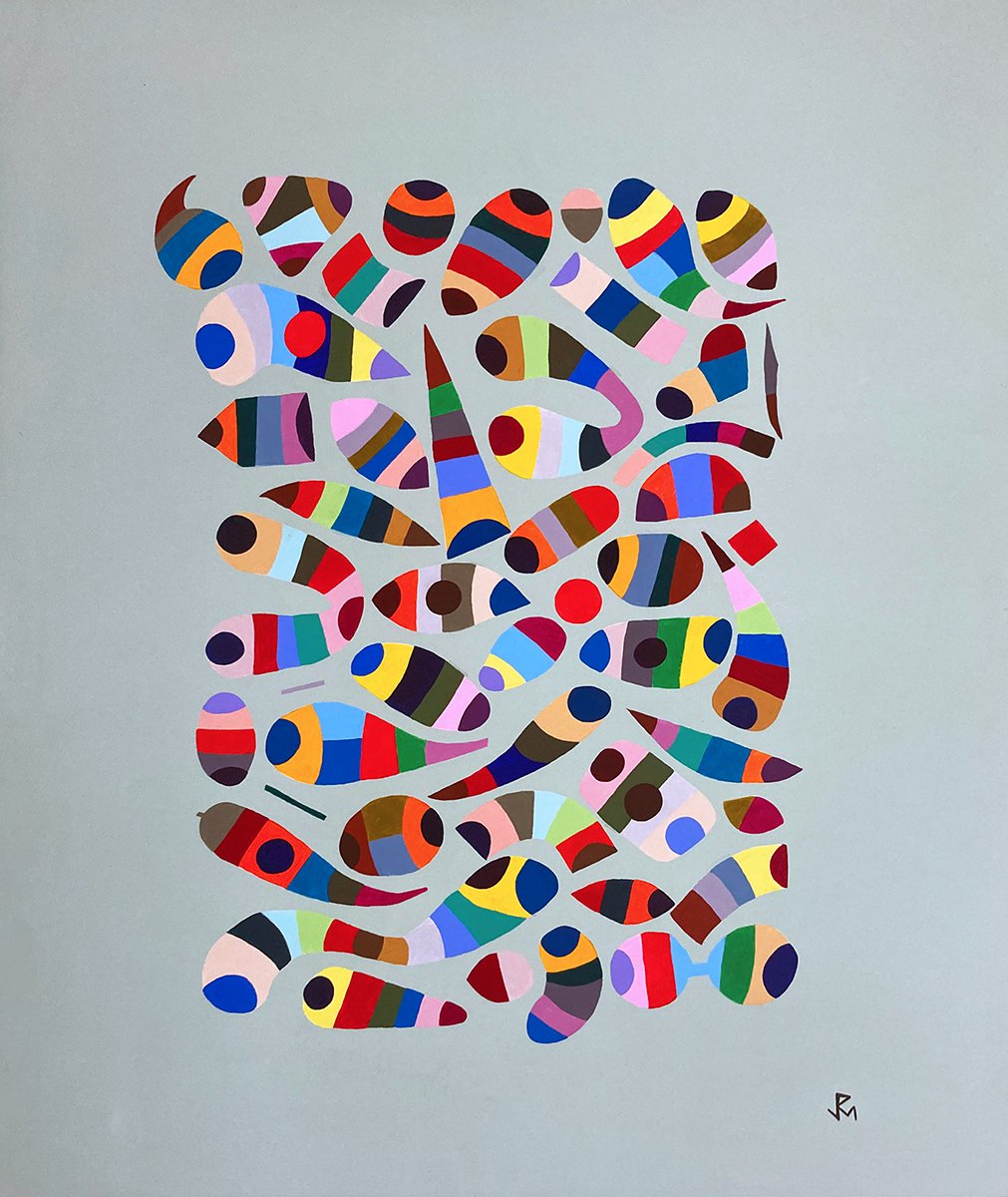
…the machines don't explain anything, you have to analyze the collective apparatuses of which the machines are just one component. Compared with the approaching forms of ceaseless control in open sites, we may come to see the harshest confinement as part of a wonderful happy past. The quest for "universals of communication" ought to make us shudder.

Asked about tactics of resistance, to which he adds delinquency, in his view a differentiation, Deleuze ponders the effectiveness of strikes, sabotage, piracy and viruses, etc. Since 1990 we have seen those tactical methods, signs of resisting authority, reconfigured and redeployed by authority against dissent. Dreams of the"transversal organization of free individuals" - a notion that is consistent with the ideals of early Internet pioneers - seem less obtainable, more distant, than ever. Deleuze grimly concludes:

Maybe speech and communication have been corrupted. They're thoroughly permeated by money-and not by accident but by their very nature. We've got to hijack speech. Creating has always been something different from communicating. The key thing may be to create vacuoles of non-communication, circuit breakers, so we can elude control.

“Circuit-breaker,” graphite on electric schematic on paper, 2011

A nod to Joseph Nechvatal is warranted to open “Occupy 2021. “ Joseph is one of the pioneers of digital artistry, a master of circuits integrating computer- and machine-based practice with the recognizable activities of multi-disciplinary creative life. He is an accomplished art writer and educator, whose insights into art history are consistently valuable. Joseph has been a visionary polysemic whose focus has ranged from sound sculpture to viral image programming, always underscored by a comprehensive understanding of contextual material within the array for content presentation. Nechvatal is also keenly sensitive to aesthetic role play in artistic community, having participated in the courageous early contemporary art movements that frame the mainstream today. Few transmedia, polyvalent creative agents working today evidence Joseph’s courage in confronting the multi-dimensional malaise afflicting the imagination. Nechvatal does not hesitate to champion expression in defense of vulnerable personal and expressive freedoms, and his critiques are those of an artist witnessing cyclic oppression, from the Reagan/HIV era through Trump/COVID, while continuously striving to produce meaning in presence, word, form and image.

And a nod to my friend Liza, pictured above, who inspires “Occupy 2021” through an expression of artistic courage in the face of disease, upheaval and discord, too, if from another angle, or set of them. Buzytsky is an immigrant American artist, embracing a feminist perspective that weaves hand-craft, sexuality, technology and the institutional structure for art into collaborative modes of productive embodiment. She, too, is exploring the vitality of text, provocative auto-portraiture, using installation as a means to expand the parameters of aesthetic experience. The dimensional points at which Joseph and Liza might appear superficially to creatively divergent, in fact are complementary. Both artists inhabit a libidinal liminal space of fractured Americanized consciousness, and in that space find physical and intellectual sustenance for intimate realities, alternative to a status quo that valorizes the banal and authoritarian. To me Buzytsky demonstrates the power of resistance, which manifests as insistence on the potential for beauty and grace in breath, in movement, in style and decoration, a dance advocating for longing in a scene that is in ruins.

We have poetic mirrors, even at times like this, that function as contemporary recitals, rather than suicidal, homicidal, anthropocidal or terracidal incitements. Seduction and reduction offer very limited answers to the solutions necessary, if we (and that “we” is inconceivably big now, encompassing future generations) are to survive, much less thrive. It does not appear that time is on our side in the contemporary age, which implies perhaps we should move on to something else. The autocratic urge to declare War on ideas of things that challenge and frighten the powerful will not work on Time. Artists have historically played the bridesmaid and groomsmen of Power. The assignment of uselessness for art and powerlessness for artists has never been a proper fit. If the “new” technology for imagination is to attain its potential, it will do so in the service of upending, of disrupting, that force dynamic to usher in a truly novel expression for vision, voice and the body of senses. We may be drifting toward a renewal of movement that is the vital succession of mortality and possession as aesthetic prime directives. To make such a beginning, temporal perception must change, starting at the Self, and extending through the Other to reach a natural consensus. Art, philosophy and technology, together, are best suited to the task.

“Bridge, Manhattan + Brooklyn” (September 2010).

Marshall McLuhan spoke on this topic in a 1973 lecture at Columbia University, entitled “Art as Survival in the Electric Age” (p. 208, Understanding Me):

This enormous gap between man’s natural equipment and technology has gotten bigger and bigger. I suggest that the artist’s role is to fill that gap by retuning and modifying the perceptual apparatus that enables us to survive in a rapidly developing environment. Art provides the training and perception, the tuning or updating of the senses during technological advance.

A decade later in 1983, the inimitable, estimable R. Buckminster Fuller published Grunch of Giants, a delightfully composed and savage rendering of the status quo, in the first term of the Reagan Presidency, the height of the Cold War (which Fuller refers to as WW3, the trillion dollar war). It was the year I entered University at Notre Dame, which, on its campus, contains a Fuller-inspired geodesic-domed gymnasium, the Stepan Center, built in 1962, two years before I was born. Stepan center in 1963 hosted Martin Luther King, Jr., at Father “Ted” Hesburgh’s invitation. It was where we Domers attended concerts, prayer services, played hoops, held pep rallies and such. In my memory, made by a brain admittedly still as yet not-done growing, which brain I had foolishly begun to assault with a profusion of dangerous, toxic chemicals - 1983 was a time of excitement, an historical moment of social, economic, cultural and political confusion and ripe for reformation. The year before, as I have painfully written about elsewhere, I had voted for “The Gipper,” one of Reagan’s nicknames, acquired by the former actor in his role playing George Gipp, an All-American football player under legendary Coach Knute Rockne. Gipp died of pneumonia in 1920, and on his deathbed suggested to “Rock” that he implore his team to “Win (just) one for the Gipper,” at some future critical juncture. Reagan often resorted to this line on the campaign trail and while in office.

Fuller’s “GRUNCH” is an anagram for “Gross Universal Cash Heist,” which is a central subject for his text, in which the inventor, author, educator, etc., demystifies in a most straightforward, somehow entertaining, style the inequitable status quo, a status quo that prevails through the present. The global scenario in the early 80s I recall as an Age of Anxiety, wherein the USSR and USA, their proxies and allies were perched on the abyss of nuclear annihilation. Meanwhile, Reagan, I discovered after ignorantly casting my vote on his behalf, enacted “Greed Is Good” policies in the US that would have momentous consequences, catastrophic for most not of the richest percentiles of wealth and income. Reagan not only oversaw a deluge of investment in the machinery of war, he swept aside regulations on corporate industrialists, busted labor unions with ruthlessness and ferocity, and made deals with reactionary cultural and religious forces that would come to fruition a few decades in the future during the Trump Presidency. Reagan, his enablers and cronies built the fire that erupted on January 6, 2021, the insurrection at the US Capitol. Reagan’s Presidency, we can see in hindsight, was pre-figurative.

“Coal Tipple,” Mixed media, 1987, collection of Sunrise Museum, Charleston, WV

Resources like Grunch of Giants have and continue to indicate possible worlds and futures, unlike the one we currently inhabit. They lift the veil on falsehoods and fallacies that perpetuate horrible “realities” that immiserate most of humanity to the benefit of a tiny fraction of our numbers - now in the billions - endanger the planet and stifle innovation in all worthwhile areas of human endeavor. In “Occupy 2021” the Wayback Machine of the Internet Archive proves a remarkable resource for time-traveling the Web. I use it here to cite the Buckminster Fuller Institute, which posted the entire text of Grunch of Giants in March of 2010, although the WM/IA capture I work from is dated October 27, consistent with our chrono-nodal literary construct, a utile temporal fiction productive of our creative purpose: to link events, people, place in time, to establish meaning and value contrary to normalized deceptions. I will only re-post a few paragraphs of Grunch, while encouraging the reader to seek out and consume the book in its entirety. It is rich in insight, and concludes, not in despair, but with hope, pointing toward practical measures available to rescue ourselves and “Spaceship Earth,” as Fuller refers to this planet, from the forces who concern themselves with power and money by any and all means, the forces who abandon wisdom and true value in their decadent, grisly, shortsighted, exploitative, ancient pursuits:

It is evident that the degree of technical "advantage" now attained by world-around industrial production capability, if realistically appraised and articulated, now shows that all humanity has just reached a state of comprehensive technical advantage adequate to provide a billionaire's level of living on an indefinitely sustainable base for all of the over four billion human passengers now aboard Spaceship Earth (see Critical Path). The world's economic accounting system, if properly entered into the world's computers, will quickly indicate that comprehensive economic success for all humanity is now realizable within a Design Science Decade. All it takes is shifting from weaponry to livingry production.

History's unprecedentedly large and invisible supranational Grunch of Giants being too supra- and infra-visibly large to be sensitively comprehended, it is difficult to surmise and accredit that the almost omni-computerized giant may be evolution's agent of most effective establishment of a world-embracing socioeconomic system most logically suited for the mass-production and distribution of its products and services to economically successful humanity. It could well be that the total-world-involved, supranational giant corporations' computer operations might, to their corporate directors' astonishment and to popular surprise, lead the Grunch into profitable discard of all that is not true, as for instance that anybody owns anything. Commonly acknowledged operational custodianship and popular reaccreditation of the integrated world-around technology management may supplant "ownership" with Hertz and telephone-renting.

The way that the giant can be successfully led into doing so is for a substantial majority of humanity, and eventually all humanity, realistically to comprehend the falsity of the greater part of the inventory of academic premises and axioms upon which the thus misconditioned reflexing of “educated" society is based. For instance, there is no God-validated deed to property of any kind whatsoever. There are no solids. There are no things—only systemic complexes of events interacting in pure principle. There is no up or down in Universe. There is no cubic structure. There are no straight lines. There is no one-, two-, or three-dimensionality. There is only four- or six-dimensionality, etc. As we eliminate that which isn't true, we inadvertently admit into reality that which is true. As world society divests itself of that which experimental evidence demonstrates to be untrue and embracingly enters into its computer the mathematical formulae of all that can be experimentally proven to be true, all the socially, selfishly malignant characteristics of the giant may vanish and the omni-pro-social-advantage-producing capabilities may prevail and flourish.

“Chart Indicating 4D Color Progression…” (1928, Buckminster Fuller)

The brief excerpt above contains many inception points for consequent discursive consideration. For example, Fuller’s envisioning of a future typified by propertylessness. Recent discussions of the concept do not fundamentally resemble Fuller’s. Unfortunately, the powerful elite has dictated new frauds, deceptions and larcenies, misrepresented as industrial disruptions, which utilize new technologies to add new layers of extraction and exploitation to the already near-total economic deprivation of everyone who is not among the wealthiest fraction of legal grifters, for whom the entitled depriving of others is a calculated, nefarious way of life. Uber did not replace Hertz, and Apple’s iPhone + Verizon/ATT/Sprint et al. did not liberate us from gross subscription models, subsidizing the portfolios of the citizen-transport and communication barons and their co-profiteers. Simultaneously enacting greater surveillance, less freedom of movement and speech exchange, and encouraging material waste, cruelty to laborers, price-gouging and inequality of access across populations, etc. Yet, the Fuller prescription, in tandem with McLuhan’s and Lanier’s, and other notable technologists, philosophers and artists, remains viable, even as we appear to approach our final moments as a species, occupying a planet miraculously suited for our sustenance, which itself at the moment seems as mortal as we are.

“Occupy 2021” is auto-historical, not exactly a document or documentation - more a web-native instrument for which no English-language word or phrase has to date been invented. To illustrate, we can examine the image captioned “Coal Tipple…” above. The picture has its metadata, which predicates its insertion in the body of this essay, which is better described as essay(+), an inference to this whatever-it-is’s dimensional composition and virtual, temporary, electrified existence. The original photograph was taken on a NIKON 35mm film camera by my father, William D. McLean, now deceased, on the the back porch of our family home in West Virginia. The photo was retouched in Photoshop, scanned and uploaded to the AFH Flick still image archive, from which it was downloaded and again retouched, to be consistent within this whatever-it-is. The art was constructed on the premises, from found materials. The painting was based on a photograph taken by the artist (myself) and depicts a local, abandoned industrial coal structure common to the region. This particular structure, in Skelton, WV, was demolished and replaced by a shopping center, a precursor to the malls, then “big box” stores, that decimated the main street economy in my hometown, and many others like it. I selected this image in lieu of a photo depicting Ronald Reagan as a mule driver for the mines, which I painted in ink on paper and “framed” behind a Plexiglas sheet, painted in acrylic on its face to window the Presidential portrait. However, I wasn’t able to locate a digital version or original print of “Mule Driver,” and so chose “Coal Tipple.” Other works in the series include “Retired Miner Sitting on a Plastic Bench at the Mall” and “Joe Hill.” This series of multimedia artworks were composed circa 1987. Between 1982 and 1987 I had revised my opinion on Reagan, to put it mildly. I was awakening to the Status Quo, and radicalizing ideologically, regarding the political economy for art. The associations and assumptions I assembled as a young artist, a fresh graduate of UND, would congeal into a content seam that threads through my art production, seeping into the paintings, weaving through projects, their aesthetics, the theoretical and conceptual architecture, and, most importantly, the figuration.

“Devil Anse,” acrylic and ink on canvas, inset in gilded wood frame; originally exhibited at In the Gallery, in the DDDD production “In Sickness & in Health” (2001, Nashville, TN); stolen from my Beckley, WV studio storage in 2003; source material archival photograph.

3 -4-ALL

Anytime one assumes the function of the historian, one is creating an imaginary topology composed people, places, events, things, tracing and linking them in the medium of time. The point, ostensibly, is to gather meaning for the purpose of improving one’s understanding of the interlinked components. The value in the exercise arises from the gathering not only of data, to add to the historical data pool, but to conceive of meaning in and from the phenomena. The historian is not only committed to hunting and gathering information, she offers interpretations, and therefore must shift into a more philosophic role, with respect to the available documentation. In this, the historian operates in conjunction with science, generating hypotheses, eventually moving toward thesis, or better, synthesis. The technical dynamic of cycling through recursive axiom-building and conducting an expansive overview is a feature of historical analysis. The objective is perspective.

The job of the auto-historian intertwines autobiographical data, impressions and interpretation within an overarching, encompassing history, the history one shares with everyone else. The content and context intermingle in the imagination, the interpretive complex, the perceptions of the individual, and the reader is given the task of adjudication, in determining whether the individual experience and interpretation sufficiently inform history, sufficiently to qualify as historical in historical terms. One may question whether this ancient model remains intact, and there are valid reasons to do so. “Occupy 2021” is an example of a kind of auto-historical work, complicated by my prolific use of autonomous imagery (art) in the service of the provisional text. The (blog) format is consistent with the (online) platform, although the composition elements can be represented in separate modalities, including the contemporary art exhibition, in accord with its expository practicum and institutional, architectural constraints. In fact, many of the images have already appeared in the mode of art actualization, in either actual or virtual form.

E-vite, announcing the participation of Occupational Art School Node 1 co-organizer Jenjoy Roybal at Black Mountain College (Posted: September 26, 2012 on the Occupy with Art blog; e-vite design by PJM)

To the best of my recollection, I launched the first AFH Blog shortly after Y2K (remember that!). In the early 2000s I developed a robust integrated dispatch system for the promotion of exhibitions, performances, lectures, panels, classes, open studios, live art events and so on. In short order, due to the relative lack of awareness in the art field, I was able to compile a very good database for mailings, a list of arts-interested people, drawn from preexisting lists generously contributed by local museums, companies and foundations, with whom I was involved professionally. Within a few seasons I grew my clientele exponentially, and therefore attendance at the solo and collective shows I produced for institutional and retail galleries, performance venues, alternative spaces. Publishing in local periodicals and in newspaper columns, having a weekly radio show, and generating coverage of all productions via traditional and some new media, I realized very early on in the art media arc the potential inherent in the digital/analog approach, which would eventually become practically ubiquitous, as we see in today’s art world. E-mail combined with postcards, flyers, posters, signage on vinyl or paper, targeted advertising, direct calls and word of mouth permitted a fairly unprecedented level of market saturation, which translated into increasing sales, notice and creative opportunity.

I realized early on, simultaneously, what advances in communications technology and associated computer-based processes could not add to art. In a word, the technology could not add informatic dimensions — for depth and breadth, plus comparative simulations, for the subjective object, but not objective substance — to the art project. Tech’s limited best is the machined-object, which is an artificial thing, an “art” output, untouched directly by any artist. The artist’s post-output tactile gesture, sometimes only a hand-scrawled signature, is only a pretense, a pantomime of artistry. The machine-artist collaboration is one-sided and non-reciprocal, an asymmetrical equivocation for purposes outside art (i.e., commerce, prestige, or the hybrid social branding). The virtual concentricity that would evolve horizontally into Web 2.0 applications provides an object or exhibition with contextual expansion. Instead of depth, art is flattened and dispersed or diffused in its versioning as network (algorithmic, rhizomatic, concentric) transmission. The associative effect is superficial, and one could witness the impact on viewership, nearly immediately. The acceptance of in-gallery photography was only the beginning, morphing quickly into the art-selfie phenomenon, then the “immersive experience” environmental photo-op, etc. The spectacle is practically artless, now. Concerns were raised within the field that the trend of virtualizing, also framed problematically as democratization, might actually undermine one of the unique features of art interaction: the sensual, experiential aspect of immediacy; happening when a person engages with art in “real” time; in environments specifically designed to accommodate the exchange; usually with qualified people available to answer questions about the art, artist, and the objective of the exposition on view. If the intervening years of development, market hucksterism and technological advances have demonstrated anything incontrovertibly, especially post-COVID, it is that those concerns were merited.

Jenjoy Roybal, introducing the Buckminster Fuller Challenge to a “Wall Street 2 Main Street” audience in Catskill, NY 2012.

The nature of the editable online blog can be complicated, depending how an author or authors utilize its core features. The chronology can be fudged, as is the case with “Occupy 2021.” Continuity is not determined by linearity. For a reader groomed on books, the structural differences can be jarring, affecting comprehension. The writer (typer, or dictator, now) “writes” in sessions, at the desktop computer, on the laptop or tablet, or the smart phone. The technical differences, if one learned to write (actually, write) with pencils or pen on paper, are marked. Referencing is also different, when one is connected to the Internet, rather than sourcing from books in a library, or at home, in a cafe, etc. Is it obtuse to note the momentous change post-digital conversion of literary production? The point of doing so here is to remind the reader/viewer that nothing contained in this whatever-it-is is permanent. The existence of “Occupy 2021” is like the existence of windswept desert sands. The Cloud may presume otherwise, but the Cloud in reality is as fragile as the content in this post. Then the Japanese bombed Pearl Harbor.

PJM

DECEMBER 7, 2021

#

“Event #1,” 30” x 20”, acrylic on canvas (2019)

OCCUPY 2021

It is nigh unto Low Midnight, and there must be a showdown between Word & Image. Both must lose. — Milo Santini, The Book of Milo (1968-2021)

“CONTENT: Jen at Steeplechase, Nashville 2001”

PREFACE

On Tuesday and Wednesday, November 2-3, 2021, I’ll be attending a symposium hosted by the Knight Foundation, entitled, “Lessons from the First Internet Ages. The famed inventor of the Web, Sir Tim Berners-Lee, wrote a short essay for the event, “Lessons from the Past and Present for the Future of the Web,” which sets the table for a proper vetting of the history and future of network society, from the maker’s standpoint. Looking back on his creation, Berners-Lee describes his motivations:

Working with various different experimental groups at CERN, I was becoming increasingly frustrated by the different and incompatible computer systems people were using, and the resulting inefficiencies. So, I thought, “What if there was a way to use the internet to create one big, virtual documentation system?” I imagined and proposed a system to connect together all these systems into something like one big, hypertext book. One big web.

When I thought about the system I wanted to build, I wanted an instrument for collaboration, for remote creativity, for learning, and for connecting. I wanted to connect people to one another, anywhere in the world, and help them share their ideas.

Each of the people working on a project with me should be able to plug into the project on the web, learn all they need to know, add the work they do into the warp and the weft of it, and then leave knowing that everyone else could see and use what they had contributed. The people should be in a sort of equilibrium with the project web, in that whenever they knew something it didn’t know, they could tell the web immediately and intuitively, and others could learn of the update immediately.

Installation view of "A Prayer for Clean Water (Phase 2)" at St. Edward's University Art Gallery in Austin (2005)

When I log on to the web now, I have a hard time matching the vision of Berners-Lee to my daily User Experience (UE). Later in the text, Berners-Lee discusses his most recent project, named Solid, to address issues confounding his original picture of what the Web could be and how it should function. Meanwhile, the same week I heard about and signed up for the KF Symposium, Mark Zuckerberg announced a branding change for the social media conglomerate Facebook. The parent company will now be called META, and its blue logo is a sideways 8, the infinity symbol. For over three decades I’ve used the sideways 8 in art composition, first in painting, sculpting and drawing, then in a bunch digital applications for moving and still imaging. I’ve also used the sideways 8 as a text divider in my writing, creative, technical and theoretical. The sideways 8 has gone the way of the rainbow, subsumed into a corporate and cultural media messaging system pervasively affecting visual and conceptual production. So, when Greek economist and Progressive International co-founder Yanis Varoufakis tweets “Hands off our mέta, our Centre for Postcapitalist Civilisation… Mr Zuckerberg. You, and your minions wouldn't recognise civilisation even if it hit you with a bargepole,” I get it. Social Media neo-Robber Barons just don’t give AF. When one of the Big 5 (Facebook, Google, Apple, Microsoft and Amazon) bust a move in any direction, metaphorically speaking, the ripple effect may hit the little guy near the shoreline like a tsunami.

“Occupy 2021” is about loss, about losing. After people experience a significant or catastrophic loss - the death of a loved one, the end of a marriage, losing a job, or a limb - there is a process of recovery, during which a person may not be inclined to keep going without whatever is gone. Defeat entails a specific kind of loss, loss at the hand of another. The terms of defeat might be negotiated, or defeat might be total, fatal. Loss on a personal level, and loss at the civic, national or global level, a shared, collective loss, have become much more complicated by virtuality. The concept of global awareness, of global consciousness, is relatively new, a function of networked communication, in the service of industrial, political and cultural globalization. Other notions of human interconnectedness on a planetary scale previously manifested through religious or imperial dissemination. For contemporary man, loss is a means by which populations are tied to experience that is configured “local to global” within a consumer mass media complex. Such experience is increasingly less direct and more distant, although individual attachment to loss-events feels real enough. Typical examples include the deaths or break-ups of celebrities, outcomes of sporting competitions, especially those wherein one side is a winner, every other a loser, and flops. Such events can be understood to be relatively low-stakes perceptual programming for collectivizing loss - and, an opposite aspirational binary: the Win.

“Equal,” “Notes on Dimensional Time,” animation still #233 (2010)

Loss is fundamental to human existence. After all, we are physically finite. Yet, we strive to not be losers, to be defined not by loss. To be a “loser” is bad, to be called a loser by someone else is derogatory. Fear is inextricable from loss. The fear of losing a person we care about, of losing connection to a place we love, of losing something that matters drives much of human behavior. In contrast, desire and gain - loss’s ostensible obverse - are inextricably intertwined. Winning is aspirational, loss its negation. The Loss-Win binary is fundamental to marketing, to propaganda, an exploitation of the human urge to survive. Winning is conflated with overcoming not only loss (experienced as defeat, a metaphor for death), but transcendence of the fear of losing. The mortality of man ensures that the experience of winning and losing is temporary. The role of history, religion, art and other human inventions in part is to mitigate the obvious reality, that our demise is inescapable. Loss is ultimate, bound as fate to the limitations of physical form and composition. We indulge contradicting fantasies, engage in escapist pursuits, and thrill to activities that celebrate the pretense of eternal life.

The computer, digital processes and the Internet combine to radically redefine our idea of the Infinite. The possibility of our surviving physicality itself, if only in a very different even non-physical form, seems an inherent promise of the virtual. Science fiction has been a reliable cultural platform for staging potential futures wherein death has been defeated, although we have cautionary depictions of deathless life, as well. The classic Star Trek series, the original, presented several scenarios in the context of pulpy, kitschy futurist melodrama, set against a backdrop of stars, sometimes focusing on the computer as a central character in simplifying quasi-theoretical and technical plot lines, as in “The Ultimate Computer” and “The Changeling.” The Terminator films posited a terrifying future war of Man versus Machines, with the machines mostly destroying humanity, and doing their best to complete the job, going so far as time travel to that end. The Matrix outlined a similar future conflict for the next generation. Both film franchises centered action on human heroes and mech-tech nemeses. More recently, movies like Ex Machina provide smart counterbalance to cartoonish, CGI-heavy movies like Transformers. Since Fritz Lang’s Metropolis (1927), filmmakers have found a ready subject in the Man-Machine configuration. Yet, the medium (movies, for big- and now small-screen) may be inherently compromised as a platform that dictates discourse on mankind’s relation to the machines we create, and how they are re-creating us. “Film,” evolving from its chemical origins, as a camera- and now computer-based medium, is fundamentally mechanical, and so biased. To be more precise, film can be conceived as a battleground upon which the humans and machine struggle for the belief of the audience. Short belief, the binary competitors appeal to the emotion, and short that to instinct. The moving image is only information generically.

“Hashtag,” “Notes on Dimensional Time,” animation still #233 (2010)

Man-Machine, as subject matter, has occupied purveyors of the written word in almost every field, for centuries. An early example is L'homme Machine, by Julien Offray de La Mettrie (1748), in which the author posits a conception of man, mechanical in his functions:

Let us now go into some detail concerning these springs of the human machine. All the vital, animal, natural, and automatic motions are carried on by their action. Is it not in a purely mechanical way that the body shrinks back when it is struck with terror at the sight of an unforeseen precipice, that the eyelids are lowered at the menace of a blow, as some have remarked, and that the pupil contracts in broad daylight to save the retina, and dilates to see objects in darkness? Is it not by mechanical means that the pores of the skin close in winter so that the cold can not penetrate to the interior of the blood vessels, and that the stomach vomits when it is irritated by poison, by a certain quantity of opium and by all emetics, etc.? that the heart, the arteries and the muscles contract in sleep as well as in waking hours, that the lungs serve as bellows continually in exercise, ... that the heart contracts more strongly than any other muscle?

The author’s perspective is greatly informed by Medicine, and aligns with materialist philosophy. In colorful style, de La Mettrie expansively charts an idea of man that acknowledges or refutes the conforming or contradictory concepts put forth by an impressive list of thinkers who have attempted to reconcile the complexities evident in human beings, and confirmed by our behavior, brutish to sophisticated. The copious references in L'homme Machine suggest that, from Descartes to Galen, the robust examination of human nature is delimited by an unresolved elemental fixation of consciousness to the corporeal. Seen in this light the configuration is no longer Man versus Machine, but Man + Machine. This fundamental discourse is not static. As it spins through history, each age imprints it with a new twist, like Marxism, the Uncertainty Principle, Chaos Theory… Each development causes the re-examination of our self-conception, and with it our perception of the world, within a universe inhabited by everything, including ourselves. Existential questions (What is, or is there, a God, or Soul; are the body and the mind somehow divisible…) are situated in a synthetic binary - of life, and/or not-alive, or both - in the medium of Time, an infinite container of finitude.

“Inertia,” “Notes on Dimensional Time,” animation still #217 (2010)

Man + Machine has inspired much popular fiction, literature, technical writing and non-fiction. The genre especially suited to the topic used to be science fiction, but now the science fiction of yesterday is often our lived reality. H.G. Wells immediately comes to mind, along with Robert A. Heinlein, Isaac Asimov, Arthur C. Clarke and Frank Herbert. My generation was fortunate to have the “Cyberpunks,” writers, including: William Gibson; my European Graduate School instructor Bruce Sterling; Cory Doctorow, who made an appearance on the Knight Foundation Symposium mentioned above; Rudy Rucker, who is also a brilliant 4D artist and theoretician; Phillip K. Dick, really a cyberpunk progenitor, and others. I am a huge fan of Iain Banks’ “Culture” series, my favorite being Player of Games. The Man|Machine configuration in many of these authors’ most famous stories cannot be separated from the Space|Time construct. As our understanding of each and all evolves (man, machine, space, time) over the past couple millennia, the stories we generate to make sense of the relations between and among them, and us, incorporates myth, science, history, math, in the immaterial medium, which is imagination. On imagination, de La Mettrie puts forth:

The finest, greatest, or strongest imagination is then the one most suited to the sciences as well as to the arts. I do not pretend to say whether more intellect is necessary to excel in the art of Aristotle or of Descartes than to excel in that of Euripides or of Sophocles, and whether nature has taken more trouble to make Newton than to make Corneille, though I doubt this. But it is certain that imagination alone, differently applied, has produced their diverse triumphs and their immortal glory.

If one is known as having little judgment and much imagination, this means that the imagination has been left too much alone, has, as it were, occupied most of the time in looking at itself in the mirror of its sensations, has not sufficiently formed the habit of examining the sensations themselves attentively. [It means that the imagination] has been more impressed by images than by their truth or their likeness.

Truly, so quick are the responses of the imagination that if attention, that key or mother of the sciences, does not do its part, imagination can do little more than run over and skim its objects.

See that bird on the bough: it seems always ready to fly away. Imagination is like the bird, always carried onward by the turmoil of the blood and the animal spirits. One wave leaves a mark, effaced by the one that follows; the soul pursues it, often in vain: it must expect to regret the loss of that which it has not quickly enough seized and fixed. Thus, imagination, the true image of time, is being ceaselessly destroyed and renewed.

Lately, those categorical divisions within the discipline of writing (popular fiction, literature, technical writing and non-fiction) are blended, mashed up. The 2019 Ian McEwan novel Machines Like Me welds the technicalities of literal intent, with respect to an imaginary literate audience, into a smoothly tuned engine fueled by dreams of artificial intelligence (AI), humanized robots siding as wish-fulfilling djinns or cuddly toys, the perfect lover, companion or financial advisor. Mayhem ensues. The action swivels from entertaining tech conjecture, of the What-If? variety, to subtle commentary on social atomization and breakdown, dystopia arising from economic inequality and ecological crisis, with nods to human resilience or humanitarianism under pressure, all scenarios inhabited, infested or incorporated into a media perceptual complex wherein thinking machines are normalized, even as they terrify or dominate. In contemporary fiction the voices of novelist and scientific philosopher are wedded in a parallax narrative that meshes with our contemporary reality, while simultaneously upending it. History has been digitized, and re-imagined in one of millions of possible plot lines. The thematic undercurrent is Adapt or Die, in a state of technological wonder and universal potential - gone mad. And, you know, Where is Love in all this? Will we really cause our own extinction, facilitated by the bots we created? What were we thinking? For God’s sake, the Children! Growing up on the dark husk of a planet, with no birds singing or bees buzzing! No Tree of Life to sit under and ponder the Apple yonder! Recent entries to this cinematic sub-genre include Finch, a kinder, gentler version of Cormac McCarthy’s The Road, and the unfunny but poignant satire Don’t Look Up.

“Obliteration,” “Notes on Dimensional Time,” animation still #297 (2010)

On the subject of what we might think of as political fictions or speculative politics, one might demur to the genius Alan Turing in his seminal text “Computing Machinery and Intelligence,” which appeared in Mind (Volume LIX, Issue 236, October 1950, Pages 433–460). This is the essay in which Turing proposes his famous, influential “Imitation Game,” a key inspiration for McEwan’s Machines Like Me and many other ensuing creative and scientific enterprises. Near the end of the paper, in the section on Learning Machines, Turing offers this compelling thought:

The idea of a learning machine may appear paradoxical to some readers. How can the rules of operation of the machine change? They should describe completely how the machine will react whatever its history might be, whatever changes it might undergo. The rules are thus quite time-invariant. This is quite true. The explanation of the paradox is that the rules which get changed in the learning process are of a rather less pretentious kind, claiming only an ephemeral validity. The reader may draw a parallel with the Constitution of the United States.

The paralleling of the US Constitution and the “idea of a learning machine” is a vital notion, a conceptual innovation that bridges several spheres, beyond science and ideology. Turing points to the mechanics of political advancement within a practical framework, embodied in the Constitutional text. The program contained therein, he suggests, is rooted in learning through trial and error, as a working model for progressive experimentation in sustainable democracy, conforming to a loose definition of the “learning machine.” His is a brilliant observation and true. That the American contemporary experience diverges from Turing’s vision of the nation’s promise leads to the question, “Why - why is this not our reality?” Or, “What might be done differently?” Or, “What and who are the obstacles and impediments to the proper functioning of Constitutional democracy in the USA?” We live in an age where such inquiries have gone META.

“Notes on Dimensional Time” animation, “Gramatica Parda” installation View, ANDlab, Los Angeles (October 2010, Photo by John Merrell)

dragon

∞

The early studies on increased Internet usage during the Corona Virus pandemic clearly demonstrate a massive global surge toward virtualization in a broad range of human activities. This development accelerated a long trend occurring over a period of decades, following the emergence of personal computing, and then ubiquitous networked electronic devices, connected to a vast array of industrial, mechanical, software-based systems. The drift from mostly agrarian living to mechanized living has been a pivotal narrative in the modern age. The question, sometimes lost or repressed in the push to Progress, is How have these changes in how we do what we do define who we are? How do we think about things and each other, now? More importantly, is this good or bad? The critique of Progress, broadly defined, has been frequently relegated to a recessive position in the scheme of things, framed as a metaphysical hindrance to the irrefutable facts of science, math and measurement. The former is framed as Idealism, the latter pragmatism. The economy of Progress through industrialization has displaced the less savory drive to globalize through imperialism, colonization, justified by religious fervor and ideological superiority. The role of the Humanities over many centuries, provisioned primarily in the West, has been to assign virtuosity, to rationalize the prospects and effects of partitioned globalization. The economy, roughly configured, consisted of power over peoples, the conversion of land, sea and air to property, and the extraction of value from all that can be commoditized. Virtualization, coupled with a crisis - the approach of a tipping point in returns on investment with the constructs of material economy - has enabled established hierarchies to pivot to a novel prospective domain. That domain, plainly speaking, is Us.

Art for Humans Blog, snapshot September 21, 2002, Internet Archive, Wayback Machine.

INTRODUCTION

On September 12, 2002 I posted an entry - Number 22 - titled “Surf for Aesthetics” to the Art for Humans blog, which at that time was hosted on Blogger. Nearly two decades later the post is still available for viewing, via the Internet Archive’s Wayback Machine HERE and on the the blogger platform, which for now is still AFG-maintained, in an archival state. To begin the current project, OCCUPY 2021 | A Thing & Its Self, I wanted to establish the main throughline, establishing a triad of chronological nodes, as a point of origination for a meaningful, dimensional discourse on art, philosophy and media in the early twenty-first century. Our inquiry would concentrate on the three centers of contemporary life: politics; economics; and society. Thematically, the orientation would allow wide latitude in discussions on the impact of phenomena, such as the COVID 19 pandemic, on individuals and collectives over the specified timeline. Comparisons to other eras would be enabled, on a chronological basis, but also through other means of association arising from the designated concentric models. The curated historical references serve to anchor the discourse in the experiential, both individual and shared or collective. Through the experiential, the study can turn to interpretation, and possibly definition of central issues with which the one and many are engaged. The medium of the discourse itself may be presumed to be perceptual. We suggest that the nature of interpretive perception is complicated, convoluted and changes over time, in short — dimensional. An additional consideration will be the interplay between virtual realities and the Real, with emphases on both theoretical and practical or technical responses. The scale and scope of the discourse will be extended by linking it to other discourses, timelines and interpretive modes, which we frame as historical. At the heart of the project is the investigation of the Thing, and our current understanding of what a Thing is, relative to ourselves. This concept is useful to approach the complex relationship between man and computer, for example, although the significance of the configuration (Man+Thing) is greater than that key contemporary subject (Man+Computer), and not just in a general<>specific sense. For one thing, the Man/Thing relationship is one of our most ancient. The assumptions of Thingness versus humanity’s self-conception move much of Civilization’s expressive, scientific, and ideological evolution (or lack thereof).

CONTENT: Football Friday Night, Nashville 2001

ACKNOWLEDGEMENT

I. In order to prevent any misunderstanding, it will be requisite, in the first place, to recapitulate, as clearly as possible, what our opinion is with respect to the fundamental nature of our sensuous cognition in general. We have intended, then, to say that all our intuition is nothing but the representation of phenomena; that the things which we intuit, are not in themselves the same as our representations of them in intuition, nor are their relations in themselves so constituted as they appear to us; and that if we take away the subject, or even only the subjective constitution of our senses in general, then not only the nature and relations of objects in space and time, but even space and time themselves disappear; and that these, as phenomena, cannot exist in themselves, but only in us. What may be the nature of objects considered as things in themselves and without reference to the receptivity of our sensibility is quite unknown to us. We know nothing more than our mode of perceiving them, which is peculiar to us, and which, though not of necessity pertaining to every animated being, is so to the whole human race. With this alone we have to do. Space and time are the pure forms thereof; sensation the matter. The former alone can we cognize à priori, that is, antecedent to all actual perception; and for this reason such cognition is called pure intuition. The latter is that in our cognition which is called cognition à posteriori, that is, empirical intuition. The former appertain absolutely and necessarily to our sensibility, of whatsoever kind our sensations may be; the latter may be of very diversified character. Supposing that we should carry our empirical intuition even to the very highest degree of clearness, we should not thereby advance one step nearer to a knowledge of the constitution of objects as things in themselves. For we could only, at best, arrive at a complete cognition of our own mode of intuition, that is of our sensibility, and this always under the conditions originally attaching to the subject, namely, the conditions of space and time; while the question: “What are objects considered as things in themselves?” remains unanswerable even after the most thorough examination of the phenomenal world. — Kant, Critique of Pure Reason, “General Remarks on Transcendental Æsthetic.” (1781)

“Blue MTN #1,” Watercolor pencil on paper, 12" x 9" (2021)

slide

∞

On September 11, 2001, I watched the television with a small crowd of people in Fido’s, a coffee shop in Hillsboro Village in Nashville, Tennessee. The screen was filled with video of the planes crashing into the World Trade Center, the Pentagon and a field in Pennsylvania. Anchormen and -women, commentators and reporters were tasked with describing these terrible images in real time. People jumped from the burning highrises, plummeting to their deaths below. Politicians, local authorities, military personnel and first responders communicated official information. Witnesses gave their accounts. Within 24 hours, we knew America was at war, although the scope and type of the conflict was, in that moment, speculative.

On September 26, 2011, I traveled from Bushwick, Brooklyn, New York City to Lower Manhattan by subway. My destination was Zuccotti Park, where the Occupy Wall Street protest was located, in the financial district. I walked the last few blocks, and as I approached the scene, the noise and commotion swelled. Drums pounded. The police presence was massive. One of the first things I noticed were the signs, but I realized immediately that this thing, whatever it was, was unlike any gathering I had encountered previously. Something was happening, and it had “juice.” Media was there. I wandered around a bit, taking it in. A successful, elderly foreign artist who had participated in the ‘68er scene had suggested I visit OWS, and determine whether she could donate a painting to the cause, whatever it was. I had done as much prep as possible, via the web, and by asking and calling around. I had planned to attend a meeting of the Occupy Arts & Culture Working Group to ask about their policy on art donations for my friend. I found the meeting fairly easily. The park was not too crowded then, at that time of the afternoon. The session lasted what seemed like a long time, but it was interesting - fun, even. There were all these strange protocols: hand signals, stacks, facilitators, mic. checks; it all was rather mystifying. Some heavy hitters were in attendance, including Nato Thompson of PS1/Creative Time, the Yes Men, art reporter and critic Martha Schwendener and others, but also some real anonymous characters. By the end of it, I had signed on, volunteering to build a web site for the group, which had given itself the unfortunate name of “Occupennial” - ignoring my web-technical objections: the word was too long and hard to spell for ‘Net usage; the subtext was irrelevant for the target demographic (the 99% of everybody, everywhere); Occupennial expressed art world biases not suited for the movement; etc. I had suggested instead “OccupyArt” dot com or - org. Either Nato or the Yes Men had popcorned Occupennial and championed it, so when the vote was taken, the matter was settled. Most of the meeting consisted of logistical problem-solving. Inquiries from all directions were flooding the communication channels, and no clear response program existed, and there was no obvious leadership. Ideas about art shows, auctions and artsy direct actions were floated and considered. It was all very exciting, especially in the context of the protest itself, which was phenomenal, a subject and object, and the platform, all at once. Some time later, after some enthralling post-meeting conversations, encounters and observations, I left Zuccotti Park, a.k.a., Liberty Square, for the BK, with my mind blown, exhausted.

On August 30, 2021, news of the last plane leaving Kabul airport reached my computer in Astoria, Oregon via a constellation of websites. The Guardian, Washington Post, New York Times, Politico, The Hill, and others, and through social media channels. There almost isn’t anything more to say about it. The coverage was generally not journalistic. The hyper-polarized sensationalism that typifies info-media now makes remote analysis by a layperson, by the Average Joe citizen, increasingly difficult. My internal reaction was complicated, and this essay represents an effort to sort through the complications. Outwardly, life went on. August 30 was a Monday, in the waning days of summer. The Corona Virus pandemic was surging, and any faith in the health system to adequately respond to the crisis had been undermined by underperformance, prevarication and confusion from the top-down in administration. We were preparing for our son’s precarious in-person, fourth grade school year. His Youth Football season had started with practices. The weather in Astoria was a bit cooler than average, but ferocious climate calamity had engulfed the American West with raging wildfire, on the heels of prolonged drought. Elsewhere, savage storms wreaked havoc. Everyone, everywhere, seemed on the verge of a nervous breakdown - lockdown, quarantine, uncertainty, lack of human touch, the rewriting of social scripts disrupted any consensuality. Migration of so much interactivity to virtual platforms proved insufficient and unsatisfactory on many levels. Many local community businesses were struggling. Yet, somehow, the fortunes of the super-rich and their multinational companies and conglomerates, like freshly-divorced wealthiest man Jeff Bezos and Amazon, improved inverse-proportionally to the dire circumstances of the rest of us. Bezos and Branson had just jetted into the edges of space on weird joyrides. Menacing China was on the rise! Domestic Terror was set to supersede other Terrors at the top of the list of threats to freedom and civilization. The entertainment industry was struggling to find a model for these times. What the hell. And America was a loser again. Viet Nam 2.0. The Taliban were back, victorious. The War on Terror was a failure. Guys in robes driving pickup trucks had defeated the most advanced, well-funded army on the planet. What else possibly could go wrong? How could one not be depressed?

usflag.jpg

quilt

∞

The 20 year anniversary of 9/11 and the 10 year anniversary of Occupy Wall Street in 2021, framed as a time-linked combine, present an opportunity to highlight integral features of contemporary perception that facilitate the next vital phases of processing reality, such as critique, reflection and introspection. The two events (9/11 and OWS) subjectively make an odd couple, and together usually do not arouse the fascination of the discursive class. From a certain angle and conjoined, they serve as markers in unfolding sequences that intertwine outside the autonomous discourses for either. One feature of the configuration “9/11-OWS-2021” to note is compression, as a temporal phenomenon in collective memory. The notation can be formulated as a proposition. The decade separating 9/11 and OWS plus the post-Occupy decade establish the first and second nodes of a sequence in historical time. The events bracket the nodal sequence. When thus linking two chronological instances, the specification naturally inclines interceding moments into recession. As in the Parallax view, which Zizek explains in the opening of his book so titled:

The common definition of parallax is: the apparent displacement of an object (the shift of its position against a background), caused by a change in observational position that provides a new line of sight. The philosophical twist to be added, of course, is that the observed difference is not simply "subjective," due to the fact that the same object which exists "out there" is seen from two different stations, or points of view. It is rather that, as Hegel would have put it, subject and object are inherently "mediated," so that an "epistemological" shift in the subject's point of view always reflects an "ontological" shift in the object itself. Or, to put it in Lacanese, the subject's gaze is always-already inscribed into the perceived object itself, in the guise of its "blind spot," that which is "in the object more than object itself," the point from which the object itself returns the gaze.

The emphatic foregrounding effect denotes the hierarchical rendering of events, in terms of ontological importance. It is a lossy thing. Alexander Galloway stipulates in “A Lossy Manifesto:” “Lossy compression thus is imperative today for theories of media and mediation, because lossy compression is the best way to upcast toward the generic. Lossy compression accomplishes this via an impoverishment or impotentialization of existence.” (Culture and Communication blog post, Jan. 15, 2017). Using Galloway’s compressive term for now, could we not conceive of the post-9/11 generation as predominantly “generic?” For the moment, let’s keep in mind Deleuze, when he says, “Spatio-temporal position is not a conceptual property.” (p. 12, “Kant: Synthesis and Time,” seminar at the University of Paris…1978). All “Property” is materially generic in its compression of hard, soft or wet information, with the exception being non-corporate - artificial - personhood.

On Deleuzian Kant’s synthetic other hand, an applicable remedy for avoiding existential impotence is extension. In the interests of minimizing Freudian anxiety, and to temporarily conform to the proverbial “Rule of three,” why don’t we simply add a decade to the progression? What is the arbitrary nodal September event for 2021? As of September 10, it appeared there was no correlating event in perfect phenomenological alignment - except the end of the United State’s occupation of Afghanistan. Over-specificity is not our analytic friend here, and our time division construct is rickety, conceptually. A contributing factor to consider is the fuzzy nature of historical beginning or ending. The start and finish of anything happening is generally an arbitrary designation, assigned after the fact. Such rigorous timeliness in the “rearview mirror” is prone to overreach. The Visionary in reverse is improved by a more universal perspective on the composition of events, which includes the start and finish. The idea of the isolated event marginalizes both contingency prior and causality in an event’s aftermath, such as ripple effects. If isolating an event in terms of history is a focal function, the ideological isolation of the event creates a practical problem of assessment on future events. The emphasis of an event’s historical otherness or isolation, also subverts and inhibits the analysis of eventual relativity over time.

We can cite Occupy as a case in point. The parameters of the OWS timeline are chronologically blurry. Some narratives suggest the occupation commenced in August, and erupted as a bonafide global movement in September. Likewise, the evacuation of US forces and Afghani allies was officially determined to be August 31, but the last transport left Kabul the day prior. Apparently, the pull-out will continue indefinitely, unofficially. Both events at minimum condition subsequent developments. The extent to which Occupy has influenced subsequent political, economic and social movements is open to debate. The power of opposing external forces to shape perception of Occupy (and the de-occupation of Afghanistan) through media and by other means, can be scrutinized. Both assembly and collapse are phenomena that infer the quality of continuum. Perhaps there should be a physics of history to analyze the behavior of historical “particles” that come together and fall apart on either end of an event. We wonder about the forces and dynamics that make a thing happen, but conjecture is insufficient to explain the mechanics of event as change agent. The complexities are profound.

If we assume a beginning and end to be a negotiation, we should settle on the terms of the negotiation itself, while the stakes, the consequences, remain harder, if not impossible, to determine in advance. Our cited events are merely symptoms of a practically immediate, universal negotiation over the terms of existence, on the precipice of its culmination (the world as we know it) and inception (the world as we would make it, or wish it to be, for ourselves). All negotiation is contextual to an extent. Just before he passed away in August 2021, the great Jean-Luc Nancy published “The End of Philosophy and the Task of Thinking” (Philosophy World Democracy, July 29, 2021). The reader is advised to read this masterwork in its entirety, because it provides authoritative mediation for the themes and subject matter addressed in “Occupy 2021,” and so much more. Nancy manages to clarify the essential issues in contemporary Philosophy, by unpacking the legacies that inform it, and simultaneously illuminating a promising path forward. A brief but comprehensive history for Philosophy, both Western and Eastern, is mapped. Ubiquitous opinion, is deferentially put in its place. Colonialism and globalism are summarily and efficiently confronted and denuded. Nancy’s astute guidance on matters of thought, framed as task, negotiates the contradictions of origin and completion, permitting us a chance to discard that which undermines truth and our realization of it. Jean-Luc contextualizes the negotiations of Philosophy in synthesis with Science, Art and Politics, especially, moving forward. In the process he envisions an elegant topology for truthful thinking in a possible world. Facing his own imminent mortality, Jean-Luc Nancy writes:

Philosophy begins with this question: what if there is no longer any order available – neither sacred, nor social, nor cosmic? The axis or soul of the philosophical answer consists in the necessity of founding an order itself.

This necessity has two aspects: on the one hand, it requires us to discover this world stripped of its attributes; on the other hand, it requires us to justify the approach taken and its results.

Keeping it very simple we can say: the first requirement invents “nature”, the second invents “reason”. Nothing could be more elementary than this nature/reason pairing. We know it well and it has structured centuries of thought. Today, however, we are scrambling ourselves: are oil, electricity, the possibility of calculation, information, natural or rational realities?

What has guided philosophy, in all its forms, has always been to give reason to nature and to naturalize reason. To give reason: that is to say, to bring to light the principles from which the cosmos, life and, if possible, thought itself proceed. This last point comes back to what I called “naturalizing reason”: understanding that the totality of what exists comes from and accomplishes a purpose. The latter has ceased to be the realization of an order given with the world itself.

“Seven Episodes: A Unifying Dream Interrupts Causality :: The Casualty Animates the Space” (2006, Claremont Graduate University Installation Gallery)

“Seven Episodes: A Unifying Dream Interrupts Causality :: The Casualty Animates the Space” (2006, Claremont Graduate University Installation Gallery)

Our treatment will cross-reference current contemporary art discourse, with a nod to the technological influence. Art and media are creatively conflated in the experience of the artist, who tactically integrates the discourse on analog and digital for psychological impact. The confessional approach toward the subjective assists the objective, by establishing the illusion of proximity between the maker and user, formerly artist and viewer. The compression of content into a consumable package appeals to the cultural marketplace, with all the attention that accompanies success there. The authenticity of the product is validated by signs of the personal, instead of the artist as actual person. Artificiality is a settled matter in the genre, while the human presence in art is rendered unsettling. The tension between the transmitter and receiver can be explained technically, as glitch, not kitsch. The critic becomes an explainer, apologist, interpreter… for tech novelty, for innovation. The concerns of art are superimposed, usually clumsily, on the multimedia exhibition as artifact of process. A reason, logic must be applied to the project to validate its artistic merit, prioritizing the contemporary for aesthetic merit. Our orienting example will be an extended quote from Hal Foster’s review of Ed Atkins “The Worm” in the Artforum Fall 2021 edition, entitled: “Your Loss.” Foster’s take on Atkin’s animation, presented in his New Museum show “Get Life/Love’s Work,” sufficiently addresses some basic concerns about “the state of the art,” to be explored below in “Occupy 2021:”

“The wager made by Atkins is that if reality can be derealized by such technologies, it might also be rediscovered there, and this might occur in a few ways. First, he believes that, once outmoded, technology passes over to the side of ‘base materiality’; its very clunkiness becomes a reality effect. Atkins adapts the term corpsing—the moment when an actor breaks character and so dispels the illusion of the performance—‘to describe a kind of structural revelation more generally’; his examples are when a vinyl record jumps or a streaming movie buffers. To corpse a medium is to expose its materiality, even to underscore its mortality, and in this moment the real might poke through. Second, punctuated by the gestural tics of the Atkins avatar, The Worm is also rife with manufactured glitches—sudden blurs, flares, beeps, and crackles—and these apparent cracks in the artifice might provide another opening to the real. Although these reality effects are artificial, ‘they baffle the signs of reality by parodying them, engendering a new kind of realism.’7 Third, if the real might be felt when an illusion fails, so too might it be sensed when that illusion is ‘glazed with effects to italicize the artifice,’ that is, when illusionism is pushed to a hyperreal point. In this register, Atkins conforms to the criterion of ‘fidelity’ in technological reproduction, but excessively so, and in this way claims such fidelity for the side of ‘revelatory materialism rather than techno magic.’ Fourth, Atkins exploits a central feature of high-definition video inherited from photography and film, at least when they were experienced by early viewers: The inanimate appears to be alive. This confusion is a telltale attribute of the uncanny (in his account, Freud was inspired by those avatars known as doppelgängers), and this uncanniness is another “mortal experience” that evokes the real.8 Finally, if photography and film opened up an ‘optical unconscious’ for Benjamin, a reality not perceived by the naked eye, high-definition video expands this realm for Atkins. His surrogate dead men make visible the psychopathology of everyday technological life...

Here his notion of art confronts his theory of media, which Atkins sketched in a 2018 lecture titled ‘Losslessness.’ ‘Losslessness,’ he tells us, ‘refers to a category of data compression algorithm that allows original data to be perfectly reproduced.’ To achieve this fidelity, digital media, even more than analog media, aim to disappear; ‘technology constantly seeks to be lost.’ The magic of technology wants not simply to cover up our existential lack—this is what makes it the ultimate fetish—but to distract us from its inevitable failure. Its myth of losslessness serves ‘ideological ends,’ among them our fantasies of ‘coherency,’ ‘holism,’ even ‘immortality.’ However, it never quite succeeds: Loss is felt nonetheless, and because this loss cannot be acknowledged, our relationship to technology is rendered ‘neurotic,’ marked by ‘aimless melancholy or shame.’ In response, Atkins argues, ‘the artist must first set out to find the technology,’ and the initial step is to make the technology ‘corporeal, analog, mortal.’ This “movement toward the literal” is not simply ‘a rebuttal of the desires of the tech’; it also points to the ‘uncovering of other realities,’ which in turn promotes the ‘freedom of the subject.’11 Here we are back on the familiar ground of modernist defamiliarization, a project that is now vastly complicated given that the human seems almost fused with the technological and the world often appears to be media all the way down. Moreover, for Atkins, it is not enough to defetishize technology, to demystify its magic. For his work to be effective, illusion must be allowed ‘sufficient function’ not only ‘to sustain critique’ but also to promote affective recognition—to express loss, to ‘set in motion a shift from melancholy to purposive mourning,’ to find in media technology an interpersonal connection that it always promises but rarely delivers.”
— Excerpt from "Your Loss" by Hal Foster*

*[Ed.: Footnotes presented as they appear in the original text, linked HERE and above.]

September 11, 2010 Commemoration Ceremony, Lower Manhattan (PJM)

September 11, 2010 Commemoration Ceremony, Lower Manhattan (PJM)

keyword

∞

Faced with the irrationality of the situation, with its insoluble decomposition, what is one to think? What is one to do? Nancy suggests a creative Philosophy. But first, we must accept the task at hand, the original action of which is allotropic resistance, bearing the signs of a second negation. Near the brilliant essay’s conclusion, Jean-Luc asks of us, “What Heidegger means by the ‘task of thought’ – at least what we can indicate – is this: are we going to stand in front of the untenable?” Atkins co-optation and re-appropriation of the term “corpsing” opens an aesthetic portal to a rich cache of raw concepts having strong bonds to Old Media and canonical art. The body, in death, is the subject of masterpieces of astonishing variety. From Roman death masks to the Pieta, the representation of mortality in art is a key theme. The grisly thread coursing through culture over the centuries, the physicality of a life’s ending, persists through the contemporary era, into post-Internet art practice. The translation of the human creative preoccupation - with dying as a corporeal event or experience into the computational format - is immediately metaphysical. The real world and virtual world are not identical. The concepts of life and death are divergent in the two spaces. The life/death binary is suspect in the virtual, and things anyway are much more complicated than that.

The contingencies of all systems have had to be reevaluated. Fantasy has been redesigned for the PC, and then again for the mobile. Whimsy is encoded, available in an online catalog. Thought is recursive, molded to the tweet. Access to the unconscious is surrendered stealthily to the search engine. Reactionaries molded by valid frustrations and desires absent viable recourse or expression are nudged by network dynamics into conspiracy or worse. Identity bursts forth only to suffer dispersion. Home is a home page. Layers of protocols bend the human, not the machine, which answers to START PROGRAM. RUN PROGRAM. END PROGRAM. Millions of programs on billions of devices hum with silent but activity. We walk looking into the palms of our hands, into the light, the glowing. A nagging whisper but no one is talking. The phone on the bed stand keeps us from sleeping and greets us in the morning and never leaves our side. Satisfaction is mechanically incomprehensible. The stoccato flow of electricity, the ON/OFF switch, fail to correlate to our concepts and rituals of living and dying, or love. The machine cannot comprehend our natural nakedness. Humanity doesn’t stand a chance, but it never has. Kafka’s “In the Penal Colony” perfectly encapsulates the malaise within the nightmare. He writes, “Enlightenment dawns on the dullest. It begins around the eyes. From there it spreads out.” The moment the condemned realizes he is the bug trapped in the web. Whether or not the story’s ending is happy is ambiguous.

“Corpsing” (September 21, 2010, Manhattan, near the Fed)

“Corpsing” (September 21, 2010, Manhattan, near the Fed)

The existential man/computer conundrum reduces to this: As soon as people turned to processors to solve the our worldly problems, the machine commenced to process us, and our world, in its image. Machines (outside the movies, e.g., Blade Runner’s great scene with Rutger Hauer: “Time to die.”) as far as we know do not have knowledge or understanding of death, as we know and understand death, or don’t. In the machine world, the Mechiverse, the solution for death, its fix, like any other, is a workaround.

The Game mentality pervades the field of computing, and has done so since the early days. We have come quite a ways from RAND Corporation’s A Million Random Digits with 100,000 Normal Deviates and its poker tests. We are no longer using punch cards to figure things out, but rocket technology is still at a premium, which we will discuss later. RAND has evolved to become a satellite of American government, contributing data and research on a vast range of policy issues. The ultimate management resource, RAND’s portfolio of technical expertise and global influence is immense. Pondering the diversified production of this mighty corporation, one might wonder if the approaches to problem-solving championed there have not remediated most of humanity to NPC (Non-Player Character) status. One might get the impression that RAND, as a mandate of its corporate AI, reserves the determinate status of the RPC (Role Playing Character) for itself, which may or may not apply to its workforce and clientele, but presumably does, to those for whom the corporation is a property in their portfolios. One might imagine that an outfit like RAND would care little for art, in its calculations, and one would be wrong. In 2004, RAND published a noteworthy monograph by Kevin F. McCarthy and Elizabeth Heneghan Ondaatje on the state of art in general, and new media in particular, entitled “From Celluloid to Cyberspace: The Media Arts and the Changing Arts World.” It is a bloodless but accurate analysis of the domain, confirming the NPC/RPC bias outlined above. The second chapter, "The Arts Environment in America,” closes with this paragraph:

The exact shape of the arts world in the future is, of course, unclear. But it seems certain that technological developments will continue to play a central role in shaping that future. Technology will have implications both for the various components of the arts environment (audiences, artists, art organizations, and funders) and, as Benjamin (1986) suggests, for the nature of art itself. Since the media arts have been the most aggressive in their use of technology, they provide a window into that future.

September 11, 2010 media coverage, lower Manhattan.

September 11, 2010 media coverage, lower Manhattan.

“Benjamin” is Walter Benjamin, and the work cited is the ubiquitous “The Work of Art in the Age of Mechanical Reproduction,” originally published roughly a half-century before 1986. We will have more to say about Benjamin and this essay later, but for now, let us consider that he is cited in a RAND paper on new media’s art world impact. Of the many sources available on the topic, why did Benjamin’s view gain such establishment credibility? The paradigm underpinning “The Work of Art in the Age of Mechanical Reproduction,” as an evaluation of the object, art, endorses a series of false equivalencies, put forth as settled arguments. Reproducibility does not fit within the definition of “fine” art at the time of Benjamin’s penning his seminal essay. Art copies and forgeries, versions in other mediums, were understood to be derivative versions of originals, of lesser value. Art-as-form-of-labor, in 1935, represented a political concept, and “The Work of Art in the Age of Mechanical Reproduction” is quite obviously political, as much as it is aesthetic, in its perspectives, predictions and argument. The motivation of the essay is to a certain extent evangelical. By 2004, however, after decades in remission, Benjamin and essay had been revived and rehabilitated to other purposes. What purposes?

concentration

∞

It is an extreme idea, to posit an absolute disciplinary division between art and science. The two fields intertwine at the most fundamental level of materiality, for art. Paint, is a chemical product, for instance. Art and science share the experimental model. Outside the lab and studio, which are not perfect reflections, the complexes for artistic and scientific interpretation display significant differences. Some of these dissimilarities are structural, others ideological. The economics of art and science are wildly unalike. Art-Science partnership or collaboration is a somewhat traditional. Important figures in art history, such as Leonardo da Vinci, stand out. What we might think of as technical art has roots in antiquity. The Trojan Horse could be labeled technical art. Both “science” and “art” are general terms. “Art” has come to describe general subjectivity. “Science” has come to describe general objectivity.” Pre-art, pre-science, such specialty of meaning in identification was, as far as we know, relatively unimportant. In a tribal social scheme, the lines are blurred. Contemporary art (and modern science) embrace a bit of blurriness, in the interests of pragmatism, which can be political, economic or social.

Dubuffet, September 2010, Manhattan

Dubuffet, September 2010, Manhattan

Modern art and science both demonstrate a speculative and indicative urge simultaneously. In this characteristic they are alike, in their humanity. We attempt to anticipate change, ostensibly in the service of survival. We look to the past for indications of future conditions. Assessments and planning are based on interpretations of the past, which are applied to projections for the future. The utility of historical criticism hinges on the accuracy of analysis and the truthful, honest and unbiased view of scenarios that do not yet exist. Historical humor arises from study of past visions of the future. Much historical tragedy arises from the follies of plans gone awry. With respect to art and science, commingled, in Futurism, Dada, Constructivism and other movements, through the contemporary period, which produced Speculative Realism and the 3D Additivist Manisfesto, we have a selection of efforts to contextualize art and science. We have theories of technological aesthetics, with Philosophical implications. Critical hinge points are fodder for academic discourse, as to which theory has proved most or least actionable, sustaining or diminishing, over time.

A pertinent example is Harold Rosenberg’s “Past Machines, Future Art,” which was initially published as a New Yorker review in the January 25 issue, and was included in Rosenberg’s essential collection of essays The De-Definition of Art in 1972.Rosenberg expressed skepticism at the prospects for scientific art, or artistic science. His comments are incisions into the construct, which today ring excessively pessimistic, given the emergence of a technological art mainstream of the early 21st Century.“Past Machines, Future Art” is a review of the MoMA exhibit "The Machine as Seen at the End of the Mechanical Age," which Rosenberg aggregates within a list of artists, artworks and projects that today are not necessarily easily fitted within an art-science binary conjunction. The art historical narratives have evolved, since the late sixties, and science is practically something else entirely. The current popular conceptions of both art and science bear little resemblance to those alluded to in Rosenberg’s survey. He zooms in on “Tinguely’s ‘Homage to New York,’ the machine construction that destroyed itself in the Sculpture Garden in the spring of 1960.” He goes on, “Philosophers of culture may find significance in the fact that so many of the creations sacred to modernism embody destruction, either of objects or of earlier art.” It is salient observation, which does not expand into an inquiry into art directly mirroring Devastation, as such, representationally, simply because It was a predominant feature of the 20th Century.

September 11, 2010, Manhattan.

September 11, 2010, Manhattan.

Rosenberg writes:

The history of the machine in art consists largely of the responses of artists to mechanisms of fantasy and to devices that are out of date or broken down or have changed into something else…The humanization of the machine, in the form of mechanisms that behave like human beings or of human beings that behave like mechanisms, provides a major current of farce, terror, irony and mystery in modern art…In our century, technology has often put in the claim to be not only the collaborator of art but a rival of it or a substitute. Apart from the reactions, pro and con, of artists to machine culture, the presence of an ever-expanding technology has inspired an independent aesthetic of the machine, with values that compete with those of traditional art and the traditional conception of the artist…

It is a sobering, precise assessment, arrived at decades prior to the emergence of the personal computer, the Web and smart phone. Initial notes would have been taken by hand, using pencil or pen and paper. The ideas would then be translated by typewriter for the magazine Wes Anderson romanticizes in his latest film, The French Dispatch. We are reviewing the writer’s review, in our century, the twenty-first. The claims still apply. Further, what is “traditional” and what such “values” might or might not be is today less concrete. Rosenberg continues:

The inspiration of machine art is problem-solving; its chief aesthetic principle is the logical adjustment of means to end. Under the guidance of this principle, it has eliminated decoration from architecture and industrial products, and nonfunctional elements from painting and sculpture. Its concept of an art reduced to essentials has spread far beyond its own mode into seemingly unrelated movements of the past fifty years. Aesthetic reductionism - that is, conceiving painting in terms of color, sculpture in terms of scale, poetry in terms of word or syllables - owes much to the machine ideal. A painting reduced to a minimum is a machine for converting paint into art.

September 2010, NYC

September 2010, NYC

His insights into the machine art have broader implications. The trend Rosenberg describes extends to most things anthro-mechanized. The transformation has been extreme, and, from an historical perspective, practically instantaneous. For examples, consider the human body, or food. Both have been radically re-conceived, according to the principle Rosenberg identifies. The concept of reduction for the dual purposes of production, service and reproducibility is the overriding conception of the post-War period, and is still. Those who study art phenomenologically ought not to be surprised at the ordering of it. The Eakins-Muybridge exchange at Penn is an excellent illustration with respect to aesthetization of mechanical processes. Art is the prime indicator for future technological patterning. Rosenberg is clued in a priori on a turn in history. The creative adaptation of man-machine is apparent now in everything from war to finance to web design for interactive social media. Absent from Rosenberg’s art-centric text, because of the “slow” materiality of art generation and consumption, is an emphasis on speed, which Virillo corrects. Rosenberg goes on:

The “classicism” of machine art, in which the light of the laboratory eliminates subjective shadows, exerts a powerful attraction upon the twentieth-century mind. By contrast, other concepts of creation appear disorganized, vague, and outmoded. At present, the linking of art to technological processes and purposes is the most influential trend in painting and sculpture both here and abroad…One seemed forced to conclude that whether or not “art is dead” or the mechanical age is ended, the age of “the new machine art” has arrived.

Federal Reserve, NYC, September 2010

Federal Reserve, NYC, September 2010

The first point is especially intriguing, suggestive of much deeper inquiries into the effects of machined experience on the human psyche, which surface in art, but in life more generally. The human experience of illumination and darkness is primitive. Our optical-interpretive systems are evolved to identify and respond to threats and other base stimuli. These responses over time developed associations with light and dark. Culture, as we currently know it, contains a rich profusion of inferences to our instinctive responses to the things we associate with light and dark as phenomena. The introduction of electricity has in a relatively brief interlude in human history altered our primitive, instinctual memories. That realization alone unveils a trove of interrelated speculative multidisciplinary study. Artists and scientists are already exploring in this direction. Next, Rosenberg points to the design effects of mechanization as a comparative construct indicative of efficiency. This realization suggests another promising direction for study.He limits his view to “concepts of creation,” but the phenomenon extends to other areas, such as production. Frederick Taylor’s The Principles of Scientific Management, for instance, transformed labor, and its influence continues through the present. The connection to Muybridge is graphic, although it is less clear to assume a position for art in the machining of civilization, in all its aspects. Is art in the machine age to be thought of as witnessing? Expressing? Are artists collaborators? Or are we, like most people, simply caught up in historical change, sometimes as victims, sometimes complicit, sometimes perpetrating mechanically-assisted harm? What is “the new machine art” about? More simply put, What is “the new machine art?” Has it killed not-machine art, which would be - what - natural art? Rosenberg concludes:

If art is dead, it will stay dead if machine art has to resuscitate it…in a museum a machine has no alternative but to destroy itself, leaving behind a memory of forms that at times resemble those of art.

September 11, 2010, Manhattan.

September 11, 2010, Manhattan.

emblem

∞

[In truth] our occupational exercise for 2021 is almost as artistic and political as philosophical, and the format will reflect it, while adhering to Nancy’s recollection of Philosophy’s former status. Our themes are less timely than time-inflected. The content has even less to do with science. Our impetus will be the proposition, mostly the re-introduction of questions already in play. If anything, the tissue of the textual body presented - its binding - is emotional, not logical and categorical. The effectiveness of its chronology is approximate, a simulation of the expressionistic recall possessed by the survivor of trauma, whose historical rank is nondescript, practically stripped of value in the perpetuating narrative. At best we can only simulate the logics of philosophy or science, and therefore must more or less abandon the prospects of objectifying their aims. Our disclaimer is that of a speaker whose final simulacrum is freedom as a condition for living. To that end the conjuncture of art, philosophy and science is somewhat agreeable, in the medium of truth, itself, and only there. In that medium the question plays a different role, than it does in the respective disciplines, or branches of truth. The question is formed like fruit on a fruit tree (the Truth Tree). The author-survivor transmits a theory of the witness to events over which he has no obvious power. The storyteller, if he was ever a change agent, in the retrospective point of view is no longer one. He is no reliable historian either. What is he, if not one more homo sacer, whose memories are but shades of memories, imagined by a ghostly figure in the void of the historical? He is a thing, even if he remains devoted to the lossy, blurred ghost memory that began as both direct and virtual experience over the span of time. To mark a point of origin, we can reference Agamben, by re-introducing several of his questions, and an observation (p. 60, “Sovereign Body and Sacred Body,” Homo Sacer: Sovereign Power and Bare Life, 1995/-9): “Why does the survival of the devotee constitute such an embarrassing situation for the community that it forces it to perform a complex ritual whose sense is so unclear? What is the status of the living body that seems no longer to belong to the world of the living? …What happens to the surviving devotee? Here it is not possible to speak of a missing corpse in the strict sense, for there has not even been a death.”

form.jpg

Our chrono-nodal configuration, considering death and survival, is clearly imperfect. The three selected historical moments contain dissimilarities. For example: The 9-11 attacks caused many fatalities. Political and military measures afterwards, justified by 9-11, resulted in many, many more. The de-occupation incurred casualties, soldier and civilian. OWS self-identified as a peaceful movement. Efforts were made by Occupiers to disassociate with violent protest, specifically Black Bloc tactics. The discourse on “diversity of tactics,” went beyond the consideration of violence versus peaceful means as a position prior to action. Everything was being considered, all the time. Does Occupy have leaders, or will it be leaderless? Do we make demands or not, and if we do, what are they? Should the movement be autonomous, or make alliances with outside organizations, such as Unions? Will Occupy be pursue its aims (or aimlessness) as a strain of anarchy, or will we Occupy Democracy? And so on. On the other hand, even after the 9-11 Commission (a.k.a., The National Commission on Terrorist Attacks Upon the United States) published its findings in 2004, the picture of who or what was responsible for those “Terrorist Attacks,” beyond the terrorists themselves, was still very unclear, and remains so through the present day. Obscuration abounds. Official justification for the invasion of Iraq included assertions that Iraq could be linked to the terrorist network responsible for the 9-11 attacks. Conspiracy theories persist, because the explanations for what happened and who was behind it were and are not trusted. Should anyone be surprised by public or private skepticism, the historical shadow?

President Joe Biden, who was Obama’s Vice President during the War on Terror (2008-16) assumed full responsibility for the pullout. Opposition to his decision was forceful, on the part of advocates for endless war and occupation. Critique of the technicalities of the evacuation abounded. In the United States, in matters of armed conflict involving this nation, the President is the Commander-in-Chief. Allies may be brought together, or not, but “the buck stops” with the POTUS, in wartime situations. A month after August 30, 2021, the citizenry of the US have not protested Biden’s decision to any significant degree, and Washington, D.C., seemingly, has moved on. It is an appropriate time to recall the protests against the War on Terror, during President George W. Bush’s first term. The anti-war protests were global, the biggest in history. In spite of those uprisings, the War on Terror continued at least through August of 2021. It is hard to say, whether the War on Terror is over, now. It has not been undeclared. Casualties mount. Terror still exists. It perseveres.

CONTENT: Deer, Tennessee 2001

∞

Another way of comparing languages and determining their relative antiquity is to consider their script, and reason inversely from the degree of perfection of this art. The cruder the writing, the more ancient the language.

The progress of writing is thus a natural progress. And it is a progress of reason. Progress as regression is the growth of reason as writing. ‘Why is that dangerous progress natural? No doubt because it is necessary. But also because necessity operates within language and society, according to ways and powers that belong to the state of pure nature. - Jacques Derrida [p. 271, Of Grammatology, “The Originary Metaphor,” (1967/1997)]

“The End of the West,” continuous outdoor exhibit process, Astoria, OR

“The End of the West,” continuous outdoor exhibit process, Astoria, OR

An attribute of the 9/11-OWS [+ 8/30/2021 (the de-occupation end-date in Afghanistan)] chrono-nodal configuration is the convolution of formal and informal reality. Within the convoluted circumstances of these three historical events are apparent and indistinct linkages, both internal and external. The external linkages connect to intricate systems of command and communication. The internal linkages are subtle. How much of what constitutes an event exists for all, as real time data? Top-down decision-making at the institutional or national level occurs in redactable exchanges. For instance, did President Joe Biden select August 31, 2021 for his deadline, based on the Taliban insisting US forces leave the country by September 11, 2021? In its formation, who was party or privy to that decision, and who or what might have influenced it, and why? The issues affecting mass perception of these events to a degree are the result of variable levels of opacity and transparency, distributed among layers of information, ranging from public to private, or secret. The protocols for the information traveling among many layers, through interlinked systems are often not shared evenly among users. The codes for information access to the information are usually inseparable from control systems. We know this because of the efforts by individuals and organizations opposed to the constriction of info flow, such as Julian Assange, Edward Snowden, Wikileaks, etc. One is reminded of the remarkable statement by Donald Rumsfeld:

Reports that say that something hasn't happened are always interesting to me, because as we know, there are known knowns; there are things we know we know. We also know there are known unknowns; that is to say we know there are some things we do not know. But there are also unknown unknowns—the ones we don't know we don't know. And if one looks throughout the history of our country and other free countries, it is the latter category that tends to be the difficult ones.

Given this inoperable operating principle for knowableness, proffered by a high-ranking insider, it is unsurprising that its inherent convolution invites conjecture by outsiders. Both convolution and conjecture suffuse the operations of critique. A third feature of contemporary perception is its resistance to conclusive critical analysis. Instead, the confluence of events promotes narrative over-production, absent meaningful resolution. The situation creates an end to history, as a viable project. The limiting of free speech in the liminal space of public and private on the basis of subjectively determined need-to-know fuels “conspiracy theory.” When subtlety in management becomes obscuration, the manager engages the protocols of stealth and cover-up, applied throughout organizational operations. Protocol produces culture, the encoding of stricture on open transmission. In the Rumsfeld scenario, direct questions meet conflicted interests, camouflaged as epistemology. For comparison, juxtapose the networks for unofficial, official and secret communications in the White House with Occupy’s “open mic.” The Rumsfeld/Bush Administration corrupted the process of data dispersion, as a means to an end - which turned out to be “endless war,” and the reorganization of American principles to conform with that initiative. Torture, for instance, would be “enhanced interrogation techniques.” Mass surveillance would be “Total Information Awareness,” encoded by legislation titled “The Patriot Act.” The conditioning of the receiver of information becomes the project, instead of precise and comprehensive communication of information being the objective.

neutral

∞

When we use a natural language as a metalanguage to describe and reason about an analog cultural experience, we are doing something strange: forcing it into small number of categories which were not designed to describe it. In fact, if we can accurately and exhaustively “put into words” an aesthetic experience, it is likely that this experience is an inferior one. - Lev Manovich (“Computer vision, human senses, and language of art,” AI and Society, November 22, 2020)

We realize, twenty years on, that 9/11 has been used by a bi-partisan consortium of leadership to justify the radical reformation of America. The role of technology in this transformation is hard to overestimate. The compression of imagination over the past twenty years is at the heart of the collective experience within that timeframe. A great flattening of the national identity has materialized, contained in the context of virtuality. The onset of the pandemic has only exacerbated the situation. This is the case not only for the US, but for most, if not all, humanity. Certainly the wired world is broadly modified by the switch from the perceived as physical correlate to remote reality. History joins everything else in the vast stream of data, which supplies the uber-machine, Big Tech, the dominating presence consuming humanity in its self-perception. Tech has assumed god-like proportions, with implications for all sectors of society, across markets, relationships and ideological boundaries.

“The End of the West,” continuous outdoor exhibit process, Astoria, OR

“The End of the West,” continuous outdoor exhibit process, Astoria, OR

Media coverage of the three cited events 9/11-OWS [+ 8/30/2021] illustrates the phenomenon of historical convolution, with its promotion of conjectural perception. What does not occur in the suffusion of conjecture, which is designed to confuse, to avoid conclusion, is a viable process for accountability. Clarity is sacrificed to critical speculation, centered in mass media channels, for optimum impact over time. This is a proven propaganda technique. The repetition of information, transmitted according to strict pattern schemes, is effective. The effectiveness of such propaganda is amplified by a complementary program for speculation and critique. The potency of subliminal suggestion is being tested on enormous populations, at unprecedented scale. The capacity to implement all manner of scheme on the individuals and communities - without the prior knowledge or consent of those affected undermines choice. The protections of privacy have been tossed aside. Exploitation is now a reflective disorder, happening in the vacuum of physical territory and resources to be consumed by ambitious neo-conquistadores. The novel syndromes are derivatively and virtually cannibalistic. Mankind transmutes itself into a resuscitating monstrosity, a terrifying revenant. The zombie is a preeminent cultural sign of the times, the inversion of Christ’s resurrection.

In the meantime, in a game of bait and switch, art and media have become falsely synonymous, surreptitiously equivalent. The merger of the two has been more of a hostile takeover by media. In Industry and Intelligence: Art Since 1820, Liam Gillick conducts an interrogation of art historical analysis using a format that this essay echoes. Writing on substantial developments in 1963 (p.68), one of his chrono-nodes or -markers, he explains:

Populism marked the artistic terrain. Populism confronted the emergent political threat of the artist as a figure through an excessive reaction to what was deployed as art. Populism in Europe was represented by social democratic or socialist politicians as much as by the right-wing organizations who instrumentalized funding bodies and private foundations. Such populism was in direct confrontation to the politically conscious threat of the artist as a figure.

What we might gather from integrating Gillick’s contentions with those herein, is the evolutionary quality of artistic change over time. The influence on art - of politics, economics, social interests and so on - thus is embedded in the historical, like an insect in amber, and fossilized. Art and artist can be displaced or reassigned, to occupy an historical object within media, within the conceptual and conjectural discourse. The implications of the configuration are plentiful, positive, negative and neutral. The main thing is that a utility for art and artist is derived. One supposes the derivative purposing of art and artist would depend on the user, whose usage would determine whether it is a good or bad thing, or nothing at all. Which is a naive presumption.

The tactical debasement of art, beginning with Plato’s excommunication of it in The Republic, alternates with art’s containment, since then. With both tactics, art is deterritorialized. The Church became the primary force for containing art within the bounds of dogmatic architecture through the Reformation. The liberation of art from its constriction is summarized by Frank Stella in “Caravaggio” (p. 5-6, Working Space, 1986). The decoupling of art from architecture is a precursor to the movements that followed.

After 1500 the artist became critical of his relationship to the surfaces of architecture and sought to modify it, either by separation, making more use of individual portable panels and canvases, or by accommodation, creating a painted space that interacted in some meaningful, though often competitive way, with the structure.

“The most important deterritorialization was the transformation that converted a special-purpose Turing machine, rigidly defined by its internal states and the symbols it uses to write on its memory tape, into a universal Turing machine capable of simulat­ing any special-purpose one,” writes deLanda in Philosophy and Simulation (Appendix, p. 201). The Internet of Things now has deterritorialized one’s personal relationship with the Turing machine. As the technological databank, or the Cloud, increasingly replaces the Collective Mind as the operative consciousness of human beings, the conceptual is modified drastically. So, too, is the objective modified… or more specifically, the Object is altered fundamentally, for machine sentience, upending the Cartesian balance, and its inherent anthropocentricity. In “The Thing,” Heidegger says in 1971, “Today everything present is equally near and equally far. The distanceless prevails.” In the contemporary mind, because of the (false) immediacy provided by technology, remote witnessing is weirdly reducible to the feeling of “sharing,” if not shared ontology. This shared feeling is illusory, generative and active. The false media is perceptually convincing, sufficiently capable of generating confusion in the user-witness. One’s idea of “being there” is transformed, through a deception of the senses, which have not adapted to experiential technology for the purposes of discernment and interpretation. To put it another way, the meaning of Being is technically dislocated from Mind. Presence is thereby radically corrupted, and perceptual over-stimulation becomes a dangerous side-effect. The difference between the actual Thing and the immaterial Thing is made indistinguishable. The suspension of immediacy enables practices such as the drone strike. One can refer to the infamous leaked footage publicized by Chelsea Manning, accidentally (on purpose) chronicling the nature of our contemporary version of World War.

The capacity of the artist to adapt within the progression of art over time does not necessarily parallel the image of the artist proceeding through art history. Now, artist-image is folded into a conception tied to marketing strategies. The management of the syndicated artist has no industrial parameters, because art has been contrived as an asset, a function of a realized investment, and the artist is relegated to labor. Exceptions exist, and these are forwarded not as rarities, but as aspirational figures. The architecture for the global artist (image) is total, because art and artist are considered virtual. The presence of humanity is dualistic, an inevitability that must pass. The animation of the artist as presence, as real, is temporary. The living artist artist will die, which is the hinge on which the market model turns. The capitalist artist is compensated as little as possible while working (alive), so as to maximize profit value when the inventory of her art is knowable, finite. It is tempting to frame the art business as a long con, and many have done so. To deride the industrial enterprise along these lines is facile. Interpreting art as grift is simply a repackaging of Plato. To suggest that art and the art business should exist independently concedes the best domains of art to capitalist domination. The problem is not reducible to capitalism, however. Art is up against everything, practically, that exists to dominate, subjugate, exterminate, exploit, etc. Art threatens Wall Street, but it threatens Beijing, equally. One needn’t be fooled by the Chinese simulated art market, designed solely to outperform the Western market, in the mediated global perception. Art also threatens radical, rich Islam. One needn’t be fooled by the gaudiness of Dubai, the desire of the Rulers of the Middle East to be recognized as civilized global players, not Sultans. Why is art so valuable to these actors on the world stage, in their ambition to “level up”? For the same reason art itself is and has always been valuable to humanity: Art and image are inextricable in the mind.

nomenclature

∞

Opening his review “Materialist Invisibility: Art As Organic Development In Pamela Rosenkranz’s Work,” Nicolas Bourriaud (Flash Art 336, Fall 2021) writes:

In the nineteenth century, Karl Marx declared that the “engine of history” was the working class, ushering in revolutions. In these early years of the twenty-first century, the climate crisis, followed by a lethal COVID pandemic, show us that the engine of contemporary history is no longer a human group, and that it partly sidesteps the order of the visible: what makes our history is the increasingly chaotic interactions between human activities and living matter. We are in fact living inside the direct and indirect effects of these interactions.

The space for concepts and objects has become a perceptual continuum, within which things and our conceptions (of them) are conflated. The borders between material and immaterial have dissolved. Definition of what is real or not real becomes problematic, therefore. Alternatively, experience and perception combine in the sensation of total immersion in things, and subsequently the whole thing (unity) is remanded to the shadow of itself, its conceptual version. If we identify this state as Virtual, we risk converting our present time into a simulation of presence. Out of that model the only thing one can expect is the simulacra, a projection of an uncertainty, defined as the real thing for practical purposes. At this point, discernment stipulates uselessness, and takes on art’s contemporary lack of stable meaning. It will be fascinating to see what the post-9-11 generation of artists makes of all this, once they attain maturity. The old tropes of “creativity” and “flow” no longer apply. Big Tech’s armies of marketeers drained those words of any meaning. Similarly, the supposed impotence of activism to resist both neoliberalism and -conservatism has proven a premature reading of the topology. Visible fractures in directional mass messaging systems can be attributed to skepticism about “play,” another trope sucked dry by marketing overuse. A recent example is Jake Angeli, “The Horned Headdress Capitol Protestor,” who was convicted for his part in the January 6 uprising. Trump was not. The contradiction and the moral perfidy of the power dynamic is resonant in the cautionary analysis of Hannah Arendt in Responsibility and Judgment (p. 132, 2003): “By identifying ourselves with the one who issues the commands, we experience the feeling of superiority which comes from wielding power.”

The malaise is psychic, the consequences are political and economic, reciprocally infecting both sectors and eventually society as a body. Schism is a fundamental project for which the solution is self-proposed by modern industrial and cultural globalism, and as such, is endemically Freudian. Schismatic politics embrace a psychology of programmatic subsumption, justified by the mantra “For the common good.” Within this project the prioritization of individuals and institutions is justified through the ideologies of exception or exemption. The inevitable friction created by this arrangement is relegated to an imaginary sector for euphemism. We are urged to accept “necessary waste.” We should agree that “no one could have foreseen” this or that disaster, and ignore evidence that cataclysm is a feature of the system, “not a bug.” Breakage is the fuel that drives the machinery of totalizing civilization, generating opportunities for exploitation. Gain is an extraction modality, derived from smashing what exists and subjecting the existential to reformation. The schismatic model is the product of a design project, refined over time by people in the service of vertical institutions, which in turn consistently represent the interests of the topmost fractional population. The history of the “elite” fractional cohort is nominal and enumerative. The commemoration of the masses is proportionately anonymous. The phenomenon is perceptual at its roots, and the reason for it is Force applied through an array of channels. The economy for it is a complex of dispensation based ultimately on the binary Complicity or Resistance. As President George W. Bush put forth to Congress, and the world, on September 20, 2001, "Every nation, in every region, now has a decision to make. Either you are with us, or you are with the terrorists."

The speed at which compounding of effects occurs is dizzying. As soon as a plausible solution for any substantial problem is offered in the divergent discourse, it is abandoned or displaced by its false equivalence. The purveyors of contradiction frequently seem to be the very agents of the problems themselves. Dr. Fauci is such a figure. A profusion of cynicism is the typical side effect, accompanied by an overall lack of trust in any pronouncement. “Fake news” is indiscernible from the public service announcement, equal parts programmatic error and intentional design, for the purposes of “plausible deniability.” Corrosion of trust subverts assertion. The weaponization of distrust, proliferated through so-called social media, has manifested in the global spy and psy-ops industries. It is no longer the richest and most powerful nations and corporations who can deploy sophisticated tools for monitoring and manipulating their own populations and workforces. Practically any despot with cash reserves can acquire the gear, as long as they are willing to join the burgeoning networks for pacifying dissent. The new ubiquity targets civil rights and those who insist on them. Ideology has lost its buffering in the race toward absorption in the web of control. The extent to which the “deep state” has become the State is remarkable. We in Occupy were committed to mirroring as a contemporary tactic. Almost by accident we revealed the map of the battlefield on which the real war was raging. Occupy was resoundingly crushed by a coalition professional combatants doing the bidding of their masters. For the briefest of intervals, what the movement brought into the light was the latest iteration of mind war.

hypercube

∞

“In fact history progresses at the speed of its weapons systems,” Paul Virilio wrote in Speed and Politics (p. 90-1, 1977) …Accession to history becomes accession to movement, distant result of the accession to power.” The mind has always been humanity’s first battleground. The violence of mind is a predecessor of violent action. The mind is where man and animal wage war, with the victor revealed in sign or its opposite, a Thing. Descartes produced the signature battle cry in this war without end, the Cogito. The cry of the Thing is known to those who have witnessed someone wounded and dying as a result of bloody, fatal conflict with another person. “MAMA!” The Thing wails, and thus at the end becomes human. Mortality in war is still only death. Death and defeat are the most fearsome partners in the mind of war. The through-put of our cited event timeline is the puncturing defeat. Death accompanies 9-11, informs 8/30/2021, but barely touches Occupy, a noteworthy distinction. In the field of the new war order, death can be virtual and/or actual, as long as defeat defines the event, an event which in war is almost always a battle. The new war form is like a bubble inflating, being punctured, followed by instantaneous deflation and disappearance. Some defeats can be leveraged into new wars, while others are scrubbed from history. A few are made widely available for controlled interpretation by and for the war machinists and their industrial or political constituencies. In OWS, we discovered that an idea, in fact, could be evicted, and that the eviction incontrovertibly can be the tactical defeat of a movement framed as occupational, even if the effects of the defeat prove temporary and partial.

What the world is discovering is virtual war. Casualties directly attributable to wartime violence are not realized. “Collateral damage,” on the hand is acceptable, whether it is real or virtual. The derivative consequences of war are not officially acknowledged. The objectives of war, and the requirement of sacrifice to achieve those objectives is made fungible, like money. We can see the symptoms of the movement toward virtuality in the evolution of military technology, but also in what is allowed to be visible in war. The proportion of global war that plays out in cyberspace is growing. Armies, especially those fielded by the richest nations of the world, are adapting accordingly. The constitution of military forces in “advanced” countries reflect the overall industrial shifts, a change that owes as much to economic ideology as it does to technology or battlefield experience. Much of war is “outsourced” to “private contractors,” i.e., mercenaries. The ugliest bits of intelligence gathering are “offshored,” to “Black Sites” abroad. The supply chains for manufacturing weapons systems are global, which can pose problems, when political tension rises between nations in the chain. Robot soldiers and unmanned destructive vehicles (drone tanks, planes, ships, etc.) are making the human driven military redundant. The economics of war, however, like streams flowing into a river to the ocean, continue to channel wealth to the main financial centers, the top firms and players. The business of war is as ancient as war itself, the monstrous shadow of Civilization. It was always virtual. Its prime beneficiaries quietly occupy positions of authority throughout the art world, and the broader world culture, in its many aspects.

Ithaca, 2011

Ithaca, 2011

“ In this dream, which every now and then still recurs, I am standing publicly at the baseline of a gargantuan tennis court. I’m in a competitive match, clearly: there are spectators, officials. The court is about the size of a football field, though, maybe, it seems. It’s hard to tell. But mainly the court’s complex. The lines that bound and define play are on this court as complex and convolved as a sculpture of string. There are lines going every which way, and they run oblique or meet and form relationships and boxes and rivers and tributaries and systems inside systems: lines, corners, alleys, and angles deliquesce into a blur at the horizon of the distant net. I stand there tentatively. The whole thing is almost too involved to try to take in all at once. It’s simply huge. And it’s public. A silent crowd resolves itself at what may be the court’s periphery, dressed in summer’s citrus colors, motionless and highly attentive. A battalion of linesmen stand blandly alert in their blazers and safari hats, hands folded over their slacks’ flies. High overhead, near what might be a net-post, the umpire, blue-blazered, wired for amplification in his tall high-chair, whispers Play. The crowd is a tableau, motionless and attentive. I twirl my stick in my hand and bounce a fresh yellow ball and try to figure out where in all that mess of lines I’m supposed to direct service. I can make-out in the stands stage-left the white sun-umbrella of the Moms; her height raises the white umbrella above her neighbors; she sits in her small circle of a shadow, hair white and legs crossed and a delicate fist upraised and tight in total unconditional support.

The umpire whispers Please Play.

We sort of play. But it’s all hypothetical, somehow. Even the ‘we’ is theory: I never get quite to see the distant opponent, for all the apparatus of the game.”
— David Foster Wallace, "Infinite Jest," p. 68 (1996)

Who might have predicted that twenty-five years after its publication, Infinite Jest could be reinterpreted, reread as dimensional non-fiction? In its formulation, the book is one of the best literary examples of the 4D text. Infinite Jest imagines a parallax world, in relation to ours, or rather, the one that has appeared, hyperreal, surreal, unreal, fake, uncanny, virtual, and more. The real world feels unrestrained by reality, but its broad contours were predictable. The image of the world about which any sane individual is skeptical, has to be called, not the real world, but a real world. We live in an era were the world image and its reflection - a mirage - displace each other in a seamless operation enabled not only by technology, but an unmooring of perception from experience, causing interpretation, possibly causality itself to fail. It may be that history is not at an end. It may be that causation ended, unnoticed.

Contemporary Art at its best privileges the Times in a signifying image that is pertinent on many levels of discourse, addressing a great variety of phenomena simultaneously. The dissociative sensation for the viewer, attending the image in its presentation by some entity (e.g., gallery, museum), arises from the complications of the interactive experience, both apparent and invisible. While viewing an institutional exhibition, the consumer of contemporary art is most likely under constant surveillance. In alternately subtle and obvious ways, the power dynamics intervene in the territories inhabited by contemporary art. From the wall placard next to the object, which stipulates sanctioned interpretation, to the museum store, its kitsch and tokens, contemporary art is marked by the borders of its containment, in the strict context of managed exchange. Whatever one person’s visual literacy, his encounter with contemporary art is centered in the contravention of art as free-spirited invention. The conventional mode of contemporary art at its worst reinforces the excommunication of freedom from communal space. The object of art is, in short, publicly imprisoned, made an example of, as a warning to any who might resist the power whose non-violent spectacle is the cultural edifice.

people.jpg

agate

∞

When thinking about any critical historic moment, the question of status gains currency. Status is identified with classification, and all that entails. Class is scientific for the purposes of argument and definition, a particular type of argument about the order of natural things. Class in the politics of economics is associated with the primal fear of vulnerabilities. One’s exposure to various threats is largely determined according to class status when inequality is classist, which it consistently is. What is the Status Quo? To put it otherwise, in the vernacular of positioning: Where do I stand in all this? Class affirmation increases one’s desire for plausible explanations, in the form of reportage. In the presence of existential threats, recursive logic gains traction. One wishes to know what to do, what to feel about things seemingly or actually beyond one’s immediate control. Such moments can induce anxiety expressed as reflection. The subtextual worry is that there is no time for memory, while so much is happening all at once.

Through the dimensional lens of contemporary historical convergence, a learned praxis rather than a habit, the individual and the collective can begin to formulate “a picture” of the moment, informed by prior circumstances, as a hedge against the status quo. Stipulating the possibility of evolving imagination, a future vision can emerge from selected events. A curated future can be proposed, with momentum provided by linked eventual phenomena and our perceptions of them. We might be wise to test the premise, which we could define as the perceptual urge, using the classification of cited events [9/11-OWS (+ 8/30/2021)], to understand what really happened. The durational quality of the construct is artificially chronological, but the history it recalls is real enough for the exercise. Beyond understanding, the potential for “better” outcomes, for a different future history, might be realized, if the lessons embedded in these events are clarified and those responsible for the systemic “failures” at the core of each are made accountable.

Except that in the new status quo, accountability is only terminal. Failure can never be admitted, and lessons are left for historians to sort through down the line. Baudrillard was right about 9/11 in his savage essay, “The Spirit of Terrorism.” A non-event cannot not yield understanding. The second negation sets the stage for the second revolution, driven by indignation at globalist excess and its horrific consequences. Baudrillard’s exasperation is palpable when he writes, “…The globe itself is resistant to globalization. Terrorism is immoral. The occurrence at the World Trade Center, this symbolic act of defiance, is immoral, but it was in response to globalization, which is itself immoral. We are therefore immoral ourselves, so if we hope to understand anything we will need to get beyond Good and Evil…” “The Spirit of Terrorism” has not been widely cited in global media on the 20th anniversary of 9/11. Nor has its predictive efficaciousness been remarked upon during the de-occupation of Afghanistan, amidst the victorious celebrations of the Taliban. One particularly humiliating image to appear in the press presents Muslim fighters mocking the famous photograph of Marines raising the American flag on Iwo Jima. One wishes Baudrillard were still alive to comment on the simu-symbolism energizing the devastating reenactment, effusive in its wry irony. The unwanted child of Good and Evil is the beloved, terrifying clown.

Instead of Baudrillard, political media inundated its readers with the banal reflections of those who conducted the unwinnable War on Terror. Bush gave a speech, most notably on the topic of domestic terrorism, unwittingly verifying Jean Paul’s analylsis about what contemporary terrorism is. Politico interviewed Neo-conservatives like Paul Wolfowitz and disgraced generals like David Patraeus, ostensibly seeking answers for what went wrong. None of these men and women were threatened with war crime prosecution, war profiteering, lying to Congress or anything else. To paraphrase Obama, we looked forward, not backwards, and look at us now. The abandonment of Iraq, then Afghanistan, was in numerous articles and commentaries, depicted as an American defeat, criticized as a sign of declining empire. The nation-building experimental project was lost to mission creep. The horrifying cumulative body count and cost in treasure was balanced against the deaths of Saddam Hussein and Osama bin Laden. No weapons of mass destruction were found in Iraq. The region is as volatile as it ever was. It appears that China will be the next in line, attempting to colonize the Afghanis. Good luck with that, China! The shifty goals in our War on Terror have not been attained. Iraq’s WMDs were never located. The price of gas has not gone down. The excursion did not magically “pay for itself.” The dreadful legacy is most poignantly illustrated in the suicide figures for US Veterans, and all those who survived but were maimed or suffered loss in the conflict. The toll should be counted on both “sides.” …On the other hand: As Baudrillard put it, “Terrorists, like viruses, are everywhere.”

Capricorn

∞

After the flood of mournful think-pieces published, posted and televised in the week following the collapse of the US-backed Afghan military and government, and the streamed spectacle of the ensuing massive evacuation, the press deftly swiveled to the 20th anniversary of 9/11. From a political standpoint, the move was brilliant. Re-emphasizing the connection between the two historical nodes was managed expertly. The association could not have seemed more spontaneous. Editors like to remind us that media is not dispensed by edict and is assiduously neutral. There was no compromise of journalistic principles, no conspiracy. The urgency of the 24/7/365 corporate, for-profit news cycle requires constant motion. Whatever storyline grabs the most consumer attention, defined today in clicks, likes, shares and comments, that story will be exploited until its currency is exhausted. Sometimes a narrative contradicts ideological constraints. Like a depth charge exploding near a submarine. The networks will then pivot into “safer” waters. The practice is a function of corporate risk aversion. The negative attention drawn to the industrial syndicate for never-ending war was threatened by the airing of its dirty laundry during the draw-down in Afghanistan, and its existential project was being questioned. The complicit media got the message and shifted focus to the emotionally sacrosanct subject of 9/11, sited securely in the not-to-distant or -recent past, to take the discourse to an ideologically safe harbor, temporarily, until the heat was off their collaborators, owners, advertisers - and frequent talk show “expert” commentators.

Complicity drove the media machines in unison. The displacement of blame away from those journalists, reporters and editors who hawked the War on Terror in its various stages might have been an unstated, instinctual or accidental objective. Happenstance by design. One would be hard-pressed to find a new story in which a press member reflected on the heady experience of being “embedded” with the coalition forces that brutally and speedily subjugated Iraq, for instance. Ah, the Glory Days! Those who promoted martial savagery in the Mideast against the enemies of the West, and amplified enthusiastically Bush’s diatribes on the “Axis of Evil,” were generally silent about their vital roles in the ensuing debacles. One could nonetheless revisit the brilliant essay of Slavoy Zizek “Are we in a war? Do we have an enemy?” [London Review of Books, Vol. 24 No. 10 · 23 May 2002), to be reminded that some thinkers in real time were contributing insightful counterpoints to the madness that engulfed media after the attacks of 9-11 and in the early stages of the War on Terror. Zizek’s analysis resonates through our designated eventuality and serves as a sobering counterbalance to two decades of moral drift instantiated in the expressed rationale for legalized torture by agents of the state, for example. Or stylized genocide, as another. And the definition of non-personhood as justification for what would otherwise be war crimes. And the persisting opportunities for individuals to refuse to comply to the mandates of evil, whatever its rationale, whoever the authorizing agency might be. These not-wars did produce heroes, who are hardly recognized as such. In too many cases these anti-heroes met the fates of villains and traitors, instead.

owsda.jpg

Zizek in his essay also deconstructed the hopelessly flawed or Orwellian logic purveyed in defense of indefensible state action in the War on Terror. He writes, “With the distinction between a state of war and a state of peace thus effectively blurred, we are entering a time in which a state of peace can at the same time be a state of emergency.” In the ambivalent semantics of wartime politics, “truthiness” as comedian Stephen Colbert framed it, prevailed and became an asset in the toolbox of lawmakers waging all-out war on the Constitution, especially in the matter of civil liberties enshrined in the main document and the Bill of Rights. Zizek dissects the complex entanglements hiding or distorting truth to get at the “real thing,” which is often an incorrect thought with massive consequence in the unfolding of history, for those who must live it as reality. Philosophy is necessary now, perhaps more than ever, due to the power of media and network technology in conjunction with destructive tech and the profit-motive driving all of it, and us, into one chaotic spectacle to the next. Philosophy, by its nature, is repelled by the blood lust of war, its stupidity, its waste. War is always a lie, which Philosophy cannot abide. Why? The relations among philosophy, truth and democracy are mapped in Badiou’s Philosphy for Militants. He writes, “The difficulty is situated in the relation between the democratic notion of freedom or liberty and the philosophical concept of truth. In short, if there exists something like a political truth, this truth is an obligation for any rational spirit.”

Badiou follows with pragmatism, though. “…but philosophy has no direct relation to justice. Justice rather presents itself, at the farthest remove from the democratic and corrupt delights of individual liberty, as the contingent alliance between virtue and terror. Now, justice is the philosophical name of truth in the domain of politics.” Administering justice to the terrorists behind 9-11 and protecting democratic liberties would be used to excuse the most heinous abuses of democracy. Extra-legality in politics sought and received sanction, disguised as intentional obliviousness. On certain subjects the press adopted the “Three Monkeys Pantomime:” hear no evil; see no evil; speak no evil. Or it redefined evil and good, in the manipulation of visibility. The mass corporate media embraced the pretense of speculation and the Blind Eye. It started with accepting censorship of photography of flag-draped caskets containing soldiers killed overseas. Over the next twenty years the trend incrementally mutated into a monstrosity, which was Trump’s duel with any media that did not kowtow to his fluctuating whims. Both sides descried “Fake News” and feigned surprise at the unthinkable consequences of complicity in state-sanctioned malpractice. Unfortunate side-effects are plummeting trust in a free press and violence toward reporters. The War on Terror and the discursive politics of anti-democratic polarization that coincide with it have proved increasingly dangerous for reporters who place themselves in the hot zones of the dimensional conflict .

mold

∞

geist.jpg

But ghosts, a.k.a. media, cannot die at all. Where one stops, another somewhere begins…A cinematic war may not even take place at all. Invisible en­emies that materialize only for seconds and as ghostly apparitions can hardly be said any longer to be killed: they are protected from death by the false immortality of ghosts…Total use of media instead of total literacy: sound film and video cam­eras as mass entertainment liquidate the real event. Friedrich Kittler [p. 130, 133,Gramophone, Film, Typewriter 91986/trans. 1999)].

The liminal zones established in the programming and rhetoric of the amorphous War on Terror coincided with other trends affecting mass memory and focal avoidance. Non-discussion, not-seeing or hearing of persons, places and things is at the crux of Facebook algorithm-enabled soft censorship, for instance. For decades, the culling of the press, through media consolidation and other neoliberal operations, has caused a general constriction in the subject matter produced by newsrooms and reporters. Interpretation of the meaning of events, contextualization, follow-ups and editorial emphasis on the basis of social import have all been dramatically reduced or modified substantially. Sometimes News is replaced or displaced by state or industrial content, which is to say, propaganda. “Erasure” of people, entire hemispheres and experience has been institutionalized incrementally in the primary channels for information dissemination. The flip side of erasure is media obsession. “Spin” is a viable, well-compensated profession for politics, entertainment and most aspects of corporate projection. The dynamism of Occupy in large measure arose from the movement’s willingness to subjectivize and objectify media in alternate dimensions. The impression of the occupation therefore seemed to create itself across media. The media elite were substantially befuddled, and sometimes reacted spasmodically, along ideological lines, and usually incorrectly. Occupiers in turn adopted comedy for dealing with a preponderantly oppositional press corp, invented independent news outlets and sought out alternative channels, quickly becoming adept at generating news to contradict the banal narratives being generated by the most powerful media forces in the world to destroy the movement. OWS became a moving media target, becoming, in a sense, its own live cinema. Anonymity emerged as a tool for de-targeting individuals in the mediated collective, whose efficiency was only partial, as Anonymous itself discovered.

Infiltration, intervention and other quasi-military and -law enforcement terminologies have gained cultural resonance as the lines between media and the other mechanisms of power have blurred. Profit-motive, and the intent to cloak it behind some other motivational pretense, has increasingly defined public speech. The Trump Presidency pushed this phenomenon to the extreme. He managed to monopolize the national conversation by blending enormous social and old media reach to establish a hybrid whose news cycle Trump controlled. He surfed the topical waves, leaving political mayhem and discord in his wake. His savviness for media manipulation was grudgingly accepted by even his harshest critics. Throughout his tenure, the question of Trump’s diversified interests was a constant. Was the entire Trump affair simply a “deal” gone awry, or the greatest con in American history? To some degree, all Presidents after George W. Bush were but inheritors of 9-11. Presidents have their own history to contend with, and events are co-opted into those histories. Omission is pertinent as commission, in the structuring of Presidential history. The world that exists outside the lens of POTUS history contains billions of other perspectives.

Occupy re-popularized the phase, “The Whole World Is Watching.” That was true until it wasn’t. We learned eventually, if it weren’t already obvious, that in the contemporary media-verse, what, where and who “the world” is watching is Media itself. FOMO - Fear of Missing Out - is the syndrome deriving from the subsumption of reality to the subjectivity of attention management. Sensation and spectacle are not only manufactured, they are facilitated and amplified. SEO - Search Engine Optimization - is complete, and Google is the industrial victor. The conversion of attention into currency was accomplished through ad regimes, at least superficially. As we know, the real product was us, our data, beyond privacy, beyond legality itself. The specter of the surveillance state as a public-private partnership is the ghosting of democracy. Another peculiar omission in the post-8/30/2021 discourse was any discussion about the problematic parts played by Israel and Saudi Arabia in the Iraq and Afghani conflicts - which were never officially American wars, as per the post-WW2 simulacra. Rather, the justification was provisional, a onetime/continuous empowerment of the US Executive Branch by the Legislative Branch, a “War Powers Act” for the conduct of indeterminate international military campaigns. These campaigns, it turned out, might also rationalize assignments within “the Heartland” itself. The fact that most of the 9/11 terrorists, including bin Laden were Saudis - not Afghanis, Iraqis, or Yemenis, Libyan, Syrians, Iranians, etc., seemingly lacks relevance in most post-8/30/2021 assessments. The War on Terror’s swiveling to “domestic terrorism” is troubling. The status quo is a condition in which the world watches, everyone in it is being watched, but what is visible and invisible is managed.

schism

∞

Culture is a paradoxical commodity. It is so completely subject to the law of exchange that it is no longer exchanged; it is so blindly equated with use that it can no longer be used. For this reason it merges with the adver­tisement. The more meaningless the latter appears under monopoly, the more omnipotent culture becomes. Its motives are economic enough. - [p. 131, “The Culture Industry: Enlightenment as Mass Deception,” from Dialectic of Enlightenment by Adorno and Horkheimer, 1947)

The focus of the media emphasized the defeat aspect, but with some exceptions, the alternate narrative was avoided. Who have been the big “winners” since 9-11? This question might be considered in the context of a fourth feature of our nodal configuration: its additive quality; which can be thought of as a dimensional nature of such historical constructs. Heidegger’s concept of “fouring” is especially pertinent here, pointing to an environmental assessment. “The fouring presences as the worlding of the world.” Obviously, the emergent global neo-oligarchy is a prominent winner over the past several decades, as are the huge corporations and syndicates that serve their interests. The fusion of industry and worldwide governance, for the conduct of surveillance, imprisonment, war, communication and profiteering has been (almost) totally successful, as an enterprise. It is impossible to review recent history without acknowledging the dynamic rise to power of these entities in the world. Technology has been key in practically every scenario, including the burgeoning inequality shaping societies on every continent. Consolidation, a false unification, is the characteristic of globalization. The re-distribution of everything is an effect. The perforated reality is evident in the disproportionate consequences of catastrophe. With the onset of the pandemic, the consequences on labor have been magnified exponentially.

While wide swaths of the planet are consumed by fire, while manufactured or natural plagues afflict people and the Earth’s many living things, while glaciers melt and oceans rise, causing tempests and floods, the profits of the richest increase dramatically. Simultaneously, the infrastructure of principled equality is being thoroughly dismantled. Ancient societal binaries are reinforced. Schemes to pit one minority against another in the majority of “losers” are hatched and implemented with organizational efficacy. Meanwhile, when it is noticed, any individual and organized or collective resistance is met with overwhelming force, with great diversity in tactics, and logistical superiority. The scale of the “real” operation happening over time before our eyes and outside our collective consciousness is breathtaking. The winners - who are decidedly not the humble Taliban, with their throwaway gear, AK-47s, handheld cameras, robes and sandals - behave with impunity now. The Rocketman, cowboy hat-festooned Jeff Bezos, flying heavenward with a fawning gaggle of tag-along billionaires, resembles self-parody without being funny. Yet - the winners are the villains targeted by Occupy Wall Street, and in 2021, as Kabul fell, they are on their own terms, triumphant. Boeing may mourn the end of the War on Terror and its boondoggle. But a thousand super-rich fund managers watch gleefully as the stock market continues to set record highs, almost daily. Greece, the birthplace of democracy, continues to be crushed by Austerity, but the party in the world’s financial centers rages unabated. Boris Groys writes (Art Power, “Art at War,” 2008):

Indeed, the contemporary mass media has emerged as by far the largest and most powerful machine for producing images—vastly more extensive and effective than our contemporary art system. We are constantly fed images of war, terror, and catastrophes of all kinds, at a level of image production and distribution with which the artist cannot compete. So it seems that the artist—this last craftsperson of present-day modernity—stands no chance of rivaling the supremacy of these commercially driven image-generating machines. And beyond this, the terrorists and warriors themselves are beginning to act as artists.

“The End of the West,” continuous outdoor exhibit process, Astoria, OR

“The End of the West,” continuous outdoor exhibit process, Astoria, OR

Groys’ observations precede Occupy, and the speculation about whether the occupation in sum posited a new kind of performative genre of art. Those same speculations were applied to the Trump Presidency. Only the censorial backlash and political campaign against Big Tech, especially Facebook and Google, have curbed the virtual flattening of everything into code, where it can be reconfigured endlessly. The accusations of electronic election manipulation by outside parties ignore the intra-partisan monkey-wrenching that typified the Democratic primaries of 2016 and 2020, ensuring that Bernie Sanders could not be elected President in either instance. At the same time, the new dynamic permitted the template portended in Occupy to be applied directly on the operative malpractice of Purdue Pharmaceutical in pushing Oxy with disastrous consequences. Nan Goldin led a successful political media campaign to link the Sacklers to the hundreds of thousands of overdoses and untold suffering and misery the drug visited upon Americans. Less obvious was the global nature of the overdose epidemic, which had overt globalist, geo-political logistics. Opium is the number one export of Afghanistan. This raw material somehow became part of a murderous supply chain. Drugs, opiates were manufactured in labs, mostly in China, some in India and were transported to Mexico, eventually to the streets of the West, via the Mexican border, and into the veins of addicts.

burnish

∞

googleme.jpg

In his essay “On the Social Media Ideology” (e-flux, #75) Geert Lovink confronts the technicality of the Message inherent in a conception of the supply chain as ideological effector:

Networks are not merely arenas of competition among rival social forces. This is a far too idealized point of view. If only. What fails here is the “staging” element. Platforms are not stages; they bring together and synthesize (multimedia) data, yes, but what is lacking here is the (curatorial) element of human labor. That’s why there is no media in social media. The platforms operate because of their software, automated procedures, algorithms, and filters, not because of their large staff of editors and designers. Their lack of employees is what makes current debates in terms of racism, anti-Semitism, and jihadism so timely, as social media platforms are currently forced by politicians to employ editors who will have to do the all-too-human monitoring work (filtering out ancient ideologies that refuse to disappear).

Trumpism is a mutation born of the technology of virality, whereupon an individual in the pursuit of raw power grabs and harnesses the mechanisms of social media and projects the platform in his own image. A novel persona, the Influencer, has emerged from this serious glitch in industrialized, centralized digital culture. The all-at-once direction of virtual propagation does not differentiate substantively between a kitten meme and the ravings of a despot. The laissez faire or libertarian biases of coders and their masters, and the near-total absence of regulatory and ethical constraints in the developmental stages of network culture, allowed for maximum exploitation of the domain and its users, as the political, military and economic sectors converged on the web, while it evolved to attain ubiquity. The head-scratching ambivalence commonly supplanting individual and industrial responsibility for the chronicled damage caused by network computing and all its derivative technologies echoes the worst explicative performances of Tobacco, Energy and Financial Sector Executives in the aftermath of the respective plagues, meltdowns and crashes they create(d). With respect to these, and especially the Climate Crisis, we as a society must ask: What is the real cost of doing business? and What must be done about it? The holographic image hovering over the adjudication could be also-recently divorced Bill Gates, spinning the Captain’s wheel on his recently purchased $644 million (est.) hydrogen-powered super-yacht, the Sinot Aqua. The Gates apparition will serve to keep fresh the Epstein affair, rumored to have been a factor in Melinda Gates’ decision to extricate herself from the marriage. However, we have learned, the Gates Foundation, the couple’s shared concern, will continue its work on a portentous portfolio of world problems. Including, coincidentally enough, global pandemics, vaccinations, and intellectual property.

An aside on this trend of billionaire dudes: It used to be, when a man of a certain demographic faced his “mid-life crisis,” he ditched the nagging wife. He hooked up with a pretty or trashy or kinky nanny, cashier, secretary, waitress, teacher or whatnot. He bought a red sports car. He flew to Vegas or Cabo. We’re dealing with a common cliche here, the stuff of sitcoms and low budget film, a murder mystery, a bad joke. These balding fellows did not spend fortunes on rocket ships and luxury boats. What is the difference between the pre-version and its latest iteration? It is the vast gap between CEO compensation and the median pay for workers in large companies. It is a decades-long lowering of effective taxes on the wealthiest among us, due to policy and enforcement failure. It is the crushing of unions. What once was middle-class comedy is today a sign of democracy’s demise in favor of techno-oligarchy and a new patriarchal aristocracy committed to fantasy fulfillment, above all. If we hoped to encapsulate the phenomenon in a single Art World-centered event, in 2021 the sale of the U.S. Constitution at Sotheby’s to billionaire financier Ken Griffith, CEO of Citadel — who, calculating the optics after the fact, loaned the document to Crystal Bridges, the “American” WalMart museum — does the trick. This lurid episode contains all the pathology and egomania, socio-economic-political corruption, dramatic subterfuge, blatant excess and hypocrisy of the historical moment. The gross narrative unfolds in the same time-frame in which an effort led by Bernie Sanders to raise taxes on America’s super-rich individuals and corporations to enact improvements for the Commonwealth is crushed in Congress, due to the machinations of lobbyists, sold-out politicians and the targets of the legislation, the neo-aristocrats acting behind their syndicates. To call this a national disgrace is understatement, and does not express the seriousness of the threat to democracy the scenario represents. It is a canary in the coal mine moment, and the lack of appropriate critical attention afforded it by media, outside the mostly fawning industrial culture press and power-money newsletters and blogs, is telling.

“The End of the West,” continuous outdoor exhibit process, Astoria, OR

“The End of the West,” continuous outdoor exhibit process, Astoria, OR

The despicable story has its compelling tech angle. A Decentralized Autonomous Organization (DAO) of “Crypto Populists” crowd sourced $46 million in a week, “the largest crowdfunding initiative of all time,” in an effort to secure the document “for the people.” Artnet, whose reporting led the field, and posted a follow-up article behind their paywall explaining how the auction house rigged the bidding against ConstituionDAO. Subsequently, the buzz is all about whether or how the future of art is going to be shaped by crypto-currency, crowd-sourcing, DAOs… Not about the spectacle itself. One of the original copies (unsigned) of the U.S. Constitution, without question one of the nation’s most important historical documents, was purchased by a “High Net Worth” (HNW) individual, a Wall Street speculator massively enriched during the pandemic! He loaned it to a private museum in Arkansas funded by one of the world’s wealthiest corporate heiresses, Alice Walton, but the reputedly mercurial Griffith, in another mid-life-crisis fit, just as easily could have set it afire or handed it to a Saudi Prince or Chinese Party Leader, or his (Griffith’s) mistress! And still may do! Setting aside hyperbole, American democracy has an existential problem, and that problem, in two words, is private ownership. Ultimately, the two (democracy and ownership, i.e., thing-based capitalism) are incompatible. The latter cannot stop til it owns the former. The former must be free.

skin

∞

Autocracy, oligarchy, the State, the Revolution - all exist today in a fluid state of convergence, if not agreement. Only dangerous, ravaged, exploitable nature is disallowed a seat at the negotiating table, or a voice in the forging of contracts. Greta Thunberg is dismissed on the bases of her youth, idealism and diplomatic competence. Escalating tensions with China ought to be considered in this broad context, as can the pandemic that originated in Wuhan and, as one of its incalculable side effects, obliterated instrumental nostalgia. All transcontinental remnants of the Commune have been overturned, not by Capitalism, per se, but by a partnership between nature and science in the medium of political economy. The Reds have experienced an inversion of tremendous symbolic import. In the first instance (unaccountable pandemic creator), as a preventative measure, and in the second (threat to the global Status Quo, the New/Old-First/Third World Order), as both preventative measure and putative reprisal. The broad field of political activism has been re-imagined within the purview of associative accounting rooted in dimensional temporality, gazing forward, into the present and in reverse on a continuum, while recognizing optional historical trajectories. In the recent past, this dynamic manifests in The Sanders candidacy, the Standing Rock uprising, The Yellow Vest movement, BLM, #MeToo. On the flip side, even the bizarre Trump-led coup of January 6, 2020 can be folded into the script. The threads aggregate to sketch representationally a period that contradicts the mandates of malaise for the many, and realization for the few, which could be our time, or that of our progeny. Joseph Nechvatal writes (p. 155, Immersion Into Noise, 2011):

Certainly, it is true that, hidden in the computer, there is something so strong, so repetitious, so ominous, and so pregnant with the darkness of infinite noise that it excites and frightens us. This is why the innumerable ramifications of mechanical desire help us to utilize our unconscious mind. And this is the real answer to why computers are interesting in art. We admire their inhuman beauty. They return us to the experimental, to a state of sexual desire and noisy restlessness. The neural processes they mimic are our own deepest desires and meticulous obsessions. Their repetitions are the fusion repetitions of our sexual acts with their duplication of eggs, sperm and blood.

“Cultura01,” ruby green Contemporary Art Foundation, Nashville 2001

“Cultura01,” ruby green Contemporary Art Foundation, Nashville 2001

Or: In this kaleidoscopic all-over perceptual eruption, chaos coexists with conspiracy and combines to end history. Will the future unfold anyway? In its shape, contours and dimensions, will it evoke Hegel, Marx, Fukuyama or Nietzsche…? Or does it by its nature belong to no one, conform to no person’s idea of it? Will it be a thing we would definitely find unrecognizable, a thing, not an entity, de-linked from fleshy, messy humanity entirely? What actually are our current prospects for any future at all, given the troublesome trajectories? How exactly does one plot a vector into a desirable future, absent certainty, and the inner urgency which sustains it - without faith, or desire, itself? Will tomorrow’s history, if it arrives at all, belong to the technologist, the Futurist, the Utopian, the Visionary, the Prophet? Can the Oracle remain on pace with the velocity of history’s accelerated unfurling? Or does the future of history already exist somewhere in the Cloud, in some database, in a machine, kept alive only by a steady electrical flow, in a climate controlled environment, lovingly attended by bots and human caretakers in uniforms straight out of a science fiction movie, like 2001? Or: …We permit ourselves to radically imagine our potential selves in an unspeakable future. We might consider a future that refuses to be the property of any person, real or otherwise; that exists un-designed; will never be colonized; is unnamed and -numbered; will neither be slave to human imagination. In such a future history our current version is impossible, vestigial, and it is ourselves who would be the alien in our vision, the monster of space and time. To paraphrase the wise words of Pogo, “We have met the enemy, and he will be us.”

Maybe the Last Man won’t be standing, but instead, will be “floating in a tin can, far, far from Home.” Gone, gone, gone Beyond. gate gate paragate… Is this the dream of Bezos, Branson and Musk, et al., or just another junkie Major Tom/Bowie nightmare? Is this our future’s end? - A bio-engineered humanoid, whose history is nothing more or less than data, compressed into a string of zeroes and ones, accessible not through cellular memory, but through a network of circuits, installed by an anonymous technician, long ago… Navigating the void, the emptiness and darkness of space, living and dying between worlds, an earthling, a sentient machine, an artificial, spliced, quasi-human thing existing conditionally in simulated, approximated planet-gravity? Is this the best science can do?

“The End of the West,” continuous outdoor exhibit process, Astoria, OR

“The End of the West,” continuous outdoor exhibit process, Astoria, OR

worship

∞

O my soul, I restored to thee liberty over the created and the uncreated; and who knoweth, as thou knowest, the voluptuousness of the future? - Friedrich Nietzsche, “LVIII. THE GREAT LONGING.” Thus Spake Zarathrustra 1883-92 (Quoted from the Project Gutenberg e-book, 1999-2021)]

The nodal sequence we formulated a tri-nodal time-linked combine for analysis, yes, but more than that. For me, this essay represents an effort to sort through the complexities of this historical period and my response to them. Our construct is perceptual, at a historical juncture in which the experiential element of perception is in question. The sinew that connects all experience (tactile, optical, imaginary, etc.) to the interpretive matrix is collapsing in Real Time, which is simultaneously virtual, in contemporary life. The conversion of every layer of cognition into data has flattened the modes of experience and perception into machine language, evolving into a phenomenological extension we are calling machine learning, and artificial intelligence. They are components of the same thing. We, the apparatus of this golem, must awaken to our new, self-induced condition, this mech-tech status quo, before it is too late. Before the human world, which in truth is not in the least anthropocentric, at most human-friendly in some places and times, returns to mud, clay, iron, wood or stone. Inert.

Historians are no longer necessary to justify and rationalize the rampant colonization of both things and not-things: our imagination; dreams; perceptions; pre-occupations; reverences; loves and so on. Civilization has been thrice converted: from non-verbal encounter, to a language-based franchise or enterprise, to an application for visual and aural agency; civil praxis has been reduced in conduct to a mass spectacle concentrating on the whims of “winners” like Elon Musk. The only accounting that matters is that which arrives at the ever-increasing bottom line of Apple, a media empire, a transnational conglomerate, one of a handful that form a syndicate, which “creates” an artificial culture, to which we can subscribe, and in which we “play” to live. The Game is the meaning. Transactional data is the currency. The global economy is dependent on the many components that feed the Empire Game. “Celebrity,” “fame,” “influence” have supplanted glory, heroism, sacrifice, as prime aspirations. Wealth has crushed patriotism, which is conflated with populism. Defeat,impotence, addiction, eviction, conviction and so are Loser signals. The margin for error is razor thin. The stakes are total. The Game, everyone knows, is rigged, predetermined. A casino. Like Wall Street.

Three Node Time Structure Kernel (2012)

Three Node Time Structure Kernel (2012)

No mythology questions its own status. - Jean-Luc Nancy (footnote #6, “The End of Philosophy and the Task of Thinking”)

The mutability of identity has been co-opted by the artificial personhood, whose political free speech is money, whose social and cultural “reach” approaches the absolute, is godlike, in terms of consumption. Is there any viable intellectual counterbalance, any checking the acquisition, then possession of “I (am Who…)?” The Empire Media blinds itself (and us) to anything that contradicts it and its mythologies. Economic sanity is shunned, when it cannot be dismantled. The great books of Piketty are ignored. The wisdom of Hegel in his introduction to Phenomenology of the Spirit has been pushed aside. Or it manufactures falsehood in the vestiture of authenticity or, when that con fails, neutrality. We now live in a Fake Age, in which nothing we are given can be trusted. Art and Self are products in a fix, whose big time grifters deny exists, emphatically displacing the marks’ common outrage, by pointing all attention the luxe collections and lifestyles their ill-begotten winnings purchase. Reality feels like a circus side show, except we ourselves are both the sideshow freak and the gawker, distracted while his pocket is picked by the barker’s stooge.

“Who is free to do as he pleases?” is still the wrong question, a narcissistic illusion disguising the generic motivation of the tyrant. Philosophy is medicine when the abuse of freedom “scales up” and becomes a plague that sickens the collective imagination. The diseased excretions of schismatism and fractionalism attack the body of accumulated, generational wisdom like cancer. What chance does one have for a well-lived and meaningful life, absent truth? The odds are similar to that of Power Ball lottery. Outside the attractions of escapism, the scintillation of hedonism, the rush of wanton violence, the emptiness of nihilism, how can one contest slavery of mind and spirit, in its latest iteration? Philosophy is immunity. Under tyranny, shackles of perceptual slavery are virtual, corresponding to actual chains and locks. The material and immaterial signs of the impoverishment of liberty intertwine, each strengthening the other, as the prisoner and his resolve to be free weaken. Enslavement is usually performative. Slaves, especially those whose masters select for punishment at some trumped up offense, are often publicly castigated, tortured or killed. When those who can distinguish types of enslavement by degree are silenced, or refuse to speak freely, freedom dissolves, like a sandcastle swamped by a rising tide.

spell

∞

What is the path for those who abhor complicity in its many expressions? There are more than one: subversion, sabotage, subterfuge; violent rebellion. For some, destiny is procedural, and their weapons are not implements of destruction. If there is to be a future for hope, it will be found in the alliance of philosophy and art in truth, the procedural way. The answer to the question above, “Who is free to do as he pleases?” is, historically, the Artist! …The cynic, romantic or provocative dramatist may depict the self-serving behavior and thinking of the rich and powerful, outlaws, political libertarians and anarchists, hoboes, mountain men, and others, as free-wheelers. None of those not-artists survive the truth test. The freedoms of babies suggest immanence, as a natural truth, but only if one ignores their extreme natural vulnerability. The tabula rasa scenario is mythological, a contrivance. The artist, on the other hand, is suspended in zones separating outcast, servant, master and seer, in his societal role. His is a pantomime of freedom, based on technical authenticity. The artist exists external to language, through the objects he creates. He himself however is a manifestation of internalized thought, but not necessarily in any particular language. The artist produces history objectively, while being produced internally from historical circumstance. Badiou writes in Handbook of Inaesthetics “Art itself is a truth procedure.” (p. 9, 1998/trans. 2005) Why does his statement explain Art needing Philosophy, always? Because Philosophy makes Art accountable to Truth. The truth procedures of art are exceedingly complicated.

Badiou’s statement, framing the procedural infers techne plus logic. Art has that side, or, at least it once had, but the surface of artistic is rounded, not vertical or horizontal. Art is not in its totality reductionist to a linear representation, except in a sketch, which either comes before or after the fact of the object. A box is not subtle. A circle possesses that quality. It is a curious development: The academy for art is not usually or prohibitively centered anymore on books, manuals. The interpreter, the medium for art faces erasure, with a few vestigial remainders, like Saltz and Smith, whose activity is akin to cosplay. There is no reliable Ruskin today. However, an ambitious artist will find countless online instructional videos and blog posts, explaining the how-to. Aesthetics are as plentiful as clip art. We don’t have one, big “Ruskin;” we have so many little Ruskins! Everyone with an iPhone can be not only the art critic and teacher, but the artist, artist biographer, agent, curator and representative as well! Just by opening an Instagram account! Unfortunately, the social media artist ends up being complicit with Zuckerberg, et al. The situation seems hopeless. Remember what happened to Shepard Fairey when he went to bat for candidate Obama, once Obama was elected? HOPE landed on the docket, and was made to OBEY. If this is the promise of “democratization” of art, then both art and democracy are gravely threatened, which is obvious. Both art and democracy rely on freedom of expression, but art, especially, must be truthful in its expression, or it perishes.

Cyclops (Wearing Davos Lapel Button), circa 2009; image printed, output photographed in 2012, Novads: End of the World MegaZine

Cyclops (Wearing Davos Lapel Button), circa 2009; image printed, output photographed in 2012, Novads: End of the World MegaZine

Walter Benjamin’s lingual presumptions were wrong. When he states “Language in such contexts means the tendency inherent in the subjects concerned-technology, art, justice, or religion - toward the communication of the contents of the mind (“On Language as Such and On the Language of Man” 1916),” he misconstrues the production of art. Art expresses objectively the mind in a body in time and place as experienced by the artist. Benjamin’s idea of art begins the flattening process which will be fully realized decades later in computing. The GUI is the medium of human-code interactions. Computer art is a simulation of another phenomenon, compressed, lossy and ultimately, not comparable to the original. The GUI is not an aura. The GUI is a mimic, not a ghost.

The Graphic User Interface is both inducement and obscuration simultaneously. The illusion of false similarity between machine and organism is critical to enjoining the two in collaboration, the point ultimately of which is transference. The GUI induces the end user to behave without inhibition before the computer, which is a working object, a tool, with functions. The ultimate utility of the computer is to encourage unrestricted usage. The GUI obscures the real function of the personal computer, which is demonstrably the exploitation of the user, as an epistemological confab, reducible in every aspect to ones and zeroes, which can be dutifully computed by the counting machine. The software translates the numbers, representing wholesale inputs, to establish a profile of the user, a profile with many applications. The processing of the user is the operation of the computer. The screen reflects the profile upon the user, under the pretense of upgrading. The pretension is additive, but the process in effect cores the use of exactly what the machine does not possess, and what the owners and operators of the network desire: the exploitable soul of the user; or spirit/mind (geist), to put in Hegelian terminology. Social media extends the equation algorithmically, on the basis of concentricity, a metaphor for human relativity.

Skyview, lower Manhattan, 9-11, 2010.

Skyview, lower Manhattan, 9-11, 2010.

thunder

∞

What art represents 9-11? One might recall the howls that initial artist responses elicited. Moving and still images of those who leapt to their deaths, rather than be burned alive in the flaming World Trade Center, were designated off-limits, either through hard or soft censorship.* A few artists still created works with this imagery, but they were savaged for doing so. And so a model was established collaboratively, determined by government and a complicit media, co-signed by the terrified and vengeful masses, to curtail free expression that might contradict the official narrative, “trigger” the feelings of some citizens, or undermine the War on Terror, etc. These policies on censorship and propaganda have metastasized to consume the body politic in America. The extent of the damage is not limited to the blatant anti-Constitutionality and quasi-criminality of Guantanamo Bay, Abu Ghraib, the spy systems revealed by Ed Snowden and others, the so-called Black Sites, the massacres of civilians by drones and mercenaries, and so on and on. Culture became censorship and vice versa. The delivery systems of information became harvesters of data, and surveillance engines. The barriers against terror became ersatz prison walls within which terror was normalized. If post-9/11 America an iconic graphic, it was the Homeland Security Advisory System. Prospective Terror became identified with color. The idea of it in hindsight is bizarre on many levels, practical and otherwise.

* Recombined horrifically in the latest Matrix film, in the culminating chase scene wherein “normal” people instantaneously transform into “bots” and spontaneously hurl their bodies from buildings at Neo and Trinity, fleeing on a motorcycle. As far as I know, no critic has connected this ghastly depiction with the 9/11 WTC leapers, or even attempted to unpack the motivational complexities operating within the action. To my mind, this is the first instance of creative replication of the unique abject terror that must be associated with the media production and consequent political erasure of that awful historical spectacle. The WTC jumpers for Americans may ultimately correlate to the Japanese identification with the mushroom cloud, in the shared imagination. For the latter, as I have written about elsewhere (in Transthesis, and A Thing…), the conception of the city-destroying monster - e.g., Godzilla - is an imaginary manifestation of the traumas of Nagasaki and Hiroshima. The USA has barely begun to scratch the surface of its worst traumas from the 1980s til now in creative representation, arguably a reason for art’s debilitated subjective condition in the establishment contemporary, the AWInc®. — PJM

The de-occupation of Afghanistan will likely not inspire much in the way of art. The debacle inspires little but the blathering of polarization agents. Secondary imagery is in short supply, because the frantic evacuation was dangerous and chaotic. The suicide bombings and misguided drone strikes repulsed even those professional photographers who are attracted to such situations like moths to flame. Artists don’t have much to go on. That goes for the War on Terror in general, if one discounts the meager cinematic offerings embedded in the two decades of interventions in the Middle East. Hollywood has oversaturated its consumers with valorization of spies and super-warriors in special ops teams. None of these gained traction, even though American Sniper, Hurt Locker, Sole Survivor, Jarhead, The Outpost and others appealed to fragmented constituencies. The Bourne franchise, Blackhawk Down and TV series like 24 danced at the edges of the fundamental premise in the War on Terror, which was the inevitability of conflict, its necessity. Extreme violence could be construed as a consistency. It is hard to balance any of this with the foundations of art. It is facile to categorize corporate mass productions with art. The era, from 9-11 until the present, has no Goya. Nor has any meaningful theatre or dance arisen from the ashes of the “American Century.” When LBJ signed P.L. 89-209, the National Foundation on the Arts and the Humanities Act on September 29, 1965, he stated for the record, “Art is a nation’s most precious heritage. For it is in our works of art that we reveal ourselves, and to others, the inner vision which guides us as a nation. And where there is no vision, the people perish.” Johnson, himself, inspired no great art.

Katrina-Bush (“MGT,” Art for Humans online exhibit 2008)

Katrina-Bush (“MGT,” Art for Humans online exhibit 2008)

This reflection opportunes an historical assessment of 21st Century Presidential Art and aesthetics. President George W. Bush, notoriously, became an artist, after leaving office, more or less in disgrace, having crashed the economy, failed to bring Osama bin Laden to justice, poured untold riches and lives into the mad cause of perpetual Imperial military misadventures and entanglements, committed war crimes by order, established the most pervasive surveillance and prison state in human history, and managed the biggest redistibution of wealth, from bottom-to-top, ever, etc. “Cultural producers” of impressive mediatic diversity responded with caricature, vitriol. The Right, in turn, characterized this critical expression as symptoms of the imaginary malady, “Bush Derangement Syndrome.” Scoffing at one’s political opponent aggravated and amplified legitimate ideological disputes. Social media was weaponized in sophisticated and blunt ways to refine the emotional traps installed in political discourse by players like Rush Limbaugh. The seeds for the crisis facing platforms like Facebook and Twitter today were planted then. As the stakes have grown, so has the interest in industrializing the exchange. The markets for data are more valuable now than the commodities and energy markets. With the shady IPO of Facebook, the virtual space for transmitting and receiving, then reacting to ideas and other stimulants, became the purview of Wall Street.

We should not have been surprised at what happened next. Assuming command, Obama basically pardoned his predecessor and his administration, the financial sector players who crashed the economy at the end of the Bush administration, and (looking “forward, not backward”) proceeded to extend and expand the worst Bush programs and policies. Incidentally, Obama went on to betray and punish the white artist - Fairey - on a technicality (for copyright infringement) who made him a graphic icon. Or at least, President Obama did nothing to intervene, as his iconographer was embroiled in a series of prosecutions. In a mostly forgotten media controversy, President Obama abandoned efforts to induct the creative communities that mobilized and organized on behalf of candidate Obama. The radio personality Glenn Beck fomented a scandal from a conference call for arts strategizing. Outrage was fomented via the right-wing talk show media monopoly. One result was the NEA individual artist grant would not be revived. A generational opportunity to resuscitate public art in the USA, in short order, was in Beltway terminology “thrown under the bus.” The Right-aligned caricaturists vengefully skewered Obama, evoking comparisons in some egregious instances to cartoonish racist stylizations of the 1800s. Graphic vitriol is as old as Presidential politics, an Americanized version of the seldom quaint cultural European tradition of political commentary expressed in cartoons.

Stock exchange, September 2010.

Stock exchange, September 2010.

Then, Obama oversaw the destruction of Occupy. This action was the precursor for what came next: the platforming of the most important reformation of the Art World in the new millennium, on the basis of offensiveness. People being offended by art is not novel. The type of newsworthy offensiveness toward art displayed in the past decade turns on a chrono-cultural construct that is different, within democratic society. The place of art in a free speech hierarchy is in flux. A rationale for destroying, damaging or displacing sculpture or painting in the public domain, now can be officially or extra-judicially carried out, rationalized or justified by criteria that is fluid and uncritical. Public discussion of these ticklish art matters are routinely fraught. “Obscenity” is a diagnosis for art that is ancient, with roots in religious utilization of creative expression contradicting dogma. The Nazis co-opted the maliciousness of relegating art to intellectual contraband. The culture war US Republicans of the 80s and 90s rode aesthetic outrage into prominence. History shows that the agents of art’s ignominy often turn out to be criminals, tyrants or both. Those taking the path to bloody power have often trod over art and artists in their first steps of ascension toward domination. Does anyone today remember the Meese Commission? For an excellent account, one recommends “The Pleasures of Looking | The Attorney General’s Commission on Pornography versus Visual Images” by Carole S. Vance, contained in the anthology The Critical Image, edited by Carol Squiers (1990). Here is an extract:

The structure of viewing was an inversion of the typical context for viewing pornography. Normally privaate, this was public, with slides presented in federal courthouse chambers before hundreds of spectators in the light of day. The viewing of pornography, usually an individualistic and libidinally anarchic practice was here organized by the state — the Department of Justice, to be exact. The normal purpose in viewing, sexual pleasure and masturbation, was ostensibly absent, replaced instead by dutiful scrutiny and the pleasures of condemnation. (p. 47)

lock

∞

Katie Series #8, “Mimetic Junction Dance,” 2007

We might pause to reflect on many threads bound to this forgettable, hyperbolic episode of prosecuting the image and speech bundled in this modernized witch hunt, conducted as political spectacle during the Reagan Presidency. The relevance is sweeping in multiple areas of public political and cultural discourse. Noting the time frame, it is necessary to point out the massive surveillance state that would emerge within a decade of the Commission. The political decency campaign has often been employed to justify state enforcement power, including surveillance. An ancient tool in the bag of political dirty tricks, “ratfucking” is the vulgar term used by Nixon operatives, including Roger Stone - pardoned by Trump - and applicable to Bush Senior Advisor and Deputy Chief of Staff, Republican consultant and, currently, frequent FOX News contributor. The sanitized version, normalized throughout the political domain, is “opposition research,” which is attached to an astonishing array of distributive means. The careers of politicians like Eliot Spitzer and Anthony Weiner were destroyed by revelations of sexual impropriety. The vulnerability of citizens of every type to such smears, based on what we now understand about Big Data collection, has without doubt had a chilling effect on free speech and therefore democracy itself. Our secrets belong to the government, are permanently captured in the Cloud, captured through software, hardware and networked peripherals. Black Mirror and other commercial cultural products, from the Bourne to the Bond movies, present the facts of the Total Information Awareness (TIA) project as ubiquitous, inevitable, expeditious and necessary - or as a sign of dystopia. How can one stand against this untenable contemporary crisis, which is persists in violation of Constitutional guarantees of privacy?

It is breathtakingly easy to be drawn into the monopoly/social media rabbit hole for tabloid controversy, because, we have learned, those rabbit holes, intellectual cesspools, were designed effectively for trapping attention, and eliciting and aggravating human emotional responses. The latest “gotcha” clickbait is the currency of the social web. The terrifying refraction of the predicament manifests in the Chinese Social Credit System. While we are preoccupied with “Cancel Culture” (reference Dave Chappelle, The Closer, or any micro- or macro-furore, conducted mostly online, with Real Life repercussions), the organization of civilization is being reconstructed as a Panopticon. Orwell’s science fiction (1984) is manifesting as the default command and control complex for the 21st century. With disconcerting speed, the infrastructural devices for the consolidation of dominant power are clicking into place: prison state - check; surveillance state - check; global militarization - check; absolute privatization of the commons, or its inverse - check; monopolization of global distribution systems for energy, technology, commodities, food, water - check; monopolization of communication and messaging systems - check; constriction and control of transportation systems - check; cooptation of educational and medical systems - check... This is not a paranoid delusion. This is experience, daily reality, for billions of people.

“Spores,” from “Heartless01,” Nashville, 2001

The Orwellian vision is not a perfect fit for our contemporary dilemma, however, because the history of the 21st Century is prismatic. We can feel discomfited by the plethora of things that do not add up, but no one will appear to make sense of it all. We can wonder why there is nor effective representation for the Afghanistan “War,” without noticing the reality that twenty years of conflict and occupation are contained in a Black Box, opaque to our gaze. The imagery and narratives that could truly depict this history have been removed from public scrutiny, intentionally, to better facilitate the management of appropriate responses. That is why there have seldom been pictures of the carnage, and stories from over there, in the unedited voices of warriors and their casualties. The problem and prosecution of “leaks” is linked to this programming. Our gaze has been displaced, while the gaze of the powerful has been turned on us. Now, in the absence of war, the entire apparatus is being brought to bear on us. It started with minor things, like the censoring of images of American soldiers arriving in caskets draped in the Flag. Dissent against the conduct of imperial war was demonized, and a flag-burning became a clip that would be replayed in media hundreds of thousands of times. Political discourse was channeled into silos, “echo chambers.” Gridlock became the political Status Quo, except for a few habitual, blank-check requisitions, benefiting the military industrial complex and its prime beneficiaries, Dylan’s “Masters of War.”

It seems like ages ago, but one may recall that just prior to the Corona Virus pandemic, uprisings were happening across the globe. Mass media offered minimal explanation for the phenomenon, beyond the drone against populism, right-wing authoritarianism, left-wing revolution or labor troubles, and so forth. A simplistic analysis would be that people were finally fed up, with, well, pretty much everything. Business As Usual was repeatedly being disrupted. Elite concerns seemed to grow as some of these disruptions swelled into nascent social, civic liberty, anti-war, anti-globalist, anti-racist/fascist movements, with reactionary complements. Comparisons were being made to past eruptions of discontent that dislodged rulers, governmental-, economic-, or social hierarchies. The disparate causes and conditions of the protests, riots, street battles, etc., could coalesce into a bonafide and unified action against establishments and arrangements. The whispers, of fear or hope, that attend historical insurrectionist moments.

Barcode 010101010, “Barcodes, Rituals + Subliminal Tapes,” Eureka, CA 2004

In the long run, a hierarchical society was only possible on a basis of poverty and ignorance. To return to the agricultural past, as some thinkers about the beginning of the twentieth century dreamed of doing, was not a practical solution. It conflicted with the tendency toward mechanization which had become quasi-instinctive throughout almost the whole world, and moreover, any country which remained industrially backward was helpless in a military sense and was bound to be dominated, directly or indirectly, by more advanced rivals. - George Orwell, 1984 (p. 157), 1950

The timing of the pandemic could not have been better, if the objective was to shut down what was beginning to look like a transnational, or better, all-directional, rebellion against gross inequality, imperialism, colonialism, perpetual militarism, impoverishment, civic neglect, governmental malpractice, corruption, financialization, climate change denial, and more.. Some of the causes and demands of the riotous hordes were specific, others less so. A few were generalized, in the vein of Occupy. Here in America , discontent had been building, really since the invasion of Iraq. It was finally coming to a head. Political polarization was endemic. Rhetoric was giving way to “domestic terrorism.” The regularity of political or ideologically-driven violence was shocking. Bernie’s first Presidential campaign would happen in this context. The subterfuge against Bernie in the primary on the part of the Democratic Party establishment, whose candidate was Hillary, when it was made public, threatened to incite outright political violence and rebellion. The election of Trump was the last straw for millions of Americans. Just when the USA a appeared on the verge of a second Civil War, Covid hit.

Art History, and history itself, would be radically transformed, starting during the Obama Presidency, accelerating through Trump’s. Public sculptures would be defaced, torn down or systematically removed. Politicized violence centered on these events. The canon would be scrutinized for cultural transgressions and targeted for diverse actions, material and immaterial. Correcting colonialism would become the project, extending to the re-writing of historical texts, and the re-contextualization of all the Humanities and Sciences, according to a new ideology, which might be loosely described as inclusion. The social mediatic version, with hastag, became known as #woke, and merged with movements, like #BLM and #metoo. This development arced through the American Presidential administrations (Bush-Obama-Trump), eventually erupting in the streets, with proto-militant factions like Antifa and Proud Boys (ostensibly revolutionary and reactionary) engaged in open conflict across the nation. The Occupy template for social change had mutated, metastasized. President Trump’s ballyhooed Art of the Deal credentials proved limited. In the view of half the country, Trump was instead the ultimate provocateur, weaponizing social media with an effectiveness no one had managed before. If President Trump was an artist at all, he was what we used to call a New Media practitioner, one of the genre’s greatest, if not its preeminent user. Joe Biden, a lifelong political “bag man,” ostensibly cares nothing about art, although the same cannot be said of his son Hunter.

September 11 memorial, NYC 2010.

September 11 memorial, NYC 2010.

Racism also has a second function. Its role is, if you like, to allow the establishment of a positive relation of this type: “The more you kill, the more deaths you will cause” or “The very fact that you let more die will allow you to live more.” I would say that this relation (“If you want to live, you must take lives, you must be able to kill”) was not invented by either racism or the modern State. It is the relationship of war: “In order to live, you must destroy your enemies.” But racism does make the relationship of war — “If you want to live, the other must die” — function in a way that is completely new and that is quite compatible with the exercise of biopower. - Michel Foucault, “Society Must Be Defended” (17 March 1976, p. 255)

fabric

∞

Neoconservative ideologues play on the tendency of Americans to think of ourselves as exceptional. Neocon usage of exceptionalism displaces accountability, subsuming calls for justice with conflation of patriotism and the indefensible. On the subject of desecration of icons of power, however, we must acknowledge America’s homegrown attacks on public images in scale and scope have been mostly unexceptional. The Taliban obliteration of ancient sites and sculpture, such as the monumental Buddhas of Bamiyan, has been more perversely grandiose, an ugly, stupid series of alarming spectacles. Jihadist Muslim violence encompasses shocking acts of small-to-medium scale “terrorism” like the Charlie Hebdo massacre, stabbings of random pedestrians, using moving vehicles to mow down European revellers, the by now prosaic suicide bombings and videotaped beheadings. The 911 attacks on the World Trade Center and Pentagon to date are the most consequential “acts of terror.” Because of the invasions and occupations of Afghanistan and Iraq, as the conflicts attained a recognizable form of contemporary asymmetric warfare, and because of the duration and cost of the conflicts, we have had the opportunity to analyze the scenario dimensionally, over time. This is a sign of normalization, which the August 30, 2021 de-occupation interrupted. One take-away from the ponderous catastrophe, this bloody imbroglio that has defined the first quarter century of the new millennium, is that it remains historically unexceptional, in practically every dimension, except with regards technology. The value of protracted war is in it use as an industrial research and development facility.

Street view of Joel Richardson and his artwork for Occupy with Art's production "Wall Street to Main Street" in Catskill, NY (2012)

Americans are notoriously concerned about Image. In this we are hardly unusual. We are conflicted. We both underestimate and overestimate the imaginary. The fearful negation of image and dismissal of artistic merit or value is not an American invention. The inclination of conquerors to dismantle public and social signs of the conquered is as ancient as conquest itself. However, we have added many tools and immaterial options to the art-denier, and to the image maker. We have pioneered a genre of creative negation, for political and cultural applications. Like many uniquely American innovations, the result is a global trend. Of course the French, maybe the Germans and Italians will clamor for credit, but attribution to European sources is profoundly wrong. The novel element is a synthetic turn on post-colonial, secular (or at best Deist) rebellion, defined specifically by the American sensibility towards Image. What is novelty in the latest iteration is the presumption of the revolutionary or violent fanatic, who attempts to obliterate the iconography of the perceived tyrant prior to the assumption of actual power. The adoption of a global media strategy to invert mass perception of power-holding and -articulation through episodic violence is novelty. Whether the approach is effective in the long-term is questionable. Further, it may be that the short-term effects are not causal, except in the overall rise to power of media industrialists. No matter how heinous the image, the for-profit media has benefited from human curiosity, our urge to see what cannot be unseen. The virtual visual taboo is not really understood, although valid pubic concerns are usually met with derision or suppression.

The problem is tricky. One does not wish to align with the contemporary cultural boogeyman, the Church, in an updated Inquisition. One does not wish to align with the historically maligned Censor, of whom there have been many, great and small - whose hate, whatever its basis, erases cultural humanity, behind the project of racial or tribal genocide, colonial or imperial conquest, and so on. In our “neo-historical” phase, the mediated masses proportionally experience history through electified screens, and are encouraged to decouple personal experience from current events, when the two domains of perception are not managed or sanctioned by top-down authority. The resulting disorientation among communities of tremendous demographic variety is integral to the manufacturing of contemporary malaise, a psycho-social phenomenon with vast political an economic implications. Differentiating between righteous indignation and the improper or unjust dispensation of power over the exercise of public, free expression in art is complicated by historicity itself. To valorize the toppling of statues of Stalin, Hitler, or Hussein, as acts of liberation, establishes a precedent for a specific heroic. What does one do when the represented mythologies of the past fail to meet uninherited expectations and criteria for heroism of the present day. If this is the standard by which public art is judged, in time all such expression is doomed.

September 2010, NYC

September 2010, NYC

Industries have emerged primarily to remedy what used to be called existential crisis, which afflicts the great majority of human beings, whose existence, we are repeatedly reminded, is more uncertain than ever. Which in itself is confusing, given our shared mortality. The remedies for mitigating death include “living it up” packages and products, which temporarily distract one from the inevitability of the end of life. Oblique treatments include therapies whose main goal is to “normalize” the individual, at minimum, or “optimize” her, at best, for continued performative participation in the Status Quo, at minimum, and transcendence of the Status Quo, optimally. Life insurance is meant to be a sign of death acceptance, that yields a fiscal upside for beneficiaries postmortem. Seen differently, such insurance is a sure-thing wager, pitched as a comfort for a future dead person still living. Wills are a legal mechanism for pre-death plans of postmortem distribution of the things, assets, one leaves behind when passing away, passing on, dying. In this they provide solace, for the future dead person and bereaved. The former will rest assured, that his post-life plans will be executed properly. The super rich approach estate planning with another mindset, that of the tax evader, or grifter.

All the above techniques speak to the human condition, which involves reconciling life and death, within some construct of acceptance, or non-acceptance, as it were. Contemporary techniques probably would seem strange to people living in other epochs, under other circumstances than what we denote as familiar. In the contemporary milieu, we are given to a convergent idea of all-at-onceness, which confuses, conflates and convolutes epochs and circumstances through the process of conflation, or flattening. In doing so, we lose the perceptual clarity that art, philosophy and religions appropriating both into their technical dogma, have traditionally afforded masses of people, who must balance individual experience with collective, dimensional interpretation. Under the auspices of collectivity, through the apparatuses of connectivity, the individual struggles to integrate negotiated solutions to death in life, as a means to acceptance of both life, on its own terms, and the terminal moment, a condition of finitude. Unsurprisingly, many of the temporary answers to technical questions about life and death fail to satisfy anyone troubled by mortality.

Novad MegaZine, End of the World Edition, no.ONE, Vol.ø 2012

The existential negotiation is converted by the managerial complex into a gamble, a game, in which one wagers not only one’s life, but its quality, moderated by the cost-benefit analysis. Actuarial statistics are the medium. The odds are posted routinely in mass media, framed as advisory information. Excess living, we are cautioned increases the odds of an early demise. One day we learn that certain foods and drink decrease the chances of contracting disease. The next, we are told by legitimate sources, often supported by clinical and scientific proof contained in government or corporate-funded studies, that the opposite is true. We are left to judge the validity of advice, based on some preponderance of evidence, although we are cautioned in doing so, because new evidence is always emerging, old theories are being reevaluated, and so on. Eventually, one may become exasperated, realizing rules for existence are impossible in the absence of coherence or conclusion, which science and medicine cannot and will not guarantee. The riskiness of life intertwines with factual impermanence.

Life is already strange enough. Knowing one will surely die eventually only heightens the strangeness. Any truth-oriented definition of insanity unfortunately is destabilized by the shift from assigned values and amorality of globalism, with its drive for productive homogenization. The globalist mindset recalls the board game Risk, which is inspired by the models for conducting war and empire throughout history, likely evolving with humans, from prehistorical strategic mapping conducted with sticks and pebbles on the ground, which children playing war use even now. Much of this martial data visualization has been computerized and networked over the past several decades, for first-world, global military applications. One of the attractions of war is its indifferent remediation of the life-death quandary. The soldier means to kill and not be killed. Simple enough. For the rest of us, life is left to be treated, as if it were a disease, with for-profit cures, none of which work well enough to ensure everlasting life, freedom from death. It is never clear whose “side” the clinician is on. Exceptions are hellholes like Abu Ghraib and Guatanamo, where the euphemism for therapeutic intervention was the “Enhanced Interrogation Technique.”

“Bubblegum Old Hickory,” acrylic and ink on canvas, 2014, David Lusk Gallery, Nashville, TN

How can one not be a Fatalist, or a Nihilist? The Psychiatrist is employed by the Army! Religious fanatics blow themselves to pieces for the promise of a paradisal afterlife! They target the Innocent (whoever that is, since we all have been adjudicated complicit by wags of every sort)! Is there any limit to contrivance of blame, in the pursuit of truth, disguising the urge to avenge our powerlessness against death’s surety? “Waterboarding” was temporarily revived as an ersatz “truth serum” for use on terrorists, which was sanctioned by maverick psychiatric professionals employed by the US military and intelligence agencies. Institutionalized torture, it seems, recedes, but does not ever entirely disappear. Torture is peculiar form of insanity, designed to inflict maximum pain on a person, meanwhile sustaining him or her on the verge of death, with the possibility of survival as the carrot. Contemporary culture has found the subject to be of interest, for reasons that are provably false, to the broad public. Torture is preventative? Torture yields vital intelligence? Torture may prevent mass destruction? The other guy does it, so why don’t we? The use of cultural and mass media to rationalize the Bush-era torture programs remains a stain on our nation. The Bard vividly described the spiritual sickness of the complicit. The bloodstains on the hands of Lady MacBeth, visible to her alone, can presumably be cleansed by an early justice that will never appear:

“Doctor
You see, her eyes are open.

Gentlewoman
Ay, but their sense is shut.

Doctor
What is it she does now? Look, how she rubs her hands.

Gentlewoman
It is an accustomed action with her, to seem thus
washing her hands: I have known her continue in
this a quarter of an hour.

LADY MACBETH
Yet here’s a spot.

Doctor
Hark! she speaks: I will set down what comes from
her, to satisfy my remembrance the more strongly.

LADY MACBETH
Out, damned spot! out, I say!–One: two: why,
then, ’tis time to do’t.–Hell is murky!–Fie, my
lord, fie! a soldier, and afeard? What need we
fear who knows it, when none can call our power to
account?–Yet who would have thought the old man
to have had so much blood in him.

Doctor
Do you mark that?”
— Shakespeare, MacBeth, Act 5, Scene 1
Cousin Margaret, Selfie Series, 2017

Cousin Margaret, Selfie Series, 2017

wedge

∞

The contemporary culture of Self (whose social media correlate is the Selfie), is the industrial antidote to the inequitable realities of power, property and prestige. The realization is grim: for a huge proportion of the global population, those who own no hard assets of transferable value, or are “upside down” in debt, the abstract “self” is what superficially remains one’s possession. To witness the possession of oneself, through the lens of the commons, one must surrender self-possession to the machinery of human consumption. The last bastion of autonomous identity falls with the click of a send button. One’s possessive reality of self is transformed mechanically thereby into a thing, a product, a brokered image, whether one comprehends the transaction or not. The person is transmuted into data, compressed, shared, traded, monetized, stored in the Cloud, etc. We become exploitable, with as much “metadata” - self-context - as the system can harvest. Identity is reduced to a name, numbers, comprising a profile, to which an image can be attached. The lines bordering censorship and regulation are dangerously blurred, because the divisions between industry, information and government are evaporating. The value of facial and vocal recognition, of other bio-markers, augments the human analog with a digital doppelgänger. The willing participant in this exchange is assumed to be motivated by sufficient rewards systems. In early phase social media, affirmation was communicated through “likes.” After the asymmetry of the exchange became obvious, incentives to self-promotion, in conjunction with product promotion or performance, became money, celebrity, travel, etc. The pioneer model online for the current industrial complex democratizing self-marketing was developed for the pornography business, which for many years generated the most profits and traffic among all web-based ventures.

Although candidate Trump was embroiled in a series of sex scandals, these did not appear to negatively affect his poll numbers or popular support, much to the exasperation of his political, personal, cultural opponents and enemies. When he secured the Republican nomination, Trump flipped the narrative on Hillary Clinton and her operatives, by using a range of media options to displace her accusations. He cleverly pointed out former President Bill Clinton’s sexual profligacy, painting the Clintons as hypocrites. The specter of Jeffrey Epstein haunted the discourse, and many prominent figures in and out of politics were implicated circumstantially, including Trump. When Trump was revealed to have had an affair with former Playboy playmate Karen McDougal, shortly after his present wife had given birth to Trump’s son Barron, the repercussions were not nearly enough to alter the election. Over the next four years a pattern began to emerge. Those around him, sometimes those closest to him, suffered for his “sins.” When a fuller biographical account of Trump’s circumstances was pieced together, the story explaining his “success” contradicted the ones he had told over the years. We learned as a nation that Trump’s “truth” was mutable, and that the person holding the office of President was not necessarily the one we were voting for or against on the ballot. The problem with fake news is impossible to solve when news is made by fake people for real, material gain.

“Donny the Clown,” Not an Artist Series, Art for Humans Tumblr 2018

“Donny the Clown,” Not an Artist Series, Art for Humans Tumblr 2018

The history of Presidential portraiture begins with the first, President George Washington. I have held a portrait of Washington in my own hands, during a high-end art installation job in Beverly Hills. The artist was Gilbert Stuart, who painted an estimated one hundred copies, based on a single sitting with Washington. The one I carried with surgical gloved hands throughout a famed California mansion, pausing periodically to hold the painting in place, while the owners and designer, Barbara Guggenheim, discussed its proper placement in this luxurious room or that one, was a smallish copy of the original POTUS, valued in the millions of dollars. The purchaser was a tech and media mogul, worth billions, with a major collection of Name pieces. The rest of the story of my experience belongs elsewhere, but suffice to say that Suffice to say that the mysterious profundity of art historical portraiture can be visceral and ponderous.

Reflecting on the Presidential portrait, one can discern among the number, nearing fifty all told, that over the few centuries since the country’s founding, the picture and image have significantly diverged, both eventually synthesized via multimedia. Andrew Jackson was the subject of much portraiture, and also the President who managed his own image and personal mythology for popular effect, in a modern sense. His image was reproduced in a variety of media, including photographs. The advent of photographic Presidential portraiture was a game-changer. President Lincoln stands out as a curiously photogenic subjective study, whose image invites a psychological angle in the reading of his historical record. The creation of Presidential legend, veering toward heroism, belongs to securely to Theodore “Teddy” Roosevelt, who was able to attach a strong narrative to his image, which by then was beginning to move. FDR was the first President to gauge his own physical limits in terms of media, which helped him secure four terms in office, his last cut short by death, in spite of prodigious handicaps, based also on performance under duress.

Hamilton’s grave, Lower Manhattan, September 2010.

“Ike” Eisenhower’s Presidency owed substantially to popular familiarity achieved through wartime propaganda. JFK was the first celebrity President. The Kennedy First Family was the first competitive within the spectrum of global Royal imagination. The Kennedy clan was the first American operative political dynasty for the modern or multimedia age, although the British Royal Family still is preeminent. The Kennedy’s phenomenal rise to political heights foreshadowed the concept of political branding. The assassinations of JFK and RFK, and Teddy’s Chappaquidick scandal cut short that trajectory, but also clearly marked a new phase for the Presidential image, one that has its shadows, plots and conspiracies. Nixon was particularly well configured for creative negation, and arguably the first President whose caricature is more recognizable than his analog version. Ford served as the first Presidential non-entity, tasked primarily with damage control and other mundane management operations. He too, like his immediate predecessor, was the object of effective satire, for his purported clumsiness, the first post-media anti-hero to hold our nation’s highest office. Carter was crushed as a result of his principled unwillingness to contest on behalf of his mediated image. Then came Reagan.

Reagan was the great consolidator of media power for the Oval Office. He was the first contemporary Presidential Imagician. A professionally trained actor, Reagan possessed theatrical discipline an order above every President who preceded him. Throughout his tenure he rarely if ever broke character. His messaging was impeccable. The Reagan era broke and re-directed post-War solidarity and patriotism in a momentous rebuttal of the Sixties’ revolutionary impetus. The cultural and economic reformation, connecting the 68ers with a coalition of feminists, workers, civil rights advocates and other movements was roundly squashed and replaced by feel-good Capitalism. “Greed is Good” became a rallying cry for the beleaguered financial sector, which set about its consolidation centering on ideological and political economy. “Iron” Maggie Thatcher emerged as the trans-Atlantic version of Reagan. Smashing unions was conducted with renewed vigor, starting here with Air Traffic Controllers, and in the UK with miners. The removal of regulation on business, reduction of civil services, erosion of rights and lowering of taxes on the wealthy were just a few of the systematic objectives embraced by Reagan conservatives. The rejection of American interventionism was reversed, and incrementally replaced by escalation of Cold War and reconstitution of shadow war activities on the global stage.

COLLOSSUS (detail), mixed media art and text, September 2010

Reaganism was consolidated into a political myth, method and ideological brand. After his two terms, the elder Bush became the first meme President (“Read my lips: No new taxes!”), and due to a number of factors failed at re-election. Image was one of those factors. He was defeated by Clinton, whose two terms set the table for our current Status Quo, even if that metaphorical table was installed by Reagan. Context and undercurrents help bring the Big Picture into focus. To contextualize 9-11, we must review major post-War developments in the Middle East, especially those pertaining to oil, finance and the new politics for ancient religions. Some developments, like the US switch from the gold standard to the Petrodollar, and the formation of OPEC, were more specifically post-Vietnam events. Other historical keys include, obviously, the establishment of a Jewish nation in Palestine, and the victorious Allies’ imposition of somewhat arbitrary borders, which converted a largely tribal region into a regional collective of largely abstracted or artificial nationalities. Cultural, historical and religious awareness in all these conversion measures was sorely lacking. The geopolitical pastiche would begin to crumble almost immediately. The global economic consequences resonate through to our present day.

“Consumable pseudo-cyclical time is spectacular time, both as the time of consumption of images in the narrow sense, and as the image of consumption of time in the broad sense. The time of image-consumption, the medium of all commodities, is inseparably the field where the instruments of the spectacle exert themselves fully, and also their goal, the location and main form of all specific consumption: it is known that the time-saving constantly sought by modern society, whether in the speed of vehicles or in the use of dried soups, is concretely translated for the population of the United States in the fact that the mere contemplation of television occupies itfor an average of three to six hours a day. The social image of the consumption of time, in turn, is exclusively dominated by moments of leisure and vacation, moments presented at a distance and desirable by definition, like every spectacular commodity. Here this commodity is explicitly presented as the moment of real life, and the point is to wait for its cyclical return. But even those very moments reserved for living, it is still the spectacle that is to be seen and reproduced, becoming ever more intense. What was represented as genuine life reveals itself simply as more genuinely spectacular life.”
— Guy Debord, Society of the Spectacle (153), 1967

We have to dig beneath the surface, the dimensions of attention attraction and image projection, through the processes of mediation, to excavate the subterranean immaterial that erupts materially, which, we are informed, no one could possibly foreseen. On the contrary, we discover, most events of significance are entirely predictable, even banal. This is definitely so in the case of the 9-11 attacks and the August 30, 2020 de-occupation of Afghanistan. Much of the necessary forensic analysis has already been accomplished by brilliant, neutral historians. Through their work we can arrive at a more comprehensive knowledge of the precedent relationships connecting a string of incidents, for instance: the Iran hostage crisis during the Carter Presidency (1979); the bombing of the Marines barracks in Beirut in Reagan’s first term (1983); the deadly Mogadishu operation under (Clinton 1993) that inspired the book and movie Blackhawk Down; the World Trade Center bombing (also 1993), and others. While the United States was engaged in Cold War and a nuclear arms race with China and the Soviet Union, the Middle East was undergoing a radical transformation, fueled by the enormous wealth accumulating there, concentrating in the coffers of brutal regimes and dynasties, some of which were and are fundamentalist in their religio-cultural beliefs and practices. These societies are not democratic. In some respects they operate as creative political anachronisms, inspired by civilizations that achieved their zenith centuries ago. The bitter struggles between Arab and Jewish peoples are profusely documented, and persistent. Volatility, violence and repressive religious extremism are indelible characteristics identified with the region, but so is brutal poverty linked to acute inequality.

“Chimera,” Novad MegaZine, End of the World Edition, no.ONE, Vol.ø 2012

“What appears familiar, self-evident, ordinary, everyday, natural, certain, and suggested is also the most uncanny: the murderous grimace in the mirror of our acts. Humanity has been misappropriated, repurposed as fighting machine. The human-all-too-human deserves trust neither from us nor from things. Its father is war, its manner devastation, its principle hatred, its result untimely death. Just as everything can become destructive, and every truth can be reinterpreted metaphysically, so has the familiar become incomprehensible when it no longer appears to us as existent.”
— Wolfgang Schirmacher, "Living in the event of technology," Inscriptions 4 (p.7, January 2021, Article 93)

spare

∞

Occupy Wall Street was a powerhouse, a creativity engine. Multi-disciplinary to the core, we channeled concepts through working groups like OWS Arts & Culture, Occupy with Art, Occupy Museums. Some of the many proposals were actualized as events, interventions, performance, exhibitions, direct action - established activist nomenclature often fell short in describing what was happening, and how. Affiliated, or “affinity” groups, pulled off spectacular stunts, like glitter-bombing Mitt Romney and the banner-drop at MoMA, but much more was in play and at stake. Salons were formed. Enclaves for occupational artsy life, like “Magic Mountain,” were popping up. Connections were being made between Occupy and movements of the 60s and 70s, sometimes through people who showed up and out for both. Marches were indicating a neo-Situationism. The signs, puppets, and community art championed by previous generations of leftist culture warriors were re-purposed by Occupy… A familiarity with activist art history, as such, will recognize the script that was superimposed on OWS by those who crushed it. The details of the complicated and rich exchange that occurred, which was global, have been Disappeared, expunged, culturally, historically. What could be has been co-opted, the rest erased. The nascent Occupational Art movement was ghosted.

The transmutation of Occupy into fodder for industrial marketing and commercial art and State propaganda has become easier with time passing. The approach is incremental and systematic. The Occupy reality has not been represented. Instead, the public has been fed a steady stream of distortions and gross fantasies, such as the mobs in The Joker or the armies of Bane in The Dark Knight Rises. Superhero franchises have been utilized both to villainize unacceptable forms of dissent and prop up Power. It is an ancient practice, and its contemporary iterations are routine in most aspects. Those of us who were there know. The reactionary processing of OWS was immediate, began almost on Day 1, whichever one that was. Liberty Square was a content epicenter for a few weeks, and the convergence upon the site by exploiters of astonishing variety became a routine subject at A & C working group meetings, eventually leading to the publication of The Statement of Autonomy. A few anomalies have appeared and been handled. Mister Robot being one. What should interest any true artist is the Unspeakable, what cannot be permitted, what will not be funded or shown.

Novad MegaZine, End of the World Edition, no.ONE, Vol.ø 2012

Novad MegaZine, End of the World Edition, no.ONE, Vol.ø 2012

Occupy produced much notable printed matter, including posters and the Occupy Wall Street Journal. One of my favorite Occupy-related print projects, to which I contributed, was the Novad Megazine, “End of the World, Vol:0, No 1.” The Novadzine was published to coincide with the “end” of the Mayan calendar cycle on December 12, 2012. The Megazine was remarkable in many respects, a collaboration that reflected the complex dynamics which suffused OWS. The Chimera was our mythological animal spirit/spirit animal. The assembly of the material was effected through a rich exchange mostly conducted virtually. The Occupy content and context merged in the design. The production was influenced directly by the movement, through its ethos, its pathos, its eros, its logos. Occupy with Art had done some exploratory work centered on the Book, which was natural. Most occupiers in Arts & Culture were writers or artists of some kind, and Occupy did seem to operate within the sense of self-awareness, from its beginning — one of its unusual dimensional features. It demonstrated a Meta-quality that still evades recursion. Much more can be drawn from this. Bruce Sterling was thinking along these lines in 2005.

How do people know what to expect from their things? Every culture has a metahistory. This is not the same as their actual history, an account of places and events. A metahistory is a cultural thesis on the subject of time itself. Metahistory is about what’s gone by, what comes next, and what all that is supposed to mean to sensible people.

…What is needed is the energy for effective intervention without the grim mania of totalitarianism. We need to take action without any suffocating pretense of eternal certainty. So we need a new concept of futurity whose image is not the static, dated tintype of the past’s future. We need a dynamic, interactive medium—we need to invent a general-purpose cultural interface for time.

Metahistories to date have had the static character of a sacred oracular text. What we need to invent is something rather more like a search engine. We need a designed metahistory.

- Bruce Sterling, Shaping Things (p. 37, p. 42)

Our occupational project had the great good fortune to be aided by an “Anarchivist,” Jeremy (“Jezz”) Bold, whose manifold contributions included the highly trained librarian’s understanding of history expressing itself through us, and vice versa. The buzzword was “lens.” The value of archival practice In Real Time was prominently on display throughout the production. Realism balanced the composition, which was situated in a projection of the ideal society. Continuity itself became the architecture for the array of disparate images, complemented by a great variety of word-based communication. The signs of protest mingled with the Sign, and it began to not matter so much which was which. Dividing lines among the academic or disciplinary constructs were softened with color and digital patina. One cannot underestimate the importance of the virtual medium. The network, the devices and software accelerated and facilitated every facet of the project. We knew the crackdown was coming. The park had been cleared. Peaceful demonstrators were being bashed by cops. The infrastructure of Occupy was infiltrated from within and subjected to a sophisticated all-directional assault. The occupiers were amateurs against pros. Everything we did we did facing imminent obliteration. I think that is a key to good art.

“Katie” Series #3 (“Look out your window”), 2007

“Katie” Series #3 (“Look out your window”), 2007

filament

∞

The proximity of the War on Terror, its “distanceless” quality, abuts the incalculable space inhabited by those who have lived the direct experience of the War’s violence and its “collateral damage.” In the culture writ large, those maimed, killed and terrorized are consigned to referential zones. At least since the advent of the printing press, the reality of war has diminished its romantic value, for justifying and rationalizing the exploits of empires and nations possessing the conceits of empire. Photo and video documentation almost as soon as they were invented became tools for propaganda. Fast global network communications have both thoroughly demystified and confuse the violence imprinting itself on us. Our image of war now is like a puzzle with so many pieces it is effectively impossible to assemble. If one is obsessive enough, the puzzle may be eventually solved, but the solution will hardly produce a gratifying image from the parts. The puzzle becomes only a picture of obsession, not a graphic union.

Fukuyama lamented:

The end of history will be a very sad time. The struggle for recognition, the willingness to risk one's life for a purely abstract goal, the worldwide ideological struggle that called forth daring, courage, imagination, and idealism, will be replaced by economic calculation, the endless solving of technical problems, environmental concerns, and the satisfaction of sophisticated consumer demands. In the post-historical period there will be neither art nor philosophy, just the perpetual caretaking of the museum of human history. - Francis Fukuyama (“The End of History?” The National Interest, Summer 1989)

One goes too far to claim he was wrong. Prediction after the fact yields a blurry picture, closer to an impression. Like a figure whose form emerges in a dense fog, the closer one is to him. The Time is not sad for everyone. A few folks are doing excessively well at what Fukuyama posits to be history’s end. Those few are creating for themselves a new direction for history, one which places them securely at its pinnacle. Fukuyama confuses the attributes with the means, which is understandable. Chronological displacement encourages both convolution and confusion, as well as conflation and other analytic foibles. About the “museum of human history:” we have instead the Museum of Ice Cream, Meow Wolf, immersive van Gogh and Kusama’s Infinity Mirrors; the museum is being disrupted by the Selfie. Art is being disrupted by the NFT, essentially a trade-able digital provenance machine. Philosophy will forever be the right implement to make sense of change. The question is whether the Few will continue to tolerate philosophers, or Truth. Fukuyama failed to recognize that the political and economic ideologies, their most noted proponents on the global stage, a few religions and name-brand philosophers would by now be subsumed in the fortunes of the globalist oligarchy. The heroes of Davos consider themselves to be the greatest creators and thinkers of the age, and they abhor competition, unless its outcome is assured, and they emerge as winners.

pod

∞

Humans, as a rule, require hope, which requires vision. George Washington Carver is credited for saying, “Where there is no vision, there is no hope.” The quote resonates nicely with President Johnson’s, above. But art has no true relation to speechifying, affirmations and aphorisms, although these modes of communication have their own value. One does well to consult a sober reference, an experienced hand, a pro, for whom both analysis and production have merits. The historical perspective is good enough, on its own terms, but much better as application. Few late 20th Century points of view bear the incisiveness of Donald Judd’s. His observations on the arts and culture, and the threats to them, are pertinent still, even though the scenario is exponentially worse now. In “Una Stanza Per Panza,” which should be required reading for art students, Judd pronounces:

Art doesn’t have to exist; there is no assurance that it continue. It has lapsed before and is disappearing now. Architecture doesn’t exist. There is no architecture that we have heard of; all the known architects, all architects building internationally, are not architects. Music hardly exists in this century; dance hardly exists. But imitations exist which claim the names, and also, in great quantity, construction and sound which do not concern themselves with names. Both the imitation arts and the nameless arts are boring and depressing because they lack the essentials of their claimed or unclaimed nature. Architecture is not comprehensible, is not spatial, and is not even functional. Music is nearly without sound and time. Both are dependent on a vague and squalid language of the past. Visual art is hurrying to this condition. Most of it is a new form of commercial art which exaggerated the attitudes of the earlier avant-gardes, as does the well-known commercial architecture which pretends to innovation. Also much of the present visual art is boring, repetitious and superficial and endlessly dependent on the past, which is misunderstood if the name of art is claimed and consequently unknown as a reality. Or, if work is called art only in a vague, descriptive way, the past is reduced to only forms to select. Art is increasingly literary and as literature is bad.

“Una Stanza Per Panza” was republished in the October 2021 Brooklyn Rail, with an introduction by Caitlin Murray, the Director of Archives and Programs at the Judd Foundation. The original was published in 1990 in serial format (refer to the BR article for details), as part of a campaign the artist waged against “a rouge’s den” of collectors, institutions and press hacks, in defense of his work and ideas. His was a courageous stand for the artist and the art, and the autonomous correlation of the two, as a fundamental right. It was a stand, furthermore, against every apparatus of their exploitation, beyond direct compensation, as agreed upon contractually. Judd’s analysis of the unique multi-dimensional domain occupied by art, across sectors and classes, is necessary, if only for one unfamiliar with the occupation to begin to recognize the effects of money, in the context of property and ownership. Art lays bare the contraption of possession in society. In so doing it operates symbolically, a metaphor for enslavement and the persistent reliance of capitalism on subjugation. The intervention by Power to edit and thereby make wrong that which the artist conceives correctly situates the discourse as a moral one, one in which the binary of Good and Bad are effective, and the answer to which is which is in the hands of a Maker.

Sculpture by Donald Judd, Chinati Foundation, Marfa, Texas (2006)

Sculpture by Donald Judd, Chinati Foundation, Marfa, Texas (2006)

mint

∞

What does the art-truth procedure look like? Light in the darkness? Schopenhauer points out: “Accordingly, every work of art really endeavors to show us life and things as they are in reality; but these cannot be grasped directly by everyone through the mist of objective and subjective contingencies. Art takes away this mist.” [p. 98, The Essential Schopenhauer, “On the Inner Nature of Art” (ed. Schirmacher, 2010)]

Another world is (still) possible, to paraphrase the occupier projection on the Brooklyn Verizon building (November 17, 2011). That projection became known as the “Bat Signal,” a designation whose meaning the Covid 19 outbreak has perhaps affected. If David Graeber’s pre-figurative anarchic revolutionary vision remains unrealized, its transformational logic persists, because it is as old as humanity itself. One might argue that the persistence of resistance is a function of Hegelian logic in truth. How else to explain the resilience of both, the whack-a-mole incidence of anti-globalist messiness and the boomeranging switch from falsehood to the true? The “many-headed Hydra,” post-Occupy, has more in common structurally with the Taliban than it does with any of the faceted states of being associated with Michael Bloomberg in his various manifestations, public or private - dots org, com, edu or gov. The materialization of “sides” in the global war amounts to a realization among allies. Any sign of resistance is countered with symbolic violence in the extreme. If a new world is to reveal itself in our future, it will unlikely be recognizable to the ordered one foundering in the contemporary morass. Appearance will reflect the life lived on the defensive. The mask is the face of the new. It is worth pondering now the histories of masks, searching in that history for clues about the psyche which desires masking, and the transformative possibilities enabled therefrom.

“The End of the West,” continuous outdoor exhibit process, Astoria, OR

“The End of the West,” continuous outdoor exhibit process, Astoria, OR

In closing it is satisfying to evoke Hegel, whose revolution-inspired thinking still is transposable in these fraught, anti-historical and desperate times. We might fool ourselves, believing that the upheavals we face are unique. They are not, and neither are the solutions and answers properly formed to meet the challenges of the day. Yet the mysteries of human existence are wrapped in the cycles of remembrance and forgetfulness. Pain is often the wages of both, and wars are waged on account of either. When people gather together, as we did at Occupy Wall Street, the reason is in great measure obscured by activity in all directions. One type of movement draws attention to itself, and OWS was such a movement. Another type generates derivative motion, and so much of the powerful external intervention directed at OWS was intended to prevent as much as possible Occupy’s proliferation. It was viewed as a viable threat to globalism, and it was shut down, evicted, beaten back, by the likes of Obama, and shadowy figures who have never claimed credit. Today, one can judge the legitimacy of OWS in its absence, a tragic fact. Because the world and its people would be in a better place, if we had responded with open minds and hearts to the peaceful redress of grievances put forth in Zuccotti Park over those few months.

The sins of our era are outlined beautifully in Hegel’s litany. They are transgressions of truth, traps of falsehood, mapped for the mind like a country stroll. One glimpses ghosts, shades of memory in the text, figures come and gone. If there is anything to gain by looking back at our cited events, and those that transpired in the interstices, it is truth. The truth winds through 9/11, Occupy Wall Street, and the US de-occupation of Afghanistan like so many strands of DNA. Human history after is shaped in our image, and that shape, if we accept the science, is a double helix. Manipulation of its code, to speak metaphorically (or not), can produce plague or perfection. It is not settled science, whether form makes fate, however. Freedom, both to- and from-, remains in the domain of choice, for now, and choice begs for truth. We neglect both by closing our eyes to the lessons behind our backs. Hegel:

Consciousness, therefore, suffers this violence at its own hands; it destroys its own limited satisfaction. When feeling of violence, anxiety for the truth may well withdraw, and struggle to preserve for itself that which is in danger of being lost. But it can find no rest. Should that anxious fearfulness wish to remain always in unthinking indolence, thought will agitate the thoughtlessness, its restlessness will disturb that indolence. Or let it take its stand as a form of sentimentality which assures us it finds everything good in its kind, and this assurance likewise will suffer violence at the hands of reason, which finds something not good just because and in so far as it is a kind. Or, again, fear of the truth may conceal itself from itself and others behind the pretext that precisely burning zeal for the very truth makes it so difficult, nay impossible, to find any other truth except that of which alone vanity is capable — that of being ever so much cleverer than any ideas, which one gets from oneself or others, could make possible. This sort of conceit which understands how to belittle every truth and turn away from it back into itself, and gloats over this its own private understanding, which always knows how to dissipate every possible thought, and to find, instead of all the content, merely the barren Ego — this is a satisfaction which must be left to itself; for it flees the universal and seeks only an isolated existence on its own account…

ENDNOTES

America from its inception has been and remains a Thing, at the minimum, in the German sense (das ding). Our three cited events represent, in turns, a violent fracturing of the American assemblage, which was in essence an attack on its semblance (9-11), a prohibited attempt to re-assemble the global US with a radically different image under different rules of order (OWS), and a disassembling of the project to forcefully recreate an imaginary American self-image upon a distant foreign sovereign, its land and people (8-30-2021). The subtext of colonialism is impossible to extract from the configuration. The first two events occurred in Manhattan, which compounds conquest with slavery with a broad theory of Capitalist Civilization and innumerable episodes of resistance and capitulation to the enterprise over time. The most recent, the de-occupation of Afghanistan, preceded by the less harried retreat from Iraq, indicates a substantial shift in the topology of hegemonic adventurism abroad. We find ourselves, perhaps, at a critical historical juncture, as the architecture of a priori Western Civilization is threatened, internally and externally. The challenges are dimensional and existential, given the profound destructive power of the major players and the extreme environmental factor. Survival of the USA as a democracy is uncertain, as has been demonstrated over the past two decades. The scientific evidence that Climate Change is a prime hazard for the future of humanity is overwhelming. Alarm at the possibility of a third World War seems to grow with every day passing. The geo-social, -economic and -political problems of population, inequality, displacement, logistics, disease, food and so on, compound one another, to create a cataclysmic swarm effect.

“The End of the West,” continuous outdoor exhibit process, Astoria, OR

“The End of the West,” continuous outdoor exhibit process, Astoria, OR

If there is a promising solution for the situation, it will require a massive humanitarian cohesion, one which is opposed by those who benefit from chaos, waste and destruction, those whose magical, perhaps mad, vision of the future invests in space travel, singularity, cloning and other much darker projects, like genocidal euthanasia. Instead, one hopes that other great minds will prevail. One thinks of Buckminster Fuller, with some input from McLuhan. Those men are gone, now, however, and humankind will need to look elsewhere for inspiration. OWS, before its eviction, positioned itself as a platform for that search. Greta Thunberg represents a generational shift in prioritization and outlook. Whatever and whoever emerge in the near-term to address the overarching crises that inflect all contemporary discourse, the plans must be comprehensive, inclusive decisive, and logistically viable. Such a monumental and unprecedented project would require the re-definition of management, of governance, really, the basic rules set for human relations, to restore homo indomitus in communion with Nature and the Universe, yes, but also with a technological future. Such a project, therefore, would require more than science and any ideology of political economy. The collaboration implied in the demand for the requisite and fundamental change requires a profusion of interdisciplinary networks. The value of art and philosophy in tandem to serve as a secular binding of mind, emotion and spirit in truth is inestimable. The accord makes “space” for science/technology to collaborate with the humanities on equal grounds, on the basis of truth. Without truth we will not survive. Then, any image of America, or any other thing, collective or individual, will not matter, will make no difference to anyone at all. The ultimate question is whether meaning will die with humanity. None of us will have the opportunity to pose or answer that question or any other, anymore. From “The Doors” (1967) anthem, “The End”…

This is the end, beautiful friend
This is the end, my only friend, the end
Of our elaborate plans, the end
Of everything that stands, the end
No safety or surprise, the end
I'll never look into your eyes, again

Can you picture what will be, so limitless and free
Desperately in need, of some, stranger's hand
In a desperate land

Lost in a Roman wilderness of pain
And all the children are insane
All the children are insane
Waiting for the summer rain, yeah

∞

In “The End,” Jim Morrison goes on to notoriously, vulgarly disposition Freud’s Oedipal Complex, merging the projects of psychoanalysis, poetry and Rock’n’Roll. Killing the Father (King) and fucking Mother, in a Howl for unbecoming the human being and recreating the Thing. Morrison’s lyrics represent a stunning reversal, captured on vinyl, tape, film and video - in multimedia. The End blurs the reality of desire, of violence and sex, to infuse and empower the deconstruction of “everything that stands,” expressed in a poetics of unfocused rage and loss, within the soaring electrified anthem performed by the Doors, whose band name is a reference to Huxley’s The Doors of Perception. The strange, dystopian, rawkus, raw, Dionysian dreams and visions of Morrison ended in overdose, with his body interred in Paris’s Père Lachaise Cemetery. “The End” has been played over and over, since the song’s release in 1967. In 1928 Paul Valéry envisioned a time when music, among the arts, would be made ubiquitous, through “he amazing growth of our techniques.” Valéry’s brief, dreamy essay, “The Conquest of Ubiquity” fantastically sketches the Internet age that would materialize less than a century later, and the future utility of music in technically enhanced contemporary life, as a transmitter of joy, emotion and beauty. He states, “I do not know whether a philosopher has ever dreamed of a company engaged in the home delivery of Sensory Reality.” The phenomena Valery imagines, and the post-reality of Jim Morrison, present a problematic mesh. The mesh is further complicated, when one remembers that Walter Benjamin quotes Valéry’s essay, to open “The Work of Art in the Age of Mechanical Reproduction” (1935). An argument can be made that, of the two essays, “The Conquest of Ubiquity” is today more germane in post-Internet media theory, although the value of either to aesthetics is arguable. Or perhaps we must entertain the concept that, in the End, Aesthetics must join painting, indeed The World itself, and all Things, thinking human and otherwise, in imaginary, repeatable, technologically effected Death, a media phenomenon.

“Marshall McLuhan theorizes that all media are actually multimedia, that no media can exist in isolation. “The ‘content’ of any medium is always another medium. The content of writing is speech, just as the written word is the content of print, and print is the content of the telegraph. If it is asked, ‘What is the content of speech?,’ it is necessary to say, ‘It is an actual process of thought, which is in itself nonverbal.’” [ p. 8, Understanding Media: The Extensions of Man, 1994] W. J. T. Mitchell agrees with McLuhan, claiming that “All media are mixed media.” [p. 215, What Do Pictures Want?: The Lives and Loves of Images, 2005] Mitchell however makes one slight modification to McLuhan’s media theory. While McLuhan claims that the content of a particular media has to be an older medium, Mitchell disagrees. Mitchell explains that where McLuhan “went wrong was in assuming that the ‘other’ medium has to be an earlier medium (novels and plays as the content of film, film as the content of video). The fact is that a newer and even nonexistent medium may be ‘nested’ inside of an older medium.” [p. 216, ibid.] According to McLuhan and Mitchell there are no boundaries that theoretically exist between the term media and multimedia, as all media are in actuality multimedia (or mixed media).”
— "multimedia," The Chicago School of Media Theory
Ithaca, 2011

Ithaca, 2011

This concept of multimedia contradicts Benjamin, but not Valéry.…And “The End” was the soundtrack for the opening sequence of Francis Ford Coppola’s award-winning film Apocalypse Now, in 1979, which was an adaptation of Joseph Conrad’s “Heart of Darkness.” In A.D. 64, Nero “fiddled” while Rome burned, which seems to have not actually happened. The unpopular Emperor has been vilified, by an ancient precursor to the contemporary meme, ever since. He blamed Christians for the conflagration that consumed the city. Today, as has been pointed out, much of the Earth is on fire: Australia; the Western USA; the Amazon; Russia; Greece; China… We must reckon with the absence of any Emperor on which to pin the fiery cataclysm, or any of the other, many cataclysmic events plaguing the world. Instead, we must accept that humanity is subject to an invisible Empire, equally, or at least proportionately, virtual and actual. The consortium of individuals and powerful syndicated network monopolies they control and/or are served by exist beyond our senses’ capacity, beyond full comprehension by anyone, even those who comprise this consortium. It is a Thing, in every meaning of the word, replete with plausible deniability, typified by risk aversion, whose most overt characteristics are its undeniable realities, which put life itself at risk. For what, we ask? Meanwhile, the non-Emperors use their boundless resources to shift blame to everyone and anything but themselves and the instruments of their power. The process of mass obfuscation is increasingly abstract, even as the masses yearn for greater clarity, mistaking it for greater simplification, an impossible proposition under the current circumstances. The obstacles to true representation are too many, too difficult, insurmountable. One only has to ask someone in power for a solution, especially one that involves the redistribution or abolishing of property and prestige on a grand scale, or reproductive equality.

Thing 1 Thing 2 (3)

Through the fractal lens of dimensional history, our existence and experience of occurrences over time spiral, like strands of DNA, through a medium of consciousness, of thought, into the absence of self-awareness, the Thing (-in-itself). The cycles of humanity echo through the ages, apparently patterned, but with mutations, deviations and anomalies. The imperfect resonance of our stories inform the inherently flawed things with which we mostly concern ourselves on a daily basis, and determine those unfortunate things that will in time be abandoned, perceived as nothing, whether they are or not. We continue the exercise of imagining a constellation of possible worlds, while the one we occupy becomes increasingly uninhabitable. On the bloody other hand, the (non-)imperial, empirical imagination cannot conceive of its own demise, which is implied in the quote of Hegel above, a function of the mind. So, it projects destruction on all the subjects of Empire. A time may come when the plight of the non-emperor Emperor becomes “historically” equivalent to the that of Tyrannosaurus Rex and the rest of the terrible lizards. The non-emperor Emperor of the contemporary age in a near- or distant future may mysteriously disappear, or at best only evolve to be vestigial. The zombie hordes of their diseased imaginations may eat them alive. It is doubtful that an escape into Space, deus ex machina, will be their salvation. Nor will re-embodiment, ad infinitum, solve their dilemma, which is a matter of unsustainibility. The Machines will not obviate the future human question, by Singularity, following a protracted phase incremental conquest by conversion. Nature possesses and administers its own truth, which contains no permanent conception of rich and poor, in the sequences of Time’s unfolding. The radical Christians will again be blameless, at least by their own script. They have their own feverish dream of the future with which to contend, contained in the Book of Revelations. …A fact that many confused commenters, pundits and social critics tend to conveniently forget, or ignore, at their own, and our, peril. Framed as a terrifying pre-truth on the subject of spiritual liberation, the End Times are something for which a great mass of this world’s people pray for, fervently, repetitively, over millennia. It is hard to say how much these prayers will affect the real outcome, because we still, in spite of all the evidence, underestimate the power of collective visualization - which, keep in mind, is the main concern of Art.

Ithaca, 2011

Ithaca, 2011

drench

∞

The great American author Cormac McCarthy has written a defining literature of our continuous End. The overarching dread of terminal destiny fulfilled spans narratives that adhere to the norms of chrono-linear drama. Within the construct of past, present and future McCarthy expertly traces the action of the characters, giving their stories sufficient realism to generate reader belief in the general hypothetical, short of expectation, past hope. The Road is the most emotionally provocative text, an exercise in despair, set ambiguously in the future. Blood Meridian, confronting an imaginary past, dispenses with the historical tropes of nation-building, rescinding the foundation myths of the American West, by locating the story in a dreamscape as horrible as Conrad’s Africa and Coppola’s Vietnam. Another classic cinematic reference would be Werner Herzog’s Aguirre, Wrath of God. God’s wrath, for McCarthy’s central characters, is a suspect in each casualty’s demise. “War is god,” McCarthy’s Judge pronounces. Tellingly, the dangerous productions of Apocalypse Now and Aguirre punctured the fictitious reality assigned romantically to movie-making, and real blood was spilt. The urge to visualize viscerally had mortal consequences. No Country for Old Men is the third installment of McCarthy’s triptych, for the purposes of our analysis, a parallax configuration to the writer’s intentional Border Trilogy. Anton Chigurh, the relentless fixer, represents a terrifying alternative to God’s wrath. Killing or mercy, for Chigurh - “all things being equal,” when “things could go either way” - is determined by the toss of a coin. The fact of Anton’s mercilessness is made an outside issue within the rules of chance. No Country for Old Men is perched precipitously between past and present, but by the end, we are beset by the feeling that our best days are behind us, and those were bad enough. The future, if one fearlessly studies the signs, is grim. The prospects for a good life, lived on the right side of things, are grim indeed. In The Road, cannibalism is an option, for survival, that must rejected, on grounds that stipulate survival on principle. The boy child, who is willing to die rather than feed on people, embodies the future of mankind. About him the man said, “If he is not the word of God God never spoke.” (p. 4, 2007). For McCarthy, the child is the covenant for our divinity in a post-Apocalypse world. Upon the body of the boy, and in his belabored breath, the origin of not only the Man-God covenant hinges, but also the origin of all things. For “In the Beginning was the Word.”

September 2010, NYC

September 2010, NYC

Foucault writes in The Order of Things, “The Retreat and Return of the Origin,” (p. 329, 1970):

In modern thought, such an origin is no longer conceivable: we have seen how labour, life, and language acquired their own historicity, in which they were embedded; they could never, therefore, truly express their origin, even though, from the inside, their whole history is, as it were, directed towards it. It is no longer origin that gives rise to historicity; it is historicity that, in its very fabric, make possible the necessity of an origin which must be internal and foreign to it…

What is historical or not is adjudicated. The date September 11 is not a federal holiday in the USA, probably because conservative lawmakers are loathe to give government workers another paid day off - they already have ten for God’s sake. History, per se, has not ended. It is run more like a business, because everything is. Originality is a cliche, the instant it is posted on Instagram. Hyperbole lost its zing during the pandemic lockdowns. The withdrawal of US forces and attached civilians, culminating on August 30, 2021, in hindsight, was a logistical miracle. The metrics are phenomenal. Why are events, which mass media elevate to a historical status, as directed by politicians or business interests, prone to dissolve, in a few days’ or weeks’ time? History and memory are ruptured, after a prolonged bout with Nemesis. The word “living” idiomatically links experience to both history and memory, affirmatively in the context of sharing, and preservation. Recently, the historical, memorial public art is being re-evaluated, sometimes by mobs, who destroy or deface those they find objectionable. The criteria is subjective. Reactions to the wave of violence against “plop art” (a term coined by architect James Wine in 1970) rarely manifest as outrage on behalf of the artist who made the art or the art on aesthetic terms. The mob enacts its criticism destructively. The process by which art enters the public domain is more interesting. A different type of Mob governs the iconography of public space, with serious implications for society. Generally speaking, the same Mob governs art and history education. We are seeing the returns on those investments, or lack thereof. Children who are taught to love and respect their art and history do not typically defile it. Those raised without art and history have no love for either, and, one wants to say, will be prone to join mobs when they congregate to vandalize carvings and paintings. No one understands this better than Banksy, the first and greatest post-contemporary anti-artist.

September 2010, NYC, 14th Street/Union Square Station, L Train platform

Notes on the Format + Final Word:

  • The MegaZine concept reflects cinematic technique. It (the MegaZine) may be thought of as static cinema presented in the descending linear order of the infinite scroll.

  • The temporal construct of the MegaZine may be imagined as a shaped dynamic lattice consisting of instantaneous, simultaneous perceptual nodes, to which wire-like connectors may be affixed, to which wovenform events (people, places, things) may be presented. The presentation is ambiguous and ambivalent, in that the events are neither clearly autonomous nor contingent, though an argument can be made for either condition, as the discursive point of origin for further analysis, critique or linkage.

The secret is to oppose to the order of the real an absolutely imaginary real, completely ineffectual at the level of reality, but whose implosive energy absorbs everything real and all the violence of real power which founders there. Such a model is no longer of the order of transgression: repression and transgression are of the old order of the law, of the order of a real system of expansion. In such a system, all that comes into contradiction with it, including the violence of its opposite, only makes its expansion accelerate. Here the virulence comes from the implosion. — Jean Baudrillard, “Our Theatre of Cruelty,” Hatred of Capitalism: A Reader (eds. Chris Kraus and Sylvere Lotringer)

Banksy Chopper, 2020

Monday 09.27.21
Posted by Paul McLean
 

ROAD TRIP 2009

title.jpg

Road Trip 2009

California to West Virginia: One Son’s Transamerican Drive to Visit his Dying Father; Featuring scenic vistas, things (including art) + people, photographed & remembered in passing.

pjm-polifilo-framed-ig.jpg structure2-framed-ig.jpg somehigher-framed-ig.jpg i40full-moon-framed-ig.jpg ortegas-framed-ig.jpg will-framed-ig.jpg structure-ig.jpg dad-dying-framed-ig.jpg

Whenever one embarks on a “road trip,” traversing the highways and bi-ways of America, one is taking one’s life in one’s hands. That is to say, the journey will be fraught with danger. Every year tens of thousands of Americans are killed and maimed while driving across the country, so the statement above is not hyperbole or exaggeration. Furthermore, the toll on other life forms is clear. In summer, one only has to wash the windshield to understand the deadly nature of this form of travel, as countless insects fall victim to the onward progress of the vehicle. Not to mention the frequent casualties on two to four legs, or wings. Looked at this way, the prospect of a road trip is less a romantic venture than a murderous one, fueled by carbon, spewing carbon monoxide and other toxic chemicals. Waste creation is a ubiquitous by-product of the endeavor. Enormous quantities of garbage are generated.

title2a.jpg train-framed-ig.jpg clouds-framed-ig.jpg soldier-framed-ig.jpg jonathonmorse-framed-ig.jpg bridalgown-framed-ig.jpg swinging-framed-ig.jpg cross2-framed-ig.jpg mcleansign-framed-ig.jpg quikpjm-framed-ig.jpg bobbys-framed-ig.jpg

However, the negatives of the commutation are counterbalanced by clear positives. One’s vision of the nation materializes with each passing mile. The wonder of America’s natural beauty unfolds at speed. Sunrises and sunsets are spectacular, especially in the West. Compared to the risks encountered a couple of centuries past, those of the modern day road-tripper are massively reduced or displaced. Depending on the apparatus and mode of travel, a rich layer of culture infuses the trek. Radio pipes into the cabin of the truck or car, and with it a range of opinion, news and perspective. The homogenization of the airwaves in recent decades brought on by media monopolization and manipulation can be counteracted by one’s curating the auditory environment in the vehicle. Practical transportation can thus be transformed by the road-tripper into a rich cultural experience, or even a specific type of generative performance.

title3a-bm.jpg

The facets of the road trip are manifold, more or less delineated by the vehicle, the road, the scenery and the state of mind of the vehicle’s occupants. A narrative organically arises for each episode of the journey, which can be expanded to include sub-plots. The linear, directional character of the road trip lends itself to the formation of the storyline. No two road trips, because Time, can be identical, so each iteration will be unique. The external trend, wrought by interstate commercial interests, to homogenize the enterprise can never completely succeed (although one may speculate on the impact the self-driven or autonomous vehicle might have on this calculus). The mediation of the Road Trip projects an established, durable mythology onto all new prospects. A literature, cinema and soundtrack have been forged over decades of practice. Think Jack Kerouac, Easy Rider, Springsteen’s Nebraska, and thousands of variations. In all the world, in the history of Man, nothing compares. The precedents can be folded nicely into the Road Trip and amplified, rejuvenated or otherwise modified. Chaucer’s Tale? It is grist for a refurbished medium. Through the lens of the Road Trip, the precursors are rendered by the means of movement. Is it cooler to traverse the nation on foot, on a donkey or horse, in a carriage or wagon, or behind the wheel of a ’65 blood-red Mustang convertible? What is more compelling? A transoceanic voyage on a sea liner, or a Gonzo ride with Hunter Thompson in a four-wheeled “boat,” a la Fear and Loathing in Las Vegas? The drama of a plane flight is relatively bland, because the risk is minimized assiduously under normal circumstances. The plane can be hijacked, blown up or crash, but that's about it. On a Road Trip: At every turn, every exit and stop, every overnight interruption, every mechanical breakdown, something unexpected could and often will happen. At least the imaginable intervention is possible. The odd encounter with strangers on a Road Trip is nearly unavoidable, again, in spite of efforts to insulate the traveller from variable human interaction. If the journey is long enough, in America, one will almost certainly come across a weirdo. Which is not to discount the possibility that the driver and his companions are the weirdos in the Road Trip narrative. The dramatic potential contained in bus and train travel present interesting correlations and overlap potential, but the missing element is the independence of the driver. The collective versus the individual dynamic merits deeper consideration, on many levels: social; political; commercial…perhaps spiritual? The roles of plane and ship captains and crew are complex, but intertwined. Obviously the configuration allows for narrative promise and greatness (e.g., Moby Dick or the African Queen), but the Road Trip's potential far outstrips it. Same is true for both bus and train travel. Hybrid forms belong to another category (Planes, Trains and Automobiles). Comedy and Tragedy can and do coexist in a single journey, which adds complexity, convolution and dimension to the mix, most pronounced in the Road Trip.

ykb911-framed-ig.jpg kanda-framed-ig.jpg ftcourage-framed-ig.jpg dad2-framed-ig.jpg tunnels-framed-ig.jpg lauren-framed-ig.jpg clouds2-framed-ig.jpg danestudio-framed-ig.jpg tilted-landscape-framed-ig.jpg marty-tnt-framed-ig.jpg

Another considerable facet is the contemplative quality of the Road Trip, bound one might think to the very individualism that distinguishes auto-based from other transportation options. I have contended that the USA Road Trip presents one of the most peculiar forms of meditation man has ever invented, developed and refined, at tremendous societal expense. The claim probably does not apply to every personality. Some people dread a long drive and avoid one. Others find driving across the vast open stretches of American landscape to be restorative, an opportunity to reflect on things, on life itself. The durational nature of the Road Trip inflects the ponderous nature of Time. A trip can be blocked into chunks of time. The radio announcer and the dashboard clock constantly advise the traveler of current time. The crossing of Time Zones undermines the determination of time, and this wrinkle indicates a perplexing part of the Road Trip experience: the “time warp;” a sense that time outside the bubble of the vehicle compartment is not the same as time within it. The phenomenon of movement seems to affect the time element. The sensation is changeable, and can vary among road-trippers, from driver to passenger. Of course, as Thompson and others have illustrated through applied research, Substances can aid the alteration of perceived impressions on a Road Trip. Unfortunately, they (Substances) simultaneously increase the likelihood of driving-related fatality and injury. Sober or not, the perceptual is modified the moment one pulls onto the highway. Moreover, being on the Road Trip clearly seems to affect perception of the interstices, the spaces and places that separate stints of forward progress. The Road Trip-specific linkage of interstitial place and space, in the narrative, may generate events. An entire genre in multimedia has evolved from the concept. Think Thelma & Louise, Paris, Texas, Mad Max. The diversity within the genre points to a fluidity for what by contrast constitutes reality under “normal” circumstances. The speculative composition of realism requires time (past, present, future) to operate within constraints. People are realistically expected to act “normally.” The standards and practices of normalcy are easily upended by the unexpected on a Road Trip. The conceptual itself, as it pertains to Road Trips, may be repurposed, so that its linkage to an object or objective is decoupled. This disruption of the concept-object creates a story line that is realistic for the Road Trip. If one has been on enough Road Trips, one becomes well aware that things can quickly go badly wrong, and also wondrously, marvelously great. One just never knows, and that is one of attractions inherent to the Road Trip.

∞

In the summer of 2009, my father was in a hospice-lite facility in Beckley, WV. I was pursuing Masters course in southern California. We (my fiancée Lauren and I) made the decision to drive across America to see him. We drove so that we could make stops along the way. We over-nighted in Santa Fe and Nashville, visiting family and friends. The errand, in its objective, was grim. In Dad’s room, I made sketches on grid paper, with markers and highlighters, and taped them to the wall. My mother had passed away in 2008, and the reverberations were palpable. The topology of the journey was familiar to me. I had made this trip many times. On this one, the mystery of mortality was in the forefront, if not unavoidable. The documentation of the trip is transparent to me as content, like a photographic diary. The viewer likely finds the narratives and sub-narratives opaque. On the Medium: The ubiquity of mobile photography and social media add a banal patina to most camera-based visual content, in my opinion; the lossy effect on subtlety is substantial. Nonetheless, the format of social media-based exhibition offers a means by which the flattening effects of profusion and compression blur the preposterous in early 21st Century existence. To provide context for the project, in mid-2009 Obama had just been elected, inaugurated and was serving his first year as US President. America was (and still is) at War, mostly, then, with Terror. Gas prices (LoL) were going through the roof! Freedom of movement in the USA was being pinched. If one paid attention, there was additional evidence of America’s wartime footing, such as military convoys. The political polarization was palpable, and AM radio was suffused with propaganda, the likes of which I had never experienced in my lifetime. One began to suspect that the creep of thought control was invading network technology and communications. Gone was the promise that emerged in the recent diminishing of global Cold War. Gone also was the short but extreme boom time between 9/11 and the final months of the Bush administration. The economy was crashing into a Great Recession. I was studying Management at the Drucker School, where the economic collapse was a source of fundamental consternation, especially since some of the root ideologies culpable in that crisis could be traced to the man after whom my school was named. Although for an instant Capitalism appeared to wobble and teeter, the decades-long trend toward massive inequality only accelerated. My art at that time was represented by Yarger|Strauss Contemporary Art in Beverly HIlls, a gallery that also showed Picasso, Miro and Chagall, among others. My 2008 solo exhibit, CONTENT, the first and only with Yarger|Strauss, was slated (not on purpose) for the same week the stock market plummeted - bad timing for a show in Beverly Hills. Professional prospects were precarious, now, and I was thinking about pursuing a PhD in Philosophy at the European Graduate School. Lauren and I were discussing wedding plans, and contemplating post-conjugal relocation, possibly to New York City.

title4.jpg

Santa Fe, Nashville, the I-40 corridor in particular, and the American roadways in general, then and now, were and are heavy for me with “ghosts, memories & shades of memories.” I have made several shows based on freeway trajectories, East-West and North-South (to paraphrase Richard Tuttle, circa 1994-5).

txwindmill-framed-ig.jpg rearview-framed-ig.jpg usalandscape-framed-ig.jpg chiles-framed-ig.jpg chiles-framed-ig.jpg dad3-framed-ig.jpg usalandscape2-framed-ig.jpg brothers-framed-ig.jpg usalandscape3-framed-ig.jpg motelsfe-framed-ig.jpg

Whenever I gaze at passing clouds, the arresting American landscape, whenever I slide behind the driver’s wheel or spot a sign to the interstate highway, I feel the Road call. The American Highway will always be co-author of my poetry and stories, the prime collaborator in my art studio. In my dreams I ride the lines from one universe to the next, pausing here and there for adventure and misadventure. The places along my dream routes are populated with strangers, yes, but also with the living and the dead whom I have known and remember.

dad4.jpg
Tuesday 05.25.21
Posted by Paul McLean
 

AFH Update (Spring 2021)

"Event" series #6 ["Growing Things"]~4WS 24" x 20" Vinyl on panel 2021

"Event" series #6 ["Growing Things"]~4WS
24" x 20"
Vinyl on panel
2021

From time to time, I have a vivid dream, the content of which is art-related. Some of these dreams linger into waking life. I am not sure to what extent my mind is convinced by dream reality. For example, I dreamt the Tennessee State Museum generously afforded me a major retrospective. The timing, however (in the dream) was unfortunate. I was closing my Nashville studio, and moving away from Nashville and Tennessee in a rather bad humor. The causes and circumstances are vague in my memory, but in the dream itself, they were clear. The content of that dream was very detailed. I can still remember many of the pieces that were hung in the museum exhibit. Actually, they were more like bigger versions of the painted wood assemblies I constructed in the early nineties in Santa Fe than anything I created while based in Nashville. The museum show was preceded by a fantastic gallery show, set in a massive art complex that mildly resembled a Second Street mall sprinkled with studios, shops, cafes, offices and “galleries.” Throughout the dream I had interactions with friends, peers and associates. As you can probably tell, the dream-narrative was very complicated and rich. I recollect this dream as a single episode, but perhaps it unfolded over several episodes, in a sequence or as a series. Eventually, the plot led to the museum contacting me to repair and pick up some of the art, after the exhibit closed. The staff were somewhat upset with me, as I had evidently neglected the show, was ambivalent to the honor that it represented, or something of that nature. In the dream, I felt a little bad about that, but not much. What does it mean? Who knows!

A few days ago, I had another alt.art-world dream. The main character not myself was an art dealer who was reminiscent of Linda Durham, whose Santa Fe gallery is a regional gem. I was playing the role of artist/art writer, and I was visiting this dealer-avatar to preview the massive new space she was opening. The thing that drew my attention most was the elaborate wall treatment throughout the gallery. Basically, the walls were painted with very intense colors and abstract forms, in the genre of digital photo stock texture samples. I was a bit surprised, and mentioned it to her, in the form of an inquiry, wondering whether she was concerned at all that these walls might interfere with viewer experience, by distracting from the paintings. She (I wish I could recall her dream-name) waved my question off with an elegant wave of the hand, turn of the wrist and shake of the head and its straight blonde hair. Sure, she said. I couldn’t care less. It’s my gallery and I can paint the walls any way I like. Or something to that effect.

This recent dream - situated in a dream-Santa Fe, or a parallel Southwest-y art town - I’m certain has had many chapters. I can call to mind some of its scenarios, most of which for some reason happen in nighttime. One involved a lovely and petite adobe gallery, the interior of which sparkled like some New Mexico art stores do. The owner was a friend, another lovely art maven, similar to others I have known over the years. Which is not to infer that this dream-gallerist was somehow not specific. Her presence, persona were detailed, very specific, authentic, as might be expected for vivid dreamworlds. We had a conversation (I forget its content), which sparked a search of sorts through the community, which led to subsequent visits to a variety of homes, restaurants, bars and so on. The dream series also included studio locations and art events, story lines, personal relationships both good and bad. Components of the dreaming (e.g., people) are recognizably drawn directly or obliquely from actual life. Other elements are wholesale inventions of the dream machine.

It is hard to estimate how much of my art is interconnected with these art dreams, and to what degree. During the relentless production phase typifying my 30s, I did disclose to some of those who wondered about my problem-solving capacity that I believed that daily sleep of four hours minimum was critically important. Because during that sleep, my mind did computations and calculations, like a computer continuing to run programs while the user is away doing something else.

I have envisioned fully realized and articulated artworks through dreams, although I have not necessarily executed them “IRL”. Partly this is because of my speculation (and others, of course) that the dream and waking worlds coincide, and one doesn’t know for a certainty that one is less “real” than the other is. A dream art may or may not make the same or better sense in material reality. Dream color, a function of dream light and chemistry and physics, is or is not translatable here in the real world. Nonetheless, art does seem able to bridge the separate worlds of dreaming and waking, contingent on the artist, whose inclination is to surf in both oceans, to put it metaphorically. Devoted meditators (David Lynch comes to mind) suggest similar outcomes deriving from their practice. Again, who knows!?

There is the related discourse on the influence of drugs, or the effects of madness, on the artist mind. The question of artistic genius is also related. The commonality is a supposition on the nature of perception, indicative of our general curiosity about vision and its interpretation. The holistic concept for art, that the artistic enterprise is convergent, absorbing stuff from all sorts of human sensation and experience, still must confront the mechanics of seeing, which are more or less scientifically knowable today, and the mechanics of interpretation of the seen thing. The latter is more speculative, hypothetical, even though prodigious investigation has been applied toward our better understanding the process. Art remains a very useful tool in the study of mind, through the lens of imagination, or creativity, as such. But also in the connection between a thing (art, for example) and viewer, which remains a really unique interrelation, one that happens on or intersects many levels of consciousness and experrience.

"Thing #1" Ink on paper 5.5" x 8.5" Strathmore paper 2021

"Thing #1"
Ink on paper
5.5" x 8.5" Strathmore paper
2021

Saturday 05.22.21
Posted by Paul McLean
 

"EXPLORING THE FOURTH DIMENSION"

astorianstory-pg1.jpg
astorianstory-pg2.jpg
Tuesday 03.02.21
Posted by Paul McLean
 

A Prayer for Clean Water (2021, Work in Progress)

“A Prayer for Clean Water”Installation View, St. Edward’s University Fine Art Gallery (2005)

“A Prayer for Clean Water”

Installation View, St. Edward’s University Fine Art Gallery (2005)

A Prayer for Clean Water

6

"Prayer #73" 768 x 1024px A Prayer for Clean Water "Make a Prayer" Project Collaboration with Gregory Thornton 2005

"Prayer #73"
768 x 1024px
A Prayer for Clean Water "Make a Prayer" Project
Collaboration with Gregory Thornton
2005

Water: snow, ice, tears, baths

drinking swimming rain puddles

ocean ….. life in my body, I can

"H2O” - digital art for AFH proposal for St. Edward’s University exhibit, “A Prayer for Clean Water” (2005)

"H2O” - digital art for AFH proposal for St. Edward’s University exhibit, “A Prayer for Clean Water” (2005)

see the mighty Columbian River from the chair here in front of the computer monitor, the grey churn of clouds in the Astoria, Oregon sky, every day water falling from the sky, the river flowing toward the Pacific Ocean, where they convene, many a ship has sunk, many a sailor met his doom. We ordered Ship Out yesterday for the midday meal, fish and chips - Tommy “Two Crabs” tells me a local legend, a fisherman and crabber who in latter years worked at the Buoy in Seaside passed away and when we drove past the restaurant down 101 his name RIP was on the sign ….. water in my coffee, my smoothie of frozen fruit, protein powder, yoghurt, ice, spirulina plus vitamin powder, water the vehicle for dreaming, an invocation, Neptune, the beasts, the fowl, the orb seen from space, the colors of blue, millions of colors in the Kauai sunset, reflected in the waves, my eyes peering through the digital camera viewfinder, framing the scene, the image machine compressing the spectacle into the code 01 recording the estimated optical values, a simulation, recombined into the still or moving picture, a memory prompt, but the readings are all off, and the derivative barely resembles the original, seeming dead in comparison, like fucking up scrambled eggs on toast, how could you do that, dude? The technology was novel then, our expectations were subverted by the output, the interface did not harmonize with the subject, the moment in Nature, or the feeling in my heart, pumping blood, the rush, the crash against the lava rock, knowing night was coming, and what did I know about destinations, spray in the air, the spirit bird, my island guardian, watching me from a safe distance ….. everything violent, beautiful, the key still in the ignition, no negotiations, a random stop

APFCW Prayer 42 Symmetric Derivation 20 Pixel Pattern1200 x 1200px

APFCW Prayer 42 Symmetric Derivation 20 Pixel Pattern

1200 x 1200px

Cupping my hands to scoop spring water trail hiking in the Glencoe mountains the crisp air burning my lungs adjusting the gear raise the camera and click the memory onto the film before the ubiquity of digital pics taken with a cellular phone pondering the sheep scat I noticed muttering at the one looking at me sideways about mutton and the clearances, Sinclair, the English ….. my feet stick to the ground, my blood and bone ghosts, signs in the pages of the books and the great poems of Sorley - visions dreams and stone the fog rising to meet me as I hop down from the ridge to the valley below to spend the night where Campbells shall never be welcome

“A Prayer for Clean Water #32 (Kauai Surf)” Proposal concept for digital print wall treatment

“A Prayer for Clean Water #32 (Kauai Surf)”

Proposal concept for digital print wall treatment

Body whomping at Kailea or Waimea the surf spinning me upside down to piledrive my twisting frame into the shallows the salt and fish skellies shells tiny by the pounding scouring my skin under the burning sun feeling the next rainbow craving a Pono burger … One of the lifeguards been peeping me say bruh dose wave gon break you neck, laughing, you ready for a board bruh, approving my progress man good feeling God good day ice a reward water all round above below for miles and miles the currents the storms the breaks the story of Water it tells itself

"Oregon Beach - 1982”"A Prayer for Clean Water" Small Print Folio*2005

"Oregon Beach - 1982”

"A Prayer for Clean Water" Small Print Folio*

2005

Always a gift, Water

“The Cuillins, Isle of Skye, Scotland - 1995”"A Prayer for Clean Water" Small Print Folio*2005

“The Cuillins, Isle of Skye, Scotland - 1995”

"A Prayer for Clean Water" Small Print Folio*

2005

You can tell the kind of man he is, by his relations with water, how he thinks, by what his thoughts of water were, are, will be. Standing Rock must be remembered for the truth it reveals about twenty-first century Man, the history he embodies, the desires, the force he brought to bear on ancient people, wrapped in robes, sage burning, praying for clean water, being gifted through the hoses that sent jets of water at them like arrows, with soldiers and guns pointed in elder faces or youth, how leaders turned their backs, the banks who used their power to produce an outcome, and those oil men whose fortunes, whose futures, whose ideologies, whose vision for the pipeline would not be denied, the jail cells, the cages into which they tossed the people, bins for soggy rags, crying or the prosecutors, the legislators, who raged at such insolence, and so made those prayers into crimes, turning America into what it is again

“Black Knight Country Club Lifeguard, Beckley, WV - circa 2003”

“Black Knight Country Club Lifeguard, Beckley, WV - circa 2003”

I dipped my fingers into the Holy Water, an altar boy in black and white, at the church a short walk from Colony Drugs, which in a few decades would become the epicenter for the Oxy epidemic. The priest would shake the aspergillum at us to purify and cleanse, reminding the congregants of our baptism in water, protecting us against evil, absolving minor sins, a blessing. Wine, water, oil, loaves and fishes, smokey incense, bloody sacrifice. The Bible tells of many watery miracles performed: Christ could walk upon it to convince his fishermen; Jonah consumed by the whale; the River Jordan - when I set eyes upon it, I could not believe it ….. Was this it? My parents had driven us McLean boys to the New River, below the dam, to picnic nearby and play amongst the Copperheads, which coiled amongst the rounded stones on the banks of that mighty burn, so I knew what to expect, but my expectation proved inordinate, by orders of magnitude. I heard boys speak of catfish the size of sharks living at the base of the dam, engorging themselves on the littler fishes, tadpoles and whatnot, like bluegills, I suppose, crappie, or varieties of bass, trout, the odd redbelly dace, muskellunge, threadfin shad, rosy face and telescope shiners, central stoneroller, bigmouth chub, northern hogsucker, greenside, Roanoke, sharpnose, rainbow, Appalachia darters, gizzard shad, yellow perch, the white sucker

“New River, West Virginia” 2015

“New River, West Virginia” 2015

Marcel invited me to the annual Desert Son rafting venture down the Rio Grande Box, which was frothy that year, that time of year, with runoff from the winter snow melt. Our guides were tops, plus we got VIP treatment. I got put in the front of the raft, and I loved it. When we hit the rapids, which were big and frequent, the dude would holler instructions to which I attempted to comply, while the splashing churn pummeled face and shoulders, knocking us this way and that, yelling, giggling, screeching, yelping, cursing crew in orange life jackets - what a gas! dodging boulders and holes, whirlpools or hitting waves just right, so as not to capsize. Dude said, if you fall in, keep your feet downriver, use your arms like paddles, rudders, to shield your head, save your skull. It was a half-day excursion. We did the morning one. I wanted to go again. “Fuck that!” Instead we dozy rode the vans after a good lunch - food tastes so much better after - back to Santa Fe, back to the bar, happy, in a good mood, spent, to drink, get drunk, baked, high, into the night again. A few years later, Susan jumped off the Taos Gorge Bridge we floated under that day, into the water below. They didn’t find her remains for months, wedged under big rocks, debris. She practiced before she did it at the railing I heard. We had an emotional conversation sometime before. We were gonna go camping, maybe, but couldn’t agree on terms. She was a brilliant comedienne. There’s more to this story, but I don’t want to talk about it right now.

“Prayer 168” Symmetric/Derivative1200 x 1200px

“Prayer 168” Symmetric/Derivative

1200 x 1200px

Change the subject. Bridge the data sets. Divergent media, sequencing. Associations. Contingency. The visual texture is impressionistic. Elements of animation. Narrative gaps. Non-linear mind, unfolding. Water is the vehicle for dreaming. Filmmaking, dream makers, weavers, but also nightmare. Like No Country for Old Men, by Cormac McCarthy, at the Santa Fe Institute. A book translates to a moving picture. Inhabiting a world existing between theater and real life. A script. H-2 Oh. The code is exact and not simultaneously. There was Mickey and Mallory’s crazy wedding scene in Natural Born Killers. When I scanned it early this morning, I couldn’t find the scene in Quinton Tarantino’s third draft, written in the same time frame (1990) as the events described above. Maybe that iconic cinematic exchange between Woody and Juliette was improvised. “We’ll be livin’ in all the oceans, now.” Raising the possibility an error has occurred. Has the subject mutated, beyond recognition, in a flash, the catalyst a memory that evokes a current pain, an ache that reminds the Author of loss, of mortality, the liquidity problem in existence, the connective tissue of imagination, the veil, behind which is hidden, the real experience of suffering, unresolved narrative, the echo of a voice deep into the cave of Mind. No, probably not. I should call Oliver and ask. Or email QT, or the actors. Someone must have the answer. Why would such a fabulous person commit suicide? Confusion sounds like Confucian, but the meanings are universes apart. Richard Tuttle at Goldleaf would go on about North-South, East-West, poking the index finger of one claw through the loop of the other, thumb plus pointer, but I came away from the chatter, Lou and Marty standing there blinking, with nothing like certainty. An artist has his own language, a map nobody else shares, a vision of how everything fits, what the form is, the space between, a word like “liminal” or interstices” is proper for him to use, as a prop, a vestment, naturally obscuring the process from the device itself, so the container stays half full and empty, so the Void has plenty of room for filling it again, with a watercolor on notebook paper, a few scratches with charcoal or graphite, a tool with a point, so we can come to an understanding, finally, a convergence of ideas, a contract, a means by which the disparate elements might be harmonized, a rationale and justification, unity like a cheap suit folded into the layers of fabric in the drawer, color coordinated, grouped by texture and age, type and maker, into a hierarchy to be adjusted and modified, to be made sense of, to make sense of this world, which apparently has none, or if it does, not one you can fathom. Any library filled with manuscripts and folios, magazines, hard- or soft cover books in the stacks, organized by author, title, numbers, editions, chronology, et cetera - we aren’t even touching media, yet - can claim a sufficient, logical conclusion, a viable explanation for a random challenge to the premise raised by the average hopeless child, that life is fair. That all men are created equal. Which isn’t to say that a building could or should perform that function. Within the written page, however, we find the whispered promise that an affirmative response is possible, if not under the circumstances, immediately, in this moment, here in this place, a remedy for pain, mental physical spiritual is around the bend, coming, waiting to be discovered, or properly administered, whatever. A poetry of solace. An encyclopedia of salves for the soul, the flesh, these thoughts. Illustrated, hopefully. It’s easier to get a picture than a decent single sentence, or paragraph at the most, summary. Hell, most of us wouldn’t know where and how to start. An editor is not an artist. The greatest writer has never composed a novel in water. There is no such thing a water book. An object of any kind is not water. The statement is not judgment, in the pejorative - just an observation, singular and plural. You can point a camera at a stream, but streaming media is not wet. Sure. call us wetware, if you wish. Next, explain to me the concept of programmable matter, demonstrate with the example of programmed water, but please no cheating. No metaphors, estimates, simulations. Do it raw, or not at all. The first mirror is water, the reflection. How do you back up that image, specifically?

“A Prayer for Clean Water” 11” x 8.5” Flyer

“A Prayer for Clean Water” 11” x 8.5” Flyer

Steam rising from our skin and hair, wrapped in towels, emerging from the sweat lodge soaked, spent in the middle of high desert winter. The red orange glow from the fire at violet dusk painting the snow a blue hue. Scott with the smudge pot of hot coals, a coffee can bailing wired to a couple of sticks, smoke billowing, chewing sage, in bare feet, sitting inside the womb, cross legged, the ancestors already in the pit, tarps rope and blankets door still open, Scott squatting, pitchfork in the sand beside his knee, peering inside at the Old Man who will pour the water. The pipe on the altar. The bags for sacred herbs: cedar, copal, osha… Preparations complete. It could be ten thousand years ago or ten thousand from now, but it is today, yesterday, two, three decades behind me. Soon he will close us in, the songs will begin, prayers, the hiss of the mni as it hits the volcanic rocks from up by San Juan Pueblo I think, the heat overwhelming, praying real hard, then later the stars are out in the New Mexico sky, being alive and stronger, full of gratitude, humility and love. When he passed the gourd we drank and water never tasted as good. Did you recognize how precious a moment that was? I was still pretty new to those ceremonies, but was keen to memorize every detail, the way I used to study Latin words, or the Won-Loss records of pitchers, or the way she stood on the steps in her skirt, talking with her eyes, the turning of her wrist, the painted lips, the sound of her heels on the tile, her perfume in the air, our voices sound like someone else, both of us tweaking, nervous, excited, but going with it, wondering what will happen next. The inipi was so different from anything I knew, which remains true. No two the same.

“A Prayer for Clean Water” Invitation (frontispiece)

“A Prayer for Clean Water” Invitation (frontispiece)

As often as possible, I would trek to beloved Barton Springs, on foot usually, in that brutal Austin heat, to plunge into the 58 degree spring water. In winter the mind had to resign its government of the body for one to momentarily ignore the fact of frigidity’s impact, that visceral shock, consistent with every initial immersion. Using the stone pebbled concrete steps or hurling oneself from the edge or lowering oneself by ladder into the green grey liquid. All methods had their features and drawbacks. Prolonging the process, a blast to the system, breathing as offset, exhalation, strategies and tactics for transition from the dry hot world to this other one, its opposite. Once, acclimated, I had a routine: warm ups, of twists, flips, hops, rotations, et cetera; then some laps, long and middling, passing fellow swimmers, some familiar by repetitive practical observation, others distinguished by belonging to established amateur clubs and competitive teams; then more aerobic exercises adapted from fighter regimens, for instance for opening hips, improving round kicks, extending flexibility; then a period of meditation, floating, being present, staring upwards at the clouds passing overhead, the big birds circling from time to time; 45 minutes to an hour, before the muscles started to cramp from the cold. Afterwards, slowly dressing after drying on the hard surface of the amphitheater, or the clipped lawns sloping upwards from the sidewalk around the pool, an historic WPA project, under the shade of the big trees, on a blanket or towel, watching the boys and girls enjoying or performing at the diving board, or scanning the groups of sunbathers for friendly faces. At different times of the day and night, in a seasonal affect, Barton Springs assumed a mystical dimension, verging on the sacred sensation.

“Bone #9 (Scene, LA Natural History Museum) 2010”Image output in variable formats and dimensions  (print, web, animations)

“Bone #9 (Scene, LA Natural History Museum) 2010”

Image output in variable formats and dimensions (print, web, animations)

For me, in the beleaguered phase of grief-stricken existential desperation, which is a peculiar transitory condition, visits to Barton Springs - and other city pools were basic survival measures, instrumental in placating the negation of mortality as a presence, for staving off the contextual oppression of spirit. The antidote being offset impressions, encounters, resonance, community - balancing the hovering darkness of persistent waste, loss, brutality and the banal. The odd sequencing of apparently disparate phenomena suggesting unfounded conclusions conceded territory to the nymphs who frequent the municipal swimming holes of Austin. The tenuous psychological shift between first- and third-person perspective visitations within the haze of grief could be supplanted by precise coincidental visitations by the normal fellow on break, or the life guard, whose role in the drama is obvious. Life is worth saving, and the application of salvation in the controlled environment of a public pool is a technical, practical operation. The logistics of life guard life unfolded throughout the sessions, for exercise, for entertainment, for socializing, available to the people of Austin, a city susceptible to savage summer temperatures. Through the art lens, the visual scenario connected Texas beyond Seurat or Monet, to ancient animal Man, to behavior pre-dating art beyond collective memory into a fossilizing record, estimated in the dioramas of the LA Natural History Museum. Water is Life. Perhaps science is right both ways. Humans emerged from water. We return to it. We are made of it and in it.

“Doug and I, New Mexico -2005”"A Prayer for Clean Water" Small Print Folio*2005

“Doug and I, New Mexico -2005”

"A Prayer for Clean Water" Small Print Folio*

2005

David, Doug and I for some reason drove the van to a park outside Flagstaff on a ceremony run. We entered a piney woods through which a trail meandered. Not too far along, we came across a strange little pond, more a sinkhole filled with rainwater, or maybe another invisible source. The scene was primordial. The murky earth-hued surface was covered partially by big leafy plants. Doug and I peeled off our clothes and waded in, while David watched like a child from behind a tree, a little freaked out. The bottom was muddy. We kept badgering him to join us. He replied, “No way!” I had (have) an aquatic practice that I performed whenever I could, consisting of movements related to Muay Thai and Kali, mostly, with additional sequences drawing upon Okinawan Hard-Soft Kung Fu, T’ai Chi and other traditional martial arts systems, integrated with lap swimming, plus a bit of water-based PT and aerobics, for knees, range of motion, focused muscle strengthening. I started my routine - it was refreshing and awesome. I think David started back to the vehicle without us. As far as we could tell, neither Doug nor I experienced any ill effects as a direct result of our unplanned dip. One is hungry after cavorting in liquid.

I have no recollection of my Baptism. I know folks who do, or say so.

"Cape Cod Lake, Sunset - 1984""A Prayer for Clean Water" Small Print Folio*2005

"Cape Cod Lake, Sunset - 1984"

"A Prayer for Clean Water" Small Print Folio*

2005

Returning from Israel, after a near-death trans-Atlantic flight caused by an allergic reaction to medicine, the family met me in Boston. The culture shock was extreme. Rather than heading back to West Virginia for the remainder of summer, the idea of which was bleak, I found an opportunity: I would be a YMCA camp counselor on Cape Cod (Hyannis); in a cabin housing inner city kids. Many of our activities occurred in and around the water. We fished, canoed, visited the beach, swam, and so on. Close to the camp there was a mile-wide pond. I made it habitual to swim solo across it and back, even though we were advised to use the buddy system. One could get a cramp. Lightning might strike. I wasn’t too rigorous about doing the length completely. The exercise itself felt worthwhile enough. The awareness of breathing. Developing a long-distance stroke. Modulating pace. These were physical and internal matters, more or less. The consciousness of temperature, of the water, of my body, of the air. The effective difference between sunny and cloudy weather. To a degree “feelings” of significant variety merged into a spectrum of sensation, entwined with the impulsive. Fear. Bliss. Relief. Satisfaction. What is meant by “well-being,” as prospectus for a complex of emotional, corporeal, psychic states conjoined to one of the elements - water. Thinking of the “depths,” which exist beyond the level one’s feet can touch the bottom. The place of suspension, where one is not just a land-based mammal. The air-born correlate is flight.

"Floating in the Dead Sea (Israel, 1984)""A Prayer for Clean Water" Small Print Folio*2005

"Floating in the Dead Sea (Israel, 1984)"

"A Prayer for Clean Water" Small Print Folio*

2005

In the Dead Sea, buoyed by the salt in the water, I lay on my back and floated, left hand in the air, to protect the bandage on my middle finger. Moving a big round hundred pound stone from a Roman wall, the last obtrusion in her perfect archeological inset square in the land, for the nice French lady, I tripped on a string marking the edge and heaved the rock up the side of a mound of loose dirt then grabbed the corner to steady myself. The stone rolled back down the embankment and crushed the tip of the middle finger, even though I yanked the paw away fast as I could. I staggered to the center of the square, wobbly, woozy, looked down at my digit, which appeared briefly to be undamaged. I think the matronly Frenchwoman called over one of the Sabra dig foremen, Shlomo or Meir, I can’t recall which, they were brothers. He looked at the wounded mit, then in my eyes, then back and squeezed the fingernail between his index and thumb, and I briefly passed out, sunk to the ground. So began a long adventure through Israel to fix it, which involved the Red Star of David soldier medic comedians, who laughed at the wound, then put a gooey ointment that became gluey concrete in the gauze bandage wrapped around it. Pulsating, swelling, infected. I was supposed to change it and reapply it in a few hours. Oh my God. Someone took a picture. One of the most painful things I’ve ever done. Pulling at the nail. Then one of the principles on the project advised me to take a bus to the medical center in Tel Aviv, or I might lose the finger/hand/arm/die. The nine-hour ride bouncing around in the front row seat, ready in case a terrorist jumped aboard to blow us up or gun us down. Israel was at war with Lebanon, Beirut only 60 kilometers from Capernaum. Then, instead, the most beautiful girl, climbs the steps and gracefully takes the seat across from mine, backlit by the light by the driver cabin, curly Sabra sun-kissed blonde sepia hair to her shoulders, blue eyes, a color to her flesh unlike any before or since, so tall, a tube top and tiny denim shorts, greek sandals, rings on her long lovely toes and fingers, full lips, the half-smile at my prolonged, delirious study of her magnificent features, each more wondrous than the last, I was nineteen or twenty, I guess, I wanted to cry, but I could only awkwardly stare, dumbfounded, partly because the pain enormous, consuming, incalculable, my broken digit now three times normal size, full of blood and pus. The halo, white glow blurring contours of her extent, better than any movie or dream. When she stood to leave I rushed/stumbled after her, called to her, stuttered a question, “Do you know where the hospital is?” It was just a few steps away. Then: “You are the most beautiful woman I have ever seen. Do you have a boyfriend?” She: “Yes, but he’s British. Here’s my number. Call me.” The surgery. The follow-up. Re-infection. Hadassah in Jerusalem. The Chagall windows. The confrontation in the market. The rest of the story of how I almost converted, became a Jew. Floating on my back in the Dead Sea. The allergic reaction on the trip back to the States, thirty thousand feet above the Atlantic, out of Zurich. The Doctor: “Give him water or juice and an extra blanket. There’s nothing else to do.” (He will live or die.)

“Girl &amp; Iguana, New Mexico - 2001”

“Girl & Iguana, New Mexico - 2001”

Will was six months old. I traveled with him to Myrtle Beach for a few days with my father, who could not imagine a journey with an infant without the mother. He photographed me introducing my son, his grandson, to the ocean. Back then, the pictures were only film, and Dad had a very good NIKON camera. His portraits of us, documenting the ceremony, are still a shock to revisit. My long locks unkept. Newly sober, very skinny. A tee shirt and cut off white scrubs. The look on the child’s face. He is a Pisces, too. Water baby, in the sun, on the shore, in the shallows. The smells and sounds of the beach. What did he know of the uncertainty into which he had been born?

"Will and I at Myrtle Beach, SC - 1992 (Photo: WD McLean)"A Prayer for Clean Water"Small Print Folio*2005*The APFCW Small Print Folio was presented on whitewashed grids in the first phase of the installation cycle. Each image was output on 8.5 x 11"…

"Will and I at Myrtle Beach, SC - 1992 (Photo: WD McLean)

"A Prayer for Clean Water"

Small Print Folio*

2005

*The APFCW Small Print Folio was presented on whitewashed grids in the first phase of the installation cycle. Each image was output on 8.5 x 11" EPSON (satin) archival paper. These were affixed to the structure by clips to copper wire strung between wood screws at regular intervals.

6

“American Artist”Mixed media on canvas (48” x 36”) with copper stripping, washers and screws); installation view, “A Prayer for Clean Water” [Painted 1985-6; presentation at St. Edward’s University Fine Arts Gallery (Austin, TX - 2005)]

“American Artist”

Mixed media on canvas (48” x 36”) with copper stripping, washers and screws); installation view, “A Prayer for Clean Water” [Painted 1985-6; presentation at St. Edward’s University Fine Arts Gallery (Austin, TX - 2005)]

Saturday 02.20.21
Posted by Paul McLean
 

2020 Poem [Verses 1 & 2]

Shasta Series #1 /1200 x 1200 pixels (cell)

Shasta Series #1 /1200 x 1200 pixels (cell)

It is automatic.
It is viral.
It attracts itself to itself.

The leaves in the backyard glisten.
We huddle by the fire in the kitchen.
A voice in the radio in the electric car tells us to listen.
It howls in our headsets, “There’s no point in bitchin’!”

The suction of Netflix, of Hulu, of Prime
consumes the imagination of the masses,
as the moment for us to make real time passes.

The bronze flesh under the dull light undulates.
A serpentine movement rises behind the wall.
Her breast is dry, the explosion deafens us all.

The beast in the numbers is counting to ten.
We name it: “Thing;” it tells us when. Thing.
There is no such thing. The bird in the tree refuses to sing.
She reasons the rhyme is insufficient, of course.

“I could have told you,” the old man intones.
He wraps his robe around the wooden stem.
“It always reduces to ‘Us Versus Them.” No.

A shark was spotted in the frigid waters.
Sam the surfer entered the waves, undaunted.
A thick fog descended. The forest felt haunted.
Rats were discovered in the attic and basement.

The gods summoned a hero to commence a quest.
A sign appeared, marking the End of the West:
A salmon on fire, hovering over the river; “Yes,”
She cried, “This must stop; a suicide, a child…
A needle; a clock. The wind from the Mountain
blows in every direction. Thunder. Lightning. Shock.”
Every tiny creature hurried to hide, or sought protection
in the shadows. Her gold hair was shining, eyes
ablaze, “None shall be spared. Each structure
will be razed. I warned you once. I did, again.
You ought to have heeded my calls, and returned
to the fold, but you were too proud, your heart too cold.
Now you will suffer, as never before. You will find none
of peace, only war. Sickness will come - it will not leave.
The people will learn what it is to grieve. Still, there will
be no reprieve. Children will go hungry. Every face
will be sad. The Sun in the heavens will darken.
A mighty roar will blast through that hole in your chest.
You hope you might escape, but you will fall with the rest.
No relatives will lay your body to rest. No stone will tell
where is your grave. None shall save you, no gentle hand
will wipe your tears. No soft chant will allay your fears.
Your mouth will burn from thirst. You will shiver, you
will grimace. No preacher will list your good works.
No friend will sigh and shake sand on your casket.
No bread will ever again fill your basket. No lover.
No joy. No prayer. No girl. No boy. No seconds,
no minutes, when you breathe out the last of your air.
No blossom will adorn your once beautiful hair.
In the dark you will be installed, forever to remain.”

Shasta Series #1 /1200 x 1200 pixels/ pattern

Shasta Series #1 /1200 x 1200 pixels/ pattern

*
Unstable, the plate shifts on its bed.
Events begin to come to a head.
The news, unreliable, turns to the Fed.
Chaos dismembers the corpse in the shed.

The freight continues to its destination.
The Queen in her chambers grows impatient.
The Prince ignores orders not to leave the palace.
The Clown mimics the King, and is beheaded.

The child found a coin at the foot of the stairwell.
A double-sided man worth a cheap loaf of bread.
The drunk in the alley thinks he’d be better off dead.
The gutter is seething, the lights turning red.

Not once in the night did the police appear.
The Crown and the Bomb, a cup of flat beer.
No grub in the pantry, no rags on her bones.
The keen blade in his fist, sharp as a claw.

A crowd gathered in the square, only to dispel
when the witch flew on her broomstick
by the Man on the Moon. We waited for morning,
but the day would not come. It knew better.

A message was sent to a faraway wizard:
hurry, kind sorcerer, please make haste to our town!
A plague is upon us! Death is all around!
The mage replied, through traditional means -

“You are on your own, and always will be!
When did you last contact me, for good or ill?
Why should I now run to you, in your affliction?
Your despair is mute, your trials make no sound.

This affliction shall pass, and you along with it!
A grievance is bound to the loss it precedes.
Make no mistake. An affront cost you an alliance
you sorely need. The monster who hunts you

will not be appeased. Every soul in your town
is lost, you will to a person be brought down.
I promise you nothing, for you have cast your lot.
In faith it is over, no act can avert it. Be still.

The widow wept loudest. She was most alone.
The smoke from her chimney turned grey, then black.
None dared knock at her door, or peek in her window.
Afraid they all were to learn of her fate. It was too late.

The air soon was heavy with stench. Her sons
sat in the park on a bench. They only could gaze
at her poor cottage and wonder what awfulness
befell her. She would not emerge, and none look inside.

A hundred homes emptied, whole neighborhoods abandoned.
Where the sad folk are gone to, no mouth would tell.
Footsteps were heard in the streets of the city. Soldiers
march with no song or tattoo. The boot is on our neck.

Guns boom in the distance. The evenings are lit.
Conflagrations on the horizon line, jets fly overhead.
Divisions of tanks. Squadrons of horsemen. Farmers
bring their cattle, pigs and chickens inside the gates.

The cemetery is filling. The wounded wail and shout.
The fate of our nation is suddenly in doubt. Whispers
abound, about a powerful enemy to the East. Hushed
rumors you hear, about invasion from the South. Terror

grows in the gut. The countryside belongs to bandits.
The schools are shut, the market, the theater.
Ignorance and loathing abound. Suspicion is rampant.
We wonder Who is our foe, so formidable and powerful?

Mary says, “I saw a woman, asleep in her car.
It was parked in the lot, next to the bazaar.
The windshield was covered with mud and straw.
A crow perched on the roof, croaking ‘CAW CAW!”

“What to think of it, what does it mean?” Jane says.
The silence that followed was laden with dread.
“Her husband was Bill, the brother of Ned.
Both joined the army, enlisted, and are killed.

Shasta Series #1 /1200 x 1200 pixels /simulation

Shasta Series #1 /1200 x 1200 pixels /simulation


*

Riots and food banks became commonplace.
Notorious grifters assumed high office
in their pimp suits. The Barons mocked everyone
with their finery, their wealth. We starved.

In Winter the snow fell from the sky. Ice
broke the power lines. Some burned books
just to survive. In the cold you pray for heat.
Without fruit and biscuits, you settle for meat.

The cops took to torture, if a radical dared
speak his mind. The Judge throws you in a cage,
if you beg for a basic wage. Don’t tell your sister
that you ain’t goin’ along. She traded herself for a blanket.

Horrid stories of carnage in Chicago. Baltimore
is a battle zone. The plague of ODs destroys a generation.
Foreclosures a thousandfold worse than Trail of Tears.
NYC and Cali push refugees in droves to haven or hinterland.

When all glimmer of wishing is gone, finally
comes the Champion, in his Duster, pistols blazing.
His name is MILO or DIM TIM. He is an avatar,
or invention, concocted for this episode perfectly!

His shield is kevlar, his teeth are ivory white, stainless.
He has night vision, all the latest contraptions. Milo
giggles as he torches moneylenders in broad daylight.
Gauntlets on burly Popeye forearms. Don’t blink.

The indomitable Tim, to our rescue! A splintering stare,
exhorting the masses to victory! Pummeling the gross evil
with rights, lefts, kicks, knees, elbows! Shoeshine! Milo
grabs a Kali stick to hit the bastard age in the mouth!

He summons Nessie, & the Abominable Snowman,
Quetzalcoatl, Bigfoot, UFOs, all the scary freaks
on the side of the Righteous, to crush the cynical!
No brick will be unbroken in any palace court.

We come for you! We are many, you are few!

Source material &gt; photo: LG McLean

Source material > photo: LG McLean

Thursday 12.17.20
Posted by Paul McLean
 
Newer / Older